
The Ultimate Guide to Rack Dimmers: Professional Lighting Power Control in 2026
A comprehensive guide to rack dimmers in 2026, covering SCR phase-cut technology, hybrid LED control, and RDM management. Features expert insights from industry leader RGB Lighting.
|
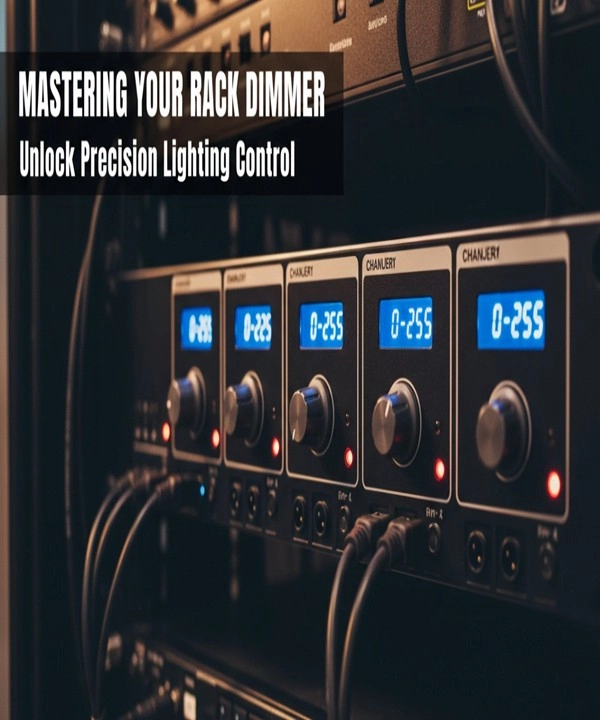
- Rack Dimmer Executive Summary: Key Takeaways
- What is a Rack Dimmer and Why is it Essential for Pro Lighting?
- Core Functions of a Professional Rack
- Anatomy of a High-Performance Rack Dimmer System
- 1. The Processor (The Brain)
- 2. SCR Phase-Cut Dimming Modules
- 3. Socapex Multicore Distribution
- 4. Sinewave Dimming Technology
- 2026 Industry Trends: The Shift to Hybrid Power Control
- The Rise of RDM Lighting Management
- Key Trends to Watch:
- Installation and Maintenance: Expert Best Practices
- 1. Load Calculation & Phase Balance
- 2. Managing Harmonics
- 3. DMX and Network Patching
- 4. Regular Cleaning
- FAQ: Common Rack Dimmer Questions
- What is the difference between a dimmer rack and a dimmer pack?
- How many channels does a standard rack dimmer support?
- Can I use LED fixtures with a traditional rack dimmer?
- What is Socapex cabling in rack dimming?
- What causes humming or buzzing in rack dimmers?
- How do I calculate the power load for a 12-channel rack?
- What is DMX512 addressing for racks?
- Why is 3-phase power required for dimmer racks?
- References
show goes on. Whether illuminating the opening ceremony of the Beijing Olympics or controlling the delicate ambiance of a broadcast studio, reliable power distribution is the backbone of visual performance. Drawing on over three decades of engineering excellence from Guangzhou RGB Lighting Equipment Co.,Ltd., this guide explores the critical technology behind modern power control.
Rack Dimmer Executive Summary: Key Takeaways
A rack dimmer is a high-density, centralized power control cabinet designed to regulate voltage for large-scale theatrical and architectural lighting installations.
Unlike portable units, these systems are engineered for permanent deployment, offering superior thermal management and circuit density. As the industry transitions toward 2026, the focus has shifted from simple voltage regulation to intelligent, hybrid power management that seamlessly integrates legacy tungsten fixtures with modern LED infrastructures.
- Hybrid Compatibility: Modern racks now support both SCR Phase-Cut Dimming for halogen lamps and constant power relays for intelligent LED fixtures.
- Centralized Control: Unified management via RDM Lighting Management protocols allows technicians to monitor system health remotely.
- High-Duty Reliability: Built for 24/7 operation, utilizing industrial-grade cooling and Socapex Multicore Distribution for rapid deployment.
- Proven Performance: Companies like RGB Lighting have deployed these systems in landmark projects such as the Shanghai World Expo, proving their stability under extreme conditions.
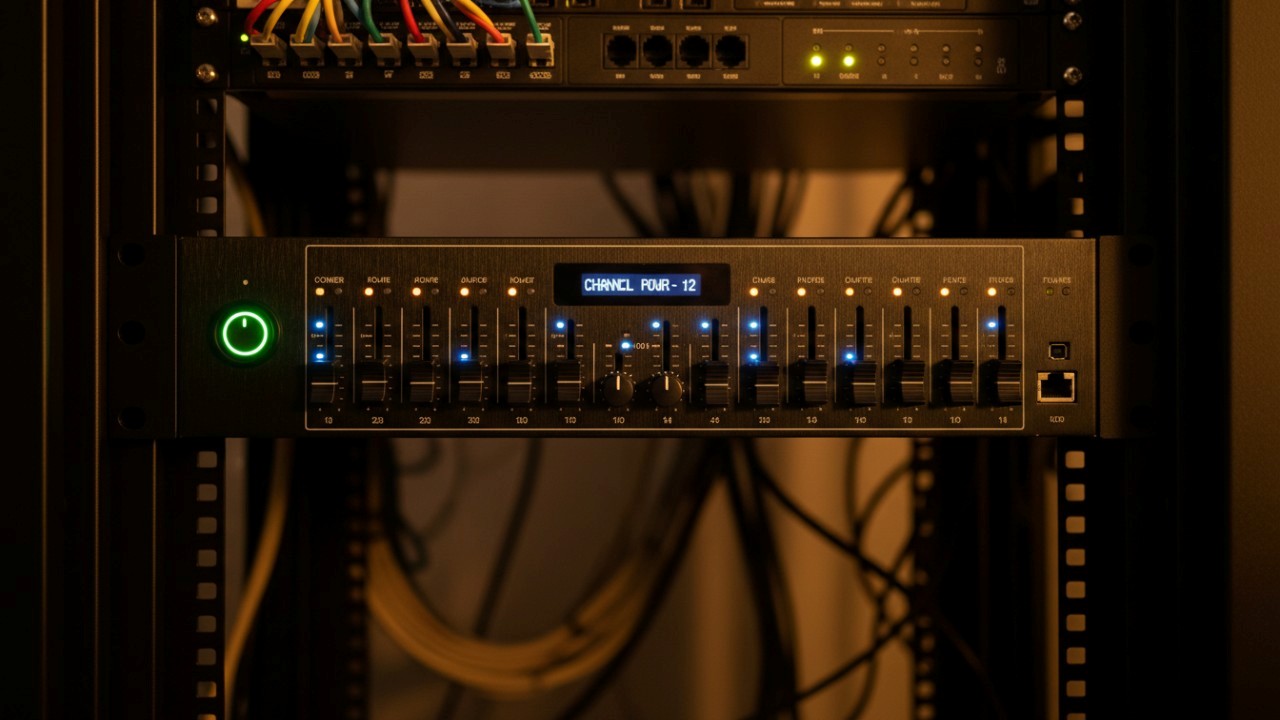
-
What is a Rack Dimmer and Why is it Essential for Pro Lighting?
A rack dimmer is a floor or wall-mounted enclosure containing multiple dimming modules that convert control signals into variable power outputs for lighting fixtures.
While a portable dimmer pack might suffice for a small DJ setup, a rack dimmer is the "central nervous system" of a stadium, theater, or concert hall. It takes a robust 3-phase power feed and distributes it across hundreds of individual channels. This architecture is essential because it isolates high-wattage power handling away from the delicate stage electronics, ensuring safety and reducing electromagnetic interference near audio equipment.
Core Functions of a Professional Rack
- Power Conditioning: Filters raw utility power to remove spikes and sags that could damage sensitive fixtures.
- Signal Decoding: Translates digital DMX512 data into precise analog voltage regulation.
- Circuit Protection: Individual breakers for every channel prevent a single short circuit from blacking out the entire stage.
- Thermal Management: Advanced airflow systems maintain optimal operating temperatures, a standard rigidly adhered to by manufacturers like RGB Lighting (ISO9001 certified).
Anatomy of a High-Performance Rack Dimmer System
The anatomy of a rack dimmer consists of a central processor, power modules, busbars, and output patch panels working in unison.
Understanding these components is vital for technicians troubleshooting connection issues or planning a system upgrade.
1. The Processor (The Brain)
The processor is the intelligence hub. It interprets DMX signals and manages the firing logic of the power modules. Modern processors from RGB Lighting utilize advanced algorithms to linearize the dimming curve, ensuring smooth fades from 0% to 100% without the "pop-on" effect seen in cheaper units.
2. SCR Phase-Cut Dimming Modules
SCR Phase-Cut Dimming remains the standard for tungsten loads. By rapidly switching the power on and off during each AC cycle, the Silicon Controlled Rectifier (SCR) reduces the RMS voltage reaching the lamp. This method is robust and cost-effective for high-wattage incandescent rigs.
3. Socapex Multicore Distribution
To get power from the rack to the truss, Socapex Multicore Distribution is the industry standard. A single 19-pin Socapex cable carries six independent circuits, drastically reducing cabling clutter. This modular approach allows for rapid load-in and load-out times in touring environments.
4. Sinewave Dimming Technology
For environments requiring absolute silence, Sinewave Dimming Technology is the premium choice. Unlike SCRs, which "chop" the waveform and create filament buzz (lamp sing), sinewave dimmers use IGBT transistors to reconstruct a clean voltage wave. This eliminates harmonic noise, making it ideal for symphony halls and opera houses.
2026 Industry Trends: The Shift to Hybrid Power Control
The 2026 landscape is defined by the convergence of direct power switching for LEDs and traditional dimming in a single, intelligent cabinet.
According to recent market analysis, the global stage lighting market is projected to reach approximately $0.92 billion by 2033, driven largely by the adoption of LED systems which now account for over 44% of the market share. This shift necessitates racks that are "future-proof."
The Rise of RDM Lighting Management
RDM Lighting Management (Remote Device Management) has transformed maintenance. It allows the rack to send feedback to the console, alerting technicians to faults like "Over Temperature" or "Breaker Trip" in real-time. RGB Lighting integrates these smart capabilities into their network dimming solutions, supporting the growing trend where 52% of market investments are now focused on automated and energy-efficient technologies.
Key Trends to Watch:
- Cloud-Based Monitoring: New systems allow facility managers to track energy usage and component health via IoT dashboards.
- Hybrid Modules: Swappable modules that can function as a dimmer or a hard-power relay, adapting to the 80% energy reduction potential of modern LED rigs.
- Sustainability Compliance: As energy codes tighten in 2025/2026, intelligent racks help venues meet strict efficiency standards by automatically cutting power to phantom loads when the system is idle.
Installation and Maintenance: Expert Best Practices
Proper installation requires precise load calculation and strict adherence to phase-balancing protocols to prevent neutral wire overheating.
Drawing from RGB Lighting’s experience as a National High-Tech Enterprise, here are the golden rules for maintaining system longevity.
1. Load Calculation & Phase Balance
Always calculate the total amperage per phase. A common mistake is overloading Phase A while leaving Phase C underutilized, which can trip the main breaker. Ensure that the total continuous load does not exceed 80% of the rack's rated capacity.
2. Managing Harmonics
When using SCR Phase-Cut Dimming, the rapid switching creates harmonic currents. It is critical to oversize the neutral conductor (often double-neutral) to handle these additive currents, preventing heat buildup in the feeder cables.
3. DMX and Network Patching
utilize RDM Lighting Management to soft-patch your rack. This allows you to assign any logical DMX address to any physical dimmer circuit without moving cables.
4. Regular Cleaning
Rack dimmers rely on forced-air cooling. Dust accumulation on the heatsinks is the #1 cause of SCR failure. Schedule quarterly cleaning of air filters and fan intake modules.
FAQ: Common Rack Dimmer Questions
What is the difference between a dimmer rack and a dimmer pack?
Racks are permanent, high-density installations for large venues, while packs are portable, low-channel units for mobile use. Racks offer higher amperage per circuit and advanced network integration.
How many channels does a standard rack dimmer support?
Standard racks typically range from 12 channels to 96 or more channels in high-density professional configurations. Custom cabinets from manufacturers like RGB Lighting can be scaled to fit specific venue requirements.
Can I use LED fixtures with a traditional rack dimmer?
Yes, provided the rack is set to a 'non-dim' or 'switched' mode to prevent damaging the LED's internal power supply. Sending a dimmed curve to a non-dimmable LED can destroy its electronics.
What is Socapex cabling in rack dimming?
Socapex is a 19-pin connector used to carry 6 individual dimming circuits from the rack to the lighting rig in a single cable. It is the standard for efficient, high-volume power distribution.
What causes humming or buzzing in rack dimmers?
Buzzing is usually caused by the physical vibration of the filament in a lamp (lamp sing) or electromagnetic interference from the SCRs. Using Sinewave Dimming Technology or high-quality choke filters can eliminate this noise.
How do I calculate the power load for a 12-channel rack?
Multiply the amperage per channel by the voltage, then multiply by 12, ensuring the total is within the 3-phase supply limits. Always leave a 20% safety headroom.
What is DMX512 addressing for racks?
It is the process of assigning a specific start address to the rack so the control console can communicate with each individual channel. This address acts as the unique identifier in the lighting network.
Why is 3-phase power required for dimmer racks?
3-phase power provides the high amperage necessary for large-scale lighting and allows for balanced load distribution across the electrical grid. Single-phase power is rarely sufficient for professional rack loads.
References
Latest News
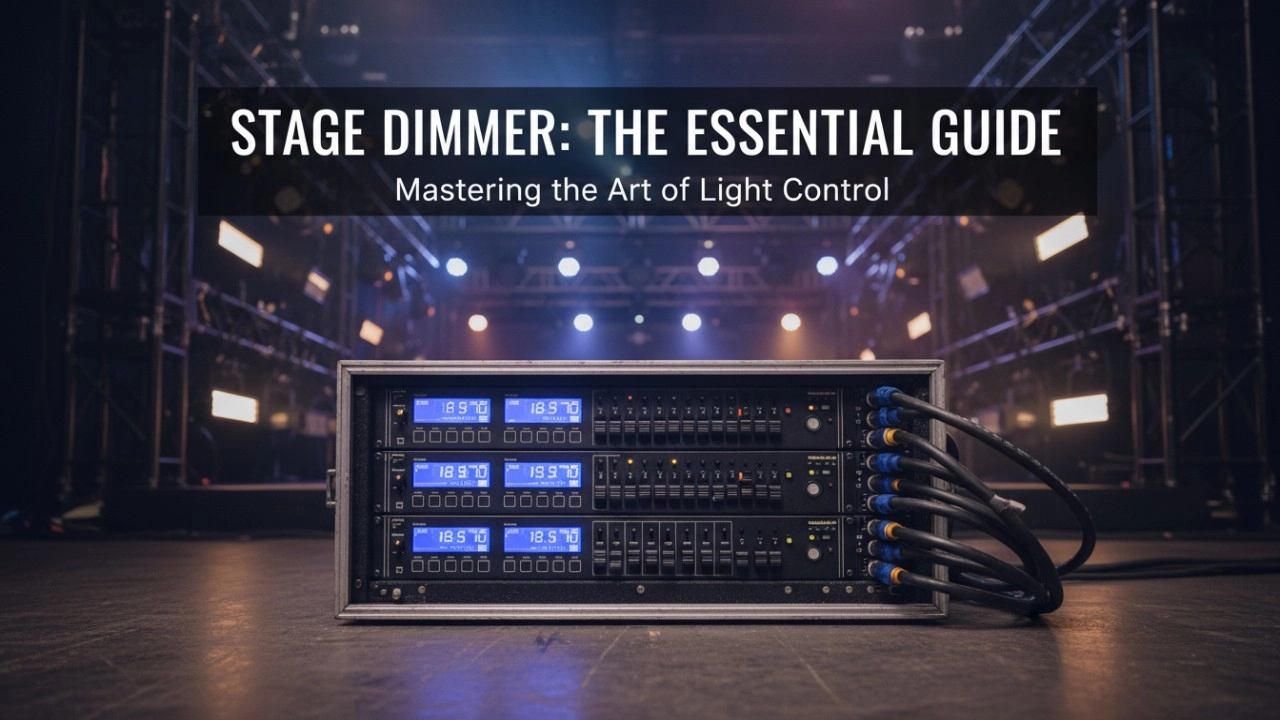
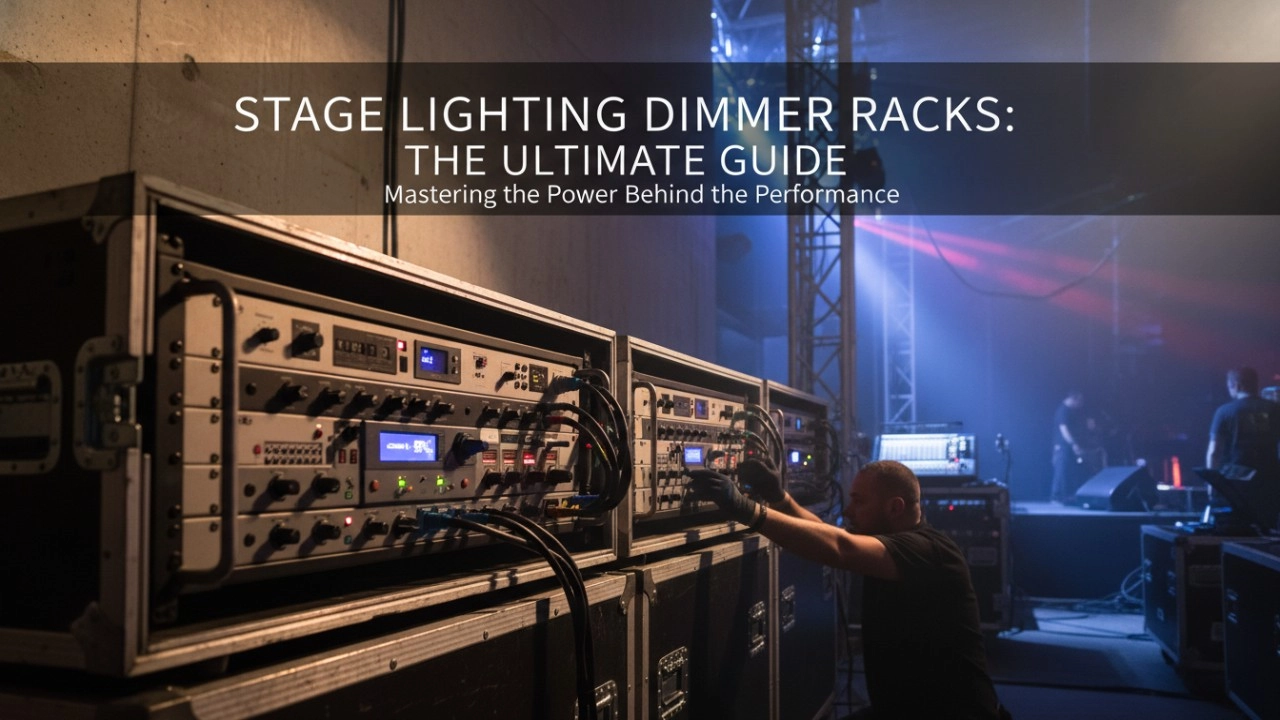
A comprehensive 2026 guide to selecting high-performance stage lighting dimmer racks. We review top hybrid systems, explore SCR vs sine wave technology, and analyze essential features like ThruPower for modern venues.
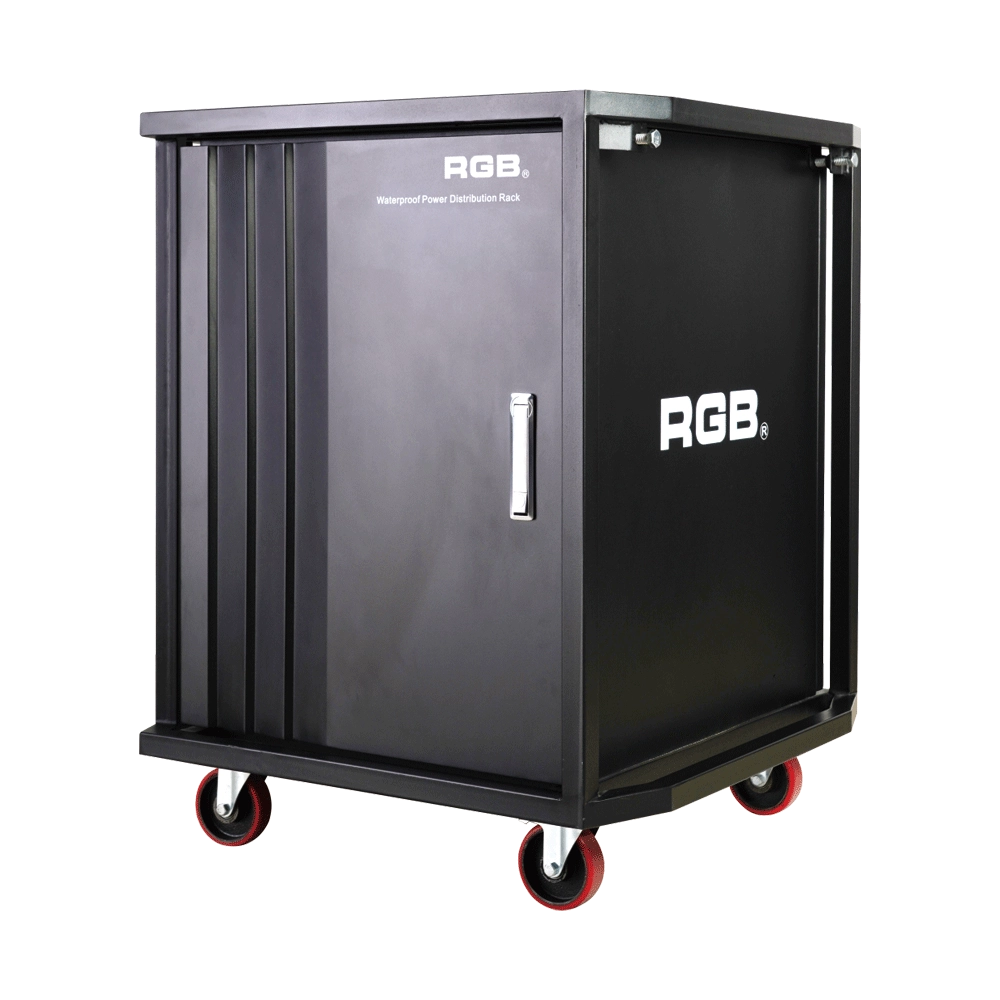
Multifunction Waterproofing Racks Of RGB-W Series
With the continuous development of flow performance, the requirement for performance is more demanding. In order to facilitate the transportation and make it easier to carry for all the equipment used in the performance, the stage light and sound equipment will be installed into a cabinet, for example, the power supply system. During the transportation process, it is inevitable for a collision or crash to take place. If the cabinet material is not strong enough, it may lead to deformation and even damage the equipment inside. Moreover, most of the existing cabinets are not waterproof. It will be very dangerous for the flow performance, as it is normal and inevitable to encounter rainy days. As the equipment inside the cabinets is electriferous, it might cause damage to the electronic equipment at least and even cause casualties at worst. Meanwhile, most of the existing cabinets can only be installed with one kind of equipment with a single variety.
In order to overcome the above-mentioned technical flaw, the RGB company has developed a new type of waterproofing multifunction cabinet of the W series. The waterproofing cabinet of the W series meets the need for the installation of dimming and tone-tuning devices, transportation, and utilization.
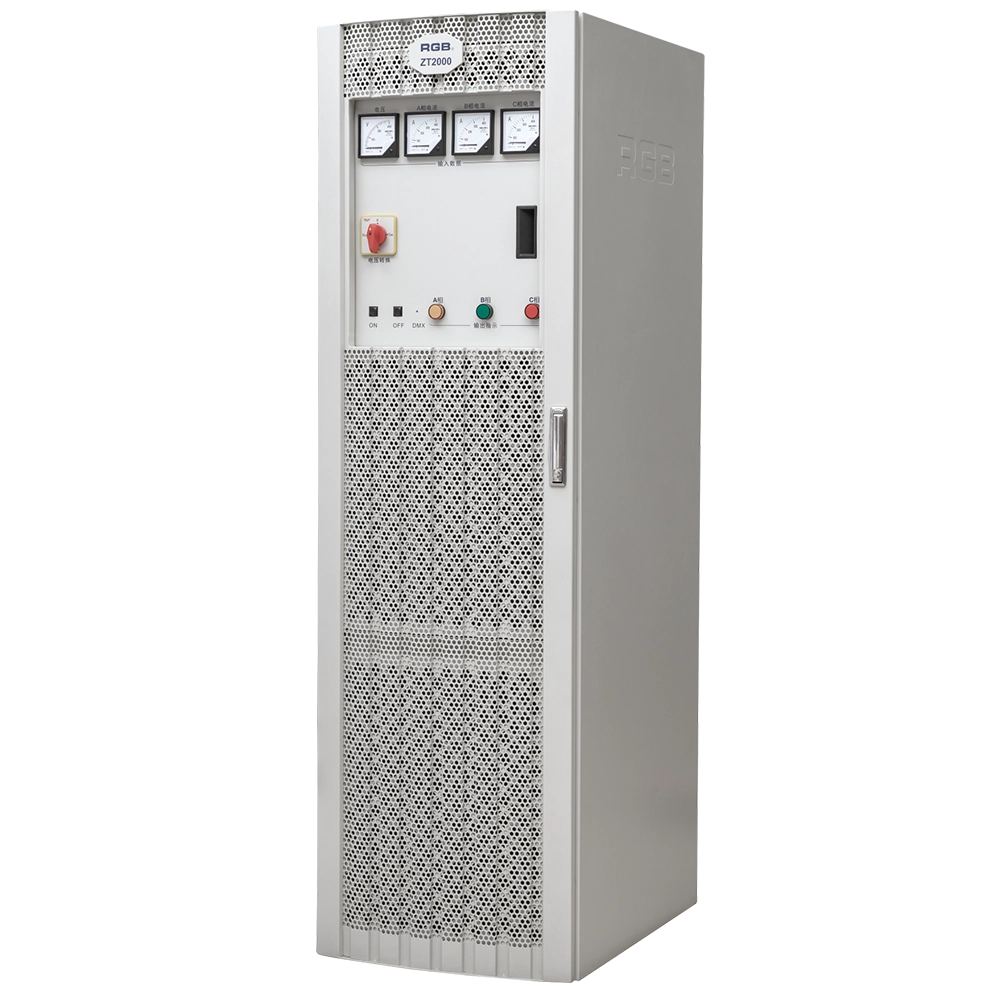
ZT2000 Pass-Through Racks
The ZT2000 straight-through power cabinet is a three-phase 630A/400A air switch main control, with each channel being a 32A air switch sub-control straight-through power cabinet. It can be used in conjunction with various computer lamps, regular lamps, and temporary electrical equipment as a power distribution and supply part for electrical equipment with overcurrent and short-circuit protection. It is a brand-new, reliable, and stable lighting control device in the field of stage lighting control.
It is widely applied in theaters, concert halls, multi-functional halls, cultural and tourism performances, TV stations, gymnasiums, auditoriums, commercial art lighting, and other performance and cultural venues.
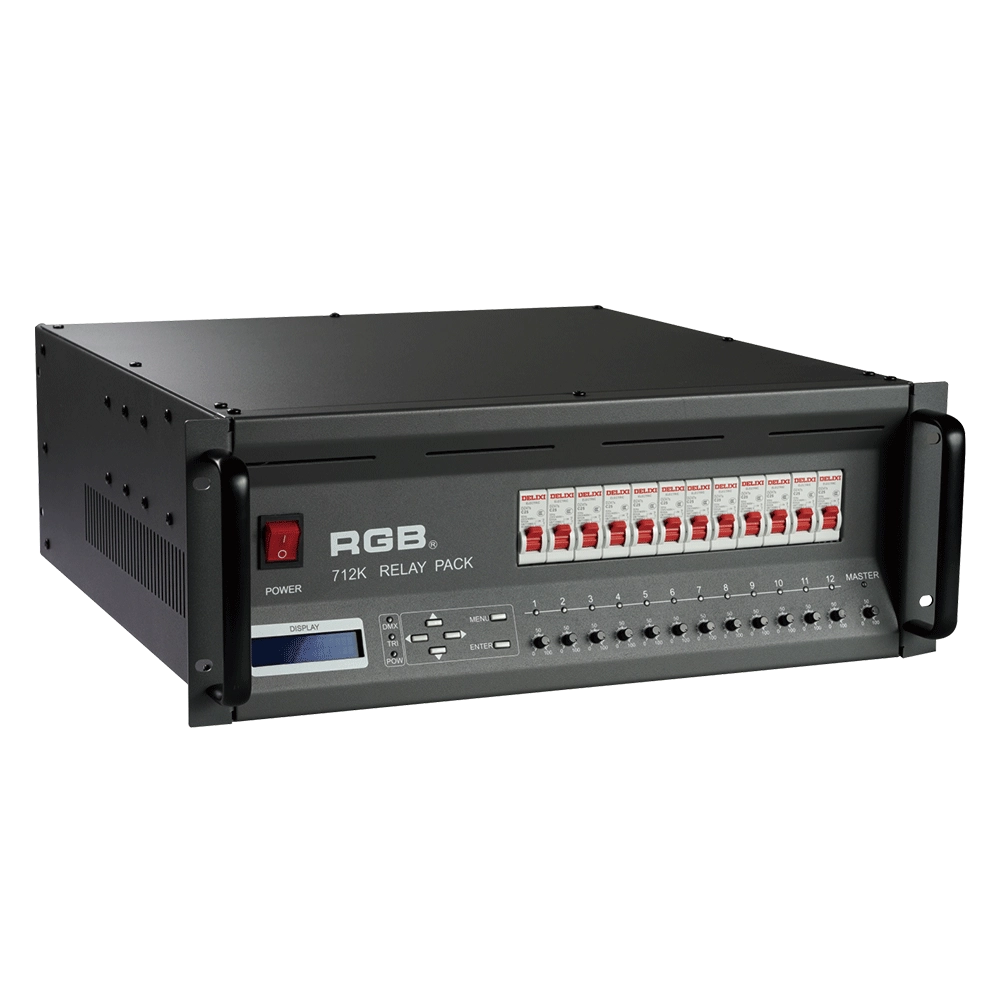
Alloy Relay Packs
High-performance DMX512 relay dimming unit with 512 addressable circuits, phase-loss protection, dual-signal amplification, 20A output per channel, and robust design for reliable stage and mobile lighting applications.
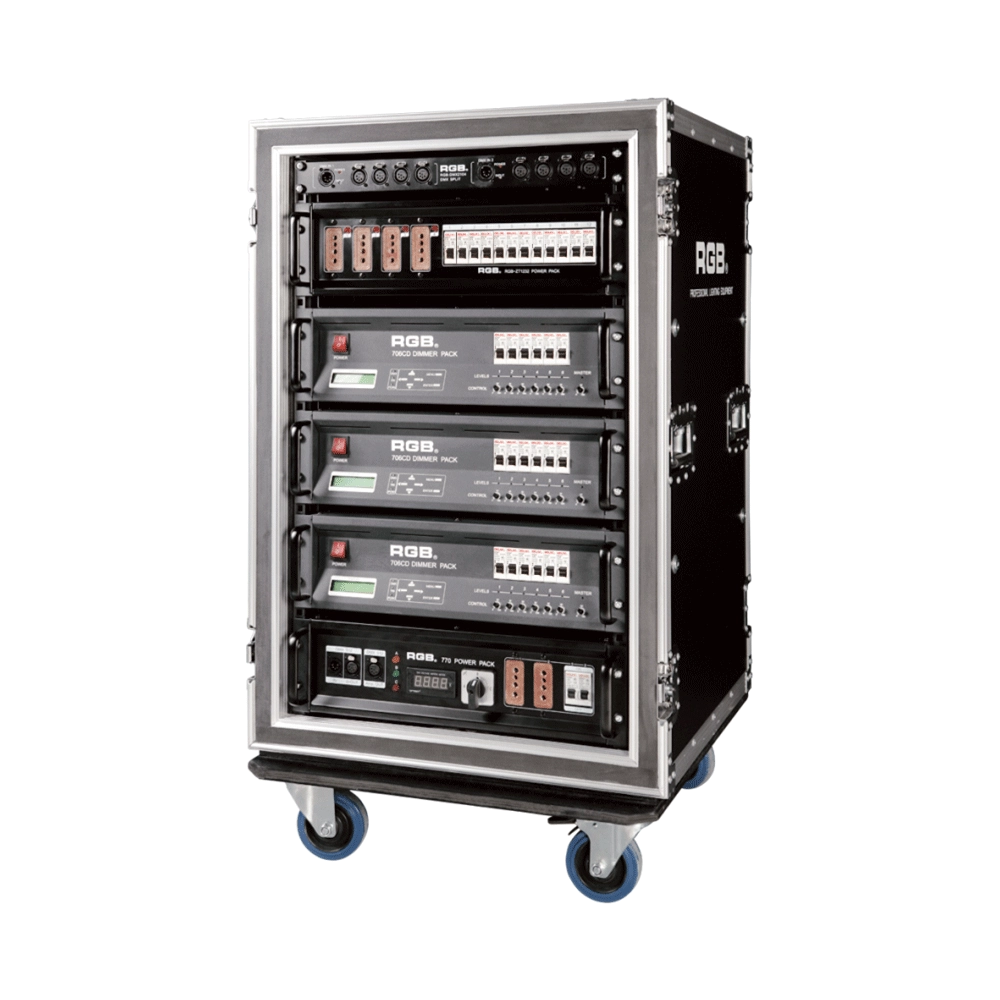
7 Series Digital Touring Dimmer Racks
7 Series digital touring dimmer racks can be assembled into many types of dimmer by taking the 7 Series dimmer as the unit. They are widely used in the entertainment industry for their convenience and practicability.
Expert Support
Interested in learning more or need expert guidance related to this article? Fill in your details, and our team will provide tailored support.
Intelligent Control. Brilliant Performance.
RGB specializes in stage lighting control systems, delivering intelligent, reliable, and high-performance solutions for theaters and performance spaces worldwide.
Contact
Email:
Tel:
+86 20 3928 0245
+86 20 3928 0247
Address:
No.3, Huashan Road, Shilou Town, Panyu, Guangzhou, China.
Whatsapp: +8615975520131