
Top 5 High-Performance Stage Lighting Dimmer Racks for Flawless Performance Control
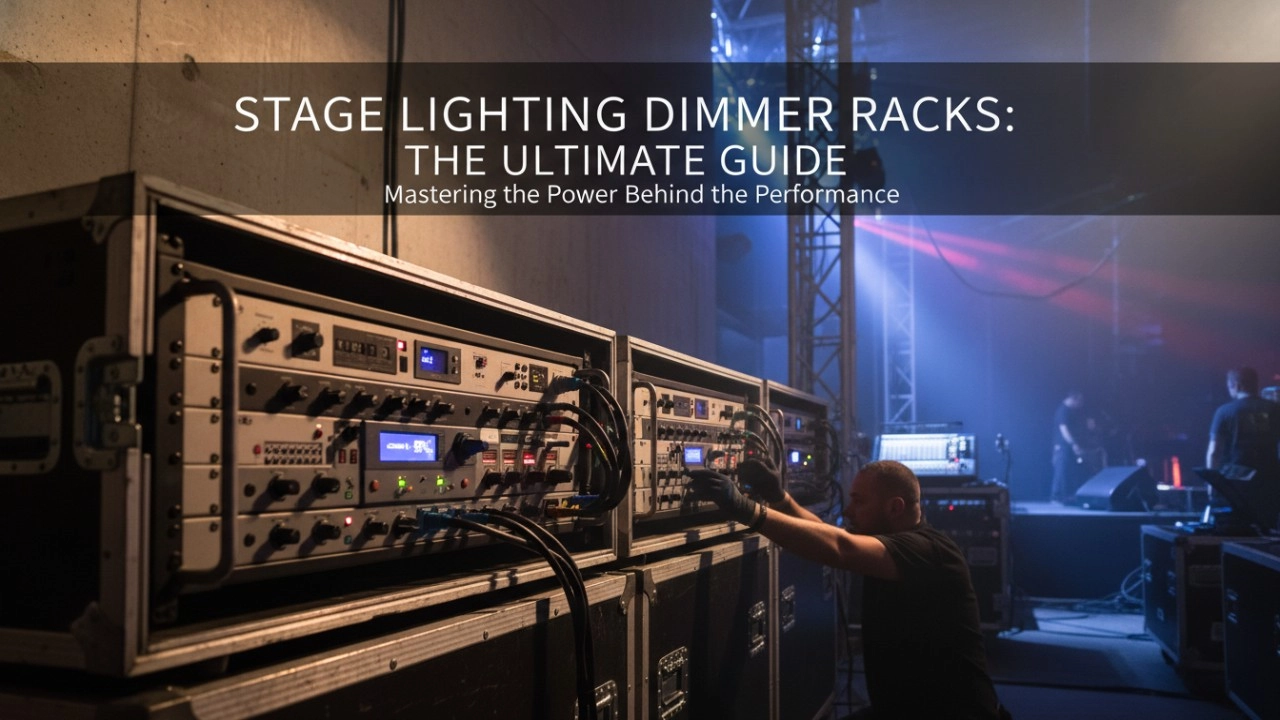
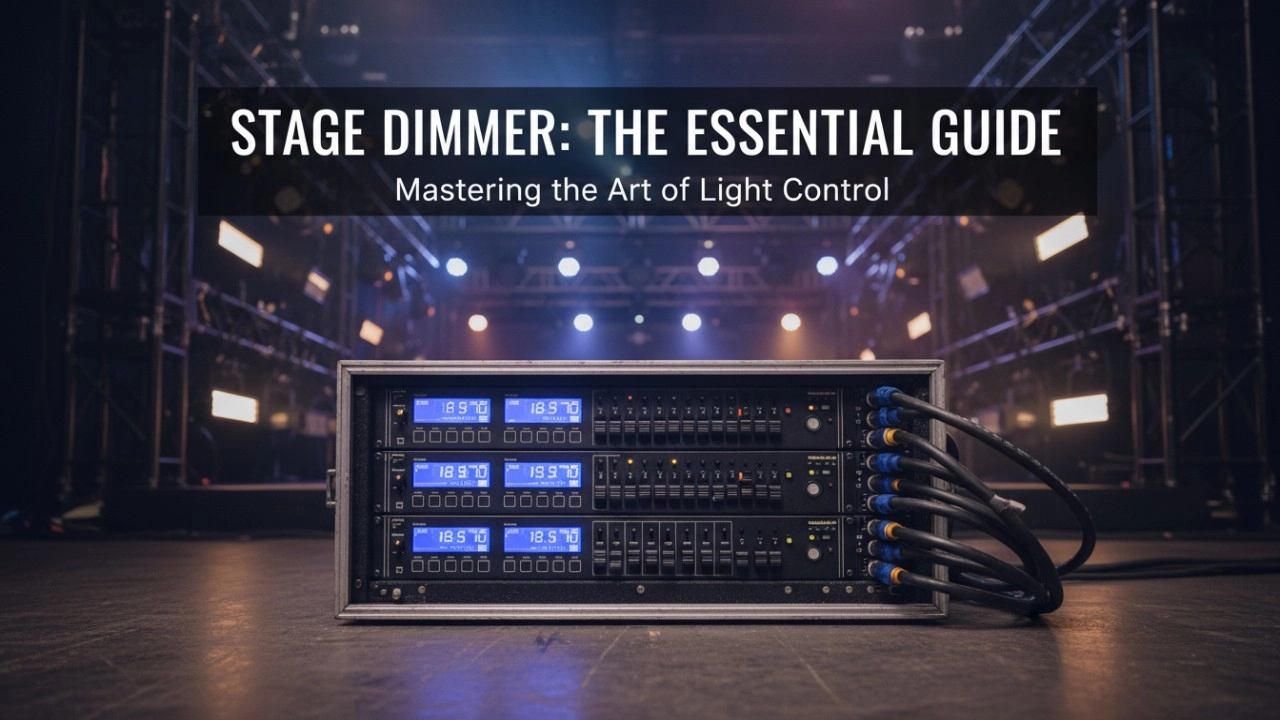
A comprehensive 2026 guide to selecting high-performance stage lighting dimmer racks. We review top hybrid systems, explore SCR vs sine wave technology, and analyze essential features like ThruPower for modern venues.
|
- Key Takeaways: Modern Dimming Essentials
- What is a high-performance stage lighting dimmer rack?
- Critical Criteria for Ranking Dimmer Racks
- Top 5 Stage Lighting Dimmer Racks Reviewed
- 1. The Industry Standard (ETC Sensor 3 Style)
- 2. The Touring Workhorse (Avolites Art 2000 Style)
- 3. The Silent Performer (Sine Wave Technology)
- 4. The Compact Hybrid (Guangzhou RGB Lighting Solution)
- 5. The Architectural Integrator
- Expert Tips: Solving the LED vs. Tungsten Dilemma
- Installation & Maintenance for Longevity
- Conclusion & Call to Action
- Frequently Asked Questions (FAQ)
- What is the difference between a dimmer rack and a power distribution unit?
- Can I plug LED lights into a standard dimmer rack?
- What is 'rise time' in stage dimming?
- What is ThruPower or switchable dimming?
- How often should dimmer racks be serviced?
- What causes dimmer rack buzzing?
- Do I need sine wave dimmers?
- How many channels fit in a standard dimmer rack?
Key Takeaways: Modern Dimming Essentials
Quick Summary: The stage lighting landscape has shifted from pure SCR dimming to intelligent ThruPower distribution systems that handle both tungsten and LED loads. This guide covers why rise time is critical for audio clarity, the necessity of RDM (Remote Device Management) for real-time feedback, and how hybrid racks are the new standard for professional venues in 2026.
What is a high-performance stage lighting dimmer rack?
A high-performance stage lighting dimmer rack is a centralized power control unit that regulates voltage to stage fixtures via DMX512, offering precise intensity control and intelligent power switching between dimming and constant power modes.
In the past, dimmer racks were simple voltage regulators. Today, they are sophisticated power management hubs. A standard DMX512 dimmer pack might suffice for a small school play, but professional venues require high-density racks capable of managing complex rigs. The core function is converting mains power into regulated outputs, ensuring that delicate tungsten filaments fade smoothly while providing clean, constant power to intelligent moving lights and LED fixtures within the same infrastructure. This versatility prevents the need for separate "dimmer" and "distro" systems, streamlining the entire stage power distribution network.
According to the United States Institute for Theatre Technology (USITT), the DMX512-A standard is the backbone of this communication, allowing lighting consoles to send precise digital instructions to these racks, ensuring every fade is synchronized and every relay fires exactly when needed.
Critical Criteria for Ranking Dimmer Racks
When evaluating dimmer racks, rise time and module modularity are the two most critical performance metrics that determine audio interference levels and operational flexibility.
- Rise Time & Choke Quality: This refers to the speed at which the current rises during the phase cut. A standard dimmer might have a rise time of 350 µs, which can cause filament "singing" and buzzing in audio lines. High-performance units boast rise times of 800 µs or higher. As noted by industry leaders like Electronic Theatre Controls, higher rise times significantly dampen the harmonic noise generated by the dimming process, which is crucial for concert halls and theaters.
- Module Modularity: Modern venues are hybrid environments. You need a rack that supports hot-swappable modules, allowing you to change a slot from a dimmer to a relay or constant power module without rewiring.
- Thermal Management: High-density lighting control generates massive heat. Intelligent, variable-speed fan systems are non-negotiable for maintaining safe operating temperatures without introducing fan noise into the quiet stage environment.
- Connectivity: Beyond basic DMX, look for support for sACN, Art-Net, and RDM to monitor temperature, voltage, and breaker status remotely.
Top 5 Stage Lighting Dimmer Racks Reviewed
1. The Industry Standard (ETC Sensor 3 Style)
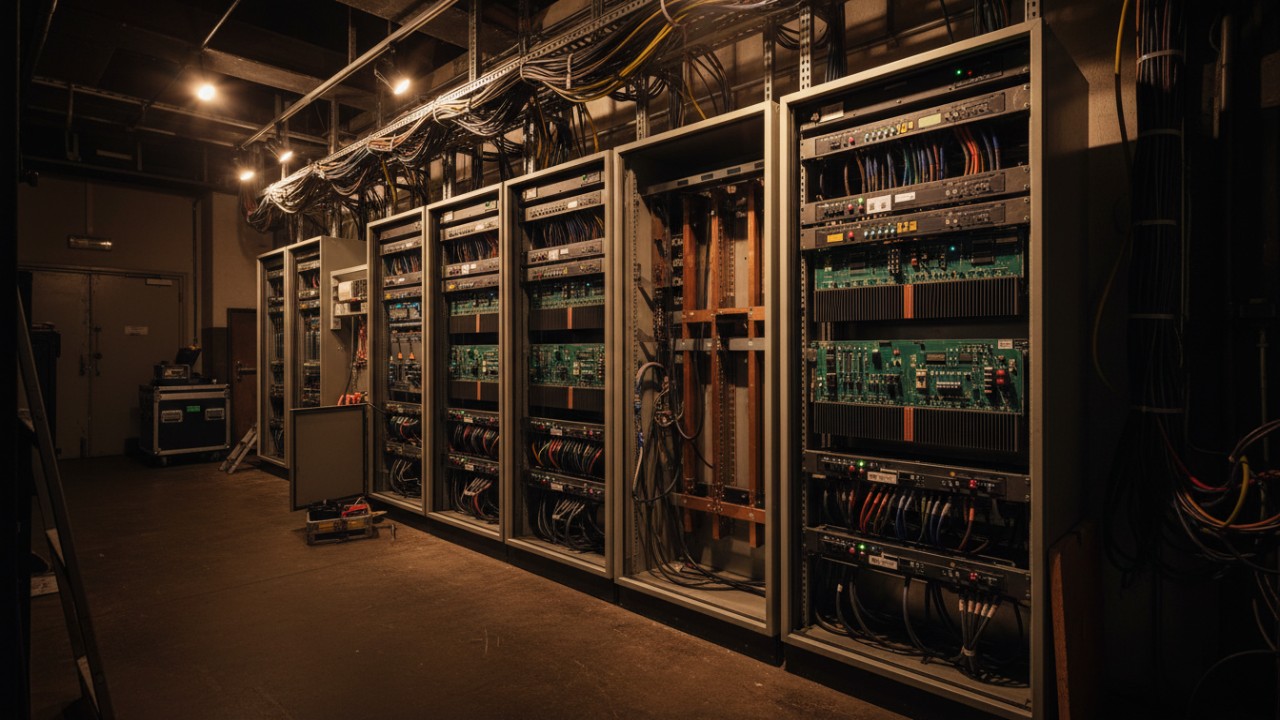
Best for: Large-scale regional theaters and opera houses requiring ultimate flexibility. This category of rack is famous for its ThruPower distribution systems. The ability to switch any circuit from a dimmer to a relay remotely via the lighting console makes it the gold standard for venues that alternate between plays (heavy tungsten) and rock concerts (heavy LED/moving light). It eliminates the need to manually swap modules, saving hours of crew time.
2. The Touring Workhorse (Avolites Art 2000 Style)
Best for: Festivals and touring rock shows. Built for the road, these racks prioritize durability and patch speed. They often feature built-in hot-patch panels, allowing touring technicians to reassign circuits rapidly. While they may not have the highest rise time compared to installation racks, their ruggedness and reliability under unstable generator power make them a favorite for outdoor events.
3. The Silent Performer (Sine Wave Technology)
Best for: Acoustic concert halls and broadcast studios. This represents the pinnacle of dimming technology. Unlike standard SCR dimmers that "chop" the waveform, sine wave dimmers manipulate the amplitude of the sine wave itself. The result is a completely silent operation—no filament sing, no choke buzz, and zero harmonic distortion on the power line. If your venue records orchestral music, SCR vs sine wave dimming is not a debate; sine wave is the only choice.
4. The Compact Hybrid (Guangzhou RGB Lighting Solution)
Best for: Mid-sized venues, cultural centers, and houses of worship needing high-density lighting control. For venues that need professional specs without the massive footprint of a stadium rack, the Compact Hybrid solution by Guangzhou RGB Lighting Equipment Co., Ltd. stands out. Founded in 1996, RGB has pioneered intelligent network dimming and hybrid solutions that integrate seamlessly into modern rigs. Their systems often feature visualized control interfaces and cloud-based management, reflecting their status as a National High-Tech Enterprise. This option provides the perfect balance of DMX512 dimmer pack simplicity with the advanced power handling required for mixed LED/tungsten stages, backed by ISO9001 and CE certifications.
5. The Architectural Integrator
Best for: Museums, ballrooms, and permanent installations. These racks focus on seamless integration with house lighting and building management systems. They prioritize smooth, low-end dimming curves (0-10%) to ensure architectural LEDs don't "pop" on or flicker at low levels. They often include emergency bypass features to ensure house lights go to full in case of a fire alarm.
Expert Tips: Solving the LED vs. Tungsten Dilemma
Ghost Voltage and Inrush Current is one of the two biggest enemies when mixing modern LEDs with legacy dimming infrastructure.
- Avoid Ghost Voltage: Never plug an LED fixture into a standard dimmer set to 100%. Even at "full," SCR dimmers leak a small amount of voltage (ghost voltage), which can cause LEDs to flicker or glow faintly when off. Always use a relay module or a dedicated "Non-Dim" circuit.
- ThruPower is Essential: If you cannot rewire your venue, upgrading to ThruPower distribution systems is the most cost-effective fix. It allows you to turn your existing dimmer circuits into hard power relays for LEDs without running new cabling.
- Manage Inrush Current: When powering on a large LED wall or rig of moving lights via a rack, utilize "staggered start" features. This prevents the massive inrush current from tripping the main breaker, a common issue in older venues with limited stage power distribution capacity.
Installation & Maintenance for Longevity
Proper phase balancing and airflow management are the unsung heroes of dimmer rack longevity, often preventing catastrophic failure during a show.
- Phase Balancing: In a 3-phase system, ensure your lighting load is distributed evenly across X, Y, and Z phases. An unbalanced neutral can overheat and cause dangerous voltage fluctuations.
- Airflow Management: Dimmer rooms are notorious for overheating. SCRs and chokes generate heat; if the rack room ambient temperature exceeds 40°C (104°F), failure rates skyrocket. Ensure your rack filters are cleaned monthly.
- Regular Cleaning: Dust is conductive and insulative. A layer of dust on a heat sink prevents cooling, while dust on a circuit board can cause shorts. As recommended by Guangzhou RGB Lighting Equipment Co., Ltd., protocols, annual maintenance should include vacuuming fan intakes and tightening all electrical terminals to prevent arcing.
Conclusion & Call to Action
Selecting the right dimmer rack is no longer just about smoothing out a tungsten fade; it is about intelligent power management for a hybrid world. Whether you need the silence of Sine Wave technology, the flexibility of ThruPower, or the robust reliability of a high-density lighting control system, the choice you make today will define your venue's capability for the next decade. Prioritize safety, modularity, and trusted manufacturing standards to future-proof your stage.
Contact Guangzhou RGB Lighting Equipment Co., Ltd. today to discuss your specific needs and upgrade your venue's dimming infrastructure.
Frequently Asked Questions (FAQ)
What is the difference between a dimmer rack and a power distribution unit?
Dimmers regulate voltage to control brightness, while distros provide constant hard power. Modern racks often combine both functions in a hybrid layout.
Can I plug LED lights into a standard dimmer rack?
Generally no, unless the dimmer can be switched to 'Non-Dim' or 'Switched' mode. Running LEDs on a dimmed curve can damage the fixture's power supply.
What is 'rise time' in stage dimming?
It refers to the time it takes for the current to rise during the phase cut. Higher rise times (e.g., 800 µs) reduce filament sing and audio buzz.
What is ThruPower or switchable dimming?
Technology that allows a single circuit to switch between dimming and constant power. Essential for venues mixing conventional lights and moving heads.
How often should dimmer racks be serviced?
At least annually for cleaning air filters and tightening terminals. More frequently in dusty environments like outdoor festivals.
What causes dimmer rack buzzing?
Vibration of the magnetic chokes inside the dimmer module. Loose laminations or low-quality filters exacerbate the noise.
Do I need sine wave dimmers?
Only if silence is critical (e.g., opera houses, recording studios). They eliminate filament noise but are significantly more expensive.
How many channels fit in a standard dimmer rack?
Standard racks typically hold 24, 48, or 96 dimmers. High-density racks can hold up to 192 channels in a single footprint.
Latest News
A comprehensive 2026 guide to selecting high-performance stage lighting dimmer racks. We review top hybrid systems, explore SCR vs sine wave technology, and analyze essential features like ThruPower for modern venues.
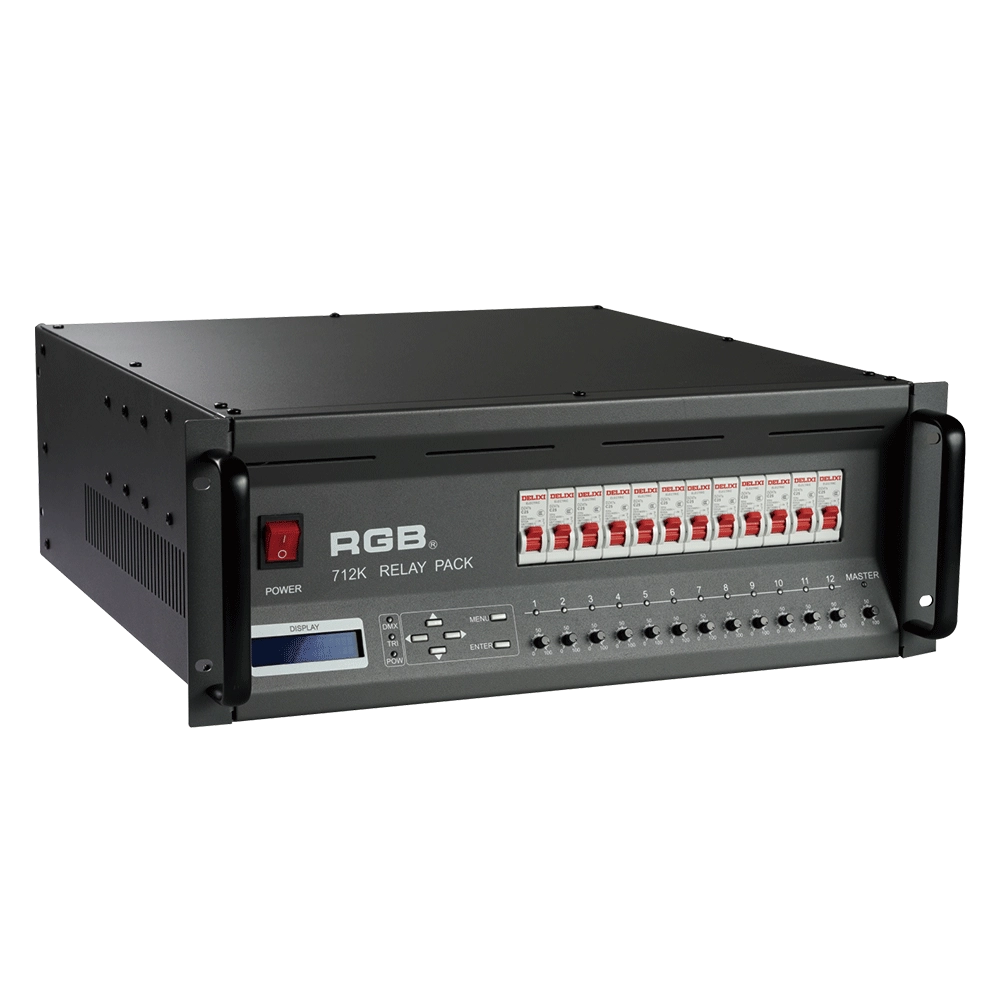
Alloy Relay Packs
High-performance DMX512 relay dimming unit with 512 addressable circuits, phase-loss protection, dual-signal amplification, 20A output per channel, and robust design for reliable stage and mobile lighting applications.
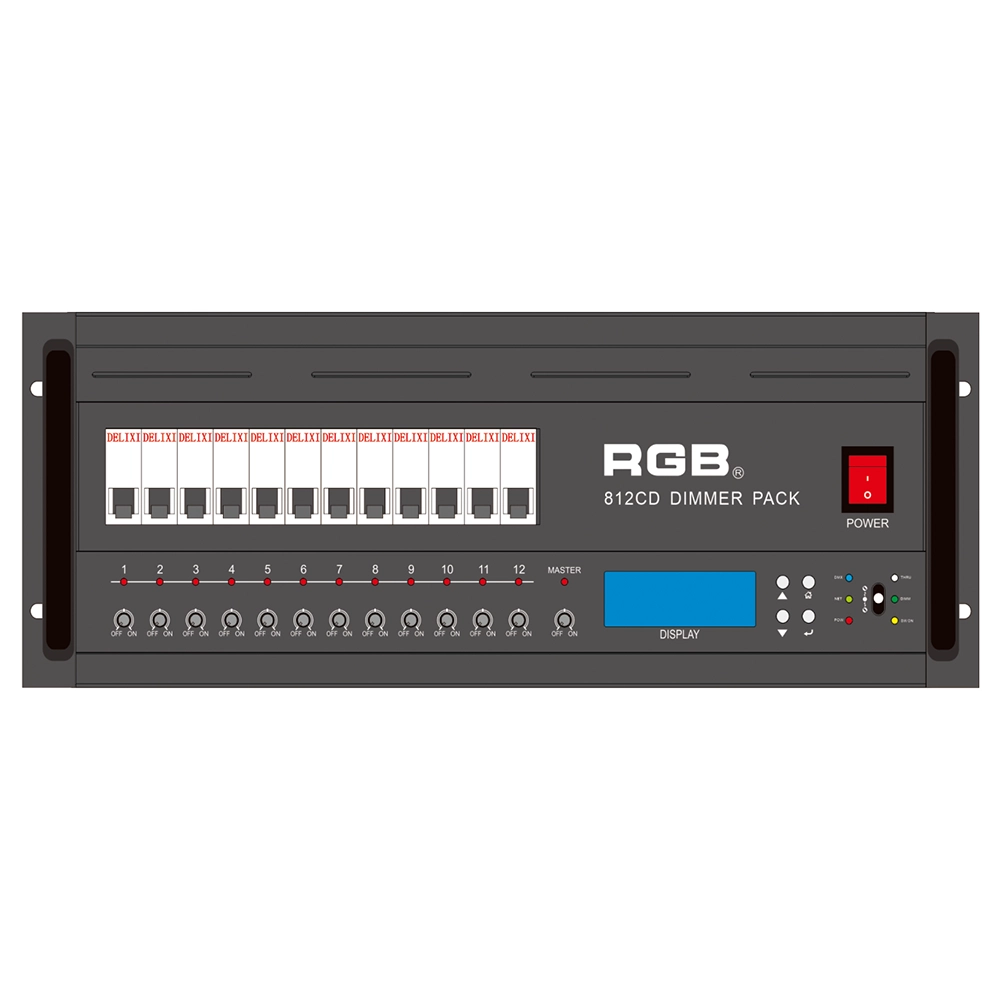
8 Series Intellight Dimmer/Relay Packs
RGB is the latest development and production of all digital, intelligent, and network dimming through the hybrid silicon box. It comes with six channels (806 silicon box), twelve channels (812 silicon box) with analog knob dimming, 49 DMX field recordings and replays (field backup function), and self-programming and recording field. RGB-8 silicon box with DMX512 digital signal input and RJ45 network input interface, with various types of dimming stations at home and abroad used. It is a powerful, stable performance and reliable work of a new generation of intelligent digital dimming through a hybrid silicon box.
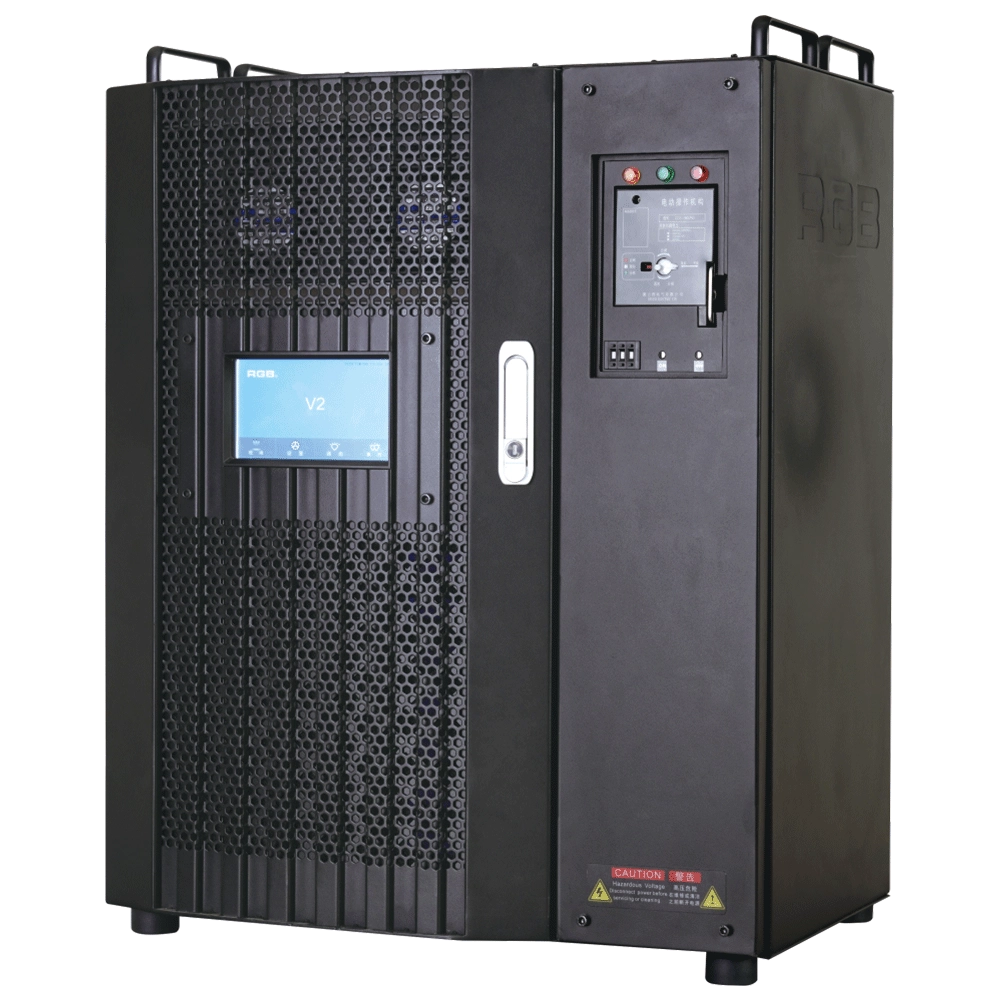
V2 Intelligent Network Dimmer/Relay Racks
V2 is an artificial intelligence dimming rack independently developed by RGB, which has completely independent core technology and obtained software copyrights. It is a fully digital electrodeless trigger and multi-backup independent CPU central processor technology. It has a variety of output configurations, such as sine wave, thyristor, relay, dimming relay, etc. It supports visual lighting control system and visually displays the online and offline status of dimming racks. Realize remote monitoring, editing, and setting of relevant parameters.
It is widely used in performing arts and cultural venues such as theaters, concert halls, multi-function halls, cultural travel and performing arts, TV stations, gymnasiums, auditoriums, commercial art lighting and so on.
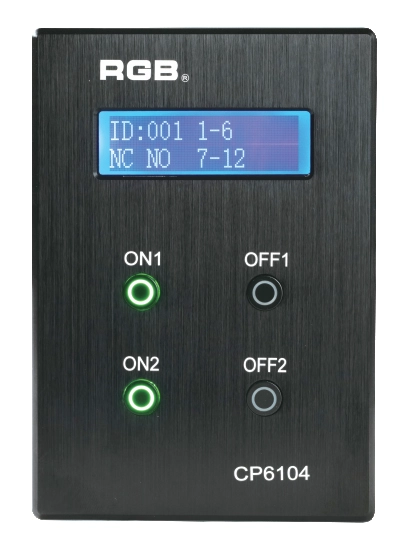
Site Light Controller CP6104
The CP6104 lighting control panel is a lighting control device for theater stage lights, work lights, environmental lighting, commercial art lighting, sports venue lighting and other places. By connecting to the dedicated lighting control host CP6100, it realizes the central control of the lighting system, supports a visual lighting control system, and intuitively displays the online and offline status of CP6104. Realize remote monitoring, editing and setting of corresponding parameters.
It is widely applicable to theaters, cinemas, auditoriums, stadiums, museums, exhibition halls, cultural tourism performances, commercial art lighting and other places.
Expert Support
Interested in learning more or need expert guidance related to this article? Fill in your details, and our team will provide tailored support.
Intelligent Control. Brilliant Performance.
RGB specializes in stage lighting control systems, delivering intelligent, reliable, and high-performance solutions for theaters and performance spaces worldwide.
Contact
Email:
Tel:
+86 20 3928 0245
+86 20 3928 0247
Address:
No.3, Huashan Road, Shilou Town, Panyu, Guangzhou, China.
Whatsapp: +8615975520131