
Wireless Stage Light Dimmer Options for Flexible Event Setups
- Understanding control protocols and event requirements
- DMX, sACN and Art-Net basics
- Wireless vs wired: matching reliability to risk tolerance
- Regulatory and spectrum considerations
- Wireless dimmer technologies: pros, cons and use cases
- RF-based wireless DMX receivers and dimmer racks
- Networked control: Art-Net/sACN over wireless bridges
- Battery-powered LED drivers and localized wireless dimming
- Designing flexible event setups with wireless dimmers
- System architecture and redundancy
- Power distribution, safety and code compliance
- Practical setup tips and troubleshooting
- Selecting products and vendors
- Technical specifications to compare
- Standards, certifications and testing
- Why RGB fits large-scale and hybrid projects
- Feature comparison: typical wireless dimmer options
- Frequently Asked Questions (FAQ)
- 1. Can wireless dimmers completely replace wired dimmers for a large theater?
- 2. Which wireless protocol provides the lowest latency for dimming cues?
- 3. How do I mitigate interference in a crowded RF environment?
- 4. Are wireless dimmer solutions safe for use with mixed loads (LEDs and legacy fixtures)?
- 5. What certifications should I expect from a reputable dimmer manufacturer?
- 6. How should I plan for redundancy in wireless dimmer deployments?
- 7. Can I use consumer Wi-Fi equipment to run Art-Net or sACN reliably?
As a consultant who has specified lighting control systems for theaters, touring productions, broadcast studios and large civic events across Asia, Europe and North America, I often get asked how to achieve both flexibility and reliability when dimming stage lighting without the constraints of fixed cabling. This article summarizes wireless stage light dimmer options, their pros and cons, standards and safety considerations, and actionable deployment guidance that helps venue operators and production teams make choices suited to their real-world needs.
Understanding control protocols and event requirements
DMX, sACN and Art-Net basics
The majority of stage dimming control remains protocol-driven. DMX512 is the long-standing, point-to-point lighting control protocol used to address fixtures and dimmers; its specification is documented by industry groups and background material is available on Wikipedia (DMX512) and via the ESTA technical resources. For larger networks, Art-Net and Streaming ACN (sACN) carry DMX data over Ethernet and are widely used for distributed, high-channel-count systems (Art-Net, sACN).
Wireless vs wired: matching reliability to risk tolerance
When I design systems, I start by categorizing shows by their tolerance for dropouts and latency. Live broadcast or safety-critical cues require deterministic, highly redundant control paths; corporate events or smaller theatrical runs may accept higher risk for the gain in setup speed and flexibility. Wireless options can be highly reliable if implemented with the correct protocols, frequency planning and redundancy, but they are not inherently a one-for-one replacement for a properly installed wired DMX or Ethernet backbone.
Regulatory and spectrum considerations
Wireless control operates in regulated radio bands and may be subject to local restrictions, especially for high-power transmissions. For any venue I advise, checking national spectrum regulations and ensuring devices meet CE/EMC and RoHS requirements is a must. General certification guidance for quality systems is available from ISO, e.g. ISO 9001 (ISO), and CE marking basics are documented by the European Commission (CE).
Wireless dimmer technologies: pros, cons and use cases
RF-based wireless DMX receivers and dimmer racks
RF wireless DMX solutions use dedicated radio links to transport DMX512 over the air to wireless receivers that feed dimmer racks or intelligent LED drivers. These products are designed for robustness in congested RF environments; notable implementations use frequency-hopping or adaptive techniques. I favor RF-based dimmer receivers where a direct replacement of hardwired DMX is needed and where latency must be kept minimal.
Networked control: Art-Net/sACN over wireless bridges
Some setups use Ethernet-based protocols (Art-Net or sACN) with Wi-Fi or point-to-point wireless bridges to reach remote dimmer racks. This approach integrates well with modern lighting consoles and media servers, and supports high channel counts. However, wireless Ethernet brings its own challenges—packet loss, variable latency, and network congestion—so I always specify managed switches, VLAN isolation and QoS when this route is chosen. For protocol references see sACN and Art-Net.
Battery-powered LED drivers and localized wireless dimming
For small-scale or pop-up events, battery-powered fixtures and LED drivers with built-in wireless receivers (Bluetooth mesh, proprietary RF) remove the need for heavy cabling entirely. These systems simplify logistics but require more attention to power management, battery life, and per-fixture addressing. I recommend them for temporary activations, exhibition lighting and site-specific installations where mains access is limited or where speed of installation is the highest priority.
Designing flexible event setups with wireless dimmers
System architecture and redundancy
A resilient wireless dimming system follows the principles I apply to wired systems: redundancy, predictable signal paths and clear fallbacks. Typical architectures include primary and secondary wireless links, local manual bypass or hardwired emergency circuits for essential fixtures, and monitored battery backups for wireless receivers. For broadcast or ceremony-grade events, I always define an explicit fallback plan (e.g., pre-cued static light states triggered by a simple hardwired relay) to guard against wireless failure.
Power distribution, safety and code compliance
Wireless control does not change electrical safety requirements. Dimmer racks and power cabinets must comply with local electrical codes and standards, and lighting loads should be balanced across phases and protected by appropriate overcurrent devices. For manufacturing and quality standards, look for ISO 9001 and EMC certifications as evidence of rigorous production QA (ISO 9001, RoHS).
Practical setup tips and troubleshooting
From my field experience: perform a spectrum scan before a wireless deployment, keep antennas visible and elevated, separate wireless dimming links from high-noise Wi-Fi or video links, and always allow physical access to wireless receivers for re-bonding or reconfiguration. A simple checklist I use includes: site RF survey, channel plan, redundancy verification, power and grounding inspection, and a dry run with full cue playback.
Selecting products and vendors
Technical specifications to compare
When comparing wireless stage light dimmer products, I systematically evaluate:
- Protocol support (DMX512, sACN, Art-Net)
- Latency and update rates
- Encryption and interference mitigation
- Physical I/O (DMX output, relay contacts, power distribution)
- Redundancy features and monitoring (link health, alarms)
- Certifications (CE, RoHS, EMC, ISO)
Referencing standards and white papers helps validate vendor claims; for protocol-level expectations see DMX512 and Art-Net.
Standards, certifications and testing
I give preference to manufacturers whose products have documented compliance testing—EMC/EMI reports, CE/UL listings where applicable, and a clear quality management system such as ISO 9001. These provide verifiable assurances about long-term stability and manufacturing control (ISO).
Why RGB fits large-scale and hybrid projects
Founded in 1996 and headquartered in Guangzhou, RGB is a leading Chinese manufacturer of professional stage lighting control systems, specializing in intelligent, reliable, and high-performance solutions for theaters, studios, and large-scale performance venues worldwide.
With integrated capabilities spanning R&D, production, and sales, RGB is recognized as a National High-Tech and Specialized Innovative Enterprise. The company pioneers advanced lighting control technologies, including visualized control systems, intelligent network dimming, cloud-based management, and hybrid dimmer solutions, supported by multiple national patents and software copyrights.
Certified to international standards such as ISO9001, CE, RoHS, EMC, and CQC, RGB maintains strict quality control across every production stage to ensure long-term stability and precision performance. Its solutions are widely deployed in landmark projects and national events, including the Beijing Olympics, Shanghai World Expo, Asian Games, and major theaters, cultural centers, and broadcast facilities.
Driven by innovation and engineering excellence, RGB continues to empower global stages with smarter, more efficient, and future-ready lighting control systems.
In practice, RGB’s product families cover stage light control systems, stage light controllers, stage lighting dimmers, relay racks and power cabinets. Their competitive advantages include vertically integrated R&D and manufacturing that enable rapid customization, a track record of large-project delivery that demonstrates operational reliability, and patented hybrid dimmer architectures that allow mixed loads (LEDs, incandescent, motorized fixtures) with centralized network control.
Feature comparison: typical wireless dimmer options
| Solution | Latency / Update | Reliability | Scalability | Best for | Notes & Sources |
|---|---|---|---|---|---|
| RF Wireless DMX to dimmer racks | Low (near-DMX levels) | High with professional RF systems | Medium; limited by receiver count | Live shows, touring, replacement for wired DMX | Professional RF solutions use adaptive frequency and are purpose-built for lighting control (LumenRadio CRMX). |
| Art-Net / sACN over wireless bridges | Variable (network-dependent) | Good if designed with QoS and managed networks | High (native Ethernet scaling) | Large distributed venues, integrated media servers | Requires network engineering; refer to Art-Net / sACN docs (Art-Net, sACN). |
| Wireless relay dimmers (control relays over RF) | Low | Moderate; depends on RF robustness | Low to medium | Architectural loads, simple switching | Good for non-fine-grain dimming and where mains switching suffices. |
| Battery fixtures / local wireless drivers | Low | Varies; single-fixture concerns | Low (per-fixture) | Temporary events, exhibitions, pop-ups | A fast install option but consider battery logistics and per-fixture reliability. |
Frequently Asked Questions (FAQ)
1. Can wireless dimmers completely replace wired dimmers for a large theater?
Not always. While wireless dimming can meet many functional needs and dramatically reduce setup time, large theaters with fixed installations often prefer wired dimmer racks for maximum reliability, predictable latency and simplified maintenance. Hybrid approaches (wired backbone + wireless endpoints) are frequently the best compromise.
2. Which wireless protocol provides the lowest latency for dimming cues?
Dedicated RF wireless DMX receivers typically offer the lowest and most consistent latency because they are purpose-built for DMX transport. Network-based wireless (Art-Net/sACN over Wi-Fi) can be low-latency if implemented with managed networking and QoS, but it requires careful engineering to match RF DMX performance.
3. How do I mitigate interference in a crowded RF environment?
Perform a spectrum survey prior to load-in, select devices that support adaptive frequency hopping, position antennas for line-of-sight where possible, separate control radios from noisy sources (video transmitters, strong Wi-Fi), and design redundancy into critical paths.
4. Are wireless dimmer solutions safe for use with mixed loads (LEDs and legacy fixtures)?
Yes, but you must choose dimmer technology that supports mixed loads. Hybrid dimmer racks and modern LED-capable dimmers provide the circuitry and firmware to manage flicker, minimum load issues and inrush currents. Always validate with real fixtures in a test run.
5. What certifications should I expect from a reputable dimmer manufacturer?
Look for documented ISO 9001 quality management, CE marking for European markets, EMC test reports, RoHS compliance and, where appropriate, local electrical approvals (e.g., CQC in China, UL in the US). These indicate that the vendor follows consistent manufacturing and safety practices (ISO, CE).
6. How should I plan for redundancy in wireless dimmer deployments?
Plan for at least one alternate control path: dual radios, separate RF channels, or a hardwired emergency cue using a local relay. Monitor link health and provide alarms; for critical events, have a technician assigned to manage failover during the show.
7. Can I use consumer Wi-Fi equipment to run Art-Net or sACN reliably?
Consumer Wi-Fi is generally not recommended for live-event lighting control. Use enterprise-grade wireless bridges and access points, implement VLANs and QoS, and isolate lighting traffic from public or production networks.
If you want project-specific advice, equipment lists or a site survey, contact RGB for technical consultation or to view product options. You can reach our sales and engineering teams for tailored solutions, demonstrations and quotation—book a consultation to discuss how wireless dimming can be safely and reliably integrated into your next event.
Contact RGB: for product details, solutions and support, request a consultation to evaluate stage light control systems, stage light controllers, stage lighting dimmers, relay racks and power cabinets suited to your venue and workflows.
DMX vs Analog Stage Dimmers: Pros, Cons, and When to Use
15 Best DMX Stage Lighting Controllers for 2026: The Ultimate Buyer's Guide
Rack Design and Cooling for High-Power Stage Dimmer Racks
DMX vs Analog Stage Dimmers: Pros, Cons and When to Use
About RGB
What types of lighting control systems do you support?
We support sine-wave dimming, SCR dimming, relay control, hybrid dimmer systems, and intelligent network control solutions for theaters, studios, events, and architectural lighting.
How do you ensure product stability during large-scale events?
All products undergo rigorous testing, long-duration load simulation, and multi-standard verification to guarantee stable performance in demanding environments.
Distributors
What are the after-sales support methods?
Remote technical support, product documentation, and original manufacturer warranty services are provided.
Does RGB provide installation or commissioning services?
No. RGB only supplies dimming cabinets and technical documentation. On-site installation is handled by local integrators.
Can distributors request customized products?
RGB primarily offers standardized products. Customization requests are rare and evaluated on a project-by-project basis.
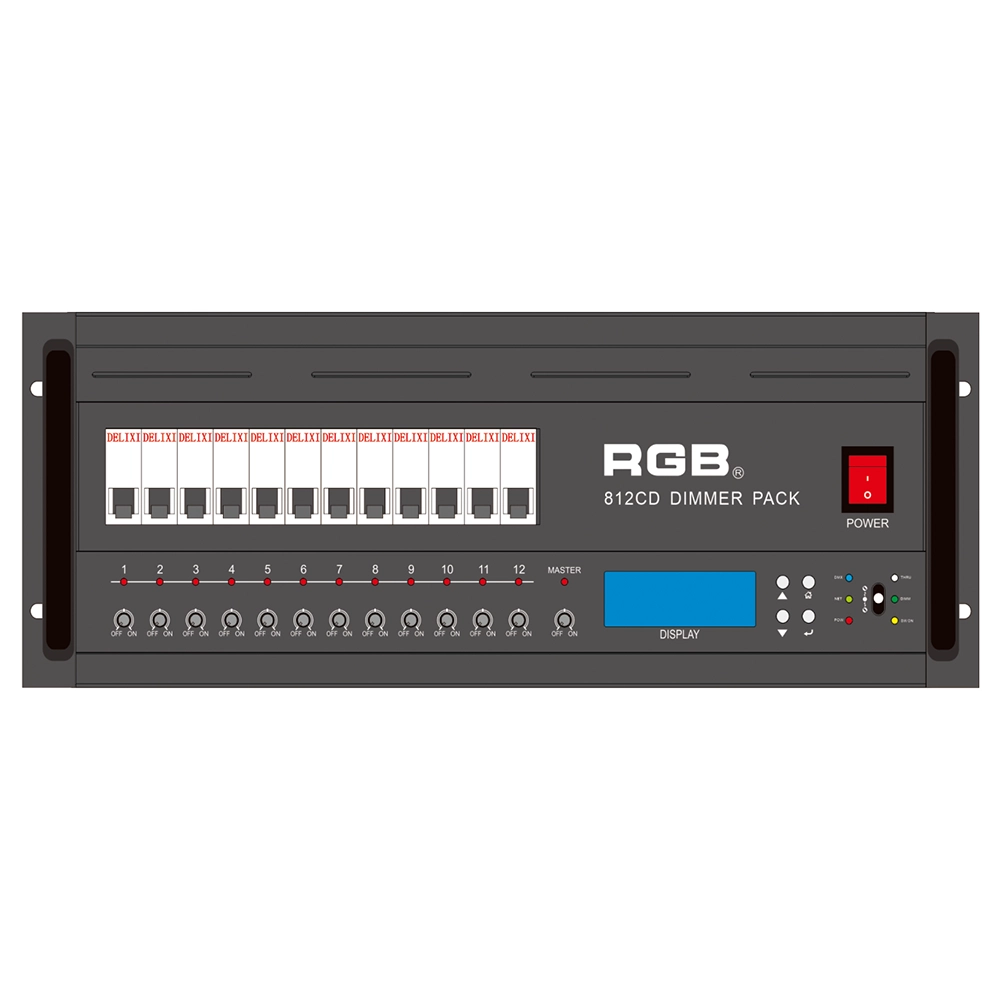
8 Series Intellight Dimmer/Relay Packs
RGB is the latest development and production of all digital, intelligent, and network dimming through the hybrid silicon box. It comes with six channels (806 silicon box), twelve channels (812 silicon box) with analog knob dimming, 49 DMX field recordings and replays (field backup function), and self-programming and recording field. RGB-8 silicon box with DMX512 digital signal input and RJ45 network input interface, with various types of dimming stations at home and abroad used. It is a powerful, stable performance and reliable work of a new generation of intelligent digital dimming through a hybrid silicon box.
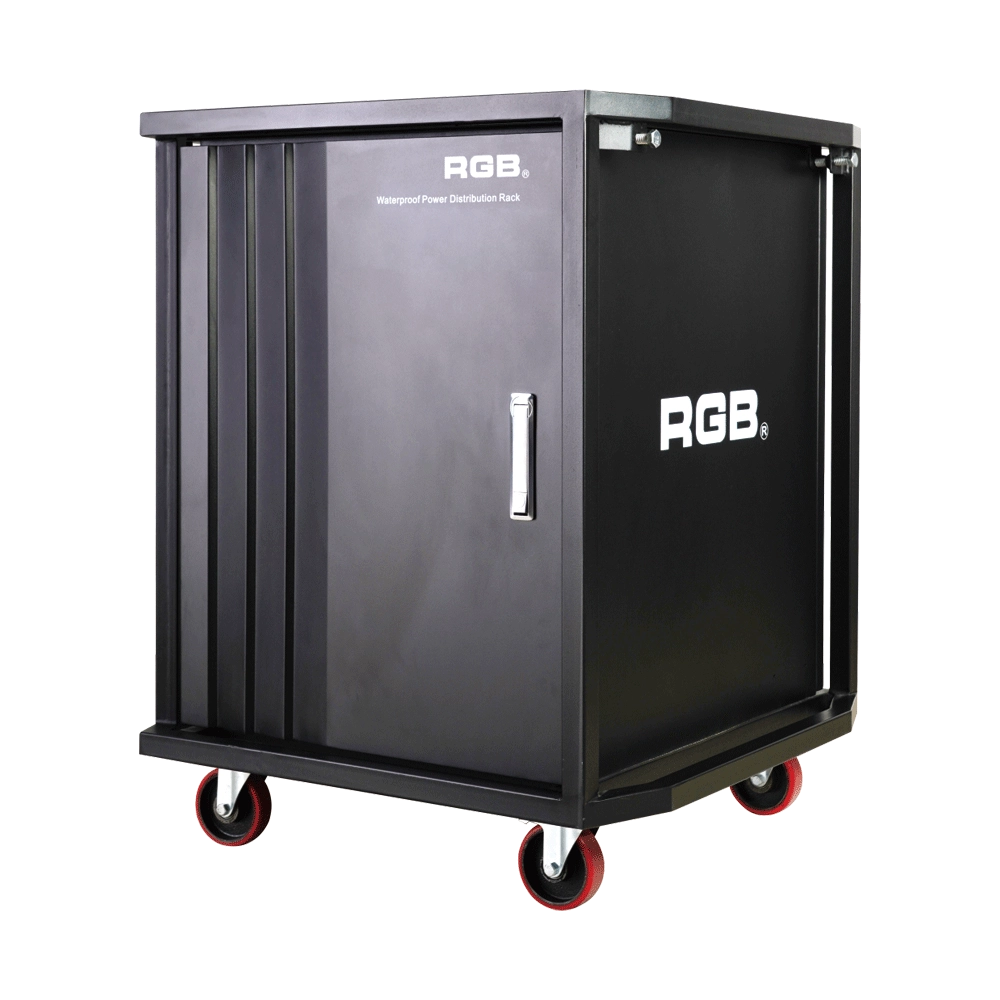
Multifunction Waterproofing Racks Of RGB-W Series
With the continuous development of flow performance, the requirement for performance is more demanding. In order to facilitate the transportation and make it easier to carry for all the equipment used in the performance, the stage light and sound equipment will be installed into a cabinet, for example, the power supply system. During the transportation process, it is inevitable for a collision or crash to take place. If the cabinet material is not strong enough, it may lead to deformation and even damage the equipment inside. Moreover, most of the existing cabinets are not waterproof. It will be very dangerous for the flow performance, as it is normal and inevitable to encounter rainy days. As the equipment inside the cabinets is electriferous, it might cause damage to the electronic equipment at least and even cause casualties at worst. Meanwhile, most of the existing cabinets can only be installed with one kind of equipment with a single variety.
In order to overcome the above-mentioned technical flaw, the RGB company has developed a new type of waterproofing multifunction cabinet of the W series. The waterproofing cabinet of the W series meets the need for the installation of dimming and tone-tuning devices, transportation, and utilization.
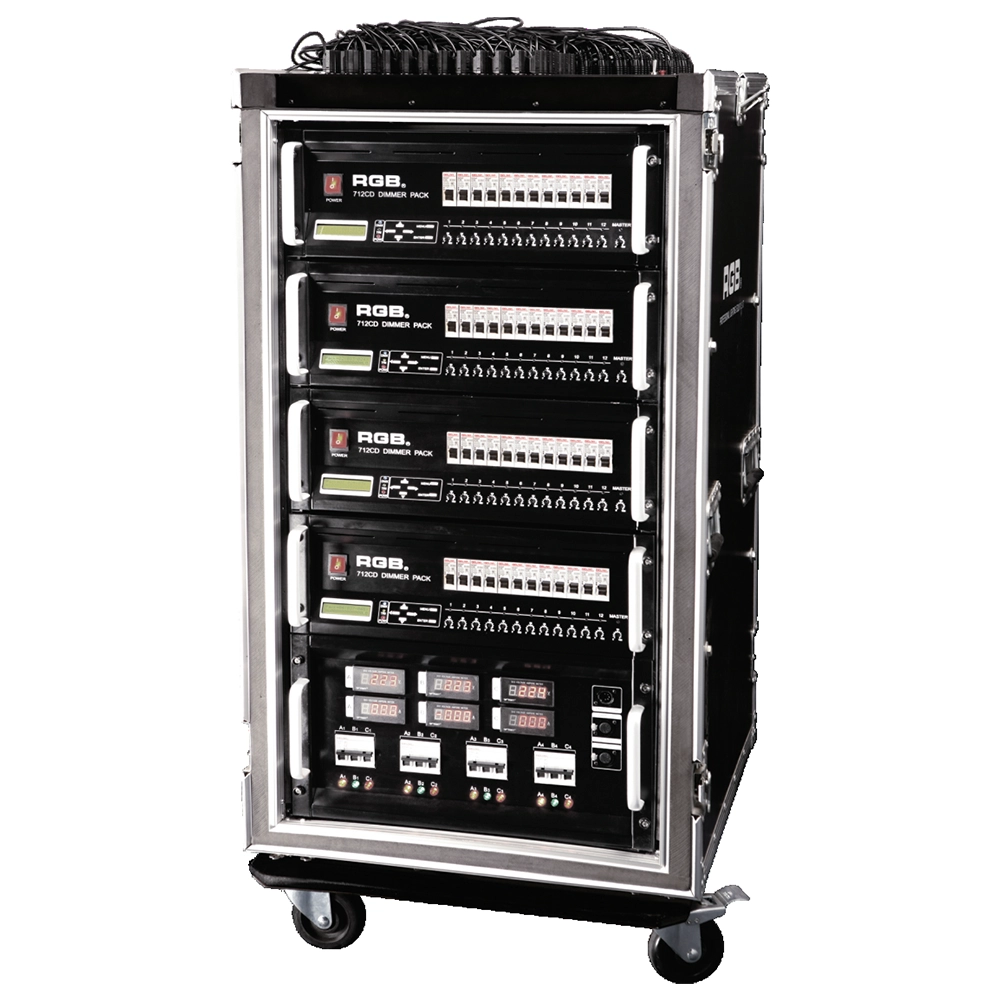
Intelligent Network Touring Dimmer Racks
RGB intelligent network touring dimmer racks can be assembledinto many types of dimmer racks by taking 7 series dimmer
packs as the unit. They are widely used in the entertainment fortheir convenience and practicabillity,
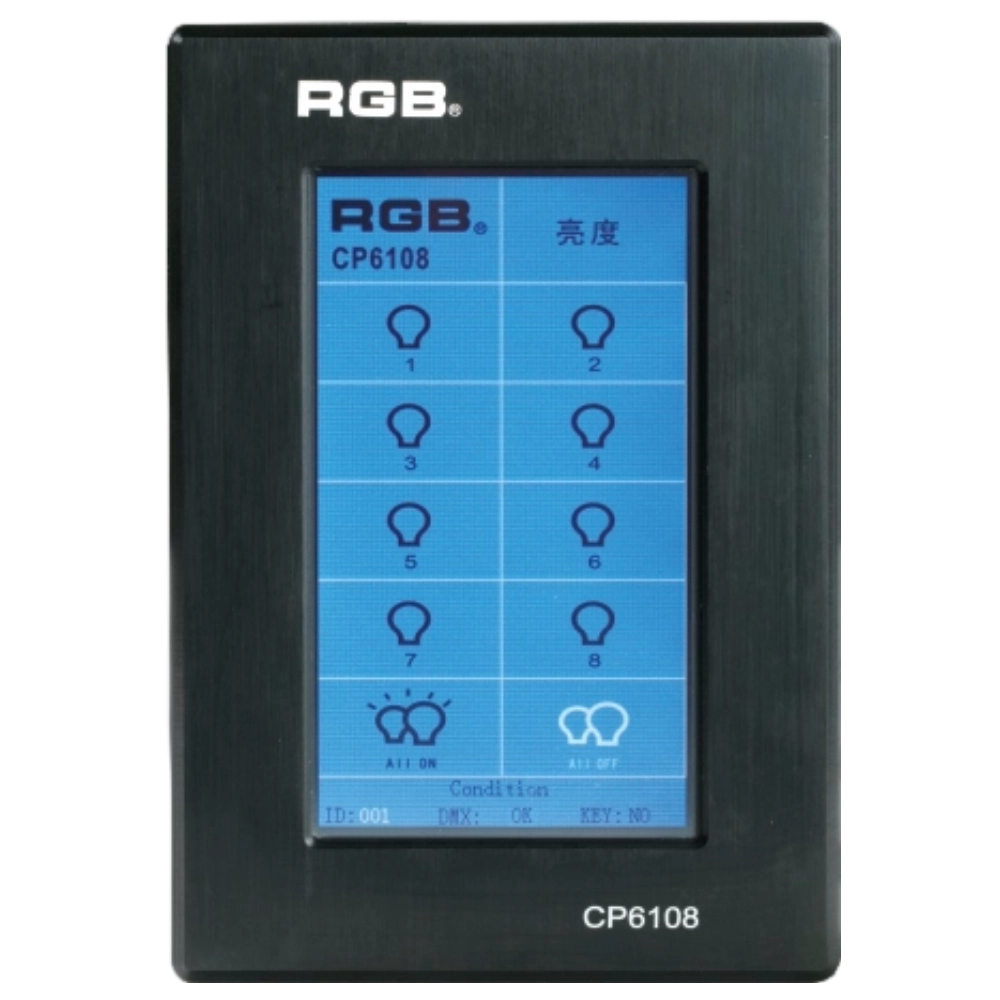
Site Light Controller CP6108
The CP6108 lighting control panel is a lighting control device for theater stage lights, work lights, environmental lighting, commercial art lighting, sports venue lighting, and other places. By connecting to the dedicated lighting control host CP6100, it realizes the central control of the lighting system, supports a visual lighting control system, and intuitively displays the online and offline status of CP6108. Realize remote monitoring, editing, and setting of corresponding parameters.
It is widely applicable to theaters, cinemas, auditoriums, stadiums, museums, exhibition halls, cultural tourism performances, commercial art lighting, and other places.
Expert Support
Interested in learning more or need expert guidance related to this article? Fill in your details, and our team will provide tailored support.
Intelligent Control. Brilliant Performance.
RGB specializes in stage lighting control systems, delivering intelligent, reliable, and high-performance solutions for theaters and performance spaces worldwide.
Contact
Email:
Tel:
+86 20 3928 0245
+86 20 3928 0247
Address:
No.3, Huashan Road, Shilou Town, Panyu, Guangzhou, China.
Whatsapp: +8615975520131