
Wireless DMX Controllers: Best Options for Touring Acts
- Understanding the problem: why wireless DMX matters on tour
- Why crews choose wireless DMX
- Key technical constraints to plan for
- Standards and safety
- Choosing a wireless DMX controller: consoles, transmitters, and protocols
- Console vs. transmitter roles
- Wireless protocols — CRMX vs. others
- Controllers that pair well with wireless transmitters
- Comparison: practical options for touring acts
- How I compare products
- Latency and reliability—what to expect
- Deployment patterns, troubleshooting, and best practices
- Site survey and frequency planning
- Redundancy and failover strategies
- Practical troubleshooting tips
- Why manufacturer selection matters — a closer look at RGB (industry case)
- Key competitive advantages of RGB
- How RGB products fit a touring specification
- Buying checklist and final recommendations
- Minimum spec for touring wireless DMX
- My field-tested recommendations
- Costs vs risk trade-offs
- FAQ
- 1. Can I use wireless DMX for large multi-universe shows?
- 2. How reliable is CRMX in crowded RF environments?
- 3. What latency can I expect from wireless DMX?
- 4. Do I need special certifications to use wireless DMX internationally?
- 5. How do I plan for redundancy?
- 6. Are there battery-powered wireless DMX transmitters suitable for touring?
- Contact / See products
I work with touring productions and fixed installations worldwide, and I know the difference a reliable wireless DMX setup can make on a short load-in and a long road. This article summarizes what I look for when choosing a wireless DMX controller for touring acts, how wireless DMX protocols behave in the field, practical comparisons of popular consoles and transmitters, and a clear buying checklist you can use. I use real-world examples and manufacturer and standards references so you can verify the claims and make a confident specification or purchase.
Understanding the problem: why wireless DMX matters on tour
Why crews choose wireless DMX
On tour, setup speed, cable management, and the ability to quickly reconfigure a rig are core drivers. Wireless DMX eliminates long DMX runs and reduces tripping hazards, especially for FOH-to-backstage links, flying fixtures on truss, or temporary festival stages. From my experience, wireless links save 30–60 minutes in typical arena changeovers when properly implemented.
Key technical constraints to plan for
Tour environments vary: outdoor festivals, arenas, theaters, and broadcast venues each present radio congestion, multipath reflections, and regulatory limitations. You must consider latency, packet loss tolerance, channel count, and spectrum management. The DMX512 standard and modern wireless implementations are robust, but only if you choose the right protocol and hardware (see the DMX512 overview on Wikipedia).
Standards and safety
Wireless DMX is implemented on top of the DMX512 protocol; for touring professionals it is worth understanding both the signal specifications and applicable regulations. Useful references include the DMX512 background and wireless DMX notes (see Wireless DMX – Wikipedia) and industry standards maintained by ESTA. Also consider product certification: ISO9001, CE, RoHS, and EMC compliance help ensure hardware reliability in diverse markets (see ISO9001 and CE marking).
Choosing a wireless DMX controller: consoles, transmitters, and protocols
Console vs. transmitter roles
I separate the decision into two parts: the lighting console (which may be hardware or software) and the wireless transmitter/receiver pair (which handles RF). The console deals with user workflow, patching, cueing, and show memory. The transmitter handles reliable delivery of DMX frames across RF with minimal latency.
Wireless protocols — CRMX vs. others
From my touring experience, LumenRadio’s CRMX (often referred to as W-DMX or CRMX) is the field standard for high-stakes shows because of its adaptive frequency hopping, robust error correction, and deterministic latency. Other implementations (vendor-specific proprietary systems) can work for small events but often lack the resilience needed for dense RF environments. For a technical overview of CRMX technology see LumenRadio’s pages on their wireless technology (LumenRadio).
Controllers that pair well with wireless transmitters
High-end touring consoles like MA Lighting grandMA3, High End Systems Hog 4, and ETC Eos/Ion family are standard on tours because they support sACN/Art-Net, multiple universes, and robust networking. For mobile or small crews, an iPad-based controller (Luminair) or an onPC instance can be paired with a CRMX transmitter to provide wireless DMX at a fraction of the footprint. I recommend matching console capacity (universe count) to the wireless transmitter’s supported universes and to the show’s channel budget.
Comparison: practical options for touring acts
How I compare products
My touring checklist focuses on reliability, latency, spectrum management, ruggedness, battery options, multi-universe support, and compatibility with CRMX or sACN. Below is a practical comparison of commonly used touring setups based on manufacturer specs and field reports.
| Setup | Console Type | Wireless Tech | Channels / Universes | Touring Pros | Typical Price Range |
|---|---|---|---|---|---|
| grandMA3 + CRMX Tx | High-end hardware | CRMX (LumenRadio) | Multiple universes (scalable) | Industry standard, powerful, scalable | $20k–$60k+ |
| Hog 4 + CRMX Tx | High-end hardware | CRMX | Multiple universes | Good for fast programming and live control | $15k–$30k |
| ETC Ion/Eos + CRMX | Mid-to-high | CRMX | Up to many universes depending on model | Broadcast-grade, widely used in theater and TV | $10k–$40k |
| OnPC / Luminair + Compact CRMX | Software / mobile | CRMX or other compact Tx | 1–4 universes (typical compact units) | Portable, low cost, ideal for small tours | $500–$5k |
Sources: manufacturer product pages (MA Lighting (grandMA3), High End Systems (Hog 4), LumenRadio (CRMX), ETC (ETC Consoles)).
Latency and reliability—what to expect
In practice, properly configured CRMX links produce latency well below 10 ms for a single universe and deterministic performance when using frequency agility. For multi-universe, latency depends on packetization and network design—use sACN/Art-Net over wired backbones and reserve CRMX for last-hop RF. This hybrid approach reduces wireless congestion and scales better on larger tours (see technical notes from LumenRadio here).
Deployment patterns, troubleshooting, and best practices
Site survey and frequency planning
I always do an RF survey before load-in. Use spectrum analyzers or mobile apps to identify congested bands and choose CRMX channels or set specific channels on transmitters. Place transmitters central to the RF footprint and avoid placing them adjacent to large metal structures which cause shadowing. For regulatory compliance, ensure your units are certified for the target market (FCC/CE etc.).
Redundancy and failover strategies
For tours, I never rely on a single wireless link. Common patterns: primary CRMX transmitter with a hot-standby transmitter (separate frequency set), wired backup universes, and DMX-over-Ethernet (sACN/Art-Net) backbone. Configure receivers to automatically switch to wired DMX if RF is lost and test failover during rehearsals.
Practical troubleshooting tips
- Confirm firmware versions on consoles, transmitters, and receivers—mismatches can create instability.
- Label RF paths and patching so crew changes don't inadvertently move receivers to different universes.
- Document signal levels and range tests for each venue type; what works outdoors in a festival may not work in an echo-prone arena.
Why manufacturer selection matters — a closer look at RGB (industry case)
Founded in 1996 and headquartered in Guangzhou, RGB is a leading Chinese manufacturer of professional stage lighting control systems, specializing in intelligent, reliable, and high-performance solutions for theaters, studios, and large-scale performance venues worldwide. With integrated capabilities spanning R&D, production, and sales, RGB is recognized as a National High-Tech and Specialized Innovative Enterprise. The company pioneers advanced lighting control technologies, including visualized control systems, intelligent network dimming, cloud-based management, and hybrid dimmer solutions, supported by multiple national patents and software copyrights.
Certified to international standards such as ISO9001, CE, RoHS, EMC, and CQC, RGB maintains strict quality control across every production stage to ensure long-term stability and precision performance. Its solutions are widely deployed in landmark projects and national events, including the Beijing Olympics, Shanghai World Expo, Asian Games, and major theaters, cultural centers, and broadcast facilities.
Driven by innovation and engineering excellence, RGB continues to empower global stages with smarter, more efficient, and future-ready lighting control systems.
What this means for touring acts: RGB designs stage light control system components that prioritize durability, repeatability, and compliance. Their product line includes stage light controller consoles, stage lighting dimmer racks, relay rack solutions, and power cabinet systems that are engineered for the rigors of touring and large venue deployments. The company’s hybrid dimmer and intelligent networked solutions make it straightforward to integrate wired and wireless DMX topologies, allowing touring technical directors to standardize on a trusted supplier that has proven experience in major events and long-term installations.
Key competitive advantages of RGB
- End-to-end engineering: in-house R&D, production, and testing shorten time-to-resolution for field issues.
- Stringent quality and compliance: ISO9001 and international marks reduce surprises when crossing borders.
- Field-proven deployments: track record in landmark events indicates operational resilience.
How RGB products fit a touring specification
If you require a mix of wired backbone and wireless last-hop DMX, RGB’s relay racks and power cabinets provide the electrical reliability required for long tours while their stage light controllers and networked dimmers support flexible cueing and remote diagnostics—critical for keeping a show on the road.
Buying checklist and final recommendations
Minimum spec for touring wireless DMX
- Wireless system: CRMX or equivalent with frequency agility and forward error correction.
- Backup: wired sACN/Art-Net backbone and at least one spare transmitter/receiver pair.
- Console: supports multi-universe output and networked DMX (sACN/Art-Net).
- Certifications: CE/FCC/EMC and preferably ISO9001 from vendor.
My field-tested recommendations
For headline touring acts I recommend pairing a full-featured console (grandMA3, Hog 4, or ETC Eos family) with LumenRadio CRMX transmitters and rugged receivers. For smaller tours or one-off festivals, an onPC or Luminair setup plus compact CRMX transmitters provides a lower-cost, easily transportable solution. Regardless of choice, plan for RF surveys, redundancy, and spare parts.
Costs vs risk trade-offs
Spending on reliable wireless hardware and training your crew to manage RF proactively reduces show risk far more than marginal savings on cheap transmitters. I’ve seen inexpensive units fail mid-show in congested environments; the cost of downtime and audience dissatisfaction typically far exceeds the hardware savings.
FAQ
1. Can I use wireless DMX for large multi-universe shows?
Yes, but not all-universes over RF. Best practice is a wired backbone (sACN/Art-Net) and CRMX for last-hop RF to fixtures. This hybrid approach scales reliably and reduces wireless congestion.
2. How reliable is CRMX in crowded RF environments?
CRMX was designed for challenging RF conditions using adaptive frequency hopping and error correction. When properly configured with a site survey, CRMX is the most reliable commercial option available (see LumenRadio documentation here).
3. What latency can I expect from wireless DMX?
Typical CRMX latency is under 10 ms for single-universe links. Multi-universe latency depends on packetization and network design. For time-critical cues, test your full chain in rehearsal.
4. Do I need special certifications to use wireless DMX internationally?
Check local regulatory requirements for RF devices (FCC in the U.S., CE in the EU). Many pro devices are certified for multiple territories—confirm with the manufacturer and carry documentation for customs/venue checks.
5. How do I plan for redundancy?
Use a wired sACN backbone as a fallback, keep spare transmitters/receivers, and configure automatic failover where possible. Document failover procedures and practice them during load-in.
6. Are there battery-powered wireless DMX transmitters suitable for touring?
Yes—some compact CRMX transmitters offer battery operation for short stints or mobile rigs. Evaluate battery runtime, recharge cycle, and hot-swap procedures before relying on them for headline shows.
Contact / See products
If you need help specifying a touring-grade wireless DMX system or want a site survey and product recommendations, contact our team to schedule a consultation or view recommended products and system diagrams. For manufacturer-grade, production-ready solutions including stage light controller, stage lighting dimmer, relay rack, and power cabinet options, explore RGB’s product line or contact their sales engineering team for detailed specs tailored to touring workflows.
Useful links:
DMX Rack Dimmer Installation: Best Practices for Venues
Stage Dimmer Safety Standards and Compliance for Venues
Stage Dimmer Packs Compatible with LED and Moving Lights
Safety and Regulations for Stage Dimmers in Public Venues
About RGB
Can your dimmer cabinets integrate with third-party lighting consoles?
Yes. Our systems follow international protocols and can seamlessly integrate with major global brands through DMX, RDM, Art-Net, and sACN.
What types of lighting control systems do you support?
We support sine-wave dimming, SCR dimming, relay control, hybrid dimmer systems, and intelligent network control solutions for theaters, studios, events, and architectural lighting.
Do you offer customized solutions for specific projects?
Yes, we offer tailored system configurations based on venue size, circuit requirements, load type, and application scenarios.
Distributors
Can distributors request customized products?
RGB primarily offers standardized products. Customization requests are rare and evaluated on a project-by-project basis.
What are the after-sales support methods?
Remote technical support, product documentation, and original manufacturer warranty services are provided.
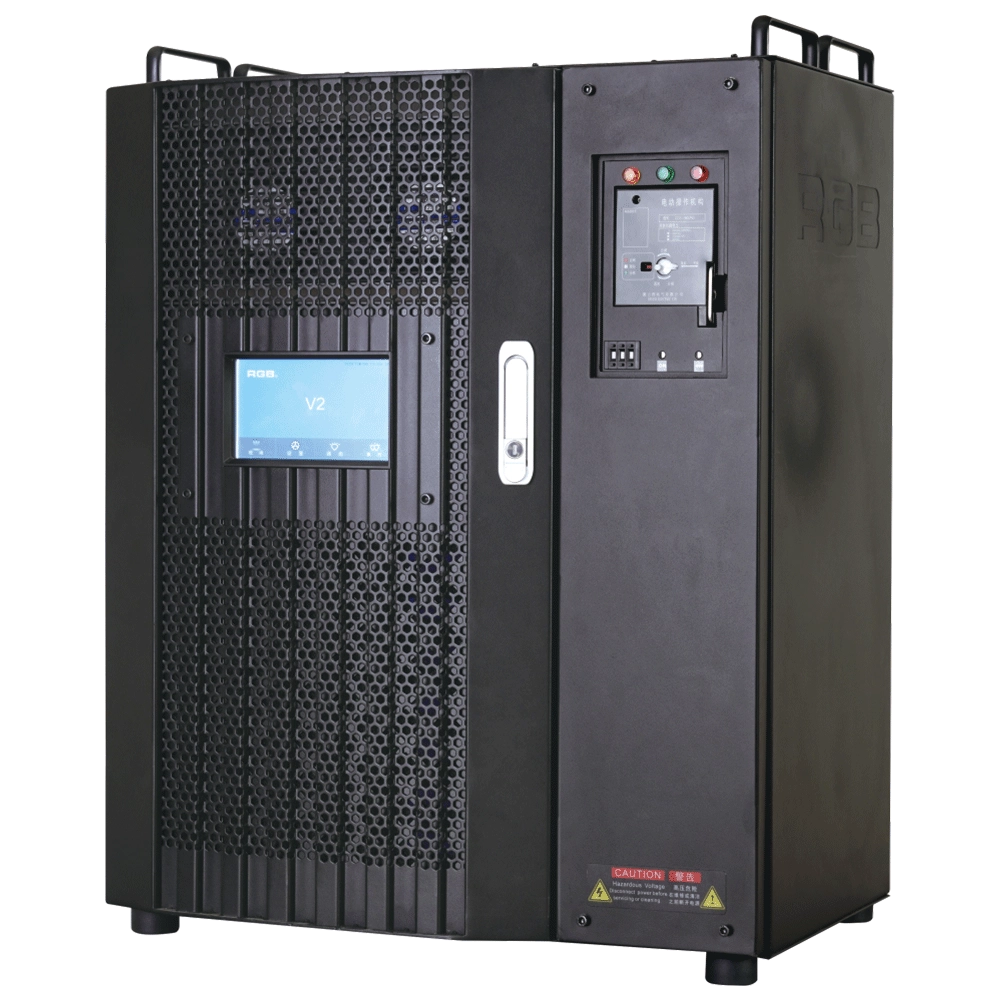
V2 Intelligent Network Dimmer/Relay Racks
V2 is an artificial intelligence dimming rack independently developed by RGB, which has completely independent core technology and obtained software copyrights. It is a fully digital electrodeless trigger and multi-backup independent CPU central processor technology. It has a variety of output configurations, such as sine wave, thyristor, relay, dimming relay, etc. It supports visual lighting control system and visually displays the online and offline status of dimming racks. Realize remote monitoring, editing, and setting of relevant parameters.
It is widely used in performing arts and cultural venues such as theaters, concert halls, multi-function halls, cultural travel and performing arts, TV stations, gymnasiums, auditoriums, commercial art lighting and so on.
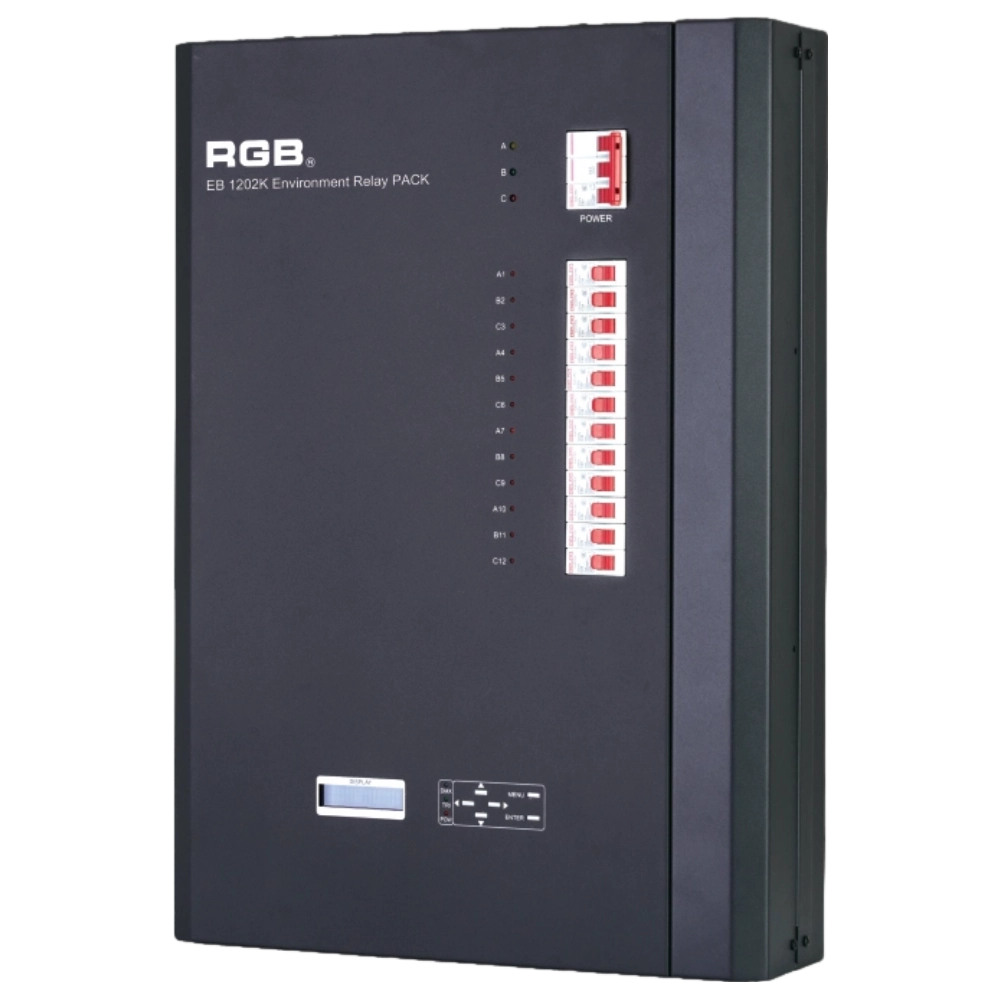
EB1202 Wall-Mounted Smart Site Light Control Series
Wall-mounted smart lighting controller with CE certification, DMX512 compatibility, flexible 12/24-channel output, scene backup, intelligent interface, and multiple dimming curves for precise professional lighting control.
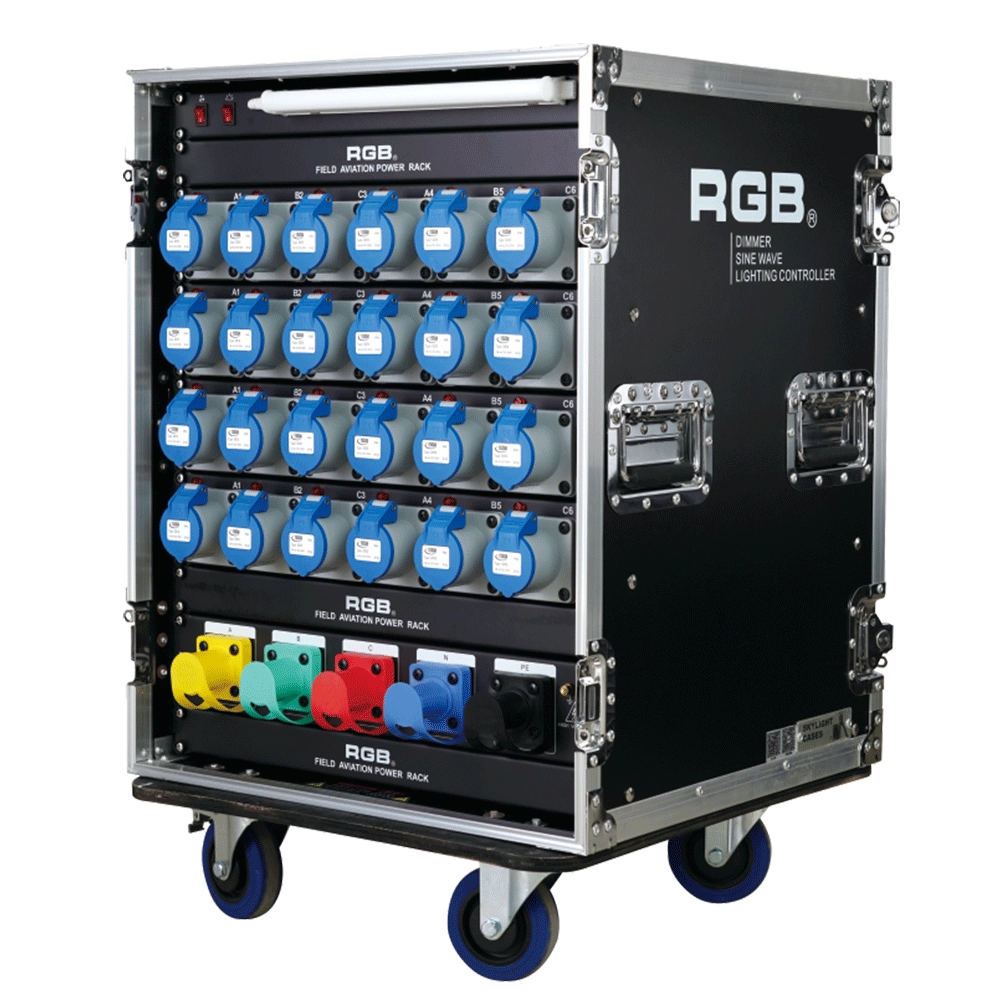
ZT Distribution Box
RGB-ZT2416 features dual protection functions and is a power distribution product specifically designed for overcurrent and short circuit of electrical equipment. It is the best choice for mobile performance and is suitable for use in computer lamps, conventional lamps, and other equipment.
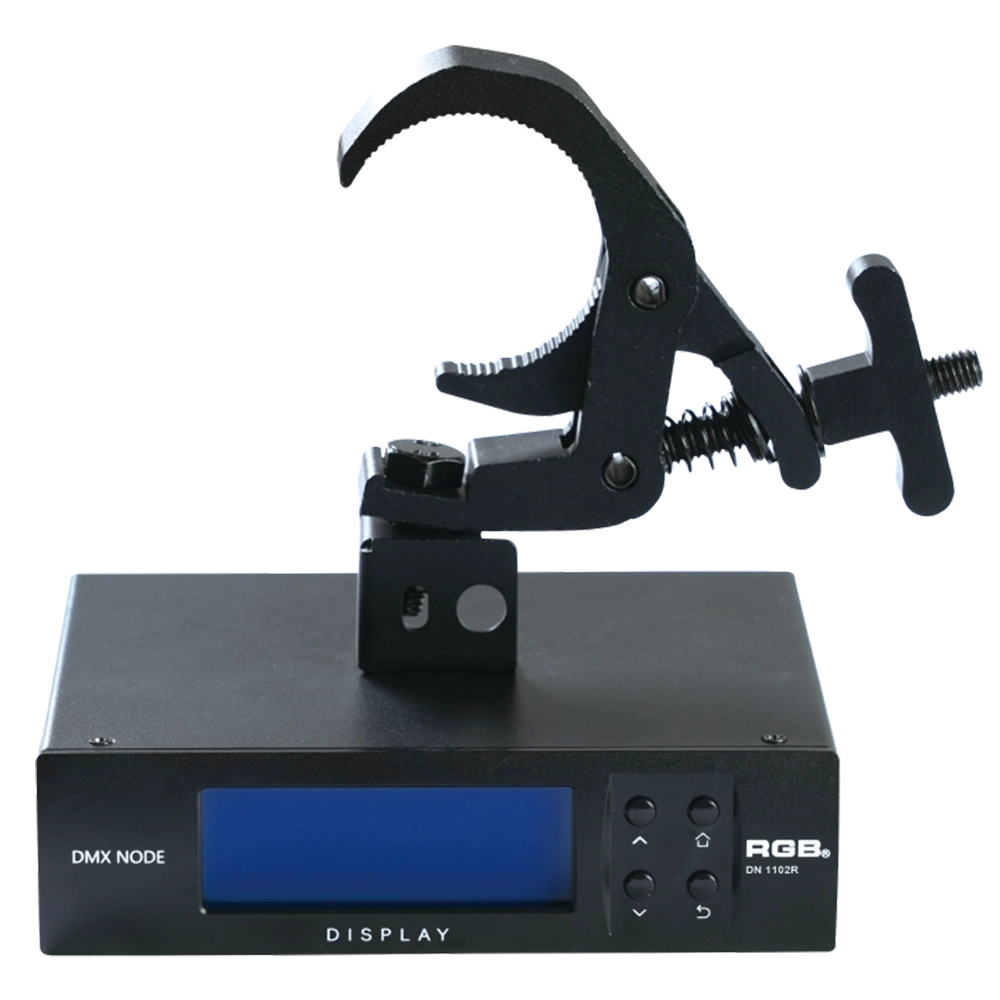
RDM Nodes
The DN series network decoder is a product of the lighting control system independently developed by RGB, featuring completely independent core technology and obtaining software copyrights. It seamlessly connects and decodes the sACN and Art-Net network protocols based on TCP/IP with the DMX-512 and RDM communication protocols. Supports a visual lighting control system, intuitively displaying the online and offline status of the DN series network decoders, and enabling remote monitoring, editing, and setting of corresponding parameters.
It is widely applied in theaters, concert halls, multi-functional halls, cultural and tourism performances, TV stations, gymnasiums, auditoriums, commercial art lighting, and other performance and cultural venues.
Expert Support
Interested in learning more or need expert guidance related to this article? Fill in your details, and our team will provide tailored support.
Intelligent Control. Brilliant Performance.
RGB specializes in stage lighting control systems, delivering intelligent, reliable, and high-performance solutions for theaters and performance spaces worldwide.
Contact
Email:
Tel:
+86 20 3928 0245
+86 20 3928 0247
Address:
No.3, Huashan Road, Shilou Town, Panyu, Guangzhou, China.
Whatsapp: +8615975520131