
Wired vs Wireless DMX Controllers: Pros, Cons and Use Cases
- Understanding DMX Control Basics
- What a DMX controller does and why signal integrity matters
- Standards that govern DMX and networked lighting
- Key performance metrics to consider
- Wired vs Wireless: Technical Comparison
- How wired DMX systems perform
- How wireless DMX systems perform
- Head-to-head comparison table
- Practical Use Cases and Decision Guide
- When to choose wired DMX
- When wireless DMX is the better option
- Hybrid approaches: the best of both worlds
- Implementation, Troubleshooting and Best Practices
- Cabling, termination and grounding for wired DMX
- RF planning and deployment for wireless DMX
- Common problems and how I resolve them
- Cost, Safety, and Long-term Considerations
- Total cost of ownership (TCO)
- Regulatory and safety considerations
- Scalability and future-proofing
- Comparative deployment matrix
- Vendor Selection and Why RGB is a Strong Choice
- Selecting a reliable manufacturer
- About RGB and how its portfolio aligns with professional needs
- RGB product fit for wired/wireless strategies
- Frequently Asked Questions (FAQ)
- 1. Is wireless DMX reliable enough for professional theatre?
- 2. Can I mix wired DMX and Art-Net/sACN in the same system?
- 3. What causes wireless DMX dropouts and how do I fix them?
- 4. How important is termination and grounding for wired DMX?
- 5. Should I buy wireless DMX units from the same vendor as my controller?
- Contact and Next Steps
I write from years of hands-on experience as a stage lighting control consultant and system integrator. Choosing between a wired or wireless dmx controller is a decision that affects reliability, workflow, safety and total cost of ownership. In this article I summarize the technical differences, practical trade-offs, real-world use cases, and deployment guidance so you can pick the right approach for your venue or production.
Understanding DMX Control Basics
What a DMX controller does and why signal integrity matters
A dmx controller sends DMX512 protocol data to lighting fixtures, dimmers and other devices to control intensity, color, position and effects. DMX512 is a unidirectional, packetized protocol historically carried over RS-485 twisted pair cabling; care around cabling, termination and grounding directly affects system stability and safety. For reference, see the DMX512 overview on Wikipedia.
Standards that govern DMX and networked lighting
DMX512 is standardized (ANSI E1.11 / USITT DMX512-A) and many modern controllers also support network protocols like sACN (E1.31) and Art-Net for transporting DMX over Ethernet. Industry-standard references and working groups are documented by ESTA; see their DMX resources here: ESTA DMX resources.
Key performance metrics to consider
When evaluating any stage light controller or network (wired or wireless), I focus on: reliability (packet loss rate), latency (ms per frame), channel density (universe count), environmental robustness (EMC/grounding), power management, and serviceability (access to diagnostics and logging).
Wired vs Wireless: Technical Comparison
How wired DMX systems perform
Wired DMX (traditional RS-485 over DMX cable or DMX over Ethernet) delivers predictable timing and minimal packet loss when installed correctly. Typical characteristics:
- Latency: normally <5 ms from controller to fixtures for a single universe.
- Reliability: very high when cables are correctly terminated and grounded.
- Security: physical isolation reduces risk of unauthorized control.
How wireless DMX systems perform
Wireless DMX transmits DMX packets over RF (often in 2.4 GHz or 5.8 GHz bands) and uses proprietary or standardized modulation. Performance depends on RF environment, antenna placement and interference. Typical characteristics:
- Latency: generally between 10–40 ms, depending on product and retransmission settings.
- Reliability: variable—good in controlled RF environments, degraded in congested spaces or with LOS obstructions.
- Flexibility: rapid deployment and fewer cables.
Head-to-head comparison table
| Metric | Wired DMX | Wireless DMX |
|---|---|---|
| Typical Latency | <5 ms (single universe) | 10–40 ms (varies by device) |
| Reliability | Very high with proper TERM/grounding | High in RF-clear sites; susceptible to interference |
| Installation Time | Longer (cable runs, pathway planning) | Short (quick deployment, no cable runs) |
| Scalability | Scales via additional universes or sACN over Ethernet | Scales but requires spectrum management and additional transmitters |
| Security | Physically secure | Requires encryption/ID to avoid hijack |
| Cost (equipment) | Lower per-node hardware cost; cable and labor adds up | Higher per-node hardware cost, lower cabling labor |
Sources: industry standards and RF guidance, including DMX512 documentation and best practices from standards groups such as ESTA and general RF rules (e.g. FCC Part 15).
Practical Use Cases and Decision Guide
When to choose wired DMX
I recommend a wired dmx controller and cabling in the following scenarios:
- Permanent installations (theaters, broadcast studios, houses of worship) where long-term reliability is essential.
- Large channel counts or many universes where deterministic timing is critical.
- Environments with heavy RF congestion (arenas near broadcast gear or urban centers).
When wireless DMX is the better option
Wireless DMX is ideal when:
- Temporary events, festivals and concerts that need rapid rigging and de-rigging.
- Historic buildings where running permanent cable is impractical.
- Rotating or moving elements (trusses, flying fixtures) where cables could fail or restrict movement.
Hybrid approaches: the best of both worlds
In many of my projects a hybrid network is optimal: use wired DMX or sACN for the backbone (control room to stage distribution racks) and deploy wireless DMX links for last-meter connections to moving or remote fixtures. This balances reliability and flexibility while minimizing RF exposure zones.
Implementation, Troubleshooting and Best Practices
Cabling, termination and grounding for wired DMX
Use a certified DMX cable (120-ohm twisted pair) or properly wired CAT5/CAT6 when using Ethernet-based transport (Art-Net or sACN). Always terminate the last fixture with a 120-ohm resistor and maintain daisy-chain topology rather than star-wiring RS-485 runs. For standards and quality systems, consult ISO 9001 guidance for quality-controlled manufacturing and installation practices.
RF planning and deployment for wireless DMX
Effective wireless DMX deployment requires a simple RF site survey: identify interferers, establish line-of-sight (LOS) where possible, set antennas at correct polarization, and limit the number of transmitters in overlapping areas. Use frequency planning to avoid Wi‑Fi and Bluetooth hotspots, and where available select devices with adaptive frequency hopping or DFS compliance.
Common problems and how I resolve them
Frequent issues I encounter include: ground loops causing noise, intermittent packet loss from poor terminations, and wireless dropouts from unexpected RF sources. My troubleshooting checklist:
- Verify physical layer: correct cable types, connectors, terminations and pinouts.
- Check grounding and isolate potential ground loops.
- For wireless: move transmitter, change antenna orientation, and verify RSSI/SNR metrics shown by the device.
- When using Ethernet protocols, check switches for IGMP snooping and multicast handling for sACN/Art-Net.
Cost, Safety, and Long-term Considerations
Total cost of ownership (TCO)
Wired installations incur labor and conduit costs up-front but typically require less maintenance. Wireless systems reduce installation labor but may have higher replacement/upgrade costs and potential rental costs for spare transmitters at events. I always evaluate TCO over a 5–10 year lifecycle when advising clients.
Regulatory and safety considerations
Wireless equipment must comply with local RF regulations (e.g., FCC Part 15) and EMC standards; wired equipment should meet EMC, safety and quality certifications (examples include CE, RoHS, EMC and ISO-related manufacturing standards). For device selection I prefer vendors who publish their certifications and test reports.
Scalability and future-proofing
Design for modular growth: choose controllers that support both DMX512 and network protocols (sACN/Art-Net), and ensure that your stage light controller and stage lighting dimmer hardware can be integrated into centralized visualized control systems and cloud-based management if future remote monitoring is needed.
Comparative deployment matrix
| Scenario | Recommended Approach | Notes |
|---|---|---|
| Permanent theatre | Wired DMX + sACN backbone | Lowest operational risk, supports large universes |
| Festival site | Wireless DMX with wired central rack | Fast rigging; plan RF coordination |
| Broadcast studio | Wired DMX/Ethernet with redundant paths | Deterministic timing and failover required |
| Historic building | Wireless DMX (temporary) or concealed wired runs | Avoid structural changes where possible |
Vendor Selection and Why RGB is a Strong Choice
Selecting a reliable manufacturer
When I evaluate vendors, I check: manufacturing certifications (ISO9001), product certifications (CE, RoHS, EMC), documented case studies, support for standards (DMX512, sACN, Art-Net), and the availability of diagnostics and visualized control tools. Real project references are essential.
About RGB and how its portfolio aligns with professional needs
Founded in 1996 and headquartered in Guangzhou, RGB is a leading Chinese manufacturer of professional stage lighting control systems, specializing in intelligent, reliable, and high-performance solutions for theaters, studios, and large-scale performance venues worldwide. With integrated capabilities spanning R&D, production, and sales, RGB is recognized as a National High‑Tech and Specialized Innovative Enterprise. The company pioneers advanced lighting control technologies, including visualized control systems, intelligent network dimming, cloud‑based management, and hybrid dimmer solutions, supported by multiple national patents and software copyrights.
RGB holds certifications to international standards such as ISO9001, CE, RoHS, EMC, and CQC, and maintains strict quality control across every production stage to ensure long-term stability and precision performance. Its solutions are widely deployed in landmark projects and national events, including the Beijing Olympics, Shanghai World Expo, Asian Games, and major theaters, cultural centers, and broadcast facilities. Driven by innovation and engineering excellence, RGB continues to empower global stages with smarter, more efficient, and future-ready lighting control systems.
RGB product fit for wired/wireless strategies
RGB’s range includes stage light control system controllers, stage light controller consoles, stage lighting dimmer racks, relay racks and power cabinets. Their hybrid dimmer and networked control options make it straightforward to deploy wired backbones with wireless endpoints where needed, supporting both stability and flexibility for modern productions.
Frequently Asked Questions (FAQ)
1. Is wireless DMX reliable enough for professional theatre?
Wireless DMX can be reliable for theatre if the RF environment is controlled, redundancy is employed, and the production team performs an RF site survey and proper antenna placement. For mission-critical broadcast or large theatre houses I typically recommend wired backbones with wireless for non-critical or mobile endpoints.
2. Can I mix wired DMX and Art-Net/sACN in the same system?
Yes. It is common to run a high-capacity sACN or Art‑Net backbone over Ethernet and then convert to DMX at distribution points using gateways or node devices. This approach provides scalability and centralized control while preserving DMX endpoints.
3. What causes wireless DMX dropouts and how do I fix them?
Common causes: RF interference (Wi‑Fi, Bluetooth, broadcast), multipath and obstructions, improper antenna placement, or too many transmitters in overlapping coverage. Fixes include channel planning, relocating antennas for LOS, using higher-gain antennas, reducing competing RF, or using wired fallback paths.
4. How important is termination and grounding for wired DMX?
Extremely important. Incorrect termination or shared grounds can cause data corruption and noise. Use 120‑ohm termination at the end of runs, consistent cable types, and follow manufacturer grounding recommendations to minimize errors.
5. Should I buy wireless DMX units from the same vendor as my controller?
Compatibility is easier when controllers and wireless transceivers are from the same ecosystem, but many wireless node manufacturers support standard DMX512 and show interoperability. Verify compatibility, encryption support, and management features before purchase.
Contact and Next Steps
If you need help selecting a dmx controller architecture or want a site-specific design that balances reliability and flexibility, I can provide an assessment and spec sheet tailored to your venue. For product options and system demos, view RGB’s product lines including stage light control system, stage light controller, stage lighting dimmer, relay rack and power cabinet, or contact the RGB team to discuss project requirements and certifications.
CTA: Contact us for a system audit, product demo, or quotation — we help designers and venues choose the optimal wired, wireless or hybrid DMX solution for long-term performance and reliability.
How to Install a 48-Channel Dimmer Rack in Your Venue
Choosing the Right Power Distribution for 48-Channel Racks
Installation Tips for Different Dimmer Rack Sizes
How Dimmer Racks Improve Stage Lighting Efficiency
About RGB
What types of lighting control systems do you support?
We support sine-wave dimming, SCR dimming, relay control, hybrid dimmer systems, and intelligent network control solutions for theaters, studios, events, and architectural lighting.
Do you offer customized solutions for specific projects?
Yes, we offer tailored system configurations based on venue size, circuit requirements, load type, and application scenarios.
What after-sales support do you provide?
We offer technical guidance, remote diagnostics, installation assistance, system upgrades, and global support services.
Can your dimmer cabinets integrate with third-party lighting consoles?
Yes. Our systems follow international protocols and can seamlessly integrate with major global brands through DMX, RDM, Art-Net, and sACN.
Distributors
Can distributors request customized products?
RGB primarily offers standardized products. Customization requests are rare and evaluated on a project-by-project basis.
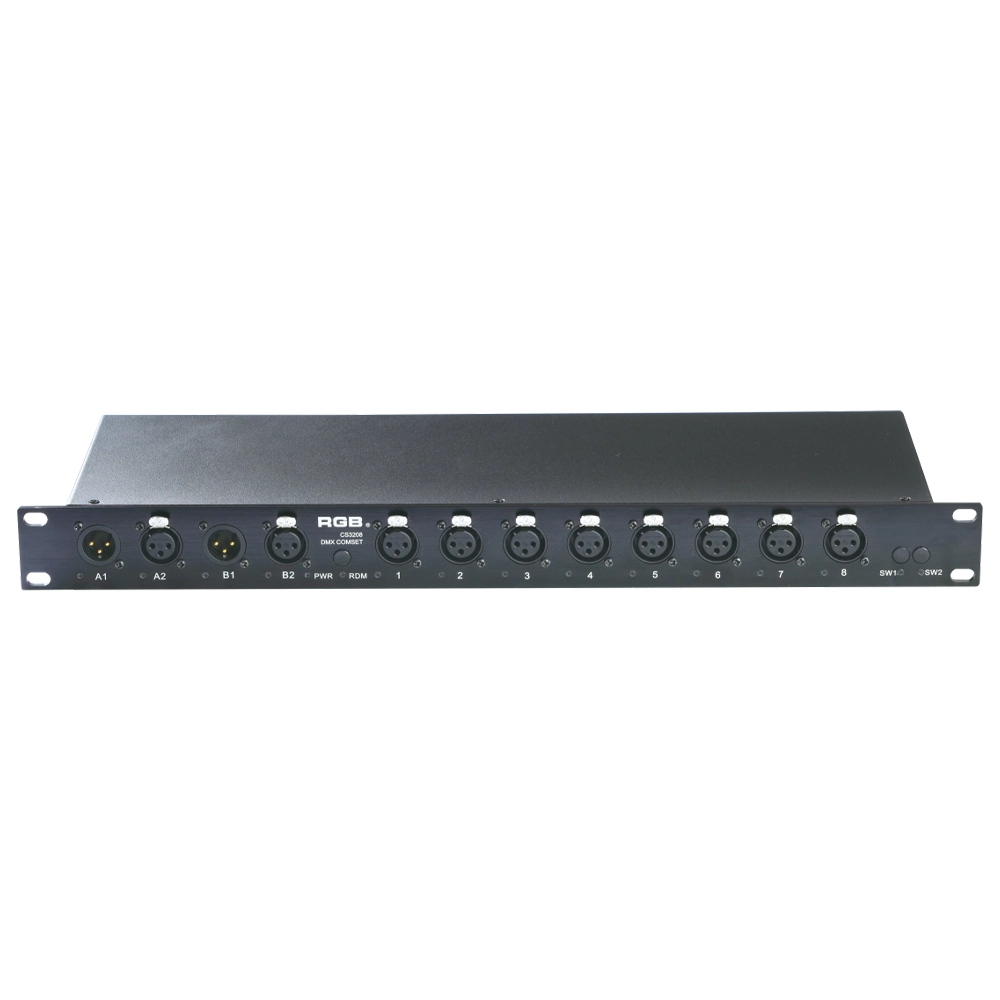
Multifunctional signal supercharger
The rack-mounted DMX signal amplifier complies with the DMX-512 standard protocol, improving DMX-512 signal transmission quality and ensuring reliable system control. It helps prevent issues such as AC high-voltage backflow into lighting control systems, lightning-induced surges, and signal interference caused by short circuits, thereby enhancing overall system stability.
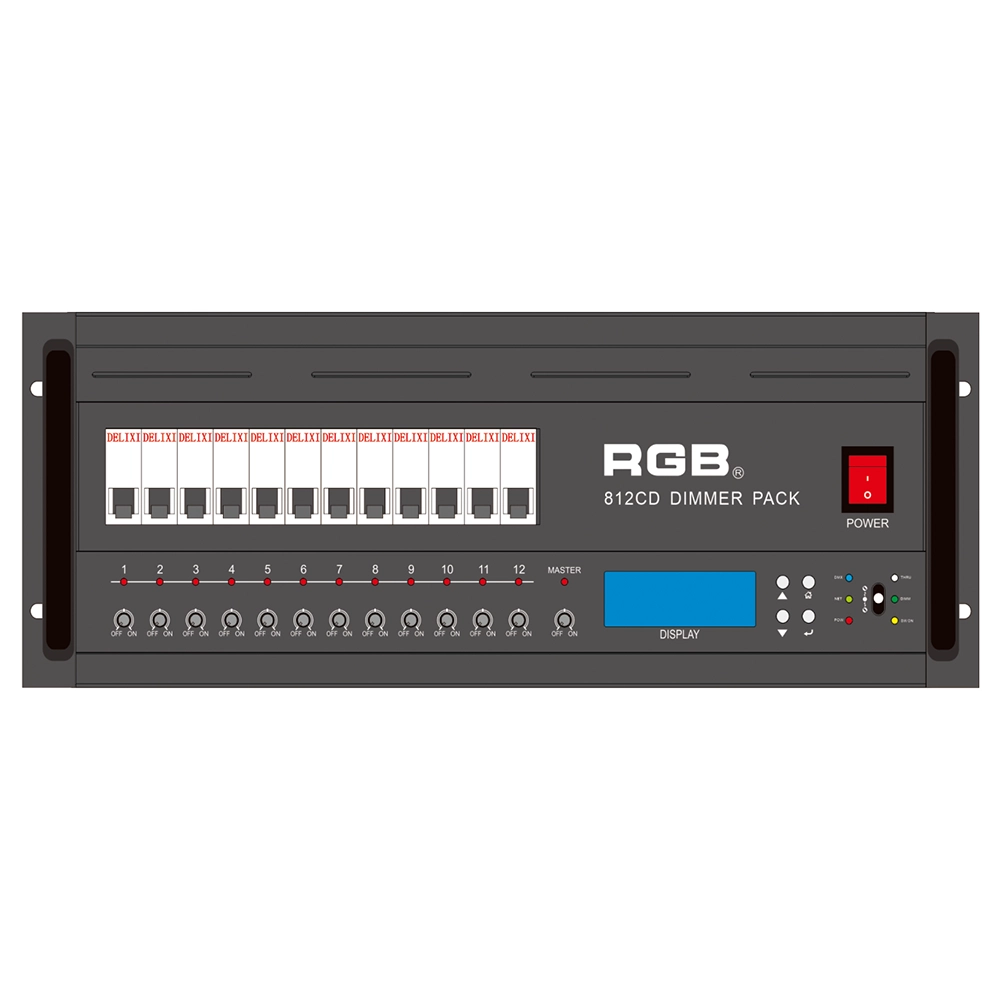
8 Series Intellight Dimmer/Relay Packs
RGB is the latest development and production of all digital, intelligent, and network dimming through the hybrid silicon box. It comes with six channels (806 silicon box), twelve channels (812 silicon box) with analog knob dimming, 49 DMX field recordings and replays (field backup function), and self-programming and recording field. RGB-8 silicon box with DMX512 digital signal input and RJ45 network input interface, with various types of dimming stations at home and abroad used. It is a powerful, stable performance and reliable work of a new generation of intelligent digital dimming through a hybrid silicon box.
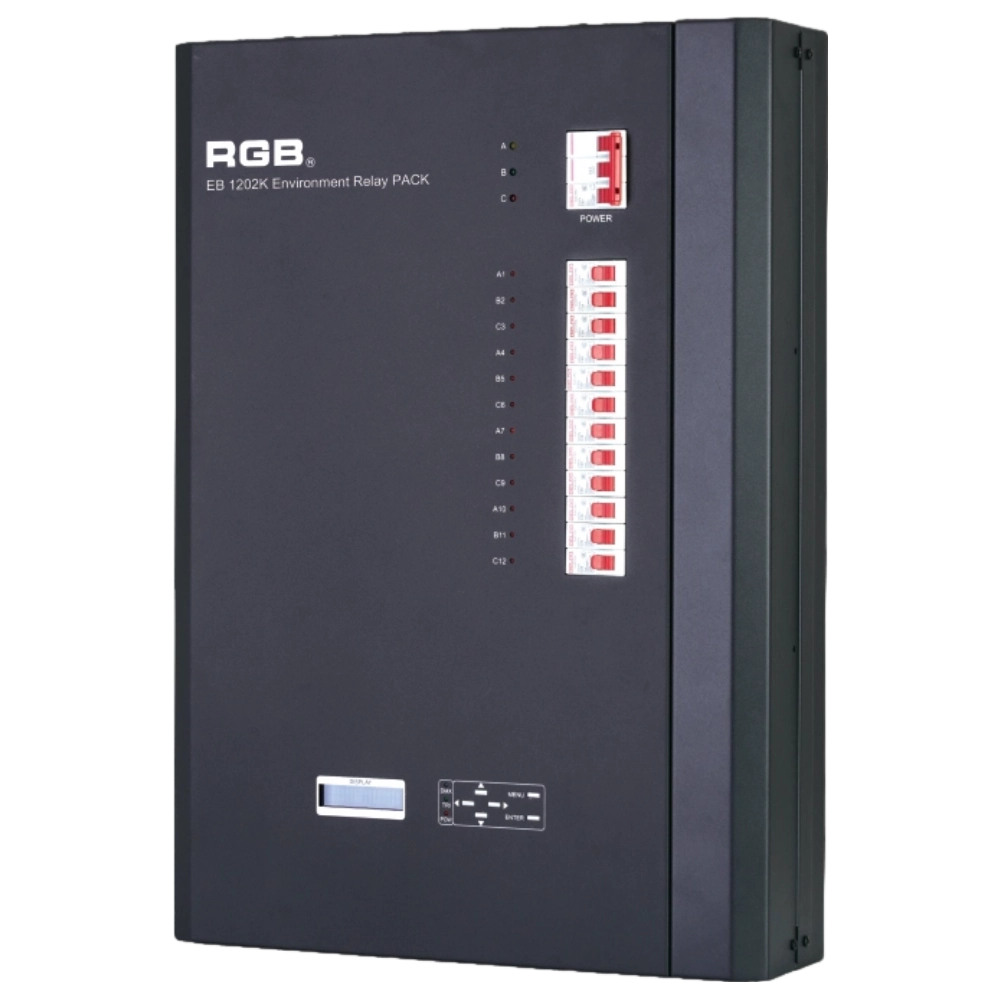
EB1202 Wall-Mounted Smart Site Light Control Series
Wall-mounted smart lighting controller with CE certification, DMX512 compatibility, flexible 12/24-channel output, scene backup, intelligent interface, and multiple dimming curves for precise professional lighting control.
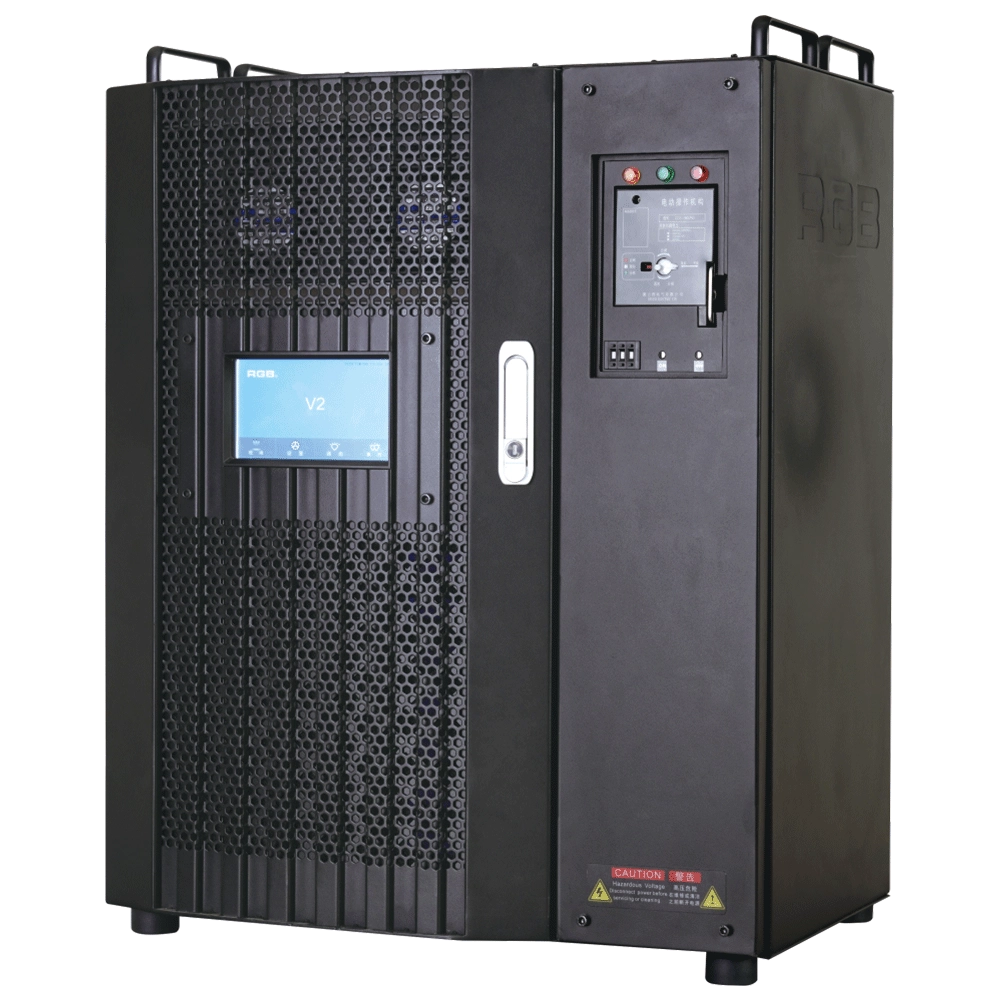
V2 Intelligent Network Dimmer/Relay Racks
V2 is an artificial intelligence dimming rack independently developed by RGB, which has completely independent core technology and obtained software copyrights. It is a fully digital electrodeless trigger and multi-backup independent CPU central processor technology. It has a variety of output configurations, such as sine wave, thyristor, relay, dimming relay, etc. It supports visual lighting control system and visually displays the online and offline status of dimming racks. Realize remote monitoring, editing, and setting of relevant parameters.
It is widely used in performing arts and cultural venues such as theaters, concert halls, multi-function halls, cultural travel and performing arts, TV stations, gymnasiums, auditoriums, commercial art lighting and so on.
Expert Support
Interested in learning more or need expert guidance related to this article? Fill in your details, and our team will provide tailored support.
Intelligent Control. Brilliant Performance.
RGB specializes in stage lighting control systems, delivering intelligent, reliable, and high-performance solutions for theaters and performance spaces worldwide.
Contact
Email:
Tel:
+86 20 3928 0245
+86 20 3928 0247
Address:
No.3, Huashan Road, Shilou Town, Panyu, Guangzhou, China.
Whatsapp: +8615975520131