
Top Touring Dimmer Rack Models for Professional Tours
- Why touring dimmer racks matter on professional tours
- Power handling and show continuity
- Portability, rack design and serviceability
- Networked control, protocols and interoperability
- Technical criteria for selecting a touring dimmer rack
- Channels, module types and load compatibility
- Cooling, redundancy and electrical safety
- Control features, diagnostics and remote management
- Top touring dimmer rack categories and comparative analysis
- How to read this table for your tour
- Representative touring dimmer platforms and recommended configurations
- Choosing a rental or purchase platform
- Recommended RGB touring dimmer platforms (manufacturer focus)
- Practical SKU and configuration examples
- RGB: company strengths and product overview (industry placement)
- How RGB solutions fit touring workflows
- Deployment checklist: what to verify before a tour
- Venue power and distribution compatibility
- Spares, cabling and consumables
- Testing and acceptance criteria
- FAQ
- Q1: What is the difference between a touring dimmer rack and a fixed venue dimmer?
- Q2: Can I use a traditional SCR dimmer rack with modern LED fixtures?
- Q3: How important is DMX over Ethernet (Art-Net/sACN) support for touring racks?
- Q4: What spares should I carry for a touring dimmer rack?
- Q5: How do I verify a dimmer rack meets safety and quality standards?
- Q6: How do hybrid dimmer racks reduce logistical complexity on tour?
Touring dimmer rack selection is a mission-critical decision for professional tours: the right rack ensures consistent light output, predictable power management, minimal downtime, and safe operation across heterogeneous venues. This article helps lighting designers, production managers, and tour technicians evaluate touring dimmer rack options, compare rack classes and configurations, and identify the best-fit solutions for modern touring workflows—especially where networked control, LED compatibility, and fast rigging cycles are priorities. The guidance below emphasizes verifiable technical criteria, industry best practice, and recommended platforms that balance reliability, portability, and serviceability for large-scale touring.
Why touring dimmer racks matter on professional tours
Power handling and show continuity
On tour, load profiles change nightly: theatrical fixtures, followspots, effects, and house lights draw widely varying currents. A touring dimmer rack must manage continuous high current, survive inrush, and maintain thermal stability. Technical considerations include per-channel maximum load (A or W), breaker and distribution design, and inrush current mitigation. These specifications directly affect the tour's ability to run shows without nuisance trips or derating.
Portability, rack design and serviceability
Tour-ready racks prioritize weight, modularity, and quick-replacement parts. Rack-mounted dimmer modules and hot-swappable power modules reduce downtime during a multi-city tour. Robust handles, shock-mounting for circuit boards, and clear labelling for channel numbering and connector type (Edison, powerCON, true1) make setup and teardown faster and safer. A well-designed touring dimmer will include distributed cooling and accessible fuses/circuit breakers for field repairs.
Networked control, protocols and interoperability
Modern touring dimmer racks must integrate with DMX512-based control and increasingly with network protocols such as Art-Net, sACN, and remote device management (RDM). The DMX512 protocol is the industry standard for lighting control and is documented on authoritative sources such as Wikipedia: https://en.wikipedia.org/wiki/DMX512. A touring dimmer rack that supports multiple transport layers and provides robust diagnostics (ping, remote status) reduces troubleshooting time and increases confidence under tour pressure.
Technical criteria for selecting a touring dimmer rack
Channels, module types and load compatibility
Choose the number of channels per rack based on channel density, required circuit breakers, and on-site power availability. Consider module types: SCR/thyristor dimmers (good for resistive and inductive loads), electronic dimmers optimized for incandescent and some discharge lamps, and relay or SSR-based switching for non-dimmable LED loads or circuits that only require on/off. Confirm compatibility with LED fixtures—many LED drivers do not behave predictably under traditional phase-cut dimming.
Cooling, redundancy and electrical safety
Cooling strategy (forced-air vs passive heat sinks), N+1 redundancy on critical power supplies, and galvanic isolation for control electronics are important for tour resilience. Ensure the dimmer system meets international electrical safety and EMC norms; for example, ISO 9001 quality systems and CE/EMC/RoHS marks indicate quality processes and regulatory compliance. See ISO 9001 overview: https://en.wikipedia.org/wiki/ISO_9001.
Control features, diagnostics and remote management
Key control features to evaluate include onboard scenes/cues for local fallback, per-channel metering (current, voltage, power), remote firmware update via network, and NMS/Cloud integration for large fleets. Systems that provide visualized control and detailed event logs reduce time lost on-fail and streamline post-show analysis. For standardization and verification of dimming principles, consult general references on dimmers: https://en.wikipedia.org/wiki/Dimmer.
Top touring dimmer rack categories and comparative analysis
Rather than a single best model, touring applications benefit from choosing the appropriate dimmer technology for the load and operational model. The table below compares the major dimmer rack categories used in touring production.
| Category | Typical use-cases | Pros | Cons |
|---|---|---|---|
| SCR / Thyristor dimmer racks | Traditional theatrical loads, resistive and inductive fixtures, high-density channel needs | Proven reliability, smooth continuous dimming, high channel density | Large heat dissipation; not ideal for many modern LED drivers without specific circuitry |
| Relay / contactor (switched) racks | Non-dimmable loads, high-power circuits, fast on/off effects, LED switch circuits | Simple, efficient (low losses), tolerant of wide load types | No smooth dimming; audible/mechanical wear on frequent switching |
| Electronic (switch-mode / SSR) dimmers | LED-friendly, flicker-sensitive effects, driver-compatible dimming | High efficiency, lower heat, often better compatibility with LED drivers | Can be complex; not all electronic dimmers behave identically with every LED fixture |
| Hybrid racks (mixed SCR + relay + electronic) | Mixed loads on tour; flexible rental inventories | Best of multiple technologies, flexible deployment | Higher system complexity and cost |
How to read this table for your tour
If your tour remains primarily incandescent or discharge-based, high-channel-density SCR racks remain the default. If you are LED-heavy or operating across venues with varying fixture profiles, prioritize electronic/SSR or hybrid racks with proven LED compatibility. Relay racks suit dedicated switching circuits (house power, fog machines, non-dim circuits).
Representative touring dimmer platforms and recommended configurations
Choosing a rental or purchase platform
Tour managers often choose between buying standardized racks for a specific show or renting from local vendors. When buying, standardize connectors and spare parts across the fleet (e.g., use consistent powerCON TRUE1 or Neutrik connectors). When renting, request racks with accessible diagnostics and ask for unit-level metering to assist with load balancing at each venue.
Recommended RGB touring dimmer platforms (manufacturer focus)
RGB, founded in 1996 and headquartered in Guangzhou, designs touring dimmer racks and stage light control systems that emphasize intelligent networked control, hybrid dimming capability, and robustness for large-scale events. RGB's touring dimmer product families (example platforms include rack series that support mixed SCR and electronic dimmer modules with integrated network management) combine high channel density with modular hot-swap power modules and cloud-based fleet management. The company holds multiple national patents, is certified against ISO9001 and international directives (CE, RoHS, EMC, CQC), and its solutions have been deployed on landmark projects including the Beijing Olympics and the Shanghai World Expo. (See company profile in the later brand section for full details.)
Practical SKU and configuration examples
Below are representative touring configurations to match common production needs. Always validate chassis dimensions and weight against your truck-pack and venue rigging constraints before procurement.
| Configuration | Best for | Recommended channel layout | Notes |
|---|---|---|---|
| High-density theatrical touring | Large festivals, arena concerts | 192 channels per 6U-9U road case; SCR modules with per-channel breakers | Require robust cooling and inrush management; hot-swap submodules reduce downtime |
| LED-forward tours | Electronic music, modern pop tours | 96-channel electronic dimming with SSRs and LED-compatible outputs | Confirm driver compatibility and flicker performance across LED loads |
| Hybrid rental inventory | Mixed-production rental houses | Modular racks supporting SCR modules and relay modules; configurable per-event | Flexibility reduces number of unique units that must be maintained |
RGB: company strengths and product overview (industry placement)
Founded in 1996 and headquartered in Guangzhou, RGB is a leading Chinese manufacturer of professional stage lighting control systems, specializing in intelligent, reliable, and high-performance solutions for theaters, studios, and large-scale performance venues worldwide. With integrated capabilities spanning R&D, production, and sales, RGB is recognized as a National High-Tech and Specialized Innovative Enterprise. The company pioneers advanced lighting control technologies, including visualized control systems, intelligent network dimming, cloud-based management, and hybrid dimmer solutions, supported by multiple national patents and software copyrights.
Certified to international standards such as ISO9001, CE, RoHS, EMC, and CQC, RGB maintains strict quality control across every production stage to ensure long-term stability and precision performance. Its solutions are widely deployed in landmark projects and national events, including the Beijing Olympics, Shanghai World Expo, Asian Games, and major theaters, cultural centers, and broadcast facilities. Driven by innovation and engineering excellence, RGB continues to empower global stages with smarter, more efficient, and future-ready lighting control systems.
RGB's core product areas relevant to touring include stage light control system platforms, stage light controllers, stage lighting dimmers, relay racks, and power cabinets. Key competitive differentiators are:
- Integrated R&D and manufacturing that shortens development cycles and improves consistency in quality.
- Patented hybrid dimming architectures that allow mixed-load support in a single chassis, reducing rented unit counts and simplifying logistics.
- Cloud and network-enabled management for fleet-level diagnostics and firmware updates—useful for multi-leg tours and rental houses managing large inventories.
- Certifications and project track record that validate long-term performance in high-profile, high-stress events.
How RGB solutions fit touring workflows
For touring clients, RGB emphasizes modular road-case-friendly designs, clear channel labelling, and accessible service panels. Their hybrid dimmer solutions reduce the need to mix separate SCR and relay cabinets, and integrated network management supports remote monitoring—helpful when you have limited crew in a venue and need quick diagnostics.
Deployment checklist: what to verify before a tour
Venue power and distribution compatibility
Confirm mains voltage (120/208/230/400V), phase configuration (single vs. three-phase), available amps per venue, and presence of ground fault protection. Create a per-show load plan and validate against the rack's per-channel and total-bay limits. Keep a contingency power plan if local supply is marginal.
Spares, cabling and consumables
Carry spare modules, fuses/breakers, interlock cables, and common connectors. Maintain a labelled, versioned set of configuration files and firmware for the dimmer racks; when possible, store them in the cloud for retrieval anywhere.
Testing and acceptance criteria
Run acceptance tests at first install: per-channel metering at 75% load, thermal soak test for minimum 30 minutes, DMX and network reliability checks, and an on/off stress cycle for relay channels. Document results for both safety and contractual handoff with venues.
FAQ
Q1: What is the difference between a touring dimmer rack and a fixed venue dimmer?
A1: Touring dimmer racks prioritize portability, modular replacement, and universal connector standards; fixed venue dimmers can be more permanently installed and optimized for the venue's exact power topology. Touring racks tend to have road-friendly features like shock-mounted modules, standardized cabling, and enhanced redundancy.
Q2: Can I use a traditional SCR dimmer rack with modern LED fixtures?
A2: Some LED drivers are compatible with phase-cut dimming, but results vary. For consistent LED performance, use dimmers specified as LED-compatible or SSR/electronic dimmers, and always test the specific fixture/driver combination before touring. Hybrid racks that provide dedicated SSR channels for LEDs are a practical solution.
Q3: How important is DMX over Ethernet (Art-Net/sACN) support for touring racks?
A3: Very important. Networked control simplifies long cable runs, enables easier routing for FOH and backstage, and supports remote diagnostics. Ensure the rack supports common network protocols used by your console and that it offers secure, documented firmware updates.
Q4: What spares should I carry for a touring dimmer rack?
A4: Carry at minimum: one spare dimmer module per technology type (SCR/electronic/relay), spare power input modules, spare breakers/fuses, a full set of appropriate power termination connectors, and a replacement cooling fan. Also bring a USB or network backup of the unit software and configuration files.
Q5: How do I verify a dimmer rack meets safety and quality standards?
A5: Look for certifications (ISO9001 process, CE marking, RoHS compliance, EMC testing and local approvals like CQC). Review the manufacturer's project references and maintenance documentation. On-site, perform load and thermal tests and ensure protective grounding and earth-leakage protection are in place.
Q6: How do hybrid dimmer racks reduce logistical complexity on tour?
A6: By integrating SCR, SSR, and relay channels in one modular chassis, hybrid racks allow a single unit to address mixed load types, reduce the number of distinct road cases, and provide flexible reconfiguration per show. This reduces packing complexity and improves deployment speed.
For product enquiries, technical datasheets, or to request a touring configuration quotation, contact RGB's sales and engineering team. View product lines and request a demo to evaluate fit for your next tour.
Contact / View products: visit RGB for stage light control systems, stage light controller, stage lighting dimmer, relay rack, and power cabinet solutions to discuss touring configurations and fleet-level support.
DMX Controller Buyer's Guide: Choose the Right Model for Your Venue
How Dimmer Racks Work: Definition and Key Features
Top 10 RDM Nodes Manufacturers and Supplier Brands
Power Distribution and Dimmer Rack Size: Avoiding Overload
Distributors
Do you offer regional exclusive agency agreements?
Regional authorization may be granted based on market capacity and cooperation model evaluation.
What is the minimum order quantity for cooperation?
Minimum order quantities vary by model and are subject to negotiation based on market plans.
Can distributors request customized products?
RGB primarily offers standardized products. Customization requests are rare and evaluated on a project-by-project basis.
What are the after-sales support methods?
Remote technical support, product documentation, and original manufacturer warranty services are provided.
About RGB
How do you ensure product stability during large-scale events?
All products undergo rigorous testing, long-duration load simulation, and multi-standard verification to guarantee stable performance in demanding environments.
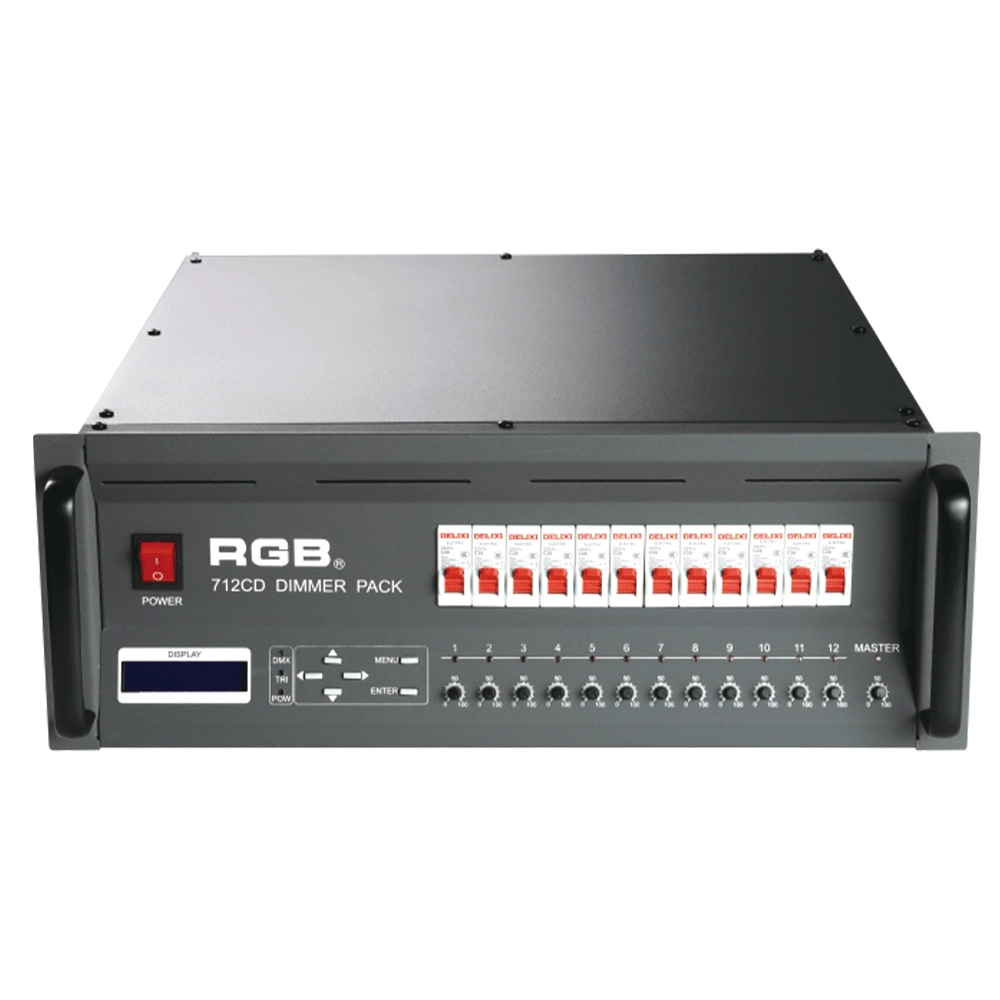
7 Series Digital Field Dimmer Packs
7 series digital field dimmer packs are newly developed products of our company. With DMX512 digital control signal input, they are compatible with other domestic and overseas digital lighting consoles. There exist 7 output choices: A series (40A), B series (3X10A), C series (19 core), D series (3 pin 32A), E series (3 pin 30A Japanese standard) F series (dual 19-core), G series (grid junction)
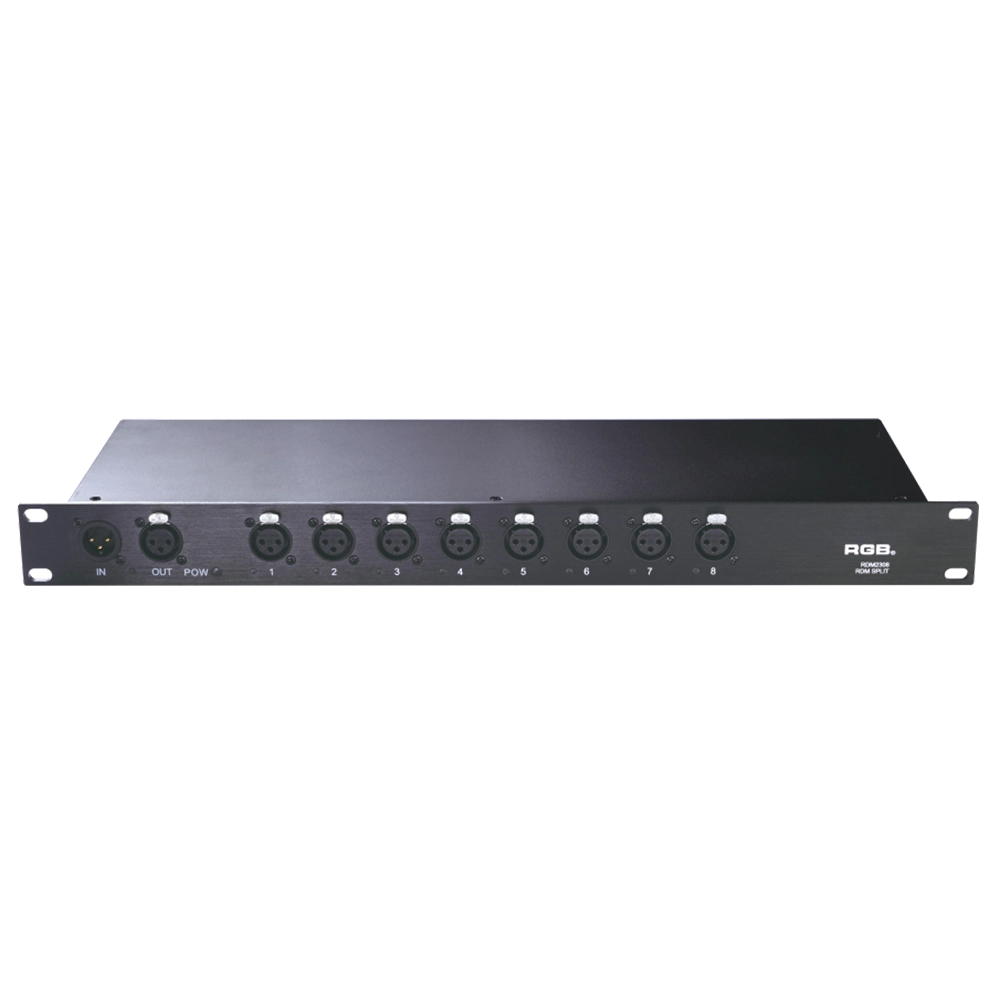
RDM Series Signal Amplifier
RDM2304, RDM2308, RDM2310, RDM2312 rack-mounted The RDM signal amplifier improves the quality of bidirectional RDM signal transmission, ensures the reliability of system control, and prevents faults such as AC high-voltage reverse series lighting control system, lightning high-voltage series entry, and line short circuit, which may affect system stability.
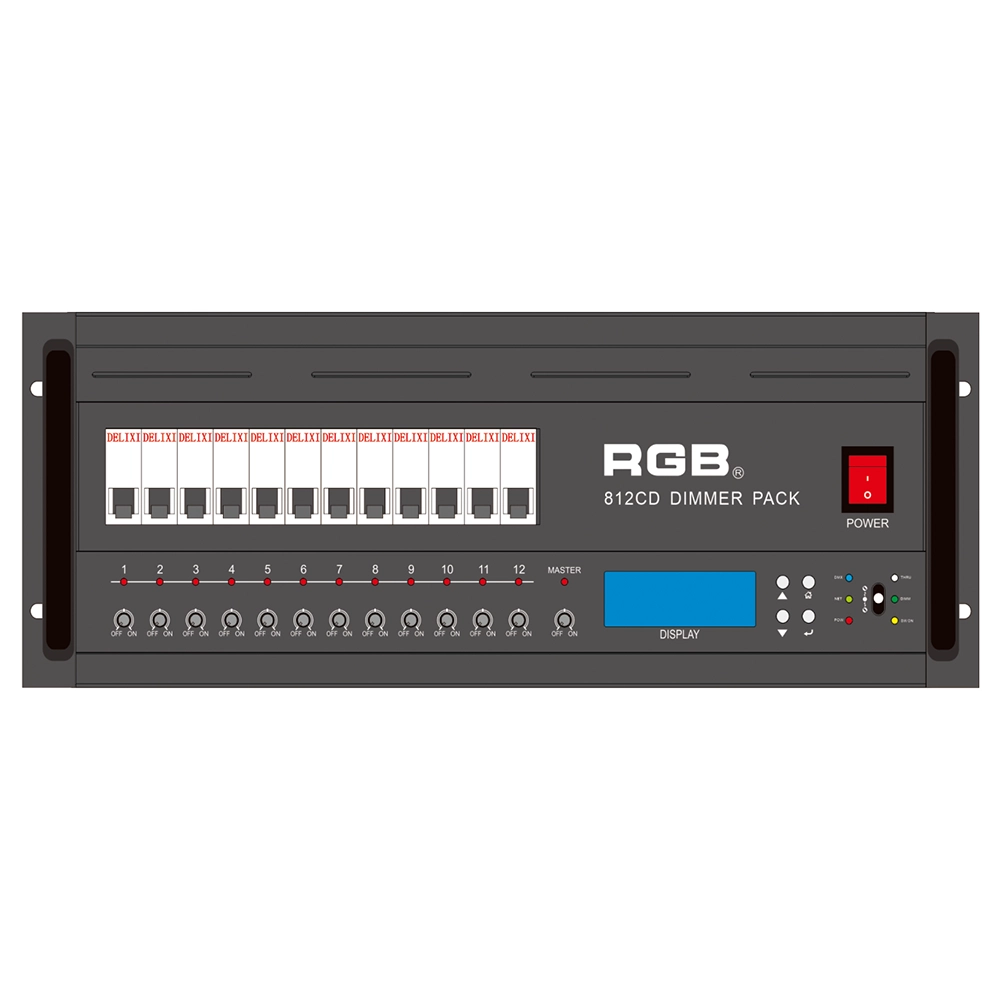
8 Series Intellight Dimmer/Relay Packs
RGB is the latest development and production of all digital, intelligent, and network dimming through the hybrid silicon box. It comes with six channels (806 silicon box), twelve channels (812 silicon box) with analog knob dimming, 49 DMX field recordings and replays (field backup function), and self-programming and recording field. RGB-8 silicon box with DMX512 digital signal input and RJ45 network input interface, with various types of dimming stations at home and abroad used. It is a powerful, stable performance and reliable work of a new generation of intelligent digital dimming through a hybrid silicon box.
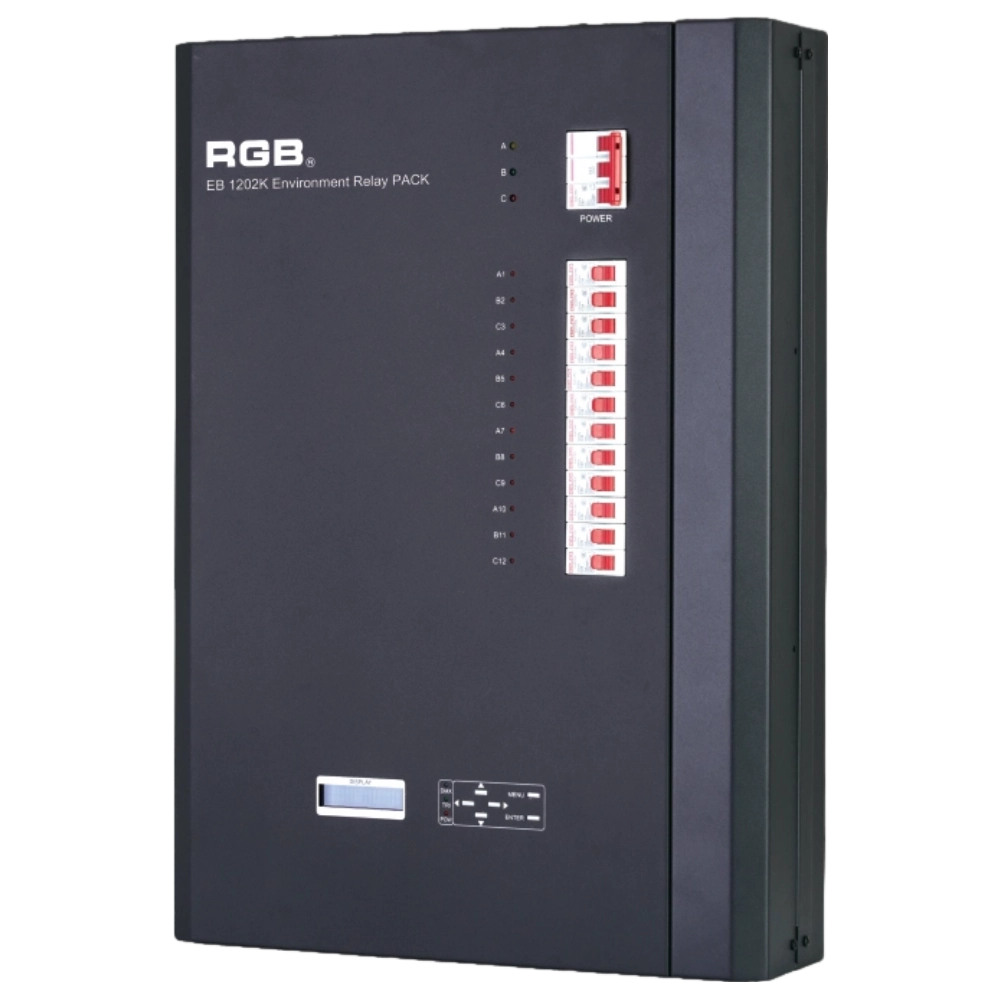
EB1202 Wall-Mounted Smart Site Light Control Series
Wall-mounted smart lighting controller with CE certification, DMX512 compatibility, flexible 12/24-channel output, scene backup, intelligent interface, and multiple dimming curves for precise professional lighting control.
Expert Support
Interested in learning more or need expert guidance related to this article? Fill in your details, and our team will provide tailored support.
Intelligent Control. Brilliant Performance.
RGB specializes in stage lighting control systems, delivering intelligent, reliable, and high-performance solutions for theaters and performance spaces worldwide.
Contact
Email:
Tel:
+86 20 3928 0245
+86 20 3928 0247
Address:
No.3, Huashan Road, Shilou Town, Panyu, Guangzhou, China.
Whatsapp: +8615975520131