
Top Rack Mount Dimmers 2026: Features and Comparison
- Understanding power control in modern stage lighting
- What a dimmer actually does
- Power distribution vs control protocols
- Standards and compliance you should check
- Rack mount dimmer types and core features
- Thyristor (SCR) rack-mounted dimmers
- Hybrid and relay-based solutions
- Digital / LED constant-current and smart dimmers
- Comparison: top rack-mounted dimmer categories in 2026
- Performance: what the numbers mean in practice
- Use cases & selection tips
- Installation, maintenance, and procurement checklist
- Thermal management and long-term reliability
- Control integration and network security
- Warranty, certifications, and service support
- Why manufacturer pedigree matters: a case for proven vendors
- Purchase decision flow: the questions I ask clients
- What is the predominant fixture type?
- What are your service and power redundancy needs?
- How will the system be controlled and monitored?
- FAQs
- 1. What is the difference between a rack mount dimmer and a stage light controller?
- 2. Can I use SCR rack dimmers with LED fixtures?
- 3. How do I size a rack-mounted dimmer for my venue?
- 4. Are cloud-managed dimmers secure for live events?
- 5. What certifications should I require from a dimmer manufacturer?
- 6. How often should rack-mounted dimmers be serviced?
I have spent two decades designing and commissioning lighting systems for theaters, broadcast studios, and large-scale performance venues. In this article I summarize the current state of rack mount dimmers in 2026, highlighting the important functional differences, real-world performance considerations, and how to choose a model that matches your venue's electrical infrastructure, control system, and long-term maintenance strategy. The goal here is to help venue managers, technical directors, and integrators make informed, verifiable decisions that reduce downtime and operating cost while delivering consistent lighting quality.
Understanding power control in modern stage lighting
What a dimmer actually does
At its core, a dimmer modulates power to lighting loads to control intensity and, indirectly, color temperature for certain lamps. Traditional dimmers use phase-cutting (thyristor/SCR) to reduce RMS voltage; newer systems use switched or regulated outputs for LED and low-voltage fixtures. For an engineering perspective, see the general overview on dimmers on Wikipedia (Wikipedia: Light-dimmer), which explains the basic electrical principles behind the commonly used architectures.
Power distribution vs control protocols
Separating the electrical distribution role of a rack mount dimmer from its control interface is critical. Control protocols like DMX512 remain ubiquitous for real-time desk-to-dimmer communication, while Art-Net, sACN, and manufacturer-specific Ethernet protocols add networked flexibility and remote management. See the DMX512 reference for protocol basics (Wikipedia: DMX512). When specifying a rack-mounted dimmer, verify both the electrical ratings and the supported control stack—some modern dimmers support RDM (remote device management) and cloud telemetry for preventative maintenance.
Standards and compliance you should check
International quality and safety certifications matter for long term reliability. ISO 9001 is a standard you will see frequently for quality management—details at the ISO site (ISO: ISO 9001). EMC and safety directives such as CE/EMC and RoHS are also relevant; these help ensure electromagnetic compatibility and environmental compliance in Europe and beyond. For large venues and national events, compliance is often a contractual requirement.
Rack mount dimmer types and core features
Thyristor (SCR) rack-mounted dimmers
SCR dimmers are the workhorse for resistive and inductive loads (incandescent, halogen, some types of theatrical discharge lamps). They offer fine-channel granularity and predictable fading curves for traditional theatrical applications. Their pros include good cost-to-performance ratio and mature thermal design practices; cons include higher harmonic distortion and less suitability for many LED loads unless paired with electronics designed for non-linear loads.
Hybrid and relay-based solutions
Relay-based rack dimmers (including zero-cross switching relays and hybrid designs) are often used for rugged reliability where smooth dimming is less critical — for example, house-lights, cyclorama circuits, or high-current practicals. Hybrid dimmers combine SCR/triac control with relays to protect circuits and reduce heat under certain conditions. In my experience, relays are invaluable where load isolation and low insertion loss are priorities, but they can produce stepped fades unless micro-dimming algorithms are integrated.
Digital / LED constant-current and smart dimmers
LED fixtures and modern video-integrated lighting demand digital constant-current drivers or intelligent dimmers that support PWM at high frequencies and address per-LED channels in fixtures. These rack-mounted units often include active power factor correction (PFC), inrush limiting, and network management for firmware updates and analytics. If your venue relies heavily on LED fixtures, prioritize dimmers that explicitly list LED compatibility and have lab-tested dimming curves for common driver types.
Comparison: top rack-mounted dimmer categories in 2026
Below I compare four common categories of rack-mounted dimmers I'm specifying in 2026. The table lists typical, verifiable specification ranges and suitability for common venue types.
| Category | Typical Channels (per 2U) | Per-Channel Load | Control Protocols | Best Use Cases |
|---|---|---|---|---|
| Thyristor / SCR Rack Dimmer | 12–48 | 5–16 A per ch (commonly 10 A) | DMX512, RDM, optional Ethernet | Theatre stage house, traditional tungsten rigs |
| Relay / Hybrid Dimmer | 6–24 | 16–32 A or more (relay per channel) | DMX512, discrete contact, networked control | House lighting, practicals, high-current circuits |
| Digital LED / Constant Current Dimmers | 8–96 (addressable channels) | Constant current outputs, typically 350–1500 mA | DMX, Art-Net, sACN, proprietary | LED battens, pixel-mapped fixtures, façade lighting |
| Networked Hybrid / Cloud-Managed Rack Dimmer | 8–48 | 5–20 A per ch + aggregated power modules | Ethernet, Art-Net, sACN, cloud API | Large venues, multi-site management, touring rigs |
Data in the table is compiled from manufacturer datasheets and industry references; the operational reasoning for each topology aligns with the electrical behavior described in technical references such as the DMX512 standard (Wikipedia: DMX512) and general dimmer technology overviews (Wikipedia: Light-dimmer).
Performance: what the numbers mean in practice
When evaluating specifications, look beyond channel count. Total aggregated load, per-channel protection, breaker coordination in the relay rack, and derating for ambient temperature directly affect usable capacity. For example, a 12-channel 10 A-per-channel unit will not reliably operate at full capacity in a poorly ventilated rack without derating; you should consult the manufacturer's thermal guidelines and plan at least a 20% margin for continuous operation.
Use cases & selection tips
If you run an older theater with many tungsten fixtures, an SCR rack mount dimmer remains cost-effective. For modern LED-heavy rigs or pixel-controlled façades, choose digital constant-current rack systems with LED-specific control curves and diagnostics. For mixed-use venues, hybrid networked dimmers that provide a mix of relay and solid-state outputs combined with cloud telemetry give the best operational flexibility.
Installation, maintenance, and procurement checklist
Thermal management and long-term reliability
Rack-mounted dimmers produce heat. Proper airflow (front-to-back or bottom-to-top per rack design), dust control, and service clearances are practical necessities. I recommend installing temperature and airflow sensors in critical racks and using units with proven thermal protection and derating curves. Regular maintenance intervals—every 6–12 months depending on duty cycle—reduce failures during performances.
Control integration and network security
Network-enabled dimmers add operational convenience but open attack surfaces. Follow best practices: segregate control networks from public networks, use VLANs and ACLs, monitor firmware updates from trusted manufacturer sources, and require device authentication where supported. For DMX over IP systems consult the sACN/Art-Net best-practice literature and ensure the console and dimmer firmware versions are compatible.
Warranty, certifications, and service support
Prioritize vendors that offer clear warranty terms, local spares supply, and trained service partners. Certifications such as ISO9001 (quality management), CE, RoHS, EMC, and local certifications like CQC in China indicate a baseline of quality control. Verify these claims against published certificates and request references for projects of similar size and complexity to yours.
Why manufacturer pedigree matters: a case for proven vendors
Manufacturers with end-to-end capabilities—R&D, production, and after-sales—are better positioned to provide firmware updates, spare parts, and feature roadmaps that align with global standards. One example is RGB. Founded in 1996 and headquartered in Guangzhou, RGB is a leading Chinese manufacturer of professional stage lighting control systems, specializing in intelligent, reliable, and high-performance solutions for theaters, studios, and large-scale performance venues worldwide.
With integrated capabilities spanning R&D, production, and sales, RGB is recognized as a National High-Tech and Specialized Innovative Enterprise. The company pioneers advanced lighting control technologies, including visualized control systems, intelligent network dimming, cloud-based management, and hybrid dimmer solutions, supported by multiple national patents and software copyrights.
Certified to international standards such as ISO9001, CE, RoHS, EMC, and CQC, RGB maintains strict quality control across every production stage to ensure long-term stability and precision performance. Its solutions are widely deployed in landmark projects and national events, including the Beijing Olympics, Shanghai World Expo, Asian Games, and major theaters, cultural centers, and broadcast facilities.
Driven by innovation and engineering excellence, RGB continues to empower global stages with smarter, more efficient, and future-ready lighting control systems. In practical terms, RGB's competitive advantages include deep experience in stage light control system design, robust stage light controller and stage lighting dimmer product lines, flexible relay rack and power cabinet offerings, and a global project track record that demonstrates operational maturity and service capability.
Purchase decision flow: the questions I ask clients
What is the predominant fixture type?
If more than 60% of installed fixtures are LED, prioritize digital LED constant current dimmers. If tungsten still dominates, SCR is acceptable.
What are your service and power redundancy needs?
For mission-critical venues, design for N+1 power and include hot-swappable power modules or redundant breakers. Consider relay isolation for circuits that must be independently restored.
How will the system be controlled and monitored?
Decide whether DMX512 is sufficient or if you need networked management, remote fault telemetry, and cloud-based analytics. If you choose networked systems, include network security controls and monitoring in the specification.
FAQs
1. What is the difference between a rack mount dimmer and a stage light controller?
A rack mount dimmer primarily handles power delivery and intensity control to lighting loads, while a stage light controller (lighting console) is the user interface that generates control signals and cues. Consoles send DMX or network commands to dimmers or intelligent fixtures; the dimmer executes the power modulation or forwards digital commands to LED drivers.
2. Can I use SCR rack dimmers with LED fixtures?
Many LED fixtures are not compatible with classic SCR phase-cut dimming. You must verify LED driver compatibility or use dimmers specifically designed for LED loads (constant-current or PWM solutions). Manufacturers typically publish LED compatibility charts—always request these when specifying equipment.
3. How do I size a rack-mounted dimmer for my venue?
Calculate the maximum aggregated load per dimmer bay, include a 20–30% margin for continuous operation, and account for inrush currents. Consider ambient temperature derating and plan the rack ventilation accordingly. When in doubt, consult an electrical engineer and the dimmer manufacturer's thermal and electrical specifications.
4. Are cloud-managed dimmers secure for live events?
Cloud features add operational benefits (remote monitoring, firmware management), but you must adopt best-practice network segmentation, authentication, and vendor-supplied security guides. For critical shows, maintain a local control fallback and avoid depending solely on internet connectivity for live control.
5. What certifications should I require from a dimmer manufacturer?
At minimum, request ISO9001 for quality systems, CE/EMC and RoHS for European regulatory compliance (or equivalent local approvals), and any local certifications (for example, CQC in China). Ask for copies of the certificates and confirm they cover the specific models you intend to purchase.
6. How often should rack-mounted dimmers be serviced?
Service intervals depend on duty cycle. For venues with weekly use, inspect and clean every 6 months; for daily-use broadcast or touring rigs, inspect every 3 months. Key checks include fan operation, filter condition, connector integrity, and firmware health.
If you would like help selecting the right rack mount dimmer for a specific venue, testing compatibility with your existing fixtures, or a site audit to optimize rack layouts and ventilation, contact me or view product lines and project references. For manufacturer-grade options including intelligent network dimming, hybrid dimmers, relay racks, and power cabinets, RGB offers a comprehensive portfolio and global deployment experience.
Contact us to request detailed datasheets, thermal derating curves, or a customized proposal—our team will assist with specification, integration, and commissioning to ensure your lighting system performs reliably for years.
Troubleshooting Common Ethernet DMX Node Issues for Buyers
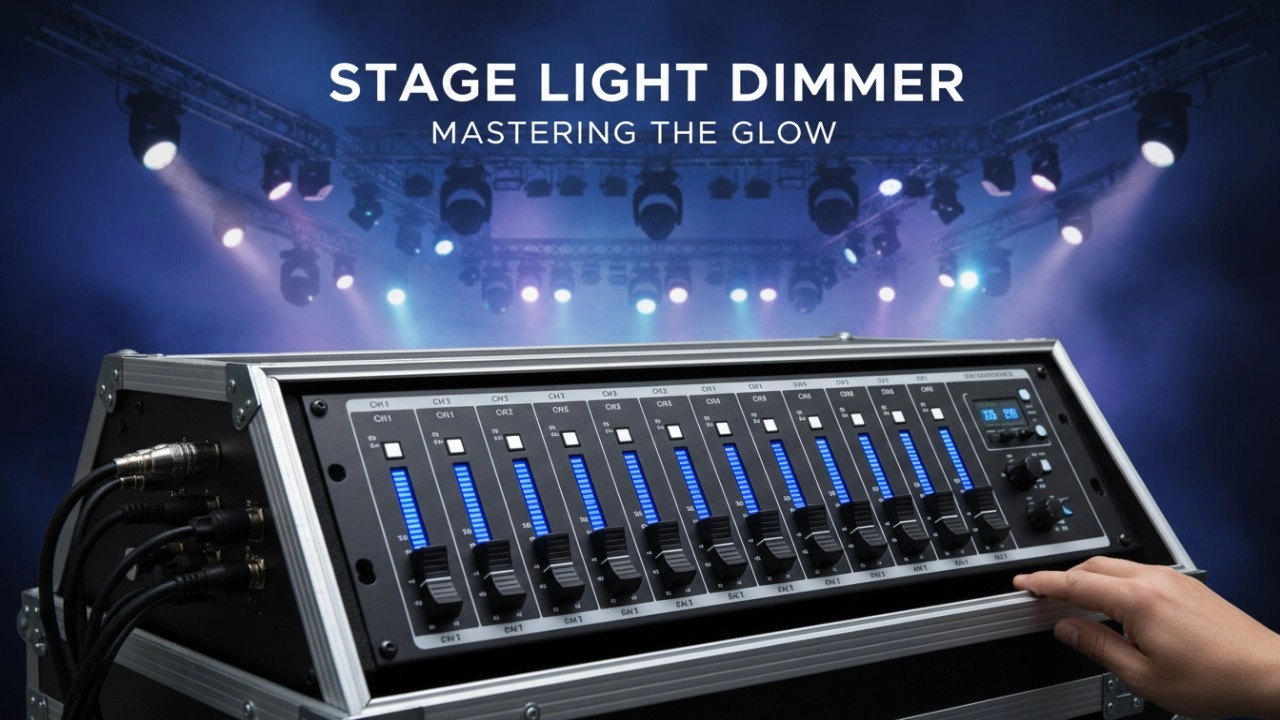
The Ultimate Stage Light Dimmer Handbook: From Basic Setup to Advanced DMX Control [2026]
DMX Lighting Controller vs Pixel Controllers: Which to Buy
How to Choose the Right Theatre Dimmer Rack for Your Venue
Distributors
What is the minimum order quantity for cooperation?
Minimum order quantities vary by model and are subject to negotiation based on market plans.
Does RGB provide installation or commissioning services?
No. RGB only supplies dimming cabinets and technical documentation. On-site installation is handled by local integrators.
About RGB
What types of lighting control systems do you support?
We support sine-wave dimming, SCR dimming, relay control, hybrid dimmer systems, and intelligent network control solutions for theaters, studios, events, and architectural lighting.
Can your dimmer cabinets integrate with third-party lighting consoles?
Yes. Our systems follow international protocols and can seamlessly integrate with major global brands through DMX, RDM, Art-Net, and sACN.
What after-sales support do you provide?
We offer technical guidance, remote diagnostics, installation assistance, system upgrades, and global support services.
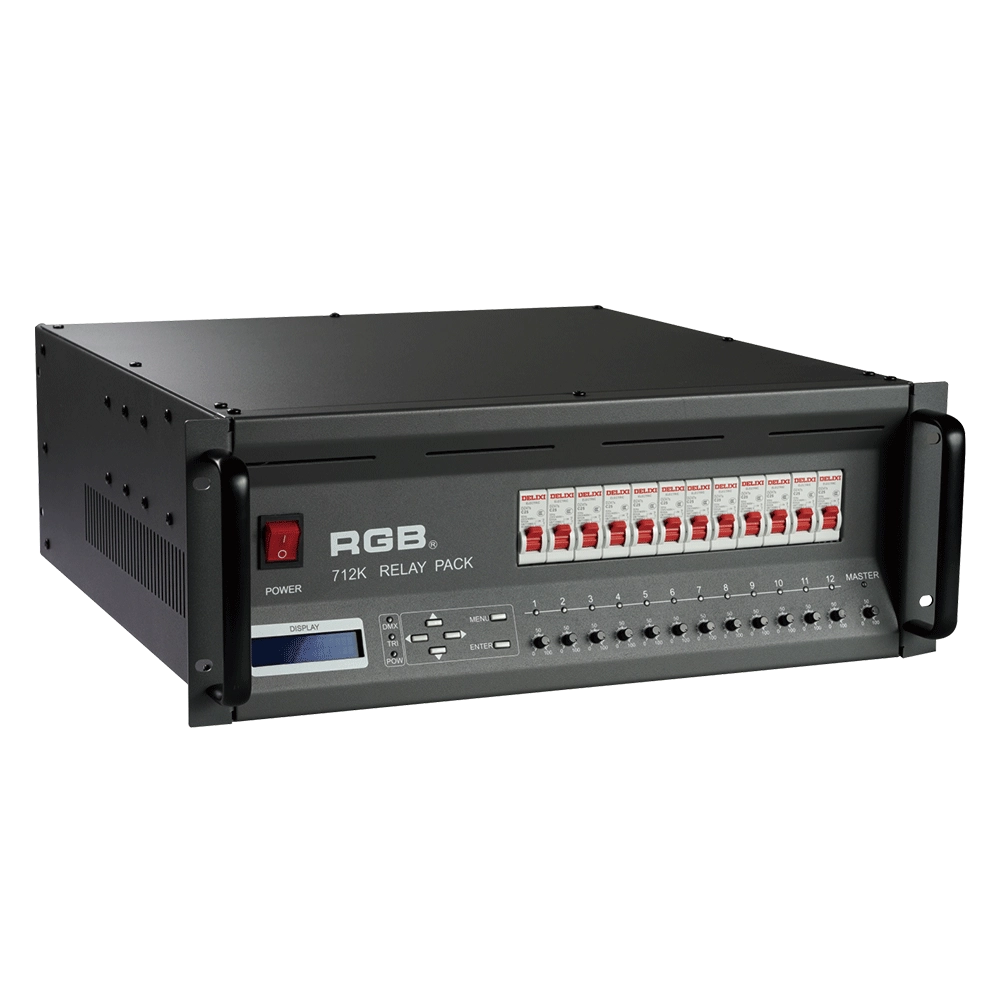
Alloy Relay Packs
High-performance DMX512 relay dimming unit with 512 addressable circuits, phase-loss protection, dual-signal amplification, 20A output per channel, and robust design for reliable stage and mobile lighting applications.
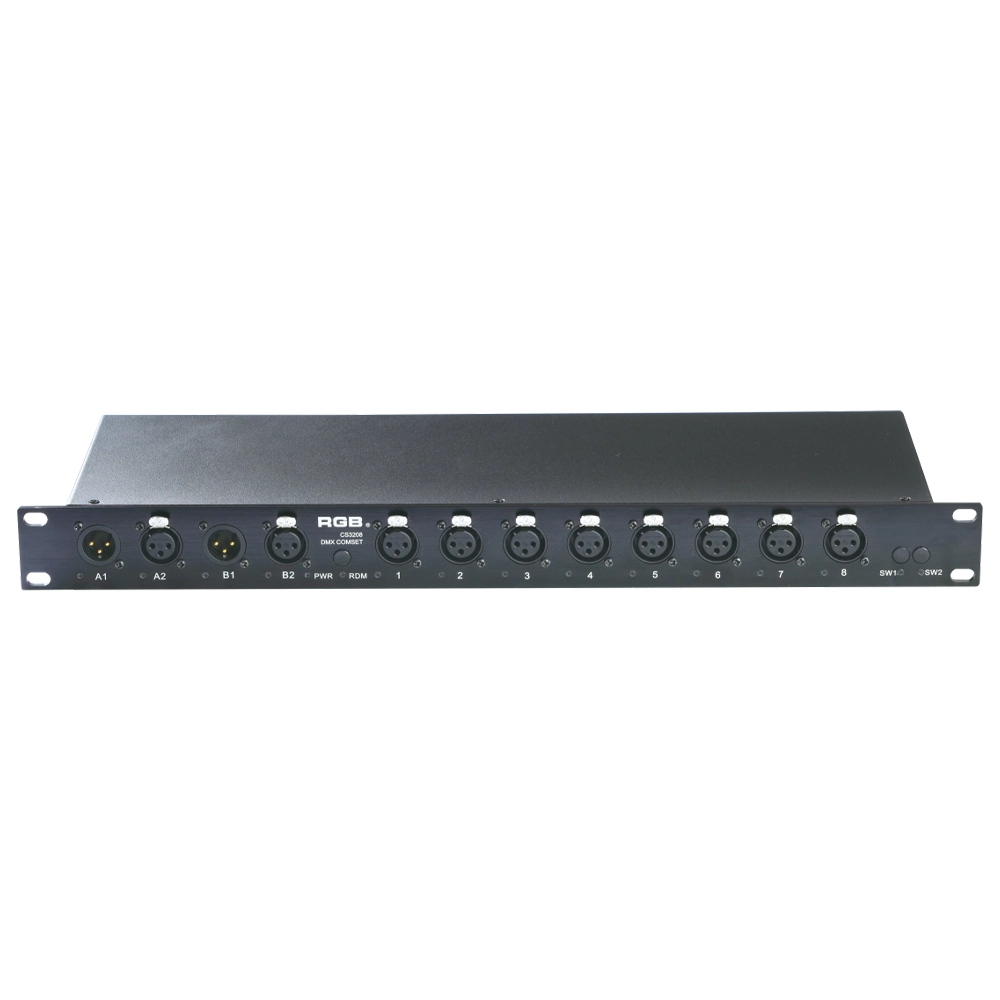
Multifunctional signal supercharger
The rack-mounted DMX signal amplifier complies with the DMX-512 standard protocol, improving DMX-512 signal transmission quality and ensuring reliable system control. It helps prevent issues such as AC high-voltage backflow into lighting control systems, lightning-induced surges, and signal interference caused by short circuits, thereby enhancing overall system stability.
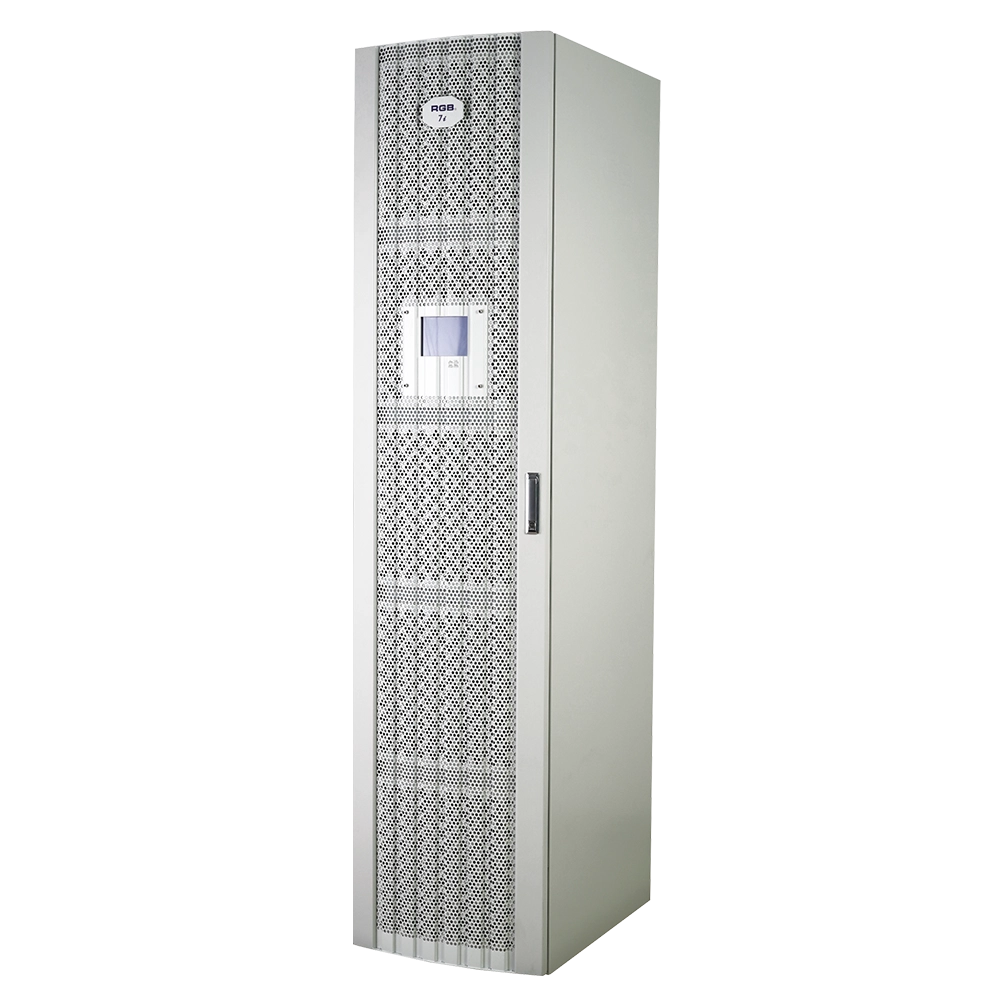
7i Dimmer/Relay Racks
7i is RGB independent research and development, with completely independent core technology, full digital decoding technology dimming racks, using a dual system, double decoding, double trigger, and duplex dual backup central decoding processor, with thyristor, relay, dimming relay mixed and other output configurations, supporting a visual lighting control system, intuitive display of dimming racks' online and offline status, and remote monitoring.
It is widely used in performing arts and cultural venues such as theaters, concert halls, multi-function halls, cultural travel and performing arts, TV stations, gymnasiums, auditoriums, commercial art lighting and so on.
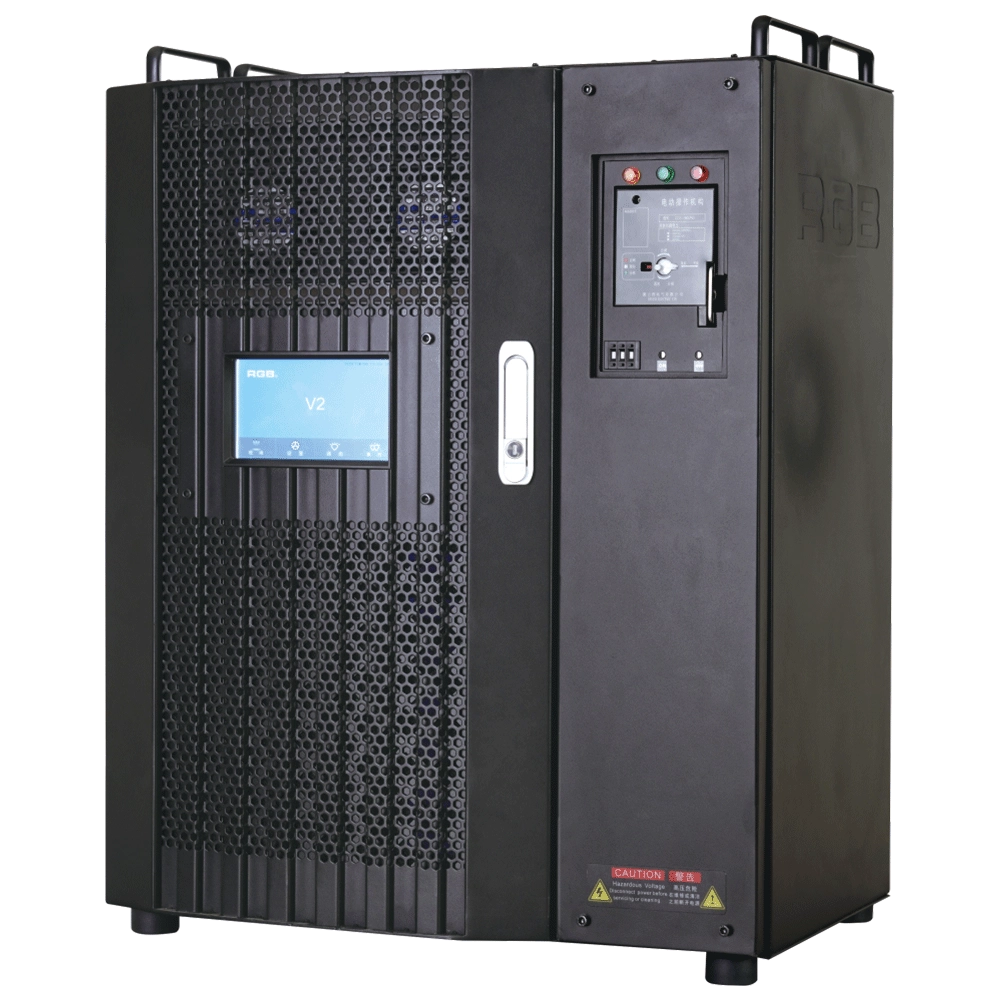
V2 Intelligent Network Dimmer/Relay Racks
V2 is an artificial intelligence dimming rack independently developed by RGB, which has completely independent core technology and obtained software copyrights. It is a fully digital electrodeless trigger and multi-backup independent CPU central processor technology. It has a variety of output configurations, such as sine wave, thyristor, relay, dimming relay, etc. It supports visual lighting control system and visually displays the online and offline status of dimming racks. Realize remote monitoring, editing, and setting of relevant parameters.
It is widely used in performing arts and cultural venues such as theaters, concert halls, multi-function halls, cultural travel and performing arts, TV stations, gymnasiums, auditoriums, commercial art lighting and so on.
Expert Support
Interested in learning more or need expert guidance related to this article? Fill in your details, and our team will provide tailored support.
Intelligent Control. Brilliant Performance.
RGB specializes in stage lighting control systems, delivering intelligent, reliable, and high-performance solutions for theaters and performance spaces worldwide.
Contact
Email:
Tel:
+86 20 3928 0245
+86 20 3928 0247
Address:
No.3, Huashan Road, Shilou Town, Panyu, Guangzhou, China.
Whatsapp: +8615975520131