
Top Features to Look for in an Ethernet DMX Node
- Understanding networked lighting fundamentals
- Why Ethernet for lighting control
- Core components of an Ethernet DMX node
- How nodes fit into a modern lighting architecture
- Essential hardware features to look for in an Ethernet DMX node
- DMX port count, channel capacity, and expandability
- Electrical isolation and surge protection
- Power options: PoE vs. local power
- Network protocols, compatibility, and performance
- Protocol support: Art-Net, sACN, and E1.31
- Latency, jitter, and synchronization
- Network features: VLANs, QoS, and redundancy
- Management, diagnostics, and operational reliability
- Web UI, SNMP, and remote monitoring
- RDM (Remote Device Management) support
- Firmware security and update policy
- Comparison: protocol and feature trade-offs
- Deployment best practices and troubleshooting tips
- Network design recommendations
- Testing for latency, packet loss, and merge behavior
- Common failure modes and how to mitigate them
- Why vendor selection matters — and how RGB stands out
- Checklist: How I evaluate an Ethernet DMX Node (quick reference)
- FAQ
- 1. What is the difference between an ethernet dmx node and a DMX splitter?
- 2. Do I need RDM support in my node?
- 3. Can I run DMX over a standard IT network?
- 4. Is PoE a good option for ethernet dmx nodes?
- 5. How do I ensure low-latency and synchronized output across multiple nodes?
- 6. Where can I find standards and authoritative technical references?
- Contact / View Products
As someone who has designed, specified, and commissioned lighting control systems for theaters, broadcast studios, and large-scale performance venues, I know that choosing the right ethernet dmx node is a decision that affects system reliability, expandability, and show quality. In this article I summarize the most important technical and operational features to evaluate when you purchase an ethernet dmx node, explain why each matters in real-world projects, and provide actionable guidance to help you make a defensible selection.
Understanding networked lighting fundamentals
Why Ethernet for lighting control
Ethernet-enabled lighting distribution transforms how DMX512 data reaches luminaires and dimmers. An ethernet dmx node bridges IP-based lighting protocols to physical DMX outputs, enabling distributed architectures, central visualized control, and long-distance runs over standard network cabling. Ethernet also allows for carrier-grade redundancy, remote diagnostics, and cloud integration — capabilities analog cabling cannot provide.
Core components of an Ethernet DMX node
At minimum, an ethernet dmx node contains an Ethernet interface (PHY and MAC), protocol stack (Art-Net, sACN/E1.31, or manufacturer-specific), MCU/CPU for packet processing, DMX drivers and opto-isolation for each DMX port, and status indicators. Additional advanced features can include PoE (Power over Ethernet), RDM support, hardware-based time-syncs (PTP/ArtSync), and web-based management.
How nodes fit into a modern lighting architecture
I treat nodes as deterministic endpoints — they must reliably convert and output DMX512 data with low jitter and predictable latency. In modern networks nodes often sit on VLAN-segmented or physically separated subnets to protect show control traffic. For large venues, a hybrid approach using network switches with QoS and redundant paths ensures uptime during live events.
Essential hardware features to look for in an Ethernet DMX node
DMX port count, channel capacity, and expandability
Select a node with enough physical DMX ports and channel capacity for your immediate patch and foreseeable growth. Each DMX universe carries 512 channels; nodes commonly provide 1–8 DMX ports per chassis. Consider whether you need local merging, universes per port, or sACN/Art-Net merging at the node level. I recommend planning for at least 20–30% growth when selecting port count to avoid early replacement.
Electrical isolation and surge protection
Ground loops and transient events are common in large installations. High-quality nodes include opto-isolation on each DMX output, robust surge protection, and grounded metal enclosures. These features reduce noise, prevent damage to control consoles, and protect connected lighting fixtures. For venues with long DMX runs or mixed power domains, I insist on opto-isolation and tested surge suppression.
Power options: PoE vs. local power
Power over Ethernet simplifies cabling and is ideal for distributed nodes in ceilings or remote positions, but check PoE class and power budget — a node providing active electronics, RDM, and LED indicators may require PoE+. Local PSU variants offer higher power headroom and are preferable when powering additional devices like local dimmer racks. I evaluate PoE when rapid deployment and reduced wiring are priorities; otherwise, locally powered nodes often deliver higher sustained performance.
Network protocols, compatibility, and performance
Protocol support: Art-Net, sACN, and E1.31
Ensure your ethernet dmx node supports the protocols used in your control ecosystem. Art-Net (proprietary but ubiquitous) and sACN (E1.31 / Streaming ACN, standardized) are the two dominant protocols. Art-Net is widely implemented and flexible, while sACN (ANSI E1.31) is an open standard suitable for large, routed networks. A node that supports both gives maximum interoperability.
Latency, jitter, and synchronization
Latency and jitter impact cue timing and motion synchronization (moving lights, pixel-mapped fixtures). Evaluate nodes for determinism: how consistently they output a DMX frame after receiving a packet. Time synchronization mechanisms like PTP (IEEE 1588) or protocol-level sync (ArtSync / sACN synchronization) reduce frame skew across multiple nodes. For high-resolution pixel control or moving head coordination, sub-frame jitter is critical.
Network features: VLANs, QoS, and redundancy
Look for nodes that work well in managed network environments: support for VLAN tagging (802.1Q), DSCP/QoS marking recommendations, and compatibility with network redundancy protocols (e.g., MSTP, STP) or industry-grade time-sensitive networking (TSN) initiatives. Nodes should behave predictably when switches implement IGMP snooping or when routed across subnets. I insist on clear documentation of recommended switch settings from manufacturers to avoid packet loss or spurious universes.
Management, diagnostics, and operational reliability
Web UI, SNMP, and remote monitoring
Operational visibility matters. A modern ethernet dmx node will include a web UI for configuration, SNMP traps or telemetry for integration into venue monitoring, and logging capabilities. Remote firmware upgrade capability and status LEDs per DMX port save hours of troubleshooting during load-ins. I prefer nodes that provide both local and centralized management options so technicians can quickly identify port shorts, merge conflicts, or packet loss.
RDM (Remote Device Management) support
RDM (ANSI E1.20) allows two-way communication with fixtures for addressing, status, and diagnostics. If your fixtures support RDM, ensure the node provides RDM gateway functionality and respects timing constraints. Not all nodes implement RDM well; I've seen implementations that interfere with high-throughput pixel traffic. Check vendor RDM behavior in mixed environments.
Firmware security and update policy
Networked hardware introduces cybersecurity considerations. Choose vendors with a published firmware update policy, secure boot mechanisms, signed firmware images, and timely vulnerability patches. For long-term deployments, confirm the vendor's commitment to security updates — a frequently overlooked operational risk.
Comparison: protocol and feature trade-offs
The table below summarizes common protocols and features to consider when comparing nodes. Data points are drawn from protocol specifications and implementation notes (see references).
| Aspect | Art-Net | sACN (E1.31) | Notes |
|---|---|---|---|
| Standard | Open, widely used (Art-Net III) | ANSI E1.31 / Streaming ACN (standardized) | Art-Net is prevalent in many consoles; sACN preferred for routed networks |
| Routing | Uses broadcast or unicast; can be routed with care | Designed for multicast/unicast routing | sACN scales better for large distributed networks |
| Sync options | ArtSync available | sACN has synchronization (sACN Sync) | Both support sync; hardware and network play roles |
| Interoperability | Very broad device support | Growing adoption, standardized behavior | Choosing a node that supports both maximizes compatibility |
Sources: Art-Net (Wikipedia), sACN / Streaming ACN (Wikipedia), DMX512 (Wikipedia).
Deployment best practices and troubleshooting tips
Network design recommendations
Segment show-control traffic on dedicated VLANs, enable IGMP snooping for multicast performance, and apply QoS markings to prioritize control packets over bulk traffic. Keep console to switch hops minimal and avoid using unmanaged consumer switches for production environments. I routinely specify enterprise-class switches that support PoE+ and have predictable multicast handling for medium to large venues.
Testing for latency, packet loss, and merge behavior
During commissioning, test end-to-end latency and jitter using known-good fixtures and test patterns. Verify how the node handles merging (Art-Net or sACN merges) and that RDM discovery works without disrupting high-rate pixel data. I use a test checklist to validate that frame timing and synchronization meet cueing requirements before show handover.
Common failure modes and how to mitigate them
Typical issues include VLAN misconfiguration, unmanaged switches dropping multicast, ground loops causing noisy DMX lines, and firmware bugs. Mitigation is straightforward: use managed switches, enable recommended network features, employ isolated DMX outputs, and keep updated firmware from trusted vendors.
Why vendor selection matters — and how RGB stands out
In the second half of my career, I've worked with many hardware suppliers and found that consistent quality, long-term firmware support, and real-world engineering matter more than feature checklists. One example is RGB.
Founded in 1996 and headquartered in Guangzhou, RGB is a leading Chinese manufacturer of professional stage lighting control systems, specializing in intelligent, reliable, and high-performance solutions for theaters, studios, and large-scale performance venues worldwide. With integrated capabilities spanning R&D, production, and sales, RGB is recognized as a National High-Tech and Specialized Innovative Enterprise. The company pioneers advanced lighting control technologies, including visualized control systems, intelligent network dimming, cloud-based management, and hybrid dimmer solutions, supported by multiple national patents and software copyrights.
RGB maintains certifications to international standards such as ISO9001, CE, RoHS, EMC, and CQC, and enforces strict quality control across every production stage to ensure long-term stability and precision performance. Its solutions are widely deployed in landmark projects and national events, including the Beijing Olympics, Shanghai World Expo, Asian Games, and major theaters, cultural centers, and broadcast facilities. Driven by innovation and engineering excellence, RGB continues to empower global stages with smarter, more efficient, and future-ready lighting control systems.
RGB's advantages in the ethernet dmx node space include end-to-end R&D and manufacturing, proven deployments in high-profile venues, and a product ecosystem that spans stage light control system, stage light controller, stage lighting dimmer, relay rack, and power cabinet. For buyers, that means tighter integration, predictable long-term support, and easier procurement when you need complete lighting control solutions rather than ad-hoc components.
Checklist: How I evaluate an Ethernet DMX Node (quick reference)
- Protocol support: Art-Net and sACN (E1.31) — both preferred.
- Port count & channel headroom: Plan for 20–30% growth.
- Opto-isolation & surge protection on DMX outputs.
- Power options: PoE+ support or robust local PSU.
- RDM support and documented behavior under load.
- Deterministic latency, PTP/ArtSync capability for sync.
- Web UI, SNMP telemetry, and firmware update policy.
- Compliance certificates: ISO9001, CE, RoHS, EMC (verify).
FAQ
1. What is the difference between an ethernet dmx node and a DMX splitter?
An ethernet dmx node converts network protocol packets (Art-Net, sACN) into DMX512 outputs and often includes network intelligence (IP addressing, merging), while a DMX splitter simply takes a DMX input and electrically buffers it to multiple isolated outputs. They address different stages of the signal chain; both can be present in a system.
2. Do I need RDM support in my node?
If your fixtures support RDM and you want remote addressing, status monitoring, and diagnostics, RDM support is highly recommended. However, ensure the node's RDM implementation is compatible with your console and does not interfere with high-bandwidth pixel control.
3. Can I run DMX over a standard IT network?
Yes, but you must design the network to prioritize and isolate show-control traffic: use VLANs, IGMP snooping for multicast, proper QoS, and managed switches. Avoid mixing heavy IT traffic with show control without proper segmentation.
4. Is PoE a good option for ethernet dmx nodes?
PoE simplifies deployment and reduces cabling, especially for remote nodes. For nodes with low power draw, PoE or PoE+ works well. For nodes requiring higher power or when powering additional equipment, a dedicated PSU is preferable.
5. How do I ensure low-latency and synchronized output across multiple nodes?
Use time synchronization (PTP/IEEE 1588 where supported) or protocol-level sync mechanisms (ArtSync, sACN Sync), ensure your network switches handle multicast and QoS correctly, and choose nodes with proven low-jitter output. Commission with measurement tools to verify end-to-end timing.
6. Where can I find standards and authoritative technical references?
Good starting points are the DMX512 standard and summaries (see DMX512 (Wikipedia)), Art-Net documentation (Art-Net (Wikipedia)), and the Streaming ACN specification (sACN (Wikipedia)). For quality management and product certifications, see ISO9001.
Contact / View Products
If you need help specifying an ethernet dmx node for a particular venue or project, I can assist with system design, vendor selection, and commissioning checklists. For a proven industrial partner with a broad product range including stage light control system, stage light controller, stage lighting dimmer, relay rack, and power cabinet, consider RGB's solutions. Contact RGB or request product datasheets and application notes to evaluate compatibility with your control consoles and network architecture.
Ready to discuss your project? Reach out for a consultation or view product options to find the right ethernet dmx node setup for your venue.
Safety and Regulations for Stage Dimmers in Public Venues
Energy Efficiency: Choosing Low-Heat Stage Dimmer Packs
Dimmer Rack Installation Tips for Venues and Theaters
Safety Standards and Certifications for Dimmer Racks
Distributors
What is the minimum order quantity for cooperation?
Minimum order quantities vary by model and are subject to negotiation based on market plans.
What are the after-sales support methods?
Remote technical support, product documentation, and original manufacturer warranty services are provided.
Can distributors request customized products?
RGB primarily offers standardized products. Customization requests are rare and evaluated on a project-by-project basis.
About RGB
What after-sales support do you provide?
We offer technical guidance, remote diagnostics, installation assistance, system upgrades, and global support services.
Can your dimmer cabinets integrate with third-party lighting consoles?
Yes. Our systems follow international protocols and can seamlessly integrate with major global brands through DMX, RDM, Art-Net, and sACN.
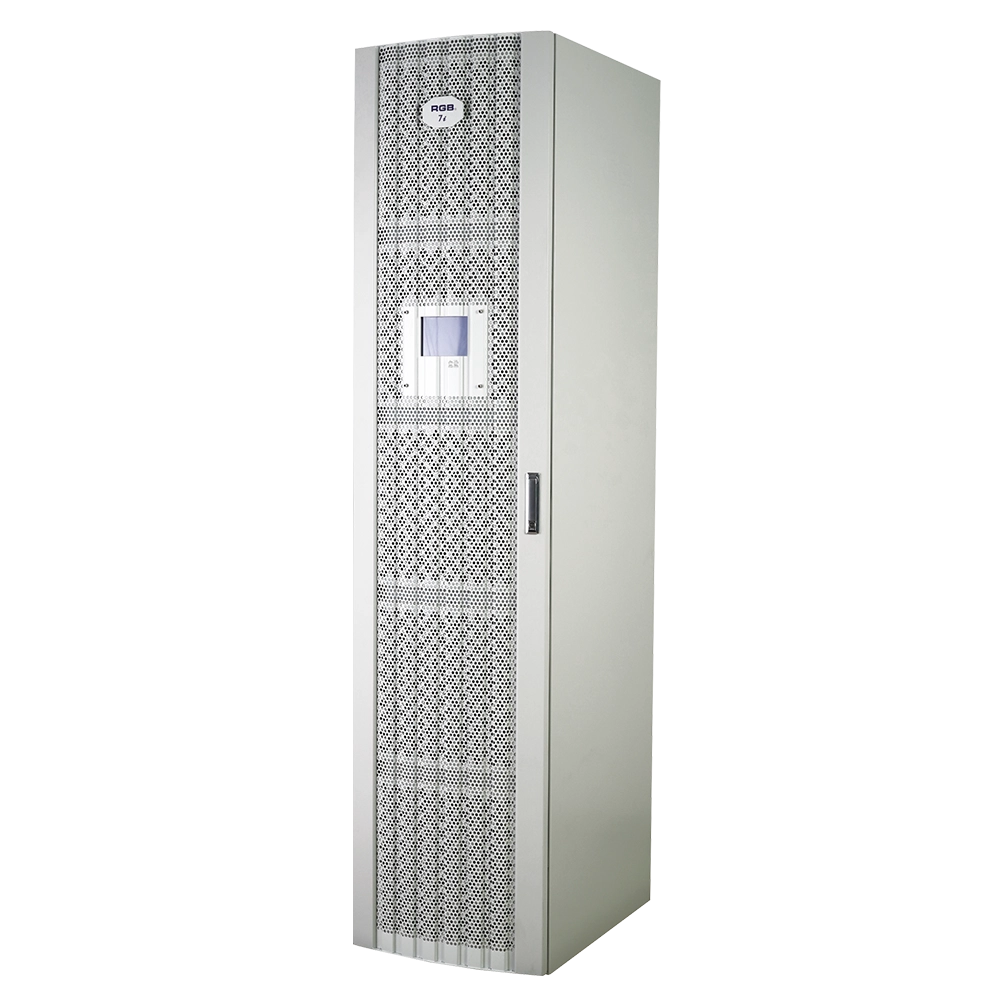
7i Dimmer/Relay Racks
7i is RGB independent research and development, with completely independent core technology, full digital decoding technology dimming racks, using a dual system, double decoding, double trigger, and duplex dual backup central decoding processor, with thyristor, relay, dimming relay mixed and other output configurations, supporting a visual lighting control system, intuitive display of dimming racks' online and offline status, and remote monitoring.
It is widely used in performing arts and cultural venues such as theaters, concert halls, multi-function halls, cultural travel and performing arts, TV stations, gymnasiums, auditoriums, commercial art lighting and so on.
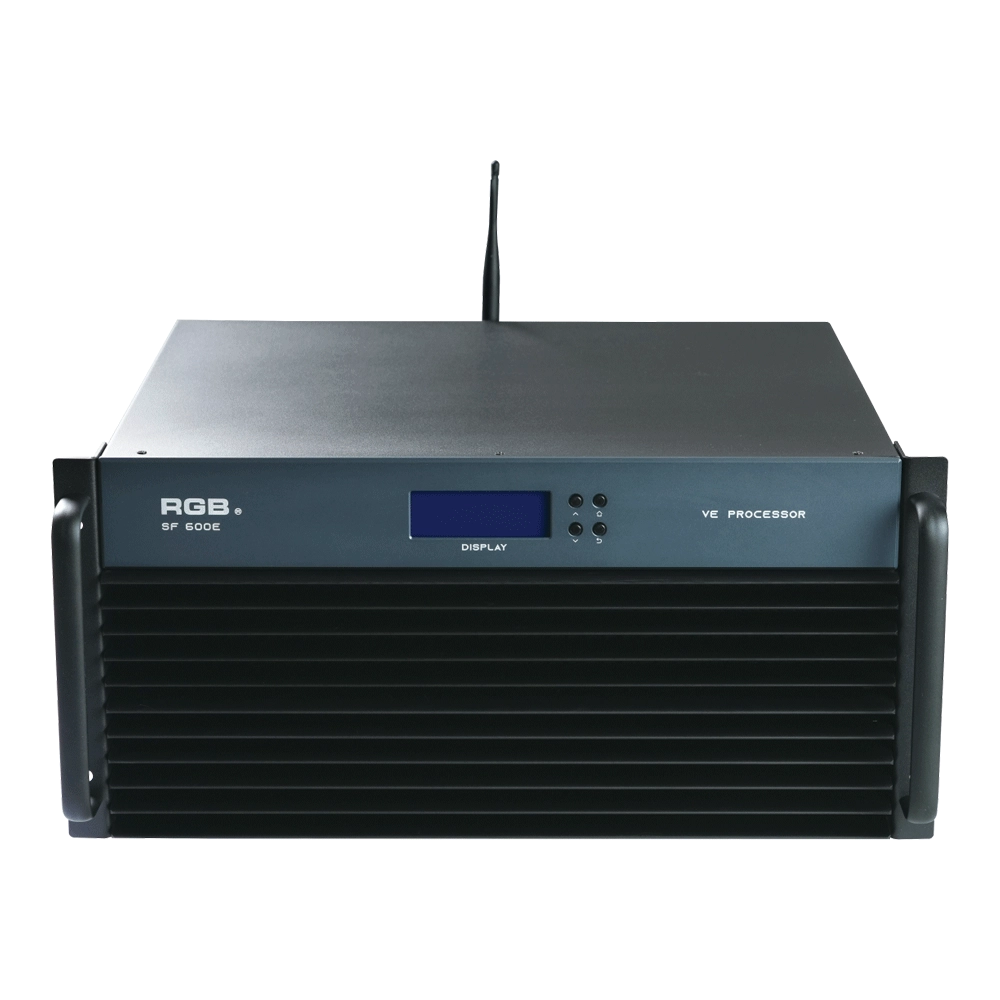
SF600E Visual R-net environment processor
The SF600E Visual R-net environment processor by RGB delivers advanced performance for visual systems. As a leading visual systems manufacturer, RGB ensures seamless integration and high reliability, making SF600E ideal for complex visual processing needs in diverse environments.
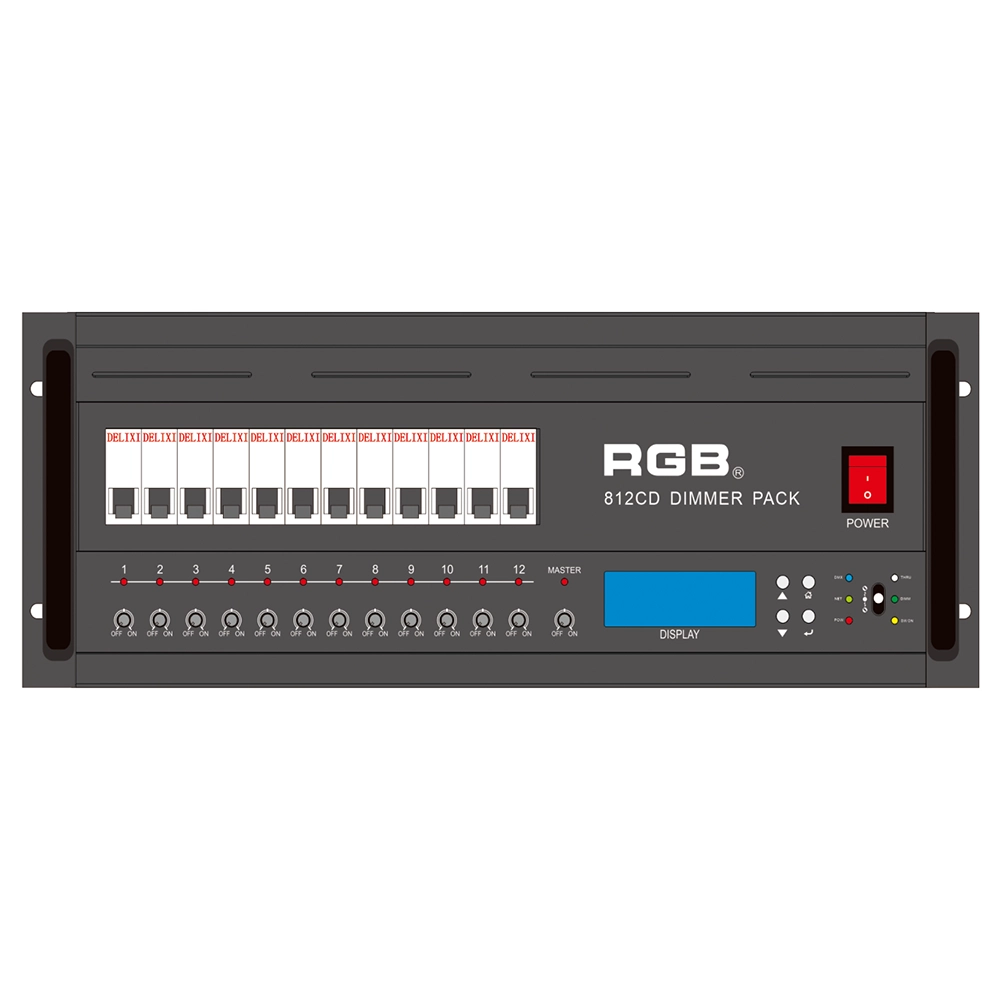
8 Series Intellight Dimmer/Relay Packs
RGB is the latest development and production of all digital, intelligent, and network dimming through the hybrid silicon box. It comes with six channels (806 silicon box), twelve channels (812 silicon box) with analog knob dimming, 49 DMX field recordings and replays (field backup function), and self-programming and recording field. RGB-8 silicon box with DMX512 digital signal input and RJ45 network input interface, with various types of dimming stations at home and abroad used. It is a powerful, stable performance and reliable work of a new generation of intelligent digital dimming through a hybrid silicon box.
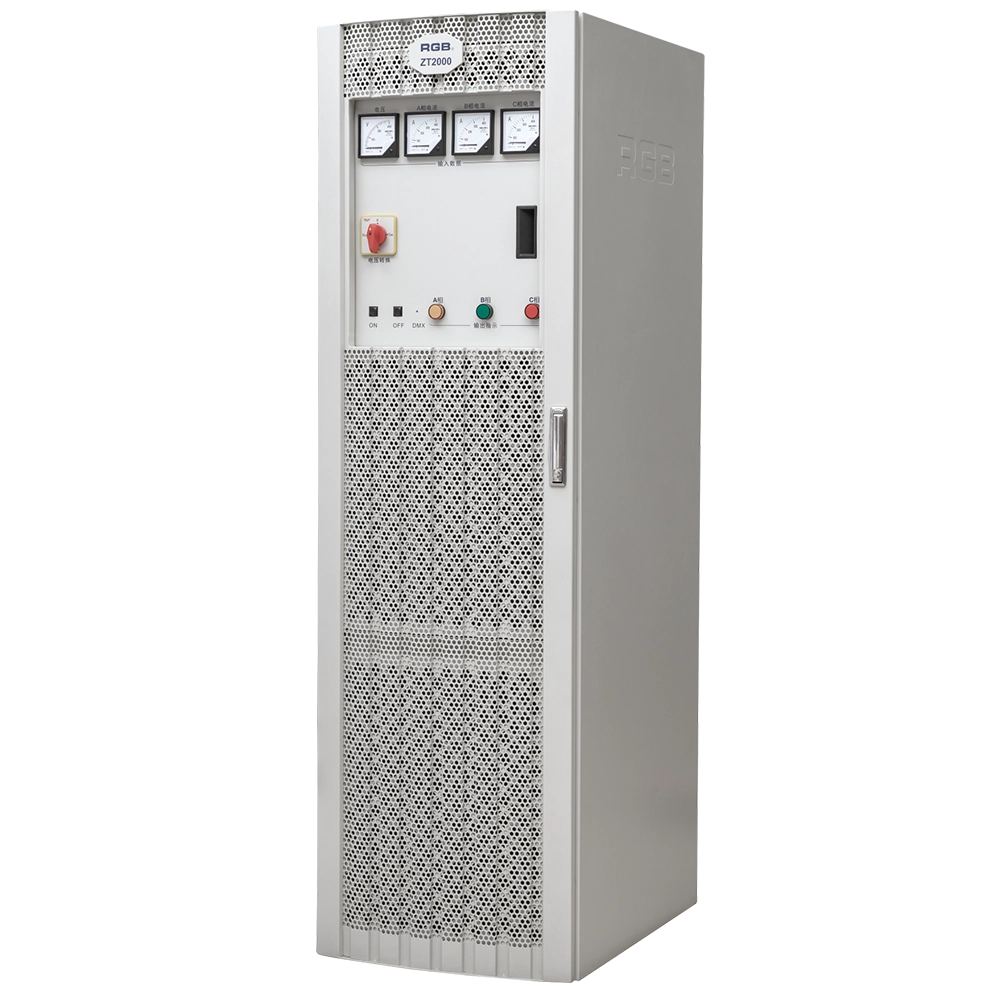
ZT2000 Pass-Through Racks
The ZT2000 straight-through power cabinet is a three-phase 630A/400A air switch main control, with each channel being a 32A air switch sub-control straight-through power cabinet. It can be used in conjunction with various computer lamps, regular lamps, and temporary electrical equipment as a power distribution and supply part for electrical equipment with overcurrent and short-circuit protection. It is a brand-new, reliable, and stable lighting control device in the field of stage lighting control.
It is widely applied in theaters, concert halls, multi-functional halls, cultural and tourism performances, TV stations, gymnasiums, auditoriums, commercial art lighting, and other performance and cultural venues.
Expert Support
Interested in learning more or need expert guidance related to this article? Fill in your details, and our team will provide tailored support.
Intelligent Control. Brilliant Performance.
RGB specializes in stage lighting control systems, delivering intelligent, reliable, and high-performance solutions for theaters and performance spaces worldwide.
Contact
Email:
Tel:
+86 20 3928 0245
+86 20 3928 0247
Address:
No.3, Huashan Road, Shilou Town, Panyu, Guangzhou, China.
Whatsapp: +8615975520131