
Top Digital Dimmers for Theaters and Live Events
- Understanding digital dimming: fundamentals and why it matters
- What is a digital dimmer and how it differs from analog dimming
- Core technologies: thyristor, MOSFET, and relay-based solutions
- Control protocols and standards
- Choosing the right dimmer for your venue
- Define load profile and channel density
- Consider electrical infrastructure and power quality
- Networkability, monitoring, and redundancy
- Top considerations: performance, maintenance, and lifecycle costs
- Light quality and flicker control
- Thermal design and reliability
- Serviceability and spare parts strategy
- Product categories and comparison
- Category overview
- Comparative table: digital dimmer types (typical attributes)
- Vendor selection framework
- Installation, commissioning, and operational best practices
- Rack design and layout
- Commissioning checklist
- Routine maintenance and monitoring
- Practical recommendations for common scenarios
- Historic theaters with legacy fixtures
- Broadcast studios and live TV
- Touring rigs and rental houses
- Why RGB stands out: a vendor case study and capabilities
- References and standards
- Frequently Asked Questions (FAQ)
- 1. What is the difference between a digital dimmer and a lighting controller?
- 2. Can I use a digital dimmer with LED fixtures?
- 3. How do I prevent flicker on camera when using digital dimmers?
- 4. What maintenance should I plan for a dimmer rack?
- 5. How important are certifications like ISO9001, CE, and RoHS?
- 6. What are the advantages of hybrid dimmer solutions?
- Contact and next steps
In my work designing and commissioning stage light control systems for theaters and live events, choosing the right digital dimmer is one of the most consequential decisions. A high-quality digital dimmer impacts light quality, reliability, power efficiency, and integration with modern control protocols such as DMX512 and networked visualized controls. This article helps production managers, lighting designers, and technical directors evaluate dimmer digital options, resolve common operational pain points, and select equipment that delivers predictable, flicker-free performance in demanding live environments.
Understanding digital dimming: fundamentals and why it matters
What is a digital dimmer and how it differs from analog dimming
A digital dimmer controls mains voltage to lighting loads using solid-state electronics or switched circuits under digital control. Unlike early analog rheostat or autotransformer dimmers, modern digital dimmers respond to discrete control data (e.g., DMX512 or Art-Net) and provide precise, repeatable output. The advantages include smoother fade curves, programmability, networked control, and improved safety and diagnostics.
Core technologies: thyristor, MOSFET, and relay-based solutions
Today’s digital dimmer architectures typically use one of three approaches: phase-angle control with thyristors/triacs (common for resistive loads), high-frequency switching with MOSFETs or IGBTs for improved dim linearity and reduced acoustic noise, and relay-based switching (microsecond PWM or zero-cross switching) for LED and non-dimmable loads. Hybrid dimmers combine these methods to support mixed load types—useful in venues that mix incandescent, LED, and moving lights.
Control protocols and standards
Digital dimmers are only as flexible as the control protocols they support. The long-standing industry standard for stage lighting is DMX512; for a primer see the DMX512 overview. Newer installations also rely on Art-Net, sACN (ANSI E1.31), and management layers that integrate with venue IT networks. When selecting a dimmer I always verify both low-level protocol compatibility and higher-level integration with visualization and asset management systems.
Choosing the right dimmer for your venue
Define load profile and channel density
The first practical step is a full inventory: incandescent fixtures, LED fixtures (addressable or non-addressable), motor loads, and non-linear devices. Channel density (channels per rack) determines rack architecture and floor space. For example, a venue with many practical lamps may prefer high-channel-count racks with small-channel dim modules; a broadcast studio might favor fewer, high-capacity channels with better power conditioning.
Consider electrical infrastructure and power quality
Assess mains voltage stability, available three-phase distribution, and inrush current characteristics. Digital dimmers can exacerbate or mitigate power quality issues. Ensure dimmer selection accommodates inrush limiting, neutral handling, and conforms to local regulations (e.g., NEC in the U.S.). For guidance on quality management and regulatory expectations, see ISO9001 documentation at ISO.org.
Networkability, monitoring, and redundancy
Network features are no longer optional for professional venues. I prioritize dimmers with remote monitoring (current, temperature, fault events), dual-network ports for redundancy, and secure software update paths. Visualized control systems that show real-time dimmer health reduce downtime during events and aid preventative maintenance.
Top considerations: performance, maintenance, and lifecycle costs
Light quality and flicker control
Flicker-free dimming is essential for live TV and recording; it means the dimmer must maintain a consistent output waveform within the exposure and scanning parameters of cameras. High-frequency switching dimmers and properly implemented PWM strategies reduce flicker risk with LED fittings. Always request photometric or camera-test results from manufacturers when camera compatibility is critical.
Thermal design and reliability
Heat is the primary enemy of dimmer longevity. Racks with forced-air cooling, intelligent thermal throttling, and conservative derating under continuous loads will outlast cheaper designs. I insist on systems that surface temperature alarms and provide channel-level disconnect in fault conditions to protect both dimmers and fixtures.
Serviceability and spare parts strategy
Front-access modules and hot-swappable channel cards save labor and event downtime. Develop a spare-parts plan including common channel modules, fuses, and network interface cards. Lifecycle costs are often dominated by maintenance and replacement parts rather than purchase price.
Product categories and comparison
Category overview
In practice I classify products as: rack-mounted phase-angle digital dimmers, high-frequency switching dimmers (suitable for mixed LED loads), and hybrid dimmers (mixing switching and relays). Additionally, lighting control manufacturers ship integrated relay racks and power cabinets for specific applications.
Comparative table: digital dimmer types (typical attributes)
| Attribute | Phase-angle (thyristor) | High-frequency switching (MOSFET/IGBT) | Hybrid / Relay-based |
|---|---|---|---|
| Load compatibility | Incandescent, some resistive / old LEDs | LEDs, electronic loads, sensitive to switching | Mixed loads; safe for non-dimmable fixtures |
| Flicker performance | Moderate; camera issues possible | High; designed for flicker-free camera work | Good when switching synchronized properly |
| Maintenance | Simple, mature technology | More complex electronics; firmware updates | Mechanical elements may need replacement |
| Typical use cases | Theaters with legacy fixtures | Broadcast, modern theaters, touring rigs | Multipurpose venues with mixed inventories |
For background on lighting control systems and how dimmers fit into broader architectures, see the Lighting control system overview.
Vendor selection framework
Rather than rely on brand alone, I evaluate vendors on: documented reliability in landmark projects, adherence to international certifications (CE, RoHS, EMC), after-sales support footprint, and R&D investment. Publicly declared certifications can be checked via manufacturer datasheets and certification bodies’ databases.
Installation, commissioning, and operational best practices
Rack design and layout
Design racks for airflow, cable management, and accessibility. Centralize control network nodes and separate power distribution transformers to reduce electromagnetic interference. Use dedicated bonding and grounding practices to reduce hum and noise—these are small investments that prevent serious issues during live events.
Commissioning checklist
My standard commissioning checklist includes: verifying channel calibration and linearity, performing camera-based flicker tests, checking thermal behavior under full-load conditions, testing failover on network links, and validating DMX/Art-Net/sACN addressing. Log all tests and retain firmware images and configuration files in venue asset management systems.
Routine maintenance and monitoring
Implement a preventive maintenance schedule: clean filters and fans, exercise relays, replace worn connectors, and run diagnostic sweeps before major events. Remote monitoring dashboards that collect trends (temperature, load current, event faults) will allow you to predict failures before they impact productions.
Practical recommendations for common scenarios
Historic theaters with legacy fixtures
When restoring legacy venues, start with a detailed inventory and decide whether to retrofit LEDs or retain incandescent lanterns. For mixed fleets, I typically recommend hybrid dimmers that can safely manage both types while allowing a phased retrofit to LED fixtures.
Broadcast studios and live TV
For broadcast, prioritize high-frequency switching dimmers with documented camera tests. Require manufacturers to provide EM-compliance and flicker test data. Use redundant network topologies and enable direct monitoring into the production control room to react immediately to anomalies.
Touring rigs and rental houses
Rental fleets need robust, serviceable dimmers: front-access modules, modular spare parts, and firmware that supports multiple control flavors. Lightweight, high-channel-count racks that can be quickly swapped in the field reduce downtime and logistic costs.
Why RGB stands out: a vendor case study and capabilities
Founded in 1996 and headquartered in Guangzhou, RGB is a leading Chinese manufacturer of professional stage lighting control systems, specializing in intelligent, reliable, and high-performance solutions for theaters, studios, and large-scale performance venues worldwide. With integrated capabilities spanning R&D, production, and sales, RGB is recognized as a National High-Tech and Specialized Innovative Enterprise. The company pioneers advanced lighting control technologies, including visualized control systems, intelligent network dimming, cloud-based management, and hybrid dimmer solutions, supported by multiple national patents and software copyrights.
Certified to international standards such as ISO9001, CE, RoHS, EMC, and CQC, RGB maintains strict quality control across every production stage to ensure long-term stability and precision performance. Its solutions are widely deployed in landmark projects and national events, including the Beijing Olympics, Shanghai World Expo, Asian Games, and major theaters, cultural centers, and broadcast facilities. Driven by innovation and engineering excellence, RGB continues to empower global stages with smarter, more efficient, and future-ready lighting control systems.
In practical terms, RGB's competitive strengths include deep integration of visualization with dimming hardware, hybrid dimmer architectures that support mixed loads, and an engineering-led approach to product lifecycle and service. Their main product lines relevant to dimming and control include stage light control system, stage light controller, stage lighting dimmer, relay rack, and power cabinet. This combination of product breadth, certification pedigree, and documented use in high-profile projects makes RGB a vendor I evaluate seriously when specifying dimming infrastructure for large venues.
References and standards
When designing or procuring dimming systems I rely on authoritative references for standards, protocol behavior, and quality management. Useful references include the DMX512 overview at https://en.wikipedia.org/wiki/DMX512, standards information available from ISO at https://www.iso.org/iso-9001-quality-management., and regulatory guidance for CE and RoHS compliance available from EU resources. For venue electrical safety and installation practices, consult local electrical codes and internationally-recognized practices.
Frequently Asked Questions (FAQ)
1. What is the difference between a digital dimmer and a lighting controller?
A digital dimmer converts control data into an electrical output to regulate lamp brightness for individual channels. A lighting controller (or console) generates the control data (e.g., DMX, sACN) and manages cues, scenes, and timelines. Controllers and dimmers work together: the controller issues commands, the dimmer executes them on power outputs.
2. Can I use a digital dimmer with LED fixtures?
Many modern digital dimmers support LEDs, especially those designed with high-frequency switching or hybrid modes. However, LED compatibility varies by fixture electronics; test representative fixtures with the dimmer for flicker, minimum output, and thermal behavior before full deployment.
3. How do I prevent flicker on camera when using digital dimmers?
Choose dimmers with documented high-frequency switching strategies, perform camera-based tests during commissioning, and adjust dimmer curves or fixture firmware as needed. Confirm that dimmer firmware and control refresh rates are synchronized with the camera shutter or use higher-frequency modulation to avoid beat frequencies.
4. What maintenance should I plan for a dimmer rack?
Scheduled maintenance includes cleaning fans and filters, checking connections and fuses, exercising relays, verifying firmware versions, and reviewing remote monitoring logs. Keep spare channel modules and manage firmware images centrally for quick recovery.
5. How important are certifications like ISO9001, CE, and RoHS?
Certifications indicate adherence to manufacturing quality management (ISO9001) and regulatory requirements (CE marking and RoHS for hazardous substances). They do not substitute for performance testing but they reduce supply-chain and safety risks. Verify certification documents when specifying equipment.
6. What are the advantages of hybrid dimmer solutions?
Hybrid dimmers combine multiple switching technologies to support mixed-load environments without compromising safety or performance. They allow venues to retain legacy fixtures while migrating to LED technologies, simplify rack inventory, and reduce the need for separate relay racks.
Contact and next steps
If you’d like help specifying the right digital dimmer architecture for your theater, studio, or live-event venue, I offer consulting for inventory assessment, rack design, and vendor selection. To view RGB’s product lines or request datasheets and case studies, contact RGB through their corporate channels or request an on-site evaluation. For quick inquiries, please reach out to our sales and technical team to arrange a technical briefing or demonstration.
Additional technical references cited in this
Wireless DMX Controllers: Best Options for Touring Acts
Scaling Dimmer Rack Sizes for Touring vs Fixed Installations
Dimmer Racks vs Integrated Dimmers: Pros and Cons
Scalable Stage Lighting Systems for Touring Productions
Distributors
Does RGB provide installation or commissioning services?
No. RGB only supplies dimming cabinets and technical documentation. On-site installation is handled by local integrators.
What are the after-sales support methods?
Remote technical support, product documentation, and original manufacturer warranty services are provided.
About RGB
What after-sales support do you provide?
We offer technical guidance, remote diagnostics, installation assistance, system upgrades, and global support services.
What types of lighting control systems do you support?
We support sine-wave dimming, SCR dimming, relay control, hybrid dimmer systems, and intelligent network control solutions for theaters, studios, events, and architectural lighting.
Do you offer customized solutions for specific projects?
Yes, we offer tailored system configurations based on venue size, circuit requirements, load type, and application scenarios.
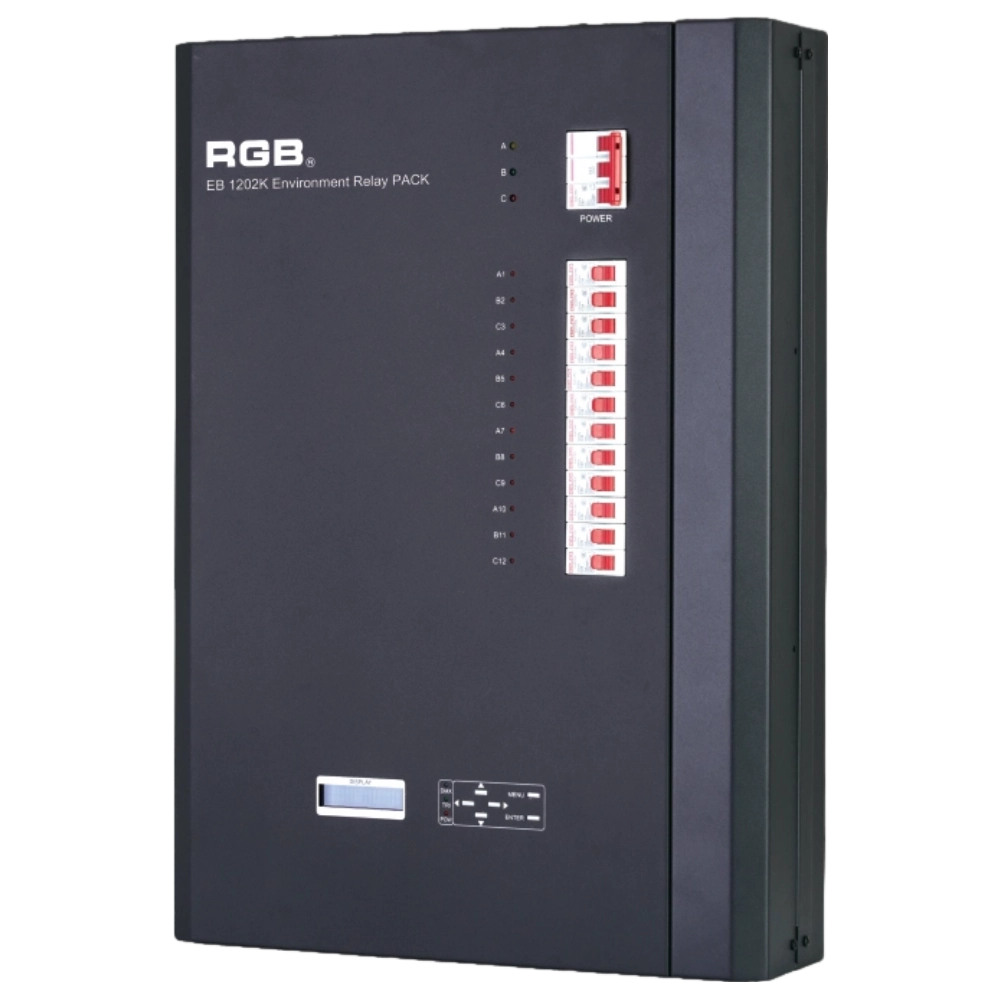
EB1202 Wall-Mounted Smart Site Light Control Series
Wall-mounted smart lighting controller with CE certification, DMX512 compatibility, flexible 12/24-channel output, scene backup, intelligent interface, and multiple dimming curves for precise professional lighting control.
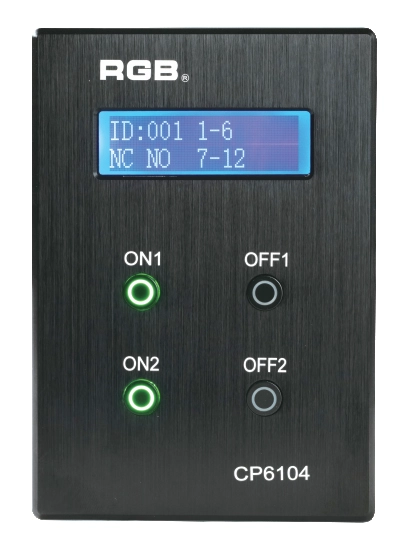
Site Light Controller CP6104
The CP6104 lighting control panel is a lighting control device for theater stage lights, work lights, environmental lighting, commercial art lighting, sports venue lighting and other places. By connecting to the dedicated lighting control host CP6100, it realizes the central control of the lighting system, supports a visual lighting control system, and intuitively displays the online and offline status of CP6104. Realize remote monitoring, editing and setting of corresponding parameters.
It is widely applicable to theaters, cinemas, auditoriums, stadiums, museums, exhibition halls, cultural tourism performances, commercial art lighting and other places.
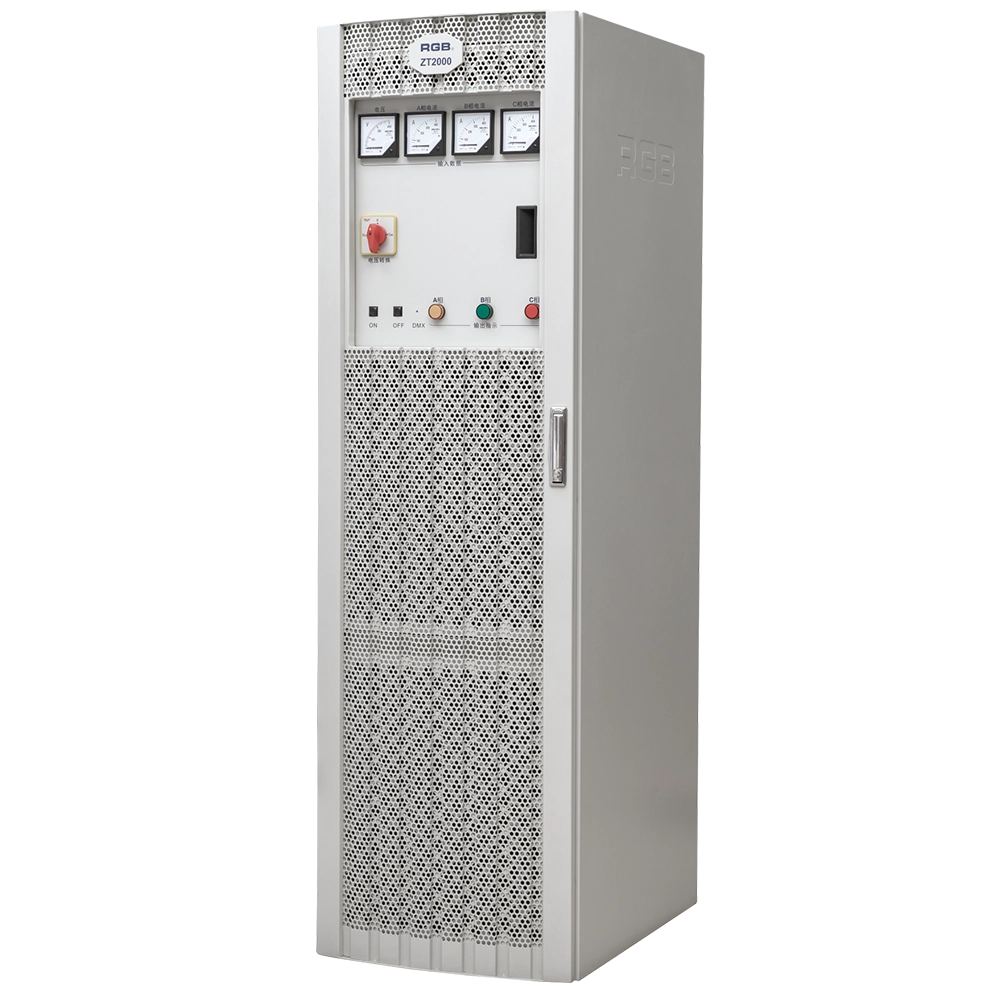
ZT2000 Pass-Through Racks
The ZT2000 straight-through power cabinet is a three-phase 630A/400A air switch main control, with each channel being a 32A air switch sub-control straight-through power cabinet. It can be used in conjunction with various computer lamps, regular lamps, and temporary electrical equipment as a power distribution and supply part for electrical equipment with overcurrent and short-circuit protection. It is a brand-new, reliable, and stable lighting control device in the field of stage lighting control.
It is widely applied in theaters, concert halls, multi-functional halls, cultural and tourism performances, TV stations, gymnasiums, auditoriums, commercial art lighting, and other performance and cultural venues.
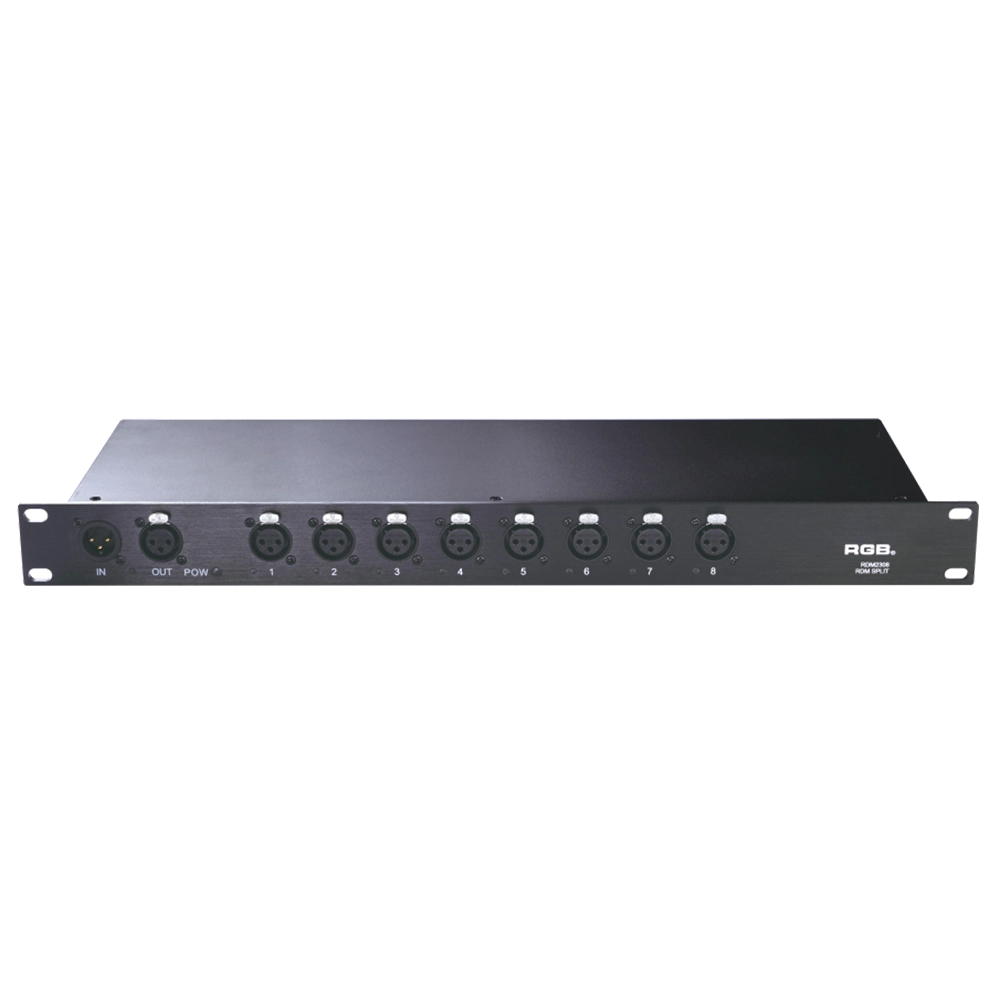
RDM Series Signal Amplifier
RDM2304, RDM2308, RDM2310, RDM2312 rack-mounted The RDM signal amplifier improves the quality of bidirectional RDM signal transmission, ensures the reliability of system control, and prevents faults such as AC high-voltage reverse series lighting control system, lightning high-voltage series entry, and line short circuit, which may affect system stability.
Expert Support
Interested in learning more or need expert guidance related to this article? Fill in your details, and our team will provide tailored support.
Intelligent Control. Brilliant Performance.
RGB specializes in stage lighting control systems, delivering intelligent, reliable, and high-performance solutions for theaters and performance spaces worldwide.
Contact
Email:
Tel:
+86 20 3928 0245
+86 20 3928 0247
Address:
No.3, Huashan Road, Shilou Town, Panyu, Guangzhou, China.
Whatsapp: +8615975520131