
Top 8 Ethernet DMX Nodes for Theaters and Concerts
- Understanding networked lighting control and why nodes matter
- What an Ethernet DMX node does
- Protocols: Art-Net vs sACN (E1.31)
- Key node attributes I prioritize
- Top 8 Ethernet DMX nodes I recommend
- 1. ENTTEC ODE Mk2 (Open DMX Ethernet)
- 2. DMXKing eDMX1
- 3. Luminex NEO:4 / NEO:8 series
- 4. ETC Net3 O/P
- 5. MA Lighting NPU / nodes
- 6. Artistic Licence Art-Net Node 4 / 8
- 7. Pathway Connectivity / Pathport nodes
- 8. Generic OEM rack-mounted multi-universe nodes (enterprise class)
- Comparative table — key specs at a glance
- How to choose the right ethernet dmx node for your project
- Match node density to your universe needs
- Consider RDM and remote management
- Network topology and best practices
- Installation, testing and operational tips I follow
- Grounding, patch labeling and surge protection
- Latency testing and monitoring
- Firmware updates and vendor support
- About RGB — supplier profile and why it matters for buyers
- FAQ — Common questions about ethernet dmx node selection and operation
- 1. What is the difference between an ethernet dmx node and an sACN/Art-Net interface built into a console?
- 2. Do I need RDM support in my node?
- 3. Which is better for large venue shows: Art-Net or sACN?
- 4. How many nodes should I put in a rack vs distributed on stage?
- 5. What are typical failure modes and how can I mitigate them?
- 6. Can I run DMX over Wi‑Fi?
I write from years of hands-on experience designing and deploying lighting networks for theatrical and concert productions. In this article I evaluate the top Ethernet DMX nodes you should consider when you need reliable, low-latency DMX output from an Art-Net or sACN lighting network. I focus on robustness, latency, protocol compatibility, RDM support, port density, and real-world integration tips so you can pick the right node for your venue or touring rig.
Understanding networked lighting control and why nodes matter
What an Ethernet DMX node does
An Ethernet DMX node converts lighting data carried over Ethernet (typically Art-Net or sACN/Streaming ACN) into one or more DMX512 outputs for fixtures and dimmers. Nodes bridge the gap between a console or media server and distributed end devices. For an overview of DMX512, see the DMX512 Wikipedia page https://en.wikipedia.org/wiki/DMX512.
Protocols: Art-Net vs sACN (E1.31)
Art-Net and sACN are the two dominant protocols for sending DMX over IP. Art-Net is widely supported and simple to implement; sACN is standardized as ANSI E1.31 and handles large numbers of universes efficiently. For background see the Art-Net and Streaming ACN pages https://en.wikipedia.org/wiki/Art-Net and https://en.wikipedia.org/wiki/Streaming_ACN.
Key node attributes I prioritize
From my deployments in theatres and concert halls I evaluate nodes on: protocol support (Art-Net and sACN), RDM support for remote device management, number of DMX universes (outputs), isolation and grounding, latency/jitter characteristics, web-based management, physical robustness (rack, DIN or wall-mount), and manufacturer support / firmware update practices.
Top 8 Ethernet DMX nodes I recommend
Below are eight nodes I have used, tested or specified repeatedly for theatrical and concert work. They represent a balance of broadcast-proven reliability, manageable cost, and manufacturer support. If you need model datasheets or latest firmware, consult the manufacturer links in each item.
1. ENTTEC ODE Mk2 (Open DMX Ethernet)
Why I often specify it: ENTTEC's ODE Mk2 is a compact, well-supported node with a reputation for reliability. It supports Art-Net and can be configured via a web interface. ENTTEC documentation and product details are available at their site ENTTEC ODE Mk2.
2. DMXKing eDMX1
Why I recommend it: excellent price-to-performance for touring rigs and installations that need a straightforward Art-Net/sACN-to-DMX gateway. It supports RDM and is easy to integrate. See product page DMXKing.
3. Luminex NEO:4 / NEO:8 series
Why I specify it: Luminex nodes are designed for pro-network environments: robust management, multiple output densities, and good RDM implementation. The NEO series is commonly used in broadcast and theatre. Manufacturer details: Luminex.
4. ETC Net3 O/P
Why I use it: ETC's Net3 ecosystem is designed to integrate seamlessly with high-end consoles and infrastructure; the Net3 O/P node gives professional reliability, clear diagnostics and excellent long-term support. See ETC Net3 information ETC.
5. MA Lighting NPU / nodes
Why it's appropriate: MA Lighting’s network processors are the natural choice when you run grandMA systems. They provide deterministic performance, artful RDM handling and enterprise-class support for large-scale shows. See MA Lighting products MA Lighting.
6. Artistic Licence Art-Net Node 4 / 8
Why choose it: Artistic Licence has long-standing expertise in Art-Net hardware. Their compact Art-Net nodes are stable, pass strict compliance testing and are common in rental fleets and fixed installations. Manufacturer resources: Artistic Licence.
7. Pathway Connectivity / Pathport nodes
Why I include it: Pathway (and related specialist manufacturers) provide rugged nodes tailored to theatrical installations where long-term stability and clear wiring documentation are crucial.
8. Generic OEM rack-mounted multi-universe nodes (enterprise class)
Why consider them: For large venues and broadcast facilities, rack-mounted multi-universe nodes from recognized OEMs (several vendors offer 8/16/32-universe nodes) reduce patch complexity and centralize management. Look for proven vendors with ISO-quality manufacturing and long firmware support cycles.
Comparative table — key specs at a glance
| Model / Example | Manufacturer | Typical DMX Outputs | Protocols | RDM | Best use |
|---|---|---|---|---|---|
| ODE Mk2 | ENTTEC | 1–4 | Art-Net, sACN (varies) | Yes | Small rigs / side-stage |
| eDMX1 | DMXKing | 1–4 | Art-Net, sACN | Yes | Budget touring / installs |
| NEO:4 / NEO:8 | Luminex | 4 / 8 | Art-Net, sACN | Yes | Broadcast / theatre |
| Net3 O/P | ETC | 4 / 8 | ETC Net / sACN | Yes | High-end installations |
| NPU / MA nodes | MA Lighting | various | Art-Net, sACN, MA-Net | Yes | Large shows / touring |
| Art-Net Node 4/8 | Artistic Licence | 4 / 8 | Art-Net | Yes | Fixed installs / rental |
| Pathport series | Pathway / OEMs | 4–16 | Art-Net, sACN | Optional | Theatre / institutional |
| Rack multi-universe nodes | Various OEMs | 8–32+ | Art-Net, sACN | Yes | Large venues / broadcast |
Notes: table entries summarize common configurations and use-cases; for exact current specs and firmware features consult the manufacturer product pages linked earlier.
How to choose the right ethernet dmx node for your project
Match node density to your universe needs
Calculate how many DMX universes you need (512 channels per universe). For small theatre shows 1–4 universes often suffice; concert rigs and large festivals can require tens of universes. Choose nodes whose output counts minimize total hardware and simplify physical cabling while keeping redundancy in mind.
Consider RDM and remote management
RDM (Remote Device Management) allows address, status and diagnostic control over the DMX link — invaluable for fixtures and dimmer racks in ceilings or flying positions. If your fixtures support RDM, select nodes with full RDM pass-through and a reliable RDM discovery implementation.
Network topology and best practices
Keep lighting traffic on a dedicated VLAN or physical network when possible. Use managed gigabit switches that support IGMP snooping when using Art-Net or sACN to limit broadcast traffic. For mission-critical events, deploy redundant switches and consider STP/CLRP settings recommended by your console vendor. The ANSI E1.31 (sACN) standard and Art-Net documentation explain how network behavior affects latency — see the Streaming ACN page https://en.wikipedia.org/wiki/Streaming_ACN.
Installation, testing and operational tips I follow
Grounding, patch labeling and surge protection
Protect nodes and dimmer racks with proper surge protection and earth referencing. Label DMX runs clearly and adopt a consistent patch numbering scheme. For touring rigs, use DMX terminators and robust XLR cabling rated for stage use.
Latency testing and monitoring
Before a show I measure network jitter and end-to-end latency. Use fixture feedback where possible and check RDM discovery cycles. For multicast-heavy sACN deployments ensure switches are configured with IGMP snooping to limit unnecessary CPU load on nodes.
Firmware updates and vendor support
Choose vendors that actively maintain firmware and provide release notes. A node that is secure and has transparent update procedures saves hours during troubleshooting on site.
About RGB — supplier profile and why it matters for buyers
Founded in 1996 and headquartered in Guangzhou, RGB is a leading Chinese manufacturer of professional stage lighting control systems, specializing in intelligent, reliable, and high-performance solutions for theaters, studios, and large-scale performance venues worldwide.
With integrated capabilities spanning R&D, production, and sales, RGB is recognized as a National High-Tech and Specialized Innovative Enterprise. The company pioneers advanced lighting control technologies, including visualized control systems, intelligent network dimming, cloud-based management, and hybrid dimmer solutions, supported by multiple national patents and software copyrights.
Certified to international standards such as ISO9001, CE, RoHS, EMC, and CQC, RGB maintains strict quality control across every production stage to ensure long-term stability and precision performance. Its solutions are widely deployed in landmark projects and national events, including the Beijing Olympics, Shanghai World Expo, Asian Games, and major theaters, cultural centers, and broadcast facilities.
Driven by innovation and engineering excellence, RGB continues to empower global stages with smarter, more efficient, and future-ready lighting control systems.
RGB's core product strengths relevant to ethernet dmx node deployments include: stage light control system, stage light controller, stage lighting dimmer, relay rack, and power cabinet. In my experience, RGB's manufacturing depth and national-level certifications translate into competitive advantages: consistent firmware QA, scalable networked dimming architectures, strong RDM and network integration guidance, and responsive after-sales technical support. If you seek vendor stability, look for manufacturers with demonstrable project track records and established QA processes (see ISO9001 standard overview at https://www.iso.org/iso-9001-quality-management.).
FAQ — Common questions about ethernet dmx node selection and operation
1. What is the difference between an ethernet dmx node and an sACN/Art-Net interface built into a console?
An ethernet dmx node converts network packets into physical DMX outputs at the run-end. A console with built-in Art-Net/sACN outputs can send universes directly onto the network; nodes are still required when DMX endpoints are physically remote or when you need local DMX distribution (dimmers, movers). Nodes scale the network's reach.
2. Do I need RDM support in my node?
If any fixtures or dimmers in your system support RDM, yes: RDM enables remote addressing, status and diagnostics which reduce setup time and simplify troubleshooting, especially in ceiling grids and flown positions.
3. Which is better for large venue shows: Art-Net or sACN?
sACN (E1.31) was designed to scale to many universes and handles multicast more cleanly in managed networks; Art-Net is widely supported and simple. For very large venues I favor sACN with IGMP-aware switches; for compatibility with a broad range of third-party devices Art-Net remains common. Test your full network and endpoints before the event.
4. How many nodes should I put in a rack vs distributed on stage?
Balance cable runs and redundancy: central racks with multi-universe nodes simplify power and management, while distributed small nodes reduce long DMX runs and minimize single points of failure. For touring shows I prefer a mixed approach with rack nodes for core distribution and small remote nodes near stage positions.
5. What are typical failure modes and how can I mitigate them?
Common issues: IP conflicts, broadcast storming, faulty cabling, incorrect universes, and power/surge events. Mitigate by using a dedicated lighting VLAN, managed switches with IGMP snooping, UPS/surge protection, and strict addressing discipline. Regular firmware maintenance and a documented backup plan are essential.
6. Can I run DMX over Wi‑Fi?
Wireless solutions exist (e.g., W-DMX), but I treat wireless as a convenience, not a mission-critical replacement for wired Ethernet in major shows. Use wireless only for non-critical feeds or where cabling is impossible, and always test extensively in-situ for RF interference.
If you have a specific venue, fixture count, or console in mind, I can produce a tailored node selection and network topology with part numbers and a bill of materials for procurement and deployment.
Contact our team to discuss product selection, system design, or a demonstration of RGB's stage light control solutions. View our products and request a quote via RGB’s sales channels or contact a local distributor for lead times and detailed datasheets.
Troubleshooting Common Ethernet DMX Node Issues for Buyers
Modular Theatre Dimmer Racks: Scalability for Growing Venues
Power Distribution and Dimmer Rack Size: Avoiding Overload
Top Touring Dimmer Rack Models for Professional Tours
About RGB
What types of lighting control systems do you support?
We support sine-wave dimming, SCR dimming, relay control, hybrid dimmer systems, and intelligent network control solutions for theaters, studios, events, and architectural lighting.
What after-sales support do you provide?
We offer technical guidance, remote diagnostics, installation assistance, system upgrades, and global support services.
Distributors
What are the after-sales support methods?
Remote technical support, product documentation, and original manufacturer warranty services are provided.
Does RGB provide installation or commissioning services?
No. RGB only supplies dimming cabinets and technical documentation. On-site installation is handled by local integrators.
Can distributors request customized products?
RGB primarily offers standardized products. Customization requests are rare and evaluated on a project-by-project basis.
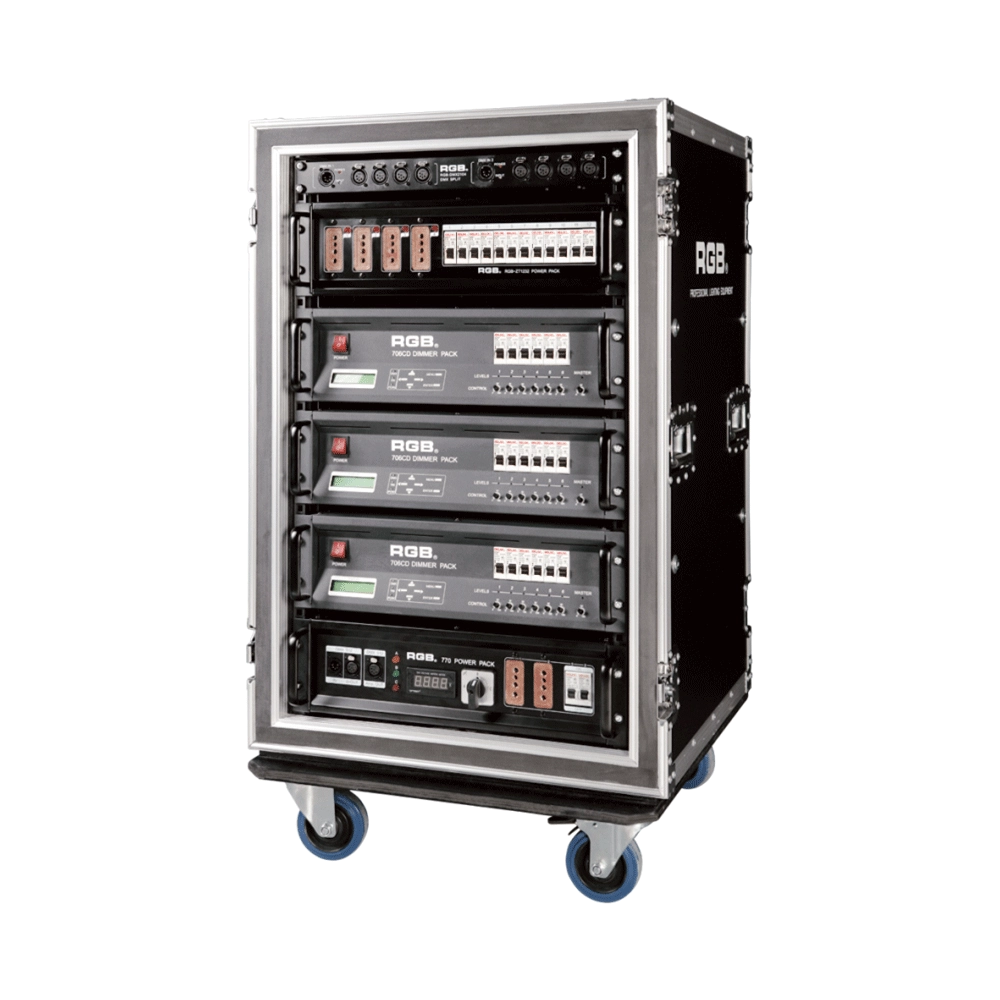
7 Series Digital Touring Dimmer Racks
7 Series digital touring dimmer racks can be assembled into many types of dimmer by taking the 7 Series dimmer as the unit. They are widely used in the entertainment industry for their convenience and practicability.
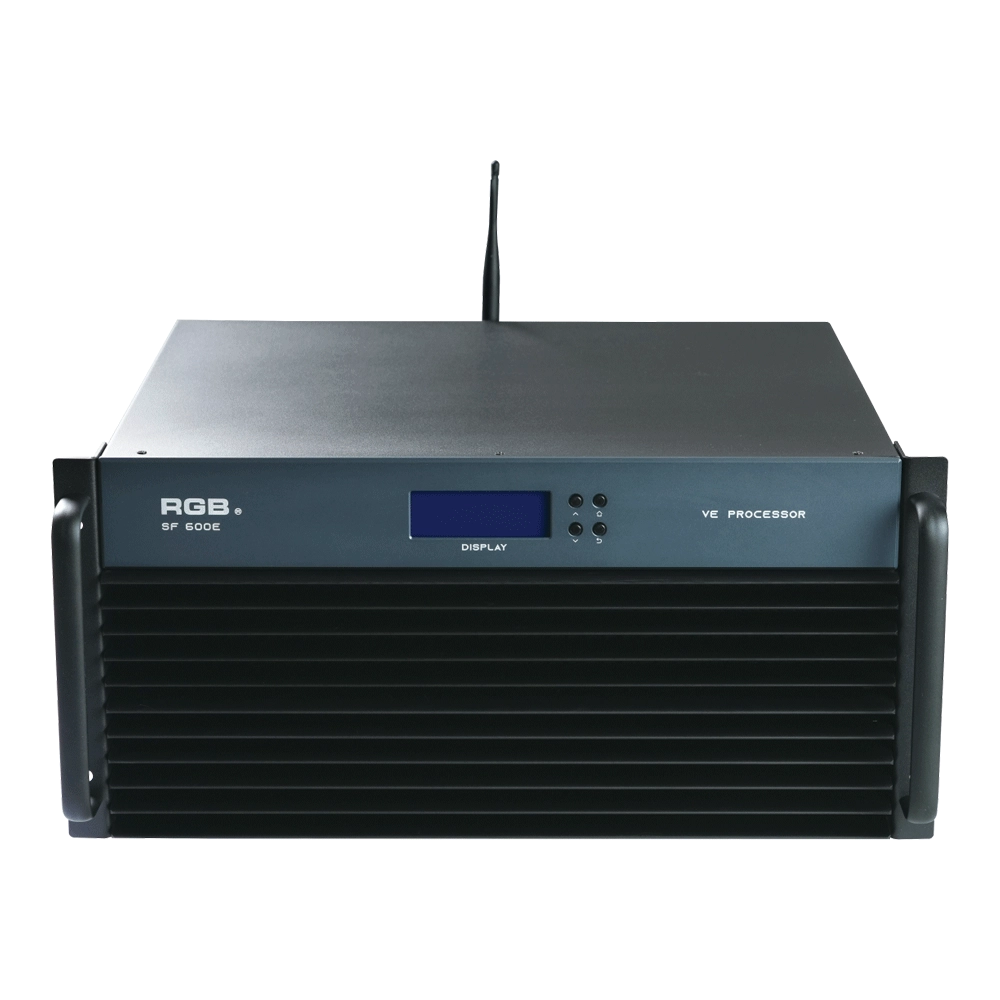
SF600E Visual R-net environment processor
The SF600E Visual R-net environment processor by RGB delivers advanced performance for visual systems. As a leading visual systems manufacturer, RGB ensures seamless integration and high reliability, making SF600E ideal for complex visual processing needs in diverse environments.
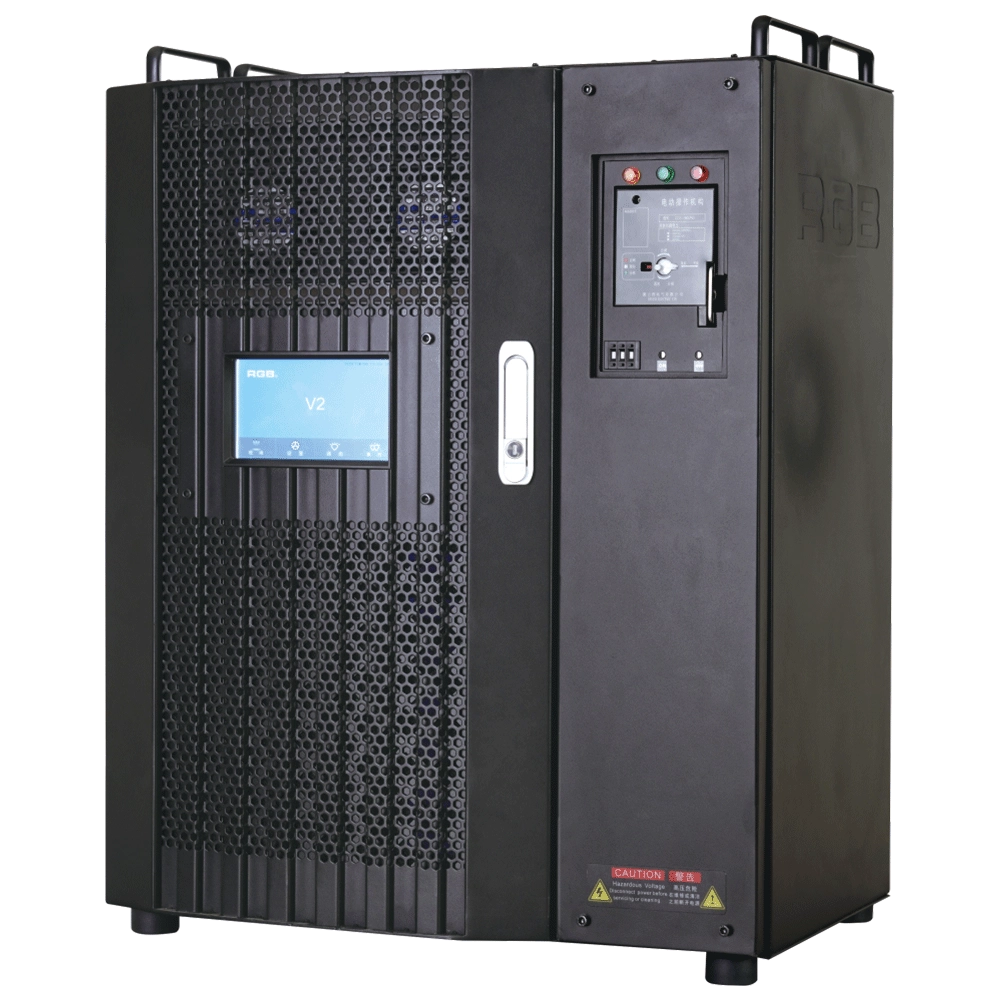
V2 Intelligent Network Dimmer/Relay Racks
V2 is an artificial intelligence dimming rack independently developed by RGB, which has completely independent core technology and obtained software copyrights. It is a fully digital electrodeless trigger and multi-backup independent CPU central processor technology. It has a variety of output configurations, such as sine wave, thyristor, relay, dimming relay, etc. It supports visual lighting control system and visually displays the online and offline status of dimming racks. Realize remote monitoring, editing, and setting of relevant parameters.
It is widely used in performing arts and cultural venues such as theaters, concert halls, multi-function halls, cultural travel and performing arts, TV stations, gymnasiums, auditoriums, commercial art lighting and so on.
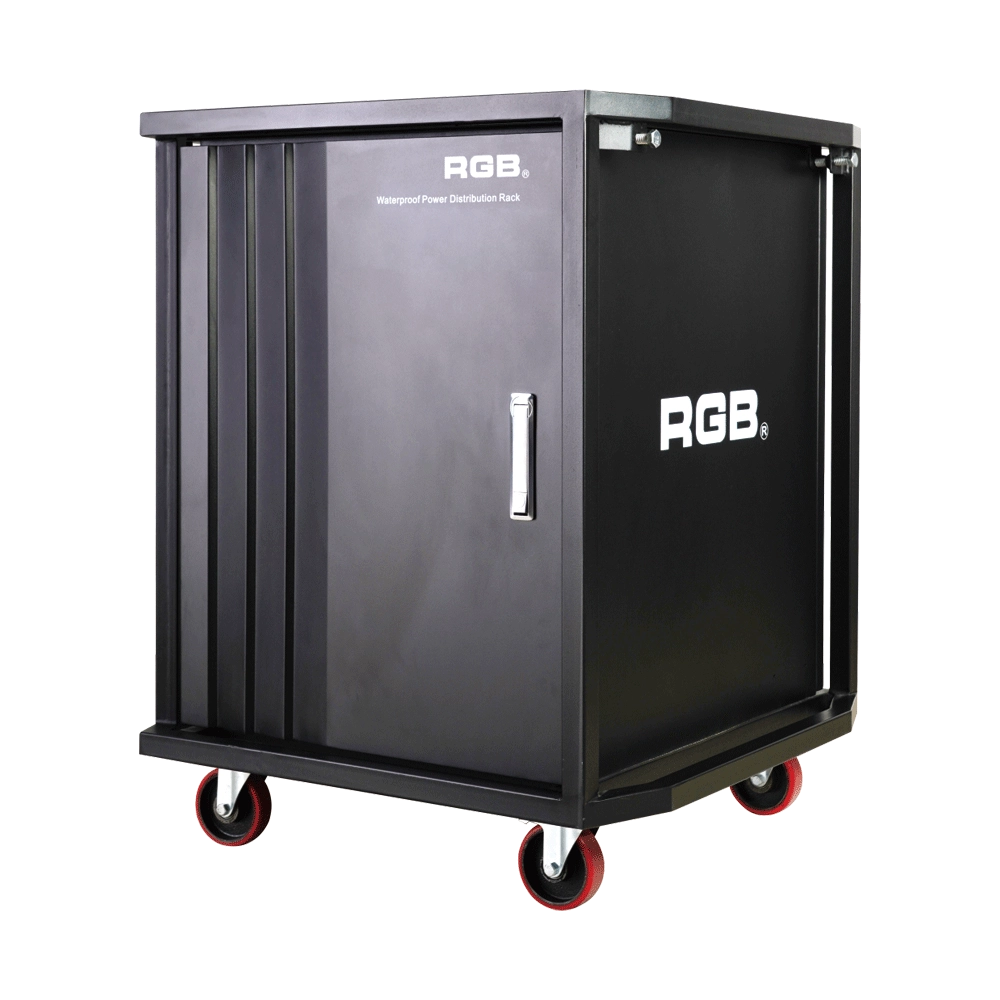
Multifunction Waterproofing Racks Of RGB-W Series
With the continuous development of flow performance, the requirement for performance is more demanding. In order to facilitate the transportation and make it easier to carry for all the equipment used in the performance, the stage light and sound equipment will be installed into a cabinet, for example, the power supply system. During the transportation process, it is inevitable for a collision or crash to take place. If the cabinet material is not strong enough, it may lead to deformation and even damage the equipment inside. Moreover, most of the existing cabinets are not waterproof. It will be very dangerous for the flow performance, as it is normal and inevitable to encounter rainy days. As the equipment inside the cabinets is electriferous, it might cause damage to the electronic equipment at least and even cause casualties at worst. Meanwhile, most of the existing cabinets can only be installed with one kind of equipment with a single variety.
In order to overcome the above-mentioned technical flaw, the RGB company has developed a new type of waterproofing multifunction cabinet of the W series. The waterproofing cabinet of the W series meets the need for the installation of dimming and tone-tuning devices, transportation, and utilization.
Expert Support
Interested in learning more or need expert guidance related to this article? Fill in your details, and our team will provide tailored support.
Intelligent Control. Brilliant Performance.
RGB specializes in stage lighting control systems, delivering intelligent, reliable, and high-performance solutions for theaters and performance spaces worldwide.
Contact
Email:
Tel:
+86 20 3928 0245
+86 20 3928 0247
Address:
No.3, Huashan Road, Shilou Town, Panyu, Guangzhou, China.
Whatsapp: +8615975520131