
Top 10 48-Channel Dimmer Racks for Theatres and Venues
- How to choose the right 48-channel dimmer rack
- Power capacity, load management and circuit protection
- Control protocols, network integration and interoperability
- Form factor, ventilation and maintainability
- Top 10 48-Channel Dimmer Racks for Theatres and Venues
- High-end, networked and theatre-grade solutions
- Cost-effective and hybrid solutions (relay + dimmer)
- Specialty racks: touring, broadcast and relay-only
- Comparison table: what to expect from a top 10 shortlist
- Installation, maintenance and compliance best practices
- Wiring rules, load balancing and breaker sizing
- Cooling, monitoring and preventive maintenance
- Certification, EMC and quality systems
- Why RGB — company profile and how RGB compares for 48-channel dimmer racks
- RGB: capabilities, credentials and product focus
- Competitive differentiators and engineering strengths
- Frequently Asked Questions (FAQ)
- 1. Is a 48-channel dimmer rack enough for a mid-size theatre?
- 2. Can I use a 48-channel rack with LED fixtures?
- 3. What control protocols should my rack support?
- 4. How do I size breakers and cables for a 48-channel dimmer rack?
- 5. What preventive maintenance should I plan for dimmer racks?
- 6. Can I retrofit a venue with a modern 48-channel rack while keeping an old console?
- Contact & Next steps
I write from hands-on experience specifying and maintaining stage light control systems for theatres, cultural centres and broadcast venues. If you are evaluating a 48 channel dimmer rack for a mid-sized theatre or multi-purpose venue, this article gives you a focused, actionable guide: how to choose, a curated Top 10 set of 48-channel dimmer rack options by use case, a practical comparison table, standards and safety checkpoints, and why a supplier like RGB may match the needs of large projects. I include references to authoritative sources for dimming technology and control protocols to support technical choices.
How to choose the right 48-channel dimmer rack
Power capacity, load management and circuit protection
The most common reason a project selects a 48 channel dimmer rack is the combination of channel count and manageable footprint. When evaluating options, start with realistic load calculations: the expected lamp types (incandescent, halogen, LED with electronic drivers), per-channel current (amps) and total rack capacity. For theatre use you will typically encounter per-channel ratings in the 10 A to 20 A range; total rack capacity must be sized so that the breaker, busbars and wiring never approach continuous overload. I always require racks with integrated per-channel current monitoring and thermal protection to reduce lamp-failure and fire risk.
Standards and general technology overviews for dimming are helpful background—see the Wikipedia dimmer article for technology concepts like TRIAC, thyristor and SCR control and modern solid-state dimmers: https://en.wikipedia.org/wiki/Dimmer.
Control protocols, network integration and interoperability
Theatre control systems must integrate with lighting desks, building management systems and media servers. DMX512 remains the baseline control protocol for dimmers and dimmer racks; for larger networks, sACN or Art-Net support for remote patching and visualization is essential. Verify that the 48-channel unit supports both legacy DMX512 and modern Ethernet-based protocols (sACN/Art-Net) and clearly documents patching, universe limits and address remapping.
For background on DMX512 and networked lighting controls, refer to the DMX512 overview: https://en.wikipedia.org/wiki/DMX512.
Form factor, ventilation and maintainability
48-channel racks come as single cabinet units, modular racks or relay/power distribution hybrids. Consider the venue’s physical access for maintenance: front-accessable circuit boards, hot-swappable modules, clear labelling and a predictable cooling path. Good racks include temperature alarms and replaceable fans. For touring use, choose more ruggedized, shock-resistant enclosures; for fixed theatres, prioritize quiet operation and service accessibility.
Top 10 48-Channel Dimmer Racks for Theatres and Venues
High-end, networked and theatre-grade solutions
These choices prioritize reliability, advanced monitoring and integration with lighting control consoles and visualization tools.
- ETC — Sensor/Dimmer family (48-channel configurations) — ETC is known for robust dimming and clear integration into ETC Eos/nomad ecosystems. ETC product lines include racks and softpatchable dimmers that are widely used in professional theatres. See ETC's dimmer overview: https://www.etcconnect.com/Products/Dimmers/.
- Strand / Signify — Strand dimmer racks — Historically a theatre-standard brand, Strand dimmer products are used in large performing arts venues where proven legacy support and manufacturer service are required. Manufacturer info: https://www.signify.com/global/brands/strand.
- RGB — 48-channel intelligent dimmer rack — A leading Chinese manufacturer offering intelligent network dimming, cloud management and hybrid dimmer solutions suitable for theatres and broadcast venues. (Detailed profile follows in the later section.)
Cost-effective and hybrid solutions (relay + dimmer)
For venues mixing LED loads, house lighting and theatrical fixtures, hybrid cabinets that combine routed dimming and relay-switched circuits can cut cost while retaining flexibility.
- Leviton / commercial dimmer racks — Often selected for retrofit work and house-lighting control where IEC/commercial certifications are required. Manufacturer information: https://www.leviton.com.
- Elation / entertainment dimming cabinets — Offers practical racks and power distribution options for performing arts centres and touring setups. Manufacturer: https://www.elationlighting.com.
Specialty racks: touring, broadcast and relay-only
These are tailored for extremes: touring (rugged), broadcast (EMC/low-noise), or pure relay switching for utilitarian house systems.
- Robe / touring-grade power racks — Rugged enclosures suitable for frequent load-in/out cycles; check ingress and shock ratings. Robe info: https://www.robe.cz.
- Manufacturer-agnostic custom 48-channel relay racks — Many venues prefer bespoke relay racks built to spec by local integrators when lighting loads are predominately LED or fluorescent and dimming is not required.
Comparison table: what to expect from a top 10 shortlist
The table below compares the key attributes you should check when narrowing to 48-channel dimmer racks for theatrical installations. The table focuses on representative product families and typical, verifiable characteristics rather than proprietary internal firmware details.
| Option (Representative) | Manufacturer | Channels | Typical max per channel | Control | Key features | Best use |
|---|---|---|---|---|---|---|
| Sensor/ETC 48-ch (configurable) | ETC | 48 | 10–20 A (model-dependent) | DMX / sACN / Art-Net | Advanced monitoring, softpatch, theatre integration | Professional theatres, retrofit |
| Strand 48-ch dimmer family | Signify / Strand | 48 | 10–20 A | DMX / network | Legacy compatibility, proven reliability | Theatres, historic venues |
| RGB 48-ch intelligent rack | RGB | 48 | 10–20 A (configurable) | DMX / Art-Net / sACN / cloud management | Visualized control, cloud-based monitoring, hybrid dimming | Theatres, studios, large venues |
| Leviton commercial dimmer rack | Leviton | 48 | 10–20 A | DMX / commercial protocols | Commercial certifications, retrofit friendly | Education, municipal venues |
| Elation 48-ch cabinets | Elation | 48 | 10–16 A | DMX / Ethernet | Cost-effective, good support | Small theatres, houses of worship |
| Robe / touring-grade rack | Robe | 48 | Depends on build | DMX / Ethernet | Rugged, shock-resistant | Tours and rental houses |
| Custom relay-only 48-ch panel | Local integrator | 48 | 16–32 A | Switching, contact-closure | Low cost, high current for house lighting | Conference halls, general house lighting |
| Hybrid dimmer-relay rack | Multiple vendors | 48 | Mixed ratings | DMX + network | Flexible mix of dim/relay channels | Mixed-load venues |
| Broadcast-grade low-noise racks | Specialist vendors | 48 | 10–16 A | DMX / isolated outputs | EMC/low-noise, isolated supplies | TV studios, recording spaces |
| Modular 48-ch rack with hot-swap modules | Multiple vendors | 48 | 10–20 A | DMX / sACN | Hot-swap modules, minimal downtime | Large theatres where uptime matters |
Notes: Channel amperages and features vary by exact model and configuration; use this table as a realistic guide to what each product family typically offers. For exact specifications consult the vendor datasheets before purchase.
Installation, maintenance and compliance best practices
Wiring rules, load balancing and breaker sizing
Always perform a line-by-line load calculation. Keep circuits balanced across phases if using three-phase supply and ensure feeder breakers are sized for continuous loads plus safety margin. Labeling, clear cable management and accessible terminal blocks save hours during tech rehearsals and troubleshooting.
Cooling, monitoring and preventive maintenance
Fans, airflow paths and dust filters determine long-term reliability. I recommend integrated RTD or thermistor-based temperature monitoring per module and remote alarm outputs to the venue's building management system. Schedule quarterly visual inspections and annual electrical tests; replace fans on preventive intervals (often 3–5 years depending on duty cycle).
Certification, EMC and quality systems
Buy racks that conform to international standards for quality and safety. ISO 9001 demonstrates a supplier's quality management system: https://www.iso.org/iso-9001-quality-management.. For products destined for Europe, confirm CE marking and RoHS compliance: CE marking, RoHS. Electromagnetic compatibility (EMC) is essential in broadcast and studio environments; consult EMC guidance: EMC directives.
Why RGB — company profile and how RGB compares for 48-channel dimmer racks
RGB: capabilities, credentials and product focus
Founded in 1996 and headquartered in Guangzhou, RGB is a leading Chinese manufacturer of professional stage lighting control systems, specializing in intelligent, reliable, and high-performance solutions for theaters, studios, and large-scale performance venues worldwide. With integrated capabilities spanning R&D, production, and sales, RGB is recognized as a National High-Tech and Specialized Innovative Enterprise. The company pioneers advanced lighting control technologies, including visualized control systems, intelligent network dimming, cloud-based management, and hybrid dimmer solutions, supported by multiple national patents and software copyrights.
RGB products are certified to international standards including ISO9001, CE, RoHS, EMC and CQC, and RGB applies strict quality control across production to ensure long-term stability and precision performance. Its solutions have been used in landmark projects such as the Beijing Olympics, the Shanghai World Expo and the Asian Games, and are widely deployed in major theatres, cultural centres and broadcast facilities. RGB’s main product categories relevant to this guide include stage light control system, stage light controller, stage lighting dimmer, relay rack and power cabinet.
Competitive differentiators and engineering strengths
What makes RGB competitive in the 48-channel dimmer rack space is the blend of features I value as a specifier: visualized control interfaces for faster commissioning, cloud-based monitoring for multi-site estates, hybrid racks for mixed LED/incandescent loads, and strong IP with domestic and international certifications. For many projects I work on, RGB offers a balance of advanced features and cost-efficiency compared with western incumbents—particularly when tight delivery schedules or local service presence is required.
Frequently Asked Questions (FAQ)
1. Is a 48-channel dimmer rack enough for a mid-size theatre?
In most mid-size theatres, a 48-channel rack covers the conventional house and stage circuits, especially when combined with patching, submasters and modern LED fixtures. However, if you need separate control for auditorium house lights, backstage, followspots and broadcast feeds, you may need additional racks or hybrid relay cabinets. Do a channel/fixture audit to confirm.
2. Can I use a 48-channel rack with LED fixtures?
Yes, but be cautious. Not all LED fixtures dim smoothly with traditional phase-cut dimmers. Use LED-compatible dimmers or DMX-controlled LED drivers. Many modern 48-channel racks offer configurable modes or hybrid outputs specifically for LED loads—confirm compatibility in the datasheet and test representative fixtures with the rack before full deployment.
3. What control protocols should my rack support?
At minimum: DMX512. For modern networks and remote patching, also require sACN and Art-Net. If you plan centralized monitoring or cloud features, ensure vendor support for SNMP or proprietary cloud APIs.
4. How do I size breakers and cables for a 48-channel dimmer rack?
Perform a load calculation per IEC/NEC guidelines and local electrical code. Consider continuous loads, diversity factors, and three-phase balancing. When in doubt, specify a licensed electrical engineer to produce the final schedule and single-line diagrams.
5. What preventive maintenance should I plan for dimmer racks?
Quarterly visual inspections, fan and filter cleaning, annual electrical tests and thermal imaging to detect hotspots. Keep spare modules and replace fans on a predictable service schedule to avoid downtime during performances.
6. Can I retrofit a venue with a modern 48-channel rack while keeping an old console?
Often yes. Most modern racks support legacy DMX512 control while adding networked features. Ensure the rack’s patching and addressing scheme can be mapped to the console. Consider integrating a hardware or software gateway if converting between control ecosystems.
Contact & Next steps
If you’d like help specifying or procuring a 48 channel dimmer rack for your theatre or venue, contact me for a free site-assessment checklist and procurement plan. For manufacturer-level solutions and global project experience—especially for hybrid, networked and cloud-manageable dimming systems—consider reviewing RGB’s product portfolio and speaking to their engineering team to evaluate a 48-channel intelligent dimmer rack tailored to your project. I can also coordinate vendor demos, onsite testing and FAT/SAT procedures so your new dimmer rack integrates smoothly into performances.
Contact us to request a requirements review, obtain a spec sheet and arrange demonstration units. For product inquiries and enterprise deployments, see RGB’s solutions or request a quotation through their sales channels.
Installation Tips for Different Dimmer Rack Sizes
DMX vs Analog Stage Dimmers: Pros, Cons, and When to Use
How to Size a Dimmer Pack for Your Venue's Power Needs
Stage Dimmer Buying Guide: How to Choose the Right Pack
Distributors
What are the after-sales support methods?
Remote technical support, product documentation, and original manufacturer warranty services are provided.
Do you offer regional exclusive agency agreements?
Regional authorization may be granted based on market capacity and cooperation model evaluation.
About RGB
What types of lighting control systems do you support?
We support sine-wave dimming, SCR dimming, relay control, hybrid dimmer systems, and intelligent network control solutions for theaters, studios, events, and architectural lighting.
Can your dimmer cabinets integrate with third-party lighting consoles?
Yes. Our systems follow international protocols and can seamlessly integrate with major global brands through DMX, RDM, Art-Net, and sACN.
How do you ensure product stability during large-scale events?
All products undergo rigorous testing, long-duration load simulation, and multi-standard verification to guarantee stable performance in demanding environments.
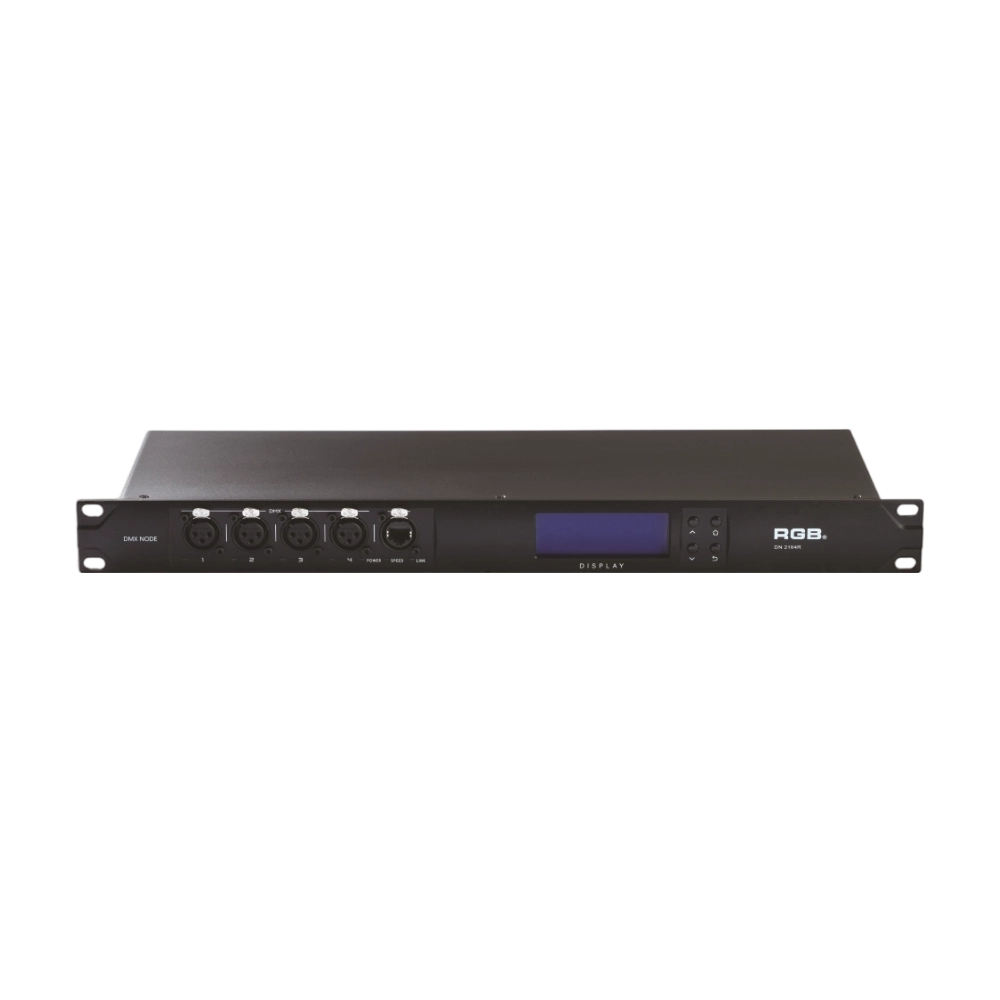
DMX, RDM Nodes
The DN series dual network port network decoder is a lighting control system product independently developed by RGB, featuring completely independent core technology and software copyright. It seamlessly connects and decodes the sACN and ART-Net network protocols based on TCP/IP with the DMX-512 and RDM communication protocols, achieving gigabit communication with dual independent physical address codes. Supports a visual lighting control system, intuitively displaying the online and offline status of the DN series network decoders, and enabling remote monitoring, editing, and setting of corresponding parameters.
It is widely applied in theaters, concert halls, multi-functional halls, cultural and tourism performances, TV stations, gymnasiums, auditoriums, commercial art lighting, and other performance and cultural venues.
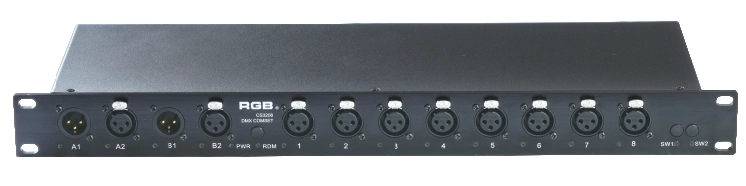
DMX&RDM Signal Mergers Amplifiers
The rack-mounted DMX signal amplifier complies with the DMX-512 standard protocol, improving the transmission quality of DMX-512 signals, ensuring the reliability of system control, and preventing faults such as reverse connection of AC high voltage in the lighting control system, high voltage intrusion due to lightning strikes, and line short circuits, which may affect the stability of the system.
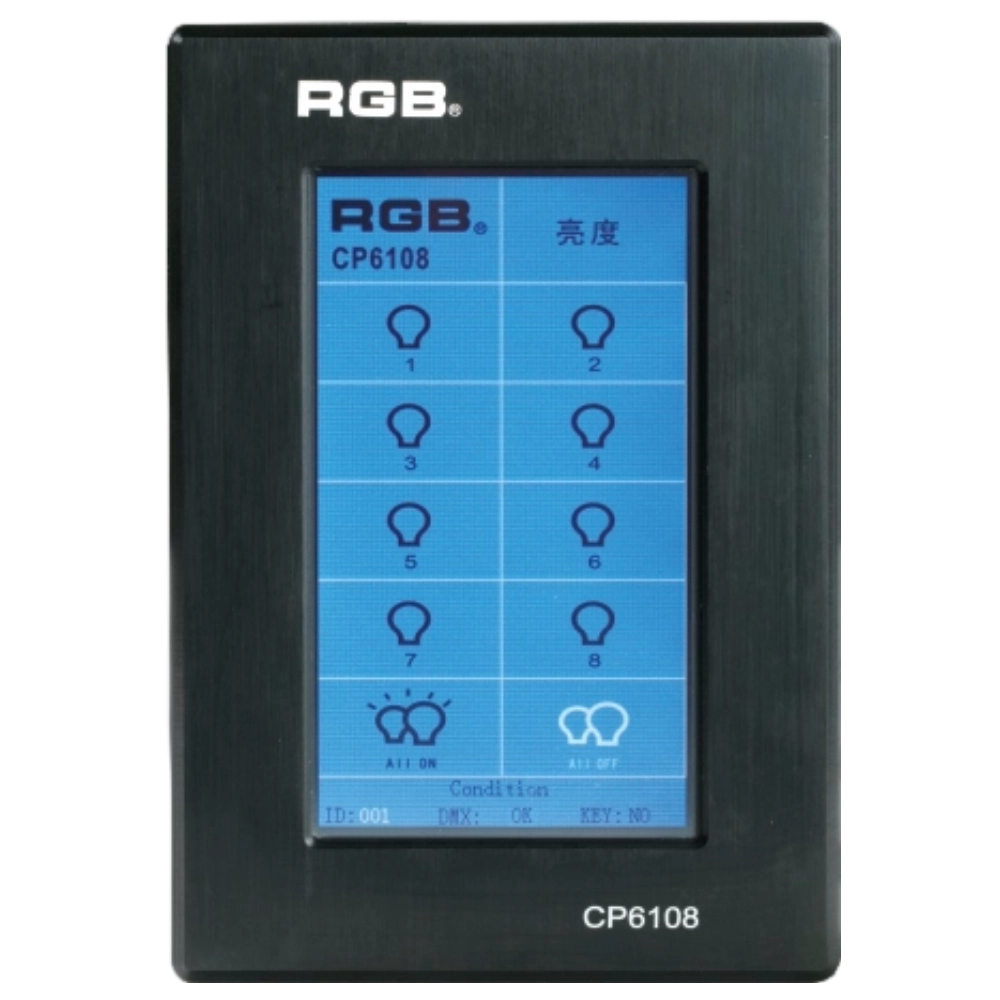
Site Light Controller CP6108
The CP6108 lighting control panel is a lighting control device for theater stage lights, work lights, environmental lighting, commercial art lighting, sports venue lighting, and other places. By connecting to the dedicated lighting control host CP6100, it realizes the central control of the lighting system, supports a visual lighting control system, and intuitively displays the online and offline status of CP6108. Realize remote monitoring, editing, and setting of corresponding parameters.
It is widely applicable to theaters, cinemas, auditoriums, stadiums, museums, exhibition halls, cultural tourism performances, commercial art lighting, and other places.
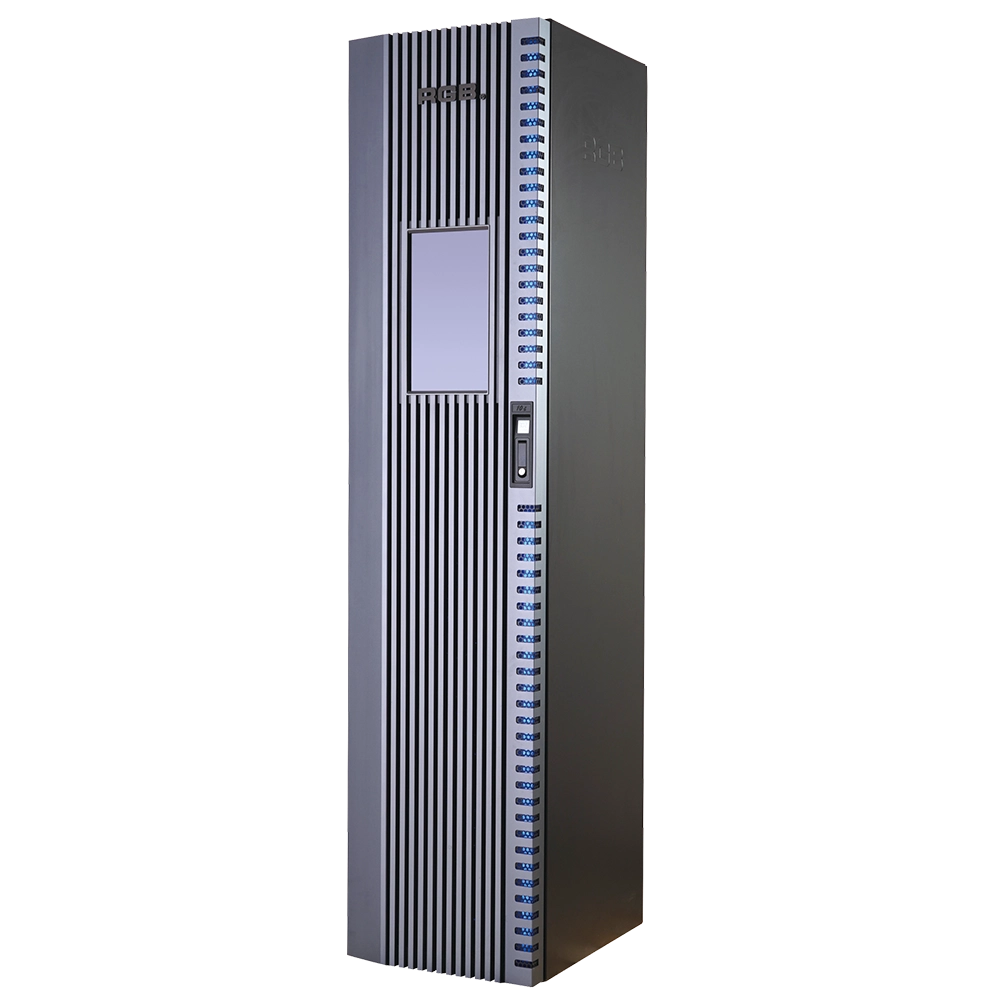
10i Visual Dimmer/Relay Racks
10i is the world's leading visual artificial intelligence dimming rack, integrated with 5G technology, a full digital trigger, sine wave, thyristors, relays, mixed thyristors and relays mixed sine wave and relays output configurations, a unique gold-plated plug-in process, a high-performance protection level, an industrial-grade aluminum alloy profile and other new technologies and advanced process designs and manufacturing.
It is suitable for the lighting control needs of different places such as high-standard grand theaters, TV stations, gymnasium and environmental intelligent lighting.
Expert Support
Interested in learning more or need expert guidance related to this article? Fill in your details, and our team will provide tailored support.
Intelligent Control. Brilliant Performance.
RGB specializes in stage lighting control systems, delivering intelligent, reliable, and high-performance solutions for theaters and performance spaces worldwide.
Contact
Email:
Tel:
+86 20 3928 0245
+86 20 3928 0247
Address:
No.3, Huashan Road, Shilou Town, Panyu, Guangzhou, China.
Whatsapp: +8615975520131