
The Masterclass: 2026 Guide to LED Compatible Dimmer Racks [Performance & Control]
- Executive Summary: Key Takeaways for 2026
- What Are LED Compatible Dimmer Racks?
- The Core Conflict: Why Traditional SCR Dimmers Fail with LEDs
- 2026 Tech Landscape: Choosing the Right Module Technology
- Retrofit vs. Replace: Upgrading Infrastructure for Hybrid Rigs
- Control Protocols & Networking: Beyond DMX512
- Expert Tips: Preventing Flicker and Inrush Issues
- Conclusion
- Can I plug LED lights into a standard dimmer rack?
- What is a ThruPower module?
- Why do my LED lights flicker on the dimmer rack?
- How do I fix LED ghosting (lights staying on when off)?
- What is the difference between SCR and IGBT for LEDs?
- How do I manage LED inrush current on my dimmer rack?
- Do I need RDM for my dimmer rack?
- Is it better to retrofit or replace an old dimmer rack?
Executive Summary: Key Takeaways for 2026
Modern dimmer racks have evolved into intelligent power control systems designed to manage the distinct electrical requirements of both tungsten and LED fixtures. In 2026, the concept of a "dimmer" is largely obsolete; venues now require hybrid infrastructure that provides constant power to LEDs while retaining dimming capabilities for legacy incandescent inventory.
For facility managers and technical directors, understanding this shift is financial and operational survival. Using outdated Phase Control dimming on modern Hybrid lighting rig power distribution systems can destroy expensive fixture power supplies and void warranties. The industry has moved toward versatile module architecture, allowing a single slot in a rack to serve as a dimmer, a relay, or a constant circuit breaker.
- Intelligent Control: Racks now communicate bi-directionally via network protocols, not just receive DMX.
- Module Versatility: ThruPower relay modules allow software-switching between dimming and constant power.
- Cost Efficiency: Retrofitting is often 50% cheaper than full replacement.
- Safety: Proper management prevents fire hazards associated with overheating neutral conductors.
What Are LED Compatible Dimmer Racks?
LED compatible dimmer racks are advanced power distribution units that utilize dual-mode modules to switch between voltage regulation (dimming) and air-gap relays (switching) based on the connected load. Unlike vintage racks that essentially "choke" electricity to lower intensity, these systems deliver pure sine wave power when required.
This distinction is vital because LED fixtures contain internal drivers—miniature computers that manage the light output. Feeding a "chopped" or dimmed power signal to these drivers confuses them, leading to failure. By integrating ThruPower relay modules, a venue can plug a 750W Source Four par into Circuit 1 and a varying-voltage LED mover into Circuit 2 without physically changing hardware.
- Dual-Mode Capability: Automatic switching between SCR/IGBT dimming and Relay modes.
- Protection: Prevents voltage leakage that causes LED "ghosting."
- Flexibility: Supports mixed inventory of incandescent and solid-state lighting.
The Core Conflict: Why Traditional SCR Dimmers Fail with LEDs
Traditional SCR dimmers fail with LEDs because they rely on a minimum resistive load to latch open, whereas LEDs present a capacitive, non-linear load that SCRs cannot stabilize. This mismatch results in the dimmer circuit rapidly opening and closing, sending dirty power downstream.
Standard Silicon Controlled Rectifiers (SCR) were built for the simple resistive heat of a tungsten filament. When an efficient LED is connected, it often draws less current than the SCR's "holding current" threshold. Furthermore, the SCR vs IGBT dimming technology debate highlights how older SCRs chop the AC sine wave, creating harmonic distortion that overheats LED neutral wires and causes audible buzzing.
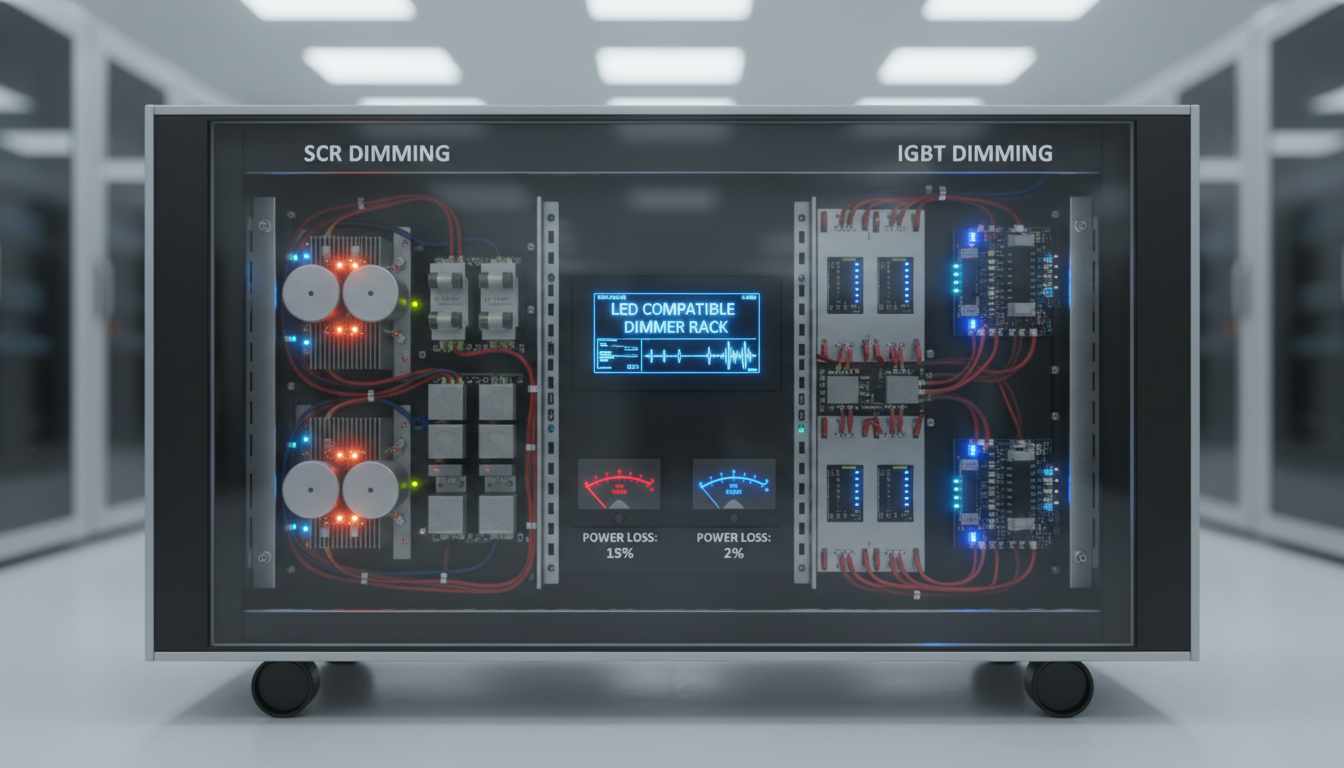
- Minimum Load Errors: LEDs drawing <10W may cause the dimmer to shut off or strobe.
- Non-Linearity: The dimming curve of an SCR does not match the electronic dimming of an LED driver.
- Voltage Spikes: Inductive kickback from LED drivers can destroy legacy rack components.
- Harmonic Distortion: Poor power quality can interfere with audio systems.
2026 Tech Landscape: Choosing the Right Module Technology
The most effective technology for 2026 is the Hybrid or "ThruPower" module, which combines a solid-state dimmer with a mechanical air-gap relay for true bypass capability. This technology ensures that when an LED fixture needs "Non-Dim" power, it receives a direct electrical connection identical to a wall outlet, bypassing the dimming choke entirely.
While SCR vs IGBT dimming technology was a major debate in the 2010s, the focus has shifted. IGBT (Insulated-Gate Bipolar Transistor) is superior for dimming due to its ability to perform Reverse Phase Control (trailing edge), which is gentler on electronic transformers. However, since most modern LEDs prefer constant power (Relay) over external dimming, the priority is now on high-quality switching relays compliant with standards from organizations like USITT.
- Relay / Air Gap: The only safe mode for powering intelligent fixtures; physically disconnects power.
- ThruPower / Hybrid: The industry standard for flexibility; software selectable modes.
- IGBT (Reverse Phase): Best for dimming legacy retrofittable LED bulbs that must be dimmed externally.
- Sine Wave: High fidelity but largely cost-prohibitive for general use.
Retrofit vs. Replace: Upgrading Infrastructure for Hybrid Rigs
Retrofitting involves replacing only the power modules and processor core of an existing rack, whereas replacement requires removing the entire steel enclosure and rewiring the main feeds. For many venues with copper-rich legacy wiring (like Strand CD80 or ETC Sensor racks), retrofitting is the most sustainable path.
A full replacement is necessary if the physical bus bars are corroded or if the venue is moving to a distributed system where power bars are located on the pipe rather than in a central room. However, swapping in ThruPower relay modules allows a venue to modernize a 20-year-old rack in hours, providing DMX stage lighting power control features that rival brand-new installations.
- Retrofit Pros: Lower labor cost, less conduit work, retains existing feed wiring.
- Replacement Pros: New warranty, smaller footprint, potential for distributed architecture.
- Cost Analysis: Retrofits typically cost $300-$500 per circuit, while new installs can exceed $1,000 per circuit including labor.
Control Protocols & Networking: Beyond DMX512
Modern power control relies on RDM (Remote Device Management) and sACN (Streaming ACN) to provide real-time feedback and remote configuration of rack modules. It is no longer sufficient to simply send intensity data; the console must know if a breaker has tripped or if a module is overheating.
Using DMX stage lighting power control standards defined by ESTA, technicians can change a circuit from "Dimmer" to "Relay" mode directly from the lighting console. This prevents the dangerous mistake of accidentally dimming a switched load, which can blow up power supplies.
- RDM (E1.20): Allows remote address setting and mode changing (Dim vs. Non-Dim).
- sACN (E1.31): Enables high-speed network communication for massive rigs.
- Feedback Sensors: Reports voltage, current draw, and temperature to the FOH position.
Expert Tips: Preventing Flicker and Inrush Issues
To prevent flicker and breaker trips, you must calculate the aggregate inrush current of your LED fixtures and stagger their power-up sequence using the rack's delay features. LED inrush current management is the hidden killer of modern lighting upgrades; a single LED driver can draw 100x its rated current for a few microseconds at startup.
If you turn on a master switch that powers 50 LED movers simultaneously, the combined inrush current will likely trip the main breaker, even if the steady-state load is well within limits. This phenomenon is well documented in technical resources like Wikipedia.
- Sequential Switching: Program the rack to turn on circuits in 0.5-second intervals.
- Dummy Loads: Use purely as a temporary diagnostic for minimum load issues, not a permanent fix.
- Curve Selection: Ensure "Switched" or "Non-Dim" curves are set at the rack level, not just the console.
- Derating: Never load an LED circuit past 80% of its breaker rating to account for thermal variances.
Conclusion
In 2026, the era of pure dimming is over; intelligent power management that adapts to the fixture type is the new standard. Whether retrofitting or building new, prioritizing ThruPower and Relay technology ensures your venue can handle any fixture inventory from tungsten pars to complex moving heads. Contact us today to optimize your Hybrid lighting rig power distribution strategy.
Can I plug LED lights into a standard dimmer rack?
Generally, no. Standard dimmers modify voltage which can damage the LED's internal power supply. You must use a "Relay" or "ThruPower" module set to "Switched" mode. Some "dimmable" retrofit LED bulbs work, but professional stage fixtures usually require constant power.
What is a ThruPower module?
A ThruPower module is a hybrid rack module that combines a dimmer and a mechanical relay. It allows you to switch a circuit between "Dim" (for tungsten) and "Relay" (for LED) via software. This eliminates the need to physically swap modules when changing your lighting plot.
Why do my LED lights flicker on the dimmer rack?
The LED load is likely below the dimmer's "minimum load" requirement (often 10-50 watts), or the dimmer is using "Phase Chopping" which conflicts with the LED's internal driver. Leakage current (snubber circuits) in the dimmer is often confusing the LED electronics.
How do I fix LED ghosting (lights staying on when off)?
To fix ghosting, install a "dummy load" or resistor on the circuit to soak up leakage current. Alternatively, switch the dimmer module to a true air-gap Relay module. Check if the rack has a "DC Output Prevent" or "Preheat" setting enabled and turn it off.
What is the difference between SCR and IGBT for LEDs?
SCR (Silicon Controlled Rectifier) is older, noisier, and requires higher minimum loads. IGBT (Insulated-Gate Bipolar Transistor) is quieter, handles low loads better, and can do Reverse Phase dimming. For most modern LEDs, neither is used for dimming; a Relay is preferred for power.
How do I manage LED inrush current on my dimmer rack?
Use "Sequential Power Up" settings to turn circuits on one by one. You should also derate your breakers (don't load a 20A circuit to 20A; stick to 70-80%) and select rack modules specifically designed to withstand high inrush currents.
Do I need RDM for my dimmer rack?
It is highly recommended for hybrid systems. RDM allows you to change a circuit from Dimmer to Relay mode from the lighting console and provides real-time alerts if a breaker trips or a module overheats.
Is it better to retrofit or replace an old dimmer rack?
Retrofit if the chassis (wiring and copper) is in good condition; it's cost-effective. Replace if the rack uses obsolete control protocols (analog/AMX) or has corroded bus bars, or if you need to move the physical location of your power distribution.
How to Choose the Right Rack Dimmer for DMX Lighting Systems
How to Choose the Best Stage Dimmer Pack for Your Venue
DMX vs. Analog Stage Dimmers: Which Control System Wins?
Scalable Stage Lighting Systems for Touring Productions
Distributors
Do you offer regional exclusive agency agreements?
Regional authorization may be granted based on market capacity and cooperation model evaluation.
What are the after-sales support methods?
Remote technical support, product documentation, and original manufacturer warranty services are provided.
Can distributors request customized products?
RGB primarily offers standardized products. Customization requests are rare and evaluated on a project-by-project basis.
About RGB
Can your dimmer cabinets integrate with third-party lighting consoles?
Yes. Our systems follow international protocols and can seamlessly integrate with major global brands through DMX, RDM, Art-Net, and sACN.
What types of lighting control systems do you support?
We support sine-wave dimming, SCR dimming, relay control, hybrid dimmer systems, and intelligent network control solutions for theaters, studios, events, and architectural lighting.
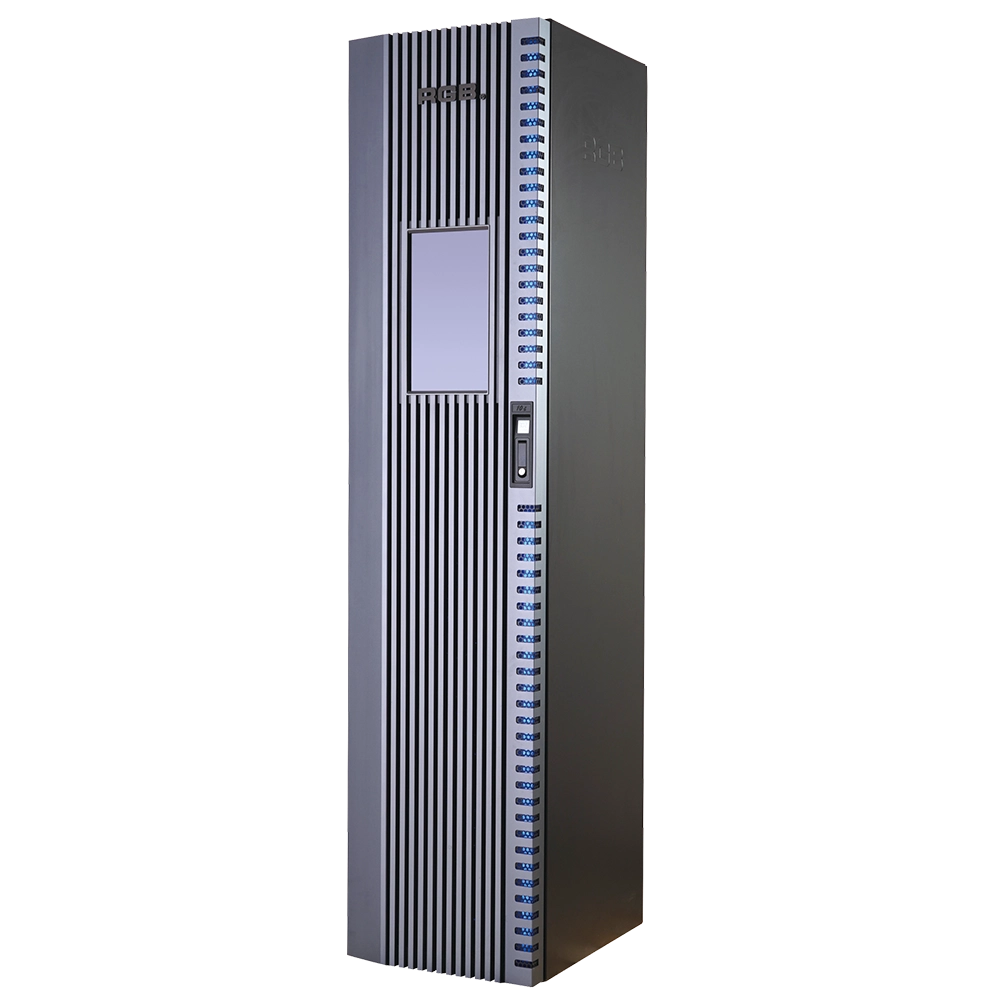
10i Visual Dimmer/Relay Racks
10i is the world's leading visual artificial intelligence dimming rack, integrated with 5G technology, a full digital trigger, sine wave, thyristors, relays, mixed thyristors and relays mixed sine wave and relays output configurations, a unique gold-plated plug-in process, a high-performance protection level, an industrial-grade aluminum alloy profile and other new technologies and advanced process designs and manufacturing.
It is suitable for the lighting control needs of different places such as high-standard grand theaters, TV stations, gymnasium and environmental intelligent lighting.
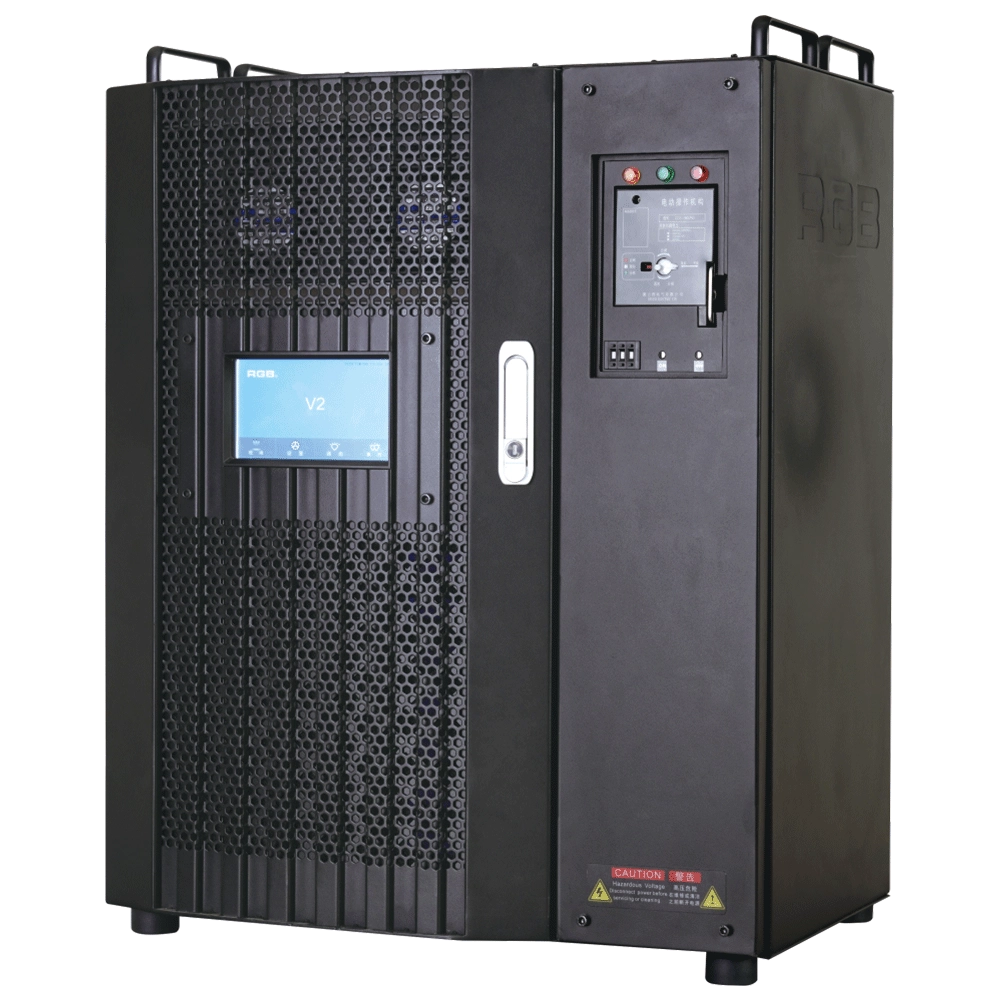
V2 Intelligent Network Dimmer/Relay Racks
V2 is an artificial intelligence dimming rack independently developed by RGB, which has completely independent core technology and obtained software copyrights. It is a fully digital electrodeless trigger and multi-backup independent CPU central processor technology. It has a variety of output configurations, such as sine wave, thyristor, relay, dimming relay, etc. It supports visual lighting control system and visually displays the online and offline status of dimming racks. Realize remote monitoring, editing, and setting of relevant parameters.
It is widely used in performing arts and cultural venues such as theaters, concert halls, multi-function halls, cultural travel and performing arts, TV stations, gymnasiums, auditoriums, commercial art lighting and so on.
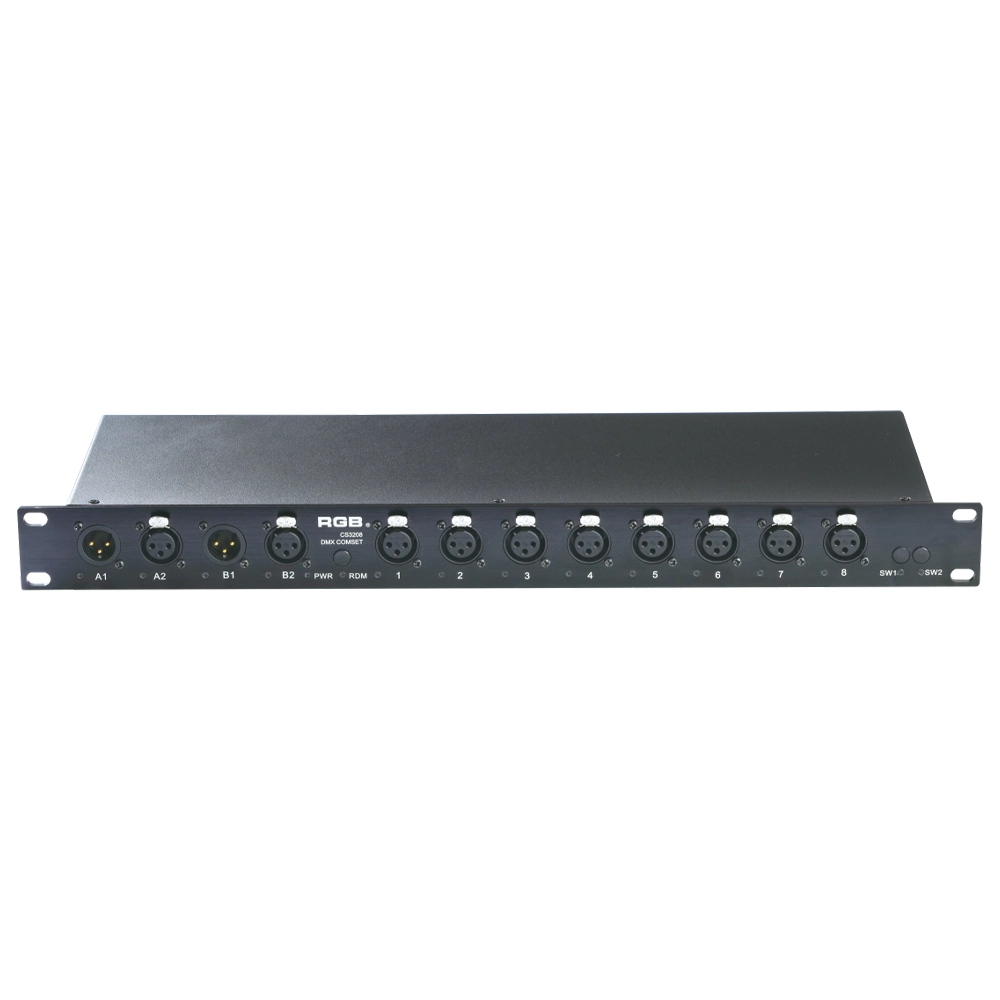
Multifunctional signal supercharger
The rack-mounted DMX signal amplifier complies with the DMX-512 standard protocol, improving DMX-512 signal transmission quality and ensuring reliable system control. It helps prevent issues such as AC high-voltage backflow into lighting control systems, lightning-induced surges, and signal interference caused by short circuits, thereby enhancing overall system stability.
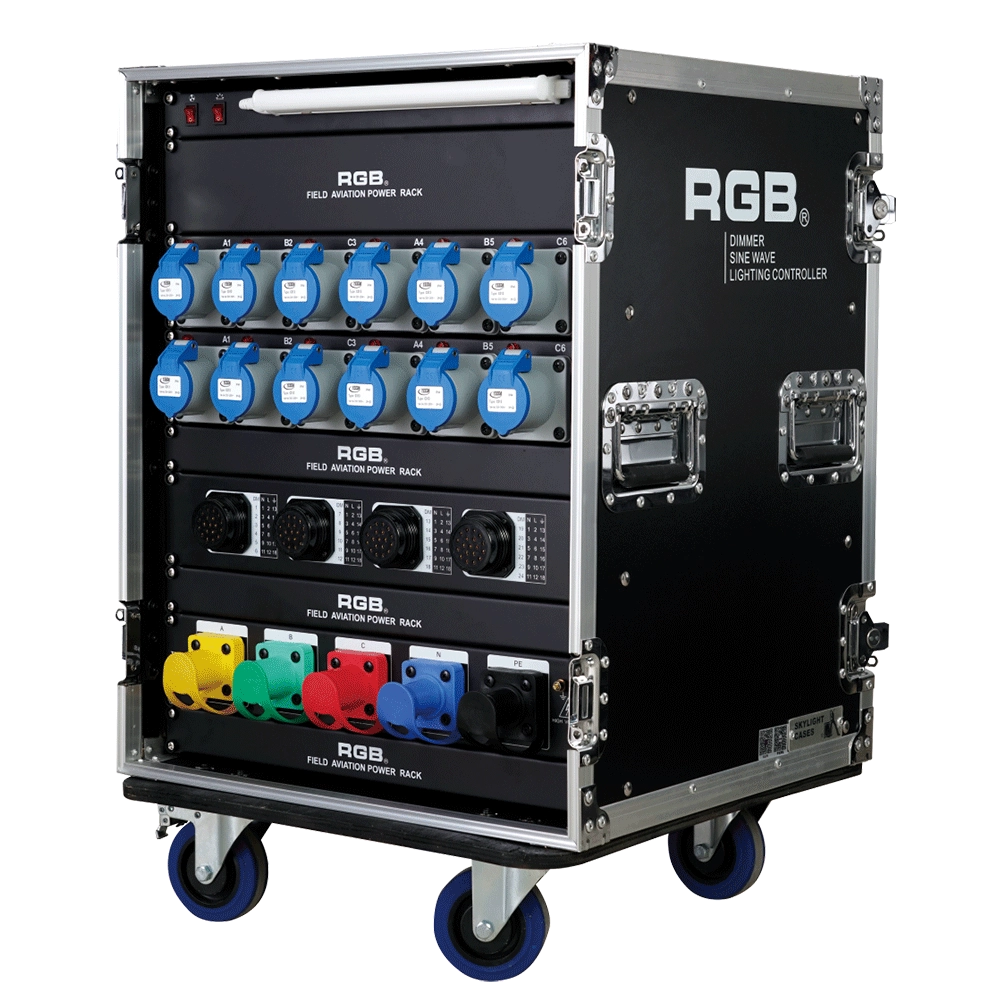
ZT2419+1216 Distribution Box
ZT2419+1216 features dual protection functions and is a power distribution product specifically designed for overcurrent and short circuits in electrical equipment. It is the best choice for mobile performance and is suitable for use in computer lamps, conventional lamps, and other equipment.
Expert Support
Interested in learning more or need expert guidance related to this article? Fill in your details, and our team will provide tailored support.
Intelligent Control. Brilliant Performance.
RGB specializes in stage lighting control systems, delivering intelligent, reliable, and high-performance solutions for theaters and performance spaces worldwide.
Contact
Email:
Tel:
+86 20 3928 0245
+86 20 3928 0247
Address:
No.3, Huashan Road, Shilou Town, Panyu, Guangzhou, China.
Whatsapp: +8615975520131