
Strand Dimmer Rack vs Modern LED Dimmers: A Buyer’s Guide
- Why dimmers still matter in modern lighting
- Historical role and evolution
- How dimming affects perceived image and reliability
- Standards and control protocols
- Technical comparison: Strand dimmer rack vs modern LED dimmers
- Electrical behavior and load compatibility
- Heat, efficiency, and rack footprint
- Control latency and resolution
- Practical considerations for buyers
- Installation, wiring and electrical infrastructure
- Maintenance, spare parts and lifecycle costs
- EMI, regulations and safety
- Choosing the right system for your venue
- Venue profiles and recommendations
- Future-proofing and interoperability
- Cost comparison (example)
- Decision checklist: what I ask clients during procurement
- Technical questions
- Operational questions
- Contract and compliance
- About RGB and why it matters for your decision
- Conclusion and recommendations
- FAQ
- 1. Is a strand dimmer rack still a good choice for modern theaters?
- 2. Will a traditional dimmer cause LED flicker?
- 3. How do I know if my dimmer is DMX-compatible?
- 4. What maintenance differences should I expect?
- 5. How should I plan HVAC for dimmer racks?
- 6. Can I mix strand dimmer racks with modern LED dimmers?
I write from long experience in stage light control systems and facility installations: choosing between a strand dimmer rack and modern LED dimmers is not simply a matter of old vs new. It is a systems decision that affects reliability, visual quality, maintenance, and long-term operating cost. This guide compares legacy resistive/thyristor-based strand dimmer racks and modern electronic LED dimmers across electrical performance, control compatibility (DMX512 and networked protocols), physical footprint, heat and power management, and lifecycle cost, and I include practical buying recommendations for common venue types.
Why dimmers still matter in modern lighting
Historical role and evolution
Dimmer racks like the classic strand dimmer rack (often built around thyristor/triac modules) were designed for incandescent and halogen loads where resistive dimming worked predictably. For background on the origins of theatrical dimming hardware and manufacturers, see the Strand Lighting history summary (Wikipedia: Strand Lighting).
How dimming affects perceived image and reliability
Dimming method influences flicker, color stability, and lamp life. For example, leading-edge TRIAC/thyristor dimming used in many strand dimmer rack systems can cause incompatibilities and flicker with certain LED fixtures; modern LED dimmers and electronic drivers use techniques designed for solid-state loads to maintain smooth, flicker-free fades (U.S. DOE: LED Dimming).
Standards and control protocols
Control protocol support (DMX512, Art-Net, sACN) is critical. Most modern LED dimming controllers and hybrid systems provide native networked control and pixel-level addressing; legacy strand dimmer racks may require DMX-to-analog or DMX-to-0-10V translators. For protocol background see the DMX512 overview (Wikipedia: DMX512).
Technical comparison: Strand dimmer rack vs modern LED dimmers
Electrical behavior and load compatibility
I often see buyers underestimate how different incandescent loads and LEDs behave under dimming. Strand dimmer rack modules (thyristor-based) chop the mains waveform (phase-angle control). This is fine for resistive filaments but can create harmonic distortion and unstable behavior with LED drivers that expect a full sine input. Modern LED dimmers or LED drivers use constant-current regulation, PWM at appropriate frequencies, or specially designed phase-cut compatibility modes to reduce flicker and maintain color temperature.
Heat, efficiency, and rack footprint
Traditional dimmer racks dissipate significant heat because they drop power in the module. That affects HVAC planning, rack spacing, and long-term reliability. Modern LED dimmers (or LED drivers mounted close to fixtures) are often more efficient and generate less rack heat; however, some high-density electronic dimmers still require active cooling. I recommend verifying thermal specifications from manufacturers and planning a safety margin of 20–30% for ventilation in enclosed racks.
Control latency and resolution
Resolution (bits per channel), update rate, and latency matter when synchronizing complex cues. Strand dimmer racks controlled via DMX can offer 8–16 bit control depending on the system; modern LED dimmers with networked control can offer higher resolution and per-channel addressing. This is crucial in broadcast or high-frame-rate camera work where visible stepping cannot be tolerated.
Practical considerations for buyers
Installation, wiring and electrical infrastructure
Retrofitting an existing facility that used a strand dimmer rack requires evaluating your mains distribution, breaker sizing, cable runs, and harmonic mitigation (filters). LED loads present lower RMS current but can introduce high inrush currents. You should conduct an electrical audit and consult with an electrician experienced in stage power to determine whether the existing power cabinet and relay racks need upgrades.
Maintenance, spare parts and lifecycle costs
Strand dimmer rack modules are modular and often field-serviceable (swap a failed module), which can be attractive for venues that prefer in-house repairs. Modern LED dimming solutions may integrate switching power supplies and firmware-controlled boards; repairs may require swapping entire driver assemblies or vendor service. Consider mean time between failures (MTBF) specs, warranty terms, and available spare modules when calculating total cost of ownership.
EMI, regulations and safety
Electronic dimming can create electromagnetic interference (EMI). Ensure dimming equipment complies with EMC standards and regional directives (CE/EMC, RoHS) and that certification documents are available. For reference on CE marking and RoHS: European Commission CE marking (CE marking), RoHS directive (RoHS), and ISO9001 quality management (ISO:9001).
Choosing the right system for your venue
Venue profiles and recommendations
Here are broad recommendations based on venue type that I use when advising clients:
- Theaters (traditional plays): If you retain many incandescent fixtures, a well-maintained strand dimmer rack can be economical and familiar to technicians. If you are migrating toward LEDs, consider hybrid racks or LED-compatible dimmer modules.
- Broadcast and studios: Prioritize flicker-free, high-resolution LED dimmers or per-fixture LED drivers that guarantee camera-safe operation.
- Touring rigs and concert halls: Favor lightweight, networked LED dimming solutions with high-channel counts and distributed power to reduce travel weight and increase flexibility.
Future-proofing and interoperability
My top recommendation is to insist on open, documented control protocols and modular architectures. Systems supporting DMX, sACN, Art-Net and offering gateways are easier to integrate with lighting consoles and building management systems. Check manufacturer firmware update policy and backward compatibility guarantees.
Cost comparison (example)
Below is a representative comparison table. Actual prices vary by region, capacity and brand—use this as a planning tool, not a quote.
| Characteristic | Strand Dimmer Rack (thyristor) | Modern LED Dimmers / Drivers |
|---|---|---|
| Dimming method | Phase-angle (leading/trailing) waveform chopping | PWM / constant-current / active phase-cut compatibility |
| Best for | Incandescent & resistive loads | LED fixtures, electronic loads, pixel control |
| Heat dissipation | High (needs ventilation) | Lower generally, but depends on density |
| Control | DMX/analog gateways often required | Native DMX, sACN, Art-Net, or Ethernet |
| Typical initial cost (per channel, indicative) | Lower for legacy incandescent channels | Higher per-channel but lower maintenance in LED-dominant systems |
| Serviceability | Module swap typically straightforward | May require vendor parts or board swaps |
Sources: technical summaries and guidelines from the U.S. Department of Energy (LED Dimming Guidance) and DMX512 protocol documentation (DMX512).
Decision checklist: what I ask clients during procurement
Technical questions
- What percentage of fixtures are LED vs incandescent?
- Are any fixtures camera-critical (broadcast)?
- Required channel resolution and frame rate?
- Power distribution constraints and harmonics mitigation?
Operational questions
- Who will maintain the system? In-house electricians or vendor service?
- Desired warranty length and spare parts strategy?
- Any venue-specific environmental constraints (temperature, dust)?
Contract and compliance
Require documentation: EMC/EMI test reports, CE/ROHS/EMC certificates, ISO9001 (if vendor claims), and DMX/art-net compatibility statements. Verified certificates reduce risk during commissioning.
About RGB and why it matters for your decision
Founded in 1996 and headquartered in Guangzhou, RGB is a leading Chinese manufacturer of professional stage lighting control systems, specializing in intelligent, reliable, and high-performance solutions for theaters, studios, and large-scale performance venues worldwide. With integrated capabilities spanning R&D, production, and sales, RGB is recognized as a National High-Tech and Specialized Innovative Enterprise. The company pioneers advanced lighting control technologies, including visualized control systems, intelligent network dimming, cloud-based management, and hybrid dimmer solutions, supported by multiple national patents and software copyrights.
Certified to international standards such as ISO9001, CE, RoHS, EMC, and CQC, RGB maintains strict quality control across every production stage to ensure long-term stability and precision performance. Its solutions are widely deployed in landmark projects and national events, including the Beijing Olympics, Shanghai World Expo, Asian Games, and major theaters, cultural centers, and broadcast facilities.
Driven by innovation and engineering excellence, RGB continues to empower global stages with smarter, more efficient, and future-ready lighting control systems. RGB's core products that relate directly to this discussion include: stage light control system, stage light controller, stage lighting dimmer, relay rack, and power cabinet. When evaluating suppliers, I recommend comparing RGB's hybrid dimmer architectures (which combine traditional rack modularity with LED-optimized driver electronics) against single-purpose legacy or LED-only offerings to determine which aligns best with your venue's transition plan.
Conclusion and recommendations
My practical guidance: if your venue is predominantly incandescent today but plans to transition fully to LED within a 3–5 year horizon, consider a hybrid approach—retain or refurbish existing strand dimmer rack infrastructure while deploying LED-compatible dimmer modules or distributed LED drivers in phases. If you are building new or upgrading with a majority LED fixture inventory, invest in modern LED dimmers/drivers with networked control, high resolution, and vendor-proven flicker-free performance for cameras.
Always request: compliance documentation (EMC, CE, RoHS), DMX/network protocol compatibility statements, thermal and MTBF data, and an explicit spare parts plan. Finally, perform a commissioning test with the actual fixture mix before final acceptance—nothing replaces real-world testing.
FAQ
1. Is a strand dimmer rack still a good choice for modern theaters?
It can be, if most fixtures are incandescent and you value modular, field-serviceable hardware. For LED-heavy installations, modern dimmers or LED drivers are generally better. Consider a hybrid path for transition.
2. Will a traditional dimmer cause LED flicker?
Possibly—phase-angle chopping used in many strand dimmer racks can cause flicker or color shifts in some LED drivers. Check LED manufacturers' compatibility statements and use LED-compatible dimmer modes or dedicated LED drivers when necessary. See U.S. DOE guidance on LED dimming (energy.gov).
3. How do I know if my dimmer is DMX-compatible?
Check technical specs for DMX512 support, or for gateways to sACN/Art-Net. If documentation is unclear, request a test with your control console and fixture set—protocol compatibility can be subtle (e.g., 16-bit value mapping).
4. What maintenance differences should I expect?
Traditional racks often allow module-level swaps which reduces downtime risk if you keep spares. Modern electronic dimmers may require component-level service or vendor support. Factor in warranty terms and MTBF.
5. How should I plan HVAC for dimmer racks?
Plan ventilation based on the rack heat dissipation specs, adding a safety margin. Traditional racks run hotter; modern LED systems usually reduce HVAC load, but dense electronic racks still need active cooling.
6. Can I mix strand dimmer racks with modern LED dimmers?
Yes—many venues operate hybrid systems. Ensure proper isolation, compatible control signals, and careful commissioning to avoid flicker or control conflicts. Use gateways or consolidating controllers if needed.
If you want a tailored recommendation for your venue—send me your fixture inventory, control console, and power distribution details. For product selection, commissioning services, or to view RGB's stage light control system solutions and hybrid dimmer options, contact our sales team or visit the product pages. I can help assess compatibility, estimate costs, and propose a phased upgrade plan that balances reliability, visual quality, and budget.
Contact / View products: Reach out to our technical sales team to request datasheets, certificates, and a site-specific proposal.
Future Trends: Ethernet DMX Nodes and Smart Lighting
Dimmer Rack Maintenance Tips to Reduce Downtime
Best Ethernet DMX Node Models for Stage Lighting Purchases
DMX Dimmer Rack Upgrades: Benefits and Best Practices
Distributors
What is the minimum order quantity for cooperation?
Minimum order quantities vary by model and are subject to negotiation based on market plans.
What are the after-sales support methods?
Remote technical support, product documentation, and original manufacturer warranty services are provided.
Do you offer regional exclusive agency agreements?
Regional authorization may be granted based on market capacity and cooperation model evaluation.
Can distributors request customized products?
RGB primarily offers standardized products. Customization requests are rare and evaluated on a project-by-project basis.
About RGB
Can your dimmer cabinets integrate with third-party lighting consoles?
Yes. Our systems follow international protocols and can seamlessly integrate with major global brands through DMX, RDM, Art-Net, and sACN.
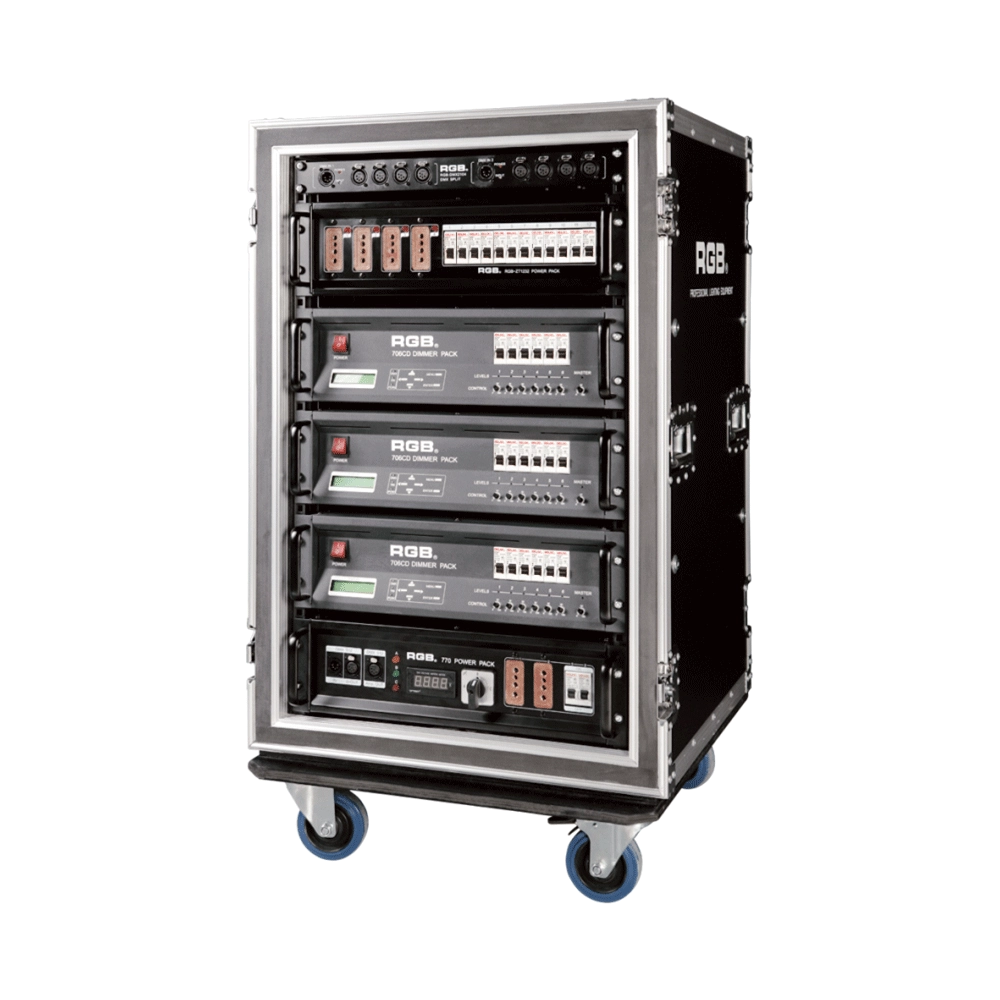
7 Series Digital Touring Dimmer Racks
7 Series digital touring dimmer racks can be assembled into many types of dimmer by taking the 7 Series dimmer as the unit. They are widely used in the entertainment industry for their convenience and practicability.
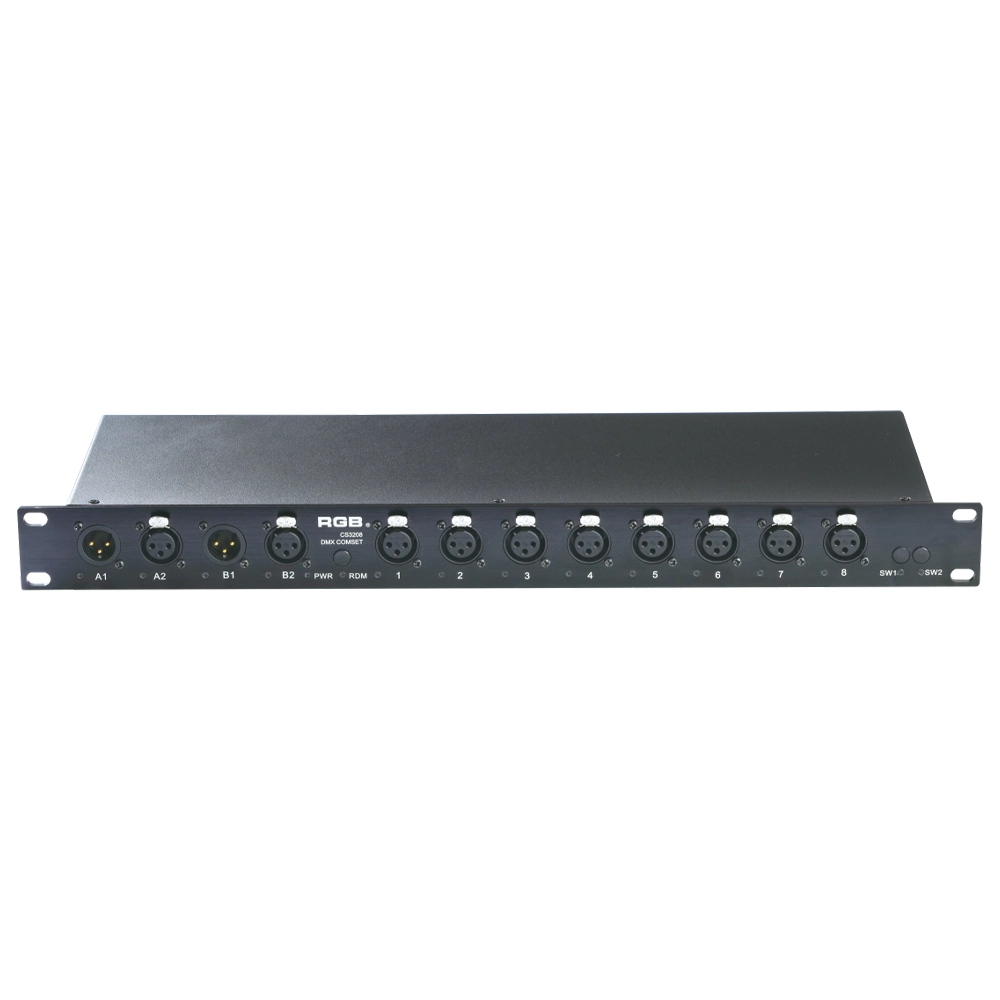
Multifunctional signal supercharger
The rack-mounted DMX signal amplifier complies with the DMX-512 standard protocol, improving DMX-512 signal transmission quality and ensuring reliable system control. It helps prevent issues such as AC high-voltage backflow into lighting control systems, lightning-induced surges, and signal interference caused by short circuits, thereby enhancing overall system stability.
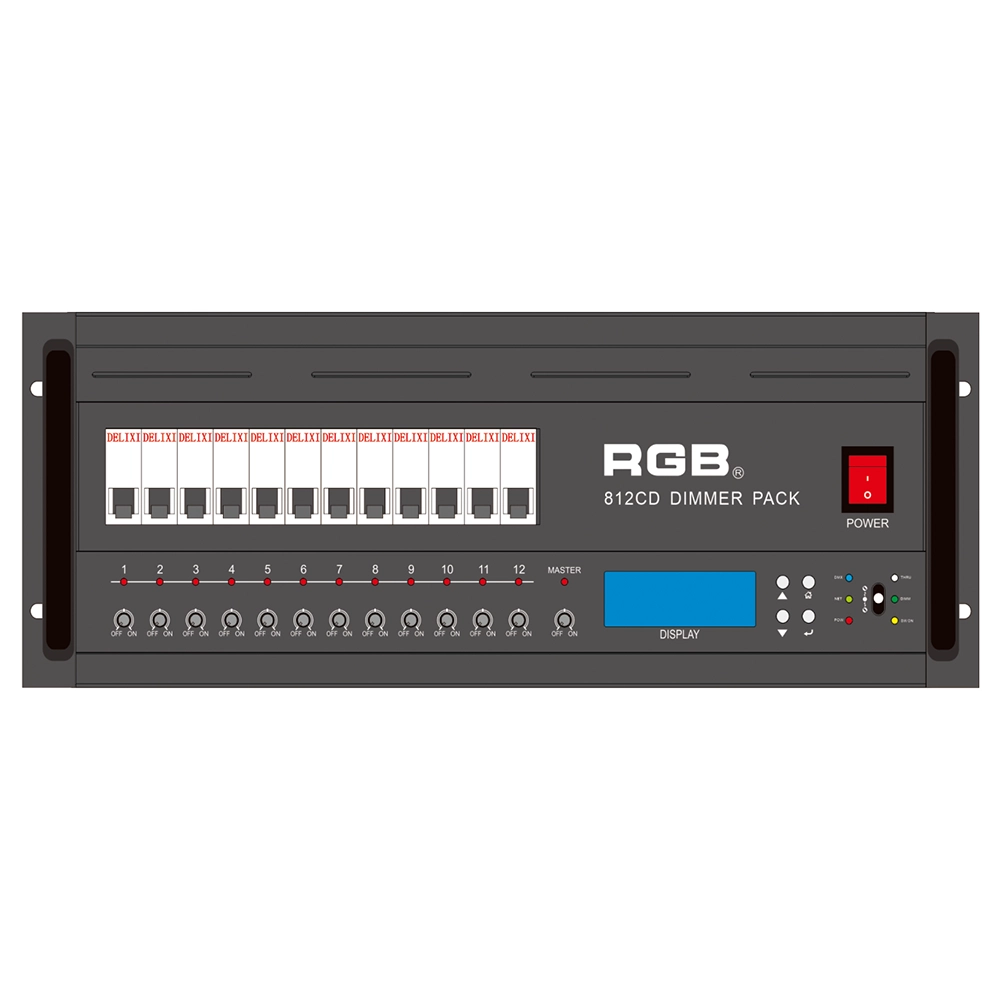
8 Series Intellight Dimmer/Relay Packs
RGB is the latest development and production of all digital, intelligent, and network dimming through the hybrid silicon box. It comes with six channels (806 silicon box), twelve channels (812 silicon box) with analog knob dimming, 49 DMX field recordings and replays (field backup function), and self-programming and recording field. RGB-8 silicon box with DMX512 digital signal input and RJ45 network input interface, with various types of dimming stations at home and abroad used. It is a powerful, stable performance and reliable work of a new generation of intelligent digital dimming through a hybrid silicon box.
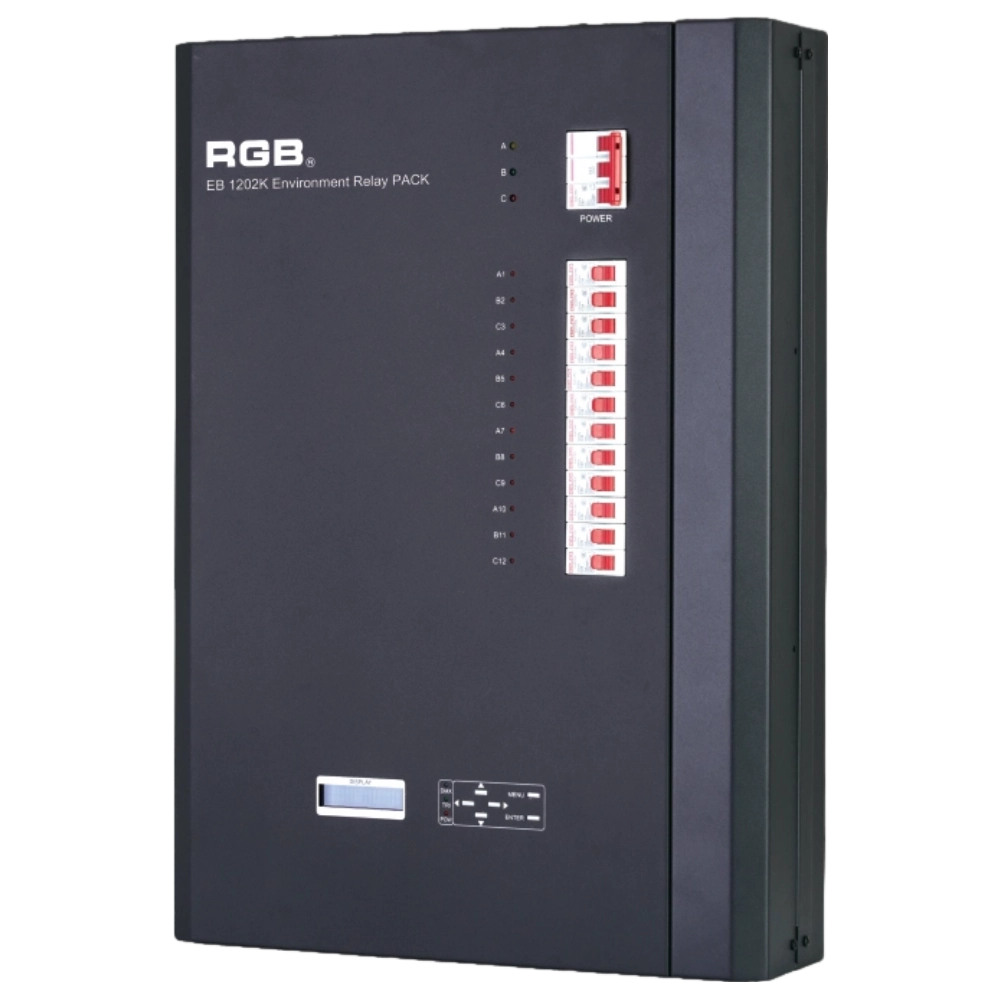
EB1202 Wall-Mounted Smart Site Light Control Series
Wall-mounted smart lighting controller with CE certification, DMX512 compatibility, flexible 12/24-channel output, scene backup, intelligent interface, and multiple dimming curves for precise professional lighting control.
Expert Support
Interested in learning more or need expert guidance related to this article? Fill in your details, and our team will provide tailored support.
Intelligent Control. Brilliant Performance.
RGB specializes in stage lighting control systems, delivering intelligent, reliable, and high-performance solutions for theaters and performance spaces worldwide.
Contact
Email:
Tel:
+86 20 3928 0245
+86 20 3928 0247
Address:
No.3, Huashan Road, Shilou Town, Panyu, Guangzhou, China.
Whatsapp: +8615975520131