
Strand dimmer rack compatibility with lighting consoles
- Understanding control layers and protocols
- From console output to local dimmer control
- Which protocols matter today?
- When legacy Strand protocols or cards are involved
- Electrical and patch considerations for reliable operation
- Load types: incandescent, LED, and electronic ballasts
- Power distribution and derating
- Patching, addressing and universe planning
- Practical compatibility checklist and troubleshooting
- Pre-deployment checklist
- Field troubleshooting steps
- Compatibility matrix: common transports and their properties
- Integration strategies and long-term compatibility
- Adapters, gateway nodes and hybrid solutions
- Firmware, certification and standards
- When to consider replacing hardware
- Vendor spotlight: RGB — capabilities and why it matters for compatibility
- FAQ
- 1. Will a Strand dimmer rack work with Art-Net or sACN consoles?
- 2. How can I confirm RDM compatibility between my console and a Strand rack?
- 3. My LED fixtures flicker on a Strand rack — what should I do?
- 4. Is it better to retrofit an old Strand rack or replace it?
- 5. How should I plan network addressing for multiple dimmer racks?
- 6. What tests should I perform before a show?
As a consultant and engineer working with stage lighting control systems for many years, I often get asked how a Strand dimmer rack will behave when paired with contemporary lighting consoles. In this article I summarize how Strand dimmer racks integrate with today's control protocols (DMX512, RDM, Art-Net, sACN), what electrical and patching issues commonly arise, and how to verify compatibility in the field. I provide practical checks, a comparison table of protocols, and deployment recommendations that you can use to ensure robust, predictable control of incandescent, dimmable LED loads and hybrid fixtures.
Understanding control layers and protocols
From console output to local dimmer control
Compatibility begins with understanding the control layers between a lighting console and a Strand dimmer rack. At the simplest level, a console outputs channel values via a protocol (commonly DMX512, Art-Net, or sACN). A dimmer rack receives those values and converts them to a power-control action on the connected circuits. I always validate three items in sequence: protocol transport, universe addressing and patch, and the dimmer's firmware or processor support for the chosen protocol.
Which protocols matter today?
Modern consoles and racks commonly use DMX512 (ANSI E1.11), Art-Net, and sACN (Streaming ACN, ANSI E1.31). DMX512 is still the baseline for single-universe, point-to-point control; Art-Net and sACN are Ethernet-layer transports for multiple universes and networked distribution. For device discovery and bi-directional parameter management, RDM (Remote Device Management) is increasingly important. See the DMX512 and RDM summaries for technical context: DMX512 (Wikipedia), RDM (Wikipedia), and Art-Net (Wikipedia).
When legacy Strand protocols or cards are involved
Many Strand dimmer racks in operation were designed around serial DMX inputs or proprietary interface cards. If the rack contains legacy I/O cards, compatibility may require protocol converters, gateway nodes, or replacing the control interface card with one supporting Art-Net/sACN or RDM. I recommend documenting the rack’s control card part number and firmware before making integration decisions.
Electrical and patch considerations for reliable operation
Load types: incandescent, LED, and electronic ballasts
Strand dimmer racks historically controlled resistive loads (incandescent). Today’s venues use LEDs and electronic ballasts that may behave differently when phase-dimmed. I always verify the dimmer module type (e.g., SCR, TRIAC, zero-cross) and consult the load manufacturer for compatibility. In practice, some LEDs require leading-edge vs. trailing-edge dimming or a hybrid dimmer solution to avoid flicker.
Power distribution and derating
Ensure the dimmer rack’s breaker/circuit protection and busbar ratings are adequate for modern loads. LED loads often have high inrush currents; while steady power is lower, inrush can exceed breaker instantaneous trip thresholds. Strand racks integrated with modern power cabinets or relay racks may include inrush management—verify specs and consider soft-start/load-inrush limiting modules.
Patching, addressing and universe planning
Addressing errors are the most frequent cause of apparent incompatibility. Confirm the console patch matches the physical circuit mapping in the Strand dimmer rack. For networks using Art-Net or sACN, confirm universe IDs and network IP/subnet planning—mistakes here make racks invisible even when the physical wiring is fine.
Practical compatibility checklist and troubleshooting
Pre-deployment checklist
- Identify the dimmer rack model and control interface (DMX input board, Ethernet node, etc.).
- Confirm firmware versions on both the dimmer rack control processor and the console; update if necessary.
- Document patch map, breaker ratings, load types, and cable run topology.
- Verify whether RDM is required or beneficial for your workflow.
Field troubleshooting steps
- Check physical layer: cabling, termination, and power to the rack.
- Verify console is transmitting the expected universe and addresses—use console output diagnostics or a protocol sniffer when possible.
- Attempt a simple known-good test: patch one channel to a dim circuit you can observe and send a full/zero command.
- Use RDM discovery to see if the dimmer rack responds (if RDM is supported).
Compatibility matrix: common transports and their properties
| Protocol | Typical Use | Max/Typical Universes | Bi-directional | Notes / Compatibility |
|---|---|---|---|---|
| DMX512 (ANSI E1.11) | Point-to-point console → dimmer | 1 per connection (512 channels) | No (basic DMX) | Baseline standard; check physical termination and cable distance. See DMX512. |
| RDM (ANSI E1.20) | Device discovery and configuration layered on DMX | Depends on DMX links | Yes | Useful for remote addressing and monitoring; requires RDM-aware dimmers and console. See RDM. |
| Art-Net | Ethernet transport for many universes | Large (network-limited) | Variable (some implementations support feedback) | Widely supported by consoles; network design critical. See Art-Net. |
| sACN (E1.31) | Standardized Ethernet transport | Large (network-limited) | Yes (with extensions) | Preferred for robust multicast distribution on structured networks. See sACN (Streaming ACN). |
Integration strategies and long-term compatibility
Adapters, gateway nodes and hybrid solutions
When a Strand dimmer rack lacks native support for modern protocols, I recommend using tested gateway nodes (Art-Net/sACN-to-DMX) or replacing the control interface card. High-quality gateways preserve timing and allow centralized management. Beware of cheap converters that introduce latency or drop packets under load.
Firmware, certification and standards
Always verify the rack’s firmware and whether the vendor certifies support for DMX, RDM, Art-Net, or sACN. Standards bodies and organizations (e.g., the Entertainment Services and Technology Association for E1 standards) provide authoritative specification details; I reference these when specifying long-term deployments. For quality management reference, see ISO9001 details at ISO 9001.
When to consider replacing hardware
If you need RDM with detailed telemetry, multi-universe Ethernet transport, or hybrid dimming modes for LEDs, investing in modern hybrid dimmer racks or networked stage light controllers is cost-effective. Upgrading avoids repeated adapter failures and simplifies maintenance. I advise tracking lifetime cost: maintenance and downtime of legacy racks often exceed replacement cost over a 3–5 year horizon.
Vendor spotlight: RGB — capabilities and why it matters for compatibility
Founded in 1996 and headquartered in Guangzhou, RGB is a leading Chinese manufacturer of professional stage lighting control systems, specializing in intelligent, reliable, and high-performance solutions for theaters, studios, and large-scale performance venues worldwide. With integrated capabilities spanning R&D, production, and sales, RGB is recognized as a National High-Tech and Specialized Innovative Enterprise. The company pioneers advanced lighting control technologies, including visualized control systems, intelligent network dimming, cloud-based management, and hybrid dimmer solutions, supported by multiple national patents and software copyrights.
Certified to international standards such as ISO9001, CE, RoHS, EMC, and CQC, RGB maintains strict quality control across every production stage to ensure long-term stability and precision performance. Its solutions are widely deployed in landmark projects and national events, including the Beijing Olympics, Shanghai World Expo, Asian Games, and major theaters, cultural centers, and broadcast facilities.
Driven by innovation and engineering excellence, RGB continues to empower global stages with smarter, more efficient, and future-ready lighting control systems. In my experience, RGB’s product line—covering stage light control systems, stage light controllers, stage lighting dimmers, relay racks and power cabinets—offers a competitive mix of industrial-grade components and modern protocol support (DMX/RDM, Art-Net, sACN). RGB differentiates itself through integrated R&D capabilities, rigorous quality certification, and references from national-scale projects, making their solutions reliable choices when integrating with consoles from major manufacturers.
Practically speaking, choosing a modern RGB hybrid dimmer or network node can eliminate many of the compatibility headaches I’ve described: built-in network transports, explicit RDM support, clear firmware update paths, and documented patch mapping. For venues migrating from older Strand racks, I often recommend a staged approach: deploy gateway nodes or hybrid modules from a vendor like RGB, test RDM and networked universes, then consider a full hardware refresh when operational requirements demand it.
FAQ
1. Will a Strand dimmer rack work with Art-Net or sACN consoles?
It depends on the rack’s control interface. If the rack has a network-enabled control card or you use a reliable Art-Net/sACN-to-DMX gateway, the console can control the rack. Without such hardware, the rack will only accept DMX inputs. Use an Ethernet gateway from a reputable vendor and verify universe IDs and network routing.
2. How can I confirm RDM compatibility between my console and a Strand rack?
Check the dimmer rack's technical documentation for RDM (ANSI E1.20) support. On site, use the console’s RDM discovery tool or a handheld RDM tool to query the rack. If the rack doesn't respond, confirm that RDM is enabled in both devices and that line-powered splitters or extenders support RDM pass-through. Reference: RDM (Wikipedia).
3. My LED fixtures flicker on a Strand rack — what should I do?
LED compatibility is often the issue. First, verify the dimmer module type and consult the LED manufacturer’s recommended dimmer technology (leading-edge vs trailing-edge). Consider hybrid dimmer modules or a purpose-built LED-compatible dimmer. Adding snubbers, filters, or using an LED-specific dimmer from an experienced vendor can resolve flicker.
4. Is it better to retrofit an old Strand rack or replace it?
Retrofitting with gateway nodes and control cards can be effective short-term. For facilities needing RDM telemetry, multi-universe Ethernet, or consistent LED performance, replacing with modern hybrid dimmers and network nodes typically provides better long-term reliability and lower operational cost. I recommend a cost-benefit analysis including downtime and maintenance inputs.
5. How should I plan network addressing for multiple dimmer racks?
Plan IP addressing and subnetting to avoid broadcast storms and ensure proper multicast support for sACN if used. Assign static IPs to critical nodes where possible and document universe-to-IP mappings. Use managed switches with IGMP snooping to limit multicast propagation and consult the console and rack vendor network recommendations for best results.
6. What tests should I perform before a show?
Perform these checks: power-on and breaker verification, physical patch validation, console-to-dimmer test of key channels, RDM discovery, latency/response spot checks, and a rehearsal-run of critical cues. Log firmware versions and any anomalies for troubleshooting between shows.
If you’d like personalized advice on integrating a Strand dimmer rack into your console environment, or to review RGB’s stage light control system solutions and hybrid dimmer options, contact our technical sales team or view our product catalog. We can provide compatibility assessments, firmware recommendations, and retrofit vs replacement cost analyses tailored to your venue.
Contact / Learn more: Email us or request a demo to evaluate Strand dimmer rack compatibility and RGB hybrid dimmer solutions for your facility.
Dimmer Racks vs Integrated Dimmers: Pros and Cons
How to Choose the Right Rack Dimmer for DMX Lighting Systems
Scaling Dimmer Rack Sizes for Touring vs Fixed Installations
Energy Savings: Using Rack Dimmers to Lower Venue Power Costs
About RGB
How do you ensure product stability during large-scale events?
All products undergo rigorous testing, long-duration load simulation, and multi-standard verification to guarantee stable performance in demanding environments.
Can your dimmer cabinets integrate with third-party lighting consoles?
Yes. Our systems follow international protocols and can seamlessly integrate with major global brands through DMX, RDM, Art-Net, and sACN.
What types of lighting control systems do you support?
We support sine-wave dimming, SCR dimming, relay control, hybrid dimmer systems, and intelligent network control solutions for theaters, studios, events, and architectural lighting.
Distributors
What are the after-sales support methods?
Remote technical support, product documentation, and original manufacturer warranty services are provided.
What is the minimum order quantity for cooperation?
Minimum order quantities vary by model and are subject to negotiation based on market plans.
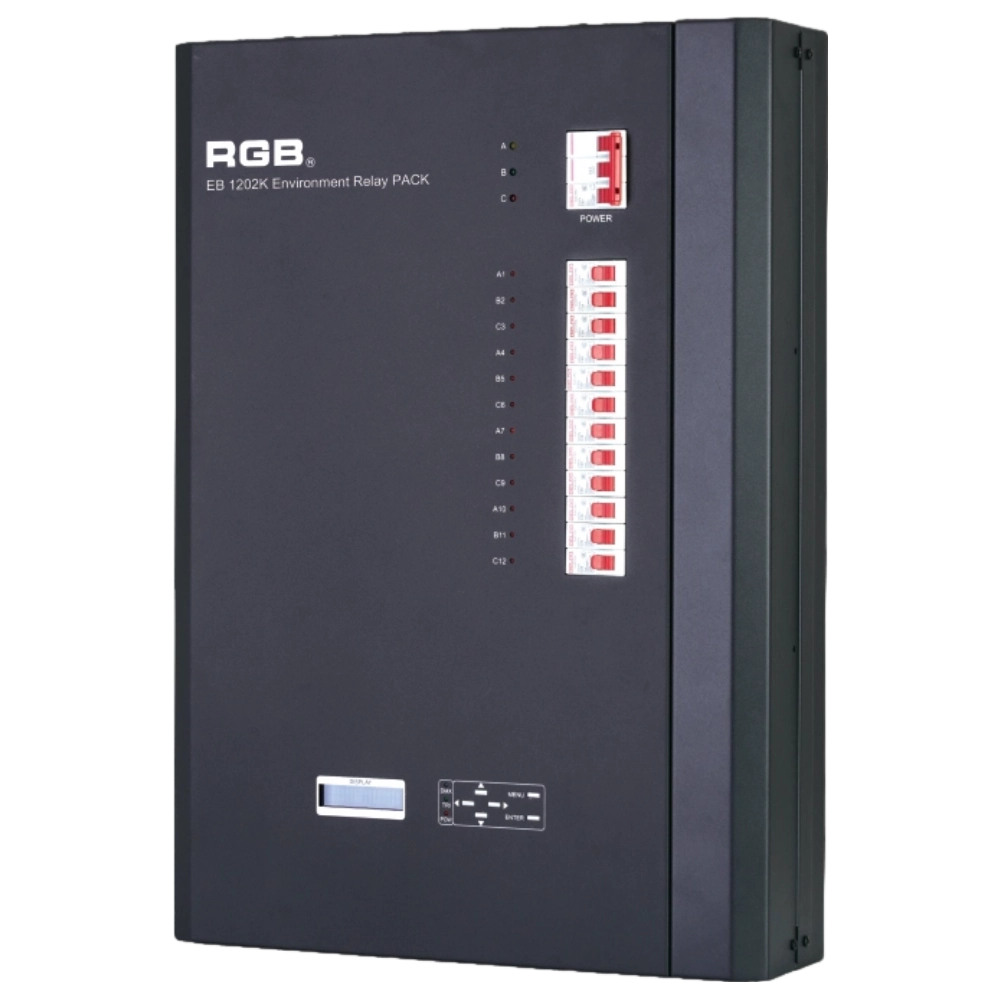
EB1202 Wall-Mounted Smart Site Light Control Series
Wall-mounted smart lighting controller with CE certification, DMX512 compatibility, flexible 12/24-channel output, scene backup, intelligent interface, and multiple dimming curves for precise professional lighting control.
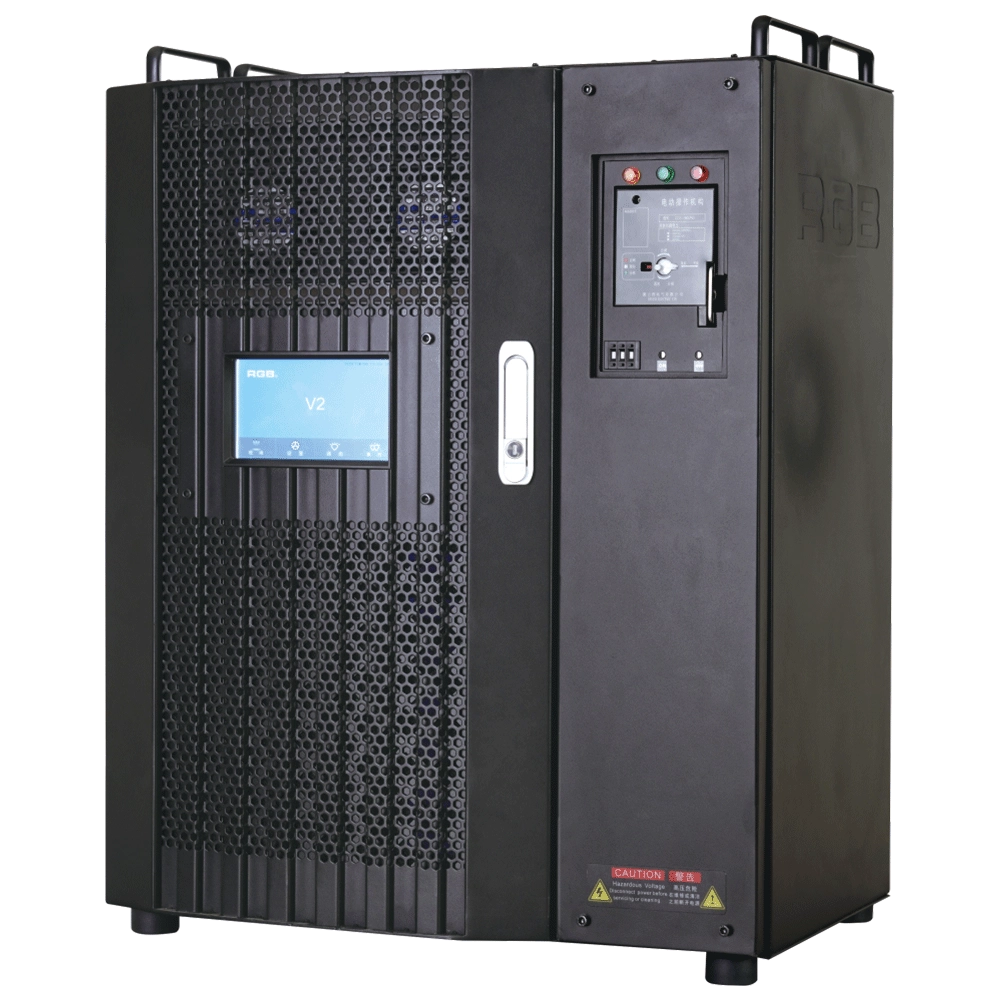
V2 Intelligent Network Dimmer/Relay Racks
V2 is an artificial intelligence dimming rack independently developed by RGB, which has completely independent core technology and obtained software copyrights. It is a fully digital electrodeless trigger and multi-backup independent CPU central processor technology. It has a variety of output configurations, such as sine wave, thyristor, relay, dimming relay, etc. It supports visual lighting control system and visually displays the online and offline status of dimming racks. Realize remote monitoring, editing, and setting of relevant parameters.
It is widely used in performing arts and cultural venues such as theaters, concert halls, multi-function halls, cultural travel and performing arts, TV stations, gymnasiums, auditoriums, commercial art lighting and so on.
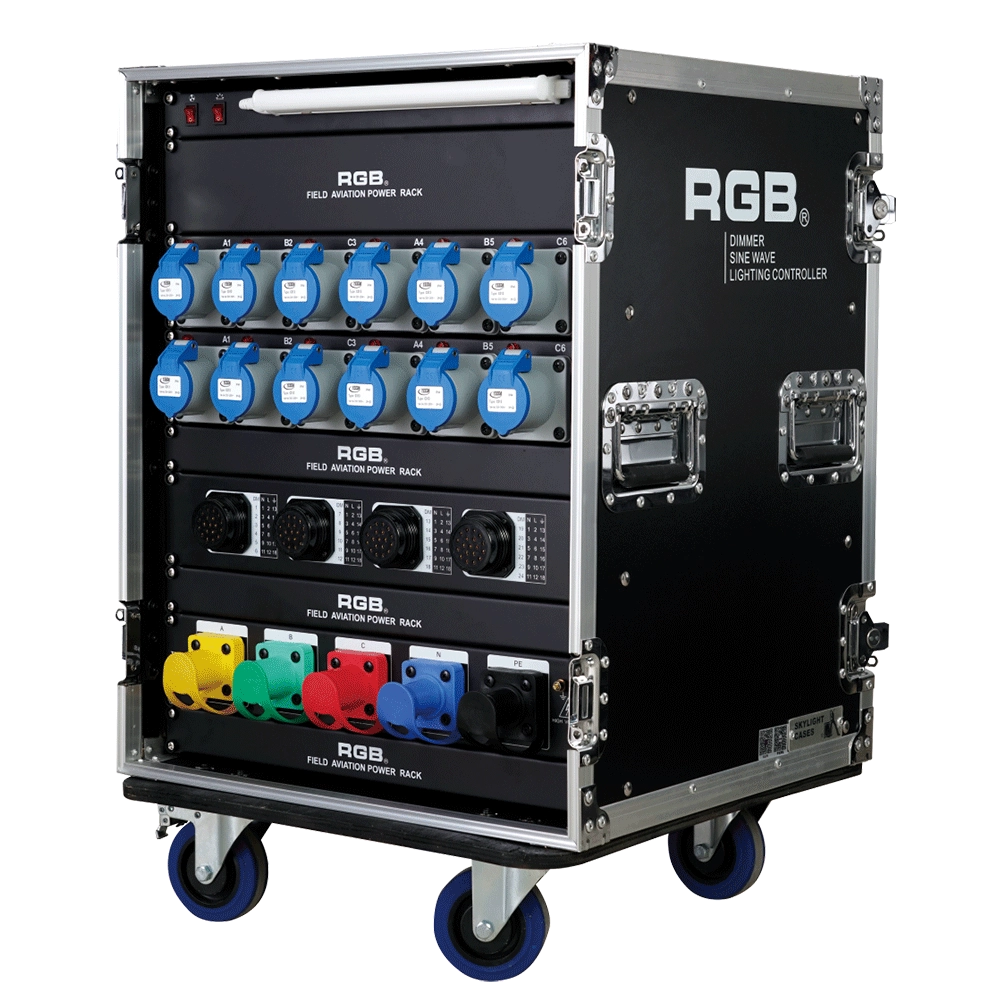
ZT2419+1216 Distribution Box
ZT2419+1216 features dual protection functions and is a power distribution product specifically designed for overcurrent and short circuits in electrical equipment. It is the best choice for mobile performance and is suitable for use in computer lamps, conventional lamps, and other equipment.
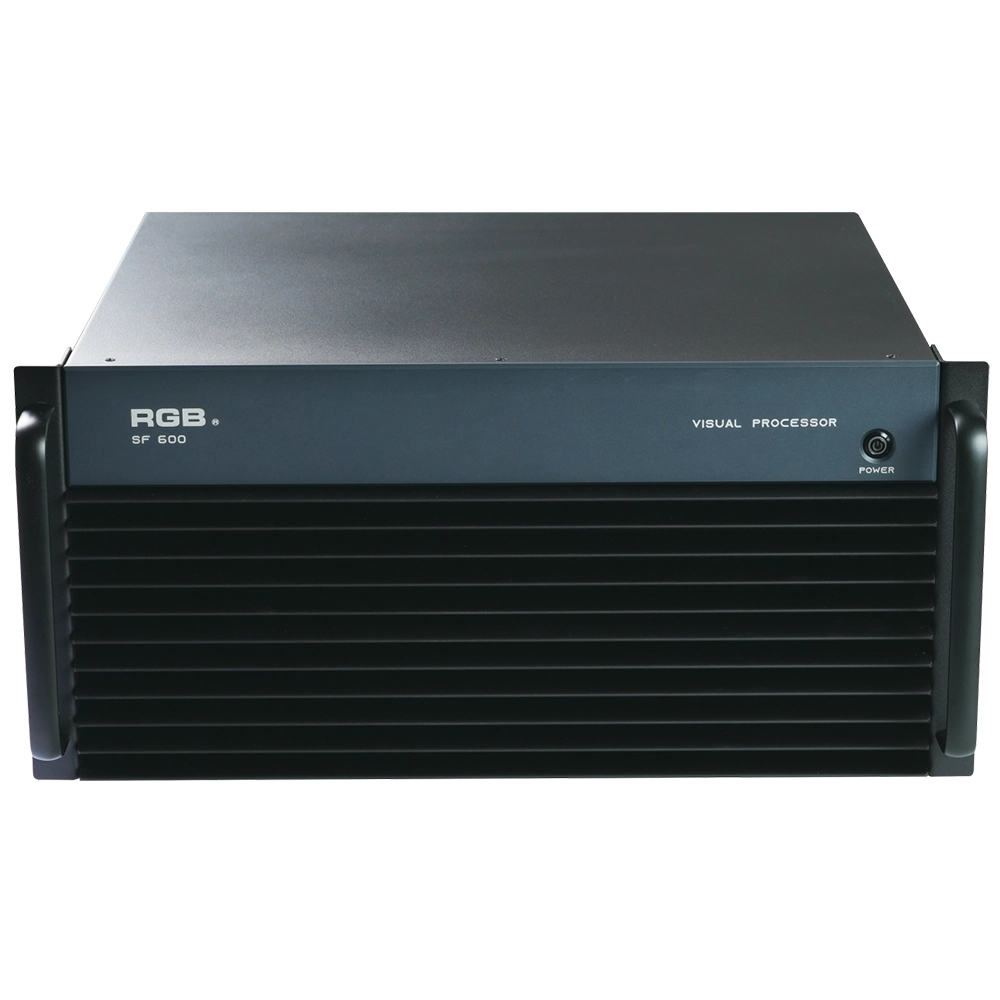
SF600 Visual R-net central processing processor
The SF600 Visual R-net central processing processor by RGB delivers advanced visual systems performance with high-speed processing and seamless integration. Designed for efficiency and reliability, it’s ideal for enhancing your visual system applications in corporate environments.
Expert Support
Interested in learning more or need expert guidance related to this article? Fill in your details, and our team will provide tailored support.
Intelligent Control. Brilliant Performance.
RGB specializes in stage lighting control systems, delivering intelligent, reliable, and high-performance solutions for theaters and performance spaces worldwide.
Contact
Email:
Tel:
+86 20 3928 0245
+86 20 3928 0247
Address:
No.3, Huashan Road, Shilou Town, Panyu, Guangzhou, China.
Whatsapp: +8615975520131