
The Ultimate Guide to Stage Lighting Dimmer Racks: Selection, Setup, and Safety (2026 Edition)
- What is a Stage Lighting Dimmer Rack?
- Key Takeaways: Quick Summary of Stage Dimming
- How Dimmer Racks Work: The Science Behind the Fade
- Types of Dimmer Racks: Portable vs. Permanent Installations
- The Evolution: Transitioning to Hybrid LED Dimming Systems (2026+ Trends)
- How to Calculate Power Loads and Choose the Right Rack
- Essential Setup & Wiring Best Practices
- Safety and Compliance: Meeting Industry Standards
- Common Mistakes and Expert Troubleshooting Tips
- Industry-Leading Solutions: Upgrading Your Power Control System
- Conclusion
- How many channels does a standard stage dimmer rack have?
- What is the difference between a dimmer rack and a relay rack?
- Can I use a traditional dimmer rack with modern LED stage lights?
- What is DMX512 and how does it connect to a dimmer rack?
- How do you calculate the power load for a theatrical dimmer rack?
- What are the cooling and ventilation requirements for stage dimmers?
- How much does a professional stage lighting dimmer rack cost?
- What is the difference between portable dimmer packs and installation racks?
In the fast-paced world of live event production, the backbone of any spectacular visual performance is the power distribution system. Whether you are outfitting a massive permanent theater or preparing for a nationwide mobile tour, understanding the intricacies of stage lighting dimmer racks is critical for safety, efficiency, and flawless execution. This guide covers everything you need to know for 2026.
What is a Stage Lighting Dimmer Rack?
A stage lighting dimmer rack is a centralized electrical hub used to manage and vary the voltage sent to theatrical lighting fixtures, controlling their brightness. It relies on control protocols to communicate directly with the lighting console.
Modern dimmer racks do much more than just fade lights; they bridge the critical gap between high-voltage power grids and delicate digital control networks. By utilizing DMX512 dimming control, these robust systems read digital commands from the lighting desk and translate them into physical voltage changes. As a universally adopted digital communication network standard, it quickly became the primary method for linking controllers to dimmers, as reported by [Wikipedia](https://en.wikipedia.org/wiki/DMX512). Today, these systems are continually evolving to handle a complex mix of traditional analog fixtures and modern intelligent LED units safely.
- Centralized Power: Consolidates chaotic electrical distribution into one highly manageable and secure location.
- Precise Control: Translates sophisticated console data into smooth, flicker-free voltage adjustments for the stage.
- Adaptability: Supports an exceptionally wide range of fixture types, from classic halogen incandescent lamps to the newest smart fixtures.
Key Takeaways: Quick Summary of Stage Dimming
The primary function of a dimmer rack is to provide safe, centralized power distribution and precise intensity control for stage productions. Understanding your venue's unique needs is essential for choosing the correct equipment and ensuring compliance.
Before diving deeper into the technical specifications and engineering, it is vital to grasp the core concepts that define modern power control in theaters:
- Distinction of Systems: Knowing the precise functional differences between mobile touring racks and hardwired permanent installations ensures you invest in the correct architecture for your specific application.
- Future-Proofing: The global lighting industry is rapidly shifting toward hybrid LED power distribution to accommodate both conventional theatrical fixtures and intelligent moving lights simultaneously.
- Safety First: Complete mastery of three-phase power balancing and electrical load calculations is strictly non-negotiable for ensuring venue safety and maximizing equipment longevity.
How Dimmer Racks Work: The Science Behind the Fade
Dimmer racks work by rapidly turning power on and off using solid-state components like thyristors or advanced sine-wave technology to reduce voltage. This microscopic switching process dictates the smooth fade and intensity of the connected stage fixtures.
Historically, theatrical dimming relied on bulky, dangerous saltwater rheostats and mechanical resistance dimmers that required immense physical effort to operate. Today, Silicon Controlled Rectifiers (SCRs) and sophisticated Control Electronics Modules (CEM) handle the heavy lifting with absolute precision. When a lighting operator pushes a fader on the control desk, the console sends a digital DMX signal to the rack's CEM. The CEM interprets this data and instructs the SCRs to chop the AC power waveform, effectively lowering the RMS voltage sent down the line to the lamp.
- Choke Filtering: High-quality dimmers use robust internal choke coils to smooth out the violently chopped electrical waveform. This critical component prevents the lamp filament from vibrating or buzzing and completely eliminates electromagnetic interference that could bleed into the venue's sensitive audio systems.
- Modular Architecture: Professional racks utilize a heavy-duty modular backplane, allowing technicians to quickly hot-swap faulty dimmer modules or upgrade to constant-power relay modules without ever needing to replace the entire heavy cabinet.
Types of Dimmer Racks: Portable vs. Permanent Installations
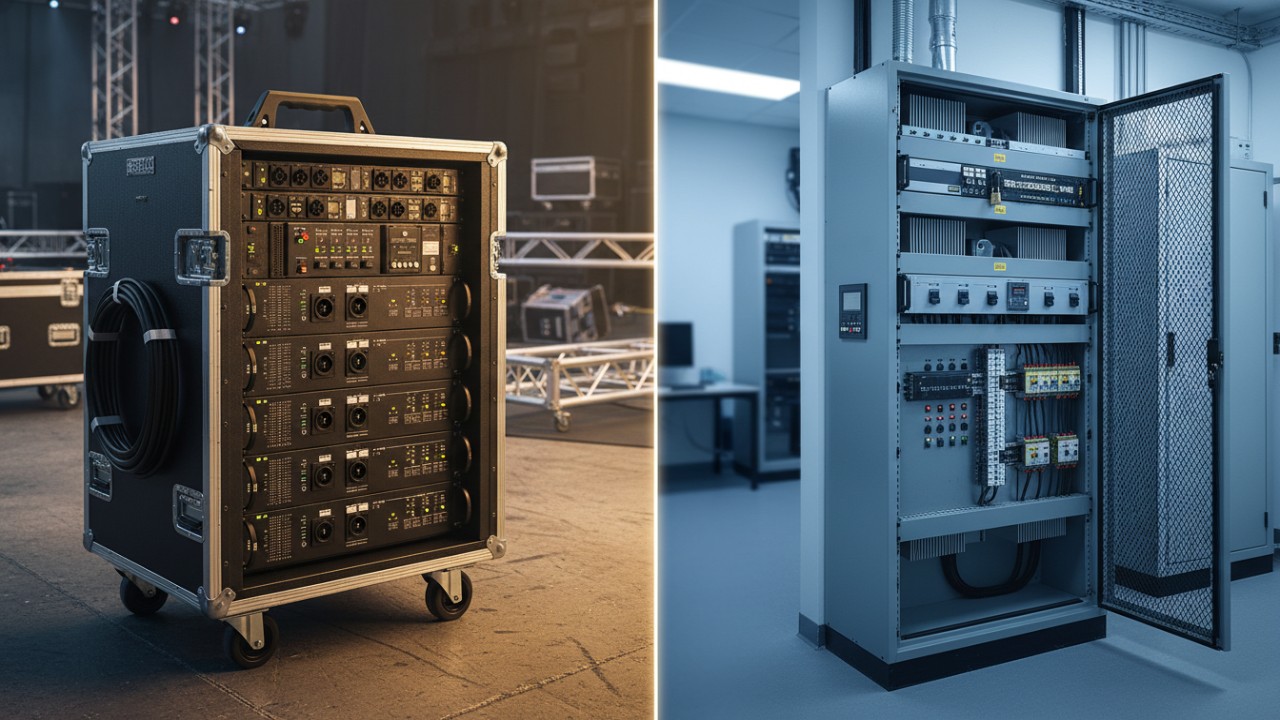
The main difference between portable vs permanent dimmer racks lies in their mobility and installation method. Permanent racks are hardwired into a building's infrastructure, while portable racks are ruggedized, mobile units designed for touring and live events.
Selecting the correct form factor depends entirely on the scale and application of your production environment:
- Permanent (Architectural) Racks: Designed specifically for large-scale theaters, educational institutions, and professional broadcast studios. These systems are typically wall-mounted or floor-mounted in dedicated, climate-controlled electrical rooms. They offer extremely high channel density, often housing 48 to 96 distinct channels per cabinet, and must be hardwired directly to the building's main power supply by certified electricians.
- Portable (Touring) Racks: Built directly into heavy-duty, shock-mounted flight cases. These road-ready racks feature heavy-gauge cam-lock power inputs for rapid deployment at outdoor festivals and arena concerts. They typically range from 24 to 48 channels and use multi-pin Socapex output connectors to quickly send multiple circuits of power out to the overhead lighting trusses.
- Shoebox Dimmer Packs: Small, entry-level 4-channel to 6-channel packs that simply plug into standard 15A or 20A wall outlets. These are ideal for mobile DJs, small nightclubs, or community theater setups requiring minimal electrical draw and maximum portability.
The Evolution: Transitioning to Hybrid LED Dimming Systems (2026+ Trends)
Hybrid LED dimming systems combine traditional voltage dimming with constant relay power in a single rack, enabling venues to run both legacy incandescent fixtures and modern intelligent LEDs safely. This represents the most critical upgrade for 2026.
The rapid transition to LED technology has introduced a major operational challenge for older venues: intelligent LEDs and mechanized moving heads require constant, clean, un-dimmed power to function. Plugging a sensitive LED fixture into a traditional dimmed circuit can severely damage its internal computer and power supply due to dangerous undervoltage (brownout) conditions. To safely bridge this technological gap, manufacturers developed innovative bypass solutions.
- ThruPower Technology: Allows a single output circuit to be digitally switched between a traditional dimmed output (ideal for a standard halogen leko) and a constant, non-dimmed relay output (required for an LED wash light) directly from the console.
- Data Integration: Future-facing rack architectures now integrate high-speed sACN and Art-Net data distribution directly within the primary chassis, massively simplifying the complex cabling previously required to feed data to smart fixtures.
How to Calculate Power Loads and Choose the Right Rack
To perform a stage lighting power load calculation, use the standard formula where Amps equal Watts divided by Volts. This vital calculation ensures you never exceed the electrical capacity of your dimmer modules or the venue's main breaker.
Understanding your specific power limits actively prevents tripped breakers and catastrophic mid-show blackouts. For example, a standard 20-Amp dimmer module running on 120V power can safely handle a maximum of 2,400 Watts of lighting (20A multiplied by 120V equals 2400W). If you patch four standard 575-Watt fixtures into that single channel, your total load becomes 2,300W. While technically safe, it operates extremely close to the module's maximum thermal limit.
- Diversity Factor: In the reality of theatrical lighting design, it is extraordinarily rare for every single light to be turned on at 100% intensity simultaneously. Electrical engineers use a standardized diversity factor to safely size the main building breaker, assuming a maximum simultaneous operational load of roughly 70% to 80%.
- Cost Tiers: Filling the gap in transparent pricing knowledge is essential for venue managers. Small 4-channel portable packs run between $150 and $400. Mid-size rolling touring racks cost between $3,000 and $8,000, offering great durability. Meanwhile, large-scale permanent 96-channel systems can easily exceed $20,000 to $40,000 depending entirely on the customized module configuration.
Essential Setup & Wiring Best Practices
Proper setup of a dimmer rack requires a balanced three-phase power connection, highly organized patch bays, and dedicated grounding. These practices ensure safe, noise-free electrical distribution for all connected theatrical lighting systems during a live performance.
A poorly wired or haphazardly patched rack represents a severe safety hazard to both the crew and the performers. When connecting a large touring rack via heavy cam-locks, technicians must strictly adhere to the universally recognized connection sequence: Ground first, then Neutral, followed by the three hot legs (Phases A, B, and C).
- Phase Balancing: You must distribute your total lighting load evenly across all three incoming electrical phases. Severely overloading Phase A while leaving Phase C completely empty can cause a highly dangerous neutral overload, potentially melting cables.
- Output Connectors: Professional racks utilize various specialized outputs. Stage Pin is the undisputed standard for US theater, Socapex is a heavy 19-pin multi-cable used to carry six independent circuits cleanly across a truss, and Twist-Lock (L5-20) remains common in older architectural setups.
- Isolated Neutrals: Maintaining strictly isolated neutrals and a completely dedicated technical ground is essential to prevent electrical hum and buzz from bleeding into the venue's sensitive audio reinforcement equipment.
Safety and Compliance: Meeting Industry Standards
Safety compliance for dimmer racks mandates strict adherence to national electrical codes and audiovisual standards, ensuring proper ventilation, clear airflow, and routine maintenance to prevent thermal shutdowns and dangerous electrical fires during live events.
Permanent architectural installations must comply strictly with NEC Article 520, which strictly governs all theaters, audience seating, and performance areas. Furthermore, the holistic design and structural integration of these lighting systems should heavily align with established best practices for optimal visual experiences, as reported by [AVIXA](https://www.avixa.org/standards).
- Ventilation Requirements: High-density dimmer modules generate massive amounts of ambient heat due to electrical resistance. Racks must be installed in dedicated, climate-controlled electrical rooms with completely unobstructed front and rear physical clearances. This allows the internal cooling fans to successfully exhaust hot air.
- Advanced Feature (AF) Reporting: Premium modern systems include internal AF sensors that provide the master lighting console with critical real-time telemetry, actively warning the operator of tripped breakers, phase loss, or impending thermal overload long before a catastrophic failure occurs.
Common Mistakes and Expert Troubleshooting Tips
Common dimmer rack mistakes include failing to terminate data lines, overloading single power phases, and neglecting routine dust cleaning. Avoiding these errors prevents catastrophic failures like ghosting lights, signal reflections, or sudden system shutdowns during a show.
Even the most advanced, ultra-expensive systems can fail spectacularly if basic operational best practices are ignored. Here are vital expert troubleshooting tips derived from decades of real-world stage experience:
- DMX Reflection: If your stage lights are flickering uncontrollably or flashing at random, you likely have a data reflection issue. Always use a dedicated 120-ohm DMX terminator plugged into the end of your data line, or directly at the rack's input if it represents the very end of the digital chain.
- Blown Neutrals: Mistakenly dropping an entire phase or severely unbalancing the three-phase load can send massive excess return current straight down the neutral wire. Always utilize a high-quality clamp meter to routinely verify individual phase loads during the technical rehearsal.
- Choke Maintenance: Accumulated dust is the absolute worst enemy of thermal regulation. Establish a highly strict maintenance routine to thoroughly vacuum dust out of the sensitive choke filters and fan intakes every six months without fail.
Industry-Leading Solutions: Upgrading Your Power Control System
Upgrading to an industry-leading power control system requires selecting a trusted manufacturer with proven expertise in custom rack engineering, hybrid dimming capabilities, and seamless integration for modern, energy-efficient stage environments across large-scale performance venues.
When selecting the foundational backbone of your theatrical dimming systems, relying strictly on established industry pioneers guarantees both supreme safety and technological longevity. For instance, leveraging the engineering excellence of Guangzhou RGB Lighting Equipment Co.,Ltd., a global pioneer founded in 1996, showcases exactly what top-tier integrated solutions look like. As a recognized National High-Tech Enterprise, RGB specializes deeply in intelligent network dimming, cloud-based infrastructure management, and hybrid dimmer solutions. Their premium equipment is meticulously certified to ISO9001 and CE standards, ensuring absolute precision output.
- Global Reliability: RGB's custom control solutions have successfully powered monumental, high-stakes events, including the spectacular Beijing Olympics and the massive Shanghai World Expo, definitively proving their capacity to handle the most demanding live environments on Earth.
- Future-Ready Engineering: Backed by multiple national patents, their systems seamlessly integrate visualized network control and true hybrid power delivery, making the inevitable transition from analog halogen to digital LED completely frictionless for modern venue operators.
Conclusion
Stage lighting dimmer racks play a critical role in bridging creative lighting design with safe, exceptionally reliable electrical distribution. Choosing a system that actively supports both current incandescent needs and future LED requirements is paramount for any modern venue looking to scale.
By fundamentally understanding the deep nuances of digital DMX control, strict phase balancing, and advanced hybrid power distribution, you can easily ensure your performance venue remains completely safe, code-compliant, and technologically relevant for many years to come. Contact us today to optimize your theatrical dimming systems strategy.
How many channels does a standard stage dimmer rack have?
Portable dimmer packs usually have 4 to 6 channels. Professional touring racks often feature 24 to 48 channels. Large permanent architectural racks can house 96 channels or more per cabinet.
What is the difference between a dimmer rack and a relay rack?
A dimmer rack modifies the voltage to smoothly fade conventional lights up and down. A relay rack provides simple on/off constant power, which is strictly required for intelligent lights and LEDs. Hybrid racks can do both depending on the installed modules.
Can I use a traditional dimmer rack with modern LED stage lights?
Generally no, unless the dimmer channel is switched to a non-dim/relay mode. Sending dimmed voltage to an LED fixture's power supply can severely damage its internal electronics. You must use bypass modules or constant power distribution for LEDs.
What is DMX512 and how does it connect to a dimmer rack?
DMX512 is the universal digital communication protocol for stage lighting. It connects via a 5-pin XLR cable from the lighting console directly into the dimmer rack's control module. The control module translates the digital DMX values (0-255) into voltage levels for each circuit.
How do you calculate the power load for a theatrical dimmer rack?
Use the formula: Amps = Watts divided by Volts. Ensure the total wattage of fixtures plugged into a single channel does not exceed the channel's capacity (e.g., 2400W for a 20A circuit). Balance the total amperage across all three legs of a 3-phase power supply.
What are the cooling and ventilation requirements for stage dimmers?
Dimmer racks generate significant heat due to electrical resistance and choke coils. They require active cooling fans and unobstructed front and rear clearances. Racks must be installed in climate-controlled electrical rooms to prevent thermal shutdown during a show.
How much does a professional stage lighting dimmer rack cost?
Small 4-channel portable packs can cost between $150 and $400. Mid-size rolling touring racks (24-channel) range from $3,000 to $8,000. Large-scale permanent 96-channel sensor racks can exceed $20,000 to $40,000 depending on module configuration.
What is the difference between portable dimmer packs and installation racks?
Portable packs are small, rugged, plug into standard wall outlets, and are meant for mobile setups. Installation racks are large, hardwired into a building's electrical panel, and intended to power a permanent theater grid.
How to Choose the Best Stage Dimmer Pack for Your Venue
Rack Dimmer Buying Guide: Choosing the Right Unit for Your Venue
Integration: Stage Dimmers with Lighting Consoles and Software
How to Choose the Right Dimmer Rack for Your Venue
About RGB
Can your dimmer cabinets integrate with third-party lighting consoles?
Yes. Our systems follow international protocols and can seamlessly integrate with major global brands through DMX, RDM, Art-Net, and sACN.
How do you ensure product stability during large-scale events?
All products undergo rigorous testing, long-duration load simulation, and multi-standard verification to guarantee stable performance in demanding environments.
What after-sales support do you provide?
We offer technical guidance, remote diagnostics, installation assistance, system upgrades, and global support services.
What types of lighting control systems do you support?
We support sine-wave dimming, SCR dimming, relay control, hybrid dimmer systems, and intelligent network control solutions for theaters, studios, events, and architectural lighting.
Distributors
What are the after-sales support methods?
Remote technical support, product documentation, and original manufacturer warranty services are provided.
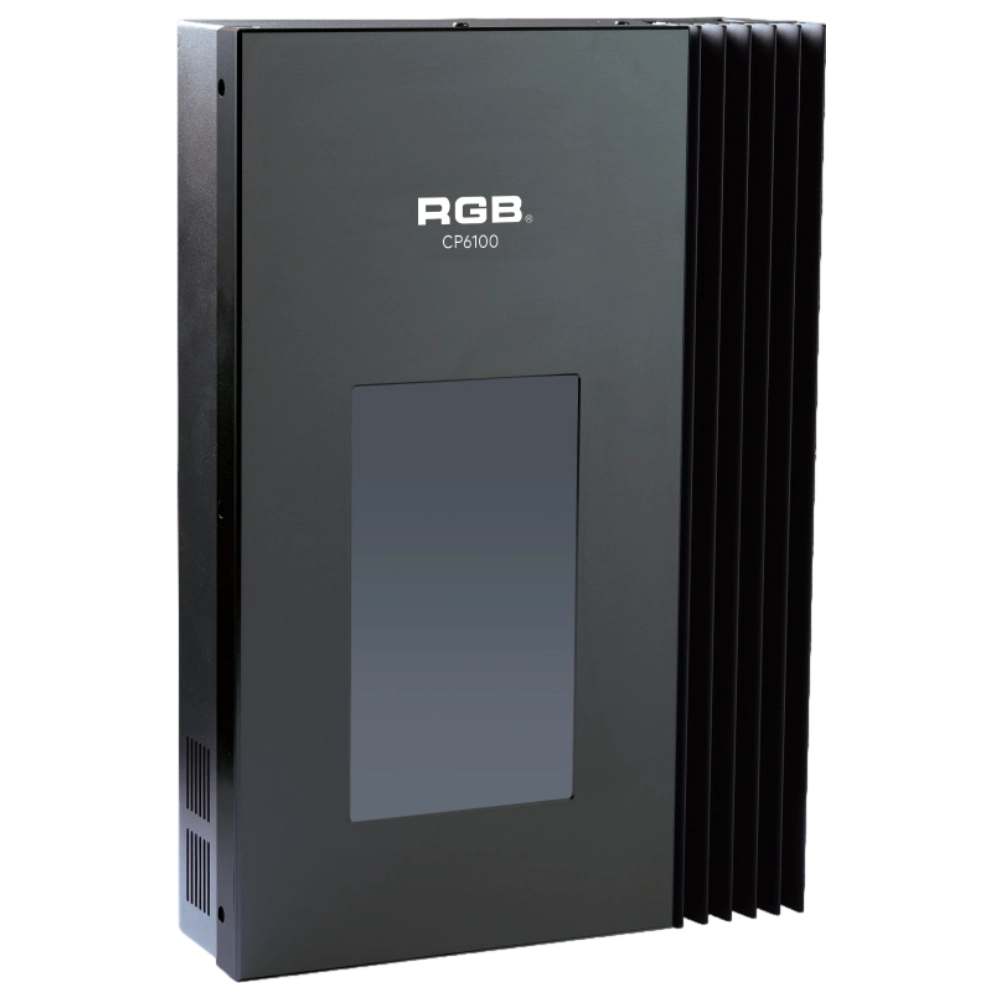
CP6100 Light Control System
The lighting control host is the main control device for theater stage lights, work lights, environmental lighting, commercial art lighting, sports venue lighting, and other places. By connecting the dedicated lighting control panels CP6104 and CP6108, it realizes the central control of the lighting system, supports a visual lighting control system, and intuitively displays the online and offline status of CP6100. Realize remote monitoring, editing, and setting of corresponding parameters.
It is widely applicable to theaters, cinemas, auditoriums, stadiums, museums, exhibition halls, cultural tourism performances, commercial art lighting, and other places.
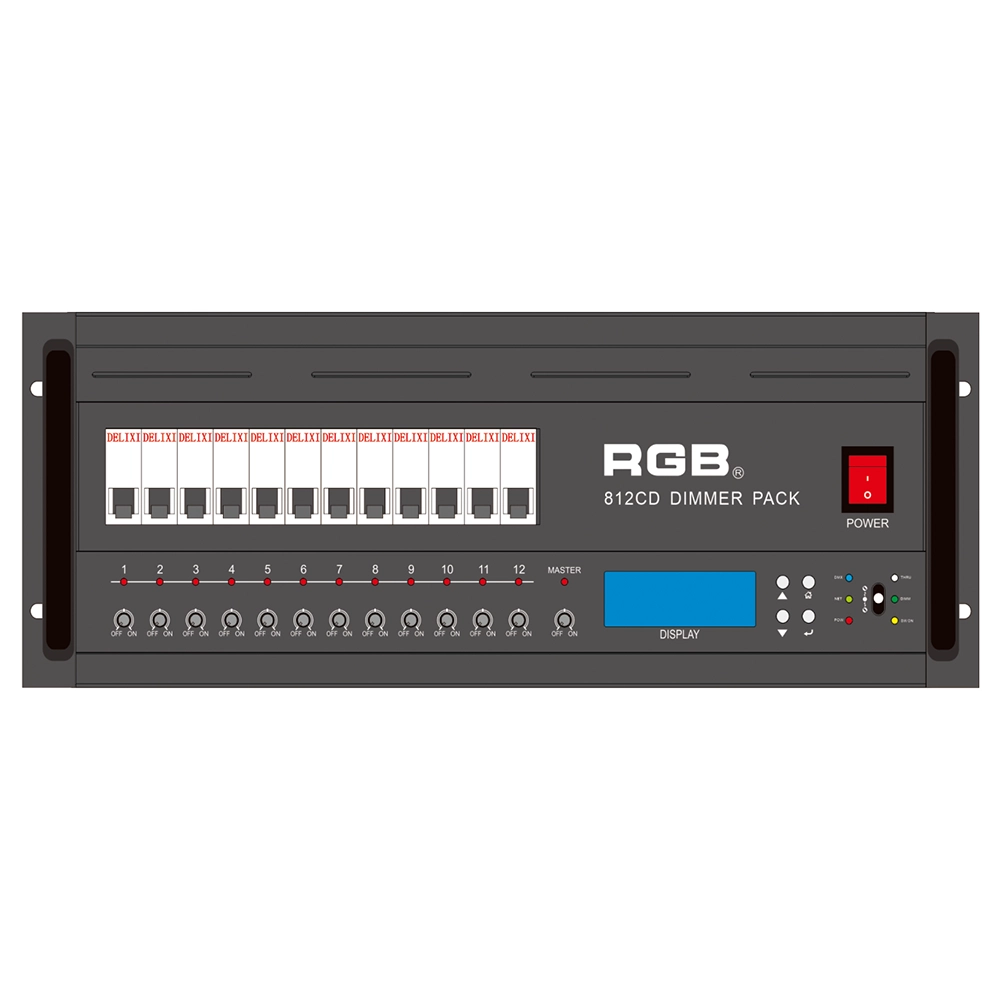
8 Series Intellight Dimmer/Relay Packs
RGB is the latest development and production of all digital, intelligent, and network dimming through the hybrid silicon box. It comes with six channels (806 silicon box), twelve channels (812 silicon box) with analog knob dimming, 49 DMX field recordings and replays (field backup function), and self-programming and recording field. RGB-8 silicon box with DMX512 digital signal input and RJ45 network input interface, with various types of dimming stations at home and abroad used. It is a powerful, stable performance and reliable work of a new generation of intelligent digital dimming through a hybrid silicon box.
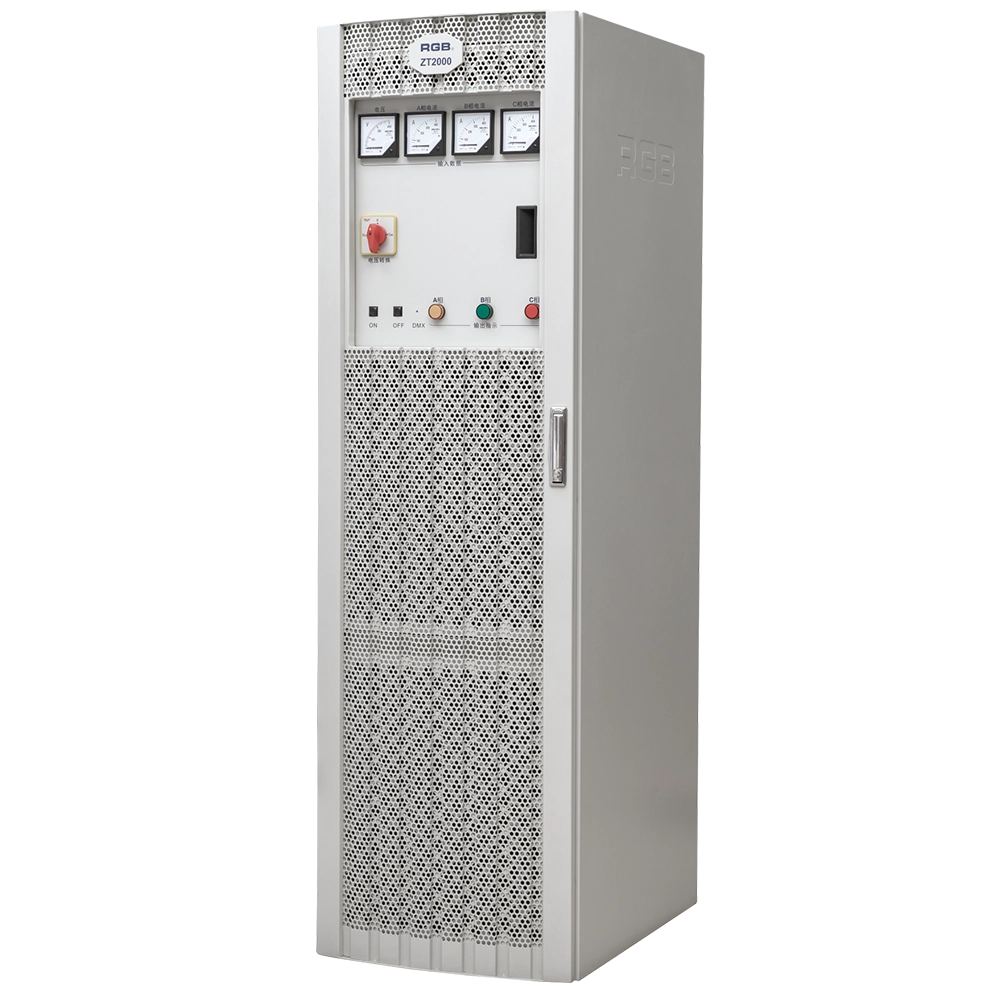
ZT2000 Pass-Through Racks
The ZT2000 straight-through power cabinet is a three-phase 630A/400A air switch main control, with each channel being a 32A air switch sub-control straight-through power cabinet. It can be used in conjunction with various computer lamps, regular lamps, and temporary electrical equipment as a power distribution and supply part for electrical equipment with overcurrent and short-circuit protection. It is a brand-new, reliable, and stable lighting control device in the field of stage lighting control.
It is widely applied in theaters, concert halls, multi-functional halls, cultural and tourism performances, TV stations, gymnasiums, auditoriums, commercial art lighting, and other performance and cultural venues.
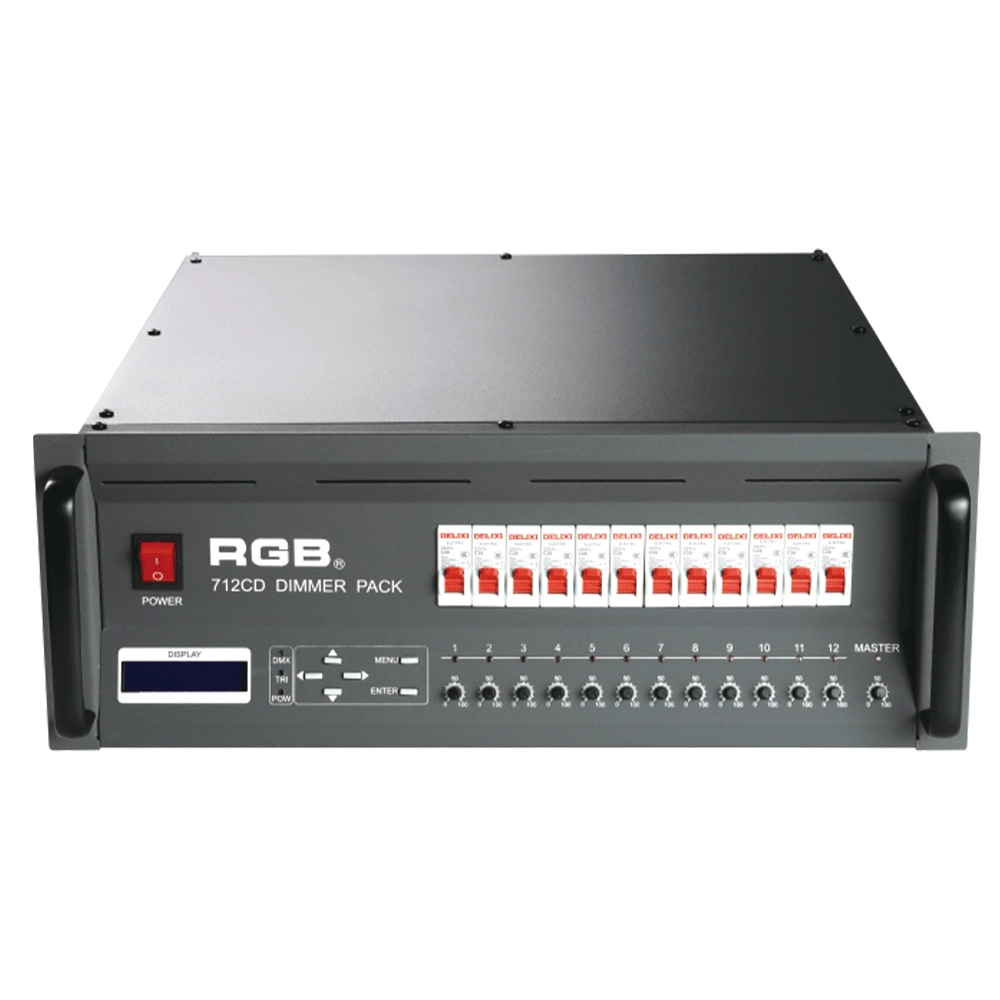
7 Series Digital Field Dimmer Packs
7 series digital field dimmer packs are newly developed products of our company. With DMX512 digital control signal input, they are compatible with other domestic and overseas digital lighting consoles. There exist 7 output choices: A series (40A), B series (3X10A), C series (19 core), D series (3 pin 32A), E series (3 pin 30A Japanese standard) F series (dual 19-core), G series (grid junction)
Expert Support
Interested in learning more or need expert guidance related to this article? Fill in your details, and our team will provide tailored support.
Intelligent Control. Brilliant Performance.
RGB specializes in stage lighting control systems, delivering intelligent, reliable, and high-performance solutions for theaters and performance spaces worldwide.
Contact
Email:
Tel:
+86 20 3928 0245
+86 20 3928 0247
Address:
No.3, Huashan Road, Shilou Town, Panyu, Guangzhou, China.
Whatsapp: +8615975520131