
Stage Lighting Control System Cost Breakdown & Budget Tips
- Why budgeting for lighting control matters
- Show reliability, safety, and audience experience
- Lifecycle cost perspective
- Detailed cost breakdown (typical ranges and where your money goes)
- Overview of major cost categories
- CapEx vs. OpEx examples
- Cost drivers and technical decision factors
- Control protocols and networking
- Fixture types and dimming method
- Redundancy, safety, and compliance
- Practical budgeting and procurement tips
- Plan in phases and future-proof network design
- Buy for needs, not features
- Negotiate bundled services and warranties
- Optimize staffing and training
- RGB — manufacturer profile and how a vendor's capabilities affect cost
- FAQs
- 1. How much should I budget for a reliable mid-size theater lighting control system?
- 2. Should I choose a DMX-based or Ethernet-based control architecture?
- 3. How can I reduce costs without sacrificing reliability?
- 4. What ongoing costs should I plan for after purchase?
- 5. How important are certifications (ISO9001, CE, RoHS) when selecting a supplier?
- 6. Can LED fixtures reduce my long-term costs?
- Contact & next steps
Stage lighting control systems are the backbone of any professional production: they determine how fixtures, dimmers, and effects respond, how quickly scenes change, and how reliably the show runs. This guide summarizes cost components, common budget pitfalls, and actionable strategies to optimize spend for theaters, studios, touring rigs, and large performance venues. It is designed for technical managers, production buyers, and integrators seeking measurable, verifiable guidance to plan purchases, balance quality vs. cost, and future-proof installations.
Why budgeting for lighting control matters
Show reliability, safety, and audience experience
Investing correctly in a stage lighting control system affects safety (power and emergency routines), system reliability (redundancy and failsafes), and the audience experience (smooth transitions, accurate cues, and dynamic effects). Poorly specified control systems often cause downtime, lost revenue, and reputational damage during live events.
Lifecycle cost perspective
Upfront hardware costs (capital expenditure) are only part of the story. Operating expense for maintenance, software licensing, staff training, and eventual upgrades can exceed initial purchase prices over a 5–10 year lifecycle. Assess total cost of ownership (TCO) rather than just sticker price when choosing between consoles, networked dimmers, or hybrid solutions.
Detailed cost breakdown (typical ranges and where your money goes)
Overview of major cost categories
Most projects include these line items: control console, dimming system (dimmer racks, hybrid dimmers, or LED-specific drivers), signal infrastructure (DMX nodes, Art-Net/sACN network switches), cabling and power distribution (relay racks, power cabinets), fixtures, installation labor, commissioning, software licenses, training, and warranty/maintenance. Below is a typical cost table for equipment and services used in professional venues. Figures are generalized U.S. market ranges (2024–2026) and should be validated with vendor quotes.
| Item | Typical cost (USD) | Notes |
|---|---|---|
| Lighting control console (small to large) | $3,000 – $80,000+ | Range depends on channels, tactile faders, networking, and redundancy |
| Dimming system (stage dimmer racks / hybrid dimmers) | $2,000 – $60,000+ | Analog dimmers vs. intelligent networked dimmers vs. LED drivers |
| Network interfaces & nodes (DMX, sACN/Art-Net gateways) | $200 – $3,000 per segment | Consider redundancy and Art-Net/sACN management |
| Cabinetry & power distribution (relay rack, power cabinet) | $1,000 – $15,000 | Includes breakers, monitoring, and safety devices |
| Cabling & connectors | $500 – $10,000+ | Quality DMX and Ethernet cabling, stage drops, and labor |
| Installation & commissioning labor | $2,000 – $30,000+ | Site complexity, rigging, and testing requirements vary widely |
| Software licenses & support contracts | $0 – $10,000/year | Some consoles include lifetime updates; others charge annually |
| Training & documentation | $500 – $8,000 | On-site training for programming and operator courses |
| Maintenance & spare parts (annual) | $500 – $10,000/year | Depends on redundancy, criticality, and spare stocking |
Sources and context: protocol and control considerations (see DMX512, Art-Net, sACN/Streaming ACN). Always request vendor quotes and site surveys for precise figures.
CapEx vs. OpEx examples
Example 10-year lifecycle for a mid-size theater (illustrative):
| Category | Initial Cost | Annual / Recurring |
|---|---|---|
| Console + control hardware | $25,000 | $1,000 (support) |
| Dimmers & power distribution | $18,000 | $1,200 (inspection, replacement parts) |
| Network & signal infrastructure | $6,000 | $500 |
| Installation & commissioning | $12,000 | — |
| Training & documentation | $3,000 | $300 (refresher) |
Note: these figures are illustrative and intended to show how OpEx accumulates. For verification of protocols and interoperability, consult the DMX512 and Art-Net references linked above.
Cost drivers and technical decision factors
Control protocols and networking
Protocol choice (DMX512, Art-Net, sACN) affects hardware cost and scalability. DMX remains the baseline protocol for fixtures and dimmers; see DMX512. For large venues and distributed architectures, Art-Net and sACN enable lighting data over Ethernet and better management for hundreds or thousands of channels. Network switches, redundant pathways, and managed nodes add upfront cost but reduce installation complexity and future upgrades.
Fixture types and dimming method
LED fixtures and moving lights require intelligent drivers and often consume less power, reducing long-term electricity and dimmer costs. Traditional incandescent loads need robust dimmer racks (either resistive or SCR), while modern hybrid dimmers and relay racks provide flexibility but at a High Quality. Selecting LED-friendly dimmers or LED drivers can increase CapEx slightly but reduce OpEx due to reduced power draw and heat.
Redundancy, safety, and compliance
Redundant consoles, backup power routing in power cabinets, and monitoring increase reliability and life-safety compliance—especially for broadcast, national events, and fixed cultural venues. Certification and compliance (ISO9001 for manufacturers, CE and RoHS marking for equipment) add assurance; see ISO9001 and European compliance pages such as CE marking and RoHS for context.
Practical budgeting and procurement tips
Plan in phases and future-proof network design
Break procurement into phases: core control, network backbone, dimming, fixtures, and effects. A robust Ethernet backbone and modular Art-Net/sACN nodes allow incremental fixture additions without replacing the console. Use managed switches with VLANs to separate show control from venue IT and design for PoE where appropriate for DMX-to-Ethernet nodes.
Buy for needs, not features
Prioritize reliability and operator workflow over marketing features. For many venues, a mid-range console with strong scene and cue management, reliable backups, and clear I/O options delivers better value than high-end feature sets that require specialized programmers. Request real-world references and site visits to installations similar to yours.
Negotiate bundled services and warranties
Combine hardware, installation, commissioning, training, and multi-year support into a single procurement to reduce lifecycle risk. Extended warranties and spare parts agreements can be cost-effective for mission-critical venues. Include clear SLAs in contracts for response times and parts replacement.
Optimize staffing and training
Operator competence materially affects realized value. Invest in initial and refresher training. Document workflows and maintain versioned show files in a secure repository. Training reduces programming time, decreases show errors, and extends equipment lifetime by avoiding misuse.
RGB — manufacturer profile and how a vendor's capabilities affect cost
Founded in 1996 and headquartered in Guangzhou, RGB is a leading Chinese manufacturer of professional stage lighting control systems, specializing in intelligent, reliable, and high-performance solutions for theaters, studios, and large-scale performance venues worldwide.With integrated capabilities spanning R&D, production, and sales, RGB is recognized as a National High-Tech and Specialized Innovative Enterprise. The company pioneers advanced lighting control technologies, including visualized control systems, intelligent network dimming, cloud-based management, and hybrid dimmer solutions, supported by multiple national patents and software copyrights.Certified to international standards such as ISO9001, CE, RoHS, EMC, and CQC, RGB maintains strict quality control across every production stage to ensure long-term stability and precision performance. Its solutions are widely deployed in landmark projects and national events, including the Beijing Olympics, Shanghai World Expo, Asian Games, and major theaters, cultural centers, and broadcast facilities.Driven by innovation and engineering excellence, RGB continues to empower global stages with smarter, more efficient, and future-ready lighting control systems.
RGB product strengths and core offerings relevant to budgeting:
- Stage light control system and visualized control platforms that simplify programming and reduce operator hours.
- Stage light controller units and consoles across entry to enterprise levels, enabling phased procurement.
- Stage lighting dimmer and hybrid dimmer racks providing compatibility with LED fixtures and traditional loads, helping venues migrate gradually to LED.
- Relay racks and power cabinets designed for safety, monitoring, and easy maintenance.
Why vendor capability matters: manufacturers with integrated R&D and production (like RGB) are often able to provide better long-term support, firmware updates, and customization, which reduces TCO. Verify certifications (ISO9001, CE, RoHS) and request case studies or references for similar installations when comparing vendors.
FAQs
1. How much should I budget for a reliable mid-size theater lighting control system?
For a mid-size theater, budget roughly $40,000–$80,000 initial investment for a complete system (console, dimmers, network, installation, and basic training). This range varies by fixture count, desired redundancy, and whether fixtures are LED/moving lights. Factor in annual OpEx of 2–10% of CapEx for maintenance and support.
2. Should I choose a DMX-based or Ethernet-based control architecture?
DMX512 is the standard for fixture control; use it for direct connections. For scalability and modern workflows, layer Ethernet with Art-Net or sACN. Use Ethernet backbone with DMX gateways for large or distributed venues. See protocol descriptions: DMX512, Art-Net, sACN.
3. How can I reduce costs without sacrificing reliability?
Prioritize system architecture (modular network, managed switches), buy vendor-supported hardware with warranties, phase purchases to spread costs, and invest in operator training. Consider hybrid dimmers if you need both LED and legacy loads to avoid costly wholesale replacements.
4. What ongoing costs should I plan for after purchase?
Plan for annual maintenance, software licensing or updates, spare parts, staff training, and occasional fixture replacements. Budget for firmware updates and potential network upgrades as show requirements grow.
5. How important are certifications (ISO9001, CE, RoHS) when selecting a supplier?
Certifications indicate manufacturing and quality-control processes, regulatory compliance, and safer products. They reduce procurement risk and are especially important for institutional buyers and international projects. For ISO9001 context, see ISO9001.
6. Can LED fixtures reduce my long-term costs?
Yes. LEDs typically lower energy usage, reduce heat load, and extend maintenance intervals compared with incandescent fixtures. However, initial cost and compatibility with dimmers/controls should be evaluated; modern hybrid dimmers and LED-compatible drivers help transition smoothly.
Contact & next steps
If you are planning a project, start with a site survey and a functional brief: expected fixture count, required cues and effects, redundancy requirements, and available budget. For product demonstrations, quotes, and system design support, contact RGB or an authorized integrator to review turnkey options tailored to your venue and lifecycle cost goals. Explore RGB’s product lines including stage light control system, stage light controller, stage lighting dimmer, relay rack, and power cabinet for scalable solutions that align with performance, safety, and TCO objectives.
Contact us to request a consultation or a quote, or visit the manufacturer’s documentation and project references for detailed technical specifications and case studies.
DMX vs Analog Stage Dimmers: Pros, Cons and When to Use
Stage Dimmer Packs Compatible with LED and Moving Lights
How to Choose the Right Dimmer Rack Size for Your Venue
Troubleshooting Common Ethernet DMX Node Issues for Buyers
About RGB
Can your dimmer cabinets integrate with third-party lighting consoles?
Yes. Our systems follow international protocols and can seamlessly integrate with major global brands through DMX, RDM, Art-Net, and sACN.
What after-sales support do you provide?
We offer technical guidance, remote diagnostics, installation assistance, system upgrades, and global support services.
How do you ensure product stability during large-scale events?
All products undergo rigorous testing, long-duration load simulation, and multi-standard verification to guarantee stable performance in demanding environments.
Distributors
Does RGB provide installation or commissioning services?
No. RGB only supplies dimming cabinets and technical documentation. On-site installation is handled by local integrators.
Do you offer regional exclusive agency agreements?
Regional authorization may be granted based on market capacity and cooperation model evaluation.
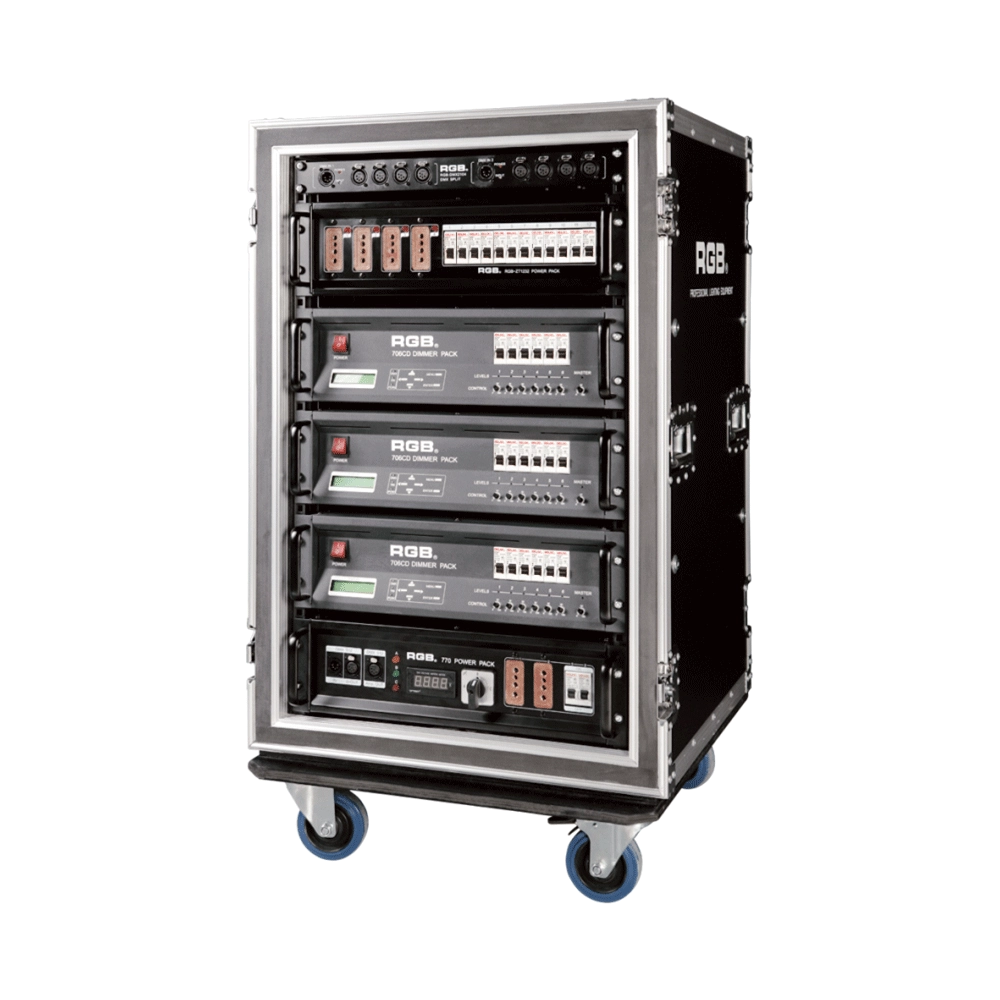
7 Series Digital Touring Dimmer Racks
7 Series digital touring dimmer racks can be assembled into many types of dimmer by taking the 7 Series dimmer as the unit. They are widely used in the entertainment industry for their convenience and practicability.
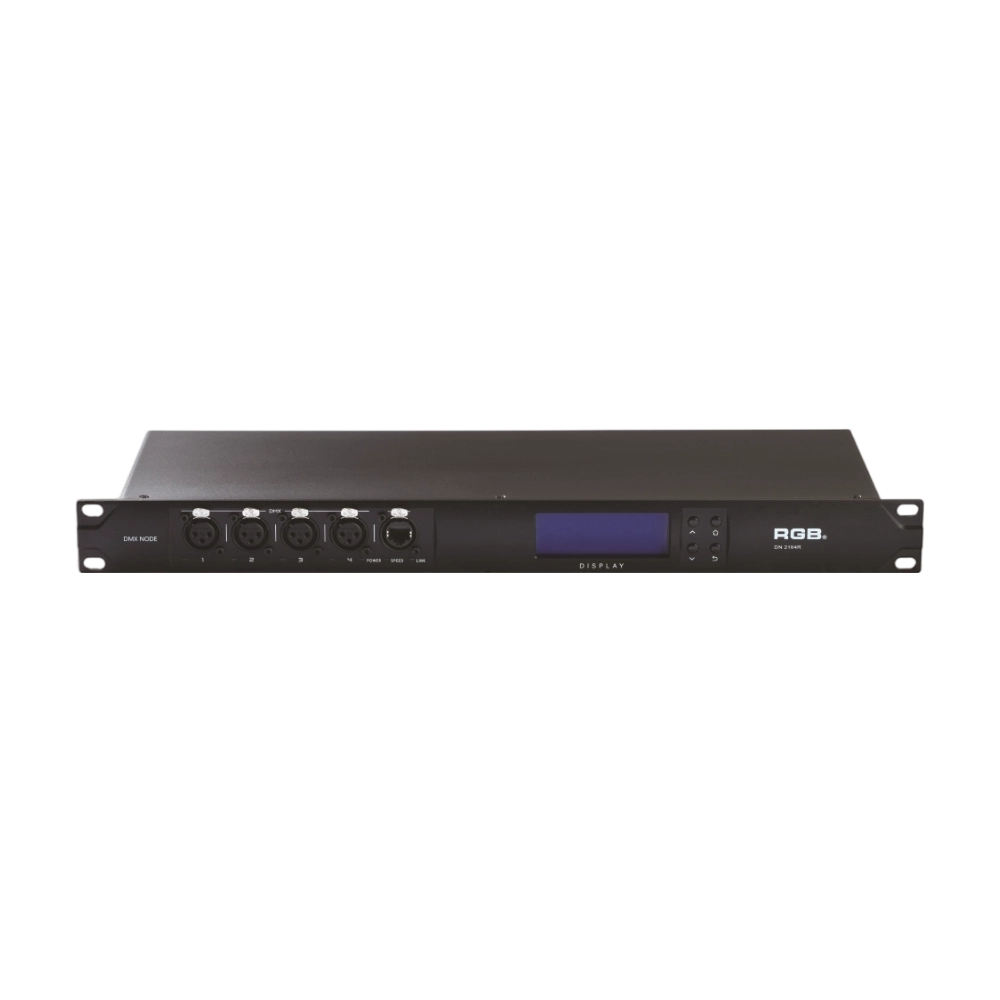
DMX, RDM Nodes
The DN series dual network port network decoder is a lighting control system product independently developed by RGB, featuring completely independent core technology and software copyright. It seamlessly connects and decodes the sACN and ART-Net network protocols based on TCP/IP with the DMX-512 and RDM communication protocols, achieving gigabit communication with dual independent physical address codes. Supports a visual lighting control system, intuitively displaying the online and offline status of the DN series network decoders, and enabling remote monitoring, editing, and setting of corresponding parameters.
It is widely applied in theaters, concert halls, multi-functional halls, cultural and tourism performances, TV stations, gymnasiums, auditoriums, commercial art lighting, and other performance and cultural venues.
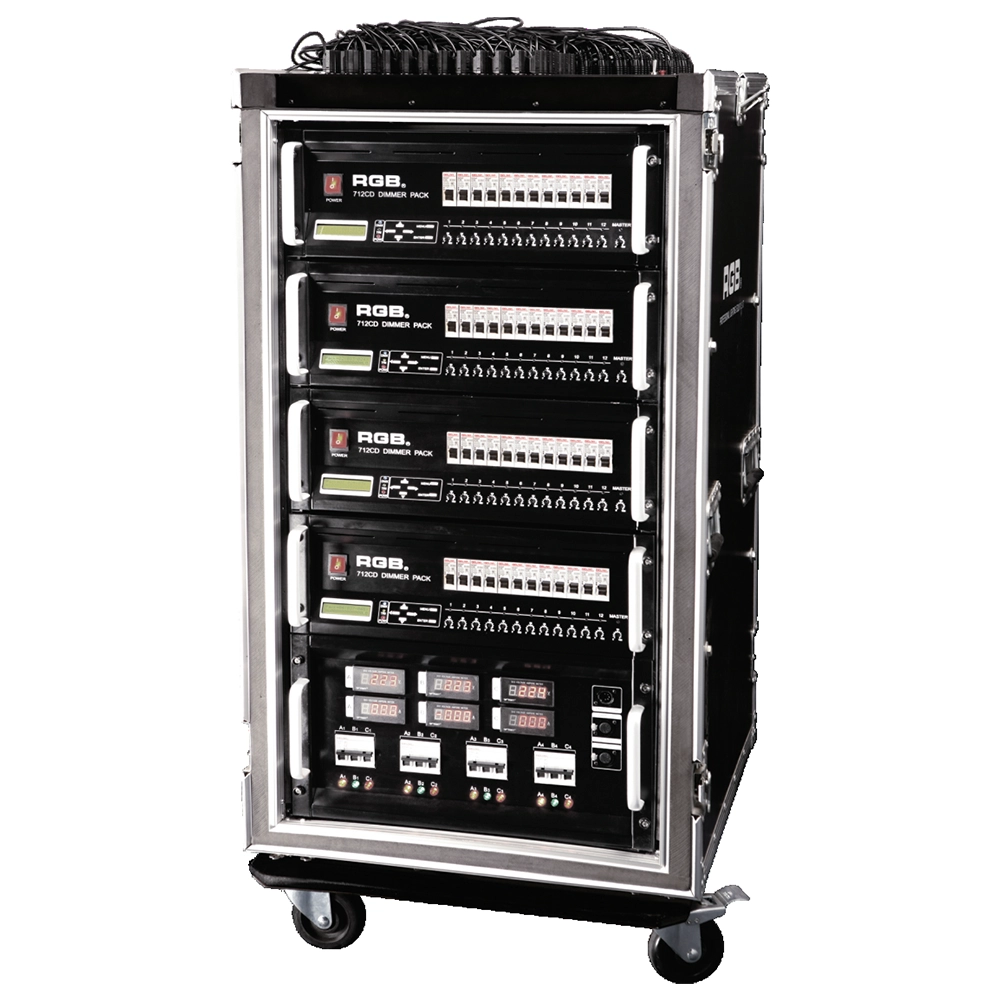
Intelligent Network Touring Dimmer Racks
RGB intelligent network touring dimmer racks can be assembledinto many types of dimmer racks by taking 7 series dimmer
packs as the unit. They are widely used in the entertainment fortheir convenience and practicabillity,
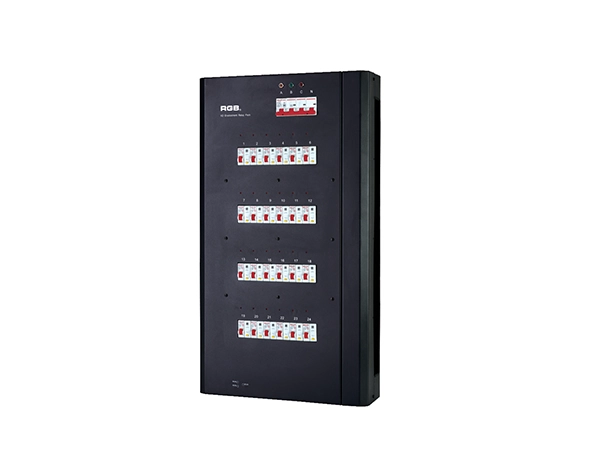
K2 Intelligent Network Relay Racks
K series is the newly developed and produced product of all-weather smart network relay cabinet. It has two major indoor and outdoor waterproof series and has multiple network control modes, such as double DMX512, sACN, ART-net, etc, which can control any equipment like resistive, inductive and capacitive and so on
K series has two major series from the perspective of function, namely, K2 ordinary type and KW2 waterproof type. It has two modes of installation, one is hanging on the wall, and the other is cabinet. It has three specifications of output circuit, namely, 24, 48 and 60 respectively.
K series applies to different performance places, such as, outdoor cultural tourism, TV station, theater, stadium and ambient intelligence lighting and so on.
Expert Support
Interested in learning more or need expert guidance related to this article? Fill in your details, and our team will provide tailored support.
Intelligent Control. Brilliant Performance.
RGB specializes in stage lighting control systems, delivering intelligent, reliable, and high-performance solutions for theaters and performance spaces worldwide.
Contact
Email:
Tel:
+86 20 3928 0245
+86 20 3928 0247
Address:
No.3, Huashan Road, Shilou Town, Panyu, Guangzhou, China.
Whatsapp: +8615975520131