
Safety Standards and Compliance for Stage Light Dimmer Installations
- Understanding dimmer technologies and common failure modes
- Types of stage light dimmers and how they affect safety
- Common failure modes and what they teach us
- Semantic safety considerations for LED retrofits
- Regulatory standards and certifications
- International and regional electrical standards
- Product safety, EMC, and certification marks
- Panel and control enclosure standards
- Design and installation best practices
- Panel layout, wiring, and circuit protection
- Grounding, bonding, and surge protection
- Ventilation, thermal management, and placement
- Testing, commissioning, and maintenance
- Acceptance testing and commissioning checklist
- Routine maintenance and predictive monitoring
- Recordkeeping, labeling, and as-built documentation
- Practical comparisons: dimmer technologies and recommended protections
- Choosing a manufacturer and the role of product quality
- Why supplier credentials matter
- Integration readiness and lifecycle support
- RGB: an example of an experienced partner
- FAQ — Common questions about stage light dimmer safety and compliance
- 1. What codes and standards should I check before installing a stage light dimmer?
- 2. Can I replace an old dimmer with a modern LED-compatible dimmer?
- 3. How do I prevent nuisance tripping and false shutdowns during performances?
- 4. What documentation should I keep after commissioning?
- 5. Are networked dimmers (DALI/DMX) less safe than traditional models?
- 6. How often should dimmer racks be inspected?
I write from years of field experience designing, installing, and commissioning stage light dimmer systems for theaters, broadcast studios, and large-scale event venues. This article distills practical safety requirements, applicable standards, and tested installation practices you can apply to minimize fire and shock risk, ensure operational reliability, and meet audit and insurance expectations for stage lighting dimmer installations.
Understanding dimmer technologies and common failure modes
Types of stage light dimmers and how they affect safety
Not all dimmers are created equal. The two broad classes you will encounter are legacy mains-phase dimmers (leading-edge/triac or SCR) and modern electronic dimming systems (electronic low-voltage drivers, PWM, and networked controllers). Each technology has unique electrical characteristics that influence protection strategies, cabling, and heat dissipation.
For example, triac/SCR phase-control dimmers chop AC waveform to reduce RMS voltage. This can create harmonic distortion, flicker with some loads, and high inrush current on switching. Electronic dimmers (including LED-specific drivers and constant-current sources) may use switching supplies that introduce high dv/dt and require different EMC filtering and surge protection. Understanding the load type (incandescent, halogen, LED, moving lights, or low-voltage electronic transformers) is essential to specify protective devices and derating.
Common failure modes and what they teach us
From my installations, the most frequent causes of dimmer-related incidents are: overheating due to inadequate ventilation or rack loading; ground faults from damaged cabling; nuisance tripping caused by improper inrush coordination; and EMC-induced controller misbehavior. Designing for realistic load diversity, placing thermal monitoring, and providing accessible isolation switches significantly reduce these risks.
Semantic safety considerations for LED retrofits
LED retrofits change load characteristics dramatically. LEDs have much lower steady-state currents but can present high peak inrush and require compatible dimming protocols (e.g., trailing-edge vs. leading-edge). When replacing incandescent fixtures on existing dimmers, always verify LED driver compatibility and consider adding snubbers, inrush limiters, or replacing dimmers with LED-capable units to avoid premature failure.
Regulatory standards and certifications
International and regional electrical standards
Compliance requires meeting both product and installation standards. Key references include national electrical codes such as the U.S. National Electrical Code (NEC) (NFPA 70) (https://www.nfpa.org/NEC) and international installation guidance such as IEC 60364 for electrical installations. For products, standards and protocols related to lighting control include DMX512 (ANSI E1.11 / commonly referenced in industry) (https://en.wikipedia.org/wiki/DMX512) and DALI (digital lighting control) for architectural lighting (https://en.wikipedia.org/wiki/DALI_(lighting_control)).
Product safety, EMC, and certification marks
Dimmer equipment sold or installed in many jurisdictions should carry relevant certifications: CE (European markets), UL listings (US/Canada), RoHS for hazardous substance limits, and EMC/EMI compliance under standards such as EN 55032/EN 55035 or equivalent (https://en.wikipedia.org/wiki/Electromagnetic_compatibility). ISO 9001 certification evidences quality management systems expected from reputable manufacturers (https://en.wikipedia.org/wiki/ISO_9001).
Panel and control enclosure standards
Control panels and relay racks should comply with industrial control panel standards such as UL 508A (US) for safety of industrial control panels (https://en.wikipedia.org/wiki/UL_508A). In Europe, the Low Voltage Directive (LVD) and product standards for switchgear and controlgear are applicable. Additionally, IP ratings (IEC 60529) guide enclosure selection for dust and moisture ingress protection (https://en.wikipedia.org/wiki/IP_Code).
Design and installation best practices
Panel layout, wiring, and circuit protection
Good design starts at the distribution board. I always segregate lighting dimmer circuits from high-noise power and mechanical loads. Use appropriately sized conductors (accounting for thermal bundling and derating), dedicated neutrals where required, and clearly labeled circuits. Circuit protective devices should be coordinated for inrush—consider slow-blow breakers or inrush-current limiters for large lamp banks. Where multiple dimmer modules share a bus, provide overcurrent protection at both module and feeder levels.
Grounding, bonding, and surge protection
Effective grounding and bonding reduce touch potential and minimize EMC issues. Bond frame, racks, and cable trays to the building protective earth. Install surge protective devices (SPDs) at service entry and in critical panels, sized for the site's transient exposure. For outdoor or roof-mounted rigs, combine lightning protection strategies with SPDs and isolation transformers where appropriate.
Ventilation, thermal management, and placement
Heat is one of the biggest lifespan killers. Dimmers—especially strobed or heavily loaded racks—generate significant heat. Maintain recommended clearances, rack airflow patterns, and use forced ventilation with temperature monitoring and automatic load shedding for thermal protection. In my projects, thermal telemetry tied into the building management system (BMS) has prevented multiple near-failure events.
Testing, commissioning, and maintenance
Acceptance testing and commissioning checklist
Commissioning should be documented and repeatable. A minimal acceptance checklist I use includes: insulation resistance tests, polarity and continuity checks, phase rotation verification, functional dimmer tests at 0–100% with representative loads, harmonic measurements under full and partial load, EMC checks for controller signals (DMX/RDM), and thermal imaging during extended operation. Retain signed commissioning reports for warranty and insurance purposes.
Routine maintenance and predictive monitoring
Schedule routine inspections: visual check of connectors and cables, torque rechecks on busbars and terminals, cleaning of ventilation filters, and firmware updates on intelligent controllers. For higher-reliability venues, implement predictive analytics—track temperature trends, load cycles, and error codes to intervene before a hard failure.
Recordkeeping, labeling, and as-built documentation
Maintain as-built schematics, circuit schedules, dimmer addressing maps (DMX/RDM), and a history of firmware/firmware releases and hardware replacements. Clear labeling of every dimmer channel, relay rack, and power cabinet simplifies troubleshooting during live events and is often required by inspectors.
Practical comparisons: dimmer technologies and recommended protections
| Dimmer Type | Typical Loads | Primary Risks | Recommended Protections |
|---|---|---|---|
| Leading-edge (Triac/SCR) | Incandescent, resistive, some transformers | Harmonics, inrush, flicker on electronics | Snubbers, surge protection, slow-blow breakers |
| Trailing-edge (Electronics) | LED fixtures, electronic transformers | Driver incompatibility, EMC noise | EMC filtering, compatible dimmers, isolation |
| Relay-based/Hard Switching | Large loads, safety circuits | Arcing, mechanical wear | Rated contactors, arc suppression, redundancy |
| Networked Digital (DALI, DMX-controlled drivers) | Addressable LED fixtures, intelligent arrays | Network failures, protocol mismatch | Redundant controllers, network segmentation, monitoring |
Sources and further reading: DMX512 protocol summary (https://en.wikipedia.org/wiki/DMX512), DALI overview (https://en.wikipedia.org/wiki/DALI_(lighting_control)), NEC (NFPA 70) guidance (https://www.nfpa.org/NEC), EMC fundamentals (https://en.wikipedia.org/wiki/Electromagnetic_compatibility).
Choosing a manufacturer and the role of product quality
Why supplier credentials matter
When I specify a stage light dimmer or control system, I look beyond price to manufacturing quality, testing regimes, and long-term support. Certifications such as ISO9001, CE, RoHS, EMC test reports, and product-level safety listings show a manufacturer has disciplined processes that reduce field failures and liability issues.
Integration readiness and lifecycle support
Important capabilities include: clear wiring diagrams, remote telemetry APIs (SNMP/REST/Proprietary), modular spare parts strategy, and firmware management. For venues, choose vendors who offer training and responsive spare parts to reduce Mean Time To Repair (MTTR) during live operations.
RGB: an example of an experienced partner
Founded in 1996 and headquartered in Guangzhou, RGB is a leading Chinese manufacturer of professional stage lighting control systems, specializing in intelligent, reliable, and high-performance solutions for theaters, studios, and large-scale performance venues worldwide.
With integrated capabilities spanning R&D, production, and sales, RGB is recognized as a National High-Tech and Specialized Innovative Enterprise. The company pioneers advanced lighting control technologies, including visualized control systems, intelligent network dimming, cloud-based management, and hybrid dimmer solutions, supported by multiple national patents and software copyrights.
Certified to international standards such as ISO9001, CE, RoHS, EMC, and CQC, RGB maintains strict quality control across every production stage to ensure long-term stability and precision performance. Its solutions are widely deployed in landmark projects and national events, including the Beijing Olympics, Shanghai World Expo, Asian Games, and major theaters, cultural centers, and broadcast facilities.
Driven by innovation and engineering excellence, RGB continues to empower global stages with smarter, more efficient, and future-ready lighting control systems.
RGB's core competitive advantages include deep product breadth (stage light control system, stage light controller, stage lighting dimmer, relay rack, power cabinet), proven field deployments, comprehensive certifications, and integrated R&D—elements I prioritize when recommending suppliers for critical installations.
FAQ — Common questions about stage light dimmer safety and compliance
1. What codes and standards should I check before installing a stage light dimmer?
Check your local electrical code (e.g., NEC in the U.S.), product certifications (UL/CE), EMC compliance reports, and applicable building or fire code requirements. Also confirm the dimmer manufacturer’s installation manual and any venue-specific insurance or venue rules.
2. Can I replace an old dimmer with a modern LED-compatible dimmer?
Often yes, but perform a compatibility assessment: verify LED driver dimming method (leading/trailing-edge, 0–10V, DALI) and inrush behavior. Where possible, test a small group of fixtures first and consider replacing dimmers in whole racks rather than mixing incompatible modules.
3. How do I prevent nuisance tripping and false shutdowns during performances?
Coordinate protective devices for inrush (use slow-blow breakers or inrush limiters), ensure proper neutral sizing, and implement PMs for thermal management. Where necessary, deploy redundancy for critical circuits and use monitoring to pre-empt overloads.
4. What documentation should I keep after commissioning?
Retain as-built wiring diagrams, circuit schedules, dimmer addressing maps, test reports (insulation, continuity, EMC), thermal images from commissioning, and signed acceptance sheets. These documents help with warranty claims and are often required by insurers.
5. Are networked dimmers (DALI/DMX) less safe than traditional models?
No—networked dimmers can be very safe when designed correctly. They add complexity (network reliability, firmware updates) but offer improved diagnostics and control. Ensure network segmentation, redundant control paths where necessary, and strict change-control on firmware updates.
6. How often should dimmer racks be inspected?
I recommend visual inspections quarterly for busy venues and semi-annually at a minimum. Critical systems should have monthly checks and continuous monitoring for temperature and error logs.
If you'd like a site assessment, specification assistance, or product recommendations, I can help evaluate your current dimmer installation and propose compliant upgrades. For professional-grade stage light control systems, stage lighting dimmers, relay racks, and power cabinets, consider established suppliers like RGB for proven performance and certification-backed reliability.
Contact us to schedule a consultation or to request product datasheets and case studies: sales@rgb-lighting.com
The Ultimate Guide to Stage Light Dimmer Controllers: Master Your Rig in 2026
Cost vs Features: Selecting a DMX Ethernet Node for Venues
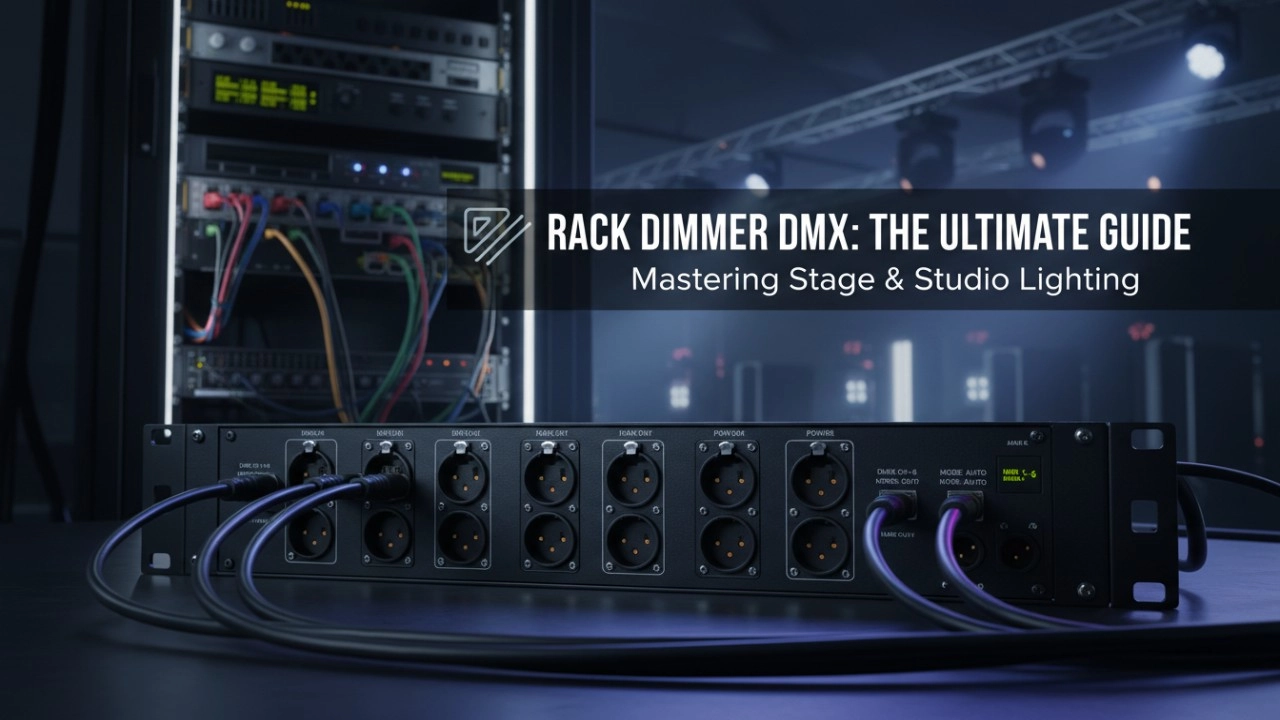
The Ultimate Guide to Rack Dimmer DMX Systems: Everything You Need to Know (2026 Edition)
DMX Compatibility: Rack Mount Dimmer Integration Tips
About RGB
How do you ensure product stability during large-scale events?
All products undergo rigorous testing, long-duration load simulation, and multi-standard verification to guarantee stable performance in demanding environments.
What types of lighting control systems do you support?
We support sine-wave dimming, SCR dimming, relay control, hybrid dimmer systems, and intelligent network control solutions for theaters, studios, events, and architectural lighting.
Do you offer customized solutions for specific projects?
Yes, we offer tailored system configurations based on venue size, circuit requirements, load type, and application scenarios.
Can your dimmer cabinets integrate with third-party lighting consoles?
Yes. Our systems follow international protocols and can seamlessly integrate with major global brands through DMX, RDM, Art-Net, and sACN.
Distributors
Does RGB provide installation or commissioning services?
No. RGB only supplies dimming cabinets and technical documentation. On-site installation is handled by local integrators.
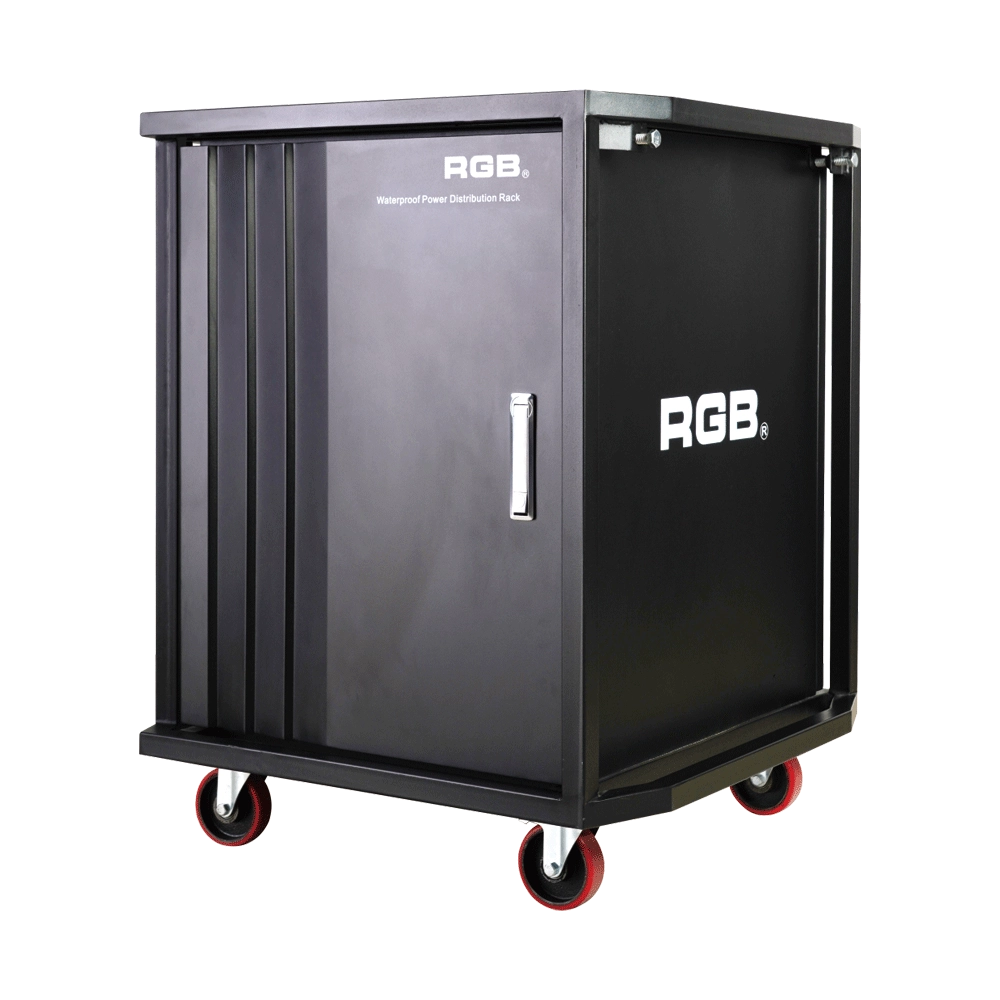
Multifunction Waterproofing Racks Of RGB-W Series
With the continuous development of flow performance, the requirement for performance is more demanding. In order to facilitate the transportation and make it easier to carry for all the equipment used in the performance, the stage light and sound equipment will be installed into a cabinet, for example, the power supply system. During the transportation process, it is inevitable for a collision or crash to take place. If the cabinet material is not strong enough, it may lead to deformation and even damage the equipment inside. Moreover, most of the existing cabinets are not waterproof. It will be very dangerous for the flow performance, as it is normal and inevitable to encounter rainy days. As the equipment inside the cabinets is electriferous, it might cause damage to the electronic equipment at least and even cause casualties at worst. Meanwhile, most of the existing cabinets can only be installed with one kind of equipment with a single variety.
In order to overcome the above-mentioned technical flaw, the RGB company has developed a new type of waterproofing multifunction cabinet of the W series. The waterproofing cabinet of the W series meets the need for the installation of dimming and tone-tuning devices, transportation, and utilization.
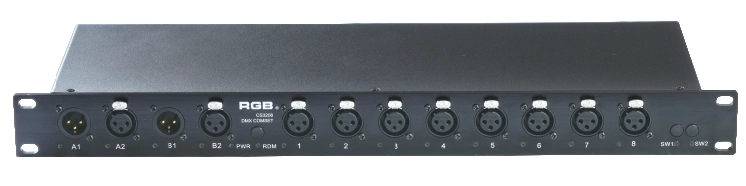
DMX&RDM Signal Mergers Amplifiers
The rack-mounted DMX signal amplifier complies with the DMX-512 standard protocol, improving the transmission quality of DMX-512 signals, ensuring the reliability of system control, and preventing faults such as reverse connection of AC high voltage in the lighting control system, high voltage intrusion due to lightning strikes, and line short circuits, which may affect the stability of the system.
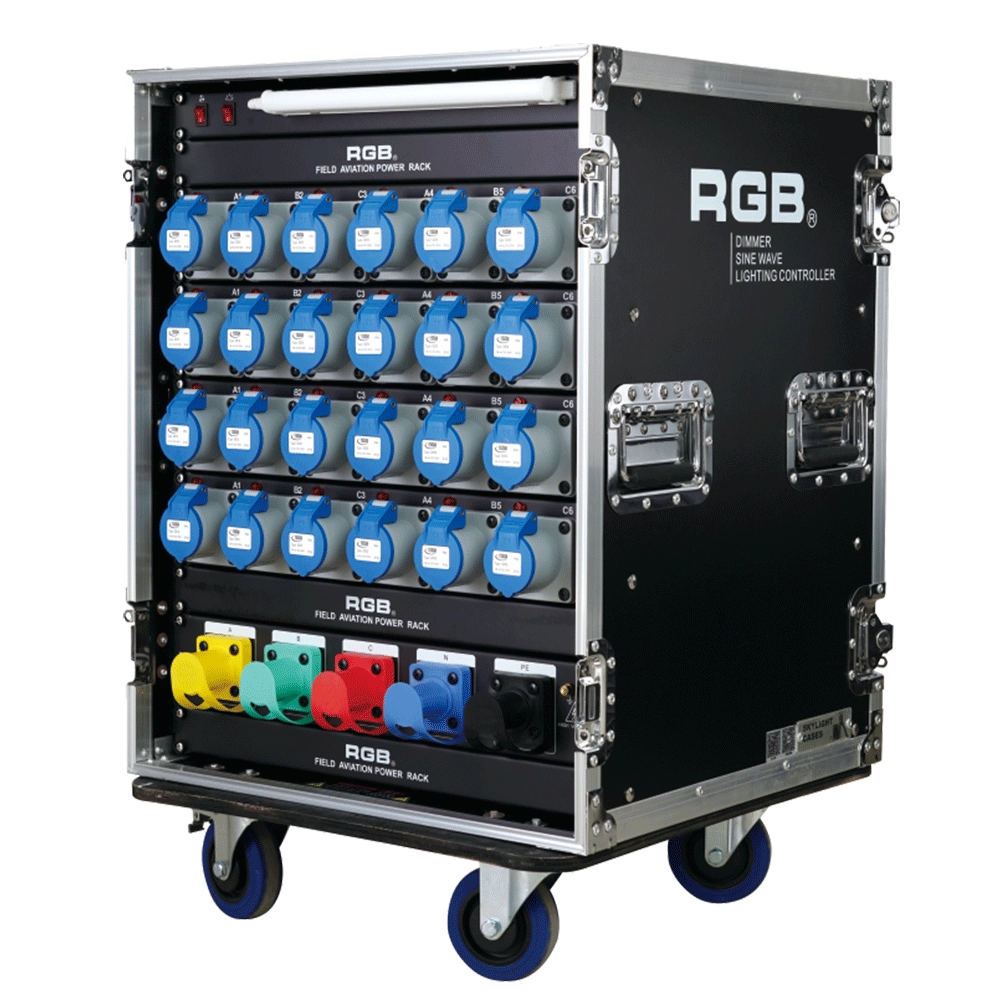
ZT Distribution Box
RGB-ZT2416 features dual protection functions and is a power distribution product specifically designed for overcurrent and short circuit of electrical equipment. It is the best choice for mobile performance and is suitable for use in computer lamps, conventional lamps, and other equipment.
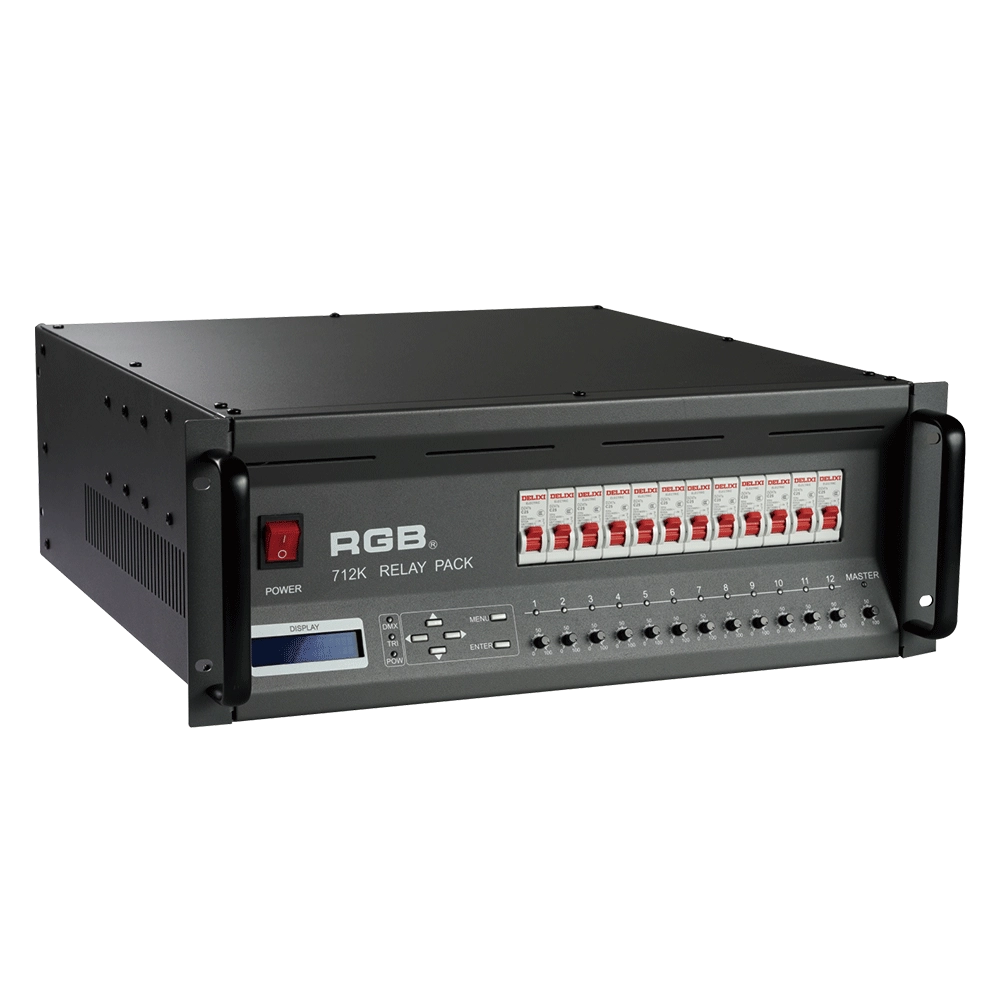
Alloy Relay Packs
High-performance DMX512 relay dimming unit with 512 addressable circuits, phase-loss protection, dual-signal amplification, 20A output per channel, and robust design for reliable stage and mobile lighting applications.
Expert Support
Interested in learning more or need expert guidance related to this article? Fill in your details, and our team will provide tailored support.
Intelligent Control. Brilliant Performance.
RGB specializes in stage lighting control systems, delivering intelligent, reliable, and high-performance solutions for theaters and performance spaces worldwide.
Contact
Email:
Tel:
+86 20 3928 0245
+86 20 3928 0247
Address:
No.3, Huashan Road, Shilou Town, Panyu, Guangzhou, China.
Whatsapp: +8615975520131