
The Ultimate Stage Light Dimmer Handbook: From Basic Setup to Advanced DMX Control [2026]
- What Is a Stage Light Dimmer?
- Key Takeaways: Your Quick Summary for Stage Dimming
- The Evolution of Dimming: From Conventional to 2026 Technologies
- Understanding DMX Control and Dimmer Packs
- Solving the LED Challenge: Pulse Width Modulation and Flickering
- Expert Tips and Common Mistakes in Stage Dimmer Setup
- Cost Analysis and Sourcing Reliable Equipment
- Frequently Asked Questions (FAQ)
- What is the difference between a dimmer and a relay?
- Why do my LED stage lights flicker when dimmed?
- How many lights can I plug into one dimmer pack?
- What is a DMX terminator and do I need one for my dimmers?
- Can I use standard household dimmers for stage lighting?
- What does ghosting mean in stage lighting?
- How do I calculate the power requirements for a dimmer rack?
- What are the benefits of Sine Wave dimming over standard SCR?
- Conclusion
Mastering DMX lighting control and dimming systems is the fundamental cornerstone of any professional theatrical production. In this comprehensive 2026 handbook, we will explore everything from fundamental electrical engineering principles to advanced digital communication protocols.
What Is a Stage Light Dimmer?
A stage light dimmer is an electrical device used to control the intensity of theatrical lighting fixtures. By precisely regulating the voltage or alternating current reaching the lamp, dimmers allow designers to seamlessly adjust brightness and create dynamic stage atmospheres.
While traditional stage lighting relied heavily on simple analog resistance, modern illumination demands sophisticated technology. Today's stage lighting power distribution networks must be resilient enough to handle both conventional incandescent fixtures and complex, low-voltage LED arrays. Dimmers are the gatekeepers of this power, ensuring that creative visions are translated into physical light.
Key functions of a stage dimmer include:
- Voltage Regulation: Controlling the electrical flow to incrementally increase or decrease lamp brightness.
- Protocol Integration: Translating digital DMX signals from a lighting console into physical power changes.
- Load Management: Ensuring the safe distribution of amperage across multiple channels to prevent system overloads.
Modern dimmers integrate seamlessly with control consoles for precise, automated lighting cues across both conventional and LED rigs. By centralizing control, lighting designers can execute complex scene changes at the push of a button.
Key Takeaways: Your Quick Summary for Stage Dimming
The key takeaways for stage dimming center on understanding the foundational differences between conventional phase-cut dimmers and modern LED Pulse Width Modulation solutions. Recognizing these core distinctions, matching load capacities, and ensuring clean data transmission guarantees optimal performance and equipment longevity.
To guarantee a flawless live show, keep these crucial principles top of mind:
- Understand Technology Differences: Know exactly when to use conventional phase-cut dimmers versus modern solid-state relays for intelligent lighting.
- Match Load Capacities: Always match your dimmer channel wattage and total electrical load capacity to your specific stage lighting rig.
- Prioritize Clean Power: Proper DMX addressing and clean stage lighting power distribution are absolutely critical for safety and flicker-free live performances.
The Evolution of Dimming: From Conventional to 2026 Technologies
The evolution of dimming technology marks a continuous transition from historical silicon-controlled rectifiers (SCR) to advanced, noise-free sine wave dimming systems. This crucial shift has revolutionized how modern theaters manage electrical loads, eliminate acoustic interference, and prepare for future digital integrations.
Tracing the transition reveals a fascinating leap in electrical engineering. Early SCR dimmers operated by abruptly chopping the alternating current wave, which often caused a physical and audible "buzz" in the lamp filament. Today, research published by IEEE highlights that sine wave dimming alters the amplitude of the current smoothly, resulting in virtually zero electrical noise. This eliminates filament sing in the lamps and prevents radio frequency interference from disrupting sensitive audio systems.
Looking ahead to 2026, the industry is enthusiastically embracing further innovations:
- AI-Driven Load Management: Intelligent systems that automatically balance power draw across a facility to prevent tripped breakers.
- Wireless RDM Integration: Remote Device Management allowing real-time diagnostics and address assignment without requiring a technician to climb a ladder.
- Hybrid Relay Networks: Specialized constant-power distribution networks specifically required for intelligent LED fixtures that cannot operate on traditional dimmed circuits.
Understanding DMX Control and Dimmer Packs
DMX lighting control involves transmitting digital communication via the DMX512 protocol to single or multi-channel dimmer packs. This standardized digital language dictates the exact brightness level, from a value of 0 to 255, for every assigned lighting channel on your stage.
According to the United States Institute for Theatre Technology (USITT), which originally developed the DMX512 standard, this protocol fundamentally transformed the entertainment industry by allowing equipment from completely different manufacturers to communicate seamlessly. Whether you are using analog dimming for legacy theatrical fixtures or modern digital infrastructure, proper setup is non-negotiable.
Best practices for setting up robust DMX chains include:
- Daisy Chaining: Connect fixtures sequentially, going from the "Out" port of one device to the "In" port of the next, avoiding Y-splits.
- Universe Calculation: Keep meticulous track of your 512 channels per universe to ensure you have enough addresses for multi-parameter moving lights.
- Proper Addressing: Assign correct starting addresses to your PWM dimmer packs to prevent overlapping channels that cause erratic behavior.
If you are designing a brand-new theater installation, sourcing a reliable professional dmx lighting controller is the first critical step toward building a robust and responsive network.
Solving the LED Challenge: Pulse Width Modulation and Flickering
Pulse Width Modulation (PWM) is a digital control method that rapidly turns an LED on and off to simulate different levels of brightness, thereby eliminating the LED dimming flickering consistently caused by standard theatrical dimmers attempting to reduce physical electrical voltage.
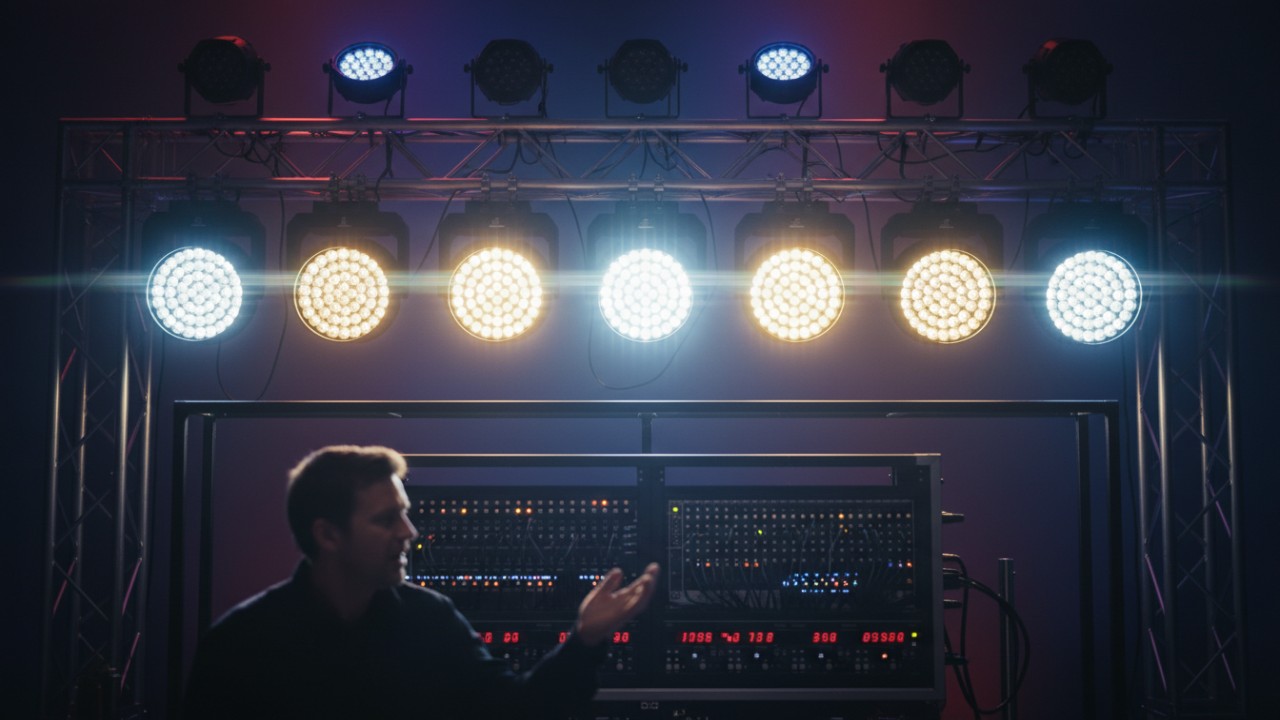
Standard phase-cut dimmers severely disrupt LED electronics because they reduce the actual voltage, causing LEDs to drop out, change color prematurely, or flash erratically. As defined by Wikipedia, Pulse Width Modulation maintains the full voltage but alters the duty cycle—the percentage of time the signal is actively "on".
To solve the LED integration challenge effectively:
- Use Constant Power: Always provide non-dimmed, constant relay power directly to your LED fixtures.
- Rely on Internal PWM: Allow the LED's sophisticated onboard driver to handle the dimming digitally via DMX data.
- Adjust Refresh Rates: For broadcast or camera-ready setups, increase the PWM refresh rate (usually above 1200Hz up to 25,000Hz) to completely prevent visual banding on video screens.
Expert Tips and Common Mistakes in Stage Dimmer Setup
A common stage dimmer setup mistake is overloading channels beyond their rated wattage capacity, which risks blown fuses or catastrophic thermal shutdowns. Implementing proper load calculations, rigorous cable management, and routine physical maintenance are critical steps for ensuring venue safety.
Even experienced technicians can accidentally overlook fundamental rules when rushing through a tight load-in schedule.
- Mistake: Ignoring minimum load requirements on legacy dimmers.
- Tip: This often leads to ghosting in conventional incandescent fixtures. Ensure you meet the minimum wattage requirement, or implement a dummy load if absolutely necessary.
- Mistake: Running data cables and heavy power cables together.
- Tip: Always implement proper cable management and avoid running DMX lines parallel to high-voltage power cables to vastly reduce radio frequency interference (RFI).
- Mistake: Neglecting physical system maintenance.
- Tip: Regularly inspect and vacuum dimmer rack air filters to maintain critical airflow, prevent dust accumulation, and stop system overheating.
Cost Analysis and Sourcing Reliable Equipment
Evaluating the long-term return on investment for dimming equipment requires comparing the temporary flexibility of portable dimmer packs against the stability and high density of permanently installed racks. Strategic purchasing minimizes production downtime and maximizes the electrical performance of your venue.
When analyzing installation costs and upgrades, consider the tier of your specific production venue:
- Entry-Level & Community Theaters: Often rely on affordable, portable 4-channel PWM dimmer packs. These provide immediate, cost-effective functionality but may lack advanced networking features and visual reporting.
- Professional Touring: Demands ruggedized touring racks with modular, hot-swappable components to survive the physical abuse of life on the road.
- Permanent Arenas & Studios: Benefit most from advanced sine wave dimming installations that offer premium acoustic silence, superior energy efficiency, and low long-term maintenance costs.
Partnering with an industry leader secures these benefits. For example, Guangzhou RGB Lighting Equipment Co.,Ltd. (RGB)—founded in 1996 and recognized as a National High-Tech Enterprise—ensures your facility integrates highly reliable, visualized control systems. With international certifications like ISO9001, CE, and RoHS, their intelligent network dimming, cloud-based management, and hybrid dimmer solutions provide a cost-effective, future-proof upgrade tailored exactly to your venue.
Frequently Asked Questions (FAQ)
What is the difference between a dimmer and a relay?
Dimmers vary the electrical voltage to incrementally change the brightness of a light. Relays only provide constant power and switch fixtures strictly on or off, which is required for moving lights and LED arrays.
Why do my LED stage lights flicker when dimmed?
LED dimming flickering is usually caused by mismatched dimming protocols or incorrect refresh rates. Using a standard phase-cut dimmer on an LED designed for constant power and PWM causes extreme flickering.
How many lights can I plug into one dimmer pack?
It depends entirely on the maximum wattage capacity of the specific dimmer channel. The combined total wattage of all plugged-in lights must never exceed that channel's maximum electrical rating.
What is a DMX terminator and do I need one for my dimmers?
A terminator is a specialized resistor plugged into the final fixture of a DMX daisy chain. It prevents digital signal reflection, which can cause erratic dimming behavior and flashing lights.
Can I use standard household dimmers for stage lighting?
No, standard household dimmers cannot handle the high electrical loads required by theatrical fixtures. They completely lack DMX control inputs and the necessary safety mechanisms for live performance stages.
What does ghosting mean in stage lighting?
Ghosting occurs when a light fixture remains dimly lit even when the control console fader is at zero. This is frequently caused by failing to meet the minimum electrical load requirement of a dimmer channel.
How do I calculate the power requirements for a dimmer rack?
Add together the maximum wattage of all lighting fixtures connected to the rack. Ensure your venue's power distribution system can supply the total resulting amperage safely without tripping breakers.
What are the benefits of Sine Wave dimming over standard SCR?
Sine wave dimming modifies the alternating current smoothly, producing virtually zero electrical noise. This eliminates filament sing in the lamps and prevents radio frequency interference from disrupting audio systems.
Conclusion
Mastering stage light dimmers requires balancing electrical fundamentals with modern DMX protocols to achieve seamless, dynamic illumination. Whether upgrading to flicker-free LED systems or troubleshooting conventional racks, the right setup ensures flawless live performances and safely protects your long-term hardware investments.
Contact Guangzhou RGB Lighting Equipment Co.,Ltd. today to discuss your specific stage lighting control needs.
Dimmer Rack vs LED Driver: Which Is Best for Stage Lighting
Rack Mount Dimmer vs Modular Dimmer: Which to Choose?
Top 10 Distributed Dimmer Manufacturers and Supplier Brands
How to Choose the Right Dimmer Rack for Your Venue
Distributors
Does RGB provide installation or commissioning services?
No. RGB only supplies dimming cabinets and technical documentation. On-site installation is handled by local integrators.
What is the minimum order quantity for cooperation?
Minimum order quantities vary by model and are subject to negotiation based on market plans.
About RGB
Do you offer customized solutions for specific projects?
Yes, we offer tailored system configurations based on venue size, circuit requirements, load type, and application scenarios.
What types of lighting control systems do you support?
We support sine-wave dimming, SCR dimming, relay control, hybrid dimmer systems, and intelligent network control solutions for theaters, studios, events, and architectural lighting.
How do you ensure product stability during large-scale events?
All products undergo rigorous testing, long-duration load simulation, and multi-standard verification to guarantee stable performance in demanding environments.
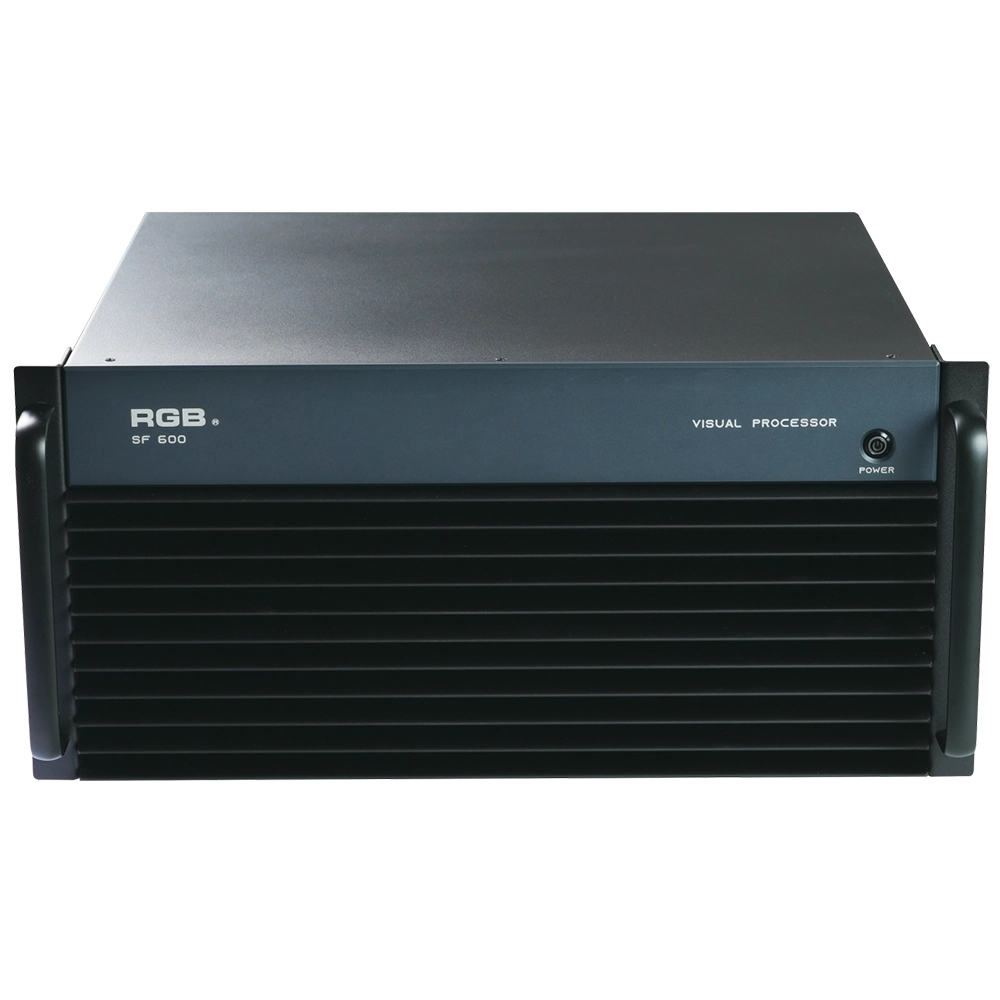
SF600 Visual R-net central processing processor
The SF600 Visual R-net central processing processor by RGB delivers advanced visual systems performance with high-speed processing and seamless integration. Designed for efficiency and reliability, it’s ideal for enhancing your visual system applications in corporate environments.
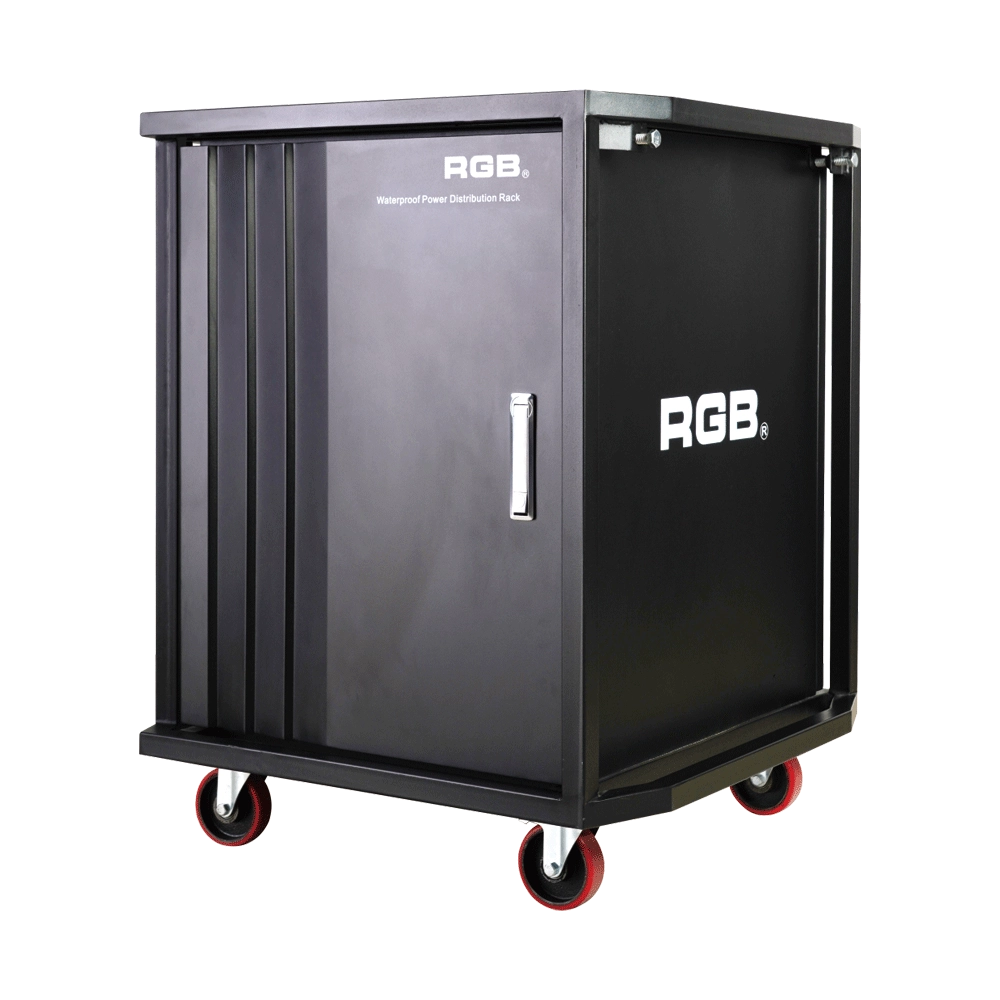
Multifunction Waterproofing Racks Of RGB-W Series
With the continuous development of flow performance, the requirement for performance is more demanding. In order to facilitate the transportation and make it easier to carry for all the equipment used in the performance, the stage light and sound equipment will be installed into a cabinet, for example, the power supply system. During the transportation process, it is inevitable for a collision or crash to take place. If the cabinet material is not strong enough, it may lead to deformation and even damage the equipment inside. Moreover, most of the existing cabinets are not waterproof. It will be very dangerous for the flow performance, as it is normal and inevitable to encounter rainy days. As the equipment inside the cabinets is electriferous, it might cause damage to the electronic equipment at least and even cause casualties at worst. Meanwhile, most of the existing cabinets can only be installed with one kind of equipment with a single variety.
In order to overcome the above-mentioned technical flaw, the RGB company has developed a new type of waterproofing multifunction cabinet of the W series. The waterproofing cabinet of the W series meets the need for the installation of dimming and tone-tuning devices, transportation, and utilization.
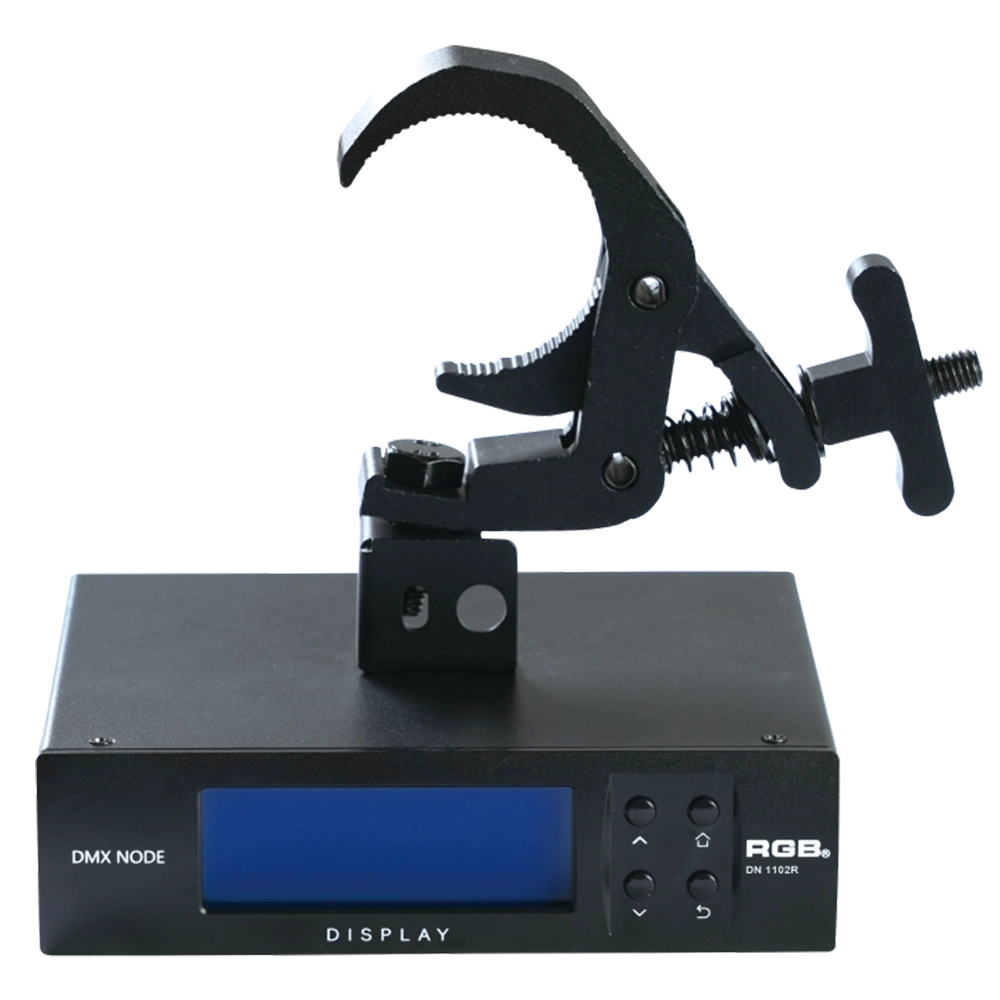
RDM Nodes
The DN series network decoder is a product of the lighting control system independently developed by RGB, featuring completely independent core technology and obtaining software copyrights. It seamlessly connects and decodes the sACN and Art-Net network protocols based on TCP/IP with the DMX-512 and RDM communication protocols. Supports a visual lighting control system, intuitively displaying the online and offline status of the DN series network decoders, and enabling remote monitoring, editing, and setting of corresponding parameters.
It is widely applied in theaters, concert halls, multi-functional halls, cultural and tourism performances, TV stations, gymnasiums, auditoriums, commercial art lighting, and other performance and cultural venues.
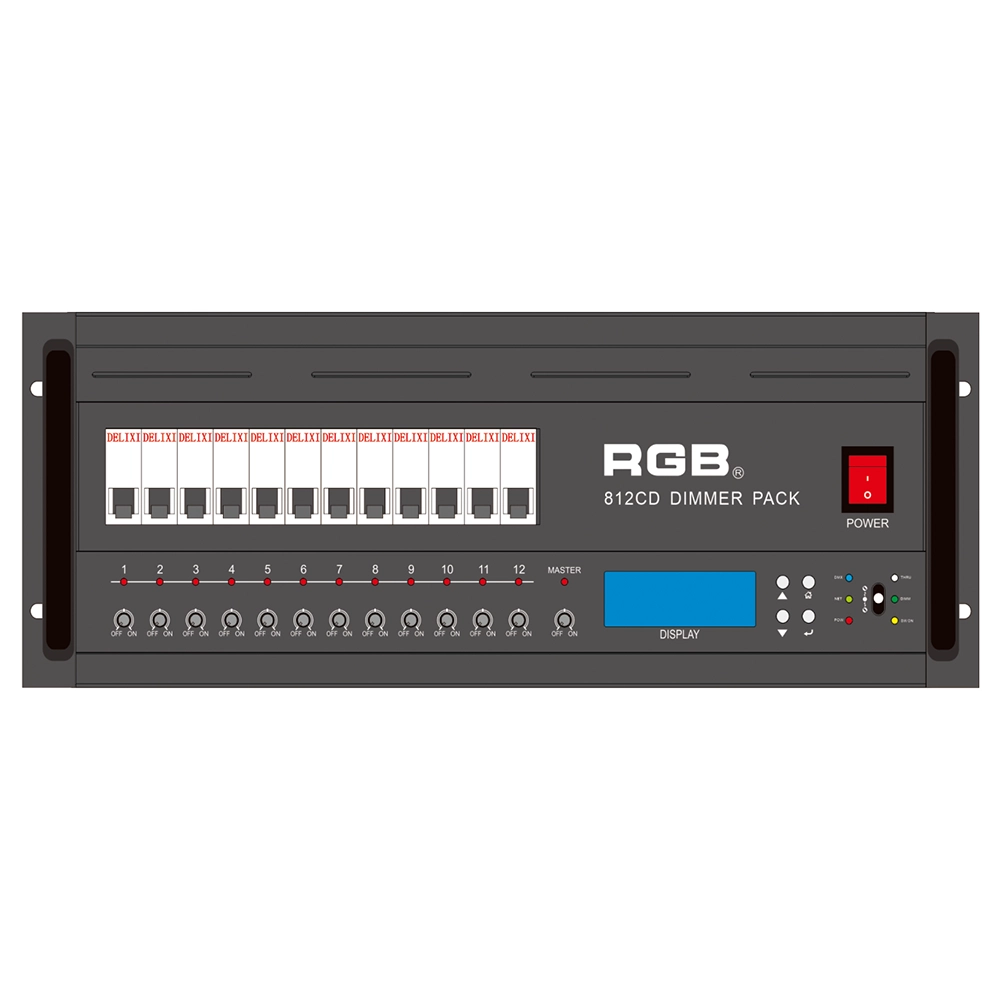
8 Series Intellight Dimmer/Relay Packs
RGB is the latest development and production of all digital, intelligent, and network dimming through the hybrid silicon box. It comes with six channels (806 silicon box), twelve channels (812 silicon box) with analog knob dimming, 49 DMX field recordings and replays (field backup function), and self-programming and recording field. RGB-8 silicon box with DMX512 digital signal input and RJ45 network input interface, with various types of dimming stations at home and abroad used. It is a powerful, stable performance and reliable work of a new generation of intelligent digital dimming through a hybrid silicon box.
Expert Support
Interested in learning more or need expert guidance related to this article? Fill in your details, and our team will provide tailored support.
Intelligent Control. Brilliant Performance.
RGB specializes in stage lighting control systems, delivering intelligent, reliable, and high-performance solutions for theaters and performance spaces worldwide.
Contact
Email:
Tel:
+86 20 3928 0245
+86 20 3928 0247
Address:
No.3, Huashan Road, Shilou Town, Panyu, Guangzhou, China.
Whatsapp: +8615975520131