
Stage Dimmer Safety Standards and Compliance for Venues
- Understanding Electrical Risks in Performance Venues
- Common failure modes of stage dimmers
- Why venue-specific electrical codes matter
- Operational risks beyond wiring
- Key Standards and Regulatory Frameworks for Stage Dimmers
- Standards that commonly apply
- Standards comparison (quick reference)
- Regulatory interactions — what venues must understand
- Design, Installation, and Operational Compliance Practices
- Design and selection: components that reduce risk
- Installation best practices
- Operational controls, training and safety protocols
- Testing, Maintenance, Documentation, and Auditing
- Acceptance testing and commissioning
- Routine maintenance schedule
- Audit checklist and documentation to retain
- Failure investigation: preserving evidence
- Practical Compliance Examples and Manufacturer Considerations
- Case study: avoiding overheating in a compact dimmer room
- How manufacturers can make compliance easier for venues
- About RGB — manufacturing excellence and product lines
- FAQs — Common questions venues ask about stage dimmer safety and compliance
- 1. Do I need full UL or IEC certification for my dimmer racks?
- 2. What are the most important maintenance tasks I should schedule?
- 3. How can I minimize electromagnetic interference from dimmers?
- 4. What documentation should I expect from a manufacturer?
- 5. What should I do after a dimmer fault during a performance?
- 6. Are DMX or network control failures a safety risk?
As a consultant who has audited and specified stage lighting control systems for theatres, broadcast studios and large performance venues, I know that ensuring a stage dimmer installation is safe and compliant is as important as achieving the desired creative effect. This article summarizes the electrical, EMC, thermal and operational risks associated with dimmers, maps the most relevant international and regional standards, and gives a practical compliance checklist you can use today to reduce risk, pass inspections, and keep performances running reliably.
Understanding Electrical Risks in Performance Venues
Common failure modes of stage dimmers
Stage dimmers—whether traditional leading-edge/trailing-edge units, solid-state semiconductor racks, or networked intelligent dimming systems—present several failure modes I see repeatedly in the field:
- Thermal overload and inadequate ventilation that lead to component failure or fire.
- Overcurrent and short-circuit conditions causing contactor or breaker trips and potential arcing.
- Electromagnetic interference (EMI) from power electronic switching affecting audio and control signals.
- Control-protocol mismatches (e.g., DMX512 or sACN) or network misconfiguration that cause unexpected outputs.
- Age-related insulation breakdown or degraded connections leading to earth-faults or leakage currents.
Understanding these risks helps prioritize mitigations—ventilation, selective coordination of protective devices, EMC filtering, and robust control architectures.
Why venue-specific electrical codes matter
Electrical codes like the National Electrical Code (NEC/NFPA 70) in the US or national regulations elsewhere set minimum installation practices for power distribution, grounding, and fire protection. Compliance isn’t optional: building inspectors and insurance underwriters often require demonstrable adherence. See the NEC overview at NFPA (NEC).
Operational risks beyond wiring
Operationally, I check procedures: are riggers and lighting operators trained? Is there lockout/tagout for dimmer maintenance? Are emergency power and circuit identification clearly documented? Operational errors are a common root cause of safety incidents in venues, so procedures and training are as important as hardware compliance.
Key Standards and Regulatory Frameworks for Stage Dimmers
Standards that commonly apply
Below I list standards and directives that typically affect stage dimmers and associated control systems. For products and assemblies intended for international or European markets, manufacturers and venues often reference multiple standards simultaneously.
- IEC 61439 (Low-voltage switchgear and controlgear assemblies) — applicable to assembled dimmer racks and power distribution units: IEC 61439.
- UL 508A (Industrial Control Panels) — in the U.S., many dimmer racks are evaluated as control panels: UL 508A.
- EMC Directive and standards (e.g., IEC 61000 series) — to manage electromagnetic compatibility: EU EMC Directive.
- CE Marking, RoHS — regulatory requirements for selling in the EU: CE, RoHS.
- DMX512 / ANSI E1.11 — the widely-used control protocol; compliance ensures predictable control behavior: DMX512.
- ISO 9001 — quality management systems for manufacturers: ISO 9001.
Standards comparison (quick reference)
| Standard / Directive | Scope | Why it matters for dimmers | What to check |
|---|---|---|---|
| IEC 61439 | LV switchgear & controlgear assemblies | Safety, short-circuit withstand, ventilation and enclosure ratings for dimmer racks | Assembly testing reports, IP/IK ratings, thermal calculations |
| UL 508A | Industrial control panels (US) | Applies when dimmer rack is a factory-built control panel | Panel construction, markings, wiring diagrams, breaker coordination |
| IEC 61000 series (EMC) | Electromagnetic compatibility | Prevents interference with audio, broadcast, and control networks | EMI filters, surge protection, emissions & immunity test reports |
| DMX512 / ANSI E1.11 | Control protocol | Ensures deterministic control and interoperability | Protocol conformance, isolation, termination, cable type |
Sources: standard organizations and overviews linked above.
Regulatory interactions — what venues must understand
Venues rarely need to certify equipment themselves, but they must ensure installed assemblies meet local code and hold manufacturer documentation (declarations of conformity, test reports). For imported or custom-built dimmer racks, validation to IEC 61439 or UL 508A is essential during acceptance testing. Expect inspectors to request wiring diagrams, short-circuit calculations and ventilation/temperature rise data.
Design, Installation, and Operational Compliance Practices
Design and selection: components that reduce risk
When I evaluate dimmer systems for a venue, I prioritize these design features to meet safety standards and practical operation:
- Robust thermal management: forced-air cooling with monitored fan failure alarms, and temperature interlocks.
- Selective coordination: correct rating and location of protective devices to avoid cascading trips.
- EMC controls: line filters, proper grounding and cable routing to minimize emissions and susceptibility.
- Isolation and insulation: reinforced insulation on control circuits and proper creepage/clearance distances.
- Accessible labeling and documentation: clear panel labels, circuit IDs and emergency shutdown instructions.
Installation best practices
On-site installation determines whether a compliant design remains safe in service. Key checks during installation include:
- Earthing/grounding continuity verified end-to-end with test records.
- Torque verification on main busbars and cable lugs per manufacturer specs.
- Proper separation of low-voltage control, data and power cables to reduce EMI and safety risk.
- Ventilation clearances, door seals and planned maintenance access.
Document these checks in an installation dossier for inspectors and future audits.
Operational controls, training and safety protocols
A compliant installation becomes unsafe if operators are undertrained or procedures are missing. I recommend venues implement:
- Formal training and competency records for all lighting operators and technicians.
- Lockout/tagout (LOTO) procedures for any work on dimmer circuits, with appropriate isolation points labeled.
- Emergency shutdown procedures integrated with venue fire and building management systems.
- Routine pre-show checklists that include visual inspections, smoke/heat detector checks near dimmer rooms, and confirmation of ventilation systems.
Testing, Maintenance, Documentation, and Auditing
Acceptance testing and commissioning
When I commission dimmer systems, I require a formal acceptance test sequence including:
- Insulation resistance and earth continuity testing (megger results recorded).
- Thermal imaging under typical load to identify hotspots.
- Functional tests on control protocols (DMX512, sACN) including error handling and failover behavior.
- EMC emission spot checks if the venue has sensitive audio/broadcast operations.
Each test should be recorded in a commissioning report and retained with the installation dossier.
Routine maintenance schedule
Preventive maintenance prevents the majority of in-service failures. My recommended schedule (minimum) is:
- Monthly: visual inspection, fan function check, and cleaning of ventilation filters.
- Quarterly: tighten accessible terminations, inspect control cabling routing.
- Annually: full electrical tests (insulation resistance, earth loop impedance), thermal imaging and firmware updates verification.
Audit checklist and documentation to retain
During audits or insurance reviews, I provide venues with a compact checklist they can present:
- Manufacturer declarations of conformity (CE / UL) and test reports for assemblies.
- Installation dossier: wiring diagrams, single-line diagrams, short-circuit and ventilation calculations.
- Commissioning report with test results and functional tests.
- Maintenance logs and operator training records.
- Change control records for any modifications post-installation.
Failure investigation: preserving evidence
If a component fails, an engineered failure analysis is necessary. Preserve the scene, keep failed parts in controlled storage, and record operating logs (control commands, time-stamped events) to support root-cause analysis.
Practical Compliance Examples and Manufacturer Considerations
Case study: avoiding overheating in a compact dimmer room
I worked on a mid-size theatre where a dense rack layout caused repeated fan failures and thermal alarms. The solution combined engineering and operational changes: improved front-to-back airflow, redundant fans with monitoring, and a temperature shutdown setpoint that initiated graceful scene fade-out rather than an abrupt trip. Post-change thermal imaging confirmed a 15–20°C reduction in peak internal temps during high-load scenes.
How manufacturers can make compliance easier for venues
When specifying dimmers, choose vendors who provide full compliance documentation and who design for ease of service. Useful manufacturer-provided items include:
- Factory test reports to IEC 61439 or UL 508A where applicable.
- Clear maintenance manuals with test procedures and spare part lists.
- Built-in monitoring (temperature, fan status, load current) with SNMP or cloud integration for proactive alerts.
About RGB — manufacturing excellence and product lines
Founded in 1996 and headquartered in Guangzhou, RGB is a leading Chinese manufacturer of professional stage lighting control systems, specializing in intelligent, reliable, and high-performance solutions for theaters, studios, and large-scale performance venues worldwide. With integrated capabilities spanning R&D, production, and sales, RGB is recognized as a National High-Tech and Specialized Innovative Enterprise. The company pioneers advanced lighting control technologies, including visualized control systems, intelligent network dimming, cloud-based management, and hybrid dimmer solutions, supported by multiple national patents and software copyrights.
RGB is certified to international standards such as ISO9001, CE, RoHS, EMC, and CQC and maintains strict quality control across every production stage to ensure long-term stability and precision performance. Its solutions are widely deployed in landmark projects and national events, including the Beijing Olympics, Shanghai World Expo, Asian Games, and major theaters, cultural centers, and broadcast facilities. Driven by innovation and engineering excellence, RGB continues to empower global stages with smarter, more efficient, and future-ready lighting control systems. Core products include stage light control systems, stage light controllers, stage lighting dimmers, relay racks and power cabinets—designed to simplify compliance, reduce life-cycle risk, and provide clear documentation for venue acceptance.
FAQs — Common questions venues ask about stage dimmer safety and compliance
1. Do I need full UL or IEC certification for my dimmer racks?
Not always. Venues receiving factory-built control panels should request manufacturer declarations and test reports (UL 508A for US, IEC 61439 for many international markets). Custom-built or locally assembled racks often require acceptance testing and may need to meet local panel standards. Keep documentation for inspectors and insurers.
2. What are the most important maintenance tasks I should schedule?
Monthly visual checks and fan verification, quarterly terminations checks, and annual electrical tests with thermal imaging and firmware validation are minimal best practices. Maintain a logbook and training records.
3. How can I minimize electromagnetic interference from dimmers?
Use EMI filters, proper cable segregation, shielded control cables with correct terminations, and ensure the dimmer vendor provides emissions data. If audio or broadcast systems are sensitive, perform site EMC testing.
4. What documentation should I expect from a manufacturer?
The key documents are declarations of conformity, factory test reports, wiring diagrams, single-line drawings, thermal calculations, and a maintenance manual with parts and test procedures.
5. What should I do after a dimmer fault during a performance?
Follow pre-established emergency procedures: isolate the affected circuit (LOTO), record event logs, preserve failed components, and schedule a root cause analysis. Avoid ad-hoc repairs without proper testing and documentation.
6. Are DMX or network control failures a safety risk?
Control failures are usually operational rather than directly hazardous, but they can cause unexpected outputs that stress lighting circuits or create unsafe conditions on stage. Design control systems with fail-safe defaults and isolation between control and power domains.
If you have further questions specific to your venue, need an on-site safety audit, or want compliance-oriented dimmer solutions, contact us to schedule a consultation or view RGB’s product portfolio. For product inquiries and technical support, please reach out to RGB for datasheets, factory test reports and commissioning assistance.
Contact / Request a Quote: For consultations and product details, visit RGB’s official site or contact their technical sales team to request compliance documentation and application-specific recommendations.
Scalable Stage Lighting Systems for Touring Productions
Choosing the Right Dimmer Rack Size for Your Venue
Stage Lighting Control System Cost Breakdown & Budget Tips
LED Stage Dimmers: Compatibility and Flicker-Free Solutions
About RGB
How do you ensure product stability during large-scale events?
All products undergo rigorous testing, long-duration load simulation, and multi-standard verification to guarantee stable performance in demanding environments.
Can your dimmer cabinets integrate with third-party lighting consoles?
Yes. Our systems follow international protocols and can seamlessly integrate with major global brands through DMX, RDM, Art-Net, and sACN.
Do you offer customized solutions for specific projects?
Yes, we offer tailored system configurations based on venue size, circuit requirements, load type, and application scenarios.
Distributors
Do you offer regional exclusive agency agreements?
Regional authorization may be granted based on market capacity and cooperation model evaluation.
Does RGB provide installation or commissioning services?
No. RGB only supplies dimming cabinets and technical documentation. On-site installation is handled by local integrators.
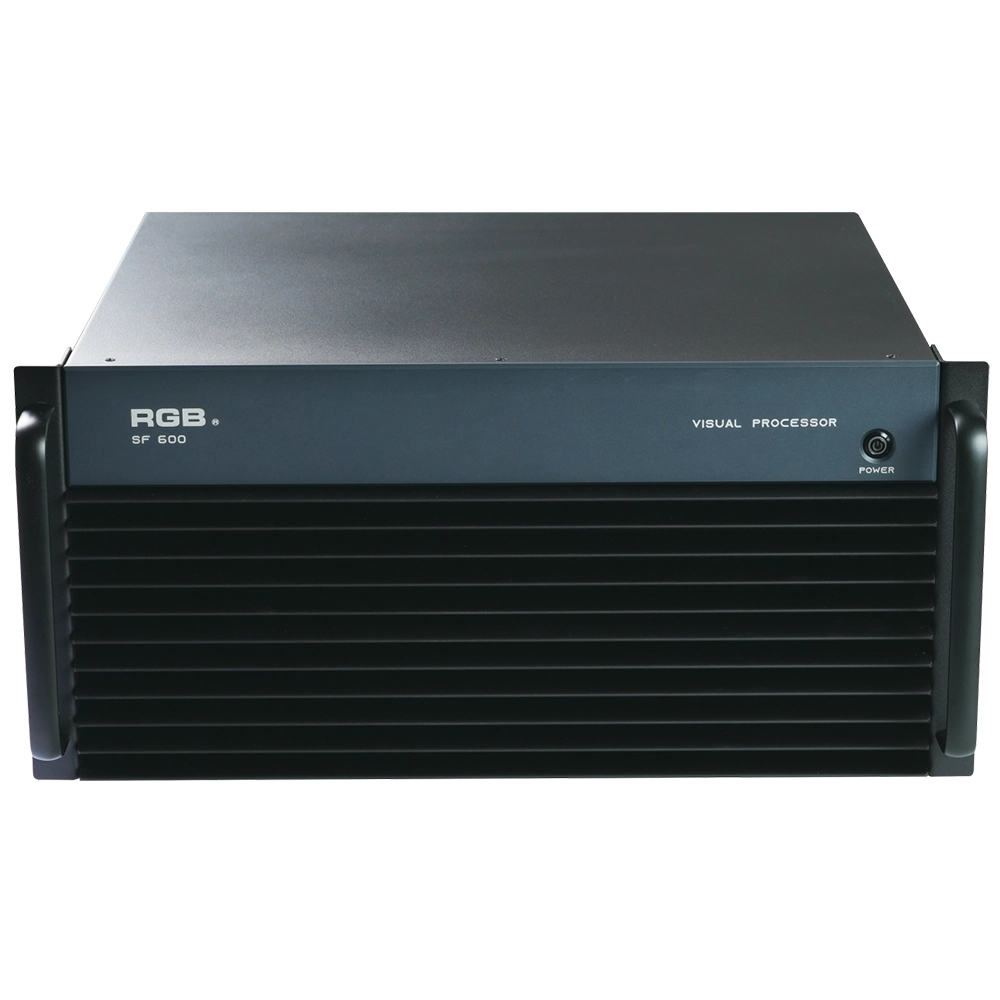
SF600 Visual R-net central processing processor
The SF600 Visual R-net central processing processor by RGB delivers advanced visual systems performance with high-speed processing and seamless integration. Designed for efficiency and reliability, it’s ideal for enhancing your visual system applications in corporate environments.
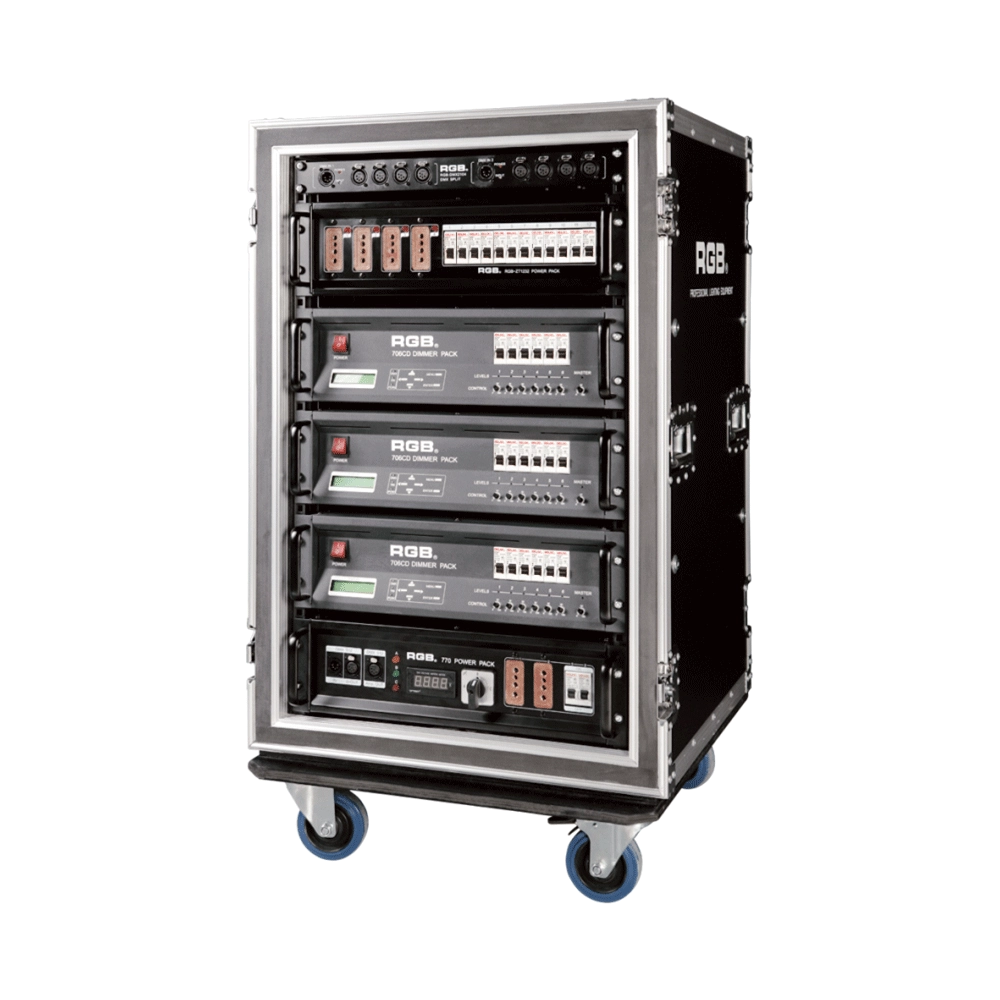
7 Series Digital Touring Dimmer Racks
7 Series digital touring dimmer racks can be assembled into many types of dimmer by taking the 7 Series dimmer as the unit. They are widely used in the entertainment industry for their convenience and practicability.
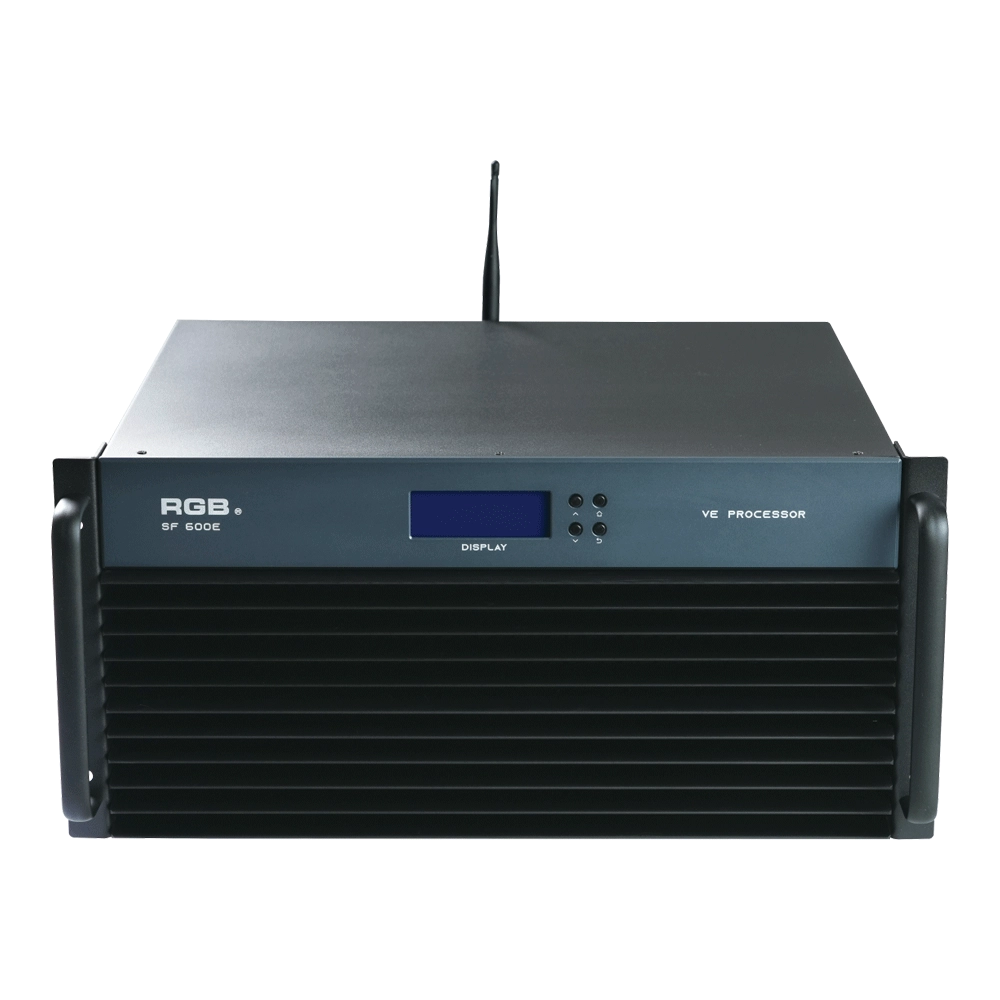
SF600E Visual R-net environment processor
The SF600E Visual R-net environment processor by RGB delivers advanced performance for visual systems. As a leading visual systems manufacturer, RGB ensures seamless integration and high reliability, making SF600E ideal for complex visual processing needs in diverse environments.
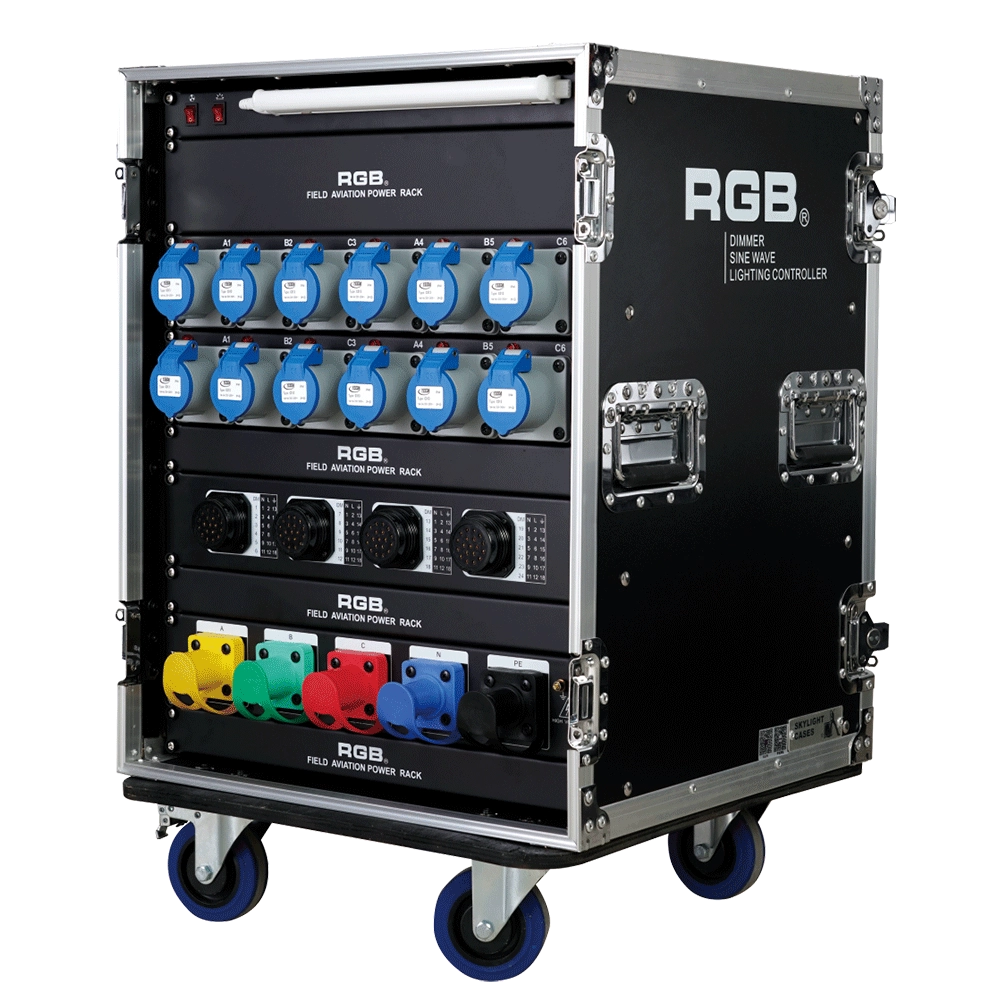
ZT2419+1216 Distribution Box
ZT2419+1216 features dual protection functions and is a power distribution product specifically designed for overcurrent and short circuits in electrical equipment. It is the best choice for mobile performance and is suitable for use in computer lamps, conventional lamps, and other equipment.
Expert Support
Interested in learning more or need expert guidance related to this article? Fill in your details, and our team will provide tailored support.
Intelligent Control. Brilliant Performance.
RGB specializes in stage lighting control systems, delivering intelligent, reliable, and high-performance solutions for theaters and performance spaces worldwide.
Contact
Email:
Tel:
+86 20 3928 0245
+86 20 3928 0247
Address:
No.3, Huashan Road, Shilou Town, Panyu, Guangzhou, China.
Whatsapp: +8615975520131