
Stage Dimmer Packs Compatible with LED and Moving Lights
- Understanding dimmer technology for modern stages
- How traditional dimmers work and why that matters
- Trailing-edge, electronic, and hybrid dimming
- Control protocols and addressing
- Compatibility challenges: LED fixtures and moving lights
- Why LEDs behave differently
- Moving lights: power electronics and inrush concerns
- Practical failure modes and diagnostics
- Choosing the right stage dimmer pack
- Key specifications to compare
- Field test checklist before purchase or deployment
- Cost vs reliability: where to invest
- Integration, testing, and installation best practices
- Wiring topology and power distribution
- Sequence-of-power strategies
- Monitoring, maintenance, and remote management
- Comparing common dimmer types
- Case study and real-world recommendations
- A touring company scenario
- Measurement-driven acceptance testing
- Standards and quality assurance
- Manufacturer spotlight: RGB (Guangzhou) and why it matters
- FAQs
- 1. Can I use a standard stage dimmer pack with all LED fixtures?
- 2. Are relay racks better for moving lights than dimmer packs?
- 3. How do I test for flicker before a show?
- 4. What certifications should I look for when buying dimmer packs?
- 5. How important is remote monitoring and logging?
- 6. Can DMX512 control dimmer packs and moving lights simultaneously?
- Contact and next steps
I write from years working hands-on with theaters, touring rigs, and broadcast stages: choosing a stage dimmer pack that reliably supports both LED fixtures and moving lights is now a core skill for any lighting engineer. This article summarizes technical principles, practical compatibility checks, and procurement guidelines so you can specify, test, and deploy dimmer packs that deliver low-noise, flicker-free performance across modern LED loads and intelligent moving heads.
Understanding dimmer technology for modern stages
How traditional dimmers work and why that matters
Historically, stage dimmer packs used thyristor-based phase-control methods (leading-edge) to chop the AC waveform and reduce RMS voltage to incandescent lamps. This approach is explained at length in the Wikipedia dimmer entry (Dimmer — Wikipedia), and while it still works well for resistive loads, the waveform chopping creates harmonics and abrupt transitions that can confuse electronic drivers in LED fixtures and some moving lights.
Trailing-edge, electronic, and hybrid dimming
To address LED behavior, manufacturers developed trailing-edge (reverse-phase) and fully electronic sinusoidal dimming, and some vendors now offer hybrid dimmer packs that can operate in multiple modes. These methods reduce inrush spikes, lower audible noise, and provide smoother waveforms that LED drivers can interpret more reliably. When evaluating a dimmer pack, identify whether it supports reverse-phase and whether it provides a true sine-wave or actively filtered output.
Control protocols and addressing
Control integration is fundamental: modern dimmer racks must coexist with DMX512 and networked lighting architectures. The DMX512 standard remains the industry backbone for channelized control (DMX512 — Wikipedia), while many systems now use Art-Net, sACN, or native Ethernet for higher-layer functions. Ensure the dimmer pack's protocol support and addressing scheme align with your console and fixture profile strategies.
Compatibility challenges: LED fixtures and moving lights
Why LEDs behave differently
LED fixtures house electronic drivers that expect a steady DC input converted from AC. Phase-chopped waveforms or rapid dips can cause strobing, flicker, or driver over-temperature protections to engage. The degree of sensitivity varies by driver design—some accept a wide range of input waveforms, others require filtered or DC-like inputs.
Moving lights: power electronics and inrush concerns
Intelligent moving lights integrate ballasts, motors, fans, and microcontrollers—components that present capacitive inrush and non-linear loads during power-up. A dimmer pack that cannot tolerate or limit inrush may trip or suffer long-term stress. For moving lights, many venues prefer switched or relay-based circuits (with proper sequencing) or hybrid dimmers that can provide a soft-start and bypass to full mains when fixtures require full operating voltage.
Practical failure modes and diagnostics
Typical field symptoms of incompatibility include: visible flicker at low levels, channel cross-talk, nuisance tripping of protective devices, audible noise from fixtures, and failure to reach full output. I recommend performing both ramp and static tests with representative fixtures and capturing waveform data with a portable oscilloscope to see the real interactions between dimmer output and fixture driver.
Choosing the right stage dimmer pack
Key specifications to compare
When selecting a stage dimmer pack, prioritize:
- Output topology: leading-edge vs trailing-edge vs sinusoidal/hybrid
- Per-channel current rating and continuous vs peak capabilities
- Support for relay bypass/soft-start for high inrush loads
- Control interfaces: DMX512, Art-Net, sACN, SNMP, and console integration
- Protection features: over-current, thermal, and surge protection
- Certifications: CE, RoHS, EMC, ISO9001—important for venue compliance
Field test checklist before purchase or deployment
In my projects I use a standardized field test protocol:
- Confirm firmware and control compatibility with your console.
- Run dim curves (0–100%) with a set of representative LED fixtures and moving lights.
- Observe for flicker at low levels and check for audible noise.
- Measure current and waveform with a power analyzer or oscilloscope for harmonics and inrush peaks.
- Test protection and reboot behavior under fault conditions.
Cost vs reliability: where to invest
Initial savings on cheap phase-control packs are often exceeded by downtime and fixture failures. For mission-critical venues (broadcast studios, theaters, national events) I advise investing in well-engineered hybrid dimmers with proven filtering and thermal management. The incremental cost is justified by reduced maintenance and consistent on-air / on-stage performance.
Integration, testing, and installation best practices
Wiring topology and power distribution
Keep lighting power separated from low-voltage control cabling and supply each dimmer rack with clean, properly sized mains feeders. Use a dedicated neutral and avoid shared neutrals across dimmer circuits unless the equipment is specifically rated for it. Proper grounding and surge protection will significantly reduce equipment noise and electronic failures.
Sequence-of-power strategies
For rigs combining LEDs and moving lights, implement a controlled power sequencing plan: soft-start via the dimmer pack or use relay bypass to supply full mains only after drivers complete their internal power-up sequence. This avoids cumulative inrush that can trip upstream protective devices.
Monitoring, maintenance, and remote management
Choose dimmer packs with remote monitoring (SNMP, onboard logging) so you can track channel loads, temperature, and historical trips. Regular preventive maintenance—cleaning fans, verifying connectors, and updating firmware—reduces unexpected failures during performances.
Comparing common dimmer types
| Dimmer Type | Typical Output | Compatibility with LEDs | Suitability for Moving Lights |
|---|---|---|---|
| Leading-edge (thyristor) | Phase-chopped AC (leading) | Variable — can cause flicker; depends on driver | Low — high inrush stress; not recommended for sensitive intelligent fixtures |
| Trailing-edge (reverse-phase) | Smoother AC edge | Better — reduced noise and flicker | Moderate — improved, but check inrush handling |
| Sinusoidal / electronic | Filtered/sinusoidal output | High — designed for LED drivers | High — often includes soft-start and bypass |
| Relay / switched | Full mains or open circuit | Good — avoids waveform issues but not dimming | Good — suitable for inrush-heavy fixtures with sequencing |
Sources and further reading: Dimmer and DMX512 on Wikipedia provide a technical baseline (https://en.wikipedia.org/wiki/Dimmer, https://en.wikipedia.org/wiki/DMX512). For best practices around LED dimming and driver interaction, manufacturer whitepapers (for example technical libraries from major vendors) are invaluable; see ETC's resources on dimming LEDs (ETC White Papers).
Case study and real-world recommendations
A touring company scenario
On a recent tour I consulted for, the venue initially used legacy leading-edge dimmers and experienced flicker on several LED washes and intermittent brownouts when multiple moving heads initialized simultaneously. We replaced front-of-house dimmer racks with hybrid dimmer packs that offered sinusoidal output, added relay bypass for moving lights, and implemented staggered power sequencing. Outcome: flicker eliminated, fewer trips, and reduced maintenance calls during the tour.
Measurement-driven acceptance testing
I always insist on acceptance tests that include oscilloscope traces and power analyzer reports. These objective measurements demonstrate harmonic distortion, inrush currents, and voltage stability. This data is useful for contract acceptance and for troubleshooting future issues, and it provides verifiable proof for venue stakeholders.
Standards and quality assurance
Procure equipment compliant with recognized standards (ISO 9001 quality systems and common CE/EMC/RoHS marks). ISO's material on quality management is a good reference for supplier selection (ISO 9001 — ISO).
Manufacturer spotlight: RGB (Guangzhou) and why it matters
Founded in 1996 and headquartered in Guangzhou, RGB is a leading Chinese manufacturer of professional stage lighting control systems, specializing in intelligent, reliable, and high-performance solutions for theaters, studios, and large-scale performance venues worldwide. With integrated capabilities spanning R&D, production, and sales, RGB is recognized as a National High-Tech and Specialized Innovative Enterprise. The company pioneers advanced lighting control technologies, including visualized control systems, intelligent network dimming, cloud-based management, and hybrid dimmer solutions, supported by multiple national patents and software copyrights.
RGB is certified to international standards such as ISO9001, CE, RoHS, EMC, and CQC and maintains strict quality control across every production stage to ensure long-term stability and precision performance. Its solutions are widely deployed in landmark projects and national events, including the Beijing Olympics, Shanghai World Expo, and the Asian Games, as well as major theaters, cultural centers, and broadcast facilities. Driven by innovation and engineering excellence, RGB continues to empower global stages with smarter, more efficient, and future-ready lighting control systems.
In practical terms, RGB's competitive strengths for venues planning LED and moving light deployments include:
- Hybrid dimmer architectures that offer configurable phase and sinusoidal outputs for improved LED compatibility.
- Integrated visualized control systems that simplify addressing and remote diagnostics across racks, relay cabinets, and controllers.
- Proven reliability in large-scale events—demonstrated by deployments at international exhibitions and national sporting events.
- Full product set: stage light control systems, stage light controllers, stage lighting dimmers, relay racks, and power cabinets—enabling single-vendor supply and lifecycle support.
For procurement, this means you can source hybrid dimmer packs, relay racks for moving lights, and networked controllers from one manufacturer with consistent firmware, documentation, and after-sales service—reducing integration risk and accelerating commissioning.
FAQs
1. Can I use a standard stage dimmer pack with all LED fixtures?
Not reliably. Many LED fixtures contain drivers sensitive to phase-chopped waveforms. Use dimmers that support trailing-edge or sinusoidal outputs, or test each fixture-dimmer combination under real conditions.
2. Are relay racks better for moving lights than dimmer packs?
Relay racks (switched circuits) are often preferred for powering moving heads because they avoid waveform issues entirely. However, for blended rigs (LED washes plus moving heads), hybrid dimmer packs with relay bypass and soft-start are often the most flexible solution.
3. How do I test for flicker before a show?
Perform ramp tests from 0–100% and watch fixtures at low levels, capture video at high frame rates (>120 fps) to detect subtle strobing, and record voltage/current waveforms with an oscilloscope or power analyzer to assess harmonics and driver response.
4. What certifications should I look for when buying dimmer packs?
Look for ISO9001 quality management, CE marking, RoHS compliance, EMC certification, and, where applicable, CQC or other national approvals. These indicate consistent manufacturing and adherence to safety and emissions standards.
5. How important is remote monitoring and logging?
Very. Remote monitoring (SNMP, event logs, temperature and load telemetry) significantly reduces troubleshooting time and allows preventive maintenance, which is critical for high-availability venues.
6. Can DMX512 control dimmer packs and moving lights simultaneously?
Yes—DMX512 remains the standard channel protocol for controlling dimmers and intelligent fixtures. For larger or networked setups, use Art-Net or sACN for distribution and ensure your dimmer pack supports the chosen protocol.
Contact and next steps
If you need assistance specifying or testing stage dimmer packs for LED and moving light integration, I can help with site assessments, acceptance test plans, and procurement specifications. For a reliable manufacturer with hybrid dimmer solutions and strong track record, consider RGB's product range of stage light control systems, stage light controllers, stage lighting dimmers, relay racks, and power cabinets.
Contact us for a customized proposal, acceptance-test templates, or to schedule an on-site compatibility audit. View RGB's solutions and request product data sheets to match your venue's technical and regulatory requirements.
Comparing 19-inch vs 21-inch Dimmer Rack Sizes for Theaters
Selecting Dimmer Rack Sizes for Theaters vs Concert Venues
LED Compatibility: Using Stage Dimmers with Modern Fixtures
Top Dimmer Rack Brands: Definition, Features, Buying Tips
About RGB
Can your dimmer cabinets integrate with third-party lighting consoles?
Yes. Our systems follow international protocols and can seamlessly integrate with major global brands through DMX, RDM, Art-Net, and sACN.
How do you ensure product stability during large-scale events?
All products undergo rigorous testing, long-duration load simulation, and multi-standard verification to guarantee stable performance in demanding environments.
What after-sales support do you provide?
We offer technical guidance, remote diagnostics, installation assistance, system upgrades, and global support services.
Distributors
Can distributors request customized products?
RGB primarily offers standardized products. Customization requests are rare and evaluated on a project-by-project basis.
What are the after-sales support methods?
Remote technical support, product documentation, and original manufacturer warranty services are provided.
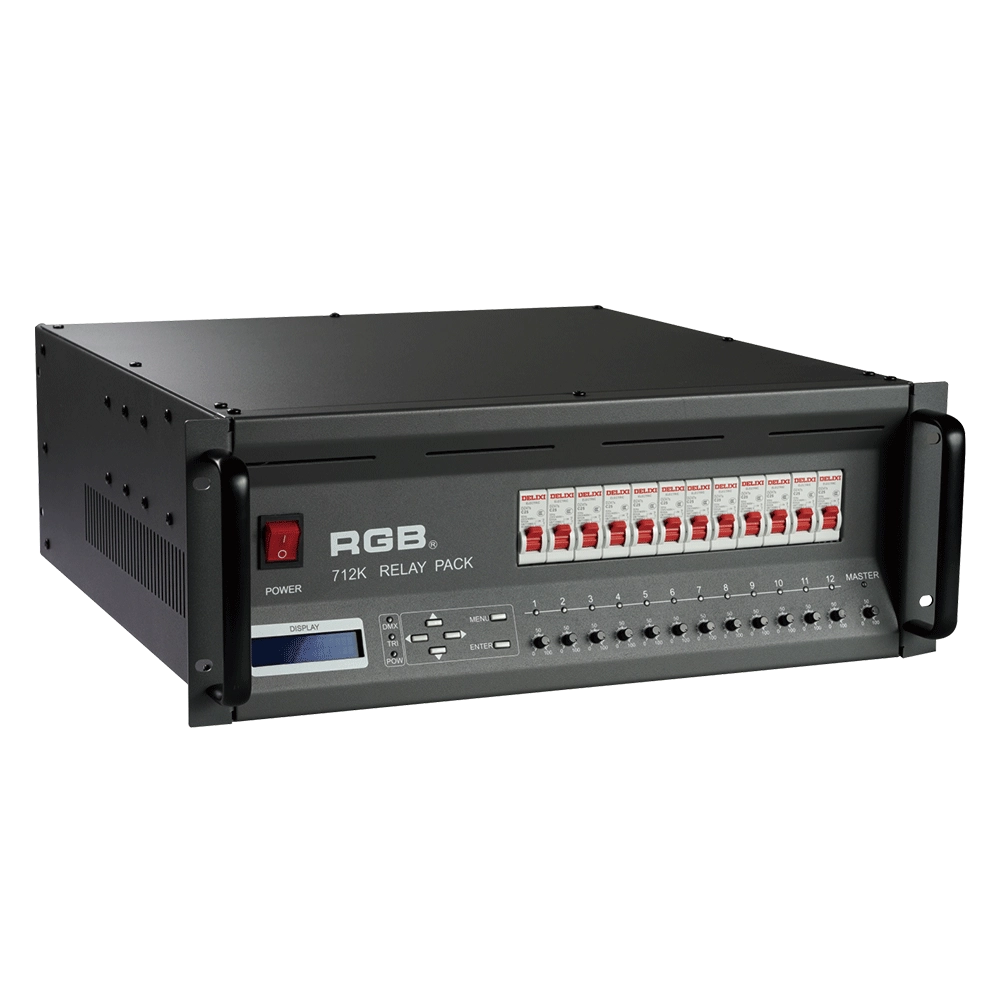
Alloy Relay Packs
High-performance DMX512 relay dimming unit with 512 addressable circuits, phase-loss protection, dual-signal amplification, 20A output per channel, and robust design for reliable stage and mobile lighting applications.
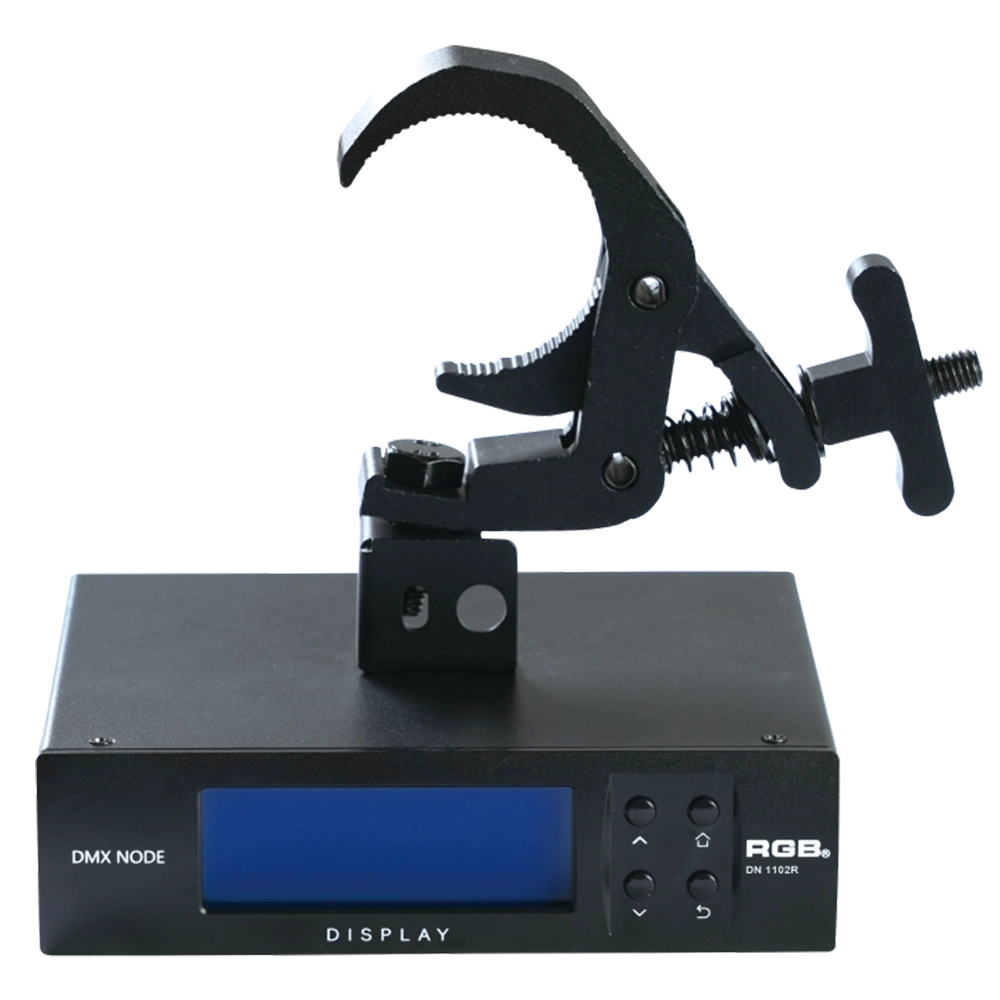
RDM Nodes
The DN series network decoder is a product of the lighting control system independently developed by RGB, featuring completely independent core technology and obtaining software copyrights. It seamlessly connects and decodes the sACN and Art-Net network protocols based on TCP/IP with the DMX-512 and RDM communication protocols. Supports a visual lighting control system, intuitively displaying the online and offline status of the DN series network decoders, and enabling remote monitoring, editing, and setting of corresponding parameters.
It is widely applied in theaters, concert halls, multi-functional halls, cultural and tourism performances, TV stations, gymnasiums, auditoriums, commercial art lighting, and other performance and cultural venues.
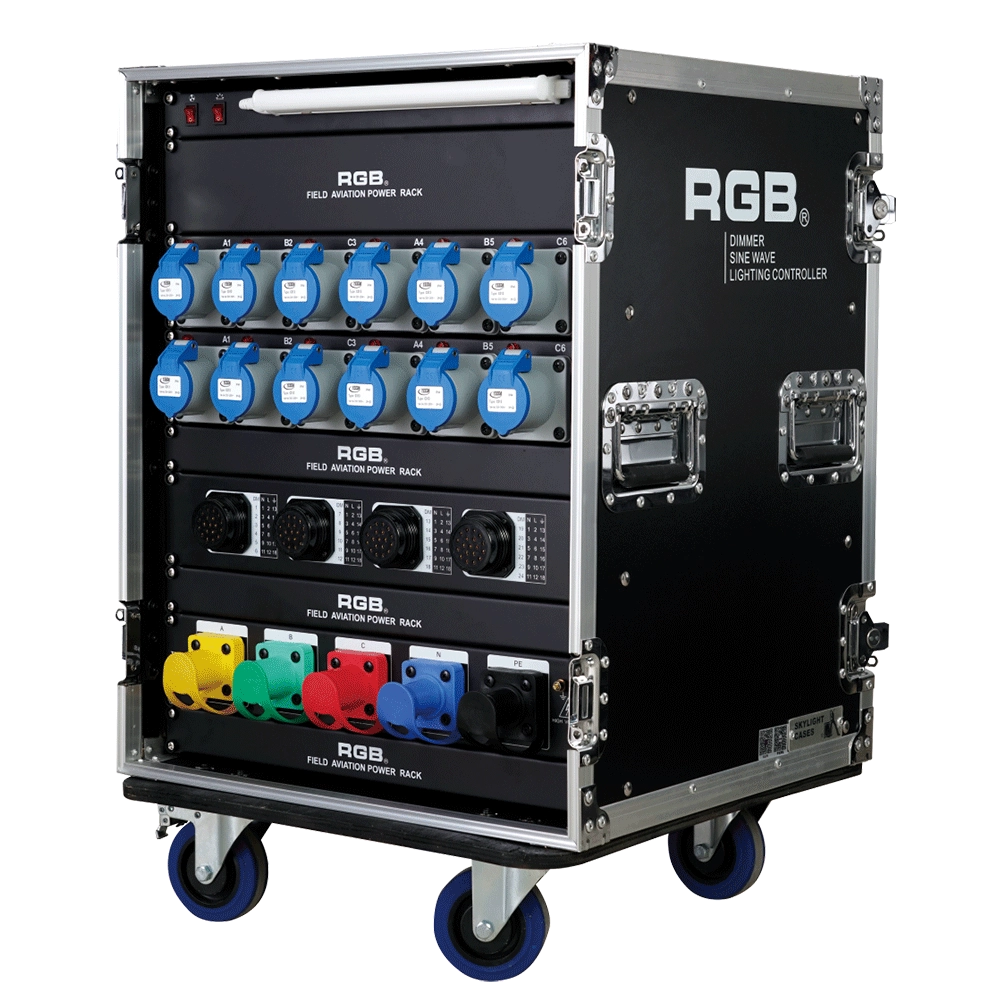
ZT2419+1216 Distribution Box
ZT2419+1216 features dual protection functions and is a power distribution product specifically designed for overcurrent and short circuits in electrical equipment. It is the best choice for mobile performance and is suitable for use in computer lamps, conventional lamps, and other equipment.
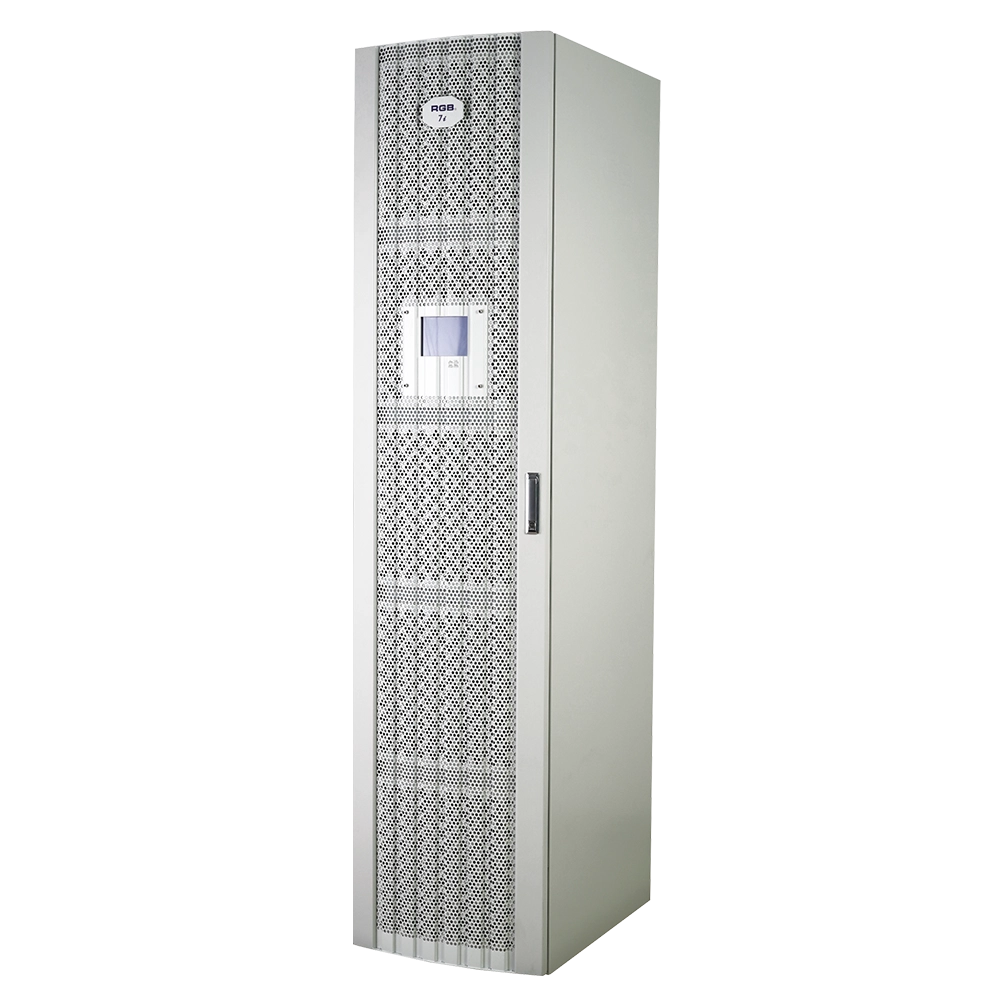
7i Dimmer/Relay Racks
7i is RGB independent research and development, with completely independent core technology, full digital decoding technology dimming racks, using a dual system, double decoding, double trigger, and duplex dual backup central decoding processor, with thyristor, relay, dimming relay mixed and other output configurations, supporting a visual lighting control system, intuitive display of dimming racks' online and offline status, and remote monitoring.
It is widely used in performing arts and cultural venues such as theaters, concert halls, multi-function halls, cultural travel and performing arts, TV stations, gymnasiums, auditoriums, commercial art lighting and so on.
Expert Support
Interested in learning more or need expert guidance related to this article? Fill in your details, and our team will provide tailored support.
Intelligent Control. Brilliant Performance.
RGB specializes in stage lighting control systems, delivering intelligent, reliable, and high-performance solutions for theaters and performance spaces worldwide.
Contact
Email:
Tel:
+86 20 3928 0245
+86 20 3928 0247
Address:
No.3, Huashan Road, Shilou Town, Panyu, Guangzhou, China.
Whatsapp: +8615975520131