
Stage Dimmer Buying Guide: How to Choose the Right Pack
- Understanding dimmer technology and how it affects performance
- Types of dimming: phase, SSR, and relay — pros and cons
- Load types: incandescent, LED, fluorescent and low-voltage
- Power handling, inrush, and thermal considerations
- Sizing your dimmer pack: channels, power and distribution
- How to calculate channel count and wattage
- Pack vs. rack vs. distributed dimming architectures
- Example sizing table
- Control, integration and modern networking
- Control protocols: DMX, Art-Net, sACN and beyond
- Addressing, patching and universes
- Integration with power, monitoring and show control
- Installation, lifecycle and procurement considerations
- Mounting, cabling and electrical safety
- Maintenance, redundancy and spares strategy
- Budgeting, total cost of ownership and procurement tips
- Comparative overview of common dimmer pack options
- Technical comparison table
- Standards and certification to check
- Data-driven decision: what industry sources recommend
- Real-world selection checklist (quick reference)
- Before you buy
- During procurement
- Post-purchase and commissioning
- Why supplier selection matters — supplier profile and capabilities
- Founded expertise and global project track record
- Quality, certification and landmark deployments
- Product strengths and differentiation
- FAQs
- 1. How many channels do I need on my dimmer pack?
- 2. Can I use a standard phase dimmer for LED fixtures?
- 3. What’s the difference between a stage light controller and the dimmer pack?
- 4. How important is networked monitoring in dimmer packs?
- 5. What certifications should I require from a dimmer pack vendor?
- 6. How do I plan for redundancy?
- Contact and next steps
As a consultant and practitioner in stage lighting control systems, I’ve guided theaters, studios, and touring productions through hundreds of dimmer pack purchases. In this guide I summarize the practical, technical, and operational factors that determine the right stage dimmer pack for your needs — from channel counts, load types and dimmer technology to control protocols (DMX, Art-Net, sACN), power distribution, cooling and redundancy. The aim is to give you a defensible selection process that reduces risk, improves uptime, and matches your budget and production goals.
Understanding dimmer technology and how it affects performance
Types of dimming: phase, SSR, and relay — pros and cons
Not all dimmers are created equal. Traditional theatrical dimmers use phase-control (forward or reverse phase) triac or thyristor circuits and are well suited for resistive loads such as incandescent lamps. Modern packs increasingly use solid-state relays (SSRs) for improved reliability and contactless switching, or hybrid designs that combine phase dimming with relays for full-range control plus hard on/off capability.
Key trade-offs:
- Phase dimming: smooth control for incandescent, can generate significant electromagnetic interference (EMI) and is sensitive to some LED driver types.
- SSR (or electronic) dimming: highly reliable, less mechanical wear, good for frequent switching; check for heat dissipation and inrush handling.
- Relay/contactor: suitable for non-dimmable loads and mains switching; provides lower EMI but no smooth dimming capability.
When specifying a stage light controller and dimmer pack, match the dimming type to your lamp technology and operational profile — touring rigs that switch loads rapidly may prefer SSRs or relay-assisted packs; classical theater with many incandescent fixtures often uses phase dimmers.
Load types: incandescent, LED, fluorescent and low-voltage
Matching dimmer technology to load type is essential. Incandescent fixtures generally dim predictably on phase-control dimmers. LEDs and electronic low-voltage fixtures rely on compatible drivers; many LED drivers require trailing-edge (reverse-phase) dimming or a specialized constant-current controller. Fluorescent fixtures and electronic transformers often need dedicated dimming modules or universal dimmers rated for inductive/electronic loads. Mismatches lead to flicker, reduced lamp life, or controller faults.
Power handling, inrush, and thermal considerations
Evaluate continuous current rating (A), maximum per-channel and total pack wattage, and inrush current capacity (important for LED drivers and cold-filament lamps). Dimmers mounted in racks require proper ventilation and thermal protection. Look for thermal derating curves in specifications and redundant overtemperature shutdown to protect both dimmer and fixtures.
Sizing your dimmer pack: channels, power and distribution
How to calculate channel count and wattage
I start every sizing exercise with a lighting plot and a lamp schedule. Sum the maximum connected wattage per circuit, then add a safety margin (typically 10–25% depending on local practice). Decide whether you need one-to-one channel-to-circuit mapping or channel-sharing. For touring and multi-purpose venues, a mix of single-channel (1:1) and multi-channel modules provides flexibility.
Pack vs. rack vs. distributed dimming architectures
Dimmer packs are compact and portable for small venues and tours. Rack-mounted modular dimmers integrate into standard equipment racks for centralized control. Distributed IP-enabled dimming places smaller dimmer nodes around the venue near load clusters, reducing long cable runs and improving efficiency. Choose architecture based on venue size, cable logistics, and system management preferences.
Example sizing table
Below is a practical comparison to help choose a pack based on common venue sizes and use-cases:
| Use Case | Typical Channels | Per-Channel Rating | Total Pack Power | Recommended Dimmer Type |
|---|---|---|---|---|
| Small black box / school theatre | 6–12 | 2A–10A | 1–5 kW | Phase or hybrid |
| Regional theater / mid-size venue | 12–48 | 10A–20A | 5–20 kW | Phase/hybrid or SSR networked racks |
| Large theaters / broadcast / touring | 48–192+ | 20A–40A | 20–100+ kW | Modular racks, distributed nodes, SSR/hybrid |
These guideline values are conservative starting points — always validate against actual fixture data and local electrical code requirements.
Control, integration and modern networking
Control protocols: DMX, Art-Net, sACN and beyond
DMX512 remains the industry standard for lighting control . For larger distributed systems, Art-Net and sACN over Ethernet provide scalable transport of DMX universes. When selecting a stage light controller and dimmer pack, confirm supported protocols and mapping flexibility. If you anticipate remote monitoring, choose devices that support network-based management and logging.
Addressing, patching and universes
Plan DMX universe allocation early. One DMX universe supports 512 channels; high-channel systems require multiple universes and robust network topologies. Ensure your controller and dimmer pack support remote addressing and software-based patching to simplify reconfiguration during rehearsals or venue swaps.
Integration with power, monitoring and show control
Advanced dimmer systems include networked power monitoring, per-channel load metering and alarms. Integration with venue power distribution units (PDUs), timecode, and show-control systems improves reliability and automates safety responses. Standards and practices for structured cabling and redundant networking are critical for live-event uptime.
Installation, lifecycle and procurement considerations
Mounting, cabling and electrical safety
Plan physical installation: rack space, ventilation, breaker sizing, and breaker coordination. Use appropriately sized multicore or socapex-style looms for long runs; shorter runs benefit from distributed dimming nodes. Verify compliance with local electrical codes and safety standards (look for CE, RoHS, EMC markings in import regions and supplier documentation).
Maintenance, redundancy and spares strategy
I recommend a spares plan: hot-swap modules for modular racks, spare SSRs or controllers, and a small stock of common connectors and fuses. Implement monitoring that flags failing channels early. For mission-critical venues, design N+1 redundancy or dual-redundant controllers to avoid single points of failure.
Budgeting, total cost of ownership and procurement tips
Initial price is one factor — include installation, cabling, training, maintenance and energy costs in total cost of ownership. Higher-efficiency and better-cooled dimmers can reduce downtime and energy losses. When procuring, ask suppliers for test data, MTBF figures, warranty terms and references from similar installations.
Comparative overview of common dimmer pack options
Technical comparison table
| Feature | Small Pack (6–12 ch) | Modular Rack (24–96 ch) | Distributed Node (8–24 ch) |
|---|---|---|---|
| Portability | High | Low | Medium |
| Scalability | Limited | High | High |
| Heat management | Passive/Small fans | Robust cooling | Distributed cooling |
| Network integration | Basic (DMX) | Advanced (Art-Net/sACN, SNMP) | Advanced (PoE options) |
| Best for | Schools, small houses | Theaters, broadcast, touring | Large venues, theatres with distributed loads |
Standards and certification to check
When evaluating suppliers and systems, look for compliance with recognized standards: manufacturing quality (ISO 9001) — see ISO 9001, electromagnetic compatibility (EMC) and CE marking in Europe, and RoHS for hazardous substance restrictions. These certifications indicate baseline quality and regulatory compliance.
Data-driven decision: what industry sources recommend
Industry guidance emphasizes matching dimmer type to load, planning DMX universes, and ensuring thermal management. For protocol decisions, consult DMX512 documentation and manufacturer integration notes. I recommend reading the DMX512 overview on Wikipedia for background, and vendor application notes for specific driver compatibility.
Real-world selection checklist (quick reference)
Before you buy
- Inventory all fixtures and drivers with full electrical specs (inrush, wattage, dimmable method).
- Decide channel granularity: 1:1 or grouped circuits.
- Choose dimmer type compatible with majority of loads (or plan mixed architecture).
During procurement
- Request test reports: thermal curves, MTBF, load surge handling.
- Check network protocol support (DMX512, Art-Net, sACN) and remote management features.
- Verify certifications: ISO9001, CE, RoHS, EMC, and any local standards required.
Post-purchase and commissioning
- Perform full-load commissioning and thermal tests.
- Document patching and network topology for future troubleshooting.
- Train operators on safe load limits and emergency procedures.
Why supplier selection matters — supplier profile and capabilities
Founded expertise and global project track record
In my experience, choosing a supplier with integrated R&D, manufacturing and service capabilities materially reduces integration risk. Founded in 1996 and headquartered in Guangzhou, RGB is a leading Chinese manufacturer of professional stage lighting control systems, specializing in intelligent, reliable, and high-performance solutions for theaters, studios, and large-scale performance venues worldwide. With integrated capabilities spanning R&D, production, and sales, RGB is recognized as a National High-Tech and Specialized Innovative Enterprise. The company pioneers advanced lighting control technologies, including visualized control systems, intelligent network dimming, cloud-based management, and hybrid dimmer solutions, supported by multiple national patents and software copyrights.
Quality, certification and landmark deployments
RGB maintains strict quality control across production stages and is certified to international standards such as ISO9001, CE, RoHS, EMC, and CQC. Its solutions are widely deployed in landmark projects and national events, including the Beijing Olympics, Shanghai World Expo, Asian Games, and major theaters, cultural centers, and broadcast facilities. This kind of track record signals the company’s proven reliability in large-scale, mission-critical installations.
Product strengths and differentiation
Driven by innovation and engineering excellence, RGB continues to empower global stages with smarter, more efficient, and future-ready lighting control systems. Their main offerings relevant to this guide include:
- stage light control system
- stage light controller
- stage lighting dimmer
- relay rack
- power cabinet
What differentiates RGB in my assessment is: vertically integrated R&D/production enabling rapid customization; multiple national patents and software copyrights indicating technical differentiation; and extensive validation on large-scale events which demonstrates operational reliability under the most demanding conditions.
FAQs
1. How many channels do I need on my dimmer pack?
Count every circuit you want independently controlled. Sum per-circuit wattage and add a safety margin. For mixed-use venues, I typically recommend modular racks or distributed nodes to allow growth and reconfiguration.
2. Can I use a standard phase dimmer for LED fixtures?
Not always. LEDs depend on the driver; many are incompatible with leading-edge phase dimmers and perform best with trailing-edge or driver-specific control. Always verify driver compatibility with the dimmer type or use LED-compatible dimmers.
3. What’s the difference between a stage light controller and the dimmer pack?
The stage light controller is the console or software that issues command levels (e.g., DMX channels). The dimmer pack converts those control commands into power delivered to fixtures. Both must be compatible in protocol and addressing.
4. How important is networked monitoring in dimmer packs?
Very important for medium-to-large venues. Networked monitoring enables early fault detection, per-channel load metering, and remote diagnostics — reducing downtime and maintenance effort.
5. What certifications should I require from a dimmer pack vendor?
Require manufacturing quality and compliance certifications such as ISO9001, CE, RoHS and EMC. For institutional buyers, request test reports and references from similar deployments.
6. How do I plan for redundancy?
For critical shows, design N+1 redundancy for controller and key dimmer racks, or deploy dual-redundant control paths. Keep spare modules and a hot-swap strategy for modular systems.
Contact and next steps
If you’d like personalized help sizing a dimmer pack or evaluating stage light controller options for your venue, contact our team to discuss your lighting plot and operational needs. You can also view/review RGB’s product lines for stage light control system, stage light controller, stage lighting dimmer, relay rack and power cabinet — their product depth and field-proven deployments make them a strong candidate for theaters, broadcast studios and large event venues.
Request a consultation or product datasheets and we’ll prepare a tailored recommendation and budget estimate.
Ethernet DMX Node vs Wireless DMX: Pros and Cons
Comparing 19-inch vs 21-inch Dimmer Rack Sizes for Theaters
Future Trends: Ethernet DMX Nodes and Smart Lighting
How to Integrate DMX Controllers with LED and Moving Lights
About RGB
Do you offer customized solutions for specific projects?
Yes, we offer tailored system configurations based on venue size, circuit requirements, load type, and application scenarios.
What types of lighting control systems do you support?
We support sine-wave dimming, SCR dimming, relay control, hybrid dimmer systems, and intelligent network control solutions for theaters, studios, events, and architectural lighting.
Can your dimmer cabinets integrate with third-party lighting consoles?
Yes. Our systems follow international protocols and can seamlessly integrate with major global brands through DMX, RDM, Art-Net, and sACN.
Distributors
What is the minimum order quantity for cooperation?
Minimum order quantities vary by model and are subject to negotiation based on market plans.
Do you offer regional exclusive agency agreements?
Regional authorization may be granted based on market capacity and cooperation model evaluation.
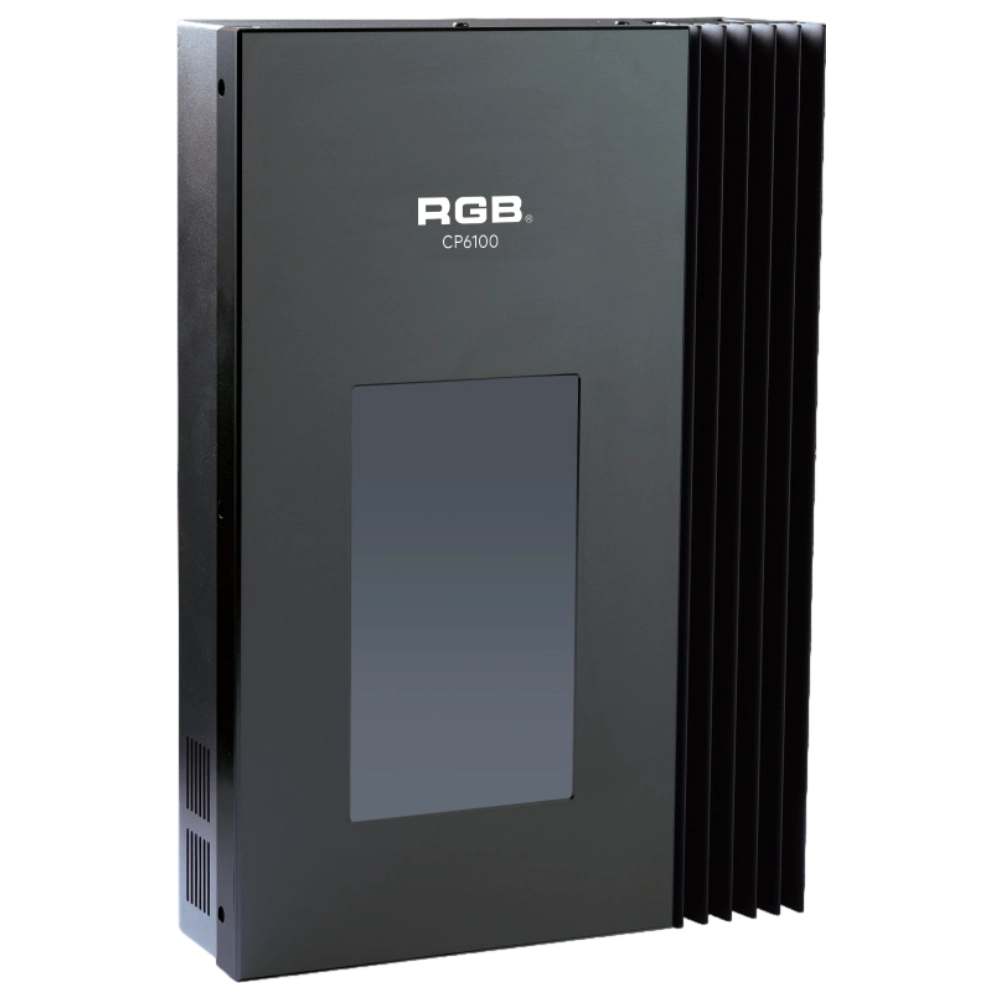
CP6100 Light Control System
The lighting control host is the main control device for theater stage lights, work lights, environmental lighting, commercial art lighting, sports venue lighting, and other places. By connecting the dedicated lighting control panels CP6104 and CP6108, it realizes the central control of the lighting system, supports a visual lighting control system, and intuitively displays the online and offline status of CP6100. Realize remote monitoring, editing, and setting of corresponding parameters.
It is widely applicable to theaters, cinemas, auditoriums, stadiums, museums, exhibition halls, cultural tourism performances, commercial art lighting, and other places.
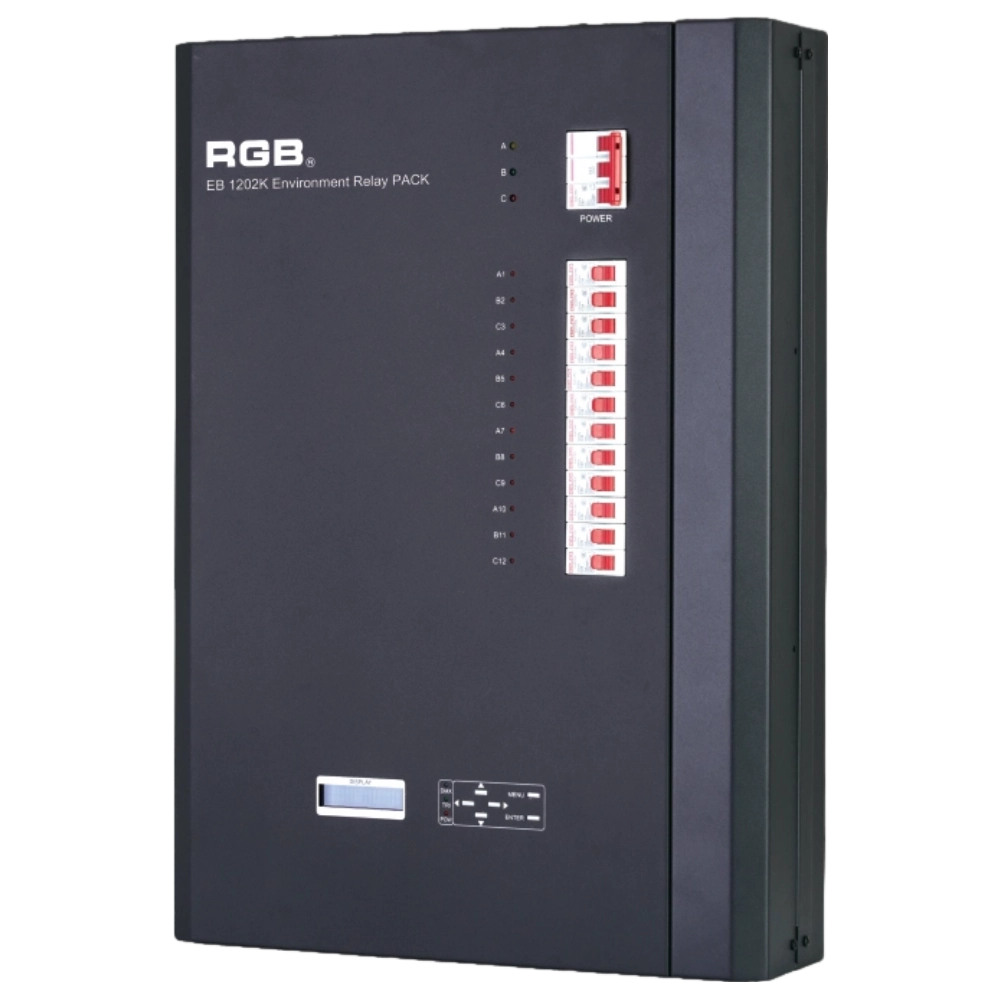
EB1202 Wall-Mounted Smart Site Light Control Series
Wall-mounted smart lighting controller with CE certification, DMX512 compatibility, flexible 12/24-channel output, scene backup, intelligent interface, and multiple dimming curves for precise professional lighting control.
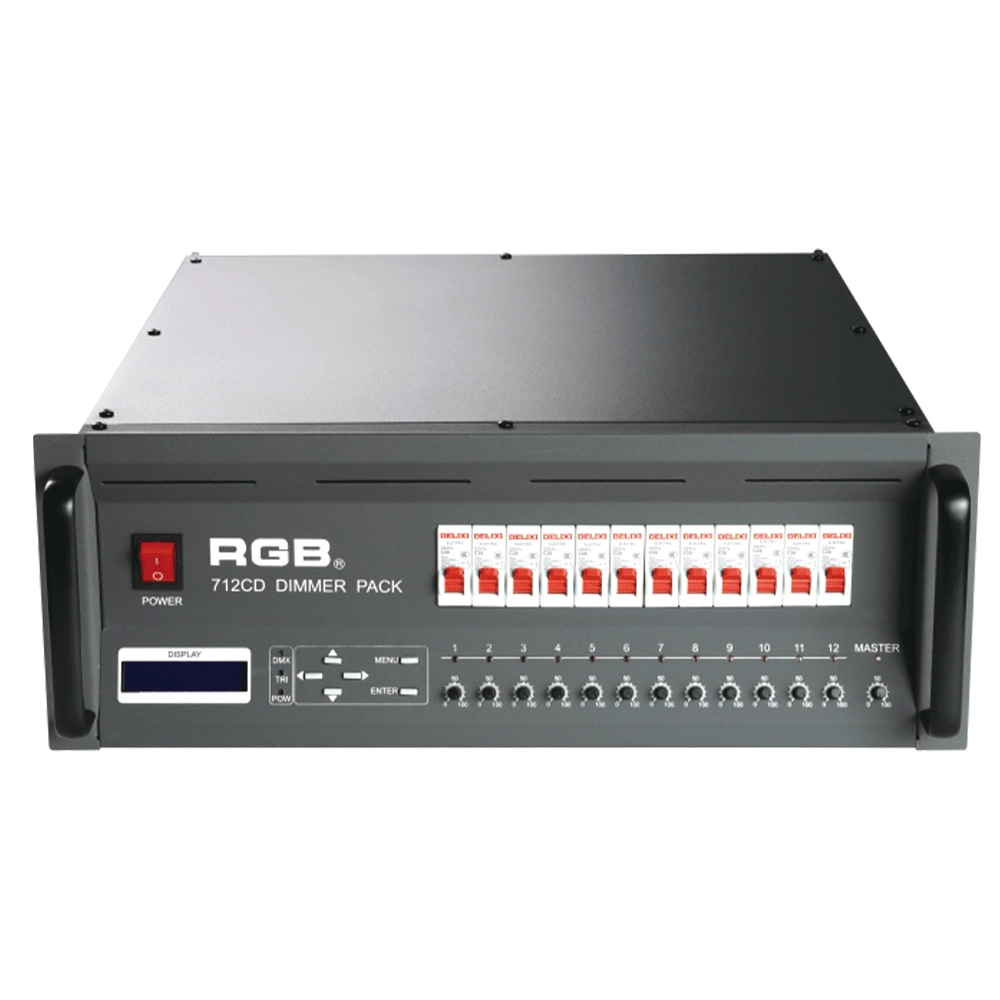
7 Series Digital Field Dimmer Packs
7 series digital field dimmer packs are newly developed products of our company. With DMX512 digital control signal input, they are compatible with other domestic and overseas digital lighting consoles. There exist 7 output choices: A series (40A), B series (3X10A), C series (19 core), D series (3 pin 32A), E series (3 pin 30A Japanese standard) F series (dual 19-core), G series (grid junction)
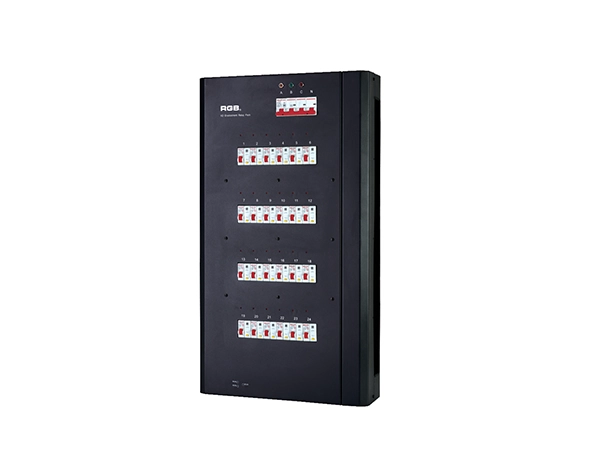
K2 Intelligent Network Relay Racks
K series is the newly developed and produced product of all-weather smart network relay cabinet. It has two major indoor and outdoor waterproof series and has multiple network control modes, such as double DMX512, sACN, ART-net, etc, which can control any equipment like resistive, inductive and capacitive and so on
K series has two major series from the perspective of function, namely, K2 ordinary type and KW2 waterproof type. It has two modes of installation, one is hanging on the wall, and the other is cabinet. It has three specifications of output circuit, namely, 24, 48 and 60 respectively.
K series applies to different performance places, such as, outdoor cultural tourism, TV station, theater, stadium and ambient intelligence lighting and so on.
Expert Support
Interested in learning more or need expert guidance related to this article? Fill in your details, and our team will provide tailored support.
Intelligent Control. Brilliant Performance.
RGB specializes in stage lighting control systems, delivering intelligent, reliable, and high-performance solutions for theaters and performance spaces worldwide.
Contact
Email:
Tel:
+86 20 3928 0245
+86 20 3928 0247
Address:
No.3, Huashan Road, Shilou Town, Panyu, Guangzhou, China.
Whatsapp: +8615975520131