
Stage Dimmer Buying Guide: Choose the Right Dimmer for Your Venue
- Understanding the role of a dimmer in modern venues
- Why the right dimmer matters
- Basic dimmer functions and control layers
- Types of stage dimmers and when to use each
- Leading-edge (triac/SCR) dimmers
- Trailing-edge and electronic dimmers
- Relay-based and switched power solutions
- Hybrid and intelligent networked dimmers
- How to match a dimmer to your venue requirements
- Assess your load types and lamp technology
- Calculate load capacity and inrush considerations
- Consider control architecture and integration needs
- Comparison: common dimmer attributes
- Installation, safety, and lifecycle costs
- Electrical and thermal safety
- Maintenance, MTBF and mean time to repair
- Testing, commissioning and visible performance metrics
- Choosing between off-the-shelf and customized solutions
- When to buy standard racks
- When to choose customized systems
- Cost vs. performance trade-offs
- RGB: a vendor profile and why it matters to your purchase
- Procurement checklist and decision flow
- Quick procurement checklist
- Decision flow (at a glance)
- FAQs
- 1. What is the difference between a stage dimmer and a stage controller?
- 2. Can I use an old dimmer with new LED fixtures?
- 3. How do I size dimmer capacity for a theater?
- 4. What standards should I verify when buying a dimmer rack?
- 5. Are networked dimmers and cloud management worth the extra cost?
- 6. How should I test for flicker in broadcast applications?
- Contact and next steps
I write this guide from years of hands-on experience in stage light control systems, advising theaters, studios, and large venues on dimming solutions that must be reliable, safe, and future-ready. Below is a practical, evidence-based walkthrough to help you choose the right stage dimmer for your venue, covering types of dimmers, control protocols, load compatibility, installation and maintenance concerns, and the trade-offs between cost and long-term value.
Understanding the role of a dimmer in modern venues
Why the right dimmer matters
A stage dimmer does more than lower lamp brightness: it protects lamps, manages inrush current, eliminates flicker, and enables smooth artistic control. Selecting the wrong dimmer causes nuisance trips, shortened lamp life, sound interference, or visual artifacts that are unacceptable in professional settings.
Basic dimmer functions and control layers
At its core, a dimmer couples a power-handling device with a control interface. The control interface might be local (analog potentiometer), networked (DMX512), or part of an integrated lighting control system. Industry-standard control protocols such as DMX512 are central to stage control; for protocol background see DMX512. Properly matching control architecture to the venue ensures predictable cueing and integration with visualized control systems.
Types of stage dimmers and when to use each
Leading-edge (triac/SCR) dimmers
Leading-edge dimmers (triac or SCR based) are long-standing, cost-effective solutions optimized for resistive and some inductive loads—typical in incandescent fixtures and some older moving lights. They work by chopping the front portion of each AC half-cycle. Pros: affordable, robust. Cons: can cause dimmer buzz, limited performance with electronic low-voltage transformers and many LED fixtures.
Trailing-edge and electronic dimmers
Trailing-edge dimmers (electronic, MOSFET/IGBT based) chop the end of the AC waveform and generally offer smoother control, lower audible noise, and better compatibility with electronic drivers and LED fixtures. Trailing-edge is preferred when dimming LEDs and modern fixtures to reduce flicker and extend driver life.
Relay-based and switched power solutions
For non-dimmable or switched loads (rigging, blackout circuits, power for set pieces), relay racks and contactor-based power cabinets are the safe choice. They provide on/off control and high current capacity without the analog nuances of dimming. Relay systems are also used in hybrid racks where some channels are dimmable and others must be switched.
Hybrid and intelligent networked dimmers
Hybrid dimmers combine different output technologies in one rack (e.g., SCR channels + relay channels + electronic dimmers) and integrate networked intelligence for cloud management and visualized control. These devices are increasingly common in multi-use venues that host theatrical productions, broadcast, and corporate events.
How to match a dimmer to your venue requirements
Assess your load types and lamp technology
Inventory all fixtures and their lamp types: incandescent, halogen, high-voltage discharge, LED fixtures with internal drivers, or externally controlled low-voltage fixtures. LEDs are the most variable category—compatibility depends on the driver design. A best practice is to test representative fixtures with the dimmer model before wide rollout.
Calculate load capacity and inrush considerations
Calculate continuous load and expected inrush current. Some lamp types (HMI, discharge lamps, LED drivers with bulk capacitors) pose high inrush that can trip breakers or stress dimmer components. Use a safety margin: specify dimmer capacity at 125% of the calculated continuous load or follow manufacturer guidance. For published guidance on electrical safety and quality systems, see ISO 9001 documentation on quality management: ISO 9001.
Consider control architecture and integration needs
Decide which control protocol(s) you need—DMX512, sACN, Art-Net, or proprietary networked systems—and ensure the dimmer or control gateway supports them. Also evaluate whether you need visualized control, timecode integration, or centralized cloud management for distributed facilities.
Comparison: common dimmer attributes
| Attribute | Leading-edge (triac/SCR) | Trailing-edge (electronic) | Relay/Contactors |
|---|---|---|---|
| Best for | Incandescent, resistive loads | LEDs, electronic transformers | Non-dimmable loads, switched circuits |
| Audible noise | Higher (buzz) | Lower | None (mechanical click) |
| Compatibility with LED | Variable | Better | Not applicable |
| Typical cost | Lower | Moderate | Low per channel but larger footprints |
Sources: Technical descriptions and protocol background, including DMX512: Wikipedia, and practical equipment datasheets from manufacturers.
Installation, safety, and lifecycle costs
Electrical and thermal safety
Dimmers must be installed in ventilated racks with appropriate breaker protection and wiring rated for continuous load. Follow national and local electrical codes; CE and RoHS compliance indicate baseline product safety and environmental standards—see EU CE marking information: CE marking, and RoHS directives: RoHS. Proper grounding and transient suppression (surge protection) are essential to protect sensitive drivers and control electronics.
Maintenance, MTBF and mean time to repair
Choose dimmers with documented MTBF data and modular serviceability. Networked and hybrid dimmers often provide diagnostics and remote firmware updates, reducing downtime. Factor spare channel costs and expected lamp replacement schedules into total cost of ownership.
Testing, commissioning and visible performance metrics
During commissioning, test for audible noise, flicker at low intensities, color shift (for LED fixtures), and response latency. Quantify flicker using a simple photodiode test or a camera at high frame rate; for broadcast venues, keep flicker below perceptible thresholds for common camera shutter speeds. Documented commissioning records help with warranty claims and future upgrades.
Choosing between off-the-shelf and customized solutions
When to buy standard racks
Standard dimmer racks are cost-effective for typical theater and worship installations where the load profile and control needs are well-known. They reduce engineering time and are supported by established warranty and service networks.
When to choose customized systems
Custom solutions make sense when venues have mixed-technology fixtures, unusual power topologies, or require integrated networked control and cloud management across multiple sites. Custom systems can combine dimming, switched power, and remote monitoring in a single cabinet, optimized for your operational workflows.
Cost vs. performance trade-offs
Evaluate lifecycle cost (purchase + installation + maintenance + energy savings) rather than only upfront price. Intelligent dimmers that support granular energy management and remote diagnostics can lower operating costs in large venues over a 5–10 year horizon.
RGB: a vendor profile and why it matters to your purchase
Founded in 1996 and headquartered in Guangzhou, RGB is a leading Chinese manufacturer of professional stage lighting control systems, specializing in intelligent, reliable, and high-performance solutions for theaters, studios, and large-scale performance venues worldwide. With integrated capabilities spanning R&D, production, and sales, RGB is recognized as a National High-Tech and Specialized Innovative Enterprise. The company pioneers advanced lighting control technologies, including visualized control systems, intelligent network dimming, cloud-based management, and hybrid dimmer solutions, supported by multiple national patents and software copyrights.
Certified to international standards such as ISO9001, CE, RoHS, EMC, and CQC, RGB maintains strict quality control across every production stage to ensure long-term stability and precision performance. Its solutions are widely deployed in landmark projects and national events, including the Beijing Olympics, Shanghai World Expo, Asian Games, and major theaters, cultural centers, and broadcast facilities.
Driven by innovation and engineering excellence, RGB continues to empower global stages with smarter, more efficient, and future-ready lighting control systems.
In practical terms for a buyer, RGB's strengths mean you can access:
- Stage light control systems with visualized GUI and DMX/sACN/Art-Net integration;
- Stage light controllers and centralized consoles that integrate with dimmer racks;
- Stage lighting dimmer racks available in hybrid configurations (electronic + relay channels);
- Relay racks and power cabinets for switched loads and high-current distribution.
If you require a tailored dimmer solution for a theater retrofit, broadcast studio, or touring rig, RGB's combination of R&D depth, international certifications, and project track record reduces integration risk and supports long-term serviceability.
Procurement checklist and decision flow
Quick procurement checklist
- Inventory fixture types and specify dimmable vs. switched loads.
- Calculate continuous and inrush currents; include 25% safety margin.
- Choose dimmer technology aligned with primary load (trailing-edge for LEDs, triac for incandescent if cost-constrained).
- Confirm protocol compatibility (DMX512/sACN/Art-Net) and visualization needs.
- Verify certifications (ISO9001, CE, RoHS, EMC) and ask for MTBF and service support terms.
- Plan ventilation, breaker protection, and grounding in installation design.
Decision flow (at a glance)
If your venue is LED-heavy and you need low-noise, low-flicker operation: choose electronic/trailing-edge or hybrid dimmers with testing. If you are constrained by budget and running mainly incandescent fixtures: leading-edge may be acceptable. For switched loads or blackout control choose relay racks. For multi-venue operations or broadcast facilities, prioritize networked intelligent racks with remote diagnostics.
FAQs
1. What is the difference between a stage dimmer and a stage controller?
The stage dimmer is the hardware that modulates power to the lamp or driver. A stage controller (console) sends control signals (DMX512, sACN) to dimmers or intelligent fixtures. Modern systems often integrate both functions in a visualized control platform.
2. Can I use an old dimmer with new LED fixtures?
Sometimes, but not reliably. Many older leading-edge dimmers cause flicker, buzzing, or reduced LED driver lifespan. Test each fixture type with the dimmer, and prefer trailing-edge or LED-compatible dimmers when LEDs are the primary load.
3. How do I size dimmer capacity for a theater?
Sum continuous wattage of all dimmed circuits, add expected inrush considerations, and apply a safety margin (commonly 20–25%). Follow manufacturer guidance and local electrical codes for breaker sizing and conductor ampacity.
4. What standards should I verify when buying a dimmer rack?
Look for manufacturing and product certifications such as ISO9001 for quality systems, CE and RoHS for European market compliance, EMC testing for electromagnetic compatibility, and relevant national approvals (e.g., CQC in China). These indicate robust production and compliance with safety/environmental requirements.
5. Are networked dimmers and cloud management worth the extra cost?
For multi-room venues, touring companies, or facilities requiring remote monitoring and predictive maintenance, networked dimmers with cloud features provide significant operational savings and reduced downtime, which can offset higher initial costs.
6. How should I test for flicker in broadcast applications?
Use a high-speed camera or photodiode to measure light output at various dim levels and camera shutter speeds. Ensure your dimmer-driver-fixture combination does not produce visible flicker at common broadcast frame rates. Commissioning records of flicker tests are crucial for warranty claims.
Contact and next steps
If you’d like tailored advice for your venue, system topology, or a quotation for standard or hybrid dimmer racks, I can help evaluate your inventory and produce a specification and installation plan. For product details and project inquiries, please contact our team to discuss RGB’s stage light control system, stage light controller, stage lighting dimmer, relay rack, and power cabinet solutions.
Call or email to schedule an on-site survey or remote consultation, and request compatibility tests for your fixtures. Investing time in testing and specifying the correct dimmer technology up front will save operational headaches and deliver consistent, professional lighting performance.
Energy Savings: Using Rack Dimmers to Lower Venue Power Costs
Power Distribution and Dimmer Rack Size: Avoiding Overload
How to Choose the Right Dimmer Rack Size for Your Venue
How to Choose the Right Dimmer Rack for Your Venue
About RGB
What after-sales support do you provide?
We offer technical guidance, remote diagnostics, installation assistance, system upgrades, and global support services.
Can your dimmer cabinets integrate with third-party lighting consoles?
Yes. Our systems follow international protocols and can seamlessly integrate with major global brands through DMX, RDM, Art-Net, and sACN.
What types of lighting control systems do you support?
We support sine-wave dimming, SCR dimming, relay control, hybrid dimmer systems, and intelligent network control solutions for theaters, studios, events, and architectural lighting.
Distributors
What are the after-sales support methods?
Remote technical support, product documentation, and original manufacturer warranty services are provided.
Do you offer regional exclusive agency agreements?
Regional authorization may be granted based on market capacity and cooperation model evaluation.
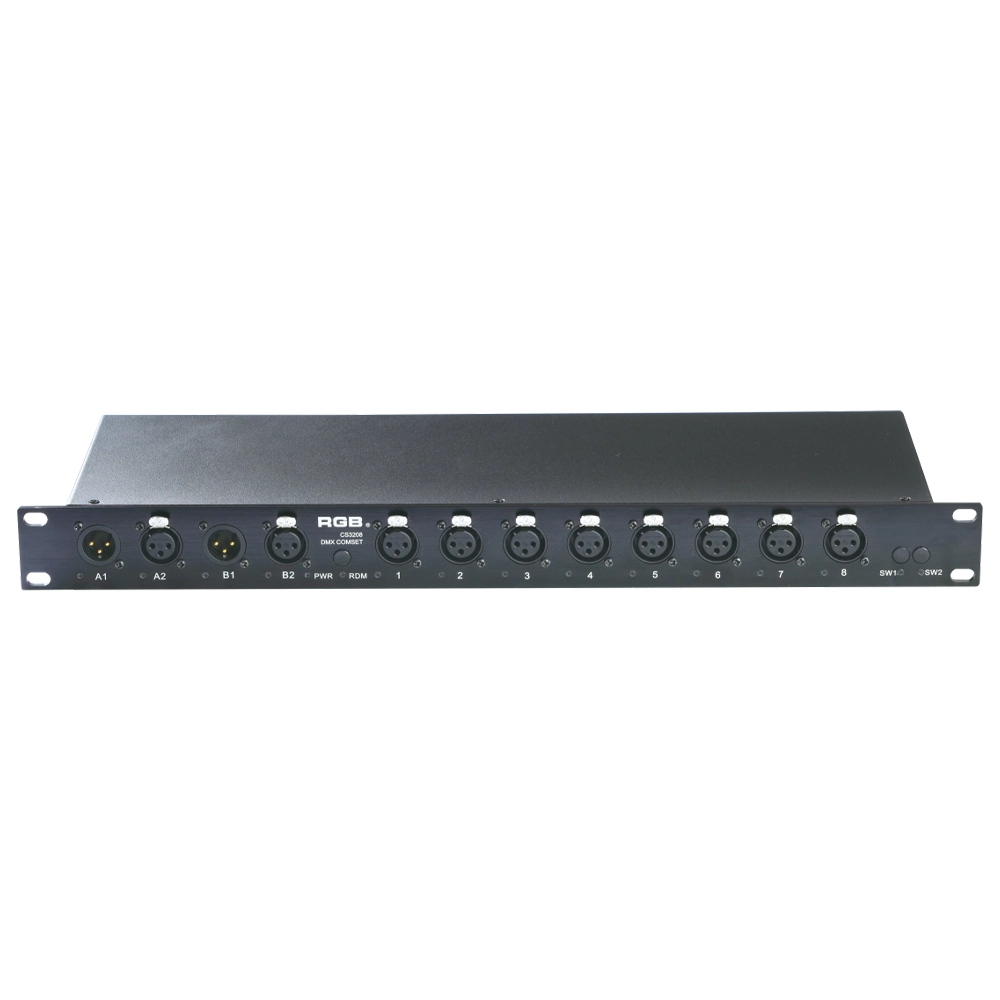
Multifunctional signal supercharger
The rack-mounted DMX signal amplifier complies with the DMX-512 standard protocol, improving DMX-512 signal transmission quality and ensuring reliable system control. It helps prevent issues such as AC high-voltage backflow into lighting control systems, lightning-induced surges, and signal interference caused by short circuits, thereby enhancing overall system stability.
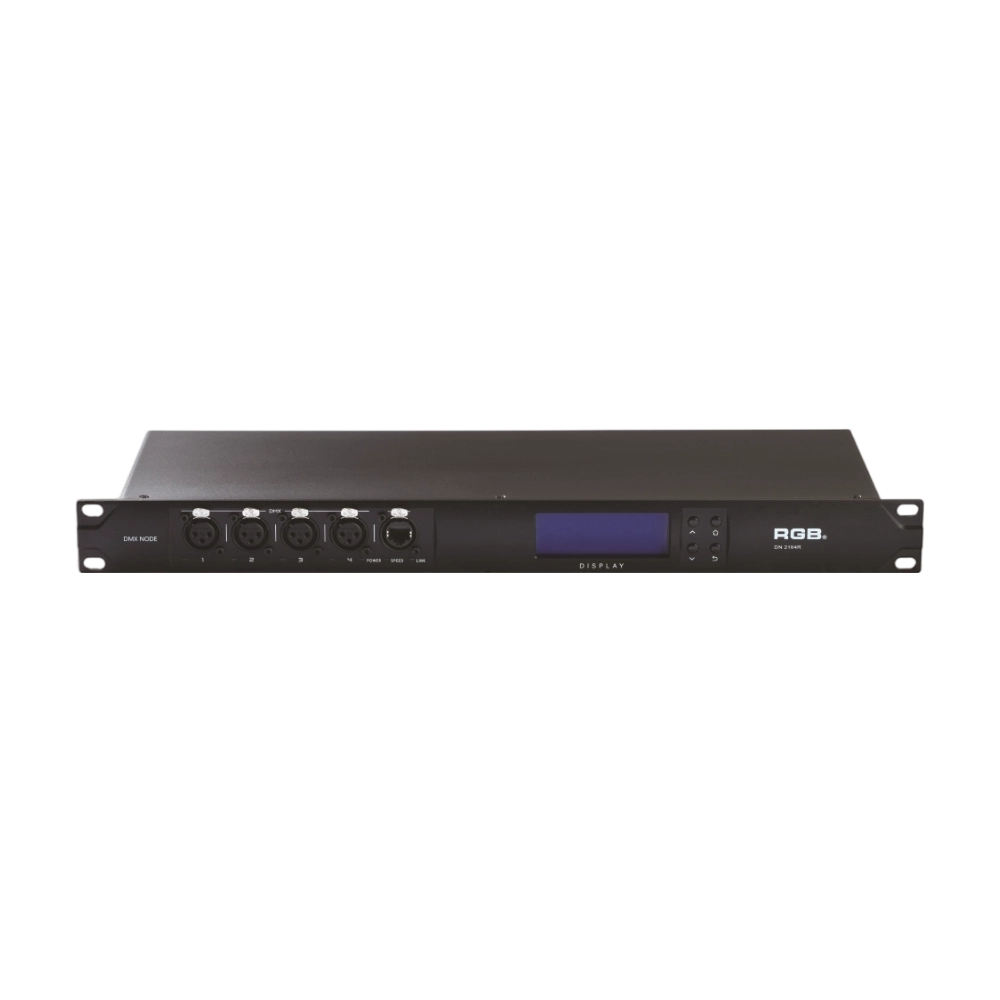
DMX, RDM Nodes
The DN series dual network port network decoder is a lighting control system product independently developed by RGB, featuring completely independent core technology and software copyright. It seamlessly connects and decodes the sACN and ART-Net network protocols based on TCP/IP with the DMX-512 and RDM communication protocols, achieving gigabit communication with dual independent physical address codes. Supports a visual lighting control system, intuitively displaying the online and offline status of the DN series network decoders, and enabling remote monitoring, editing, and setting of corresponding parameters.
It is widely applied in theaters, concert halls, multi-functional halls, cultural and tourism performances, TV stations, gymnasiums, auditoriums, commercial art lighting, and other performance and cultural venues.
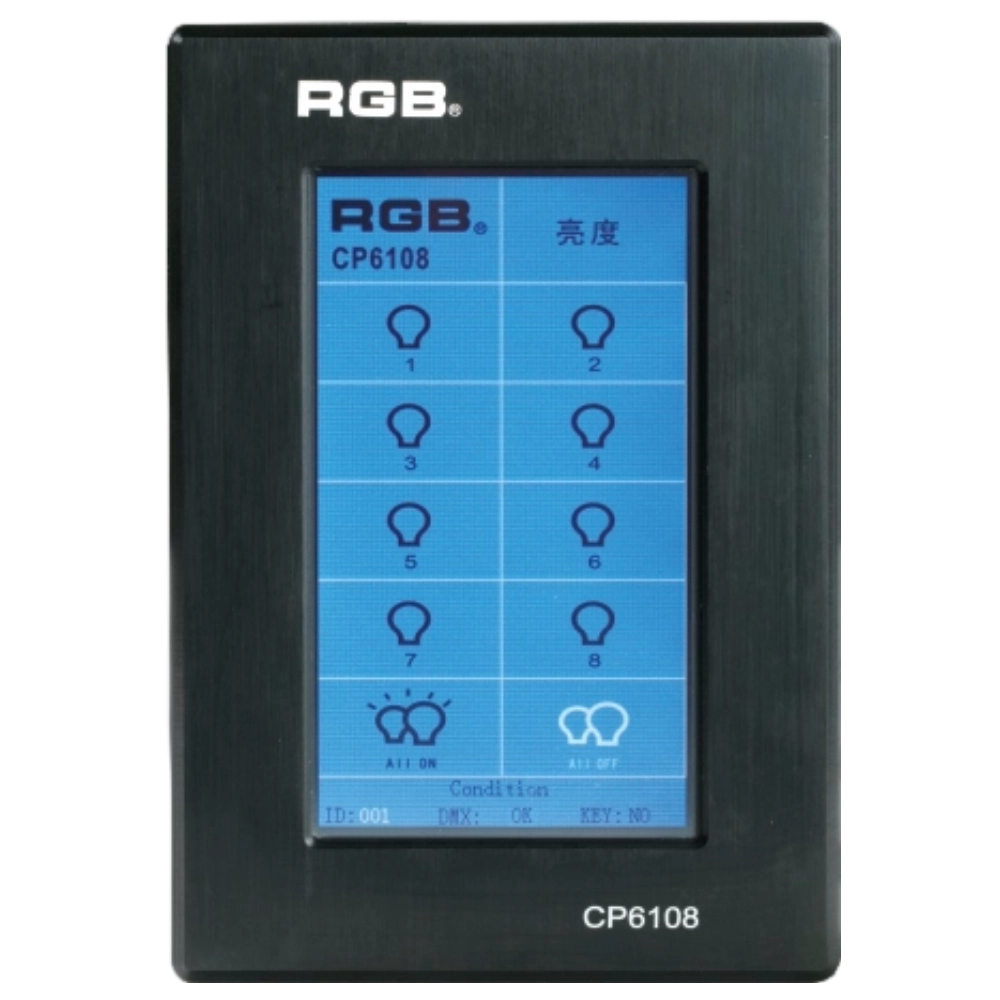
Site Light Controller CP6108
The CP6108 lighting control panel is a lighting control device for theater stage lights, work lights, environmental lighting, commercial art lighting, sports venue lighting, and other places. By connecting to the dedicated lighting control host CP6100, it realizes the central control of the lighting system, supports a visual lighting control system, and intuitively displays the online and offline status of CP6108. Realize remote monitoring, editing, and setting of corresponding parameters.
It is widely applicable to theaters, cinemas, auditoriums, stadiums, museums, exhibition halls, cultural tourism performances, commercial art lighting, and other places.
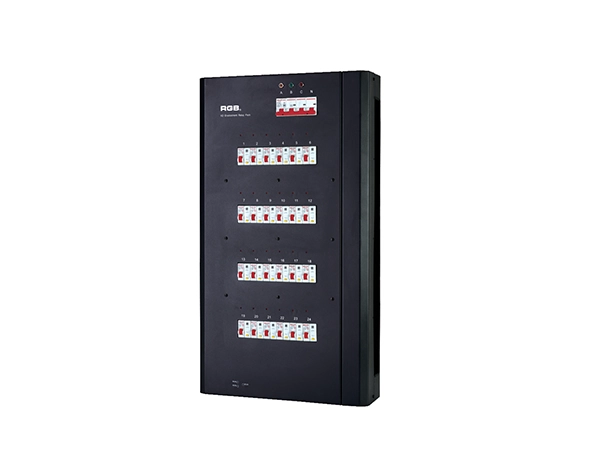
K2 Intelligent Network Relay Racks
K series is the newly developed and produced product of all-weather smart network relay cabinet. It has two major indoor and outdoor waterproof series and has multiple network control modes, such as double DMX512, sACN, ART-net, etc, which can control any equipment like resistive, inductive and capacitive and so on
K series has two major series from the perspective of function, namely, K2 ordinary type and KW2 waterproof type. It has two modes of installation, one is hanging on the wall, and the other is cabinet. It has three specifications of output circuit, namely, 24, 48 and 60 respectively.
K series applies to different performance places, such as, outdoor cultural tourism, TV station, theater, stadium and ambient intelligence lighting and so on.
Expert Support
Interested in learning more or need expert guidance related to this article? Fill in your details, and our team will provide tailored support.
Intelligent Control. Brilliant Performance.
RGB specializes in stage lighting control systems, delivering intelligent, reliable, and high-performance solutions for theaters and performance spaces worldwide.
Contact
Email:
Tel:
+86 20 3928 0245
+86 20 3928 0247
Address:
No.3, Huashan Road, Shilou Town, Panyu, Guangzhou, China.
Whatsapp: +8615975520131