
How to Size a Dimmer Pack for Your Venue's Power Needs
- Understanding venue power and electrical basics
- Key electrical concepts: watts, amps, voltage, and power factor
- Why power factor and inrush matter for dimmer packs
- Applicable codes and standards
- How I calculate the dimmer pack capacity
- Step 1 — Inventory your fixtures and their wattages
- Step 2 — Sum steady-state wattage and convert to amps
- Step 3 — Apply diversity, power factor, and inrush margins
- Design considerations and channel-level decisions
- Channel rating vs. rack rating
- Single-phase vs. three-phase distribution and phase balancing
- Heat dissipation, rack ventilation, and derating
- Worked examples, comparison table, and specification checklist
- Worked example — Small theatre (single-phase)
- Comparison table — Typical channel strategies
- Specification checklist I use when selecting a dimmer pack
- Choosing technology and future-proofing
- Traditional SCR/triac dimmers vs. modern networked intelligent dimmers
- Why I favor hybrid and monitored dimmer systems in modern venues
- Procurement, testing, and commissioning best practices
- Why manufacturer credentials and certifications matter
- What I check in a manufacturer
- Case for proven project deployments
- About RGB — industry credentials and product strengths
- Frequently asked questions (FAQ)
- 1. How do I know whether to choose single-phase or three-phase dimmer racks?
- 2. How much diversity (load factor) should I apply?
- 3. Can I use a dimmer pack designed for incandescent fixtures with LED fixtures?
- 4. How should I manage inrush currents during power-up?
- 5. What documentation and testing should I keep for compliance?
- Contact and next steps
When planning or upgrading a venue's lighting system, choosing the right stage dimmer pack is one of the most important technical decisions you will make. In this article I summarize how to determine required capacity, how to interpret channel ratings versus rack limits, and what electrical, thermal, and operational factors I always verify before specifying a solution. I also provide worked examples, a comparison table, and references to standards and authoritative sources you can use to validate calculations.
Understanding venue power and electrical basics
Key electrical concepts: watts, amps, voltage, and power factor
Before sizing equipment, you must be fluent in the basic relationships. The core formula is I = P / (V × PF), where I is current (amps), P is real power (watts), V is voltage (volts), and PF is power factor (unitless). For single-phase loads at unity PF the simplified form is I = P / V. For three-phase balanced loads the current per phase is I = P / (√3 × V × PF). These formulas are standard and explained in basic electrical references (see Electrical power on Wikipedia: https://en.wikipedia.org/wiki/Electrical_power).
Why power factor and inrush matter for dimmer packs
Traditional resistive loads such as incandescent lamps have PF close to 1, but modern lighting (electronic ballasts, LED fixtures) can present poor PF and large inrush currents. Dimmer packs and their upstream breakers must accommodate both sustained current and short-term surges. When I size dimmer racks, I add margin for PF and inrush—often using PF values of 0.9 for mixed loads and factoring in inrush multipliers (2–4× steady-state current) for circuits with many capacitive LED drivers.
Applicable codes and standards
Local electrical code (in the U.S., the National Electrical Code (NEC)) and international standards influence breaker sizing and derating. Quality manufacturers also design to ISO9001 and product safety directives such as CE and RoHS. Refer to ISO for quality management certification: ISO 9001.
How I calculate the dimmer pack capacity
Step 1 — Inventory your fixtures and their wattages
List each fixture type and quantity. Use manufacturer-rated wattages. When manufacturer data is unavailable, use conservative typical values. For guidance on fixture categories see Stage lighting on Wikipedia: https://en.wikipedia.org/wiki/Stage_lighting.
Step 2 — Sum steady-state wattage and convert to amps
Calculate total watts (sum of all fixtures at full output). Then convert to amps using the formulas above. Example: total P = 12,000 W at 120 V single-phase → I = 12,000 / 120 = 100 A (assuming PF ≈ 1). For three-phase 400 V line-to-line, I = P / (√3 × 400 × PF).
Step 3 — Apply diversity, power factor, and inrush margins
Diversity (or load factor) accounts for the fact not all fixtures are at full output simultaneously. Typical diversity factors for theatrical lighting vary by programming; I conservatively use 0.8–0.9 for live theatre and 0.6–0.8 for concert scenarios with heavy dynamic control. Apply a PF derating (e.g., 0.9) and include an inrush allowance. Multiply steady-state current by (1 / PF) and then add an inrush margin or ensure upstream breakers and inrush limiting hardware can handle surges.
Design considerations and channel-level decisions
Channel rating vs. rack rating
Dimmer packs are specified with per-channel continuous current ratings (e.g., 10 A, 20 A) and a maximum rack or module power capacity. When patching, you must ensure the sum of loads on channels does not exceed the rack's rated continuous current, and individual channel loads do not exceed channel rating or thermal limits. Many modern racks allow per-channel camlocks or breakers to simplify protection and maintenance.
Single-phase vs. three-phase distribution and phase balancing
For venues with significant loads, three-phase distribution reduces conductor sizes and balances thermal loading. When using a three-phase dimmer rack, carefully patch and balance channels across phases. I always prepare a phase-balance spreadsheet for each production and aim to keep per-phase loading within ±10% of the mean to minimize neutral currents and transformer stress.
Heat dissipation, rack ventilation, and derating
Dimmer racks generate heat. The ambient temperature, ventilation, and rack spacing affect continuous ratings. Many manufacturers specify de-rating curves above 25°C. Ensure adequate ventilation, allow service clearances, and account for cumulative heat when multiple racks are in the same room. If you cannot provide rated ventilation, derate capacity or select higher-rated equipment.
Worked examples, comparison table, and specification checklist
Worked example — Small theatre (single-phase)
Inventory: 12 × 1,000 W ellipsoidal fresnels (incandescent) = 12,000 W; 8 × 650 W Fresnels = 5,200 W; 20 × 300 W LED wash = 6,000 W (LED driver nameplate). Total P = 23,200 W.
Assume supply is 120 V single-phase, PF = 0.95, diversity = 0.85 for live shows.
Steady-state current (before diversity): I = 23,200 / (120 × 0.95) = 203.5 A.
Apply diversity: I_design = 203.5 × 0.85 = 173.0 A.
Allow 15% for inrush and margin: I_final ≈ 173 × 1.15 = 199 A → round to a 200 A feed and appropriate breaker coordination.
Comparison table — Typical channel strategies
| Strategy | Per-channel rating | Typical use | Pros | Cons |
|---|---|---|---|---|
| Many 10 A channels | 10 A (continuous) | House lights, small fixtures | Fine-grained control; lower per-channel fault impact | More channels to manage; potential for patching errors |
| Fewer 20 A channels | 20 A | Large spots, flood banks | Simpler patching; less wiring bulk | One channel failure affects more fixtures |
| Relay/rack hybrid | Varies | Power switching for non-dim loads | Efficient for LED and switched loads | Requires careful segregation; not always dimming-compatible |
Sources and notes: general strategies are adapted from manufacturer application notes and the practical industry guidance summarized on the Dimmer Wikipedia page: https://en.wikipedia.org/wiki/Dimmer.
Specification checklist I use when selecting a dimmer pack
- Calculate required feed amperage (after diversity, PF, and inrush allowances).
- Verify per-channel continuous ratings and thermal derating for ambient temperature.
- Confirm breaker coordination, trip curves, and upstream protective devices.
- Check DMX/RDM or network control compatibility and channel count for console mapping.
- Evaluate ventilation, service access, and cable management for camlocks and multicore runs.
- Plan for redundancy or parallel supply for critical events.
Choosing technology and future-proofing
Traditional SCR/triac dimmers vs. modern networked intelligent dimmers
Traditional SCR or triac-based dimmers have decades of proven reliability for resistive loads. For mixed LED-heavy environments, intelligent network dimmers and hybrid solutions (which can include relay switching, PWM outputs for LED, and active power factor correction) are often a better long-term choice. Intelligent racks offer visualized control, remote diagnostics, and load monitoring to reduce maintenance time.
Why I favor hybrid and monitored dimmer systems in modern venues
Hybrid dimmers support legacy incandescent loads and modern LED fixtures without overstressing components. Integrated load monitoring and cloud-based management reduce troubleshooting time—especially for large venues. When specifying a system I look for manufacturers that provide detailed load reports, per-channel energy use, and software updates.
Procurement, testing, and commissioning best practices
Before acceptance, perform an on-site commissioning sequence: verify full-load tests, check thermal behavior under sustained loads, measure PF, and validate DMX/Art-Net/ACN channel mapping. Document phase balance and labeling. For safety and compliance, retain records of testing and manufacturer certificates.
Why manufacturer credentials and certifications matter
What I check in a manufacturer
I prioritize vendors with demonstrated product reliability, technical support, and international certifications. Certifications such as ISO9001 for quality management and CE/RoHS/EMC show the company follows recognized manufacturing and safety practices. For example, ISO explains its quality management standard here: https://www.iso.org/iso-9001-quality-management..
Case for proven project deployments
I always ask for reference projects—landmark installations indicate operational maturity. Products used in high-profile events (large expos, Olympics, broadcast facilities) offer real-world proof of durability under demanding schedules.
About RGB — industry credentials and product strengths
Founded in 1996 and headquartered in Guangzhou, RGB is a leading Chinese manufacturer of professional stage lighting control systems, specializing in intelligent, reliable, and high-performance solutions for theaters, studios, and large-scale performance venues worldwide. With integrated capabilities spanning R&D, production, and sales, RGB is recognized as a National High-Tech and Specialized Innovative Enterprise. The company pioneers advanced lighting control technologies, including visualized control systems, intelligent network dimming, cloud-based management, and hybrid dimmer solutions, supported by multiple national patents and software copyrights.
Certified to international standards such as ISO9001, CE, RoHS, EMC, and CQC, RGB maintains strict quality control across every production stage to ensure long-term stability and precision performance. Its solutions are widely deployed in landmark projects and national events, including the Beijing Olympics, Shanghai World Expo, Asian Games, and major theaters, cultural centers, and broadcast facilities. Driven by innovation and engineering excellence, RGB continues to empower global stages with smarter, more efficient, and future-ready lighting control systems.
In my work I have chosen RGB products when the project requires robust stage light control system, stage light controller, stage lighting dimmer, relay rack, or power cabinet solutions. Their integrated capabilities, patent-backed technologies, and field-proven deployments set them apart when reliability, serviceability, and international compliance are priorities.
Frequently asked questions (FAQ)
1. How do I know whether to choose single-phase or three-phase dimmer racks?
Choose single-phase for small venues with modest total loads (generally under the rating of a single feed breaker, e.g., 200 A at 120 V). For larger venues or distributed lighting (house, stage, auditorium), three-phase reduces conductor size, improves phase balancing, and is more economical for higher total power. Use the three-phase current formula I = P / (√3 × V × PF) to determine required phase currents. See Three-phase electric power on Wikipedia for background: https://en.wikipedia.org/wiki/Three-phase_electric_power.
2. How much diversity (load factor) should I apply?
Diversity depends on programming. For full theatrical performances, use conservative diversity values around 0.8–0.9; for heavily dynamic concerts where most fixtures could be run at full, use 0.9–1.0 (i.e., minimal diversity). The safer approach is to size for higher capacity or to provide future expansion capability.
3. Can I use a dimmer pack designed for incandescent fixtures with LED fixtures?
Not always. Incandescent-compatible dimmers use phase-cutting techniques that can cause flicker or damage to some LED drivers. Today many vendors offer hybrid dimmers or dedicated LED-friendly outputs. Verify the dimmer's LED compatibility and whether the manufacturer provides recommended driver lists.
4. How should I manage inrush currents during power-up?
Options include staggered power-up sequences, inrush-limiting devices (NTC or controlled soft-start), and using dimmers with inrush protection. During commissioning I measure cold inrush and ensure upstream breakers have appropriate time-current characteristics to avoid nuisance trips while still protecting conductors.
5. What documentation and testing should I keep for compliance?
Retain manufacturer datasheets, certificates of conformity (CE/ROHS/ISO), commissioning test reports (current, PF, thermal), breaker coordination studies, and phase-balance spreadsheets. These documents aid future maintenance and regulatory inspections.
Contact and next steps
If you want help sizing a stage dimmer pack for your venue, I can provide a site-specific calculation, phase-balance plan, and a product recommendation tailored to your mix of fixtures. For integrated, reliable solutions I often recommend RGB's product families (stage light control system, stage light controller, stage lighting dimmer, relay rack, power cabinet). To discuss a quotation or request a technical datasheet, contact our sales team: info@rgblighting.com. You can also request an on-site assessment or ask for example configuration files and commissioning checklists.
References and further reading:
- Dimmer — Wikipedia: https://en.wikipedia.org/wiki/Dimmer
- Electrical power — Wikipedia: https://en.wikipedia.org/wiki/Electrical_power
- Three-phase electric power — Wikipedia: https://en.wikipedia.org/wiki/Three-phase_electric_power
- ISO 9001 — International Organization for Standardization: https://www.iso.org/iso-9001-quality-management.
Choosing the Right Dimmer Rack Size for Your Venue
Stage Dimmer Pack vs Dimmer Rack: Which Is Best for You?
Compatibility: Strand Dimmer Racks with Lighting Consoles
DMX Controller Buyer's Guide: Choose the Right Model for Your Venue
About RGB
What types of lighting control systems do you support?
We support sine-wave dimming, SCR dimming, relay control, hybrid dimmer systems, and intelligent network control solutions for theaters, studios, events, and architectural lighting.
Can your dimmer cabinets integrate with third-party lighting consoles?
Yes. Our systems follow international protocols and can seamlessly integrate with major global brands through DMX, RDM, Art-Net, and sACN.
Distributors
Do you offer regional exclusive agency agreements?
Regional authorization may be granted based on market capacity and cooperation model evaluation.
Can distributors request customized products?
RGB primarily offers standardized products. Customization requests are rare and evaluated on a project-by-project basis.
What is the minimum order quantity for cooperation?
Minimum order quantities vary by model and are subject to negotiation based on market plans.
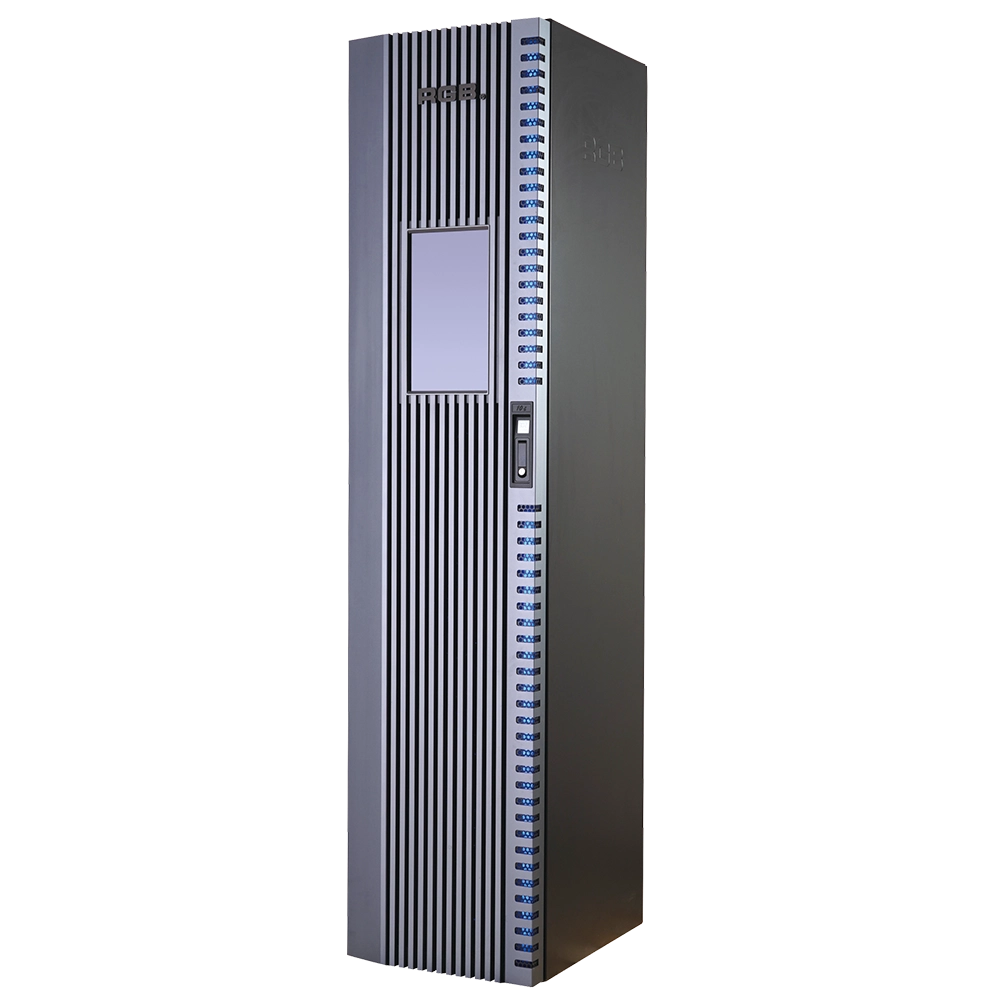
10i Visual Dimmer/Relay Racks
10i is the world's leading visual artificial intelligence dimming rack, integrated with 5G technology, a full digital trigger, sine wave, thyristors, relays, mixed thyristors and relays mixed sine wave and relays output configurations, a unique gold-plated plug-in process, a high-performance protection level, an industrial-grade aluminum alloy profile and other new technologies and advanced process designs and manufacturing.
It is suitable for the lighting control needs of different places such as high-standard grand theaters, TV stations, gymnasium and environmental intelligent lighting.
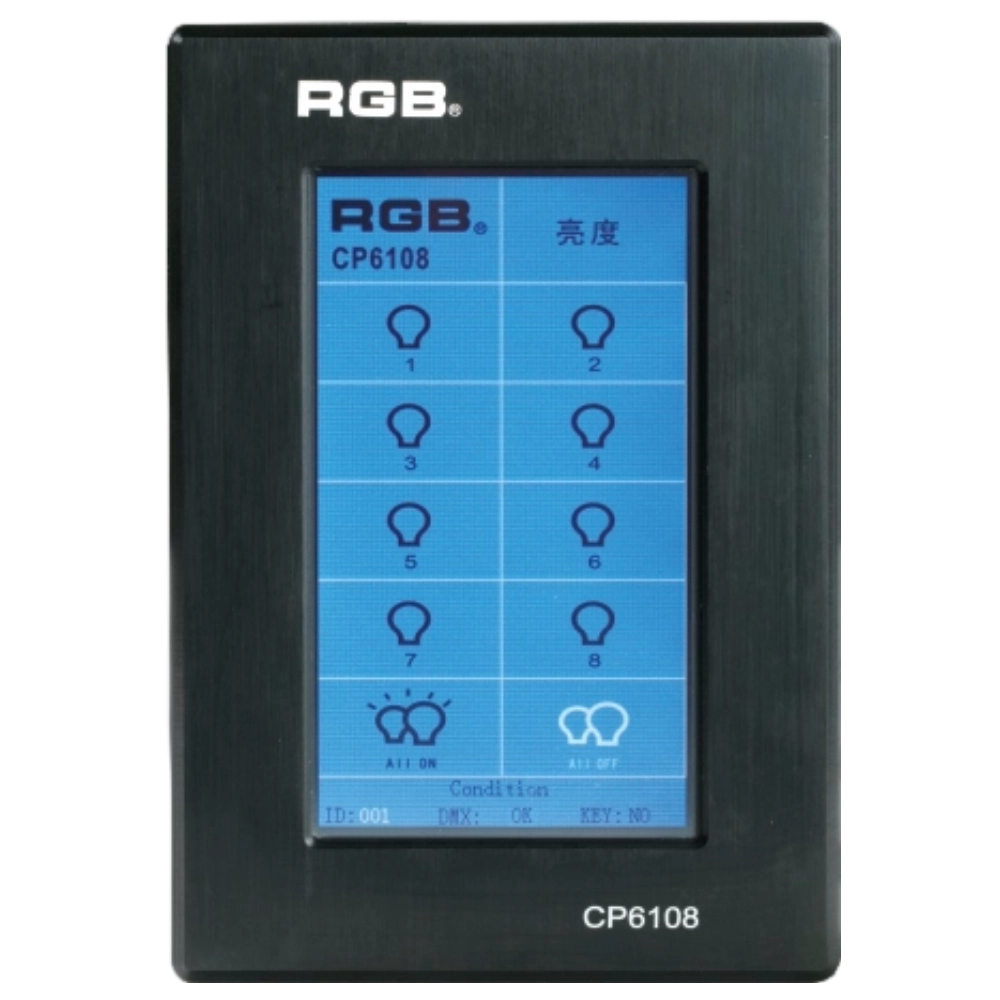
Site Light Controller CP6108
The CP6108 lighting control panel is a lighting control device for theater stage lights, work lights, environmental lighting, commercial art lighting, sports venue lighting, and other places. By connecting to the dedicated lighting control host CP6100, it realizes the central control of the lighting system, supports a visual lighting control system, and intuitively displays the online and offline status of CP6108. Realize remote monitoring, editing, and setting of corresponding parameters.
It is widely applicable to theaters, cinemas, auditoriums, stadiums, museums, exhibition halls, cultural tourism performances, commercial art lighting, and other places.
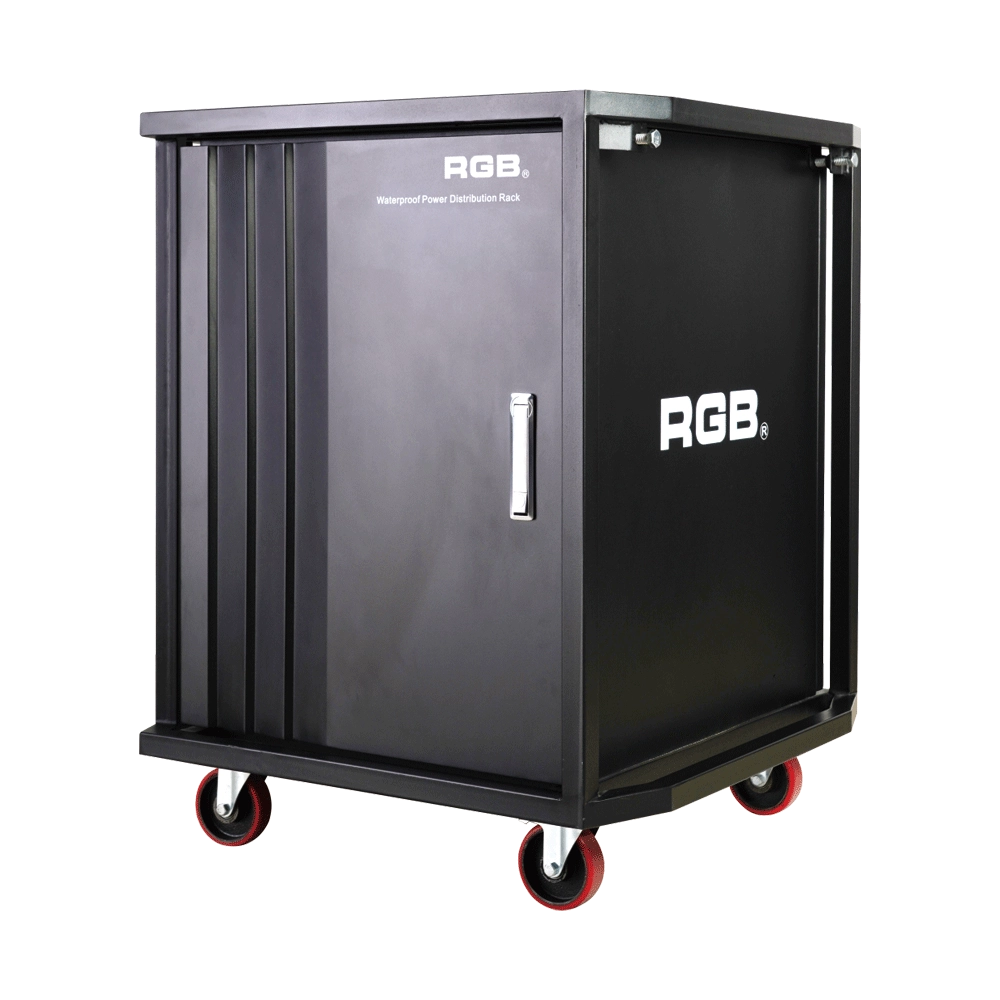
Multifunction Waterproofing Racks Of RGB-W Series
With the continuous development of flow performance, the requirement for performance is more demanding. In order to facilitate the transportation and make it easier to carry for all the equipment used in the performance, the stage light and sound equipment will be installed into a cabinet, for example, the power supply system. During the transportation process, it is inevitable for a collision or crash to take place. If the cabinet material is not strong enough, it may lead to deformation and even damage the equipment inside. Moreover, most of the existing cabinets are not waterproof. It will be very dangerous for the flow performance, as it is normal and inevitable to encounter rainy days. As the equipment inside the cabinets is electriferous, it might cause damage to the electronic equipment at least and even cause casualties at worst. Meanwhile, most of the existing cabinets can only be installed with one kind of equipment with a single variety.
In order to overcome the above-mentioned technical flaw, the RGB company has developed a new type of waterproofing multifunction cabinet of the W series. The waterproofing cabinet of the W series meets the need for the installation of dimming and tone-tuning devices, transportation, and utilization.
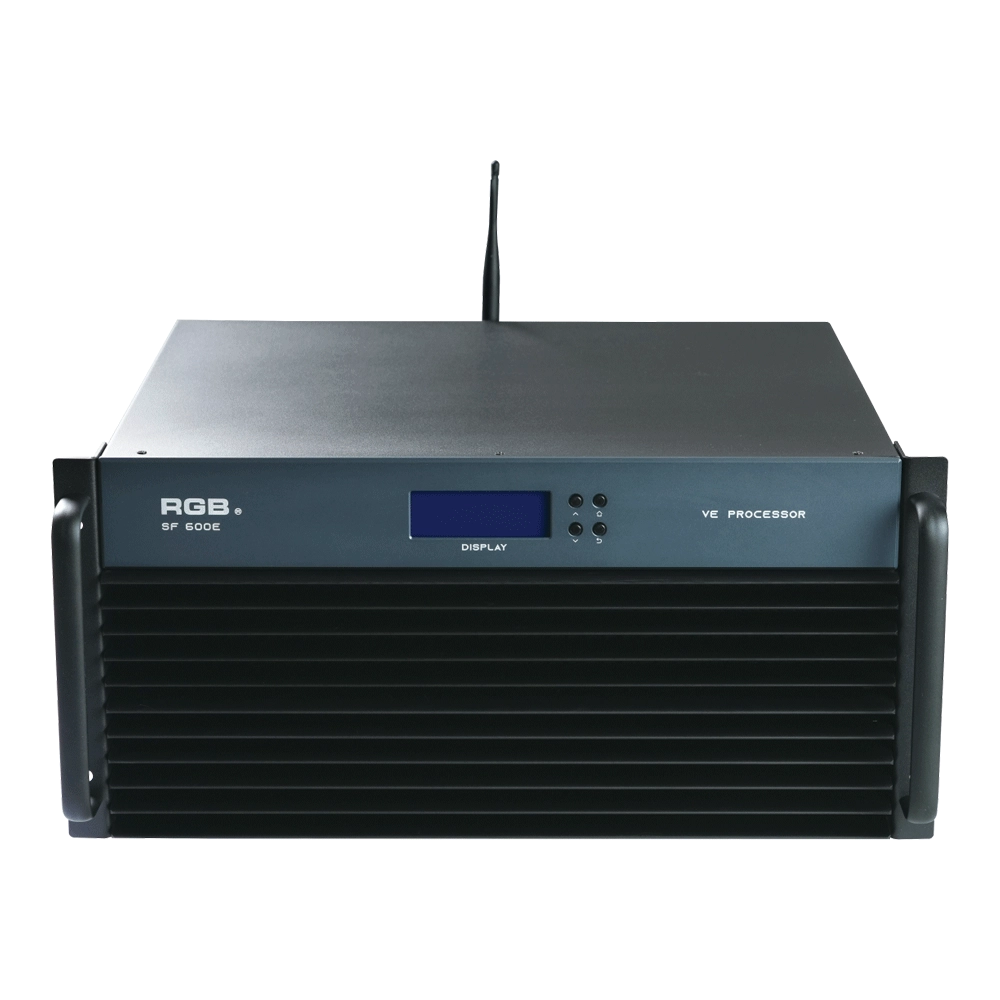
SF600E Visual R-net environment processor
The SF600E Visual R-net environment processor by RGB delivers advanced performance for visual systems. As a leading visual systems manufacturer, RGB ensures seamless integration and high reliability, making SF600E ideal for complex visual processing needs in diverse environments.
Expert Support
Interested in learning more or need expert guidance related to this article? Fill in your details, and our team will provide tailored support.
Intelligent Control. Brilliant Performance.
RGB specializes in stage lighting control systems, delivering intelligent, reliable, and high-performance solutions for theaters and performance spaces worldwide.
Contact
Email:
Tel:
+86 20 3928 0245
+86 20 3928 0247
Address:
No.3, Huashan Road, Shilou Town, Panyu, Guangzhou, China.
Whatsapp: +8615975520131