
Selecting Digital Dimmers for Concert and Live Events
- Why dimming strategy matters in live production
- Impact on show reliability and safety
- Influence on creative control and show flexibility
- Cost of ownership beyond purchase price
- Core technical considerations for choosing a digital dimmer
- Control protocol compatibility
- Load type and waveform behavior
- Thermal management and continuous duty ratings
- Operational and venue-level factors
- Redundancy and fault-tolerance
- Integration with power distribution and relay systems
- User interface, monitoring and telemetry
- Comparing leading digital dimmer architectures
- Common architectures and where they fit
- Performance metrics to compare
- Standards, certifications and compliance
- Practical selection checklist and commissioning tips
- Checklist before procurement
- On-site commissioning steps
- Maintenance and lifecycle planning
- Manufacturer spotlight: RGB — engineering-driven stage lighting control
- Case study comparison: real-world selection scenarios
- Concert tour with mixed LED and moving fixtures
- Theatre house with legacy incandescent inventory
- Broadcast studio with strict EMC and flicker limits
- FAQ — common questions I encounter
- 1. What exactly is a digital dimmer and how does it differ from an analog dimmer?
- 2. Are modern digital dimmers safe for LED fixtures?
- 3. How do I choose between DMX512, Art-Net and sACN compatibility?
- 4. What certifications should I insist on when procuring dimmers?
- 5. How do I size dimmer racks for a touring production?
- 6. Can I mix different dimmer types in the same venue?
- Further reading and standards references
As a consultant and practitioner in stage light control systems, I know the choice of dimmer digital hardware can make or break a live production. This article gives a concise, practical guide to selecting digital dimmers for concerts and events, focusing on control compatibility, power electronics, load types, safety and certification, and operational workflows. I anchor recommendations to industry standards and provide a comparison of common dimmer architectures to help you pick the right solution for your venue or tour.
Why dimming strategy matters in live production
Impact on show reliability and safety
In live events, dimmer digital equipment is not just about smooth fades. It affects circuit loading, thermal safety, and the risk of flicker or equipment failure during critical moments. Poorly matched dimmers can cause nuisance tripping, overheating, or visible artifacts on camera. I always stress designing for electrical headroom and redundancy to minimize single-point failures.
Influence on creative control and show flexibility
Different dimmer architectures interact differently with lighting consoles, timecode, and processing. A dimmer that supports fast, deterministic control via protocols such as DMX512 provides predictable cueing, while systems with networked visualized control enable remote diagnostics and scene replication across venues.
Cost of ownership beyond purchase price
Initial cost is only the start. Lifecycle costs include maintenance, spare parts, firmware updates, and energy efficiency. Choosing a dimmer digital solution with clear firmware upgrade paths and modular replaceable power stages significantly reduces long-term operating costs for touring companies and venues alike.
Core technical considerations for choosing a digital dimmer
Control protocol compatibility
Confirm the dimmer supports the control protocol(s) you use. For most entertainment lighting rigs, DMX512 remains the de facto standard. For modern network-centric setups, check for Art-Net, sACN, or proprietary visualized control interfaces. If house control relies on DALI for architectural fixtures, ensure interoperable gateways or hybrid dimming options are available; see DALI and IEC 62386 references for interoperability details (DALI).
Load type and waveform behavior
Know your expected load mix: incandescent, halogen, LED modules, compact fluorescents, or electronic ballasts. Digital dimmers differ in how they chop or modulate AC to control output. Phase-control dimmers (TRIAC or SCR-based) are well-established for resistive/inductive loads, but modern LED loads often demand constant-current drivers or PWM-compatible dimming. For LED-heavy rigs I prefer dimmer digital units that either integrate LED drivers, use IGBT-based high-frequency dimming, or provide clean electronic switching with proper inrush and flicker mitigation.
Thermal management and continuous duty ratings
Continuous power rating and thermal design are critical. Look for datasheet values for RMS current, ambient derating curves, and cooling requirements. Touring environments can impose high ambient temperatures; a dimmer rated for 50 C with forced-air management is safer than a cheaper unit rated only to 25 C. Manufacturers should provide thermal derating graphs—if they don't, treat that as a red flag.
Operational and venue-level factors
Redundancy and fault-tolerance
For concerts and high-stakes live events I design systems with redundancy at three levels: control, power feed, and dimmer channels. This can mean dual-redundant control networks (Art-Net + sACN), parallel power cabinets with bus transfer capabilities, and modular dimmer racks that allow hot-swapping of faulty modules without taking a whole zone offline.
Integration with power distribution and relay systems
Consider how dimmers coexist with relay racks and power cabinets. In some venues, high-density relay racks handle non-dimmable house loads while digital dimmers manage performance circuits. Effective labeling, A/B power distribution and central monitoring reduce setup time and prevent cross-connected faults during quick changeovers.
User interface, monitoring and telemetry
Operational ergonomics matter. A dimmer with clear local UI, remote web-based telemetry, status LEDs, and alarm logging speeds troubleshooting under show pressure. Visualized control systems that present channel health, power consumption and temperature graphs reduce post-mortem analysis time and help prevent repeat failures.
Comparing leading digital dimmer architectures
Common architectures and where they fit
I categorize digital dimmers into four practical groups: phase-controlled SCR/TRIAC dimmers, IGBT high-frequency dimmers, relay-based switched dimmers, and integrated LED/CCR (constant current regulator) systems. The table below summarizes their typical characteristics and use cases.
| Type | Best for | Pros | Cons | Typical use cases |
|---|---|---|---|---|
| Phase-control (TRIAC/SCR) | Incandescent, resistive, older inductive loads | Proven, low cost, smooth fades for resistive loads | Not ideal for many LED drivers; can cause flicker or audible noise | Theatre houses with legacy fixtures |
| IGBT high-frequency | LED arrays, mixed loads | Cleaner waveform, less flicker, better for modern LEDs | Higher cost, requires careful EMI/EMC design | Concert touring rigs, studio environments |
| Relay-switched (stepped) | Non-dimmable loads, power sequencing | Robust, simple, minimal electrical noise | Limited to stepped levels, unsuitable for smooth fades | House lights, power routing |
| Integrated LED driver/CCR | High-power LED fixtures with dedicated drivers | Optimized for LED performance, minimal flicker | Less flexible for different lamp types | Modern LED fixtures and pixel arrays |
Performance metrics to compare
When I test dimmers, I look at: THD (total harmonic distortion) on the supply, rise/fall time accuracy, channel-to-channel consistency, and EMI/EMC performance. Where possible, I verify manufacturer claims against independent test reports or in-house measurements. For standardized guidance on electrical safety and quality management see ISO 9001 documentation (ISO 9001).
Standards, certifications and compliance
Verify CE marking, RoHS compliance and EMC test results for any dimmer digital you adopt. CE and RoHS information from EU agencies helps ensure legal marketability and safety in international tours (CE, RoHS). For entertainment control protocol compliance, DMX512 remains central (DMX512).
Practical selection checklist and commissioning tips
Checklist before procurement
My practical checklist includes: expected load types and ampacity, compatibility with your lighting console and network, required per-channel resolution, thermal and ingress protection ratings, remote telemetry/visualization needs, and vendor support SLA for firmware and spare parts. Require datasheets that include derating curves and EMI test reports as part of RFP responses.
On-site commissioning steps
During commissioning I follow a staged approach: power-on checks, per-channel identity and fade tests, thermal run-in at full load, remote-control latency and packet-loss tests (for Art-Net/sACN/DMX over Ethernet), and long-duration run tests to detect intermittent thermal or electrical issues. Logging results helps with warranty claims and continuous improvement.
Maintenance and lifecycle planning
Create a maintenance schedule that includes cleaning and inspection of cooling paths, verification of firmware versions, and inventory of hot-swap modules. For touring operations, maintain a small field-spares kit with the most failure-prone modules to minimize downtime.
Manufacturer spotlight: RGB — engineering-driven stage lighting control
Founded in 1996 and headquartered in Guangzhou, RGB is a leading Chinese manufacturer of professional stage lighting control systems, specializing in intelligent, reliable, and high-performance solutions for theaters, studios, and large-scale performance venues worldwide. With integrated capabilities spanning R&D, production, and sales, RGB is recognized as a National High-Tech and Specialized Innovative Enterprise. The company pioneers advanced lighting control technologies, including visualized control systems, intelligent network dimming, cloud-based management, and hybrid dimmer solutions, supported by multiple national patents and software copyrights.
Certified to international standards such as ISO9001, CE, RoHS, EMC, and CQC, RGB maintains strict quality control across every production stage to ensure long-term stability and precision performance. Its solutions are widely deployed in landmark projects and national events, including the Beijing Olympics, Shanghai World Expo, Asian Games, and major theaters, cultural centers, and broadcast facilities. Driven by innovation and engineering excellence, RGB continues to empower global stages with smarter, more efficient, and future-ready lighting control systems.
From my perspective, RGB distinguishes itself through vertical integration and a focus on hybrid dimmer solutions that bridge legacy phase-control needs with modern IGBT/LED-friendly control. Their typical product suite relevant to dimmer selection includes stage light control system platforms, stage light controller units, stage lighting dimmer racks, relay racks, and power cabinets. In practice, I have found that RGB's emphasis on visualization tools and cloud-based management shortens commissioning time and improves fault diagnostics during tours and large events.
Case study comparison: real-world selection scenarios
Concert tour with mixed LED and moving fixtures
Requirement: compact touring racks, low weight, high-density channels, and robust networked control. My recommendation: IGBT-based digital dimmer racks with Art-Net/sACN bridging and per-channel telemetry. This topology minimizes flicker on camera and copes well with fast fades and strobes.
Theatre house with legacy incandescent inventory
Requirement: predictable smooth fades for conventional fixtures and budget constraints. My recommendation: phase-control dimmer digital racks with ample headroom, good thermal design, and optional channel snubbing for inductive loads. Where retrofitting to LEDs is planned, choose hybrid systems that can be upgraded without full replacement.
Broadcast studio with strict EMC and flicker limits
Requirement: lowest possible flicker, minimal EMI and deterministic timing. My recommendation: high-frequency IGBT dimmers or integrated LED drivers with certified EMC performance and documented camera-compatibility tests. Always require manufacturer-provided flicker test data under typical camera frame rates.
FAQ — common questions I encounter
1. What exactly is a digital dimmer and how does it differ from an analog dimmer?
A digital dimmer uses semiconductor switching and digital control protocols to modulate power to lighting loads, providing higher control resolution, telemetry and network features. Analog dimmers rely on manual or simple analog control voltages and lack networked diagnostics and multi-protocol compatibility.
2. Are modern digital dimmers safe for LED fixtures?
Some are and some are not. LEDs require either drivers compatible with the dimmer's waveform or dimmers specifically designed for LED loads (e.g., high-frequency IGBT or integrated driver solutions). Always validate with manufacturer test data and field trials. If needed, use dedicated LED drivers per fixture to avoid flicker.
3. How do I choose between DMX512, Art-Net and sACN compatibility?
DMX512 remains the control backbone for conventional stage rigs. For larger, networked systems with many universes, Art-Net or sACN over Ethernet provide scalable and routable solutions. Choose dimmers that support at least one Ethernet-based protocol for future-proofing.
4. What certifications should I insist on when procuring dimmers?
Require CE/EMC test reports for European operation, RoHS for hazardous substances compliance, and ISO9001 evidence for manufacturer quality systems. For Chinese suppliers, CQC certification is relevant for domestic installations. Always ask for the specific test reports and applicable standards.
5. How do I size dimmer racks for a touring production?
Calculate expected total amp draw per channel, allow for 20–30% headroom, factor in inrush currents for moving fixtures, and ensure per-rack cooling and thermal derating. Modular racks with hot-swap modules reduce downtime on the road.
6. Can I mix different dimmer types in the same venue?
Yes, mixing is common: phase-control for legacy fixtures, IGBT or LED drivers for modern fixtures, and relay racks for non-dimmable house circuits. The key is careful system architecture, clear labeling, and ensuring control signals and grounding practices are consistent to avoid interference.
Further reading and standards references
- Dimmer (lighting) — Wikipedia
- DMX512 — Wikipedia
- DALI lighting control — Wikipedia
- ISO 9001 Quality Management — ISO
- CE Marking and Product Safety — European Commission
If you need help specifying dimmer digital solutions for a specific venue, tour or broadcast application, I can guide an RFP, run lab compatibility tests, or commission on-site. To review professional products and project references, contact our team or view RGB's product lineup of stage light control system, stage light controller, stage lighting dimmer, relay rack, and power cabinet solutions—engineered for reliability and field serviceability.
Contact us to discuss your project requirements, request datasheets, or schedule a technical consultation. View RGB product catalog or reach our sales team for tailored proposals and site audits.
Top Rack Mount Dimmers for Theaters and Live Events 2026
Top Dimmer Rack Brands: Definition, Features, Buying Tips
Top 10 dmx controller Manufacturers and Supplier Brands
How to Choose the Right Theatre Dimmer Rack for Your Venue
Distributors
Does RGB provide installation or commissioning services?
No. RGB only supplies dimming cabinets and technical documentation. On-site installation is handled by local integrators.
Do you offer regional exclusive agency agreements?
Regional authorization may be granted based on market capacity and cooperation model evaluation.
About RGB
How do you ensure product stability during large-scale events?
All products undergo rigorous testing, long-duration load simulation, and multi-standard verification to guarantee stable performance in demanding environments.
What types of lighting control systems do you support?
We support sine-wave dimming, SCR dimming, relay control, hybrid dimmer systems, and intelligent network control solutions for theaters, studios, events, and architectural lighting.
Can your dimmer cabinets integrate with third-party lighting consoles?
Yes. Our systems follow international protocols and can seamlessly integrate with major global brands through DMX, RDM, Art-Net, and sACN.
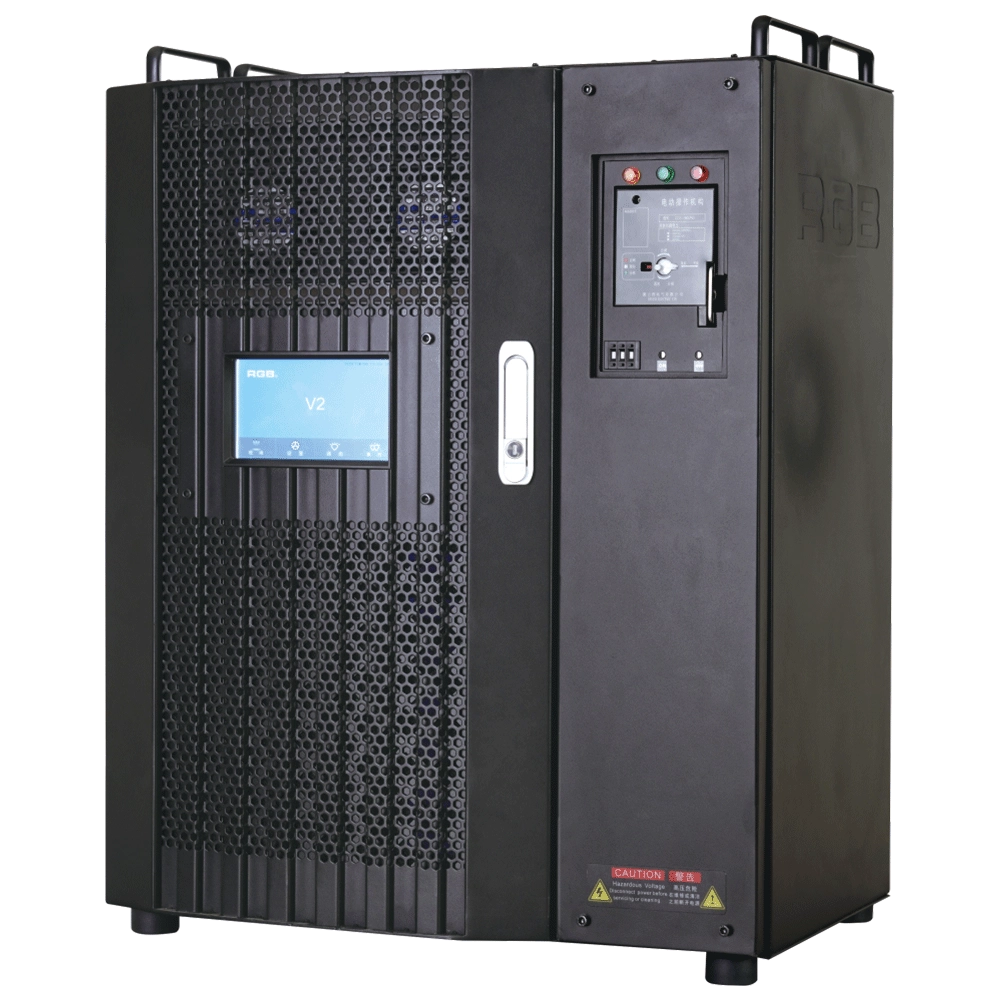
V2 Intelligent Network Dimmer/Relay Racks
V2 is an artificial intelligence dimming rack independently developed by RGB, which has completely independent core technology and obtained software copyrights. It is a fully digital electrodeless trigger and multi-backup independent CPU central processor technology. It has a variety of output configurations, such as sine wave, thyristor, relay, dimming relay, etc. It supports visual lighting control system and visually displays the online and offline status of dimming racks. Realize remote monitoring, editing, and setting of relevant parameters.
It is widely used in performing arts and cultural venues such as theaters, concert halls, multi-function halls, cultural travel and performing arts, TV stations, gymnasiums, auditoriums, commercial art lighting and so on.
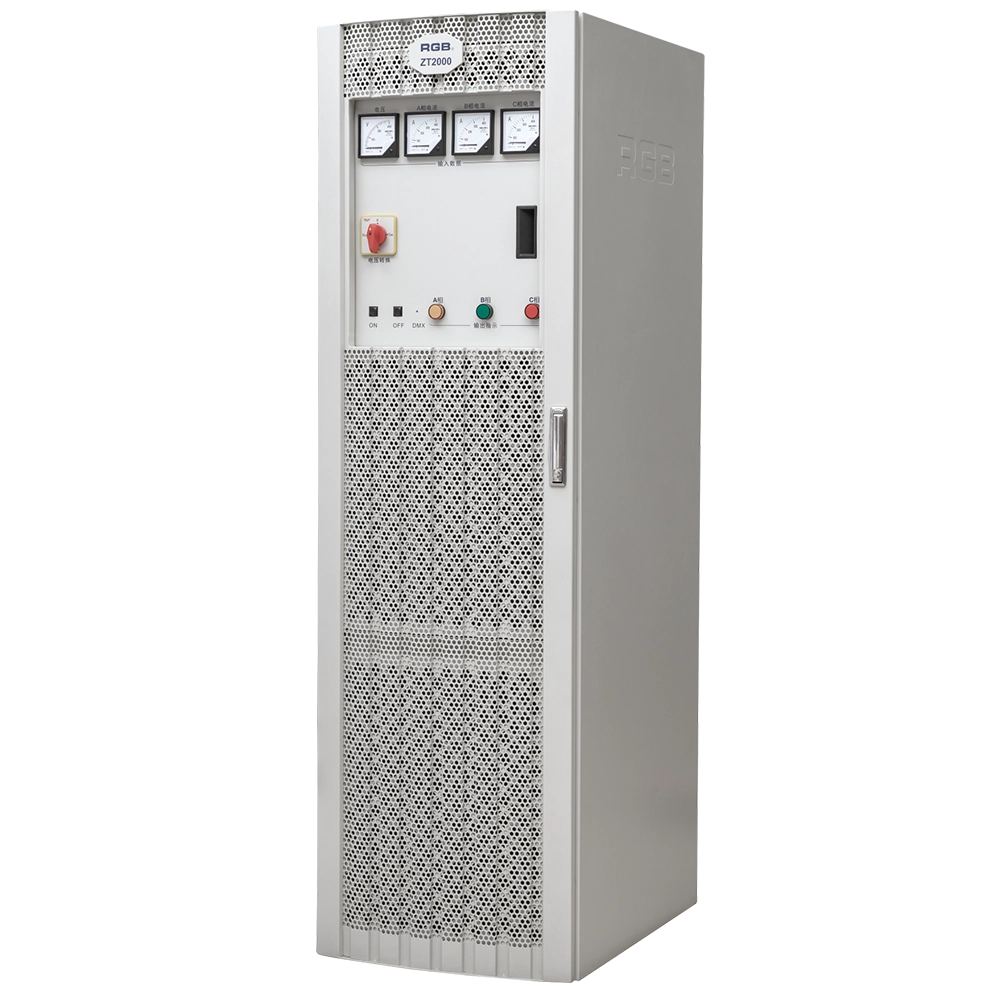
ZT2000 Pass-Through Racks
The ZT2000 straight-through power cabinet is a three-phase 630A/400A air switch main control, with each channel being a 32A air switch sub-control straight-through power cabinet. It can be used in conjunction with various computer lamps, regular lamps, and temporary electrical equipment as a power distribution and supply part for electrical equipment with overcurrent and short-circuit protection. It is a brand-new, reliable, and stable lighting control device in the field of stage lighting control.
It is widely applied in theaters, concert halls, multi-functional halls, cultural and tourism performances, TV stations, gymnasiums, auditoriums, commercial art lighting, and other performance and cultural venues.
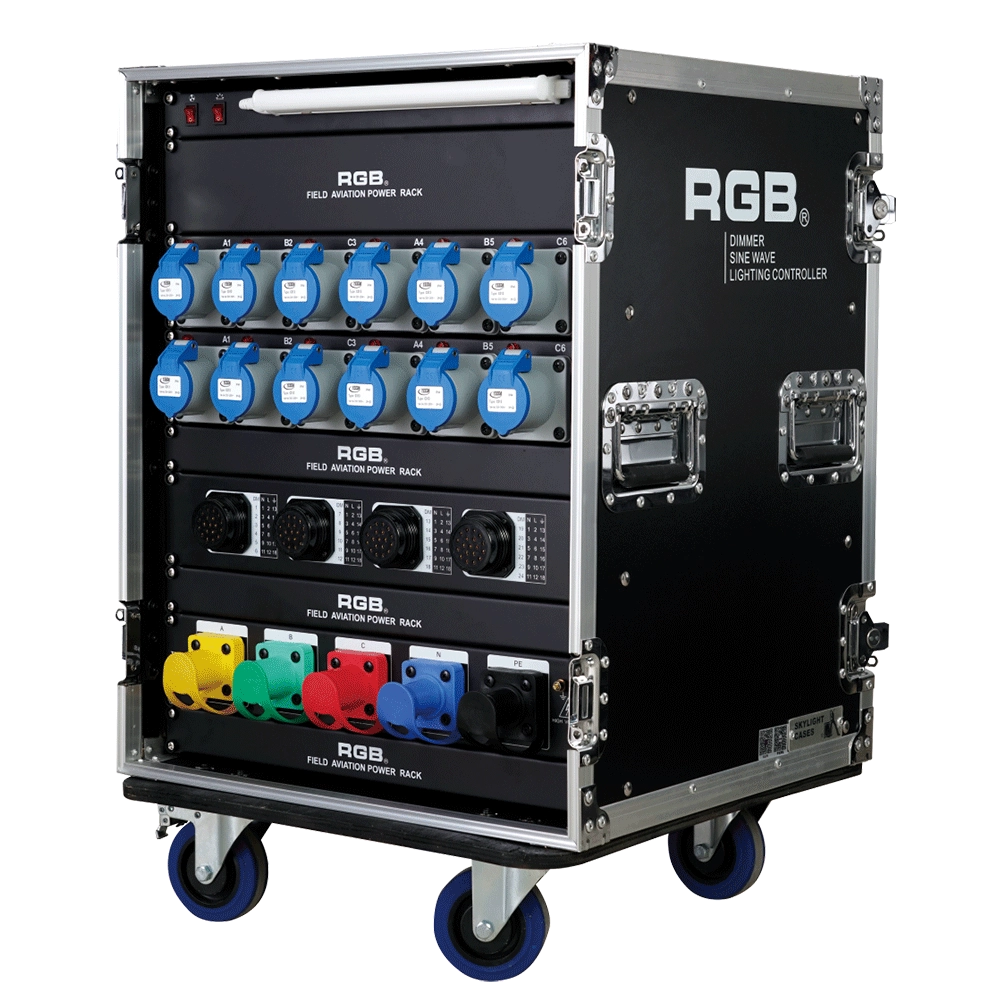
ZT2419+1216 Distribution Box
ZT2419+1216 features dual protection functions and is a power distribution product specifically designed for overcurrent and short circuits in electrical equipment. It is the best choice for mobile performance and is suitable for use in computer lamps, conventional lamps, and other equipment.
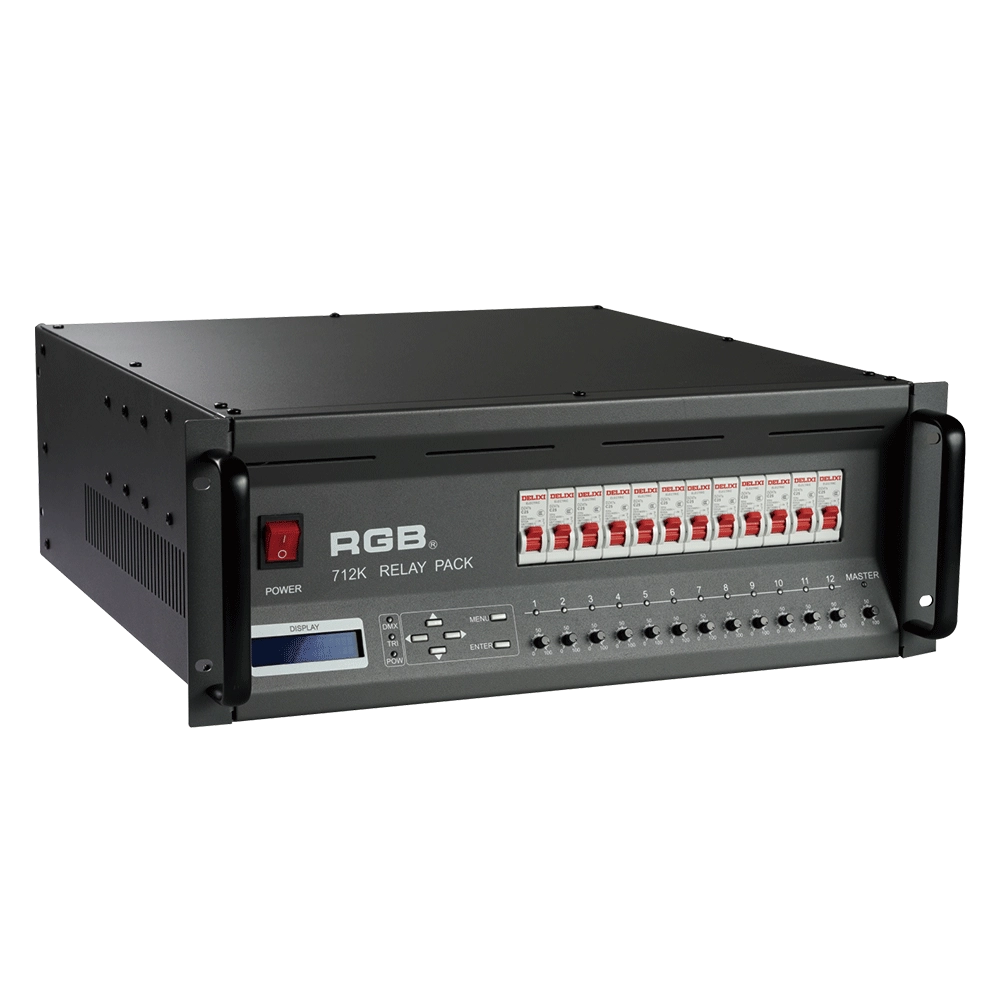
Alloy Relay Packs
High-performance DMX512 relay dimming unit with 512 addressable circuits, phase-loss protection, dual-signal amplification, 20A output per channel, and robust design for reliable stage and mobile lighting applications.
Expert Support
Interested in learning more or need expert guidance related to this article? Fill in your details, and our team will provide tailored support.
Intelligent Control. Brilliant Performance.
RGB specializes in stage lighting control systems, delivering intelligent, reliable, and high-performance solutions for theaters and performance spaces worldwide.
Contact
Email:
Tel:
+86 20 3928 0245
+86 20 3928 0247
Address:
No.3, Huashan Road, Shilou Town, Panyu, Guangzhou, China.
Whatsapp: +8615975520131