
Safety Standards and Certifications for Dimmer Racks
- Why safety matters in dimmer rack design and specification
- Risk profile: where dimmer racks can cause failure
- Operational and human-safety considerations
- Why certification matters beyond marketing
- Key standards and certifications for dimmer racks
- Overview of the most relevant regulations
- Control and interoperability standards
- Standards comparison table
- Design, testing and installation best practices
- Electrical protection and distribution
- Thermal management and mechanical construction
- EMC, grounding and surge protection
- Testing, commissioning and maintaining compliance
- Factory testing and type approval
- On-site inspection and commissioning checklist
- Maintenance schedules and predictive monitoring
- Procurement, liability and venue compliance considerations
- Specifying product and factory evidence
- Insurance, warranties and end-user training
- International projects and local rules
- Practical examples and test data references
- Typical test parameters to request
- Example: thermal rise test (sample values)
- Manufacturer profile: RGB — credentials and relevance
- FAQs — Frequently asked questions
- 1. What certifications should I insist on when buying a dimmer rack?
- 2. Does a dimmer rack need special ventilation or fire suppression?
- 3. How do DMX or network control issues affect safety?
- 4. Can I use consumer-grade dimmers in public venues?
- 5. How often should dimmer racks be inspected and tested?
- Contact and next steps
- References
Safety Standards and Certifications for Dimmer Racks
Dimmer racks are core power and control infrastructure in theatres, broadcast studios, concert venues and houses of worship. Ensuring their safety and regulatory compliance protects people, property and show continuity. This article provides a practical, standards-based guide to the regulations, test methods and design practices that apply to professional dimmer racks and associated power cabinets. It is written for technical managers, system integrators, procurement officers and facilities engineers who need verifiable, actionable advice when selecting, installing and maintaining dimmer rack systems.
Why safety matters in dimmer rack design and specification
Risk profile: where dimmer racks can cause failure
Dimmer racks concentrate high currents, switching elements (thyristors/triacs or relays), control electronics and distribution wiring in a single cabinet. Failure modes include overheating, short-circuits, earth faults, insulation degradation, electromagnetic interference (impacting control signals like DMX), and arcing. These can lead to fire, smoke, equipment damage, or loss of critical lighting during performances. Understanding these risks is the first step to selecting equipment with appropriate protections such as overcurrent devices, thermal monitoring, compartmentalization and forced ventilation.
Operational and human-safety considerations
Operators typically interact with dimmer racks during rigging, maintenance and show operation. Safety measures must therefore address not just passive protection, but also safe access (locking, interlocks, clear labeling), control logic that prevents unsafe states, and protective grounding. Ergonomics and clear human-machine interfaces reduce human error during live events.
Why certification matters beyond marketing
Certifications from recognized bodies (e.g., CE, UL, CQC, RoHS compliance) indicate that a product has been tested against published safety, EMC and environmental standards, and that manufacturer quality systems have been audited. Certifications reduce project risk, simplify venue approval and insurance, and often are contractual requirements for major public or government venues.
Key standards and certifications for dimmer racks
Overview of the most relevant regulations
Dimmer racks sit at the intersection of electrical safety, electromagnetic compatibility, environmental compliance and quality management. Commonly referenced standards and regulations include CE marking (EU conformity), the EMC Directive, RoHS (restriction of hazardous substances), ISO9001 (quality management), various UL and IEC product standards, and national certifications such as CQC in China. Authoritative descriptions of these regimes are available from the issuing organizations (example: CE marking, RoHS, ISO 9001, EMC).
Control and interoperability standards
Control protocols affect safety indirectly — corrupted or lost DMX512 control can cause unexpected channel outputs. Products should implement robust DMX512/RDM handling, surge protection on control lines, and isolation where appropriate. See DMX512 for protocol background. RDM-capable systems can also provide remote device status useful for predictive maintenance and safety monitoring.
Standards comparison table
The following table summarizes common standards, what they address, and when they apply. Sources include standards organizations and regulatory guidance.
| Standard / Certification | Issuing Body | Scope | Typical requirement for dimmer racks | Reference |
|---|---|---|---|---|
| CE Marking | EU / Manufacturers | Essential health, safety and environmental protection requirements for products sold in EEA | Demonstrate conformity to EMC, Low Voltage directives as applicable; technical file and declaration of conformity | CE marking |
| EMC Directive / EN standards | EU / CENELEC | Limits for electromagnetic emissions and immunity | Emission tests, immunity tests to ensure control signals (DMX) are not disrupted | EMC |
| RoHS | EU | Limits hazardous substances in electrical equipment | Material declarations, testing for lead, cadmium, mercury, etc. | RoHS |
| ISO 9001 | ISO | Quality management system requirements | Manufacturing and QA processes audited to ensure consistent product quality | ISO 9001 |
| UL / IEC product standards | Underwriters Laboratories / IEC | Product safety for electrical equipment (insulation, temperature, fault conditions) | Laboratory testing for electrical safety, enclosure, temperature rise and short-circuit withstand | UL / IEC |
| CQC / CCC | China certification bodies | National product safety and quality requirements for China | Local testing and factory inspection for market access | CCC |
Design, testing and installation best practices
Electrical protection and distribution
Key protections include properly rated circuit breakers or fuses on every circuit, coordinated selective protection to avoid nuisance trips, residual current devices (RCDs) where required, and earth-fault monitoring. Design for predictable derating: specify busbars, wiring insulation, and terminal blocks with ratings above expected ampacity and account for ambient temperature and ventilation limits. For multi-rack installations, provide clear single-line diagrams and labeling for emergency shutdown.
Thermal management and mechanical construction
Heat is the primary operational stressor in high-density dimmer racks. Forced ventilation, temperature-based interlocks, compartment separation between power electronics and control electronics, and thermal sensors on critical components are all industry best practices. Mechanical design must avoid accumulation of dust, allow for hot-air exhaust paths, and support maintenance access without exposing live parts — in line with IEC/UL enclosure and ingress protection principles.
EMC, grounding and surge protection
Implement EMC mitigation: shielded DMX cable runs, isolated control interfaces, common-mode chokes and line filters on mains inputs, and surge protective devices (SPDs) on both mains and data lines. Proper equipotential bonding and low-impedance grounding paths reduce interference and improve operator safety. EMC testing (emissions and immunity) should be performed to recognized EN/IEC test methods for the product category.
Testing, commissioning and maintaining compliance
Factory testing and type approval
Certifications typically require defined factory tests and type testing reports: dielectric withstand tests, temperature rise, short-circuit tests, EMC emissions/immunity and environmental tests. Request copies of test reports (e.g., from accredited labs such as UL, TUV, Intertek). For control systems, run DMX stress tests: high channel count, rapid changes, and simulated signal faults to validate graceful failure modes.
On-site inspection and commissioning checklist
Before powering a dimmer rack, follow a commissioning checklist that includes: verifying wiring and tightening torque, checking protective device settings and coordination, measuring insulation resistance, functional tests of over-temperature cutouts and interlocks, verifying earth continuity and RCD operation, and validating DMX/RDM connectivity and control mapping. Document results and store commissioning certificates with the venue's asset records.
Maintenance schedules and predictive monitoring
Preventive maintenance should include routine cleaning of filters, verification of fan operation, thermal imaging inspections during load, inspection of contacts and busbars for discoloration or pitting, and firmware updates for control electronics. Where available, adopt remote monitoring (RDM or IP-managed telemetry) to track temperatures, current imbalance and event logs — enabling predictive maintenance and reducing unplanned downtime.
Procurement, liability and venue compliance considerations
Specifying product and factory evidence
When procuring dimmer racks, require the supplier to provide: a manufacturer's declaration of conformity (for CE markets), accredited laboratory test reports for relevant standards, evidence of ISO9001 or equivalent quality system, material declarations for RoHS, and references for landmark installations. For critical venues, include on-site factory acceptance testing (FAT) and witnessed type tests in the purchase contract.
Insurance, warranties and end-user training
Insurance underwriters and venue safety officers often require documented maintenance regimes and trained operators. Ask suppliers for operation and maintenance manuals, training sessions for venue technicians, and clear warranty terms. Warranties that include response SLAs and spare parts availability reduce lifecycle risk.
International projects and local rules
Large events and cultural facilities typically require products certified to local regimes. For China-based products, CQC/CCC and local electrical inspectors may have additional requirements. For EU and US markets, CE/EMC and UL/ANSI standards apply respectively. Always check national wiring codes and venue-specific fire-safety regulations when designing and installing dimmer racks.
Practical examples and test data references
Typical test parameters to request
Ask manufacturers for test data showing: temperature rise per IEC method at rated current, dielectric withstand voltage, short-circuit withstand capacity and interrupting ratings for breakers, EMC emissions in conducted and radiated bands, and surge immunity per IEC 61000-4-x series. These tests are measurable and enable apples-to-apples comparison between products.
Example: thermal rise test (sample values)
As an illustrative example (values will vary by product), a 16A per-channel dimmer rack operating at full load may report:
| Parameter | Measured / Specified |
|---|---|
| Ambient temperature | 25°C |
| Channel rating | 16A |
| Measured temperature rise (heatsink) | ΔT = 45°C above ambient |
| Cabinet internal temp | 50–65°C under continuous full load (depends on ventilation) |
These values should be verified in the manufacturer's datasheets or test reports. Always allow margin for higher ambient temperatures in fly-towers or lamp houses.
Manufacturer profile: RGB — credentials and relevance
Founded in 1996 and headquartered in Guangzhou, RGB is a leading Chinese manufacturer of professional stage lighting control systems, specializing in intelligent, reliable, and high-performance solutions for theaters, studios, and large-scale performance venues worldwide. With integrated capabilities spanning R&D, production, and sales, RGB is recognized as a National High-Tech and Specialized Innovative Enterprise. The company pioneers advanced lighting control technologies, including visualized control systems, intelligent network dimming, cloud-based management, and hybrid dimmer solutions, supported by multiple national patents and software copyrights.
Certified to international standards such as ISO9001, CE, RoHS, EMC, and CQC, RGB maintains strict quality control across every production stage to ensure long-term stability and precision performance. Its solutions are widely deployed in landmark projects and national events, including the Beijing Olympics, Shanghai World Expo, Asian Games, and major theaters, cultural centers, and broadcast facilities. Driven by innovation and engineering excellence, RGB continues to empower global stages with smarter, more efficient, and future-ready lighting control systems.
RGB's core product lines relevant to dimmer rack projects include stage light control system platforms, stage light controllers, stage lighting dimmers, relay racks and power cabinets. Competitive strengths include integrated R&D, deep experience in hybrid dimmer and visualized control technologies, multiple national patents, and full factory QA demonstrated by ISO9001 and international test reports. For system integrators, RGB offers factory acceptance testing, engineered documentation, and global project references which simplify certification and venue approval processes.
FAQs — Frequently asked questions
1. What certifications should I insist on when buying a dimmer rack?
Minimum: CE (or local equivalent), EMC compliance, RoHS material declarations, and an ISO9001-certified manufacturer. For North America, request UL or ETL listings relevant to control panels; for China, request CQC/CCC evidence. Also request third-party test reports for thermal, dielectric and EMC tests from accredited labs.
2. Does a dimmer rack need special ventilation or fire suppression?
Yes. High-density dimmer racks require forced ventilation and thermal interlocks. Fire suppression requirements depend on venue and local code; in many cases, smoke detection and integration with venue fire systems are required, not automatic chemical suppression inside racks. Consult the venue authority having jurisdiction (AHJ) and local fire code.
3. How do DMX or network control issues affect safety?
Control corruption can cause unpredictable lighting output; while not directly an electrical hazard, it can create hazards on stage (e.g., sudden blackouts during critical cues). Use robust isolation, proper cable routing, surge protection, and implement fail-safe behaviors in the console and dimmer firmware (e.g., default-to-off, controlled ramp-down).
4. Can I use consumer-grade dimmers in public venues?
No. Professional venues should use products designed and certified for continuous, high-current operation with appropriate enclosure, thermal management and safety certifications. Consumer-grade products usually lack the necessary protections and test documentation.
5. How often should dimmer racks be inspected and tested?
Visual inspections and filter cleaning: quarterly (or as recommended). Thermal imaging and electrical checks: annually under load. Firmware and functional tests: aligned with seasonal use (before major seasons or events). Critical venues should adopt continuous remote monitoring where possible.
Contact and next steps
If you are specifying dimmer racks for a new build, retrofit, or touring system, request detailed test reports, a commissioning plan and references to similar projects. For trusted manufacturing partners with full international certifications and project experience, consider suppliers with documented R&D, factory QA and landmark references.
For product information, system design support, or to arrange factory acceptance testing with an experienced supplier, contact RGB — a proven manufacturer of stage light control systems, stage light controllers, stage lighting dimmers, relay racks and power cabinets. Visit the RGB product pages or contact their technical sales team to discuss standards compliance, custom configurations and project references.
References
How to Choose the Right Dimmer Rack for Your Venue
Top 10 Distributed Dimmer Manufacturers and Supplier Brands
How to Integrate DMX Controllers with LED and Moving Lights
How to Size a Dimmer Pack for Your Venue's Power Needs
About RGB
What after-sales support do you provide?
We offer technical guidance, remote diagnostics, installation assistance, system upgrades, and global support services.
How do you ensure product stability during large-scale events?
All products undergo rigorous testing, long-duration load simulation, and multi-standard verification to guarantee stable performance in demanding environments.
Can your dimmer cabinets integrate with third-party lighting consoles?
Yes. Our systems follow international protocols and can seamlessly integrate with major global brands through DMX, RDM, Art-Net, and sACN.
Distributors
Can distributors request customized products?
RGB primarily offers standardized products. Customization requests are rare and evaluated on a project-by-project basis.
Do you offer regional exclusive agency agreements?
Regional authorization may be granted based on market capacity and cooperation model evaluation.
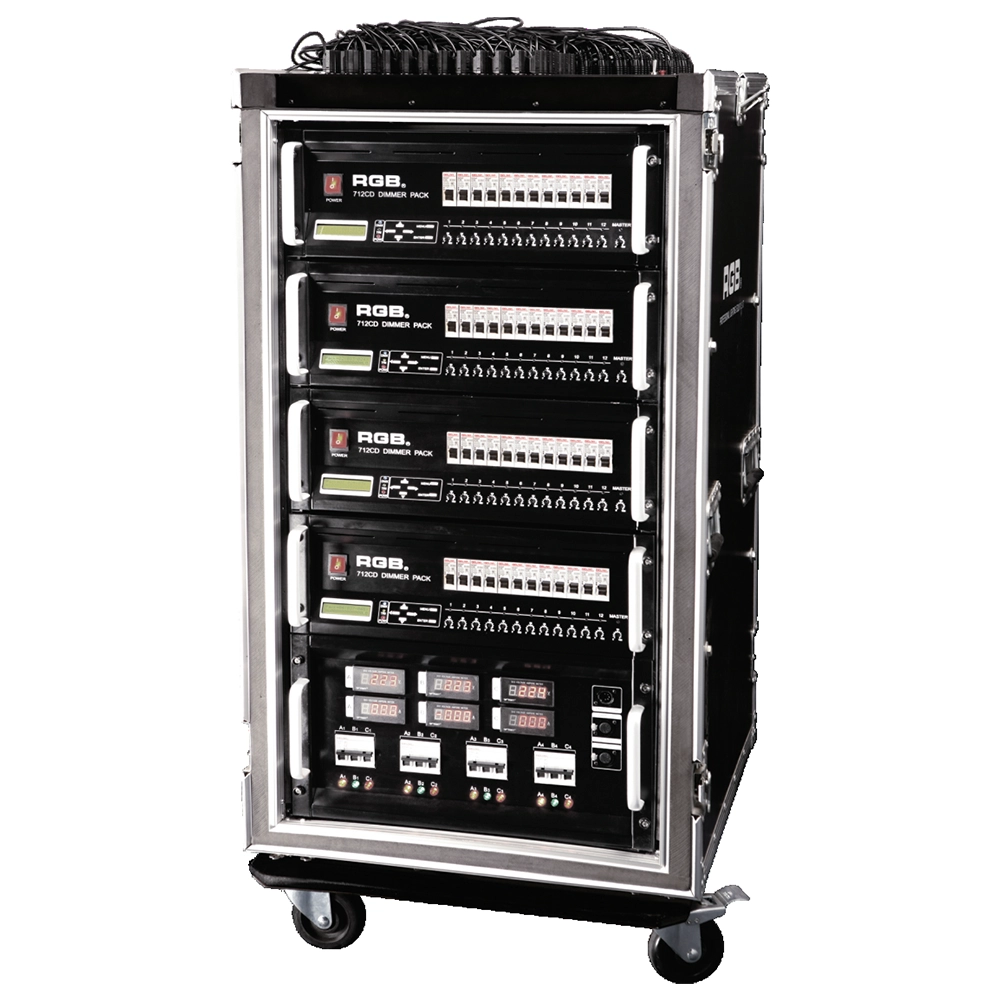
Intelligent Network Touring Dimmer Racks
RGB intelligent network touring dimmer racks can be assembledinto many types of dimmer racks by taking 7 series dimmer
packs as the unit. They are widely used in the entertainment fortheir convenience and practicabillity,
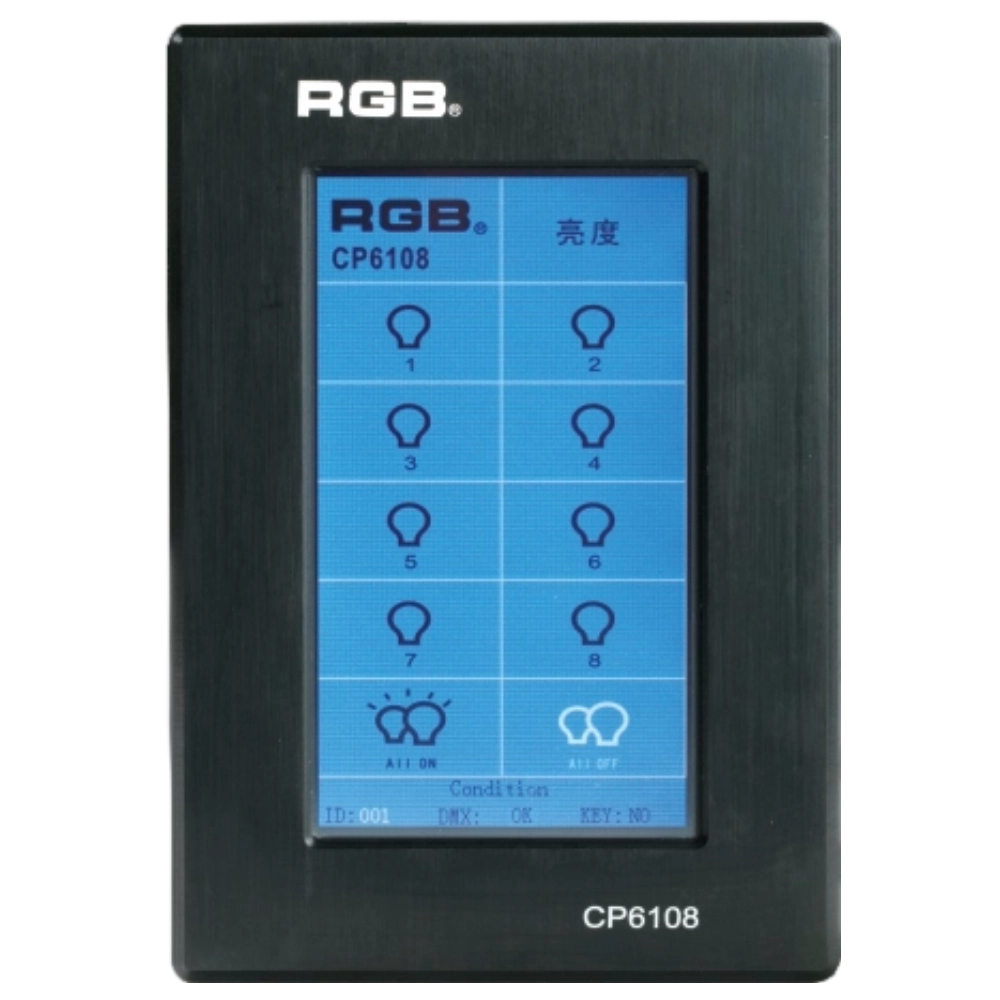
Site Light Controller CP6108
The CP6108 lighting control panel is a lighting control device for theater stage lights, work lights, environmental lighting, commercial art lighting, sports venue lighting, and other places. By connecting to the dedicated lighting control host CP6100, it realizes the central control of the lighting system, supports a visual lighting control system, and intuitively displays the online and offline status of CP6108. Realize remote monitoring, editing, and setting of corresponding parameters.
It is widely applicable to theaters, cinemas, auditoriums, stadiums, museums, exhibition halls, cultural tourism performances, commercial art lighting, and other places.
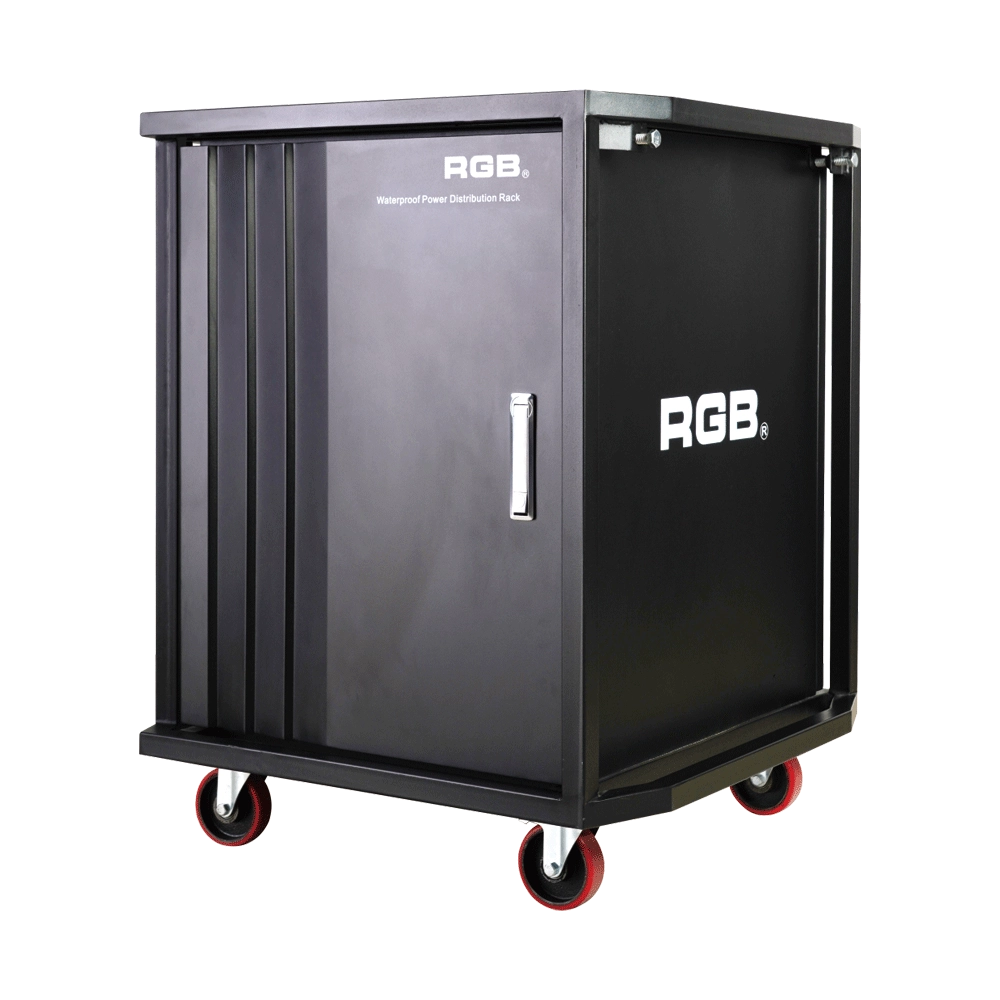
Multifunction Waterproofing Racks Of RGB-W Series
With the continuous development of flow performance, the requirement for performance is more demanding. In order to facilitate the transportation and make it easier to carry for all the equipment used in the performance, the stage light and sound equipment will be installed into a cabinet, for example, the power supply system. During the transportation process, it is inevitable for a collision or crash to take place. If the cabinet material is not strong enough, it may lead to deformation and even damage the equipment inside. Moreover, most of the existing cabinets are not waterproof. It will be very dangerous for the flow performance, as it is normal and inevitable to encounter rainy days. As the equipment inside the cabinets is electriferous, it might cause damage to the electronic equipment at least and even cause casualties at worst. Meanwhile, most of the existing cabinets can only be installed with one kind of equipment with a single variety.
In order to overcome the above-mentioned technical flaw, the RGB company has developed a new type of waterproofing multifunction cabinet of the W series. The waterproofing cabinet of the W series meets the need for the installation of dimming and tone-tuning devices, transportation, and utilization.
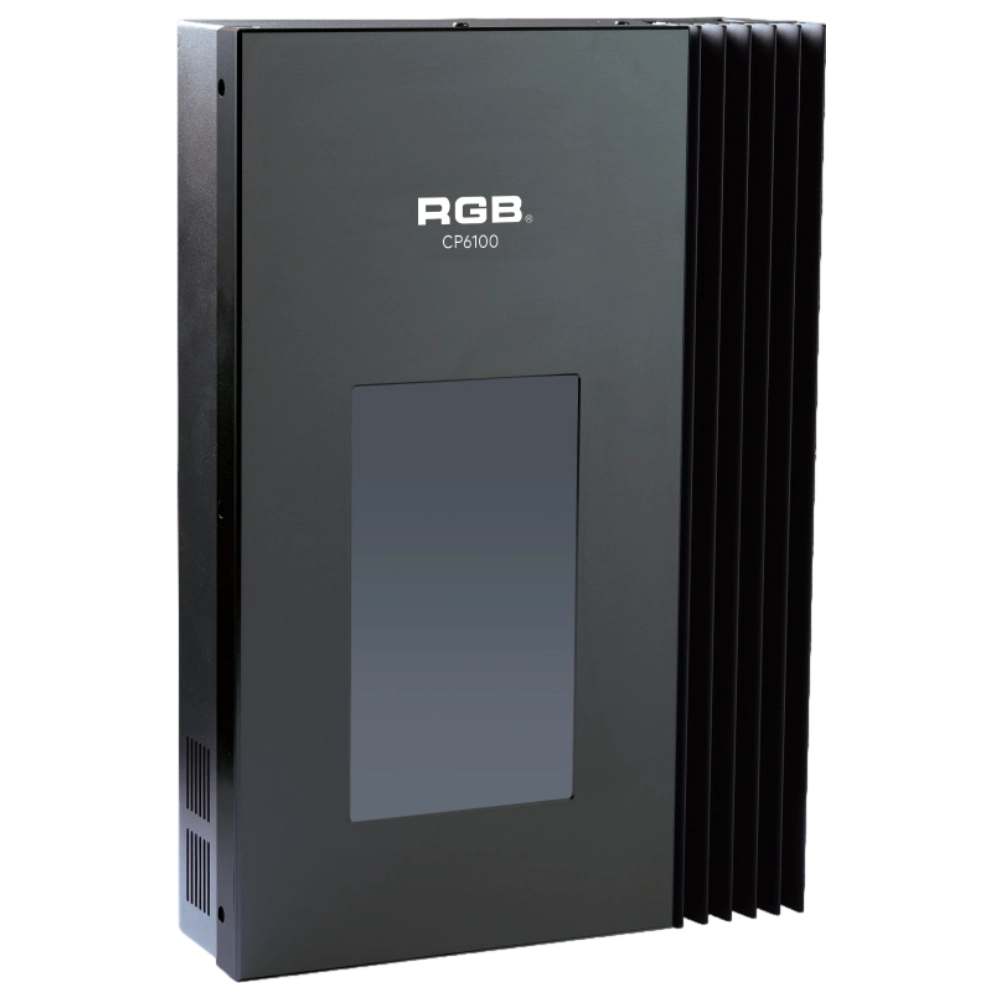
CP6100 Light Control System
The lighting control host is the main control device for theater stage lights, work lights, environmental lighting, commercial art lighting, sports venue lighting, and other places. By connecting the dedicated lighting control panels CP6104 and CP6108, it realizes the central control of the lighting system, supports a visual lighting control system, and intuitively displays the online and offline status of CP6100. Realize remote monitoring, editing, and setting of corresponding parameters.
It is widely applicable to theaters, cinemas, auditoriums, stadiums, museums, exhibition halls, cultural tourism performances, commercial art lighting, and other places.
Expert Support
Interested in learning more or need expert guidance related to this article? Fill in your details, and our team will provide tailored support.
Intelligent Control. Brilliant Performance.
RGB specializes in stage lighting control systems, delivering intelligent, reliable, and high-performance solutions for theaters and performance spaces worldwide.
Contact
Email:
Tel:
+86 20 3928 0245
+86 20 3928 0247
Address:
No.3, Huashan Road, Shilou Town, Panyu, Guangzhou, China.
Whatsapp: +8615975520131