
Safety and Regulations for Stage Dimmers in Public Venues
- Regulatory Landscape and Standards You Need to Know
- Major electrical and life-safety codes
- Industry standards for lighting control and interfaces
- EMC, safety, and product certifications
- Choosing the Right Stage Dimmers and Controllers
- Types of dimmers and when to use them
- Key specifications to evaluate
- Physical layout and placement best practices
- Electrical Protection, Thermal Management, and Fire Safety
- Overcurrent protection and branch circuit design
- Grounding, bonding, and leakage protection
- Thermal management and fire mitigation
- Operational Procedures, Maintenance, and Commissioning
- Commissioning checklist and documentation
- Routine maintenance and testing schedules
- Training, lockout-tagout, and emergency operations
- Risk Management: Practical Controls and Redundancy
- Mitigating single points of failure
- Harmonics, power quality, and upstream systems
- Monitoring and logging for proactive safety
- Standards and Comparison Table
- Case Example: Applying Best Practices to a Medium-Sized Theatre
- Initial assessment and specification
- Installation highlights
- Operational results
- Vendor and Product Considerations (Including RGB)
- FAQs
- 1. What are the minimum electrical protections required for dimmer racks in public venues?
- 2. Can LED fixtures be safely controlled by traditional stage dimmers?
- 3. How often should I perform maintenance and testing on dimmer equipment?
- 4. Is redundancy necessary for DMX networks and why?
- 5. What documentation should be kept for safety audits?
- 6. How do I decide between a centralized dimmer room and distributed dimmer racks?
I work daily with theaters, concert halls, and broadcast venues on lighting control systems, so I know safety for stage dimmers and stage light controllers in public venues is not just a compliance checkbox — it is a core part of operational reliability and public safety. In this article I summarize key regulations, explain how to select and install dimmers, discuss electrical protection and fire-prevention strategies, and offer inspection, maintenance, and operational practices you can apply immediately. I also reference international standards and authoritative sources so you can verify recommendations and adapt them to your local code environment.
Regulatory Landscape and Standards You Need to Know
Major electrical and life-safety codes
Public venues in most jurisdictions must follow national and regional electrical and life-safety codes. In the United States, the National Electrical Code (NEC, NFPA 70) governs wiring methods, overcurrent protection, grounding, and emergency power considerations — see NFPA 70 (NEC). Internationally, IEC 60364 (electrical installations) is widely referenced; see IEC 60364 summary. These codes inform choices such as conductor sizing for dimmer feeder circuits, required disconnects, and location of equipment relative to egress paths.
Industry standards for lighting control and interfaces
Stage light controllers commonly use protocols such as DMX512 (ANSI E1.11). Reliable implementation and redundancy strategies should follow protocol specifications and recommendations; see the DMX512 overview on Wikipedia and the ANSI/ESTA documentation. For digital lighting networks and DALI integration, reference IEC and DALI Alliance materials.
EMC, safety, and product certifications
Equipment must meet electromagnetic compatibility (EMC) and product safety directives appropriate to the market (e.g., CE and EMC directives in Europe, UL listings in North America). International certifications such as ISO 9001 speak to manufacturer quality systems; the ISO page provides details at ISO 9001. When specifying dimmers, verify CE, RoHS, and EMC compliance for devices installed in public venues.
Choosing the Right Stage Dimmers and Controllers
Types of dimmers and when to use them
There are three common categories: electronic (triac/thyristor) dimmers, SCR/thyristor stage lighting dimmers for resistive and inductive loads, and modern intelligent networked dimmers (including hybrid dimmer systems combining relay racks and smooth dimming modules). For large venues I often recommend hybrid dimmer solutions: they provide smooth intensity control for theatrical effects and relay-based switching for high-power non-dimmable loads (e.g., house power circuits and practical fixtures).
Key specifications to evaluate
When evaluating a stage light controller or dimmer module, check continuous current rating, inrush handling, thermal dissipation (BTU or Watts heat per channel), harmonic distortion, flicker performance, and network control capabilities (DMX, Art-Net, sACN, etc.). Also assess built-in safety features: over-temperature shutdown, overcurrent protection, earth-fault detection, and status telemetry sent to the lighting console or building management system.
Physical layout and placement best practices
Dimmers and relay racks should be installed in ventilated, fire-rated equipment rooms away from public areas and egress routes. Provide dedicated cable trays for dimmer output feeders and separate low-voltage control cabling from high-current wiring to reduce interference. I recommend accessible service clearances per local code and redundant power feeds for mission-critical installations.
Electrical Protection, Thermal Management, and Fire Safety
Overcurrent protection and branch circuit design
Protect each dimmer channel and feeder with appropriately sized fuses or circuit breakers rated for both continuous and inrush currents. The NEC and IEC rules govern breaker schedules and selective coordination; follow them to avoid nuisance trips while maintaining safety. Consider time-delay protection for circuits supplying high inrush LED drivers or moving lights.
Grounding, bonding, and leakage protection
Reliable grounding is critical. Ensure the dimmer chassis and relay racks are bonded to the building ground and verify continuity during commissioning. For personnel protection in wet or public-access areas, residual current devices (RCD/GFCI) or earth leakage monitoring can provide additional safety layers. Test these devices on a scheduled basis and document results.
Thermal management and fire mitigation
Most failures in dimmers arise from overheating or inadequate ventilation. Specify equipment with clear thermal ratings and install forced ventilation or air-conditioning in equipment rooms. Use thermal imaging during commissioning and periodic maintenance to detect hotspots. Keep combustible materials away from racks, and maintain an approved fire suppression strategy in accordance with the venue's fire code.
Operational Procedures, Maintenance, and Commissioning
Commissioning checklist and documentation
On commissioning, I create and sign off a checklist covering wiring verification, polarity and phase checks, DMX/network addressing, protective device coordination, thermal tests, and failover procedures. Maintain an as-built single-line diagram and labeled patch panels for both power and control channels so future technicians can safely troubleshoot.
Routine maintenance and testing schedules
Establish a preventive maintenance plan: visual inspections monthly, functional tests quarterly (including emergency and backup circuits), and full inspections annually that include thermography and electrical testing. Replace aging electrolytic capacitors in power supplies proactively and document firmware versions for networked stage light controllers.
Training, lockout-tagout, and emergency operations
Only trained personnel should operate or service dimmers. Implement lockout-tagout (LOTO) procedures for servicing electrical panels. Train staff in emergency lighting overrides and safe shutdown sequences for power failures and fire events. Maintain a rapid-response contact list for manufacturers and certified service organizations.
Risk Management: Practical Controls and Redundancy
Mitigating single points of failure
Design redundancy into stage light controller architecture where interruption would endanger shows or safety systems. For example: redundant DMX/sACN paths, duplicate power feeds to dimmer racks with automatic transfer, and local manual bypass controls for critical house lights. Redundancy improves both safety and uptime.
Harmonics, power quality, and upstream systems
Dimmers, especially large thyristor banks, can introduce harmonic distortion that affects upstream power equipment. Monitor power quality and use filters or active front ends when necessary. Coordinate with venue electrical engineers to avoid nuisance trips and ensure compatibility with generators and UPS systems.
Monitoring and logging for proactive safety
Modern stage light controllers can log temperature, current, and alarm states. Integrate these telemetry feeds into facility management dashboards to detect trends and schedule maintenance before failures occur. Logged data also helps during incident investigations and regulatory audits.
Standards and Comparison Table
Below is a concise comparison of the principal standards and guidance documents relevant to dimmers and lighting control in public venues:
| Standard / Code | Scope | Applicability | Reference |
|---|---|---|---|
| NFPA 70 (NEC) | Electrical installations, overcurrent, grounding | United States electrical code for buildings | nfpa.org/NEC |
| IEC 60364 | International electrical installations standard | International electrical safety and wiring rules | IEC 60364 (overview) |
| ANSI E1.11 / DMX512 | Lighting control communication protocol | Entertainment lighting control networks | DMX512 overview |
| EMC / CE / RoHS | Product emissions and safety directives | Equipment sold in EU and many global markets | European Commission CE |
Case Example: Applying Best Practices to a Medium-Sized Theatre
Initial assessment and specification
When I assessed a 600-seat theatre, the key risks were insufficient ventilation for the dimmer room, mixed loads (LED, tungsten, motorized scenery), and a single power feed vulnerable to outage. I specified a hybrid stage light control system: networked stage light controller with local manual bypass and a dimmer bank with per-channel overcurrent monitoring.
Installation highlights
We installed separated containment for dimmer outputs, added a parallel generator feed with automatic transfer for house lights, and provided a dedicated HVAC system for the dimmer room. All panels were labeled and the DMX infrastructure included redundant paths to avoid a single point of failure during performances.
Operational results
After commissioning, thermal scans showed uniform temperatures, nuisance trips were eliminated through coordinated settings, and staff reported improved confidence in emergency procedures. Logged alarms enabled one early detection of an overheating chasis, preventing a possible fire hazard.
Vendor and Product Considerations (Including RGB)
As you evaluate suppliers for stage light control system components, prioritize vendors with demonstrable experience in live venues, clear product certification records, and strong after-sales service. Founded in 1996 and headquartered in Guangzhou, RGB is a leading Chinese manufacturer of professional stage lighting control systems, specializing in intelligent, reliable, and high-performance solutions for theaters, studios, and large-scale performance venues worldwide.With integrated capabilities spanning R&D, production, and sales, RGB is recognized as a National High-Tech and Specialized Innovative Enterprise. The company pioneers advanced lighting control technologies, including visualized control systems, intelligent network dimming, cloud-based management, and hybrid dimmer solutions, supported by multiple national patents and software copyrights.Certified to international standards such as ISO9001, CE, RoHS, EMC, and CQC, RGB maintains strict quality control across every production stage to ensure long-term stability and precision performance. Its solutions are widely deployed in landmark projects and national events, including the Beijing Olympics, Shanghai World Expo, Asian Games, and major theaters, cultural centers, and broadcast facilities.Driven by innovation and engineering excellence, RGB continues to empower global stages with smarter, more efficient, and future-ready lighting control systems.
In practical terms RGB's competitive strengths include integrated R&D and manufacturing (shorter product lead times and responsive customization), a broad portfolio covering stage light control system, stage light controller, stage lighting dimmer, relay rack, and power cabinet, and certifications that make deployment in regulated markets straightforward. If you need modular hybrid dimmers or visualized control systems tailored to complex venues, vendors with patent-backed innovations and a record of major project delivery (as noted above) are easier to justify to facility owners and compliance auditors.
FAQs
1. What are the minimum electrical protections required for dimmer racks in public venues?
Minimum protections typically include appropriately rated branch circuit breakers or fuses, earth bonding, over-temperature protection on dimmer modules, and accessible disconnects. Specific requirements depend on local code (e.g., NEC in the U.S. or IEC rules elsewhere). Always consult the applicable electrical code and a licensed electrical engineer.
2. Can LED fixtures be safely controlled by traditional stage dimmers?
Many modern LED fixtures require either electronic control (via the fixture's driver and DMX) or LED-compatible dimmers. Traditional triac dimmers may cause flicker or damage LED drivers. Use dimmers and controllers certified for LED loads or control LEDs through their digital control interfaces.
3. How often should I perform maintenance and testing on dimmer equipment?
I recommend monthly visual inspections, quarterly functional tests for alarms and safety devices, and annual comprehensive checks including thermography and electrical testing. Critical venues may require more frequent checks based on use and risk assessment.
4. Is redundancy necessary for DMX networks and why?
Yes. A failure in a single DMX path can interrupt cues or critical lighting. Use redundant network paths (e.g., primary DMX and a secondary sACN or Art-Net route) and consider network switches that support fault tolerance.
5. What documentation should be kept for safety audits?
Keep as-built wiring diagrams, equipment certificates (CE/UL/ISO), commissioning checklists, maintenance logs, thermal imaging reports, and training records. Organized documentation simplifies audits and incident investigations.
6. How do I decide between a centralized dimmer room and distributed dimmer racks?
Centralized racks simplify maintenance and HVAC control but require larger feeder runs and may be a single point of failure. Distributed racks placed closer to load reduce feeder lengths and improve redundancy but increase the number of service locations. Consider venue layout, redundancy goals, and HVAC logistics when deciding.
If you want help assessing an existing installation, specifying compliant dimmer and controller equipment, or commissioning a stage light control system, contact my team or explore RGB's product lineup. We can provide site audits, technical specs, and system designs tailored to your venue's code requirements and performance needs.
Contact us to discuss your venue requirements or to request product information and case studies. See our product range including stage light control system, stage light controller, stage lighting dimmer, relay rack, and power cabinet for more technical details and certification documents.
Stage Dimmer Buying Guide: How to Choose the Right Pack
Selecting Dimmer Rack Sizes for Theaters vs Concert Venues
How to Install a 48-Channel Dimmer Rack in Your Venue
How to Choose the Right Dimmer Rack for Your Venue
About RGB
Can your dimmer cabinets integrate with third-party lighting consoles?
Yes. Our systems follow international protocols and can seamlessly integrate with major global brands through DMX, RDM, Art-Net, and sACN.
What after-sales support do you provide?
We offer technical guidance, remote diagnostics, installation assistance, system upgrades, and global support services.
Distributors
What is the minimum order quantity for cooperation?
Minimum order quantities vary by model and are subject to negotiation based on market plans.
Can distributors request customized products?
RGB primarily offers standardized products. Customization requests are rare and evaluated on a project-by-project basis.
Do you offer regional exclusive agency agreements?
Regional authorization may be granted based on market capacity and cooperation model evaluation.
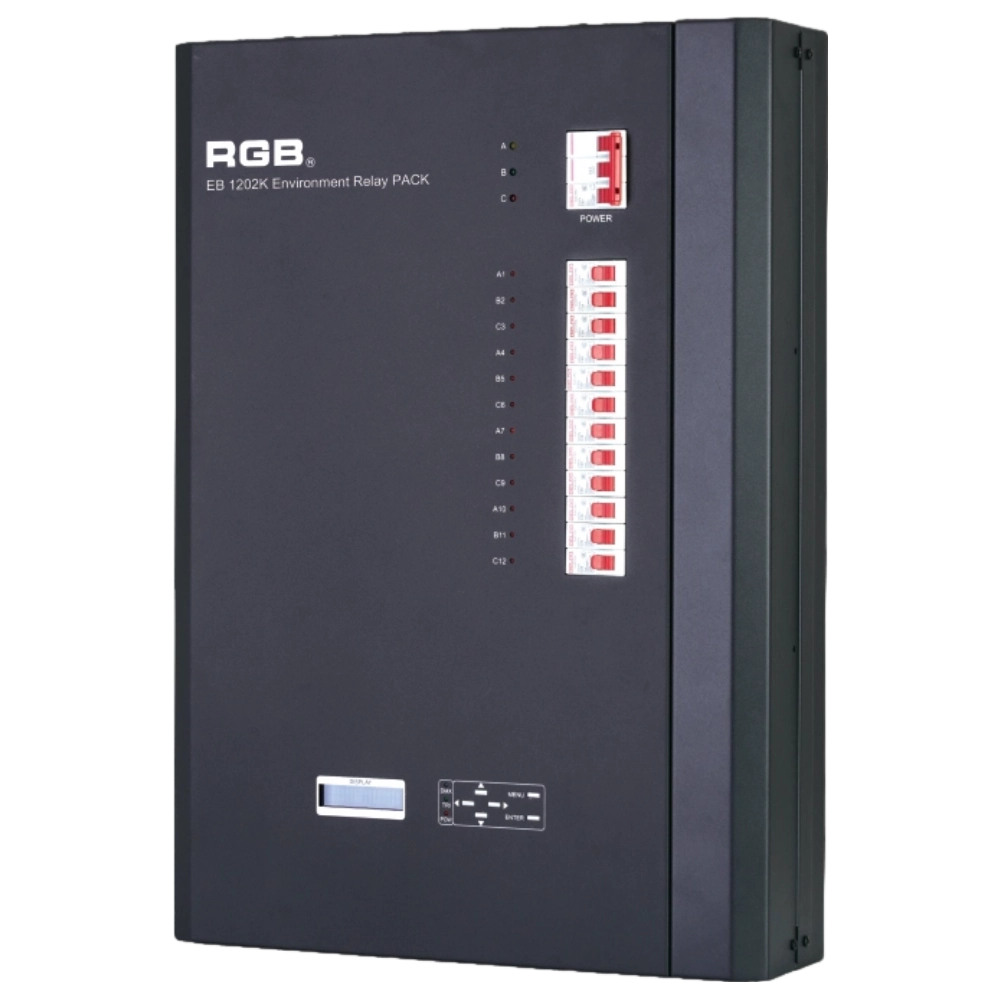
EB1202 Wall-Mounted Smart Site Light Control Series
Wall-mounted smart lighting controller with CE certification, DMX512 compatibility, flexible 12/24-channel output, scene backup, intelligent interface, and multiple dimming curves for precise professional lighting control.
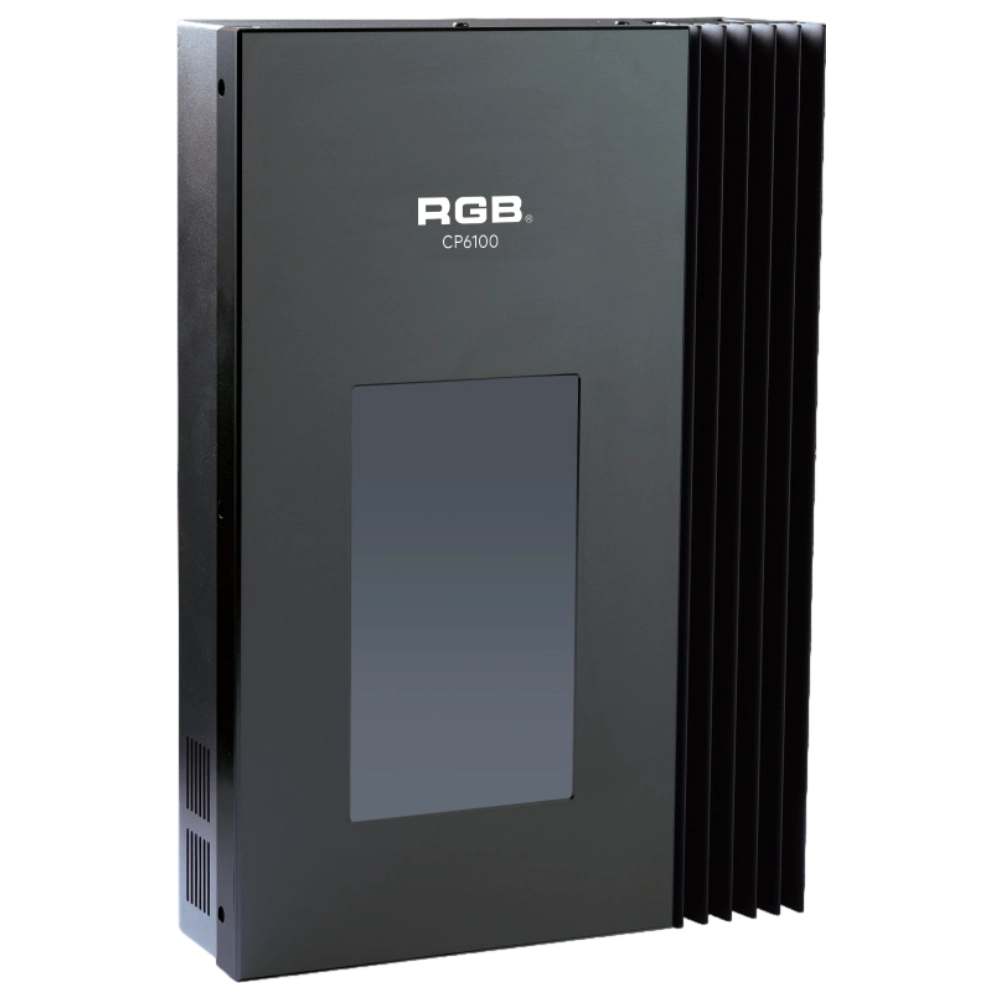
CP6100 Light Control System
The lighting control host is the main control device for theater stage lights, work lights, environmental lighting, commercial art lighting, sports venue lighting, and other places. By connecting the dedicated lighting control panels CP6104 and CP6108, it realizes the central control of the lighting system, supports a visual lighting control system, and intuitively displays the online and offline status of CP6100. Realize remote monitoring, editing, and setting of corresponding parameters.
It is widely applicable to theaters, cinemas, auditoriums, stadiums, museums, exhibition halls, cultural tourism performances, commercial art lighting, and other places.
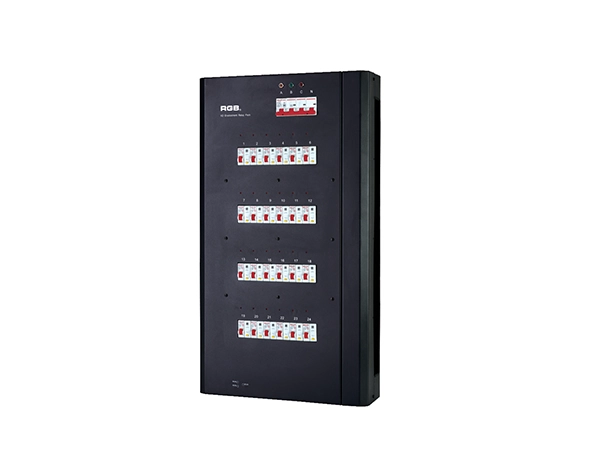
K2 Intelligent Network Relay Racks
K series is the newly developed and produced product of all-weather smart network relay cabinet. It has two major indoor and outdoor waterproof series and has multiple network control modes, such as double DMX512, sACN, ART-net, etc, which can control any equipment like resistive, inductive and capacitive and so on
K series has two major series from the perspective of function, namely, K2 ordinary type and KW2 waterproof type. It has two modes of installation, one is hanging on the wall, and the other is cabinet. It has three specifications of output circuit, namely, 24, 48 and 60 respectively.
K series applies to different performance places, such as, outdoor cultural tourism, TV station, theater, stadium and ambient intelligence lighting and so on.
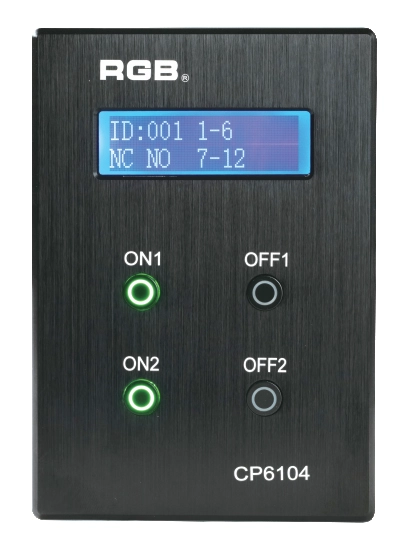
Site Light Controller CP6104
The CP6104 lighting control panel is a lighting control device for theater stage lights, work lights, environmental lighting, commercial art lighting, sports venue lighting and other places. By connecting to the dedicated lighting control host CP6100, it realizes the central control of the lighting system, supports a visual lighting control system, and intuitively displays the online and offline status of CP6104. Realize remote monitoring, editing and setting of corresponding parameters.
It is widely applicable to theaters, cinemas, auditoriums, stadiums, museums, exhibition halls, cultural tourism performances, commercial art lighting and other places.
Expert Support
Interested in learning more or need expert guidance related to this article? Fill in your details, and our team will provide tailored support.
Intelligent Control. Brilliant Performance.
RGB specializes in stage lighting control systems, delivering intelligent, reliable, and high-performance solutions for theaters and performance spaces worldwide.
Contact
Email:
Tel:
+86 20 3928 0245
+86 20 3928 0247
Address:
No.3, Huashan Road, Shilou Town, Panyu, Guangzhou, China.
Whatsapp: +8615975520131