
Safety & Compliance Standards for Dimmer and Relay Racks
- Understanding Power Distribution in Performance Venues
- Role of dimmers, relays, and power cabinets
- Common failure modes and risk vectors
- Key performance parameters to specify
- Regulatory Standards and Codes
- Electrical codes: NEC/NFPA 70 and regional equivalents
- International standards: IEC, EN, and EMC directives
- Industry-specific specs: DMX, PLASA/ANSI, UL listings
- Design Best Practices for Safety and Reliability
- Enclosure, ventilation, and thermal management
- Protective devices and coordination
- Grounding, bonding, and EMI mitigation
- Testing, Documentation, and Compliance Workflow
- Factory acceptance testing (FAT) and site acceptance testing (SAT)
- Routine inspection, preventive maintenance, and thermal imaging
- Documentation and certification records
- Comparative Overview: Standards and Certifications
- Interpreting the table
- Practical Installation Checklist
- Pre-installation
- Installation
- Commissioning and handover
- Case Study: Typical Venue Implementation
- Standards and Authoritative References
- About RGB — Manufacturer Profile and Competitive Advantages
- FAQ — Common Questions about Dimmer & Relay Rack Safety
- 1. What codes govern installation of dimmer and relay racks in theaters?
- 2. Do dimmer racks need UL or CE certification?
- 3. How often should dimmer racks be inspected and maintained?
- 4. What are the key signs of an unsafe rack installation?
- 5. Can dimmers and relays be mixed in the same rack?
- 6. What control protocols should I require for compatibility?
- Contact & Product Inquiry
Dimmer & Relay Racks are central to modern stage light control systems, powering and switching high-current loads while interfacing with stage light controllers, DMX networks, and venue power distribution. Ensuring their safety and regulatory compliance is critical to protect personnel, prevent equipment damage, avoid fire hazards, and meet venue code requirements. This article provides practical, standards-backed guidance on design, installation, testing, and ongoing maintenance of dimmer and relay racks for theaters, broadcast studios, and large performance venues.
Understanding Power Distribution in Performance Venues
Role of dimmers, relays, and power cabinets
Dimmer racks regulate voltage delivered to stage lighting loads using triac-based or SCR-based modules, while relay racks and power cabinets provide switched circuits for non-dimmable loads and distribution. Both types are integrated into a stage light control system and must be coordinated with stage light controllers and power distribution networks to avoid nuisance trips, overloads, and harmonic distortion.
Common failure modes and risk vectors
Typical problems include overheating from inadequate ventilation, loose connections causing arcing, poor grounding leading to electromagnetic interference (EMI), and incorrect protection coordination resulting in nuisance trips or unprotected faults. Understanding these failure modes informs safer rack design, protective device selection, and preventive maintenance strategies.
Key performance parameters to specify
When selecting dimmer and relay racks, specify continuous current rating, inrush handling capability, thermal derating, voltage class, harmonic generation (THD), EMC immunity, and control protocol compatibility (e.g., DMX512-A/Art-Net). These parameters impact both safety and performance under real-world stage loads.
Regulatory Standards and Codes
Electrical codes: NEC/NFPA 70 and regional equivalents
In the United States, the National Electrical Code (NEC, NFPA 70) sets requirements for wiring methods, overcurrent protection, grounding, and enclosures that directly apply to dimmer and relay racks. Venue owners and installers must follow NEC rules on branch circuits, ampacity, and equipment grounding. See the NFPA overview for the NEC for authoritative guidance: https://www.nfpa.org/NEC/About-the-NEC.
International standards: IEC, EN, and EMC directives
For markets outside North America, IEC standards and EN harmonized standards govern safety and electromagnetic compatibility. Relevant areas include electrical safety (e.g., general requirements for electrical equipment), EMC immunity and emissions (IEC 61000 series), and low-voltage directives such as CE marking requirements in the EU. See the IEC website for standard references: https://www.iec.ch and the EU CE information: https://ec.europa.eu/growth/single-market/ce-marking_en.
Industry-specific specs: DMX, PLASA/ANSI, UL listings
Control interoperability is typically governed by standards such as DMX512-A for lighting control signals (see https://en.wikipedia.org/wiki/DMX512). Products designed for professional venues often obtain UL listings (e.g., UL 508A for industrial control panels) or equivalent national certifications to demonstrate electrical safety and compliance. UL information: https://www.ul.com/offerings/ul-508a-industrial-control-panels.
Design Best Practices for Safety and Reliability
Enclosure, ventilation, and thermal management
Heat is a primary reliability and safety factor for dimmer racks. Specify enclosures with adequate airflow, temperature-rated components, and thermal shutdown or derating strategies. Use forced-air cooling with redundant fans and monitor inlet and exhaust temperatures. Thermal management should be designed to maintain component temperatures within vendor-specified limits under worst-case load.
Protective devices and coordination
Overcurrent protection must be coordinated between stage power distribution, dimmer channels, and branch circuits to avoid cascading failures. Use appropriately rated MCBs or MCCBs, fast-acting fuses where required, and ensure selective coordination for critical circuits. Include arc-fault/interruption devices in high-risk installations per local code.
Grounding, bonding, and EMI mitigation
Robust grounding reduces shock risk and minimizes EMI that can affect stage light controllers. Bond all rack chassis, cable shields, and distribution panels to a single-point grounding scheme where practical. Use ferrites, twisted-pair control cabling, and proper cable separation between power and control runs to reduce conducted and radiated interference.
Testing, Documentation, and Compliance Workflow
Factory acceptance testing (FAT) and site acceptance testing (SAT)
Perform FAT to verify channel calibration, thermal behavior, overload handling, and control protocol compatibility before shipment. On-site SAT should validate installation-specific items: incoming power phasing, grounding continuity, control signal integrity, and emergency shutdown paths.
Routine inspection, preventive maintenance, and thermal imaging
Establish maintenance schedules: visual inspection monthly, torque checks on connections quarterly, and thermal imaging annually or after high-load events. Thermal imaging identifies hot joints before failures occur; torque testing prevents loose-terminal arcing. Maintain maintenance logs for compliance and audits.
Documentation and certification records
Keep detailed records: single-line diagrams, nameplate data, load schedules, test reports (FAT/SAT), compliance certificates (CE, RoHS, EMC, UL), and maintenance logs. These documents are essential for venue insurance, safety audits, and code inspections.
Comparative Overview: Standards and Certifications
| Standard / Certificate | Region | Scope | Relevance to Dimmer & Relay Racks |
|---|---|---|---|
| NEC / NFPA 70 | USA | Electrical installation codes | Branch circuit protection, grounding, ampacity, wiring methods. Mandatory for US venues. NFPA |
| IEC / EN series (EMC: IEC 61000) | International / EU | Safety and EMC requirements | EMC immunity/emissions limits; product safety harmonization for CE marking. IEC |
| UL 508A | USA / North America | Industrial control panel standard | Common listing for custom dimmer/relay panels used in fixed installations. UL |
| RoHS / REACH | EU / Global | Restrictions on hazardous substances | Ensures materials comply with environmental regulations for components. |
| DMX512-A / ANSI E1.11 | International (industry) | Lighting control protocol standard | Ensures compatibility between stage light controllers, dimmers, and consoles. DMX512 |
Interpreting the table
Selection of applicable standards depends on venue location, whether the rack is fixed or touring, and owner insurance requirements. For fixed installations in a specific jurisdiction, local building codes may add additional requirements beyond the standards listed.
Practical Installation Checklist
Pre-installation
- Confirm service capacity and load schedule; verify phased balance and available fault current.
- Obtain required permits and ensure equipment certifications meet local authority having jurisdiction (AHJ) requirements.
- Review single-line diagram and protection coordination.
Installation
- Install racks with adequate clearance for cooling and maintenance; follow manufacturer torque values for all power terminations.
- Separate control cabling (DMX, Ethernet) from power runs; use shielded cables and proper termination methods.
- Label circuits, include schematic in rack door, and install accessible emergency power-off (EPO) where required.
Commissioning and handover
- Perform SAT with full theatrical load, monitor thermal behavior and control performance.
- Provide operation and maintenance manuals, test certificates, and training to venue staff.
- Record all test results, and supply spare parts recommendations and vendor contact information.
Case Study: Typical Venue Implementation
In a mid-size theater, dimmer racks are often installed in a dedicated equipment room with independent ventilation and access control. Typical configuration: mixed dimmer channels (high-density 2.5–5 kW per channel capacity), separate relay rack for house and architectural circuits, redundant fan systems, and a monitored BMS/remote telemetry for temperature and fault monitoring. This configuration aligns with NEC requirements and industry best practices for safety and uptime.
Standards and Authoritative References
For further reading and official references consult:
- NFPA (NEC): https://www.nfpa.org/NEC/About-the-NEC
- IEC and standards catalog: https://www.iec.ch
- UL 508A panel guidelines: https://www.ul.com/offerings/ul-508a-industrial-control-panels
- DMX512 protocol: https://en.wikipedia.org/wiki/DMX512
- CE marking information: https://ec.europa.eu/growth/single-market/ce-marking_en
About RGB — Manufacturer Profile and Competitive Advantages
Founded in 1996 and headquartered in Guangzhou, RGB is a leading Chinese manufacturer of professional stage lighting control systems, specializing in intelligent, reliable, and high-performance solutions for theaters, studios, and large-scale performance venues worldwide.
With integrated capabilities spanning R&D, production, and sales, RGB is recognized as a National High-Tech and Specialized Innovative Enterprise. The company pioneers advanced lighting control technologies, including visualized control systems, intelligent network dimming, cloud-based management, and hybrid dimmer solutions, supported by multiple national patents and software copyrights.
Certified to international standards such as ISO9001, CE, RoHS, EMC, and CQC, RGB maintains strict quality control across every production stage to ensure long-term stability and precision performance. Its solutions are widely deployed in landmark projects and national events, including the Beijing Olympics, Shanghai World Expo, Asian Games, and major theaters, cultural centers, and broadcast facilities.
Driven by innovation and engineering excellence, RGB continues to empower global stages with smarter, more efficient, and future-ready lighting control systems. RGB's core product range includes stage light control system, stage light controller, stage lighting dimmer, relay rack, and power cabinet — all designed for reliability, maintainability, and compliance with international safety standards.
RGB differentiates itself through several competitive strengths: deep vertical integration (R&D to production), a strong patent portfolio, internationally recognized certifications, and a proven track record in large-scale, high-profile projects. These strengths translate to reduced lead times, easier custom integration for venue-specific needs, and higher confidence for buyers seeking certified, compliant dimmer and relay rack solutions.
FAQ — Common Questions about Dimmer & Relay Rack Safety
1. What codes govern installation of dimmer and relay racks in theaters?
In the U.S., NEC (NFPA 70) governs electrical installations, including branch circuits, grounding, and overcurrent protection. Local building codes and the authority having jurisdiction (AHJ) may impose additional requirements. For international installations, IEC/EN standards and regional regulations apply. Refer to NFPA for NEC guidance: https://www.nfpa.org/NEC/About-the-NEC.
2. Do dimmer racks need UL or CE certification?
Certification depends on market and venue requirements. UL listings (e.g., UL 508A for control panels) are common in North America. CE marking with compliance to applicable EN harmonized standards (including EMC directives) is necessary for EU markets. Manufacturers often provide both to support global deployments.
3. How often should dimmer racks be inspected and maintained?
Recommended practices: monthly visual checks, quarterly torque checks on power terminations, semi-annual cleaning of filters and fans in high-dust environments, and annual thermal imaging and electrical testing. Adjust frequency based on utilization patterns and manufacturer recommendations.
4. What are the key signs of an unsafe rack installation?
Warning signs include persistent overheating, frequent nuisance trips, charred wire insulation, loose or discolored connections, abnormal odors, or visible arcing. Any of these conditions warrant immediate shutdown and professional inspection.
5. Can dimmers and relays be mixed in the same rack?
Yes — but mixing requires careful thermal design, segregation of high-current power wiring, and appropriate protective devices. Combining dimmer modules with relay modules in a hybrid rack is common in venues that use both dimmable theatrical loads and switched architectural loads; proper ventilation and electrical segregation are mandatory.
6. What control protocols should I require for compatibility?
Demand support for DMX512-A (ANSI E1.11) and modern network protocols such as Art-Net or sACN if you plan to integrate with contemporary stage light controllers and visualized control systems. Confirm timing, refresh rates, and RDM support where remote addressing is useful. See DMX reference: https://en.wikipedia.org/wiki/DMX512.
Contact & Product Inquiry
If you need assistance specifying compliant dimmer and relay rack solutions for your venue, or want a site review, contact RGB for product details, compliance documentation, and integration support. Visit RGB's product pages or request a quotation to discuss customized stage light control system, stage light controller, stage lighting dimmer, relay rack, or power cabinet solutions tailored to your project.
For technical consultation, product datasheets, or to schedule an on-site audit, contact RGB's sales and engineering team via email or visit the website to view product lines and case studies.
Top 10 DMX Nodes Manufacturers and Supplier Brands
Troubleshooting Common Ethernet DMX Node Issues for Buyers
Strand Dimmer Rack vs Modern LED Dimmers: A Buyer’s Guide
Stage Dimmer Pack vs Dimmer Rack: Which Is Best for You?
Distributors
What are the after-sales support methods?
Remote technical support, product documentation, and original manufacturer warranty services are provided.
Can distributors request customized products?
RGB primarily offers standardized products. Customization requests are rare and evaluated on a project-by-project basis.
What is the minimum order quantity for cooperation?
Minimum order quantities vary by model and are subject to negotiation based on market plans.
About RGB
What types of lighting control systems do you support?
We support sine-wave dimming, SCR dimming, relay control, hybrid dimmer systems, and intelligent network control solutions for theaters, studios, events, and architectural lighting.
Can your dimmer cabinets integrate with third-party lighting consoles?
Yes. Our systems follow international protocols and can seamlessly integrate with major global brands through DMX, RDM, Art-Net, and sACN.
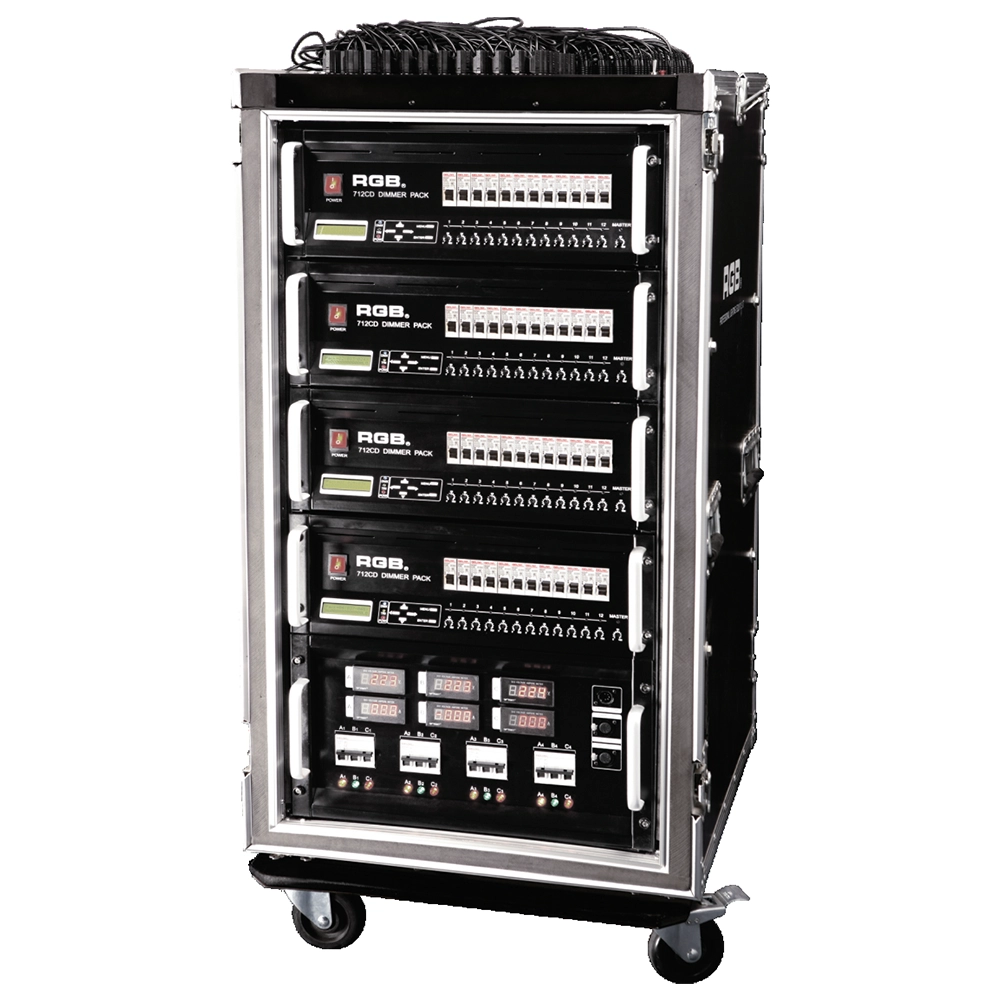
Intelligent Network Touring Dimmer Racks
RGB intelligent network touring dimmer racks can be assembledinto many types of dimmer racks by taking 7 series dimmer
packs as the unit. They are widely used in the entertainment fortheir convenience and practicabillity,
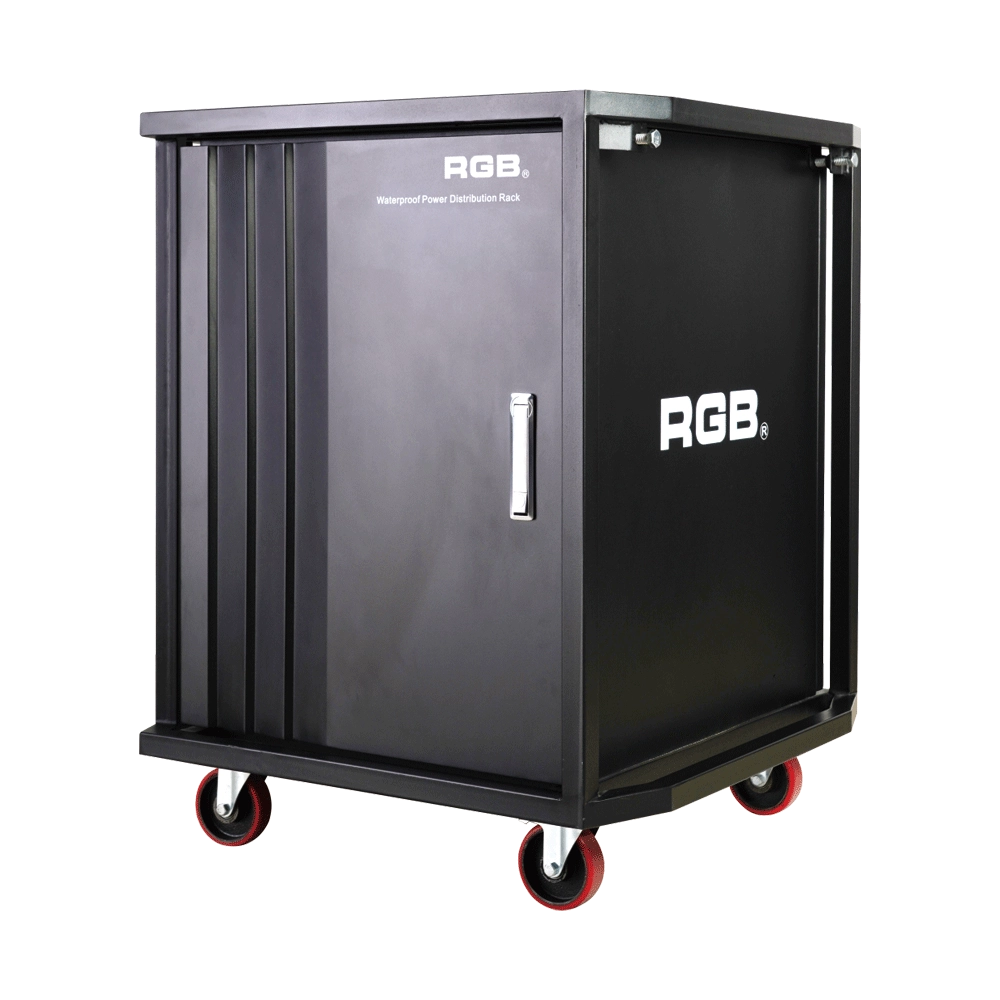
Multifunction Waterproofing Racks Of RGB-W Series
With the continuous development of flow performance, the requirement for performance is more demanding. In order to facilitate the transportation and make it easier to carry for all the equipment used in the performance, the stage light and sound equipment will be installed into a cabinet, for example, the power supply system. During the transportation process, it is inevitable for a collision or crash to take place. If the cabinet material is not strong enough, it may lead to deformation and even damage the equipment inside. Moreover, most of the existing cabinets are not waterproof. It will be very dangerous for the flow performance, as it is normal and inevitable to encounter rainy days. As the equipment inside the cabinets is electriferous, it might cause damage to the electronic equipment at least and even cause casualties at worst. Meanwhile, most of the existing cabinets can only be installed with one kind of equipment with a single variety.
In order to overcome the above-mentioned technical flaw, the RGB company has developed a new type of waterproofing multifunction cabinet of the W series. The waterproofing cabinet of the W series meets the need for the installation of dimming and tone-tuning devices, transportation, and utilization.
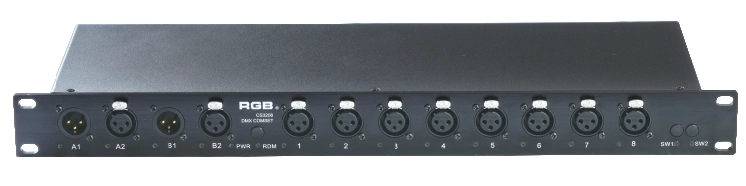
DMX&RDM Signal Mergers Amplifiers
The rack-mounted DMX signal amplifier complies with the DMX-512 standard protocol, improving the transmission quality of DMX-512 signals, ensuring the reliability of system control, and preventing faults such as reverse connection of AC high voltage in the lighting control system, high voltage intrusion due to lightning strikes, and line short circuits, which may affect the stability of the system.
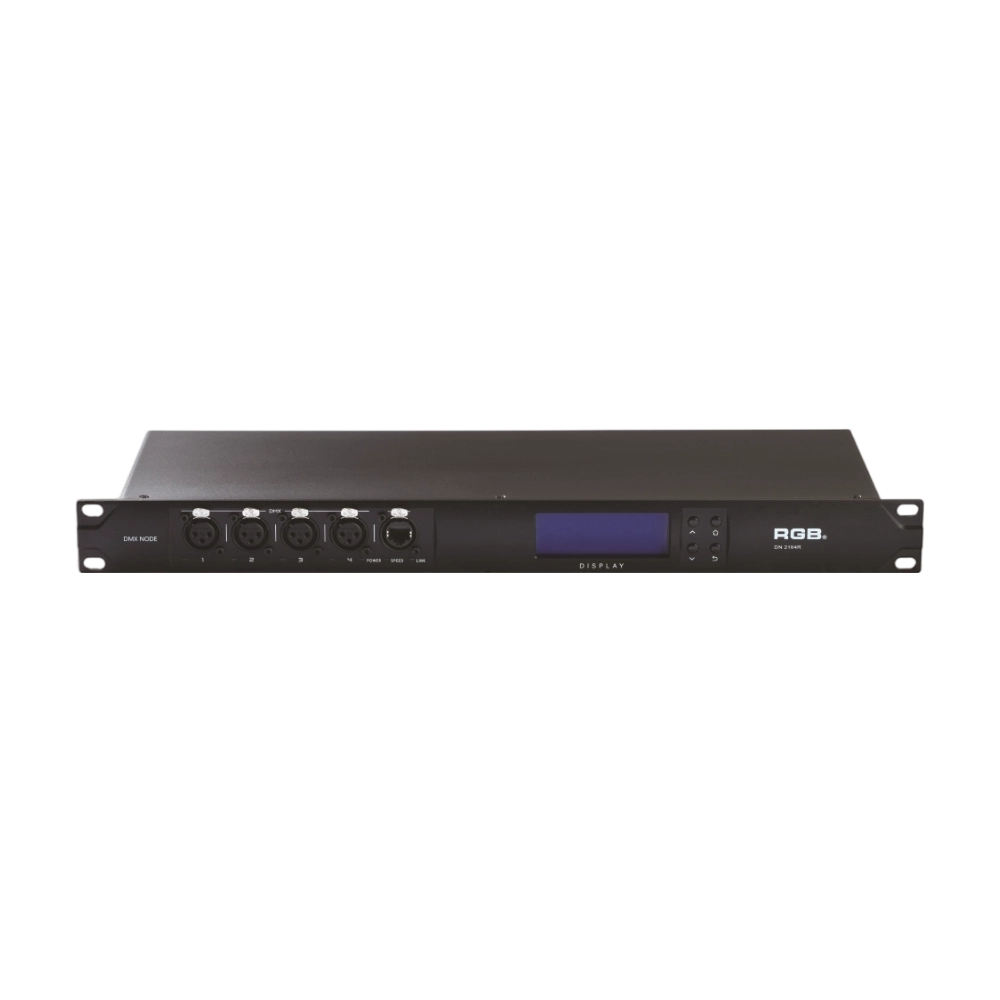
DMX, RDM Nodes
The DN series dual network port network decoder is a lighting control system product independently developed by RGB, featuring completely independent core technology and software copyright. It seamlessly connects and decodes the sACN and ART-Net network protocols based on TCP/IP with the DMX-512 and RDM communication protocols, achieving gigabit communication with dual independent physical address codes. Supports a visual lighting control system, intuitively displaying the online and offline status of the DN series network decoders, and enabling remote monitoring, editing, and setting of corresponding parameters.
It is widely applied in theaters, concert halls, multi-functional halls, cultural and tourism performances, TV stations, gymnasiums, auditoriums, commercial art lighting, and other performance and cultural venues.
Expert Support
Interested in learning more or need expert guidance related to this article? Fill in your details, and our team will provide tailored support.
Intelligent Control. Brilliant Performance.
RGB specializes in stage lighting control systems, delivering intelligent, reliable, and high-performance solutions for theaters and performance spaces worldwide.
Contact
Email:
Tel:
+86 20 3928 0245
+86 20 3928 0247
Address:
No.3, Huashan Road, Shilou Town, Panyu, Guangzhou, China.
Whatsapp: +8615975520131