
Rack vs Portable Dimmers: What Venue Managers Should Know
- Understanding the fundamentals of dimming and control
- What a stage light dimmer does and why it matters
- Control protocols and integration
- Key safety and quality standards to verify
- Comparing rack-mounted and portable dimmers
- Design philosophy and typical deployments
- Performance, cooling and electrical capacity
- Cost, lifecycle and total cost of ownership (TCO)
- Rack vs Portable: side-by-side comparison
- How to evaluate which is right for your venue
- Assess your programming and operational model
- Electrical infrastructure and load planning
- Control and monitoring features to demand
- Maintenance, lifecycle and upgrade paths
- Planned maintenance and spare strategy
- Scalability and future-proofing
- Environmental and safety considerations
- Real-world use cases and decision flow
- Case A — Regional theatre (fixed schedule)
- Case B — Multi-purpose civic center
- Case C — Touring production or rental company
- Choosing vendors and validating claims
- What to ask manufacturers
- Why certifications and documented deployments matter
- About RGB and why it matters for your venue
- Frequently Asked Questions
- 1. Can I mix rack and portable dimmers in the same venue?
- 2. How do I ensure dimmers are camera-safe (no flicker)?
- 3. What maintenance schedule should I follow for rack dimmers?
- 4. How many channels do I need?
- 5. Are LED fixtures changing the dimmer choice?
- 6. Who should I involve in the selection process?
In this article I provide a practical, experience-driven guide to help venue managers decide between rack-mounted and portable stage light dimmer solutions. I combine technical background, control-system interoperability, installation and maintenance considerations, and real-world venue use cases. Throughout I reference authoritative standards and industry resources to make recommendations you can verify and act on.
Understanding the fundamentals of dimming and control
What a stage light dimmer does and why it matters
A stage light dimmer modulates power to luminaires to control intensity, and in modern systems it also integrates with control protocols (DMX512, Art-Net, sACN) and power management. The basics of dimming—leading-edge, trailing-edge, and electronic/thyristor-based regulation—are covered in technical references such as the general dimmer overview on Wikipedia. For venue managers, the choice of dimmer affects color temperature stability, flicker risk on cameras, life of fixtures, and electrical safety.
Control protocols and integration
Most professional stage light dimmer systems interface with lighting consoles via DMX512 or networked protocols such as Art-Net and sACN. The DMX512 protocol standard is documented on Wikipedia, and it remains the backbone for channelized dimming. When evaluating dimmers, I always validate support for the control protocols used in-house, the number of channels per device, and whether the unit supports remote diagnostics and visualized control—features that reduce onsite troubleshooting time.
Key safety and quality standards to verify
Quality management and product safety are not optional for venue infrastructure. Look for manufacturers certified to ISO 9001 (ISO) and product compliance to CE, RoHS, and EMC directives. These indicate consistent production and electromagnetic compatibility—which matters for sensitive broadcast and live-event environments.
Comparing rack-mounted and portable dimmers
Design philosophy and typical deployments
Rack-mounted dimmers are engineered for permanent installation in equipment rooms, rack cabinets, or backstage power racks. They prioritize high channel density, cable management, and long-term serviceability. Portable dimmers (road cases, flight-ready units) prioritize mobility, ruggedized connectors, and quick deployment for touring or multi-purpose venues. The right choice depends on how fixed or flexible your venue’s programming is.
Performance, cooling and electrical capacity
Rack units typically offer higher continuous current capacity per channel and more advanced thermal management (front-to-rear airflow through 19-inch rack chassis, redundant fans, and heat-sink arrays). Portable units can be powerful but often represent trade-offs between weight, size, and sustained thermal dissipation. For venues running long cues, dense tungsten loads, or broadcast-length events, cooling and derating characteristics are decisive.
Cost, lifecycle and total cost of ownership (TCO)
Upfront cost for rack systems is usually higher due to integration, installation, and possible electrical upgrades (dedicated circuits, distribution). Portable units appear cheaper initially but can incur higher lifecycle costs through transport damage, repeated connectors replacement, and less-efficient cooling. I advise venue managers to model three-to-five-year TCO including installation, scheduled maintenance, spare parts, and downtime risk.
Rack vs Portable: side-by-side comparison
| Aspect | Rack-mounted dimmer | Portable dimmer |
|---|---|---|
| Primary use | Permanent installs, theaters, broadcast centers | Tours, rental, multi-purpose spaces |
| Channel density | High (24–96+ channels per 3–6U typical) | Lower per chassis; modular stacks common |
| Cooling | Optimized rack airflow, long-term thermal stability | Constrained by chassis size and portability |
| Transportability | Low (installed infrastructure) | High (flight cases, reinforced connectors) |
| Installation cost | Higher (integration, cabling, electrical works) | Lower initial; recurring logistics costs |
| Maintenance | Easier scheduled service, spare modules in racks | Higher risk of physical connector wear & transport damage |
Source: synthesis of industry practice and standards overview; DMX512 protocol for control expectations: DMX512.
How to evaluate which is right for your venue
Assess your programming and operational model
I start by asking: Do you run fixed seasons with stable infrastructure (regional theatre, opera house) or do you host touring productions, festivals, and variable layouts? Fixed venues typically favor rack solutions for reliability and neat integration with stage light control system architecture. Venues with frequent equipment turnover or rentals often prefer portable dimmers for their flexibility.
Electrical infrastructure and load planning
Perform a load audit: calculate maximum concurrent wattage, inrush characteristics (especially for LED fixtures with switching power supplies), and required circuit redundancy. This audit determines whether your venue needs higher-amperage rack dimmers or distributed portable units feeding different stage zones. When in doubt, consult a licensed electrical engineer and verify compliance with local electrical codes and building regulations.
Control and monitoring features to demand
Require per-channel monitoring, remote diagnostics, visualized control, and logging. Modern dimming nodes with SNMP or web-based UIs make preventative maintenance and rapid troubleshooting possible. If you rely on broadcast or streamed content, ensure dimmer solutions are rated for camera-safe dimming (flicker-free) and specify dimmers with high PWM frequencies and stable output characteristics.
Maintenance, lifecycle and upgrade paths
Planned maintenance and spare strategy
For rack systems I recommend modular spare modules that can be swapped in minutes. Maintain an inventory of critical spares (fuses, connector assemblies, control interface boards) and a scheduled preventive maintenance routine including fan replacement cycles and thermal inspections. For portable units, build a repair kit for field-changed connectors and handle replacements.
Scalability and future-proofing
Choose dimmers with networked control and firmware upgrade paths. This future-proofs your investment for protocol changes (e.g., added Art-Net/sACN features), integration with building management systems, or migration to hybrid dimming architectures combining relay switching for mains loads and fine-grain electronic dimming for creative cues.
Environmental and safety considerations
Ambient temperature, dust, humidity, and transit vibration affect equipment lifetime. Rack systems in controlled equipment rooms are easier to keep within manufacturer-specified environmental limits; portable units should be ruggedized to IP or MIL-STD levels if used outdoors or on tour. Verify EMC compliance and grounding schemes to avoid hum or interference with audio and broadcast equipment.
Real-world use cases and decision flow
Case A — Regional theatre (fixed schedule)
Recommendation: Rack-mounted dimming solution integrated into the venue’s stage light control system. Rationale: Higher channel density, better long-term cooling, centralized monitoring, and lower operational disruptions. Budgeting should include installation, dedicated circuits, and service agreements.
Case B — Multi-purpose civic center
Recommendation: Hybrid approach—permanent rack dimmers for the main house, and portable racks for satellite stages and rentals. Rationale: Balances reliability and flexibility, reduces setup time for frequent reconfigurations, and optimizes TCO.
Case C — Touring production or rental company
Recommendation: Portable, ruggedized dimmers with modular replacement parts and flight-case protection. Rationale: Mobility and rapid deployment are paramount; prioritize connectors, shock isolation, and lightweight thermal designs.
Choosing vendors and validating claims
What to ask manufacturers
- Request test reports on thermal performance and continuous-load ratings.
- Ask for interoperability matrices with your lighting consoles and control protocols.
- Obtain references and case studies from venues of similar scale and use.
- Verify certifications (ISO9001, CE, RoHS, EMC) and patent/whitepaper documentation where applicable.
Why certifications and documented deployments matter
Certifications reduce supply chain risk and indicate consistent manufacturing controls. Vendor-provided case studies, especially those involving large events or broadcast (where flicker and reliability are mission-critical), provide the best evidence. For example, compliance to ISO9001 helps ensure repeatable quality; more about ISO 9001 is available at ISO.
About RGB and why it matters for your venue
Founded in 1996 and headquartered in Guangzhou, RGB is a leading Chinese manufacturer of professional stage lighting control systems, specializing in intelligent, reliable, and high-performance solutions for theaters, studios, and large-scale performance venues worldwide. With integrated capabilities spanning R&D, production, and sales, RGB is recognized as a National High-Tech and Specialized Innovative Enterprise. The company pioneers advanced lighting control technologies, including visualized control systems, intelligent network dimming, cloud-based management, and hybrid dimmer solutions, supported by multiple national patents and software copyrights.
Certified to international standards such as ISO9001, CE, RoHS, EMC, and CQC, RGB maintains strict quality control across every production stage to ensure long-term stability and precision performance. Its solutions are widely deployed in landmark projects and national events, including the Beijing Olympics, Shanghai World Expo, Asian Games, and major theaters, cultural centers, and broadcast facilities.
Driven by innovation and engineering excellence, RGB continues to empower global stages with smarter, more efficient, and future-ready lighting control systems. RGB’s core offerings relevant to your decision include stage light control system platforms, stage light controllers, stage lighting dimmer racks, relay racks, and power cabinets. What differentiates RGB is the integrated R&D-to-production capability, numerous deployed landmark projects, and a product lineup that supports hybrid dimming architectures—making it a strong option for venues seeking both rack and portable dimmer solutions with professional service and global deployment experience.
Frequently Asked Questions
1. Can I mix rack and portable dimmers in the same venue?
Yes. Many venues adopt a hybrid topology: permanent rack-mounted dimmers for the main house and portable units for stage extensions, rehearsals, or touring productions. Ensure unified control via compatible protocols (DMX512, Art-Net/sACN) and consistent grounding and power distribution practices.
2. How do I ensure dimmers are camera-safe (no flicker)?
Specify dimmers with high switching frequencies and test with the actual camera systems you use. Ask manufacturers for lab reports or field case studies demonstrating flicker-free operation under broadcast lighting conditions.
3. What maintenance schedule should I follow for rack dimmers?
I recommend quarterly visual inspections, annual fan and filter replacement, and spare-module inventory. For high-duty venues, increase checks to monthly. Maintain firmware updates and log event histories for proactive diagnostics.
4. How many channels do I need?
Inventory your lighting fixtures and group channels logically (per circuit or per dimmer channel depending on fixture type). Factor in redundancy: leave spare channels for growth or unexpected reconfigurations. Typical small theaters may need 48–96 channels; larger venues commonly exceed 192 channels.
5. Are LED fixtures changing the dimmer choice?
Yes. LEDs often include onboard drivers and may require constant-current or intelligent control rather than traditional phase dimming. Evaluate whether to use relay switching for mains loads, intelligent networked drivers, or hybrid dimmers that combine both approaches to maintain smooth dimming curves and avoid flicker.
6. Who should I involve in the selection process?
Involve your technical director, head electrician, a licensed electrical engineer for load and code compliance, and the production manager to ensure the selected solution meets programming needs and logistic workflows.
If you'd like a venue-specific evaluation, technical datasheets, or to see RGB’s dimmer and control solutions in action, contact our sales and engineering team. We can provide load audits, detailed spec comparisons, and deployment case studies tailored to your venue. Visit our product pages or request a quote to explore rack and portable dimmer options and lifecycle support plans.
Contact us to schedule a consultation or request product information:
The Ultimate Guide to Choosing the Best Digital Dimmer Pack in 2026
How to Choose the Right Strand Dimmer Rack for Your Venue
Dimmer Rack Maintenance Tips to Reduce Downtime
Best DMX Ethernet Nodes 2026: Performance and Price Comparison
Distributors
Does RGB provide installation or commissioning services?
No. RGB only supplies dimming cabinets and technical documentation. On-site installation is handled by local integrators.
What is the minimum order quantity for cooperation?
Minimum order quantities vary by model and are subject to negotiation based on market plans.
Do you offer regional exclusive agency agreements?
Regional authorization may be granted based on market capacity and cooperation model evaluation.
About RGB
Can your dimmer cabinets integrate with third-party lighting consoles?
Yes. Our systems follow international protocols and can seamlessly integrate with major global brands through DMX, RDM, Art-Net, and sACN.
Do you offer customized solutions for specific projects?
Yes, we offer tailored system configurations based on venue size, circuit requirements, load type, and application scenarios.
10i Visual Dimmer/Relay Racks
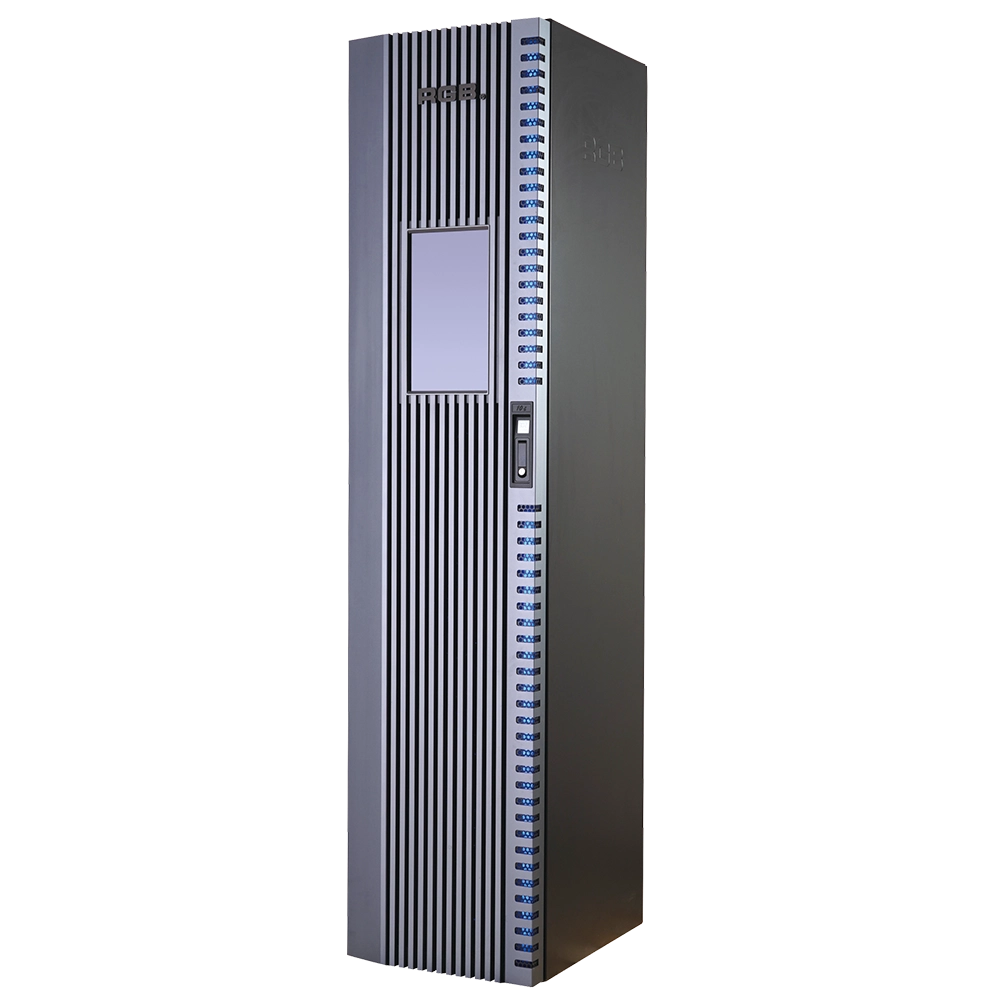
10i is the world's leading visual artificial intelligence dimming rack, integrated with 5G technology, a full digital trigger, sine wave, thyristors, relays, mixed thyristors and relays mixed sine wave and relays output configurations, a unique gold-plated plug-in process, a high-performance protection level, an industrial-grade aluminum alloy profile and other new technologies and advanced process designs and manufacturing.
It is suitable for the lighting control needs of different places such as high-standard grand theaters, TV stations, gymnasium and environmental intelligent lighting.
EB1202 Wall-Mounted Smart Site Light Control Series
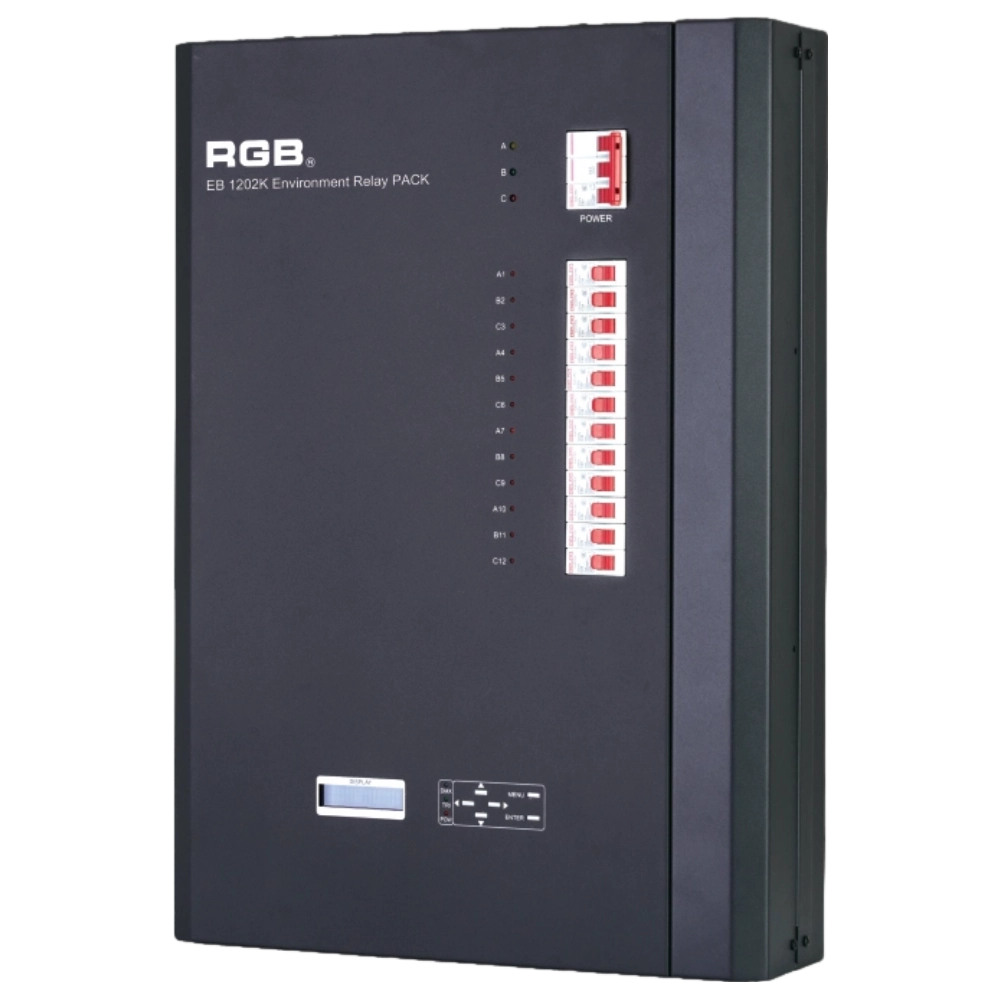
Wall-mounted smart lighting controller with CE certification, DMX512 compatibility, flexible 12/24-channel output, scene backup, intelligent interface, and multiple dimming curves for precise professional lighting control.
RDM Nodes
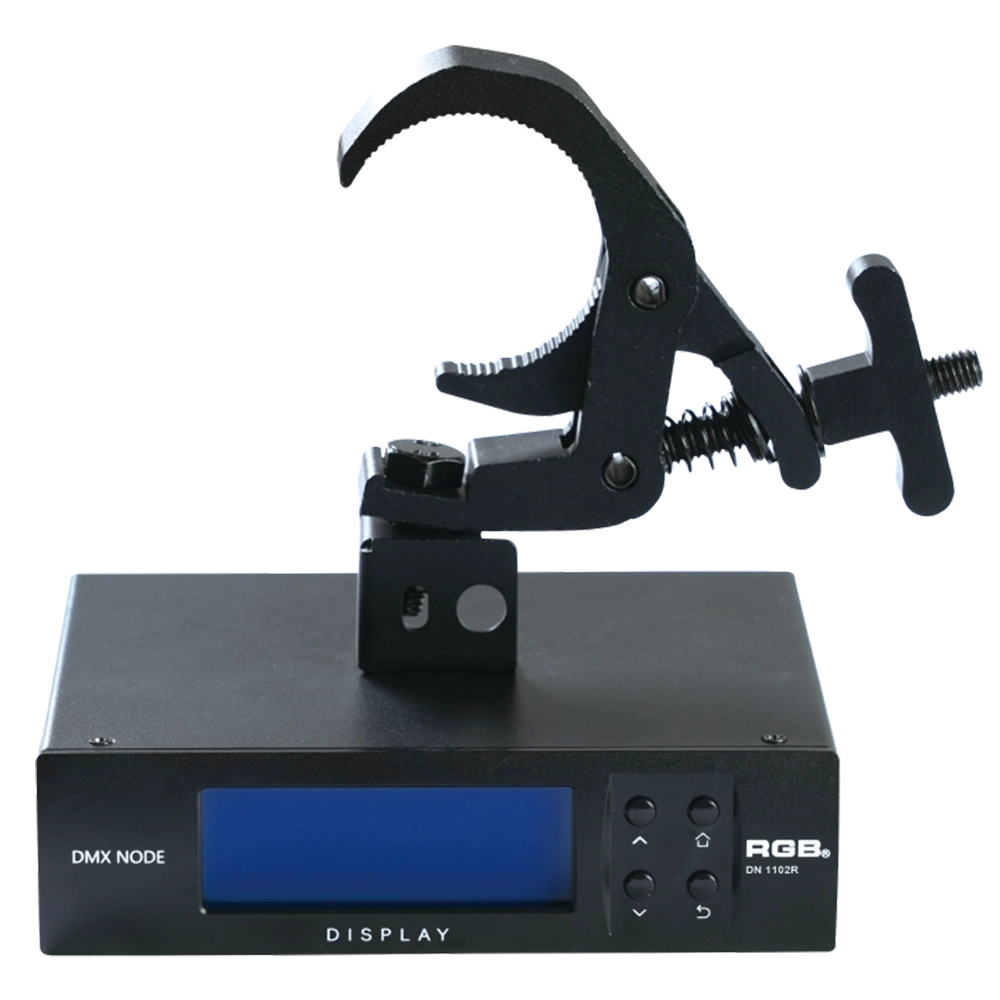
The DN series network decoder is a product of the lighting control system independently developed by RGB, featuring completely independent core technology and obtaining software copyrights. It seamlessly connects and decodes the sACN and Art-Net network protocols based on TCP/IP with the DMX-512 and RDM communication protocols. Supports a visual lighting control system, intuitively displaying the online and offline status of the DN series network decoders, and enabling remote monitoring, editing, and setting of corresponding parameters.
It is widely applied in theaters, concert halls, multi-functional halls, cultural and tourism performances, TV stations, gymnasiums, auditoriums, commercial art lighting, and other performance and cultural venues.
Multifunctional signal supercharger
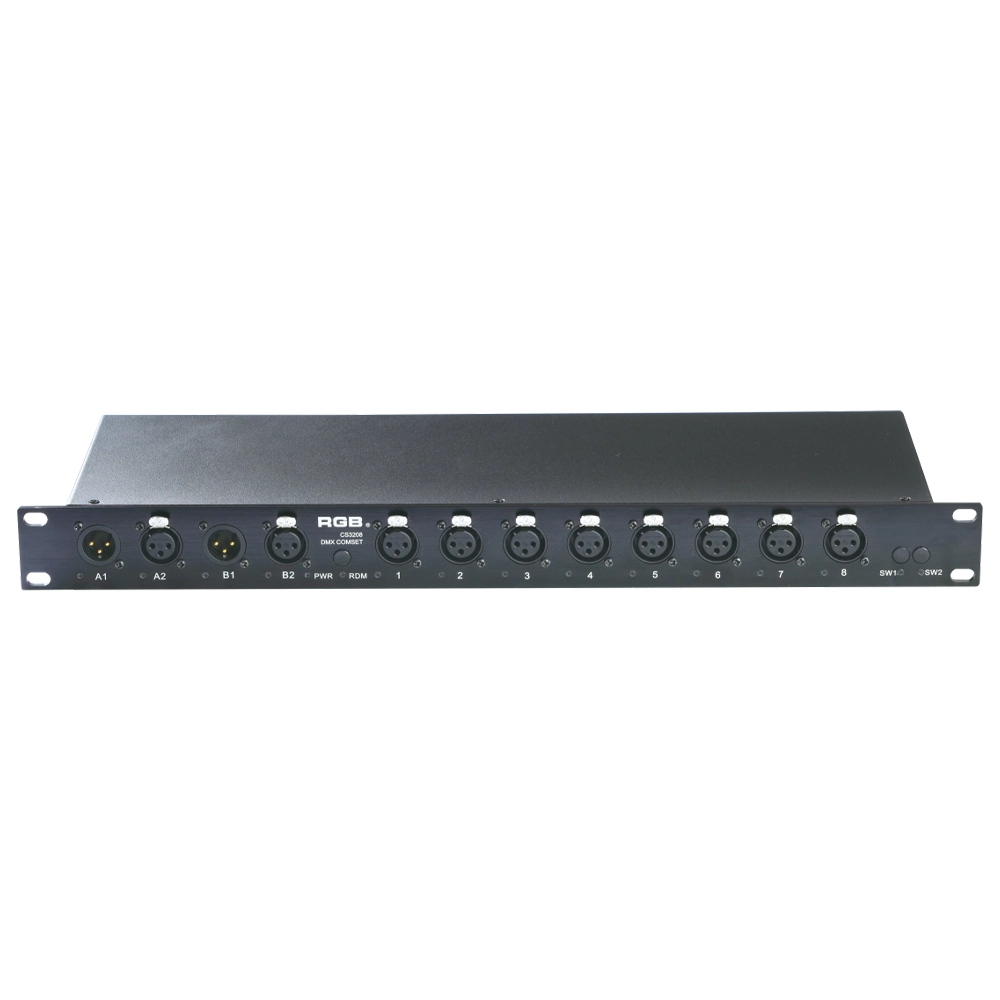
The rack-mounted DMX signal amplifier complies with the DMX-512 standard protocol, improving DMX-512 signal transmission quality and ensuring reliable system control. It helps prevent issues such as AC high-voltage backflow into lighting control systems, lightning-induced surges, and signal interference caused by short circuits, thereby enhancing overall system stability.
Expert Support
Interested in learning more or need expert guidance related to this article? Fill in your details, and our team will provide tailored support.
Intelligent Control. Brilliant Performance.
RGB specializes in stage lighting control systems, delivering intelligent, reliable, and high-performance solutions for theaters and performance spaces worldwide.
Contact
Email:
Tel:
+86 20 3928 0245
+86 20 3928 0247
Address:
No.3, Huashan Road, Shilou Town, Panyu, Guangzhou, China.
Whatsapp: +8615975520131