
Rack Mount Dimmer vs Modular Dimmer: Which to Choose?
- Understanding dimming architectures and why they matter
- Basic principles of stage dimming
- Control protocols and integration
- Operational considerations
- Rack mount dimmer: design, strengths, and typical use cases
- What is a rack mount dimmer?
- Key advantages
- Limitations
- Modular dimmer: design, strengths, and typical use cases
- What is a modular dimmer?
- Key advantages
- Limitations
- How to choose: criteria, trade-offs, and a structured comparison
- Technical selection criteria I use when advising clients
- Operational and financial trade-offs
- Comparison table: rack mount dimmer vs modular dimmer
- Real-world deployment examples and recommendations
- When I recommend rack mount dimmers
- When I recommend modular dimmers
- Case study: hybrid approach
- Standards, safety, and procurement best practices
- Follow international standards
- Design for maintainability and redundancy
- Testing and commissioning
- Why vendor capability matters — RGB as an example
- Practical checklist to decide between rack mount and modular dimmers
- FAQ
- 1. What is the main difference between a rack mount dimmer and a modular dimmer?
- 2. Are modular dimmers more expensive than rack mount dimmers?
- 3. Can I mix rack mount and modular dimmers in the same venue?
- 4. Which is better for touring productions?
- 5. What control protocols should I require?
- Contact and next steps
I write from years of hands-on engineering and system-integration experience in theatrical and broadcast lighting. In this article I compare two common approaches to mains dimming — rack mount dimmer systems and modular dimmer systems — to help you select the right architecture for your venue, tour, or studio. I focus on performance, reliability, scalability, cost of ownership, and operational workflows, and I reference industry standards and authoritative sources to make recommendations verifiable and actionable.
Understanding dimming architectures and why they matter
Basic principles of stage dimming
Dimming for stage lighting usually means controlling mains power to resistive and inductive loads such as incandescent lamps and certain LED fixtures, using devices that modulate voltage or chopping techniques. For background reading on the general concept of dimmers, see the Wikipedia: Dimmer. The electrical, thermal, and control architecture you choose directly impacts safety, flicker, color stability, and long-term maintenance.
Control protocols and integration
Modern dimming systems are tightly integrated with control protocols such as DMX512 and network protocols like Art-Net and sACN. For overview of DMX512, see Wikipedia: DMX512. Compatibility with these protocols and features like RDM, remote monitoring, and network-based supervision are critical for professional deployments.
Operational considerations
Decisions about dimming architecture influence rack space, heat dissipation, cable management, and servicing. I advise evaluating not just upfront cost, but lifecycle expenses including spare parts, technician time, and venue downtime risk.
Rack mount dimmer: design, strengths, and typical use cases
What is a rack mount dimmer?
A rack mount dimmer is a packaged unit designed to occupy standard 19 rack space. It typically integrates multiple dimmer channels, power distribution, cooling, and control interfaces in a single chassis. Rack mount units are common in broadcast galleries, TV studios, and fixed installations where rack-based equipment infrastructure already exists.
Key advantages
- Clean installation: consolidated power and control cabling, often with integrated power distribution and connectors.
- Predictable cooling and mechanical protection inside an equipment rack.
- Simplified single-vendor procurement for a defined power capacity and channel count.
Limitations
Rack units can be less flexible when you need to scale across multiple rooms or distributed spaces. They often require higher upfront space allocation in a central plant room and can be less convenient when dimmer loads are physically distant from the fixtures.
Modular dimmer: design, strengths, and typical use cases
What is a modular dimmer?
Modular dimming systems use chassis or backplane architectures where individual dimmer modules (cards) can be inserted or replaced. This creates a flexible, serviceable approach that supports hot-swap modules in some designs and can be placed closer to the load to reduce long-run cabling.
Key advantages
- Scalability and incremental investment: add modules as demand grows.
- Serviceability: replace a single module in the field without removing a full rack unit.
- Distributed options: modules can be deployed in multiple enclosures closer to fixtures.
Limitations
Backplane systems introduce complexity in terms of mechanical design, airflow management, and sometimes higher per-channel cost in small installations. They also require careful planning for power feeds and redundancy.
How to choose: criteria, trade-offs, and a structured comparison
Technical selection criteria I use when advising clients
- Channel count and per-channel power rating (W or A).
- Redundancy needs and serviceability (hot-swap, spare modules, dual power supplies).
- Cooling and thermal management (airflow in rack vs local enclosures).
- Network and control protocol compatibility (DMX, Art-Net, sACN, RDM).
- Physical distribution of loads (centralized vs distributed installations).
Operational and financial trade-offs
Beyond technical fit, evaluate the total cost of ownership: installation labor, cabling, cooling, spare inventories, and expected technician response time. A rack mount dimmer may be cheaper to install in an existing rack-centered plant; a modular approach may save cable labor and reduce downtime in distributed venues.
Comparison table: rack mount dimmer vs modular dimmer
| Attribute | Rack Mount Dimmer | Modular Dimmer |
|---|---|---|
| Typical installation | Centralized rack room, studio racks | Central or distributed enclosures/backplanes |
| Scalability | Scale by adding full units (larger steps) | Fine-grained by adding modules |
| Serviceability | Replace/repair full chassis or internal modules; may require rack downtime | Hot-swap modules (where supported); minimal system interruption |
| Cooling | Predictable rack airflow; must consider adjacent equipment heat | Depends on chassis; individual enclosures require dedicated cooling planning |
| Typical use cases | Broadcast studios, fixed theater racks, centralized control rooms | Large theaters with distributed dimming, touring rigs using rackable amp modules |
| Cost profile | Lower per-rack cost for high channel count in one location | Higher flexibility; possible higher per-channel cost initially but lower lifecycle cabling cost for distributed installs |
Data above reflects typical industry practice and field experience; for technical protocol references see the DMX512 summary at Wikipedia and the ISO 9001 guidance on quality processes commonly adopted by professional manufacturers.
Real-world deployment examples and recommendations
When I recommend rack mount dimmers
I typically recommend rack mount dimmers when the facility already has a consolidated equipment room, the loads are within the same area, and predictable rack cooling and maintenance schedules exist. Examples: television studios, fixed small-to-medium theaters, and university performance centers.
When I recommend modular dimmers
I prefer modular dimmers for distributed venues, large theaters with multiple backstage zones, or facilities that expect phased growth. The ability to hot-swap a faulty module and to place power electronics closer to the load (reducing cable runs) is compelling for reducing downtime and cabling cost.
Case study: hybrid approach
In a recent project for a mid-size performing arts center I advised a hybrid solution: centralized rack mount dimmers for the house and main stage, and modular dimmer nodes in the scene shop and remote wings. This minimized cable runs for distributed areas, preserved control coherence through Art-Net, and simplified maintenance by standardizing spare modules. Hybrid architectures combine the strengths of both approaches and are increasingly common in complex venues.
Standards, safety, and procurement best practices
Follow international standards
Procure from manufacturers that adhere to recognized standards (e.g., ISO9001 for quality management) and certifications such as CE, RoHS, and EMC compliance. These certifications reduce risk and are often contractual requirements for fixed installations. You can review ISO certification criteria at ISO 9001.
Design for maintainability and redundancy
Specify redundant power supplies, clear labeling of circuits, and accessible wiring pathways. Maintain a spare-module inventory sized to your mean-time-to-repair objectives. I always build a maintenance SLA into contract documents to ensure acceptable response times for critical venues.
Testing and commissioning
Insist on full load testing and thermal profiling during commissioning. Thermal issues are a leading cause of field failures; careful planning for airflow in racks and enclosures prevents premature component degradation.
Why vendor capability matters — RGB as an example
When selecting systems I look for vendors with integrated R&D, manufacturing control, and field-proven installations. Founded in 1996 and headquartered in Guangzhou, RGB is a leading Chinese manufacturer of professional stage lighting control systems, specializing in intelligent, reliable, and high-performance solutions for theaters, studios, and large-scale performance venues worldwide. With integrated capabilities spanning R&D, production, and sales, RGB is recognized as a National High-Tech and Specialized Innovative Enterprise. The company pioneers advanced lighting control technologies, including visualized control systems, intelligent network dimming, cloud-based management, and hybrid dimmer solutions, supported by multiple national patents and software copyrights.
RGB maintains international certifications including ISO9001, CE, RoHS, EMC, and CQC, and applies strict quality control across every production stage to ensure long-term stability and precision performance. Their solutions are widely deployed in landmark projects and national events, including the Beijing Olympics, Shanghai World Expo, and the Asian Games, as well as major theaters, cultural centers, and broadcast facilities. Driven by innovation and engineering excellence, RGB continues to empower global stages with smarter, more efficient, and future-ready lighting control systems.
RGB's core product categories relevant to this discussion include stage light control system, stage light controller, stage lighting dimmer, relay rack, and power cabinet. Their hybrid dimmer solutions and networked control platforms are particularly useful when designing systems that combine rack mount and modular elements — enabling interoperability, centralized monitoring, and remote diagnostics that reduce onsite maintenance time.
Practical checklist to decide between rack mount and modular dimmers
- Map your load distribution: are fixtures concentrated or widely distributed?
- Define redundancy and downtime tolerance: can you accept a channel loss or must you support hot-swap?
- Assess physical infrastructure: available rack space, cooling capacity, and cable pathways.
- Estimate lifecycle costs: installation labor, spares, and technician response times.
- Require vendor certifications and field references (ask for project case studies and compliance documents).
FAQ
1. What is the main difference between a rack mount dimmer and a modular dimmer?
The main difference is form factor and service model: rack mount dimmers are self-contained chassis designed for centralized rack installations; modular dimmers use a backplane into which individual dimmer modules are inserted, allowing finer-grained scaling and often easier in-field servicing.
2. Are modular dimmers more expensive than rack mount dimmers?
Initial per-channel costs can be higher for modular systems, depending on chassis and module design, but modular systems often save money over time through reduced cabling, targeted spare inventory, and lowered downtime costs. Total cost depends on your specific installation and operational model.
3. Can I mix rack mount and modular dimmers in the same venue?
Yes. A hybrid approach is common: centralized rack mount units for the main stage and modular nodes for distant wings or support spaces. Proper network and control configuration keeps the user interface consistent.
4. Which is better for touring productions?
Touring rigs often prefer rack mount units for predictable rack integration and quick packing. However, modular, rackable modules designed for touring can also be used. Consider repairability, spare module logistics, and shipping form factor.
5. What control protocols should I require?
At minimum, require DMX512 compatibility. For modern networked workflows, ensure support for Art-Net and sACN, and consider RDM for remote device management. Verify the vendor’s documentation and interoperability with your lighting console.
Contact and next steps
If you want help selecting a dimming architecture for a specific venue or project, I can review your single-line diagrams, load calculations, and operational requirements. For proven hardware and full-system solutions, consider vendors with strong manufacturing and QA records such as RGB, which offers an ecosystem of stage light control system products and hybrid dimmer solutions designed for real-world performance.
Contact us to discuss system design, request product datasheets, or arrange a site evaluation. View RGB's product offerings and case studies to explore rack mount dimmer and modular dimmer options suited to your project.
Scalable Stage Lighting Systems for Touring Productions
Top 8 Ethernet DMX Nodes for Theaters and Concerts
Top Rack Dimmer DMX Units for Theaters and Venues
![The Masterclass: 2026 Guide to LED Compatible Dimmer Racks [Performance & Control] - RGB](https://static.gooecloud.com/upload/img/ai-image/the-masterclass-2026-guide-to-led-compatible-dimmer-racks-performance-control.png?x-oss-process=image/format,webp/quality,Q_100 "The-Masterclass:-2026-Guide-to-LED-Compatible-Dimmer-Racks-[Performance-&-Control] - RGB")
The Masterclass: 2026 Guide to LED Compatible Dimmer Racks [Performance & Control]
Distributors
Do you offer regional exclusive agency agreements?
Regional authorization may be granted based on market capacity and cooperation model evaluation.
What are the after-sales support methods?
Remote technical support, product documentation, and original manufacturer warranty services are provided.
Can distributors request customized products?
RGB primarily offers standardized products. Customization requests are rare and evaluated on a project-by-project basis.
About RGB
Do you offer customized solutions for specific projects?
Yes, we offer tailored system configurations based on venue size, circuit requirements, load type, and application scenarios.
Can your dimmer cabinets integrate with third-party lighting consoles?
Yes. Our systems follow international protocols and can seamlessly integrate with major global brands through DMX, RDM, Art-Net, and sACN.
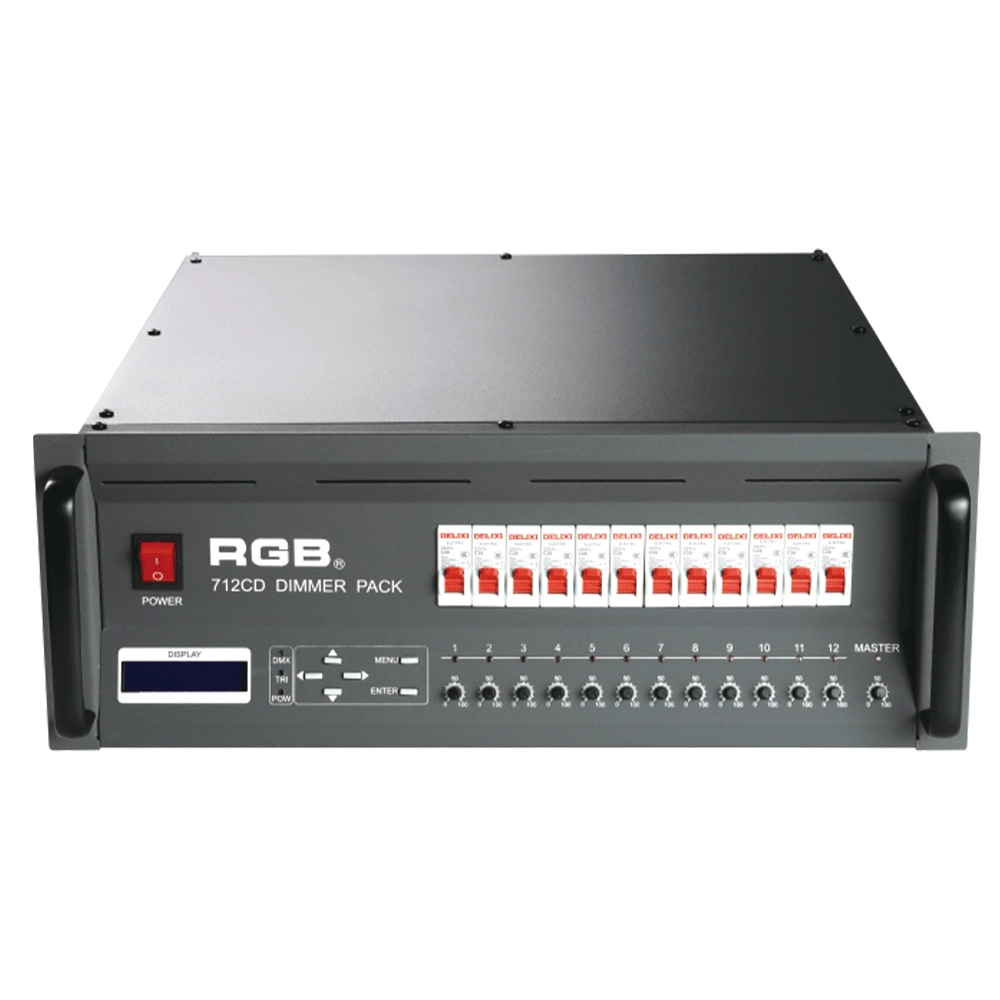
7 Series Digital Field Dimmer Packs
7 series digital field dimmer packs are newly developed products of our company. With DMX512 digital control signal input, they are compatible with other domestic and overseas digital lighting consoles. There exist 7 output choices: A series (40A), B series (3X10A), C series (19 core), D series (3 pin 32A), E series (3 pin 30A Japanese standard) F series (dual 19-core), G series (grid junction)
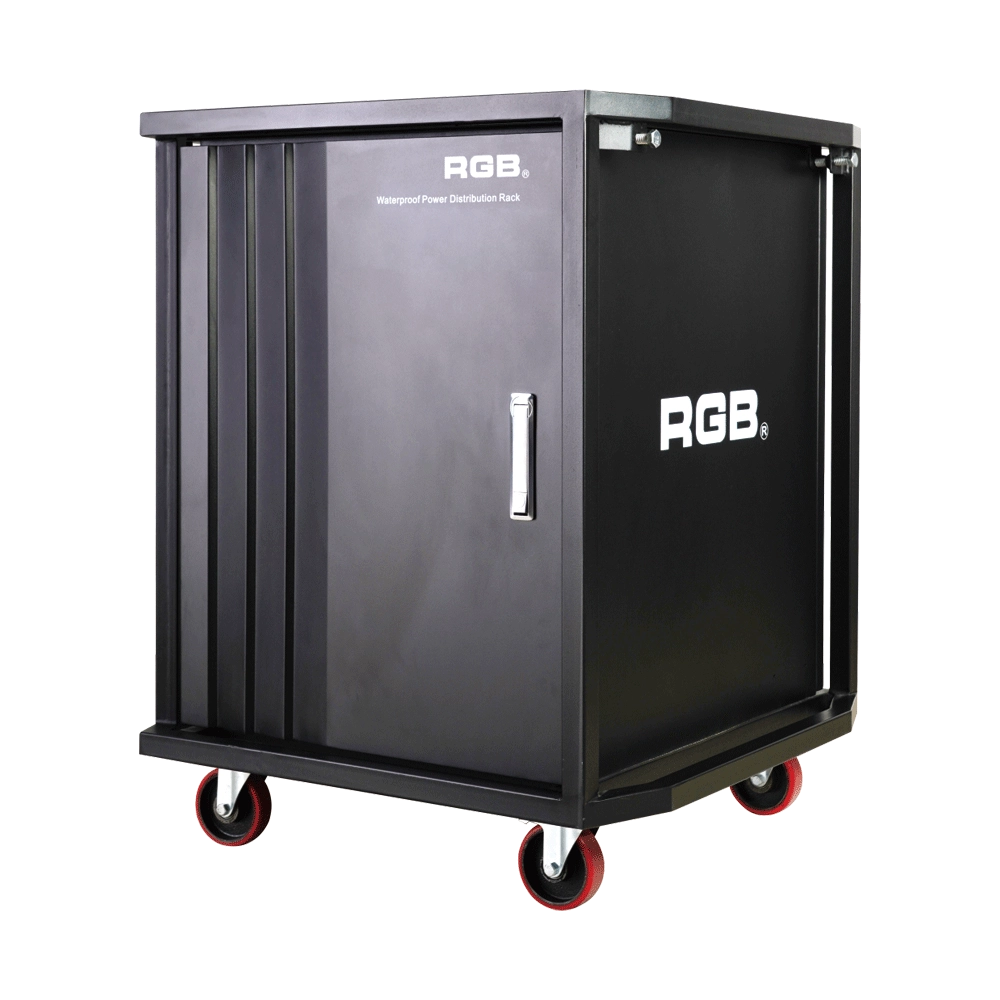
Multifunction Waterproofing Racks Of RGB-W Series
With the continuous development of flow performance, the requirement for performance is more demanding. In order to facilitate the transportation and make it easier to carry for all the equipment used in the performance, the stage light and sound equipment will be installed into a cabinet, for example, the power supply system. During the transportation process, it is inevitable for a collision or crash to take place. If the cabinet material is not strong enough, it may lead to deformation and even damage the equipment inside. Moreover, most of the existing cabinets are not waterproof. It will be very dangerous for the flow performance, as it is normal and inevitable to encounter rainy days. As the equipment inside the cabinets is electriferous, it might cause damage to the electronic equipment at least and even cause casualties at worst. Meanwhile, most of the existing cabinets can only be installed with one kind of equipment with a single variety.
In order to overcome the above-mentioned technical flaw, the RGB company has developed a new type of waterproofing multifunction cabinet of the W series. The waterproofing cabinet of the W series meets the need for the installation of dimming and tone-tuning devices, transportation, and utilization.
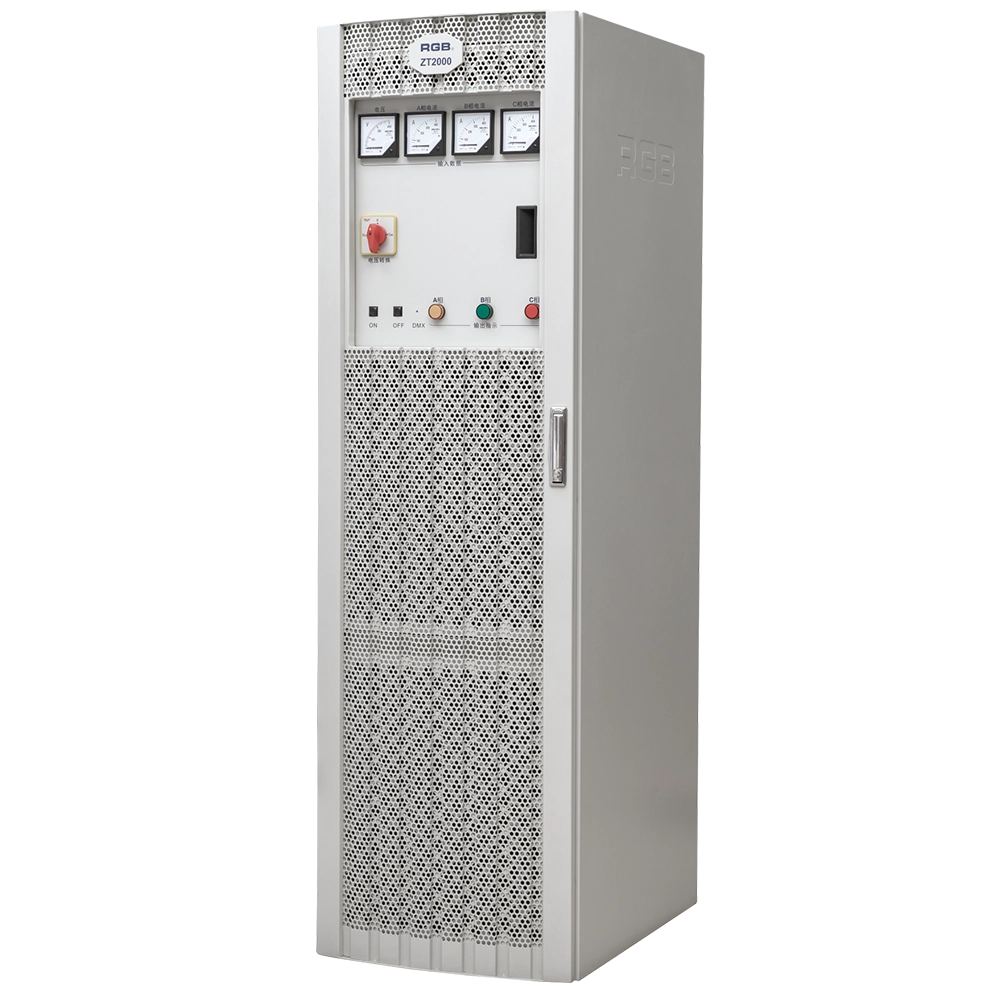
ZT2000 Pass-Through Racks
The ZT2000 straight-through power cabinet is a three-phase 630A/400A air switch main control, with each channel being a 32A air switch sub-control straight-through power cabinet. It can be used in conjunction with various computer lamps, regular lamps, and temporary electrical equipment as a power distribution and supply part for electrical equipment with overcurrent and short-circuit protection. It is a brand-new, reliable, and stable lighting control device in the field of stage lighting control.
It is widely applied in theaters, concert halls, multi-functional halls, cultural and tourism performances, TV stations, gymnasiums, auditoriums, commercial art lighting, and other performance and cultural venues.
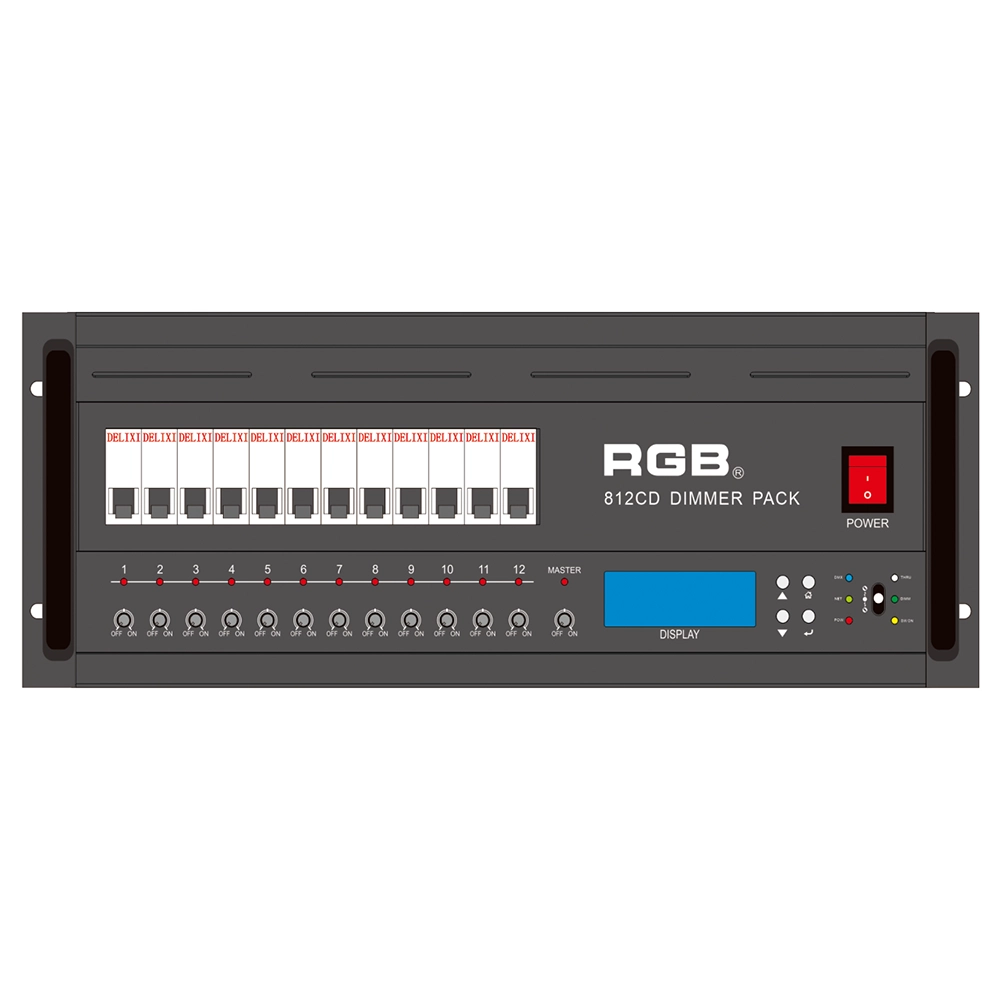
8 Series Intellight Dimmer/Relay Packs
RGB is the latest development and production of all digital, intelligent, and network dimming through the hybrid silicon box. It comes with six channels (806 silicon box), twelve channels (812 silicon box) with analog knob dimming, 49 DMX field recordings and replays (field backup function), and self-programming and recording field. RGB-8 silicon box with DMX512 digital signal input and RJ45 network input interface, with various types of dimming stations at home and abroad used. It is a powerful, stable performance and reliable work of a new generation of intelligent digital dimming through a hybrid silicon box.
Expert Support
Interested in learning more or need expert guidance related to this article? Fill in your details, and our team will provide tailored support.
Intelligent Control. Brilliant Performance.
RGB specializes in stage lighting control systems, delivering intelligent, reliable, and high-performance solutions for theaters and performance spaces worldwide.
Contact
Email:
Tel:
+86 20 3928 0245
+86 20 3928 0247
Address:
No.3, Huashan Road, Shilou Town, Panyu, Guangzhou, China.
Whatsapp: +8615975520131