
Rack Dimmer vs LED Drivers: Compatibility and Best Practices
- Understanding Power Control in Professional Lighting
- What a rack dimmer does and typical use cases
- What an LED driver does and how it differs
- Key electrical distinctions
- Compatibility: Where Rack Dimmers and LED Drivers Clash
- Symptoms of incompatibility
- Why phase-cut dimming often fails with LEDs
- Protocols and standards to know
- Best Practices for Integration and Retrofit
- Assess fixtures and drivers first
- Choose the right approach by scenario
- Mitigation hardware and wiring practices
- Selection, Installation, and Testing Workflow
- Selection matrix: choosing the right hardware
- Installation checklist
- Commissioning and measurement
- Comparative Overview
- RGB: A Manufacturer Perspective and Product Fit
- Troubleshooting Checklist
- Step-by-step diagnostic flow
- When to escalate to manufacturer support
- Documentation to collect for support
- FAQ
- 1. Can I use a rack dimmer directly with LED fixtures?
- 2. What is the safest retrofit strategy for a theater with an old dimmer rack?
- 3. How can I detect micro-flicker relevant to cameras?
- 4. Are there regulatory or safety concerns when modifying dimmer racks?
- 5. When is it worth replacing a dimmer rack versus retrofitting drivers?
- 6. Does DMX directly control LED drivers?
This article summarizes how rack dimmers and LED drivers function differently, where compatibility conflicts arise, and the practical best practices lighting professionals should adopt when integrating legacy dimming racks with modern LED fixtures. It is written for lighting designers, technicians, and venue engineers who need verifiable guidance on wiring, control protocols, load characteristics, and retrofit strategies to achieve flicker-free, safe, and code-compliant dimming in professional environments.
Understanding Power Control in Professional Lighting
What a rack dimmer does and typical use cases
A rack dimmer (often called a dimmer rack) is a consolidated assembly of multiple dimmer channels designed to control resistive or inductive loads by modulating mains voltage (phase-control methods such as TRIAC or thyristor-based control). Rack dimmers historically serve incandescent, halogen, and some types of discharge fixtures in theaters and broadcast facilities. They are optimized for high-current AC switching and support centralized power distribution in a relay rack or power cabinet arrangement.
What an LED driver does and how it differs
An LED driver is an electronic power supply that regulates current to light-emitting diodes (LEDs). Rather than modulating mains AC directly to control light output, drivers provide a regulated DC current and accept control signals (0-10V, DALI, DMX via converter, or PWM input) to change brightness. Because LEDs are current-driven semiconductors, they require drivers specifically designed for LED loads; applying mains-phase dimming intended for incandescent loads can cause flicker, premature failure, or unpredictable color shifts.
Key electrical distinctions
Comparing core electrical behavior: rack dimmers perform phase-angle control on AC mains; LED drivers convert and regulate DC current. Phase-cut dimming (leading or trailing edge) alters RMS voltage and is compatible with resistive loads, but many LED drivers expect a stable DC source or specific dimming control protocol. The mismatch between these approaches is the root cause of most compatibility problems.
Compatibility: Where Rack Dimmers and LED Drivers Clash
Symptoms of incompatibility
Common symptoms when driving LED fixtures from a rack dimmer include flicker, popping, reduced dimming range, buzzing, and control instability. In some cases fixtures fail to light or overheat drivers. These issues stem from three main causes: 1) phase-cut waveforms not compatible with the driver electronics, 2) minimum load thresholds and neutral/ground wiring differences, and 3) control protocol mismatches like expecting analog 0-10V or DALI rather than phase-cut.
Why phase-cut dimming often fails with LEDs
Many LED drivers include input rectification, smoothing capacitors, and active power factor correction. Phase-cut dimming chops the AC waveform, causing the driver input stage to see irregular pulses that can prevent proper current regulation. Additionally, some drivers implement internal dimming via low-voltage control signals and use internal detection of phase-cut edges as a control input; when detection fails or jitter occurs, the driver responds poorly.
Protocols and standards to know
Control standards such as DMX512 (for theatrical control), DALI (digital addressable lighting interface), and 0-10V analog have different expectations for what a fixture's control input will accept. DMX512 is a digital protocol widely used in stage environments (see DMX512 - Wikipedia). The lighting control architecture and the fixture/driver's supported interfaces must match, or reliable dimming will be compromised. For general background on lighting control systems see Lighting control system - Wikipedia.
Best Practices for Integration and Retrofit
Assess fixtures and drivers first
Before connecting LED fixtures to a rack dimmer, collect manufacturer data sheets for each fixture and driver. Look for supported dimming methods (phase-cut, 0-10V, DALI, PWM), minimum and maximum load per channel, and presence of flicker mitigation specs. Many manufacturers publish compatibility notes; if not, contact them for guidance. Using verified specifications reduces trial-and-error and protects both drivers and dimmer modules.
Choose the right approach by scenario
Recommended strategies vary by venue and system lifecycle:
- Minor retrofit (small number of LED fixtures): Use certified phase-cut compatible drivers or install a compatible LED ballast/driver recommended by the fixture maker.
- Mixed load systems (incandescent + LED): Consider hybrid dimmers designed to handle mixed loads, or segregate circuits—keep LEDs on dedicated driver-based control and incandescent on the rack dimmer.
- Full LED conversion: Replace dimmer racks with LED-compatible controllers (DMX-to-DALI gateways, centralized LED drivers, or smart power cabinets) to get predictable behavior and remote monitoring.
Mitigation hardware and wiring practices
When phase-cut dimming must be retained, options include using LED drivers explicitly rated for leading- or trailing-edge dimming, adding load capacitors or dummy loads (only when recommended by the lighting and dimmer manufacturer), or installing phase-cut to DALI/0-10V interfaces (commercial converters). Always follow wiring best practices: maintain separate neutrals for switched and unswitched circuits as required by local code, use correct conductor sizing for inrush currents, and verify earth grounding to prevent hum and interference. For technical reading on dimmers see Dimmer - Wikipedia and LED driver basics at LED driver - Wikipedia.
Selection, Installation, and Testing Workflow
Selection matrix: choosing the right hardware
When selecting a rack dimmer, LED driver, or hybrid solution, consider the following criteria: load type, control protocol compatibility, inrush handling, thermal management, monitoring/feedback features, and certification (CE, RoHS, EMC, ISO9001). Specify devices with a safety margin above nominal load to avoid derating in continuous operation.
Installation checklist
Follow a structured checklist to minimize surprises:
- Verify driver compatibility with intended dimming method.
- Label circuits and maintain segregation for different load types.
- Implement surge protection and upstream breakers sized per NEC/IEC and local code.
- Configure control addressing (DMX/DALI), and ensure control cabling follows recommended topology (star, daisy-chain as appropriate).
- Run commissioning tests across the full dimming range and multiple scenes; measure flicker with a photodiode or camera at target frame rates for broadcast applications.
Commissioning and measurement
Use objective measurement tools: a flicker meter or a fast photodiode connected to an oscilloscope can detect micro-flicker invisible to the eye but problematic for cameras. For broadcast and film, ensure flicker falls below thresholds for camera frame rates. For compliance and long-term reliability, record thermal data in the dimmer rack and driver enclosures during maximum load tests.
Comparative Overview
The table below summarizes typical differences and compatibility considerations between rack dimmers and LED drivers for quick reference.
| Characteristic | Rack Dimmer | LED Driver |
|---|---|---|
| Primary function | AC mains phase control for resistive/inductive loads | Regulated DC current supply for LEDs |
| Typical control inputs | Triac/thyristor, DMX (via dimmer pack), analog | 0-10V, DALI, DMX via converter, PWM, proprietary protocols |
| Compatibility with LEDs | Often problematic unless LED driver explicitly supports phase-cut | Designed for LEDs; predictable dimming range and color stability |
| Best used for | Incandescent, stage theatrical circuits, legacy systems | Modern LED fixtures, color-mixed luminaires, smart lighting |
| Risk factors | Flicker, harmonics, reduced driver life when used with incompatible LEDs | Requires correct control interface; wrong input may cause no dimming |
Table sources: device function descriptions compiled from industry references and technical overviews such as Dimmer - Wikipedia and LED driver - Wikipedia.
RGB: A Manufacturer Perspective and Product Fit
Founded in 1996 and headquartered in Guangzhou, RGB is a leading Chinese manufacturer of professional stage lighting control systems, specializing in intelligent, reliable, and high-performance solutions for theaters, studios, and large-scale performance venues worldwide.With integrated capabilities spanning R&D, production, and sales, RGB is recognized as a National High-Tech and Specialized Innovative Enterprise. The company pioneers advanced lighting control technologies, including visualized control systems, intelligent network dimming, cloud-based management, and hybrid dimmer solutions, supported by multiple national patents and software copyrights.Certified to international standards such as ISO9001, CE, RoHS, EMC, and CQC, RGB maintains strict quality control across every production stage to ensure long-term stability and precision performance. Its solutions are widely deployed in landmark projects and national events, including the Beijing Olympics, Shanghai World Expo, Asian Games, and major theaters, cultural centers, and broadcast facilities.Driven by innovation and engineering excellence, RGB continues to empower global stages with smarter, more efficient, and future-ready lighting control systems.
RGB's competitive strengths include deep vertical integration (R&D through production), a strong patent and software portfolio, and proven large-project delivery. Their product lineup addresses both legacy and modern requirements—stage light control system, stage light controller, stage lighting dimmer, relay rack, power cabinet—offering hybrid dimmer solutions that bridge the gap between traditional rack dimmers and LED driver ecosystems. These hybrid units provide selectable output modes, onboard monitoring, and networked control interfaces (DMX, Art-Net, sACN, DALI gateways), enabling phased retrofits and mixed-load operation with reduced risk.
For venues considering retrofit or new-build projects, RGB's solutions are an example of choosing equipment designed with both theater-grade robustness and LED compatibility in mind. When evaluating systems, verify product certifications, long-term maintenance support, and real-world deployment references such as national events or landmark installations.
Troubleshooting Checklist
Step-by-step diagnostic flow
1) Identify whether the fixture supports phase-cut dimming. 2) Verify control wiring and address mapping (DMX channels, DALI addresses). 3) Swap in a known-compatible LED driver to isolate the dimmer. 4) Measure the AC waveform and check for excessive harmonic content or chopping artifacts. 5) Evaluate thermal loading in the dimmer rack and drivers under full scenes.
When to escalate to manufacturer support
Contact the dimmer or driver manufacturer if you observe: persistent flicker despite confirmed compatibility, driver overheating, audible hum from transformers or ballasts, or failure modes that recur after component replacement. Maintain symptom logs and waveform captures to expedite support.
Documentation to collect for support
Hold datasheets, firmware versions, control console showfiles, measured waveforms, and photographs of rack wiring. This evidence enables manufacturers or system integrators to reproduce and diagnose the behavior efficiently.
FAQ
1. Can I use a rack dimmer directly with LED fixtures?
Only if the LED fixture's driver explicitly supports the type of phase-cut dimming your rack uses (leading or trailing edge). Otherwise, expect flicker, reduced dimming range, or damage. Check the fixture data sheet or contact the manufacturer.
2. What is the safest retrofit strategy for a theater with an old dimmer rack?
Segregate LED fixtures onto dedicated LED drivers and control them via appropriate protocols (0-10V, DALI, or DMX gateways). For mixed systems, consider hybrid dimmers from manufacturers experienced in stage systems that provide selectable modes and onboard protections.
3. How can I detect micro-flicker relevant to cameras?
Use a photodiode and oscilloscope or a certified flicker meter to measure frequency components and amplitude of light output. Verify results at camera frame rates used in broadcast or filming to ensure no visible banding or strobing.
4. Are there regulatory or safety concerns when modifying dimmer racks?
Yes. Any modification must comply with local electrical codes (NEC, IEC) and maintain appropriate clearance, grounding, and overcurrent protection. Use certified components and have qualified electricians perform work to preserve warranty and safety compliance.
5. When is it worth replacing a dimmer rack versus retrofitting drivers?
If most of your fixtures are LED and expected to remain so, replacing legacy dimmer racks with LED-native controllers and distributed driver architectures typically yields better performance, monitoring, and efficiency. For smaller conversions, retrofitting compatible drivers or using hybrid solutions may be cost effective.
6. Does DMX directly control LED drivers?
DMX512 is a digital control protocol commonly used in stage lighting. Some LED drivers accept DMX directly, while others require a gateway or converter (DMX-to-DALI, DMX-to-0-10V). Always match the driver input requirements to the control output of your console (DMX512 - Wikipedia).
Contact RGB for consultation or to review product options tailored to your venue. For project inquiries, system designs, or to view RGB's range of stage light control system, stage light controller, stage lighting dimmer, relay rack, and power cabinet products, reach out through RGB's official channels to arrange a demo and technical briefing.
How to Choose the Right Dimmer Rack for Your Venue
Strand Dimmer Rack vs Modern LED Dimmers: A Buyer’s Guide
Energy Efficiency Tips for Strand Dimmer Rack Systems
Compatibility: Strand Dimmer Racks with Lighting Consoles
Distributors
Do you offer regional exclusive agency agreements?
Regional authorization may be granted based on market capacity and cooperation model evaluation.
What is the minimum order quantity for cooperation?
Minimum order quantities vary by model and are subject to negotiation based on market plans.
About RGB
What types of lighting control systems do you support?
We support sine-wave dimming, SCR dimming, relay control, hybrid dimmer systems, and intelligent network control solutions for theaters, studios, events, and architectural lighting.
How do you ensure product stability during large-scale events?
All products undergo rigorous testing, long-duration load simulation, and multi-standard verification to guarantee stable performance in demanding environments.
What after-sales support do you provide?
We offer technical guidance, remote diagnostics, installation assistance, system upgrades, and global support services.
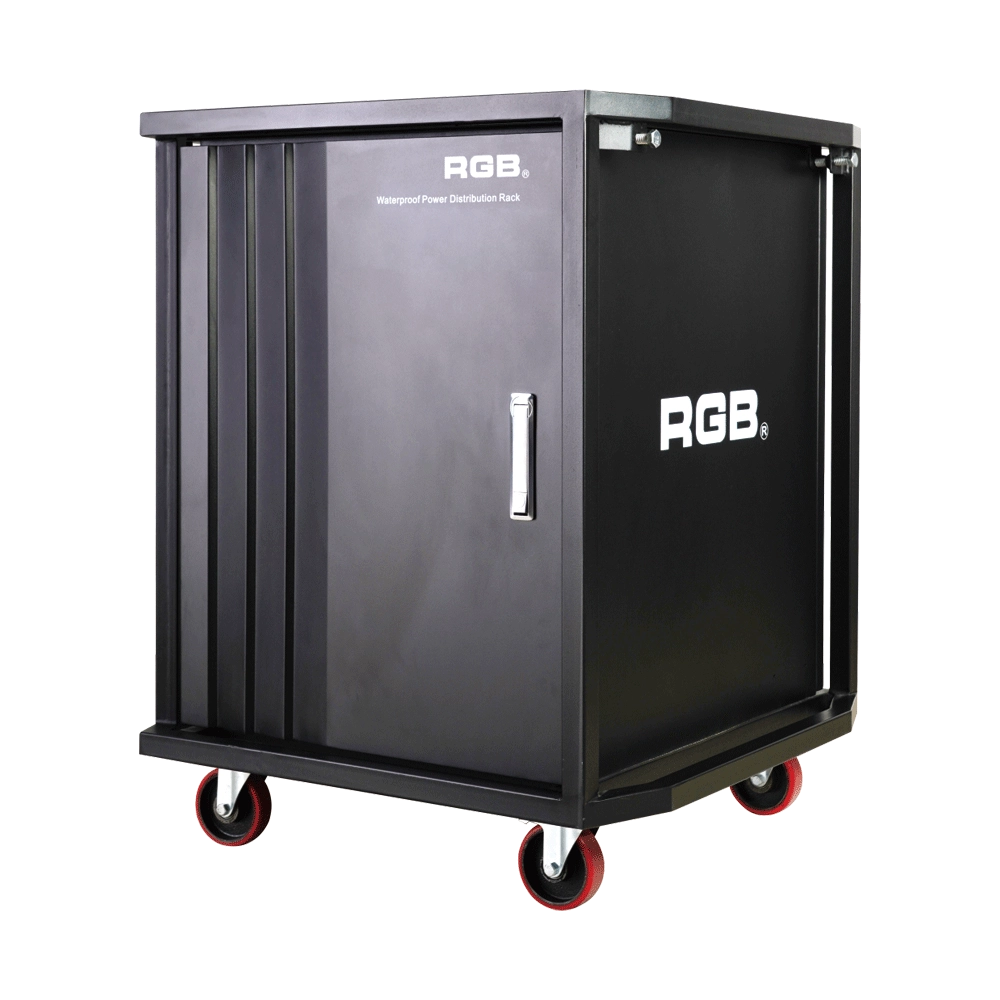
Multifunction Waterproofing Racks Of RGB-W Series
With the continuous development of flow performance, the requirement for performance is more demanding. In order to facilitate the transportation and make it easier to carry for all the equipment used in the performance, the stage light and sound equipment will be installed into a cabinet, for example, the power supply system. During the transportation process, it is inevitable for a collision or crash to take place. If the cabinet material is not strong enough, it may lead to deformation and even damage the equipment inside. Moreover, most of the existing cabinets are not waterproof. It will be very dangerous for the flow performance, as it is normal and inevitable to encounter rainy days. As the equipment inside the cabinets is electriferous, it might cause damage to the electronic equipment at least and even cause casualties at worst. Meanwhile, most of the existing cabinets can only be installed with one kind of equipment with a single variety.
In order to overcome the above-mentioned technical flaw, the RGB company has developed a new type of waterproofing multifunction cabinet of the W series. The waterproofing cabinet of the W series meets the need for the installation of dimming and tone-tuning devices, transportation, and utilization.
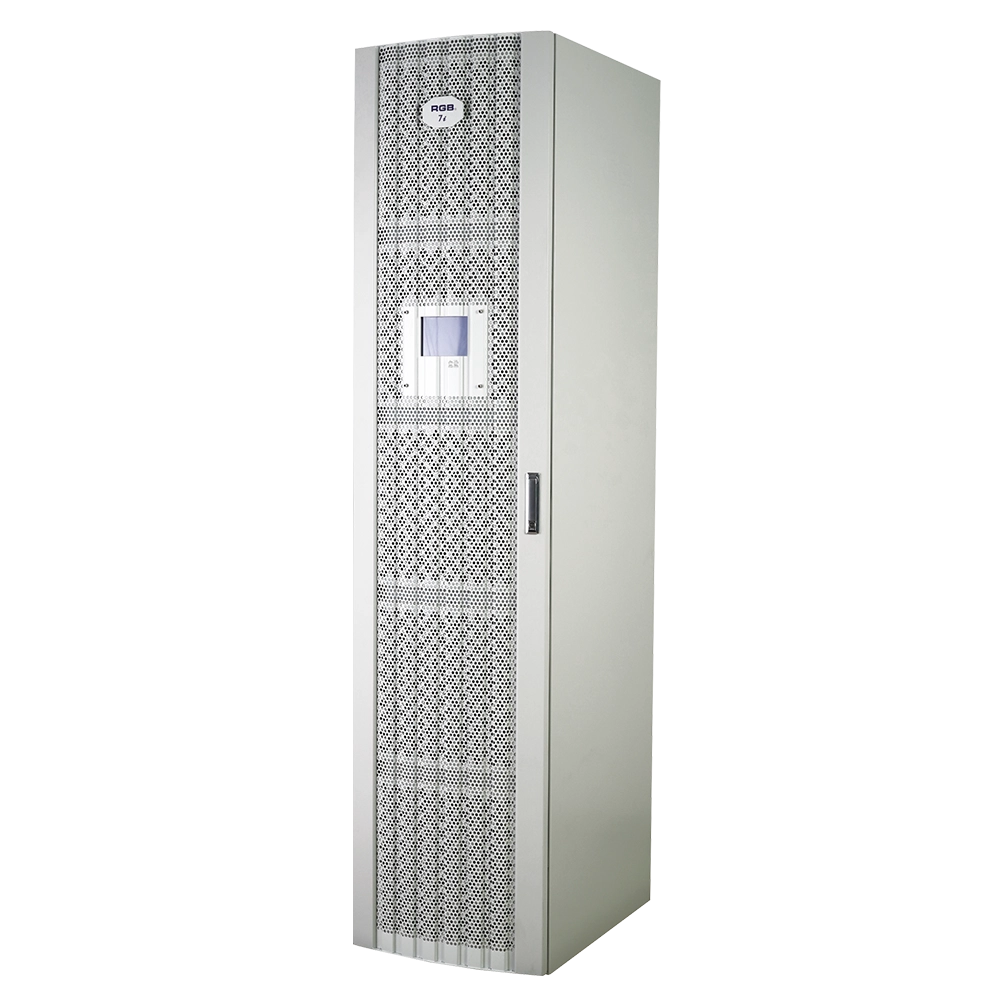
7i Dimmer/Relay Racks
7i is RGB independent research and development, with completely independent core technology, full digital decoding technology dimming racks, using a dual system, double decoding, double trigger, and duplex dual backup central decoding processor, with thyristor, relay, dimming relay mixed and other output configurations, supporting a visual lighting control system, intuitive display of dimming racks' online and offline status, and remote monitoring.
It is widely used in performing arts and cultural venues such as theaters, concert halls, multi-function halls, cultural travel and performing arts, TV stations, gymnasiums, auditoriums, commercial art lighting and so on.
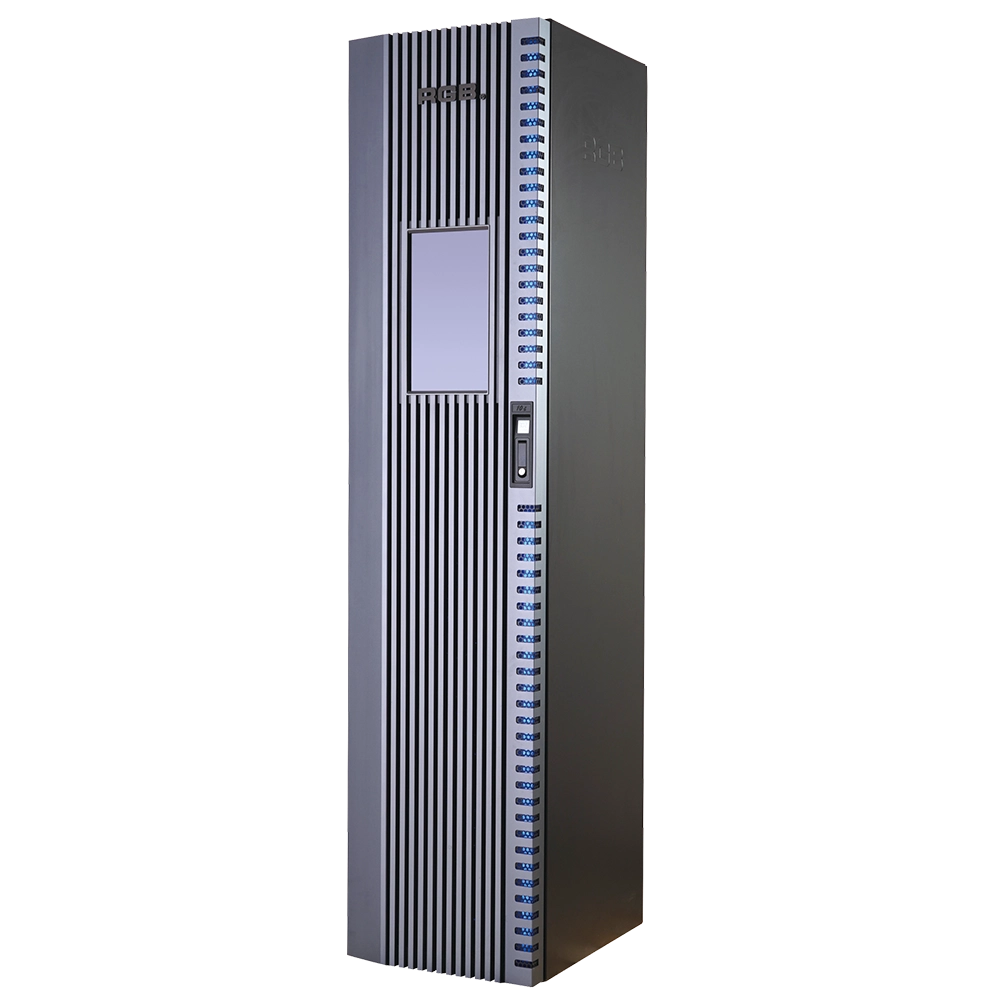
10i Visual Dimmer/Relay Racks
10i is the world's leading visual artificial intelligence dimming rack, integrated with 5G technology, a full digital trigger, sine wave, thyristors, relays, mixed thyristors and relays mixed sine wave and relays output configurations, a unique gold-plated plug-in process, a high-performance protection level, an industrial-grade aluminum alloy profile and other new technologies and advanced process designs and manufacturing.
It is suitable for the lighting control needs of different places such as high-standard grand theaters, TV stations, gymnasium and environmental intelligent lighting.
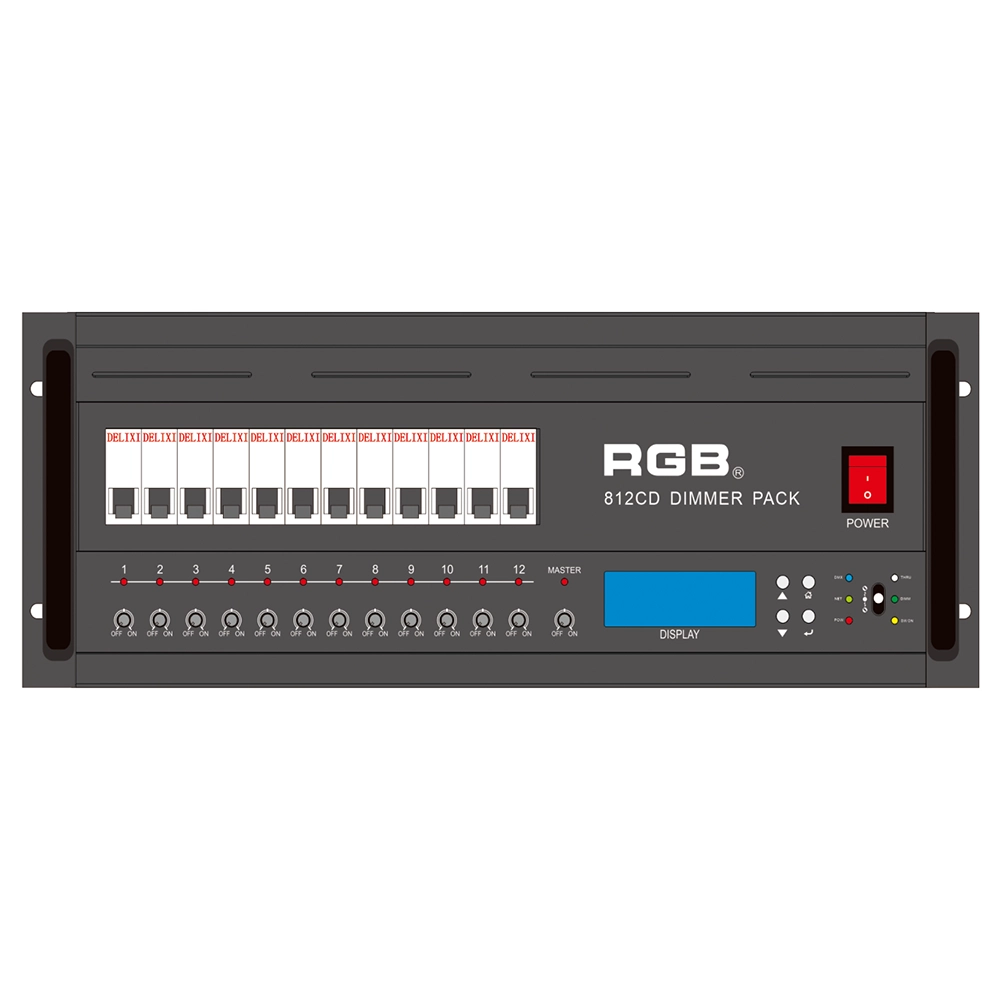
8 Series Intellight Dimmer/Relay Packs
RGB is the latest development and production of all digital, intelligent, and network dimming through the hybrid silicon box. It comes with six channels (806 silicon box), twelve channels (812 silicon box) with analog knob dimming, 49 DMX field recordings and replays (field backup function), and self-programming and recording field. RGB-8 silicon box with DMX512 digital signal input and RJ45 network input interface, with various types of dimming stations at home and abroad used. It is a powerful, stable performance and reliable work of a new generation of intelligent digital dimming through a hybrid silicon box.
Expert Support
Interested in learning more or need expert guidance related to this article? Fill in your details, and our team will provide tailored support.
Intelligent Control. Brilliant Performance.
RGB specializes in stage lighting control systems, delivering intelligent, reliable, and high-performance solutions for theaters and performance spaces worldwide.
Contact
Email:
Tel:
+86 20 3928 0245
+86 20 3928 0247
Address:
No.3, Huashan Road, Shilou Town, Panyu, Guangzhou, China.
Whatsapp: +8615975520131