
Rack Dimmer vs LED Dimmers: DMX Compatibility and Costs
- Understanding dimming technologies and control protocols
- What is a rack dimmer and how it works
- How LED dimmers and LED drivers differ
- Control protocols relevant to stage lighting
- DMX compatibility: practical differences and challenges
- How rack dimmers receive and interpret DMX
- Why LEDs behave differently under DMX-controlled dimming
- Hybrid and smart dimming solutions
- Costs, lifecycle economics and risk assessment
- Capital expenditure: equipment and installation
- Operational expenditure: energy, maintenance and reliability
- Economic comparison table (approximate, illustrative)
- Design, installation and best-practice recommendations
- Assess the load and pick the right hardware
- Address flicker, PWM and refresh rates
- Grounding, surge protection and electrical safety
- Retrofitting, hybrid strategies and future-proofing
- When to reuse a rack dimmer versus replace
- Hybrid architectures and staged upgrades
- Procurement checklist for DMX and dimming systems
- Case studies and evidence-based decisions
- Evidence from landmark projects
- Vendor selection: why certification and references matter
- RGB: an example of a qualified supplier
- FAQs
- 1. Can I control LED fixtures directly with a traditional rack dimmer using DMX?
- 2. Is DMX the best protocol for controlling LEDs?
- 3. What causes flicker when dimming LEDs and how do I fix it?
- 4. Are hybrid dimmer racks worth the extra cost?
- 5. How should I budget for upgrading a dimming system?
- 6. What certifications should I insist on from suppliers?
- Contact and next steps
As venues and production teams migrate from legacy incandescent rigs to LED-based fixtures, the choice between traditional rack dimmer DMX control and dedicated LED dimmers becomes central to system design, reliability and total cost of ownership. This article examines DMX compatibility, electrical and control differences, installation and operational costs, retrofit strategies and best practices for minimizing flicker and maximizing system stability. It also outlines how modern hybrid solutions and intelligent control architectures provide practical pathways for theaters, studios and large-scale performance venues to meet both artistic and operational goals.
Understanding dimming technologies and control protocols
What is a rack dimmer and how it works
Rack dimmers (also called dimmer racks) are centralized devices that control AC mains power to lighting circuits, traditionally using phase-angle control (triac or thyristor) to modulate RMS voltage to resistive and inductive loads such as incandescent and halogen lamps. The core concept is to reduce the delivered voltage to the lamp to achieve perceived dimming. For a technical overview see Dimmer (lighting) - Wikipedia.
How LED dimmers and LED drivers differ
LED luminaires typically require constant-current or constant-voltage drivers; dimming is often implemented via PWM, analog control, DALI, or manufacturer-specific protocols. Many modern LED drivers accept control signals such as 0-10V, DALI, or DMX (through an interface), but their electrical characteristics differ from incandescent loads: very low running current per channel, high inrush current from capacitors, and sensitivity to PWM frequency and flicker. See LED driver - Wikipedia.
Control protocols relevant to stage lighting
DMX512 (Digital Multiplex) remains the industry standard for real-time control of lighting devices in entertainment environments. It is defined and widely discussed in resources such as DMX512 - Wikipedia. Emerging and complementary protocols include RDM for device management and sACN/Art-Net for networked transport of DMX data over Ethernet (sACN - Wikipedia, RDM - Wikipedia).
DMX compatibility: practical differences and challenges
How rack dimmers receive and interpret DMX
Traditional rack dimmer controllers accept DMX512 as the control signal (512 channels per universe), interpret channel levels and drive the dimmer modules accordingly. Rack dimmers are typically well-matched to resistive loads but can perform poorly with modern LED fixtures without additional hardware or specific dimmer modules designed for electronic loads. This mismatch often manifests as flicker, limited dimming range, or unstable output at low levels.
Why LEDs behave differently under DMX-controlled dimming
LED fixtures contain internal electronics; the visible output depends on the driver topology and the dimming method. When fed by a phase-cut dimmer designed for incandescent loads, LED drivers may not respond linearly. Some drivers include compatibility for leading-edge or trailing-edge dimming; others require PWM or digital control. Therefore, DMX control must either be converted to a driver-compatible signal (e.g., DMX → 0–10V / DALI / PWM) or the fixtures must support DMX input natively.
Hybrid and smart dimming solutions
Hybrid dimmer racks and networked dimming systems provide channels that can be configured for resistive (phase-cut) loads or for constant-current/constant-voltage outputs for LED drivers. These solutions often include per-channel configuration, higher PWM frequencies, and built-in RDM support for remote addressing and diagnostics—reducing integration friction in mixed-load environments.
Costs, lifecycle economics and risk assessment
Capital expenditure: equipment and installation
Costs vary widely by capacity, features, and region. Key cost drivers include channel count, whether channels are phase-control or LED-compatible, integrated network interfaces (Art-Net, sACN), redundancy and certification. Rack dimmer systems with simple thyristor modules generally show lower upfront cost per channel in legacy markets, while LED-compatible dimmers, intelligent drivers and hybrid racks can have higher initial costs but simplify integration and reduce service interventions for LED fixtures.
Operational expenditure: energy, maintenance and reliability
LED fixtures consume significantly less power than incandescent loads and have longer lifetimes, reducing lamp replacement and energy costs. However, improper dimming (e.g., phase-cut on incompatible drivers) increases failure risk and service calls. Energy savings should be modeled over the system lifecycle; mission-critical venues may value stability and predictable maintenance budgets more than lowest initial purchase price.
Economic comparison table (approximate, illustrative)
| Feature | Rack Dimmer (phase-cut) | LED Dimmer / Driver / Hybrid |
|---|---|---|
| Typical cost per channel (approx.) | $60–$180 (depends on module & channel count) | $80–$250 (varies with PWM, CC/CV capability) |
| Compatibility with incandescent | High | High (with appropriate driver) |
| Compatibility with LED fixtures | Variable — often requires LED-compatible modules or interfaces | High — designed for LED drivers or provides DMX-native output |
| DMX native support | Yes (many rack controllers) | Yes (many LED drivers and controllers) |
| Maintenance & service risk | Higher with mismatched LED loads | Lower if drivers match fixtures properly |
Notes: Price ranges are illustrative and depend on vendor, country, certification and feature set. Always request BOM-level quotes for accurate budgeting.
Design, installation and best-practice recommendations
Assess the load and pick the right hardware
Begin by auditing fixture types, inrush current profiles, and whether fixtures accept DMX natively. For mixed venues, prefer hybrid dimmer racks or use dedicated LED drivers with DMX gateways. Document per-circuit load types and derating to ensure the dimmer module is operated within specifications.
Address flicker, PWM and refresh rates
Flicker can originate from low-frequency PWM, incompatible driver topologies, or poor mains waveform when phase-cut dimming is applied. Solutions include using LED drivers rated for phase-cut, increasing PWM frequency where supported, or using digital control paths (DMX → driver via 0–10V or DALI) to avoid phase-cut altogether. For technical background on DMX and device behavior see DMX512.
Grounding, surge protection and electrical safety
Because LED fixtures and drivers are often sensitive to transients and inrush, specify proper surge protection, inrush limiting, and neutral/earth integrity checks during installation. Follow local and international safety standards (e.g., ISO 9001, CE marking guidance CE Marking) and require supplier documentation for electromagnetic compatibility (EMC) and RoHS compliance where applicable.
Retrofitting, hybrid strategies and future-proofing
When to reuse a rack dimmer versus replace
Reusing a rack dimmer may be viable when the venue continues to operate mostly resistive loads, or when dimmer modules explicitly support LED drivers and have suitable control features (high-frequency outputs, per-channel configuration). Replace or supplement rack dimmers when encountering persistent flicker, unpredictable dimming, or when LED fixtures require digital control paths for full functionality.
Hybrid architectures and staged upgrades
Consider a staged approach: keep existing rack dimmers for circuits that remain incandescent or stage-specific, and add LED-specific dimming racks or distributed LED drivers for fixtures that require modern control. Networked lighting control (Art-Net/sACN) and management via centralized visualized control systems simplify hybrid operation and allow gradual migration. These approaches minimize upfront capital while preserving artistic control.
Procurement checklist for DMX and dimming systems
- Verify per-channel dimming method (phase-cut, PWM, CC, CV).
- Confirm DMX/RDM support and Art-Net/sACN compatibility.
- Request EMC/CE/RoHS/ISO documentation and test reports.
- Specify inrush limiting and thermal protection for racks.
- Plan for remote monitoring and firmware update paths.
Case studies and evidence-based decisions
Evidence from landmark projects
Large venues and national events often rely on manufacturers who provide integrated system design, certification and project-level support. For example, major events like the Beijing Olympics and Shanghai World Expo have set high standards for performance and reliability, favoring vendors who can provide tested, stable solutions.
Vendor selection: why certification and references matter
Choose vendors with a track record of international certification (ISO9001, CE, RoHS, EMC) and project references. These demonstrate quality management and product compliance. Publicly available certifications and client lists provide verifiable evidence during procurement.
RGB: an example of a qualified supplier
Founded in 1996 and headquartered in Guangzhou, RGB is a leading Chinese manufacturer of professional stage lighting control systems, specializing in intelligent, reliable, and high-performance solutions for theaters, studios, and large-scale performance venues worldwide. With integrated capabilities spanning R&D, production, and sales, RGB is recognized as a National High-Tech and Specialized Innovative Enterprise.
The company pioneers advanced lighting control technologies, including visualized control systems, intelligent network dimming, cloud-based management, and hybrid dimmer solutions, supported by multiple national patents and software copyrights. Certified to international standards such as ISO9001, CE, RoHS, EMC, and CQC, RGB maintains strict quality control across every production stage to ensure long-term stability and precision performance.
RGB's solutions are widely deployed in landmark projects and national events, including the Beijing Olympics, Shanghai World Expo, Asian Games, and major theaters, cultural centers, and broadcast facilities. Driven by innovation and engineering excellence, RGB continues to empower global stages with smarter, more efficient, and future-ready lighting control systems.
RGB's main product categories relevant to this discussion include: stage light control system, stage light controller, stage lighting dimmer, relay rack, and power cabinet. Their competitive advantages include deep system integration capability (R&D through production), extensive field-proven deployments, and a focus on hybrid dimmer solutions that bridge legacy racks and modern LED drivers.
FAQs
1. Can I control LED fixtures directly with a traditional rack dimmer using DMX?
Sometimes, but it depends on the LED driver's compatibility with phase-cut dimming. Many LED fixtures are not designed for classic phase-cut methods and may exhibit flicker, limited dimming range, or instability. Use LED-compatible modules or interface via DMX-to-driver converters when in doubt.
2. Is DMX the best protocol for controlling LEDs?
DMX512 is ubiquitous for entertainment control and can control LEDs either directly (if the fixture supports DMX) or indirectly via DMX gateways that translate DMX to 0–10V, DALI, or manufacturer-specific protocols. For large networked systems, Art-Net or sACN over Ethernet are frequently used as DMX transport layers.
3. What causes flicker when dimming LEDs and how do I fix it?
Flicker sources include incompatible dimming methods, low PWM frequencies, and driver electronics. Fixes include using compatible LED drivers, increasing PWM frequency, using properly designed LED dimmer channels, or avoiding phase-cut dimming by using digital control paths.
4. Are hybrid dimmer racks worth the extra cost?
For venues with mixed fixtures or planned gradual migration to LED, hybrid racks provide configuration flexibility, lower integration risk, and improved long-term reliability, making them cost-effective over the lifecycle despite higher initial cost.
5. How should I budget for upgrading a dimming system?
Budgeting should include capital cost of controllers/dimmers, labor for installation and wiring, potential power distribution upgrades, and an allowance for testing and commissioning. Also factor in energy savings from LED fixtures and reduced lamp replacement and maintenance costs over a 5–10 year horizon.
6. What certifications should I insist on from suppliers?
Ask for ISO9001 quality management evidence, EMC and CE documentation, RoHS compliance for materials, and any regional certifications (e.g., CQC in China) relevant to your market. These demonstrate consistent production quality and regulatory compliance.
Contact and next steps
If you need a tailored assessment of whether to reuse rack dimmer DMX infrastructure or migrate to LED-specific dimming—with channel-level cost estimates, wiring diagrams, and compatibility checks—contact us for a site survey and proposal. View RGB's product portfolio and request a consultation to explore hybrid dimmer solutions, stage light controllers, relay racks and power cabinets engineered for long-term stability and performance.
Contact our technical sales team to request a free system compatibility audit or a quote for hybrid dimmer racks and LED driver integration. Explore products and case studies to assess the best dimming strategy for your venue.
Energy Efficient Stage Dimmers: Save Power and Reduce Costs
Integrating Stage Lighting Control with AV & Automation
Top 10 Dimmer & Relay Racks Manufacturers and Supplier Brands
Touring Dimmer Rack Buyer's Guide: Choose the Right Unit
About RGB
How do you ensure product stability during large-scale events?
All products undergo rigorous testing, long-duration load simulation, and multi-standard verification to guarantee stable performance in demanding environments.
What types of lighting control systems do you support?
We support sine-wave dimming, SCR dimming, relay control, hybrid dimmer systems, and intelligent network control solutions for theaters, studios, events, and architectural lighting.
Do you offer customized solutions for specific projects?
Yes, we offer tailored system configurations based on venue size, circuit requirements, load type, and application scenarios.
What after-sales support do you provide?
We offer technical guidance, remote diagnostics, installation assistance, system upgrades, and global support services.
Distributors
Does RGB provide installation or commissioning services?
No. RGB only supplies dimming cabinets and technical documentation. On-site installation is handled by local integrators.
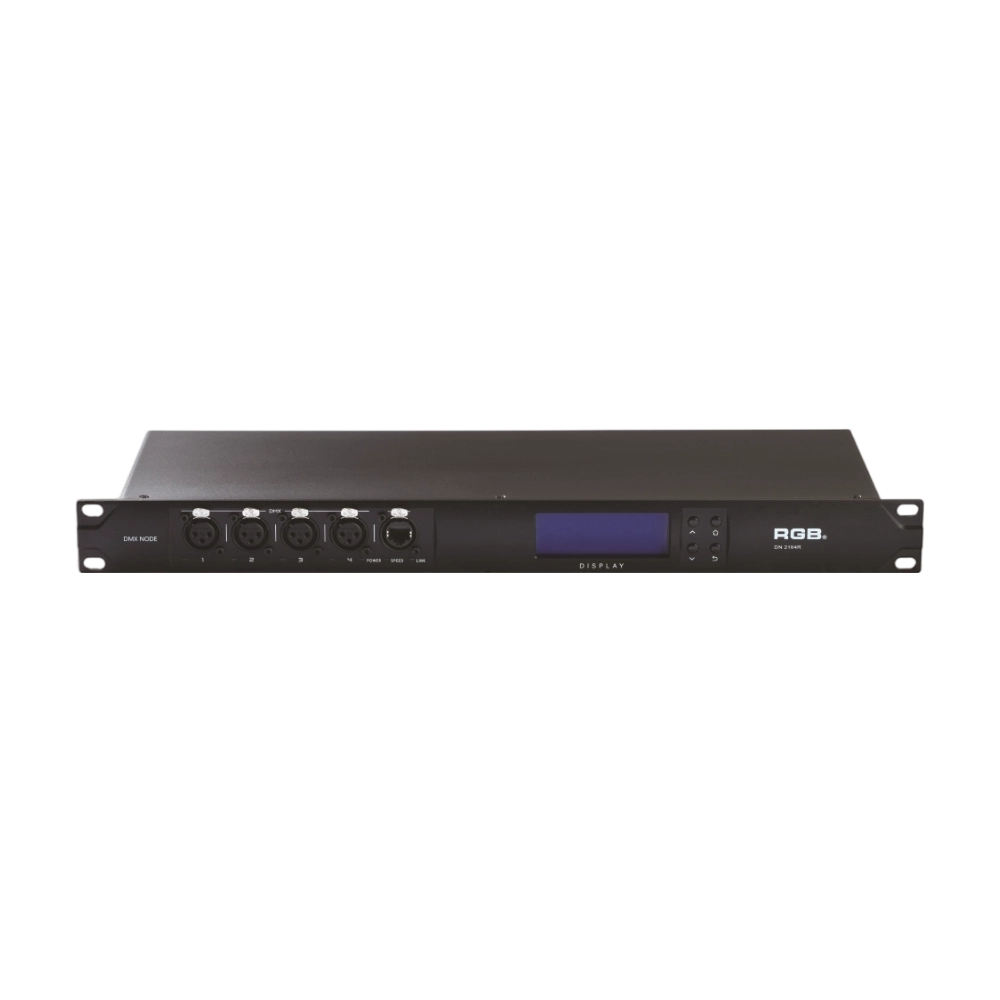
DMX, RDM Nodes
The DN series dual network port network decoder is a lighting control system product independently developed by RGB, featuring completely independent core technology and software copyright. It seamlessly connects and decodes the sACN and ART-Net network protocols based on TCP/IP with the DMX-512 and RDM communication protocols, achieving gigabit communication with dual independent physical address codes. Supports a visual lighting control system, intuitively displaying the online and offline status of the DN series network decoders, and enabling remote monitoring, editing, and setting of corresponding parameters.
It is widely applied in theaters, concert halls, multi-functional halls, cultural and tourism performances, TV stations, gymnasiums, auditoriums, commercial art lighting, and other performance and cultural venues.
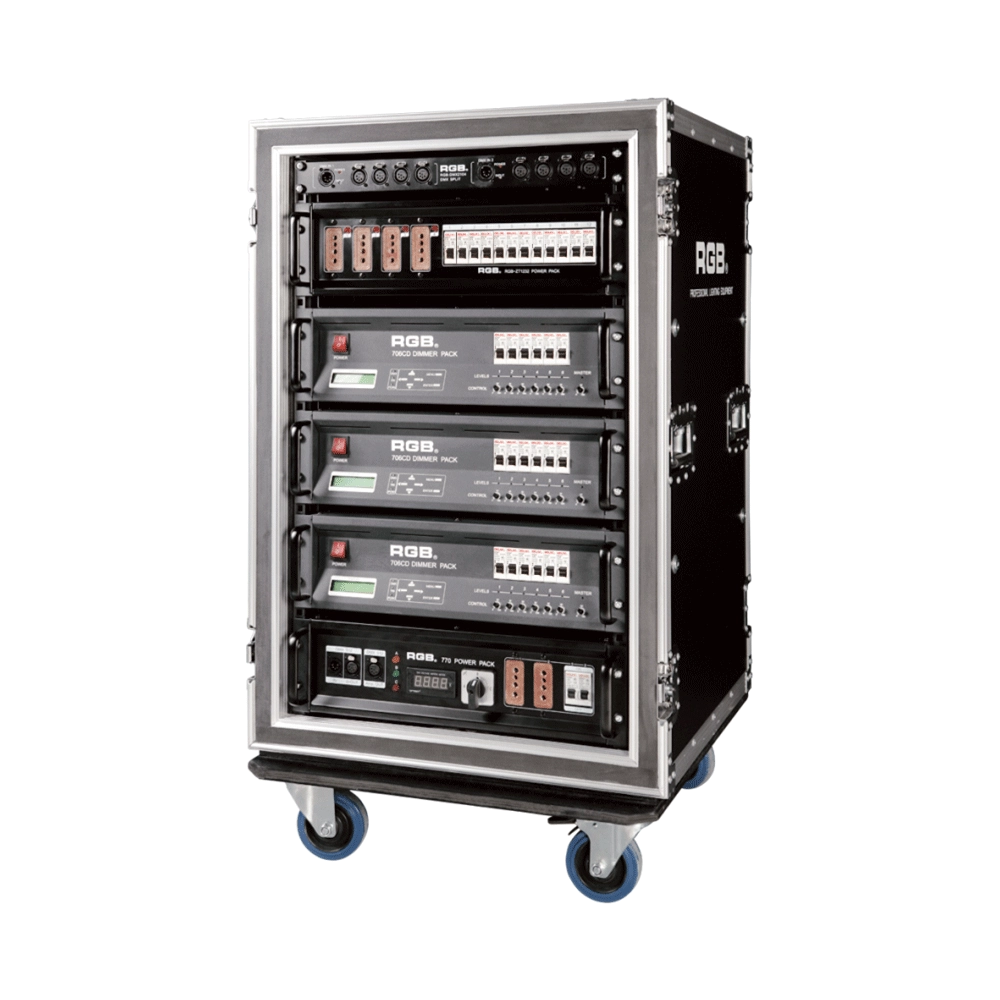
7 Series Digital Touring Dimmer Racks
7 Series digital touring dimmer racks can be assembled into many types of dimmer by taking the 7 Series dimmer as the unit. They are widely used in the entertainment industry for their convenience and practicability.
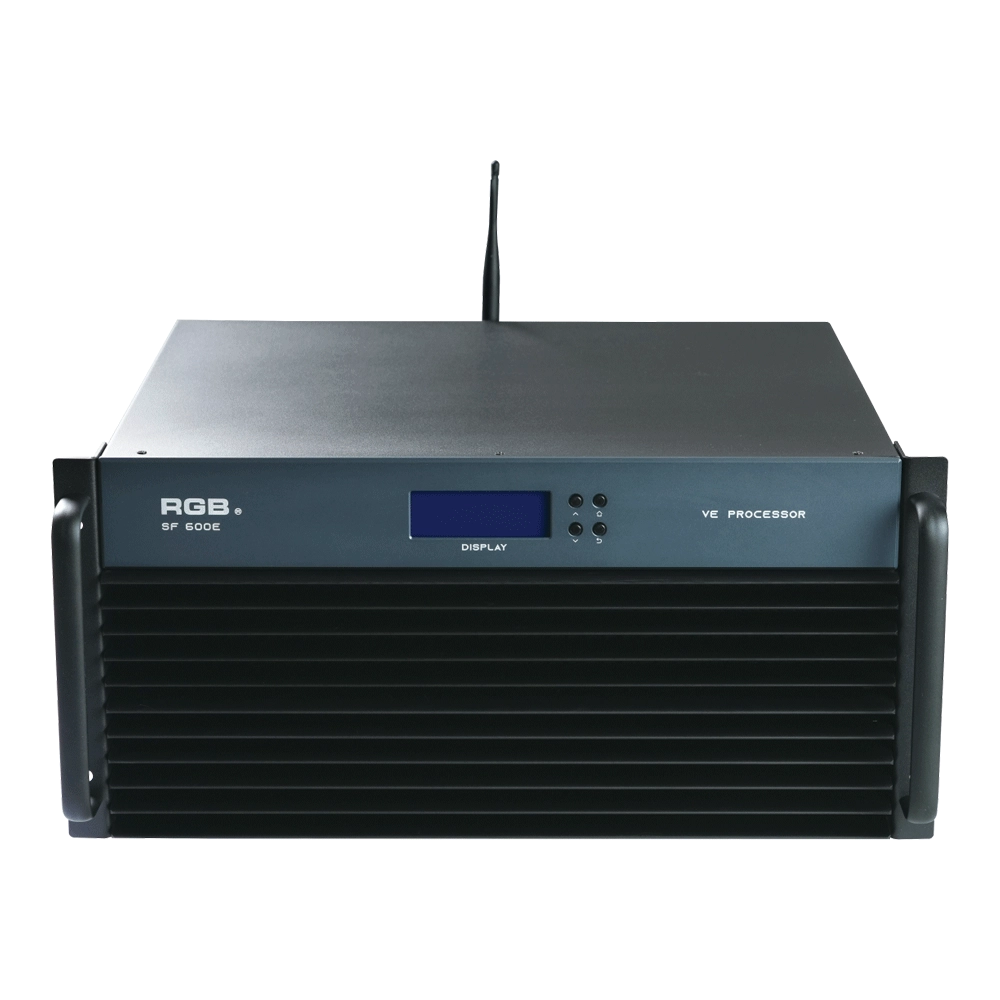
SF600E Visual R-net environment processor
The SF600E Visual R-net environment processor by RGB delivers advanced performance for visual systems. As a leading visual systems manufacturer, RGB ensures seamless integration and high reliability, making SF600E ideal for complex visual processing needs in diverse environments.
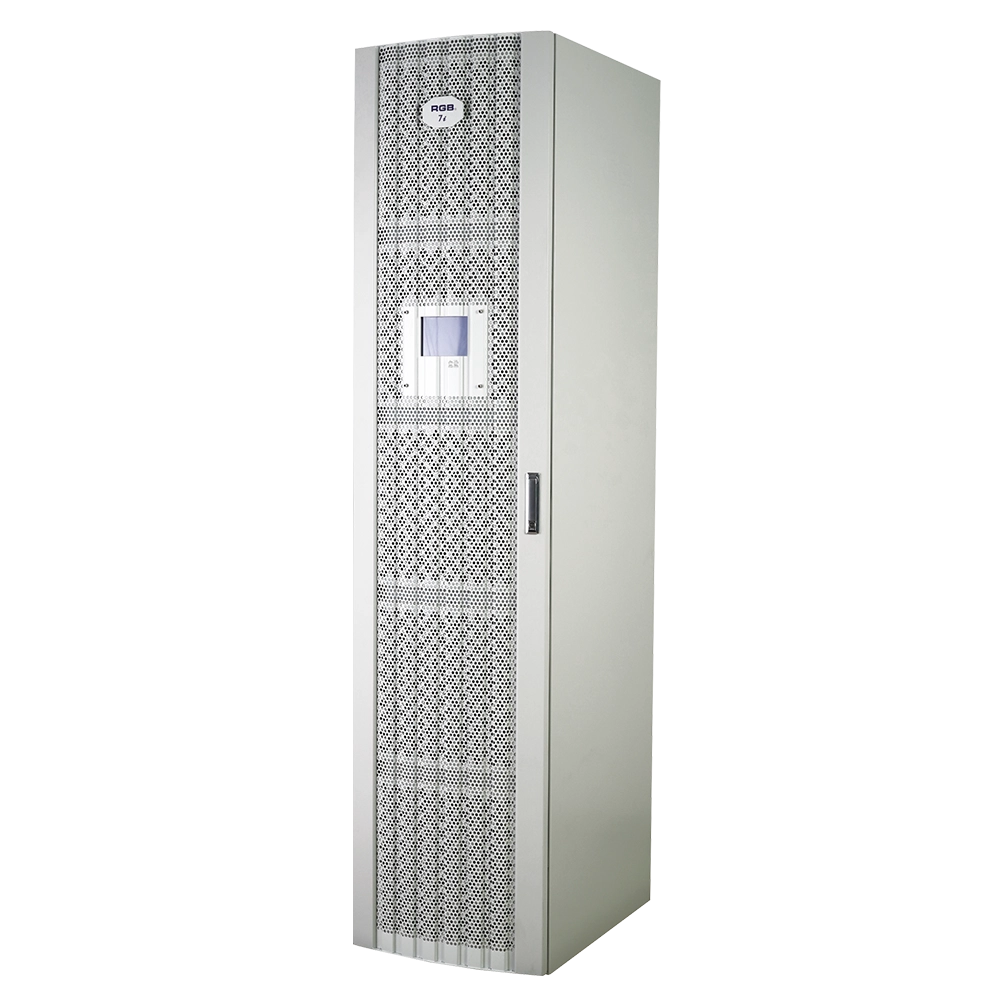
7i Dimmer/Relay Racks
7i is RGB independent research and development, with completely independent core technology, full digital decoding technology dimming racks, using a dual system, double decoding, double trigger, and duplex dual backup central decoding processor, with thyristor, relay, dimming relay mixed and other output configurations, supporting a visual lighting control system, intuitive display of dimming racks' online and offline status, and remote monitoring.
It is widely used in performing arts and cultural venues such as theaters, concert halls, multi-function halls, cultural travel and performing arts, TV stations, gymnasiums, auditoriums, commercial art lighting and so on.
Expert Support
Interested in learning more or need expert guidance related to this article? Fill in your details, and our team will provide tailored support.
Intelligent Control. Brilliant Performance.
RGB specializes in stage lighting control systems, delivering intelligent, reliable, and high-performance solutions for theaters and performance spaces worldwide.
Contact
Email:
Tel:
+86 20 3928 0245
+86 20 3928 0247
Address:
No.3, Huashan Road, Shilou Town, Panyu, Guangzhou, China.
Whatsapp: +8615975520131