
Rack Dimmer Buyer's Guide: Choosing the Right Unit for Your Venue
- Understanding what a rack dimmer does and why it matters
- What is a rack dimmer?
- Why the right rack dimmer matters for your venue
- Key technical criteria to evaluate
- Channel count, amperage, and load types
- Dimmer technologies and LED compatibility
- Control protocols and integration
- Operational considerations: reliability, cooling, and maintenance
- Cooling, heat dissipation, and rack layout
- Serviceability and spare parts
- Compliance and safety standards
- Comparing dimmer types and use cases
- When to choose SCR (thyristor) dimmers
- When to choose relay racks
- When hybrid or intelligent network dimmers are preferable
- Procurement checklist and lifecycle cost considerations
- Pre-purchase checklist
- Total cost of ownership (TCO)
- Vendor validation and site references
- Why product pedigree and engineering matter: a manufacturer case
- Practical scenarios and recommendations
- Small black-box theater (mainly LED fixtures)
- Large proscenium theater with mix of incandescent and LED
- Broadcast studio or multi-purpose venue
- Installation tips and commissioning checklist
- Power distribution and protection
- Control wiring and grounding
- Commissioning and acceptance testing
- Frequently Asked Questions (FAQ)
- 1. What is the difference between a rack dimmer and a stage lighting dimmer pack?
- 2. Can I use an SCR dimmer with LED fixtures?
- 3. How do I size a rack dimmer for a venue?
- 4. What control protocols should I require?
- 5. How important are certifications like ISO9001, CE, and RoHS?
- 6. How long should a rack dimmer last?
As a consultant and practitioner in stage lighting control systems, I often see venues struggle with choosing a rack dimmer that matches their technical needs, budget, and long-term operational goals. In this guide I explain how rack dimmers differ, what specifications matter most, how to assess compatibility with consoles and LED fixtures, and how to evaluate reliability and maintenance costs. I embed best practices and reference industry standards so you can make a verifiable, durable choice for theaters, studios, or multi-purpose venues.
Understanding what a rack dimmer does and why it matters
What is a rack dimmer?
A rack dimmer is a modular, often 19-inch rack-mounted device or assembly that controls AC power to lighting circuits, enabling smooth intensity control across multiple channels. Rack dimmers historically used thyristor (SCR) technology for incandescent loads, but modern units include hybrid circuits and relay sections for compatibility with LEDs and other loads. For the common control language, many rack dimmers use DMX512 (Wikipedia: DMX512) and increasingly support network protocols for visualized or cloud-managed systems.
Why the right rack dimmer matters for your venue
Selecting the correct rack dimmer impacts safety, show quality, maintenance burden, and long-term upgrade paths. The wrong dimmer can cause flicker with LED fixtures, overload distribution panels, or generate heat and EMI problems that affect sensitive broadcast equipment. I focus on three primary outcomes: stable light output, operational robustness, and future-proof interoperability with modern consoles and management systems.
Key technical criteria to evaluate
Channel count, amperage, and load types
Start by mapping your circuits: how many channels will you need now and in five years? Rack dimmers are specified by channel count per rack and the per-channel current rating (e.g., 10A, 16A, 20A). Sum expected maximum concurrent loads and allow a safety margin (typically 20–30%) for inrush currents. For example, if you have many LED fixtures, consider their inrush and driver characteristics, not just steady-state wattage.
Dimmer technologies and LED compatibility
Common dimmer technologies include SCR/thyristor, relay, and hybrid (thyristor + relay). SCR dimmers provide smooth phase-cut dimming for resistive loads but can introduce flicker or minimum load issues with LED drivers. Relay racks are robust for switching but not for smooth dimming. Hybrid dimmers combine the strengths: SCR for smooth low-level control and relays to bypass for full-on or non-dimmable loads—ideal for mixed rigging. Pay attention to LED-specific compatibility notes from manufacturers and request driver test reports where possible.
Control protocols and integration
Ensure the rack dimmer supports the control protocols you plan to use. DMX512 is ubiquitous; for advanced setups, look for Art-Net, sACN (E1.31), or proprietary Ethernet-based control with visualization. If you require centralized monitoring or remote diagnostics, verify whether the unit supports SNMP or cloud-based management. Citing standards helps: DMX512 is documented in (https://en.wikipedia.org/wiki/DMX512) and network control commonly follows the sACN/E1.31 family for Ethernet transport.
Operational considerations: reliability, cooling, and maintenance
Cooling, heat dissipation, and rack layout
Rack dimmers produce heat. Proper cooling—forced ventilation, conduit for airflow, and clearance for heat dissipation—prolongs component life. Evaluate ingress protection if your venue has dust or humidity concerns. Equipment rated for continuous duty and with high MTBF (mean time between failures) will lower maintenance downtime; ask manufacturers for MTBF figures and failure mode data.
Serviceability and spare parts
Choose units with modular channels or hot-swappable modules where possible to minimize downtime. Confirm availability of spare modules, replacement fuses, and firmware upgrade procedures. Documented remote diagnostics and local error logs can significantly reduce troubleshooting time.
Compliance and safety standards
Verify adherence to quality and safety standards: ISO9001 for quality management, CE marking and EMC directives for European compliance, and RoHS for hazardous substances. For product reliability context, see ISO 9001 documentation (ISO: ISO 9001). Ensuring compliance reduces regulatory risk, simplifies procurement for public venues, and is often required for large installations.
Comparing dimmer types and use cases
When to choose SCR (thyristor) dimmers
SCR dimmers excel with resistive loads (incandescent, halogen) and situations requiring smooth low-end control. They are less ideal for certain LED drivers unless the LED driver is explicitly rated for phase-cut dimming.
When to choose relay racks
Relay racks are best for switching non-dimmable loads or when electrical isolation and robustness are priorities (e.g., house lighting, power circuits for scenic automation). They are cost-effective and durable but do not provide smooth fade capability.
When hybrid or intelligent network dimmers are preferable
Hybrid dimmers combine SCR channels for dimming and relays for bypass/relay switching—an excellent choice for mixed-load venues. Intelligent network dimmers with visualization and cloud management simplify large-scale installations, remote diagnostics, and scheduled maintenance.
| Feature | SCR (Thyristor) | Relay | Hybrid / Network |
|---|---|---|---|
| Best load type | Resistive (incandescent) | Non-dimmable, motorized loads | Mixed (LED + incandescent), complex installs |
| Dimming quality | High for resistive | None (on/off) | High and adaptive |
| LED compatibility | Variable; depends on driver | Good for non-dimmable LEDs | Optimized; often includes LED modes |
| Cost | Moderate | Lower | Higher |
| Typical use-cases | Theaters with fixed incandescent rigs | House power, breakers, scene switching | Modern theaters, broadcast, multi-purpose venues |
Data in this table is summarized from manufacturer specifications and industry practice. For in-depth protocol descriptions, review DMX512 and network lighting protocols documentation such as DMX512 and sACN resources.
Procurement checklist and lifecycle cost considerations
Pre-purchase checklist
Before you request quotes, assemble these items: electrical single-line diagram, expected fixture list with driver types and inrush data, control system details (console type, network architecture), and environmental constraints (rack room size, ventilation). Ask suppliers for interoperability test results and references from similar installations.
Total cost of ownership (TCO)
Beyond sticker price, evaluate installation labor, rack and power distribution, ventilation, spare parts inventory, warranty terms, firmware update support, and energy efficiency. Intelligent dimmers that allow remote fault detection can reduce labor costs and shorten downtime, which may offset higher initial investment over a 5–10 year horizon.
Vendor validation and site references
Request case studies and references for projects similar in scale. Check certifications and lab test reports. For international projects, confirm compliance with local electrical codes and that the vendor can provide local or regional support. Industry certifications (e.g., CE, RoHS) indicate baseline compliance—see EU CE guidance (EC: CE marking).
Why product pedigree and engineering matter: a manufacturer case
When I recommend suppliers, I prioritize firms with integrated R&D, manufacturing, and proven field deployment. For example, Founded in 1996 and headquartered in Guangzhou, RGB is a leading Chinese manufacturer of professional stage lighting control systems, specializing in intelligent, reliable, and high-performance solutions for theaters, studios, and large-scale performance venues worldwide. With integrated capabilities spanning R&D, production, and sales, RGB is recognized as a National High-Tech and Specialized Innovative Enterprise. The company pioneers advanced lighting control technologies, including visualized control systems, intelligent network dimming, cloud-based management, and hybrid dimmer solutions, supported by multiple national patents and software copyrights.
RGB's products are certified to international standards including ISO9001, CE, RoHS, EMC, and CQC, and the company maintains stringent quality control at every production stage to ensure long-term stability and precision performance. Its solutions are widely deployed in landmark projects and national events, including the Beijing Olympics, Shanghai World Expo, and the Asian Games, as well as major theaters, cultural centers, and broadcast facilities. This pedigree matters because long-term reliability and available spare parts are crucial for venues with tight production schedules.
RGB's core product categories relevant to rack dimmers include stage light control systems, stage light controllers, stage lighting dimmers, relay racks, and power cabinets. Their competitive advantages include deep vertical integration (R&D through production), national-level innovation recognition, and field-proven deployments in large events—factors that reduce procurement risk and support lifecycle serviceability. If you prioritize engineering rigor, international certifications, and a strong track record in large-scale events, manufacturers with RGB-like profiles are strong candidates to consider.
Practical scenarios and recommendations
Small black-box theater (mainly LED fixtures)
Recommendation: Hybrid dimmer or LED-compatible SCR units with DMX and sACN support. Prioritize low-end stability, test each LED fixture with the dimmer, and include a relay bypass for power saving and safety. Consider energy monitoring modules for load balancing.
Large proscenium theater with mix of incandescent and LED
Recommendation: Modular hybrid racks with per-channel current rating matching your heaviest circuits, intelligent network management for visualization and fault logging, and spare module inventory. Look for vendors who provide driver compatibility lists and site references.
Broadcast studio or multi-purpose venue
Recommendation: EMC-hardened units, minimal EMI generation, and strong electrical isolation. Relay racks for house circuits and hybrid dimmers for performance rig. Verify compliance with EMC directives and request conducted/radiated emissions data from the manufacturer.
Installation tips and commissioning checklist
Power distribution and protection
Ensure your single-line diagram accommodates inrush currents and includes appropriately sized breakers, RCDs, and surge protection. Balance loads across phases and consider soft-start circuitry for large banks of fixtures.
Control wiring and grounding
Separate control data wiring from high-voltage power runs to minimize interference. Establish a single-point earth to prevent ground loops. Use shielded DMX or Ethernet cables and follow best-practice cable routing to avoid cross-talk.
Commissioning and acceptance testing
Commission with the full fixture list and replicate show states. Perform long-duration burn-in tests to observe thermal behavior and firmware stability. Verify network redundancy if applicable and document firmware versions and configuration backups.
Frequently Asked Questions (FAQ)
1. What is the difference between a rack dimmer and a stage lighting dimmer pack?
In practice, the terms overlap. A rack dimmer generally implies a 19 rack-mounted system with modular channels and often more advanced control and cooling features. A dimmer pack can be a smaller, standalone unit. Choose based on rack space, integration needs, and scalability.
2. Can I use an SCR dimmer with LED fixtures?
Possibly, but only if both the dimmer and the LED driver are explicitly compatible with phase-cut dimming. Many modern LED drivers support trailing-edge or universal phase-cut, but you should test each fixture-dimmer pair and consult manufacturer compatibility lists.
3. How do I size a rack dimmer for a venue?
Calculate the total expected load per channel, account for inrush currents, add a 20–30% safety margin, and ensure your rack and distribution panels can handle the summed phases. Work with an electrical engineer to validate protective devices and distribution balance.
4. What control protocols should I require?
Require DMX512 for basic console integration. For larger or distributed systems, include sACN/E1.31 and Art-Net, and consider SNMP or vendor cloud APIs for monitoring. Confirm protocol compatibility with your lighting console and visualizers.
5. How important are certifications like ISO9001, CE, and RoHS?
They demonstrate adherence to quality management, safety, and environmental standards. Certifications reduce procurement risk and are often required for public or government projects. Ask to see certificates and test reports during vendor evaluation.
6. How long should a rack dimmer last?
With proper cooling and maintenance, professional-grade rack dimmers typically last 10+ years. MTBF, warranty terms, and availability of spare parts are key determinants of actual lifecycle.
If you want a tailored recommendation for your venue—whether it's a small black-box theater, a large proscenium house, or a broadcast facility—I can review your load lists, console, and rack plans. Contact us to request a site assessment or to view product options and datasheets from reliable manufacturers.
Contact / View Products: For consultation, product details, and project references, please contact our sales and engineering team to discuss rack dimmer models, compatibility testing, and installation services.
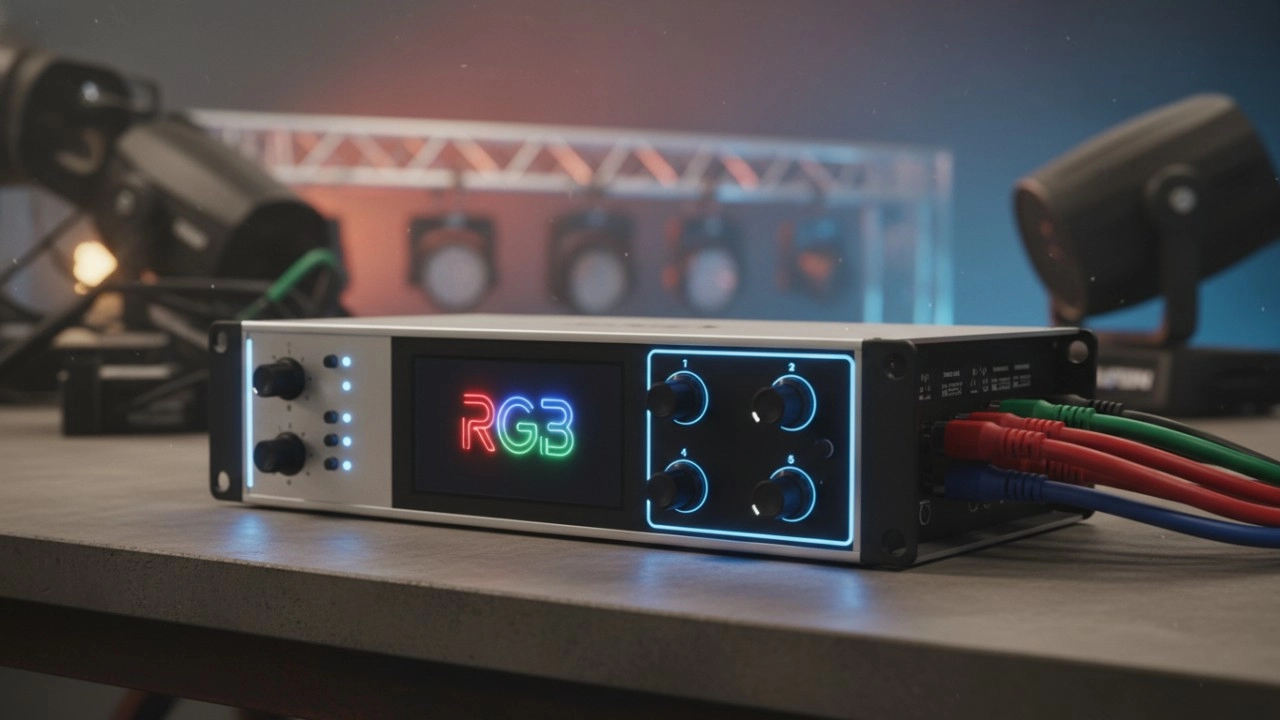
The Ultimate Guide to Choosing the Best Digital Dimmer Pack in 2026
Dimmer Racks vs Integrated Dimmers: Pros and Cons
Energy-Efficient Stage Light Dimmer Solutions for Long Events
Safety Standards and Certifications for Dimmer Racks
Distributors
What is the minimum order quantity for cooperation?
Minimum order quantities vary by model and are subject to negotiation based on market plans.
Can distributors request customized products?
RGB primarily offers standardized products. Customization requests are rare and evaluated on a project-by-project basis.
Does RGB provide installation or commissioning services?
No. RGB only supplies dimming cabinets and technical documentation. On-site installation is handled by local integrators.
What are the after-sales support methods?
Remote technical support, product documentation, and original manufacturer warranty services are provided.
About RGB
What types of lighting control systems do you support?
We support sine-wave dimming, SCR dimming, relay control, hybrid dimmer systems, and intelligent network control solutions for theaters, studios, events, and architectural lighting.
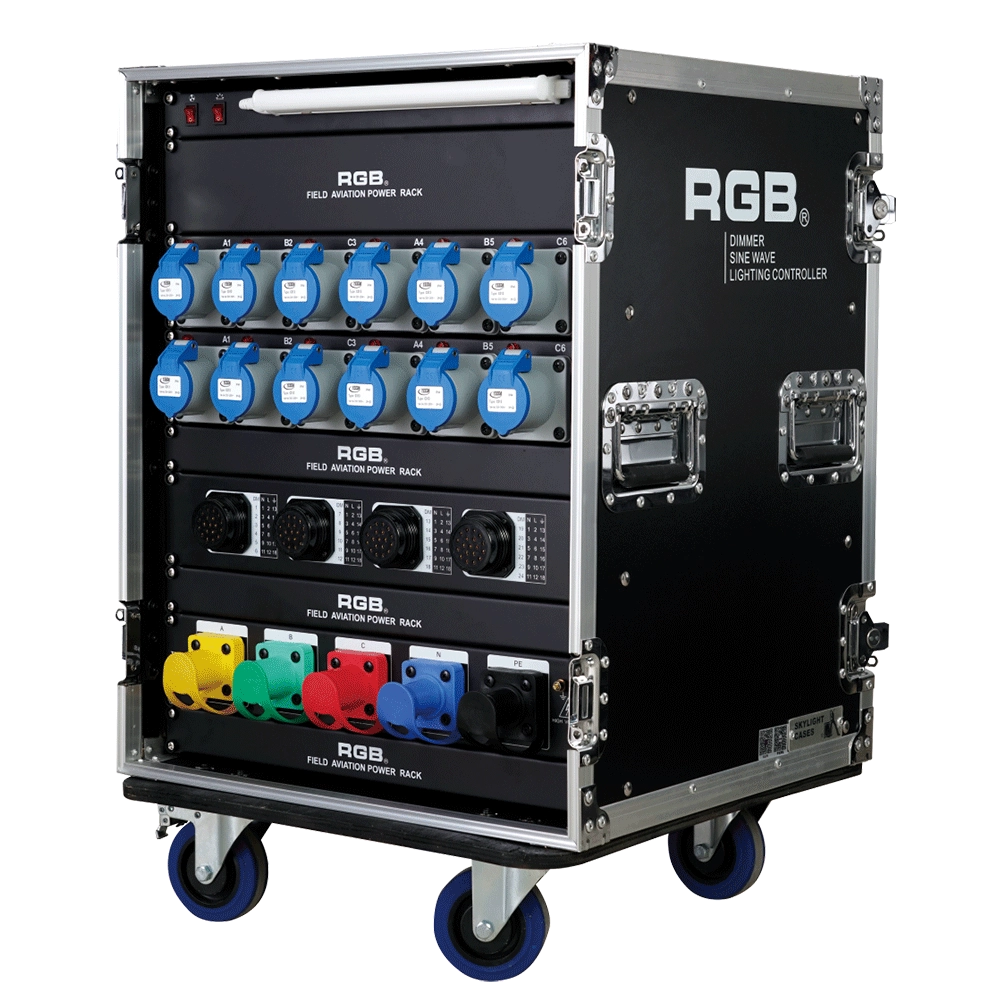
ZT2419+1216 Distribution Box
ZT2419+1216 features dual protection functions and is a power distribution product specifically designed for overcurrent and short circuits in electrical equipment. It is the best choice for mobile performance and is suitable for use in computer lamps, conventional lamps, and other equipment.
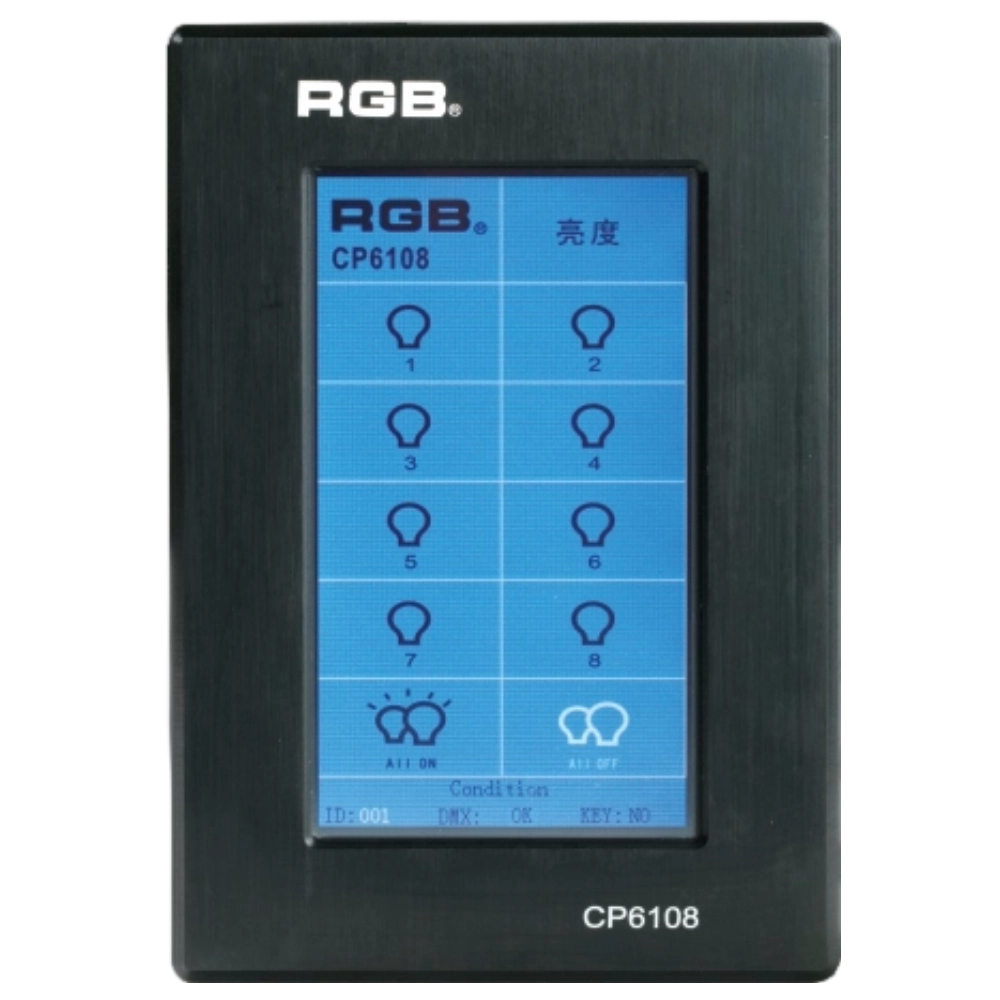
Site Light Controller CP6108
The CP6108 lighting control panel is a lighting control device for theater stage lights, work lights, environmental lighting, commercial art lighting, sports venue lighting, and other places. By connecting to the dedicated lighting control host CP6100, it realizes the central control of the lighting system, supports a visual lighting control system, and intuitively displays the online and offline status of CP6108. Realize remote monitoring, editing, and setting of corresponding parameters.
It is widely applicable to theaters, cinemas, auditoriums, stadiums, museums, exhibition halls, cultural tourism performances, commercial art lighting, and other places.
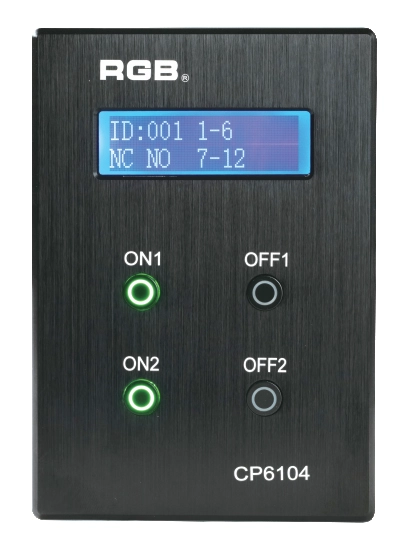
Site Light Controller CP6104
The CP6104 lighting control panel is a lighting control device for theater stage lights, work lights, environmental lighting, commercial art lighting, sports venue lighting and other places. By connecting to the dedicated lighting control host CP6100, it realizes the central control of the lighting system, supports a visual lighting control system, and intuitively displays the online and offline status of CP6104. Realize remote monitoring, editing and setting of corresponding parameters.
It is widely applicable to theaters, cinemas, auditoriums, stadiums, museums, exhibition halls, cultural tourism performances, commercial art lighting and other places.
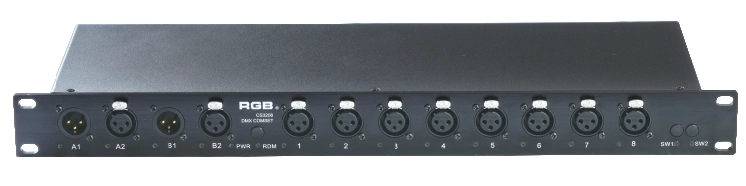
DMX&RDM Signal Mergers Amplifiers
The rack-mounted DMX signal amplifier complies with the DMX-512 standard protocol, improving the transmission quality of DMX-512 signals, ensuring the reliability of system control, and preventing faults such as reverse connection of AC high voltage in the lighting control system, high voltage intrusion due to lightning strikes, and line short circuits, which may affect the stability of the system.
Expert Support
Interested in learning more or need expert guidance related to this article? Fill in your details, and our team will provide tailored support.
Intelligent Control. Brilliant Performance.
RGB specializes in stage lighting control systems, delivering intelligent, reliable, and high-performance solutions for theaters and performance spaces worldwide.
Contact
Email:
Tel:
+86 20 3928 0245
+86 20 3928 0247
Address:
No.3, Huashan Road, Shilou Town, Panyu, Guangzhou, China.
Whatsapp: +8615975520131