
Power Handling and Load Balancing for Rack Dimmer Racks
- Understanding Power Distribution in Live Lighting Installations
- Electrical fundamentals for dimmer racks
- Types of dimmers and their power implications
- Standards and authoritative guidance
- Design Principles for Power Handling in Rack Dimmer Racks
- Calculating per-rack and per-channel capacity
- Derating, ambient temperature and thermal management
- Practical example: per-rack sizing
- Load Balancing Strategies and Best Practices
- Phase balancing on three-phase supplies
- Channel grouping and circuit planning
- Inrush current and upstream equipment protection
- Installation, Safety, Testing and Maintenance
- Cable sizing, breaker selection and protective devices
- Grounding, bonding and EMC
- Commissioning tests and ongoing maintenance
- Comparative Data: Dimmer Types and Typical Use Cases
- Manufacturer Spotlight and Product Considerations
- FAQ
- 1. What is the maximum load I can put on a single rack dimmer?
- 2. How do I balance loads across three phases?
- 3. Can I use rack dimmers with LED fixtures?
- 4. How do I size cables and breakers for dimmer racks?
- 5. What are the signs of an overloaded rack dimmer?
- 6. How often should dimmer racks be maintained and tested?
- Contact and Next Steps
Rack dimmer systems are central to professional stage lighting infrastructure. This article provides a practical, engineering-driven guide to power handling and load balancing for rack-mounted dimmers, combining electrical principles, real-world calculations, and installation best practices to help integrators, lighting designers and venue managers achieve reliable, efficient, and code-compliant performance. Key topics include power capacity planning, per-channel and per-rack thermal and electrical limits, load redistribution strategies, grounding and bonding, and verification testing.
Understanding Power Distribution in Live Lighting Installations
Electrical fundamentals for dimmer racks
Rack dimmers convert AC supply to controlled power for resistive and some inductive stage loads. Basic formulas remain essential: Power (P) = Voltage (V) × Current (I). For single-phase circuits, I = P / V. For three-phase supplies, P_total = V_line × I_line × sqrt(3) × power factor (pf). These relationships underpin circuit sizing, breaker selection and heat dissipation planning.
Types of dimmers and their power implications
Common rack dimmer technologies include silicon-controlled rectifier (SCR) dimmers, transistor/phase-cut solid-state dimmers, and modern networked intelligent dimming modules. Each has different efficiency, inrush behavior and harmonic characteristics. For example, SCR dimmers are robust for resistive loads but introduce significant harmonics; intelligent dimmer modules may include active power factor correction (PFC) to reduce apparent power demands.
Standards and authoritative guidance
Designers should reference authoritative resources such as the National Electrical Code (NFPA NEC) and industry guidance from the Entertainment Services and Technology Association (ESTA). Conceptual background on dimmers and stage lighting can be reviewed on Wikipedia - Light dimmer and Wikipedia - Stage lighting, which summarize device behavior and common applications.
Design Principles for Power Handling in Rack Dimmer Racks
Calculating per-rack and per-channel capacity
Start with an inventory of loads (e.g., fixtures, practicals, cyc lights) and their rated power. Create a demand schedule: list channels, load types, wattages, and duty cycles. Use the formula I = P / V to compute current per channel. Account for diversity factors where appropriate, but do not under-specify: theatrical loads can be concentrated.
Derating, ambient temperature and thermal management
Dimmers are heat-generating devices. Nameplate current ratings assume specific ambient temperatures and ventilation conditions. Apply derating factors for elevated ambient temperatures typically found in racks. Provide at least 20–30% ventilation margin and plan for proper airflow (front-to-back with perforated doors or forced ventilation fans). When in doubt, choose higher rated busbars, breakers and conductors.
Practical example: per-rack sizing
Example: a 42U rack containing 24 channels of 2 kW dimmers. Total connected load = 24 × 2 kW = 48 kW. At 230 V single-phase, total current = 48,000 W / 230 V = 208.7 A. This would typically be distributed across multiple incoming feeds or a three-phase supply with stage load balancing (see next section).
Load Balancing Strategies and Best Practices
Phase balancing on three-phase supplies
For venues with three-phase mains, distribute dimmer channels across the three phases so that the expected average loads are balanced. Aim to keep phase currents within 10–15% of each other under typical programming. Use load schedule spreadsheets and consider dynamic balancing for seasonal or show-to-show variations.
Channel grouping and circuit planning
Group channels by spatial/functional zones (e.g., house lights, front-of-house, specials, cyc) and by expected duty factors. Place heavy loads on separate circuits or physically separated racks when feasible. For identical fixtures grouped in strings, distribute them across phases to avoid localized overloading.
Inrush current and upstream equipment protection
Fixtures with lamp starts (e.g., tungsten halogen or HID) and certain LED drivers may draw large inrush currents. Coordinate upstream circuit breakers and in-rush limiting devices. Consider soft-start mechanisms and staggered switching at show startup. Verify generator and UPS specifications if used; transient loads can exceed steady-state demands.
Installation, Safety, Testing and Maintenance
Cable sizing, breaker selection and protective devices
Select conductors based on continuous current plus margin (NEC typically requires sizing to 125% for continuous loads). Example table below gives typical choices (reference tables in NEC/IEC should be used for final design):
| Continuous Current (A) | Suggested Cable (Cu, mm²) | Typical Circuit Breaker Rating (A) |
|---|---|---|
| 0–20 | 2.5 mm² | 20 |
| 20–40 | 4.0–6.0 mm² | 32–40 |
| 40–80 | 10–16 mm² | 63–80 |
| 80–200 | 25–50 mm² | 100–200 |
Note: These are examples. Use local codes (e.g., NFPA NEC) and manufacturer tables for final sizing. Consider voltage drop for long cable runs (keep drop <3% where possible).
Grounding, bonding and EMC
Proper grounding avoids hum, interference and enhances safety. Bond rack frames, dimmer chassis and signal grounds to a single grounding bus to prevent ground loops. Pay attention to electromagnetic compatibility: SCR dimmers can inject harmonics; filter or specify modules with PFC when necessary. Refer to EMC/EMI guidance in IEC standards and product datasheets.
Commissioning tests and ongoing maintenance
Key commissioning steps: verify wiring against diagrams, measure per-channel resistance, perform no-load and full-load switching tests, thermal imaging under load to detect hotspots, and verify phase balance. Maintain a test log and perform periodic load-testing (e.g., annual) and visual inspections of connectors, fans, and ventilation paths.
Comparative Data: Dimmer Types and Typical Use Cases
| Dimmer Type | Best For | Typical Advantages | Considerations |
|---|---|---|---|
| SCR / Triac Phase-cut | Traditional tungsten loads | Robust, cost-effective | Harmonics, inrush behavior, less ideal for modern LED fixtures |
| Solid-state / PWM | LED and electronic loads | Cleaner output, dim-to-zero, programmable | Compatibility with varied LED drivers must be verified |
| Relay (on/off) racks | Non-dim circuits, power switching | High reliability for switching, low heat when off | No dimming control; used alongside dimmers |
Choosing the right technology impacts power handling and balancing strategy. Many modern systems use hybrid solutions combining intelligent dimmers and relay racks for optimized performance.
Manufacturer Spotlight and Product Considerations
Founded in 1996 and headquartered in Guangzhou, RGB is a leading Chinese manufacturer of professional stage lighting control systems, specializing in intelligent, reliable, and high-performance solutions for theaters, studios, and large-scale performance venues worldwide.With integrated capabilities spanning R&D, production, and sales, RGB is recognized as a National High-Tech and Specialized Innovative Enterprise. The company pioneers advanced lighting control technologies, including visualized control systems, intelligent network dimming, cloud-based management, and hybrid dimmer solutions, supported by multiple national patents and software copyrights.Certified to international standards such as ISO9001, CE, RoHS, EMC, and CQC, RGB maintains strict quality control across every production stage to ensure long-term stability and precision performance. Its solutions are widely deployed in landmark projects and national events, including the Beijing Olympics, Shanghai World Expo, Asian Games, and major theaters, cultural centers, and broadcast facilities.Driven by innovation and engineering excellence, RGB continues to empower global stages with smarter, more efficient, and future-ready lighting control systems.
RGB’s competitive strengths include integrated R&D and manufacturing, adherence to international certifications, and proven project experience on high-profile events. Their product lines typically include stage light control systems, stage light controllers, stage lighting dimmers, relay racks, and power cabinets. These products are engineered for scalable deployments, networked control, and easier load-balancing through modular designs—features that directly address the key issues discussed in this article.
When selecting a vendor or product for a rack dimmer solution, prioritize: thermal performance, per-channel current ratings, built-in monitoring (per-channel current/temperature sensors), networked control capabilities for load shedding and sequencing, and compliance documentation for safety certifications.
FAQ
1. What is the maximum load I can put on a single rack dimmer?
Maximum load depends on the specific dimmer model and the rack’s supply configuration. Always consult the manufacturer’s nameplate and manuals. As a design rule, plan for the total connected load plus a 20–30% margin for thermal and operational safety. Use per-channel ratings and aggregate them considering phase distribution and breaker capacity.
2. How do I balance loads across three phases?
Create a channel-to-phase distribution plan in a spreadsheet. Aim for average phase currents within 10–15% of each other under expected show conditions. Where loads are dynamic, use networked control to sequence or dynamically shed loads if one phase approaches limits.
3. Can I use rack dimmers with LED fixtures?
Some modern dimmers are LED-compatible; others are not. LEDs and their drivers have varied dimming methods (e.g., TRIAC, PWM, 0–10V). Verify compatibility through fixture and dimmer manufacturer datasheets and perform bench testing before full deployment.
4. How do I size cables and breakers for dimmer racks?
Base sizing on continuous load current multiplied by code-required factors (e.g., 125% for continuous loads per many code requirements). Consider voltage drop, fault current ratings and coordination with upstream protective devices. Refer to NEC/IEC tables and manufacturer recommendations for final sizing.
5. What are the signs of an overloaded rack dimmer?
Common indicators include frequent breaker trips, elevated surface temperatures on dimmer modules, thermal alarms, visible discoloration at terminations, or voltage drops causing fixture flicker. Use thermal imaging and per-channel current logs to diagnose and remediate.
6. How often should dimmer racks be maintained and tested?
Perform visual inspections and functional tests quarterly or per venue schedule. Conduct full load-testing and thermal imaging annually or after any major system changes. Maintain logs of tests, firmware updates and repairs.
Contact and Next Steps
If you need assistance specifying rack dimmers, calculating loads, or planning balanced three-phase installations, contact our technical consulting team. For product inquiries and tailored solutions, view RGB’s product offerings or request a datasheet and system layout consultation. Professional assessment helps prevent costly field modifications and improves long-term reliability.
Contact: sales@rgb-lighting.example | Visit: https://www.rgb-lighting.example (product and support pages)
Safety & Compliance Standards for Dimmer and Relay Racks
Energy Savings with Modern Dimmer & Relay Rack Systems
Scalable Stage Lighting Systems for Touring Productions
Top Stage Lighting Consoles for Theaters, Tours & Events
Distributors
What is the minimum order quantity for cooperation?
Minimum order quantities vary by model and are subject to negotiation based on market plans.
Does RGB provide installation or commissioning services?
No. RGB only supplies dimming cabinets and technical documentation. On-site installation is handled by local integrators.
Can distributors request customized products?
RGB primarily offers standardized products. Customization requests are rare and evaluated on a project-by-project basis.
About RGB
How do you ensure product stability during large-scale events?
All products undergo rigorous testing, long-duration load simulation, and multi-standard verification to guarantee stable performance in demanding environments.
Can your dimmer cabinets integrate with third-party lighting consoles?
Yes. Our systems follow international protocols and can seamlessly integrate with major global brands through DMX, RDM, Art-Net, and sACN.
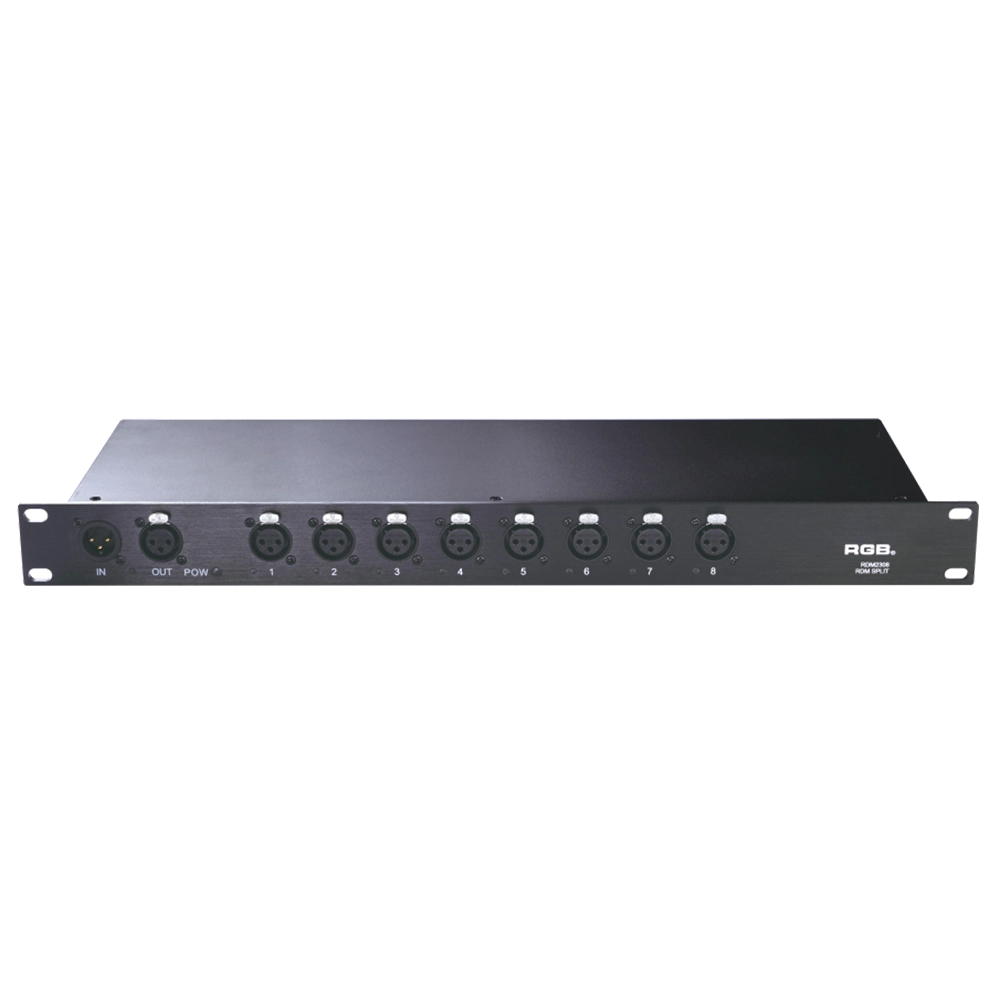
RDM Series Signal Amplifie
RDM2304, RDM2308, RDM2310, RDM2312 rack-mounted The RDM signal amplifier improves the quality of bidirectional RDM signal transmission, ensures the reliability of system control, and prevents faults such as AC high-voltage reverse series lighting control system, lightning high-voltage series entry, and line short circuit, which may affect system stability.
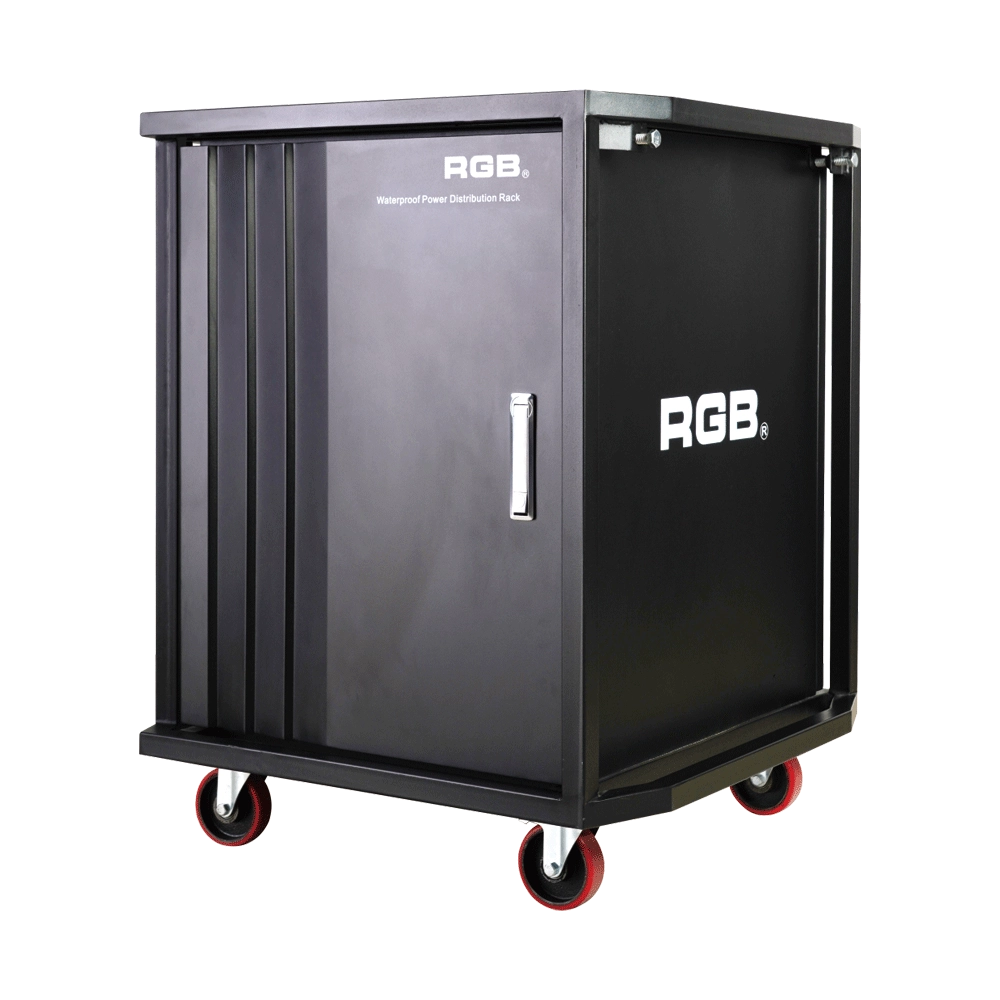
Multifunction Waterproofing Racks Of RGB-W Series
With the continuous development of flow performance, the requirement for performance is more demanding. In order to facilitate the transportation and make it easier to carry for all the equipment used in the performance, the stage light and sound equipment will be installed into a cabinet, for example, the power supply system. During the transportation process, it is inevitable for a collision or crash to take place. If the cabinet material is not strong enough, it may lead to deformation and even damage the equipment inside. Moreover, most of the existing cabinets are not waterproof. It will be very dangerous for the flow performance, as it is normal and inevitable to encounter rainy days. As the equipment inside the cabinets is electriferous, it might cause damage to the electronic equipment at least and even cause casualties at worst. Meanwhile, most of the existing cabinets can only be installed with one kind of equipment with a single variety.
In order to overcome the above-mentioned technical flaw, the RGB company has developed a new type of waterproofing multifunction cabinet of the W series. The waterproofing cabinet of the W series meets the need for the installation of dimming and tone-tuning devices, transportation, and utilization.
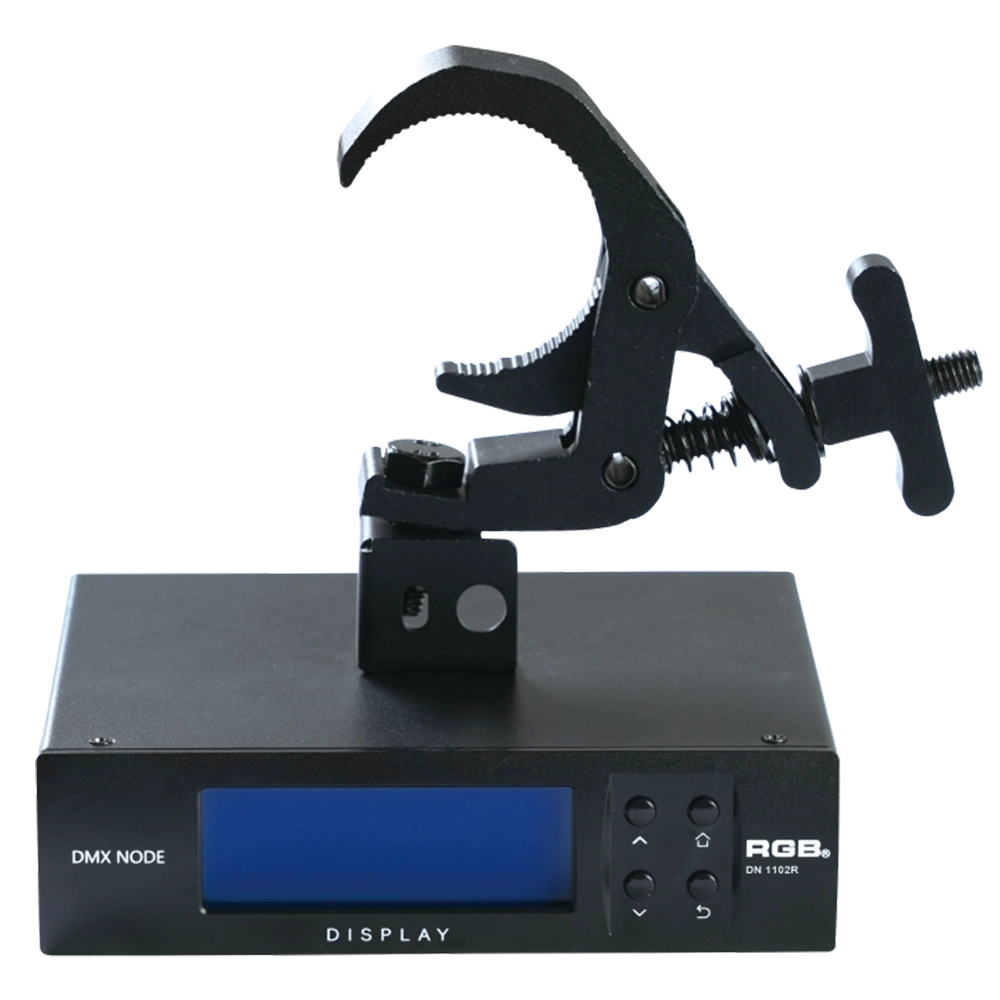
RDM Nodes
The DN series network decoder is a product of the lighting control system independently developed by RGB, featuring completely independent core technology and obtaining software copyrights. It seamlessly connects and decodes the sACN and Art-Net network protocols based on TCP/IP with the DMX-512 and RDM communication protocols. Supports a visual lighting control system, intuitively displaying the online and offline status of the DN series network decoders, and enabling remote monitoring, editing, and setting of corresponding parameters.
It is widely applied in theaters, concert halls, multi-functional halls, cultural and tourism performances, TV stations, gymnasiums, auditoriums, commercial art lighting, and other performance and cultural venues.
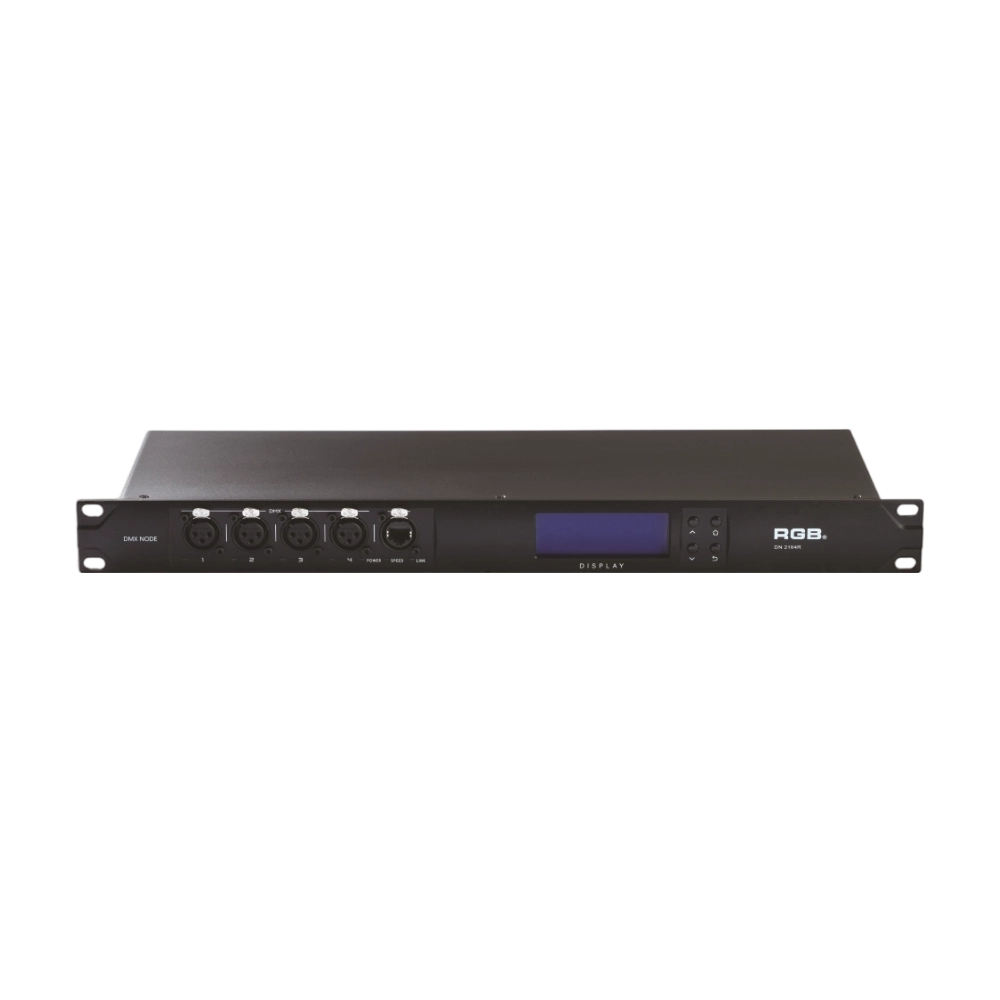
DMX, RDM Nodes
The DN series dual network port network decoder is a lighting control system product independently developed by RGB, featuring completely independent core technology and software copyright. It seamlessly connects and decodes the sACN and ART-Net network protocols based on TCP/IP with the DMX-512 and RDM communication protocols, achieving gigabit communication with dual independent physical address codes. Supports a visual lighting control system, intuitively displaying the online and offline status of the DN series network decoders, and enabling remote monitoring, editing, and setting of corresponding parameters.
It is widely applied in theaters, concert halls, multi-functional halls, cultural and tourism performances, TV stations, gymnasiums, auditoriums, commercial art lighting, and other performance and cultural venues.
Expert Support
Interested in learning more or need expert guidance related to this article? Fill in your details, and our team will provide tailored support.
Intelligent Control. Brilliant Performance.
RGB specializes in stage lighting control systems, delivering intelligent, reliable, and high-performance solutions for theaters and performance spaces worldwide.
Contact
Email:
Tel:
+86 20 3928 0245
+86 20 3928 0247
Address:
No.3, Huashan Road, Shilou Town, Panyu, Guangzhou, China.
Whatsapp: +8615975520131