
Portable 48-Channel Dimmer Racks for Touring and Rentals
- Why portable dimmer racks matter on tour
- Practical trade-offs: channel density vs portability
- Control compatibility and standards
- Why 48 channels is a common choice
- Specifying a 48 channel dimmer rack: electrical and mechanical considerations
- Power capacity and per-channel ratings
- Cooling, ventilation, and thermal management
- Mechanical form factor and roadworthiness
- Deployment and operational workflows for touring and rental use
- Power distribution planning
- Patching, labeling, and cable management
- On-tour maintenance checklist
- Comparisons, numbers, and cost of ownership
- Comparative table: typical portable rack options
- Cost of ownership considerations
- Reliability metrics and standards
- Vendor selection, warranties and the case for choosing an experienced manufacturer
- What to ask your supplier
- Serviceability and spare parts
- RGB — a manufacturer profile and capabilities
- Troubleshooting common problems on the road
- DMX signal issues and fixes
- Heat-related channel failures
- Electrical noise and EMC problems
- Frequently Asked Questions (FAQ)
- 1. Is a 48 channel dimmer rack enough for a small touring band?
- 2. What mains feed do I need for a 48 channel rack?
- 3. How do I transport a portable 48 channel dimmer rack safely?
- 4. Can I combine multiple 48 channel racks under one lighting console?
- 5. Are LED fixtures safe to use with traditional dimmer racks?
- 6. What certifications should I require from a dimmer rack vendor?
I write from years of touring and rental experience designing and deploying stage lighting systems worldwide. In this article I focus on the 48 channel dimmer rack as a practical, widely used configuration that balances channel count with portability. I cover when a 48-channel solution is the right choice, how to spec and plan power and control, deployment and transport tips, maintenance and troubleshooting workflows, and how to evaluate vendors and warranty/standards compliance. Throughout I include concrete comparisons, verifiable references to relevant standards, and actionable checklists to help you make decisions that reduce downtime and total cost of ownership.
Why portable dimmer racks matter on tour
Practical trade-offs: channel density vs portability
Tours and rental operations require equipment that is robust, fast to rig, and predictable. A 48 channel dimmer rack offers a sweet spot for many small to mid-size productions: enough channels to control a typical concert front- and side-light rig or a medium theatrical show, while still remaining transportable and serviceable on the road. Compared with larger fixed installations, a portable 48 channel dimmer rack reduces flight case size, on-site rigging time, and replacement-part complexity.
Control compatibility and standards
Modern portable racks are expected to accept industry-standard control protocols. DMX512 remains the established control protocol for conventional dimming and many fixtures (DMX512 — Wikipedia). When specifying a 48 channel dimmer rack, ensure it supports the required DMX universe mappings, remote monitoring (via SNMP or manufacturer protocols), and — where applicable — RDM (Remote Device Management) for device addressing and diagnostics.
Why 48 channels is a common choice
From a logistic standpoint, 48 channels often map neatly to one rack segment that can be physically and electrically managed, while allowing two racks (or one 48 + one 24) to be combined for larger needs. Many touring lighting console patching approaches also favor multiples of 12 or 24 channels per rack, making 48 channels efficient for common fixture counts.
Specifying a 48 channel dimmer rack: electrical and mechanical considerations
Power capacity and per-channel ratings
When specifying a 48 channel dimmer rack, the primary electrical decisions are per-channel current ratings (commonly 10A, 16A, or 20A), total rack mains feed, and breaker/fuse arrangements. For example, a rack with 48 channels at 10A per channel requires infrastructure capable of handling expected simultaneous loads. Use diversity factors based on lamp type (incandescent vs LED with electronic drivers) to avoid overspecifying mains. For planning guidance on safety and product standards, consult ISO 9001 quality management principles for supply chain consistency (ISO 9001 — ISO).
Cooling, ventilation, and thermal management
Heat is the leading failure mode for touring dimmer racks. Portable 48 channel dimmer racks must have well-designed ventilation or forced cooling and thermal monitoring. Look for racks with temperature sensors and per-circuit thermal protection to prevent cascading failures. Good airflow design also reduces maintenance intervals and increases mean time between failures (MTBF).
Mechanical form factor and roadworthiness
A touring 48 channel dimmer rack typically comes in a road case or an integrated flight-case rack. Key mechanical considerations: shock-mounted internals, easy-access front and rear panels for quick repairs, and clear labelling for each channel. Rack units (RU) vary by manufacturer; confirm the rack's mounting pattern and whether it fits your road case and transport vehicles.
Deployment and operational workflows for touring and rental use
Power distribution planning
Always plan mains feeds, earth bonding, and local distribution ahead of load-in. Use per-channel load spreadsheets and on-site load meters. I recommend labeling each phase and using color-coded cabling for three-phase feeds. For temporary events or venues with uncertain power quality, portable voltage regulation and UPS for control electronics can prevent show-stopping faults.
Patching, labeling, and cable management
Consistency wins. I insist on a patching and labeling standard: rack-channel labeling, DMX addressing documented in a show file, and color-coded Soco/Multicore where used. Quick access to a printed and digital patch sheet in the case reduces error rates during fast turnarounds.
On-tour maintenance checklist
My touring maintenance checklist for a 48 channel dimmer rack includes: visual inspection, channel-by-channel load balance check, thermal scan, fuse/breaker verification, DMX signal integrity test (verify 120-ohm termination and cable continuity), and firmware checks. Keep a small spares kit with fuses, common relays/contactors, and a spare PSU module if the rack supports hot-swappable parts.
Comparisons, numbers, and cost of ownership
Comparative table: typical portable rack options
| Specification | 24-channel (typical) | 48-channel (typical) | 96-channel (typical) |
|---|---|---|---|
| Rack height (RU) | 8–12 RU | 12–20 RU | 24–40 RU |
| Approx. weight (in case) | 25–40 kg | 40–70 kg | 80–140 kg |
| Typical per-channel rating | 10–16 A | 10–16 A | 10–32 A |
| DMX universes required | 1 | 1 | 2+ |
| Portability score (1–5) | 5 (very portable) | 4 (balanced) | 2 (less portable) |
Note: values are typical ranges to illustrate relative trade-offs. Exact numbers depend on manufacturer and model. DMX512 supports 512 channels per universe (reference), so a 48 channel dimmer rack typically consumes less than one DMX universe for conventional dimming control.
Cost of ownership considerations
When evaluating rental vs purchase costs, include transport, case replacement, in-field repair time, and mean time to repair (MTTR). A heavier rack may have lower per-channel unit cost but higher logistics cost. I model total cost of ownership across a 5-year period and typically find that a robust 48 channel dimmer rack optimized for road use delivers the best balance of utilization and serviceability for rental houses focusing on small to mid-size shows.
Reliability metrics and standards
Designs that comply with international safety and EMC regulations reduce on-site risk. Certification to standards like CE and EMC for electromagnetic compatibility, and RoHS for hazardous substances, are important for worldwide touring and rental operations (CE marking, RoHS). Adopting products from manufacturers employing ISO 9001 systems increases consistency across production batches (ISO 9001).
Vendor selection, warranties and the case for choosing an experienced manufacturer
What to ask your supplier
Ask prospective vendors for: detailed electrical schematics, thermal/ventilation specifications, MTBF or field failure data, firmware update policy, spare parts lead times, and full compliance documentation (CE, RoHS, EMC, ISO where applicable). Request references from touring rental houses and project case studies.
Serviceability and spare parts
For touring and rental operations I prioritize modular designs with hot-swappable modules, accessible fuses, and clear parts lists. Supplier logistics matter: local stocking of critical spares (PSUs, channel modules) can reduce downtime dramatically during a tour.
RGB — a manufacturer profile and capabilities
Founded in 1996 and headquartered in Guangzhou, RGB is a leading Chinese manufacturer of professional stage lighting control systems, specializing in intelligent, reliable, and high-performance solutions for theaters, studios, and large-scale performance venues worldwide.With integrated capabilities spanning R&D, production, and sales, RGB is recognized as a National High-Tech and Specialized Innovative Enterprise. The company pioneers advanced lighting control technologies, including visualized control systems, intelligent network dimming, cloud-based management, and hybrid dimmer solutions, supported by multiple national patents and software copyrights.Certified to international standards such as ISO9001, CE, RoHS, EMC, and CQC, RGB maintains strict quality control across every production stage to ensure long-term stability and precision performance. Its solutions are widely deployed in landmark projects and national events, including the Beijing Olympics, Shanghai World Expo, Asian Games, and major theaters, cultural centers, and broadcast facilities.Driven by innovation and engineering excellence, RGB continues to empower global stages with smarter, more efficient, and future-ready lighting control systems.
In my experience working with manufacturers like RGB, the competitive advantages to look for are: integrated R&D for timely firmware and protocol support; multiple certified quality processes to ensure batch consistency; and demonstrated deployments at large-scale events (which indicate reliability under pressure). RGB's main product families that relate to the 48 channel dimmer rack include stage light control system, stage light controller, stage lighting dimmer, relay rack, and power cabinet — all important when you need integrated system support, spare parts and engineering backup.
Troubleshooting common problems on the road
DMX signal issues and fixes
DMX dropouts are often caused by cabling or grounding issues. Verify cable continuity, proper termination (120-ohm resistor on the last device), and check for broken pins on XLR connectors. Use an inexpensive DMX tester to confirm signal presence and timing. Reference for DMX protocol basics: DMX512 (Wikipedia).
Heat-related channel failures
If channels are failing during long runs, stage the show to reduce simultaneous high loads, add sectional cooling, or re-balance loads across phases. Where possible, convert high-heat incandescent loads to LED fixtures that reduce rack thermal stress and mains demand.
Electrical noise and EMC problems
EMC-related problems can cause unpredictable behavior. Ensure proper earthing, use shielded multicore cabling, and keep power and data cables separated as per good practice. Products certified for EMC and CE lower the probability of such issues (CE marking).
Frequently Asked Questions (FAQ)
1. Is a 48 channel dimmer rack enough for a small touring band?
Yes. For many small-to-medium bands, a 48 channel dimmer rack provides ample channels for FOH, side, and basic effects. If your rig has many moving lights or you use pixel-mapped LED panels, you may need additional universes or separate power/control for those fixtures.
2. What mains feed do I need for a 48 channel rack?
It depends on per-channel ratings and expected diversity. A common approach is to use a 3-phase feed with distribution to balance phases, but single-phase may be acceptable if per-channel current is low and load is balanced. Always calculate expected simultaneous load and consult a qualified electrician.
3. How do I transport a portable 48 channel dimmer rack safely?
Use flight cases with shock mounting, lockable front/rear panels, and secure lashing points. Keep electronics temperature-controlled during prolonged storage, and include a small spares kit inside the case for immediate repairs.
4. Can I combine multiple 48 channel racks under one lighting console?
Yes. Multiple racks can be patched to a single console; ensure you have sufficient DMX universes (DMX512 has 512 channels per universe) or use Ethernet-based lighting control (sACN, Art-Net) for higher-channel systems.
5. Are LED fixtures safe to use with traditional dimmer racks?
Many LED fixtures require electronic drivers and are best run directly from a switched circuit or via LED-compatible dimmers. Traditional phase-cut dimmers can cause flicker or damage to some LED loads. Check fixture compatibility before connecting to a conventional dimmer channel.
6. What certifications should I require from a dimmer rack vendor?
Ask for CE, EMC, RoHS compliance and proof of ISO quality processes (ISO9001). For specific markets, additional local certifications may be required.
If you want help selecting the right portable 48 channel dimmer rack, evaluating vendor offers, or getting a tailored power and load plan for an upcoming tour, contact us to discuss your production needs or view our product line. I can provide a load spreadsheet template and a deployment checklist to reduce risk on the road. For product inquiries and technical consultations, please contact our sales team or request a quote to view compatible stage light control systems, stage light controllers, stage lighting dimmers, relay racks, and power cabinets.
DMX Controller Buyer's Guide: Choose the Right Model for Your Venue
Touring Dimmer Rack Buyer's Guide: Choose the Right Unit
How to Install a 48-Channel Dimmer Rack in Your Venue
Top 10 Dimmer & Relay Racks Manufacturers and Supplier Brands
About RGB
How do you ensure product stability during large-scale events?
All products undergo rigorous testing, long-duration load simulation, and multi-standard verification to guarantee stable performance in demanding environments.
What after-sales support do you provide?
We offer technical guidance, remote diagnostics, installation assistance, system upgrades, and global support services.
Distributors
What are the after-sales support methods?
Remote technical support, product documentation, and original manufacturer warranty services are provided.
Do you offer regional exclusive agency agreements?
Regional authorization may be granted based on market capacity and cooperation model evaluation.
What is the minimum order quantity for cooperation?
Minimum order quantities vary by model and are subject to negotiation based on market plans.
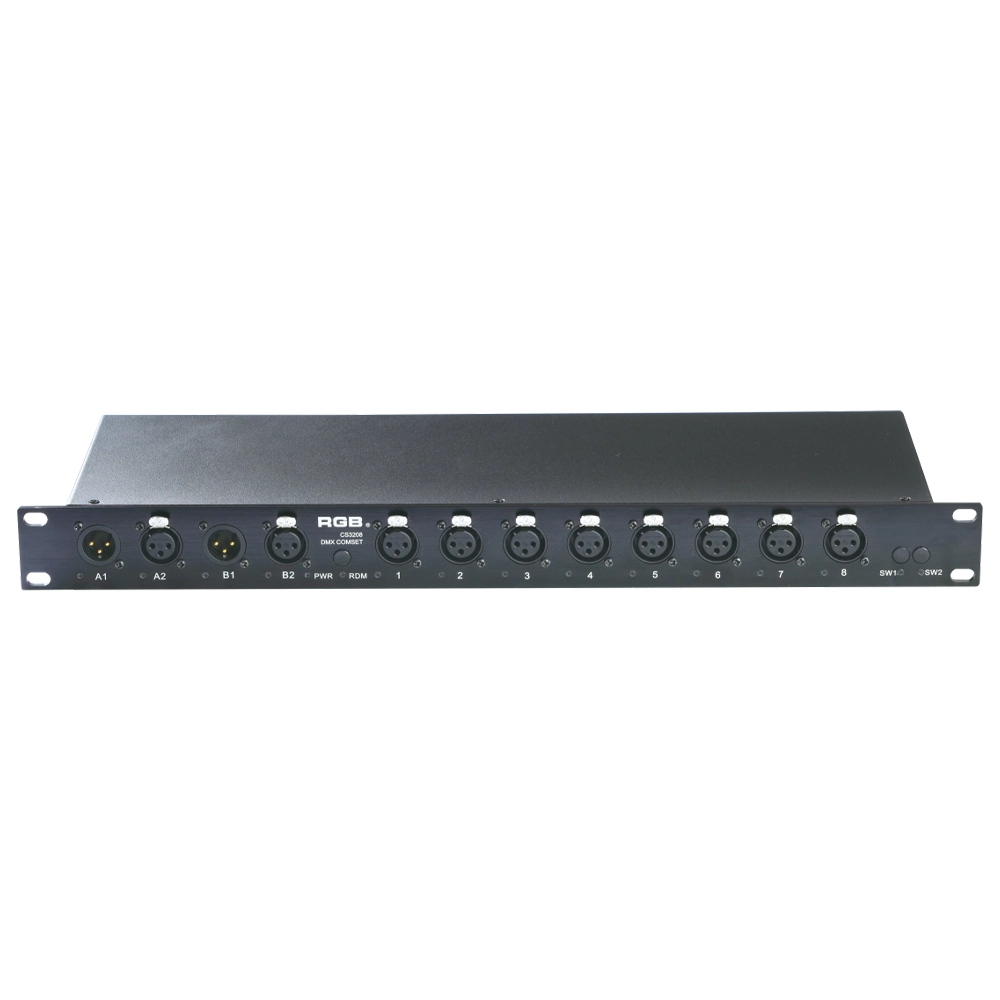
Multifunctional signal supercharger
The rack-mounted DMX signal amplifier complies with the DMX-512 standard protocol, improving DMX-512 signal transmission quality and ensuring reliable system control. It helps prevent issues such as AC high-voltage backflow into lighting control systems, lightning-induced surges, and signal interference caused by short circuits, thereby enhancing overall system stability.
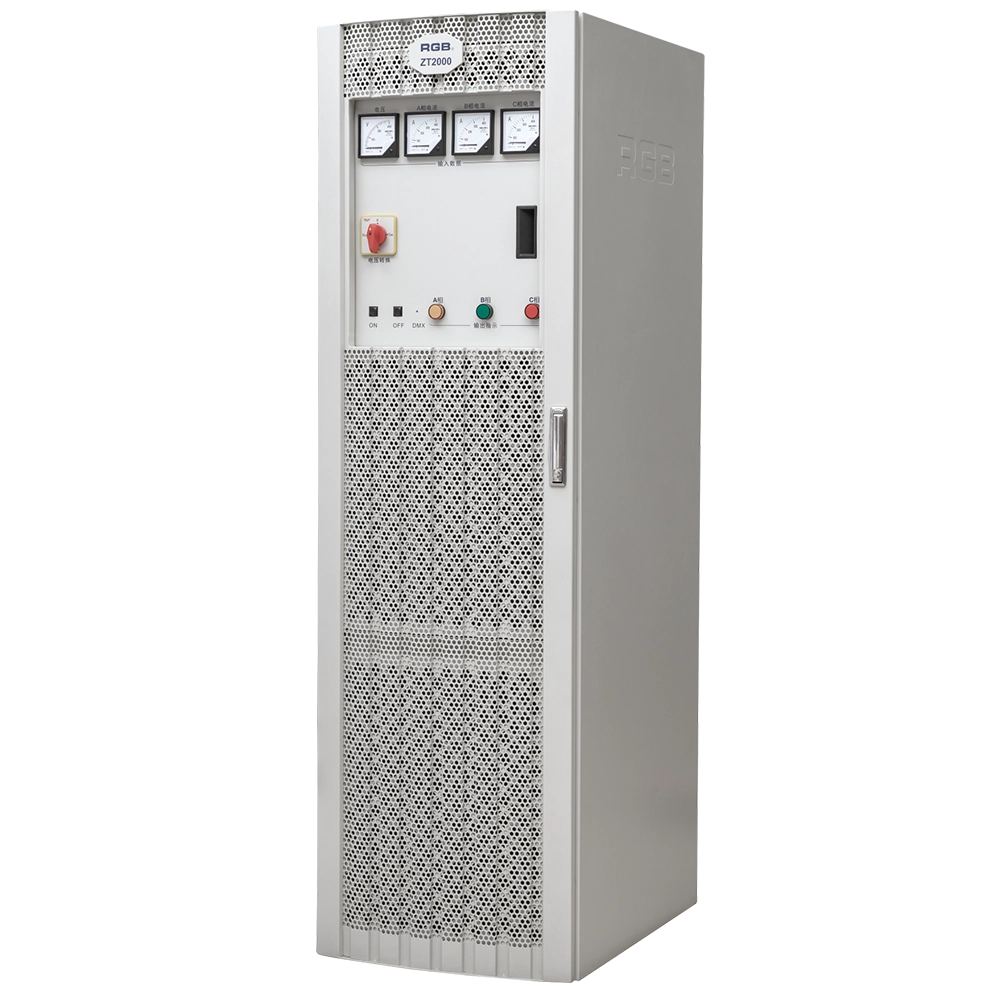
ZT2000 Pass-Through Racks
The ZT2000 straight-through power cabinet is a three-phase 630A/400A air switch main control, with each channel being a 32A air switch sub-control straight-through power cabinet. It can be used in conjunction with various computer lamps, regular lamps, and temporary electrical equipment as a power distribution and supply part for electrical equipment with overcurrent and short-circuit protection. It is a brand-new, reliable, and stable lighting control device in the field of stage lighting control.
It is widely applied in theaters, concert halls, multi-functional halls, cultural and tourism performances, TV stations, gymnasiums, auditoriums, commercial art lighting, and other performance and cultural venues.
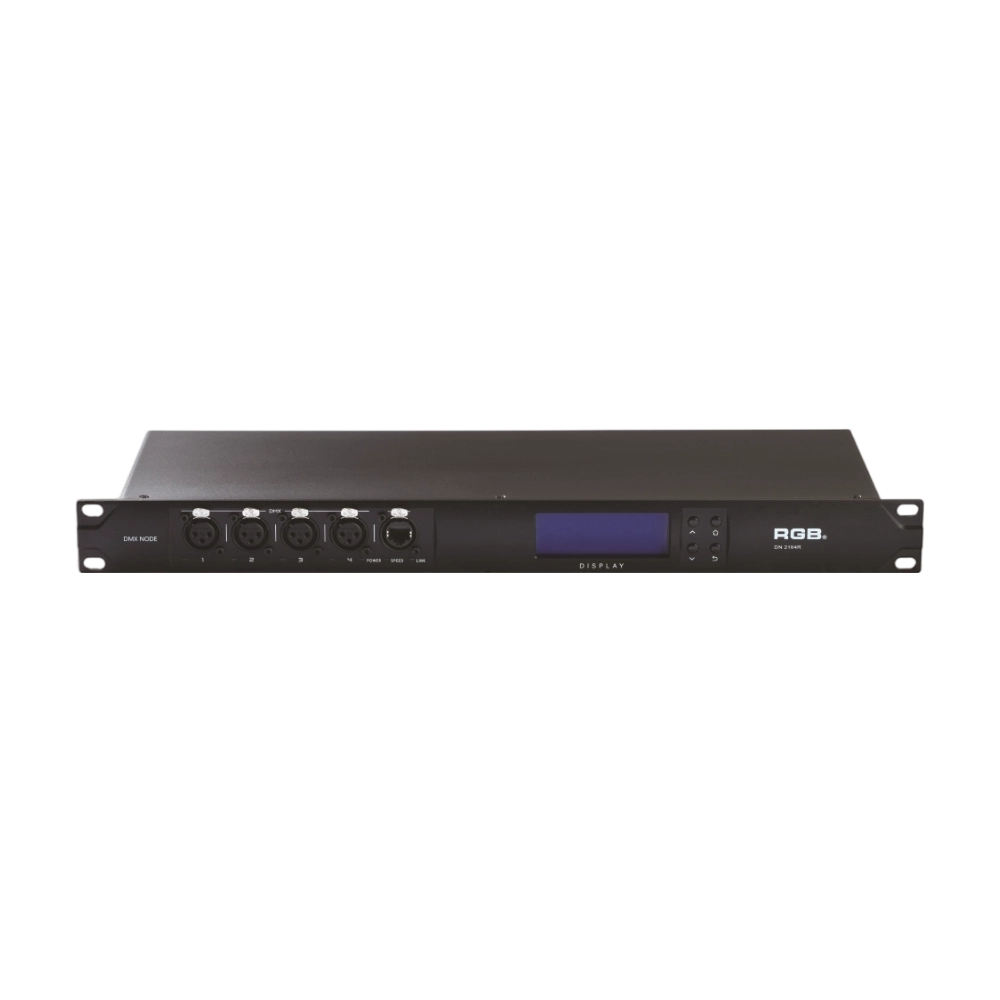
DMX, RDM Nodes
The DN series dual network port network decoder is a lighting control system product independently developed by RGB, featuring completely independent core technology and software copyright. It seamlessly connects and decodes the sACN and ART-Net network protocols based on TCP/IP with the DMX-512 and RDM communication protocols, achieving gigabit communication with dual independent physical address codes. Supports a visual lighting control system, intuitively displaying the online and offline status of the DN series network decoders, and enabling remote monitoring, editing, and setting of corresponding parameters.
It is widely applied in theaters, concert halls, multi-functional halls, cultural and tourism performances, TV stations, gymnasiums, auditoriums, commercial art lighting, and other performance and cultural venues.
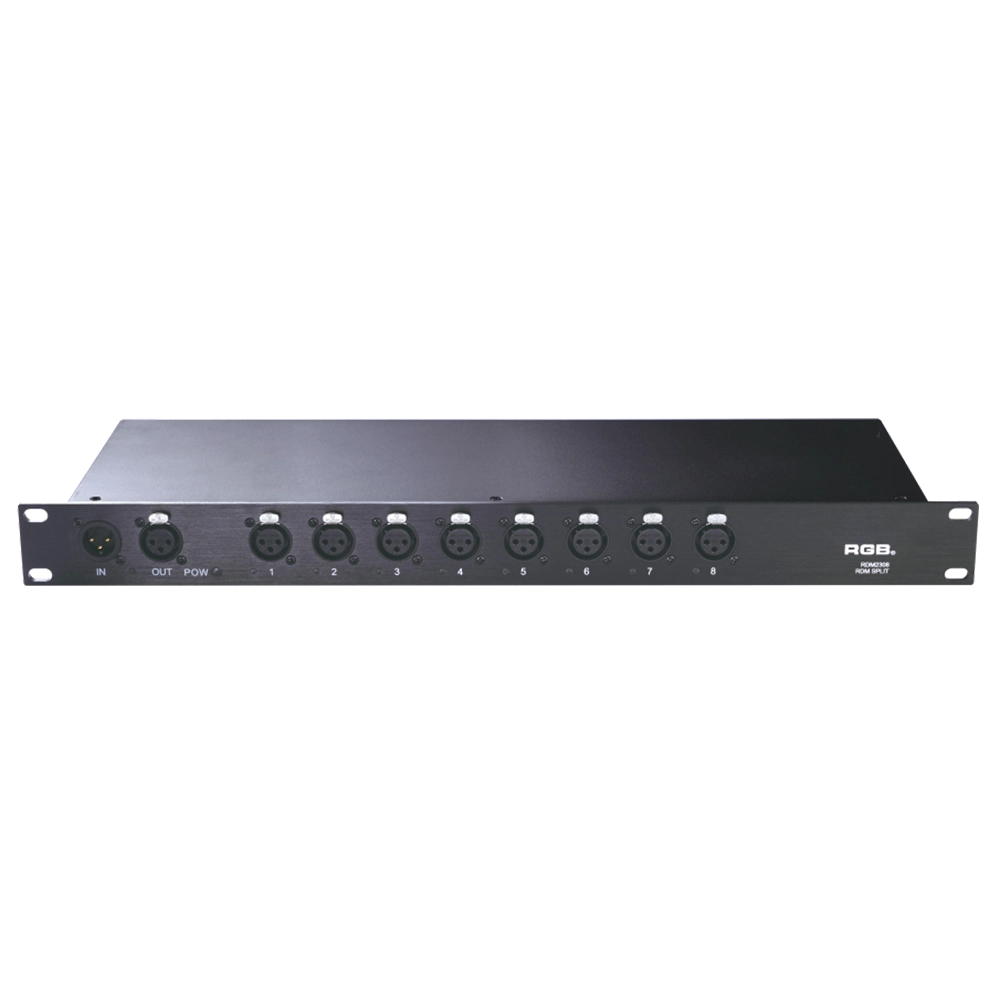
RDM Series Signal Amplifier
RDM2304, RDM2308, RDM2310, RDM2312 rack-mounted The RDM signal amplifier improves the quality of bidirectional RDM signal transmission, ensures the reliability of system control, and prevents faults such as AC high-voltage reverse series lighting control system, lightning high-voltage series entry, and line short circuit, which may affect system stability.
Expert Support
Interested in learning more or need expert guidance related to this article? Fill in your details, and our team will provide tailored support.
Intelligent Control. Brilliant Performance.
RGB specializes in stage lighting control systems, delivering intelligent, reliable, and high-performance solutions for theaters and performance spaces worldwide.
Contact
Email:
Tel:
+86 20 3928 0245
+86 20 3928 0247
Address:
No.3, Huashan Road, Shilou Town, Panyu, Guangzhou, China.
Whatsapp: +8615975520131