
Optimizing DMX512 with a 48-Channel Dimmer Rack
- Understanding DMX512 and Dimmer Rack fundamentals
- What DMX512 requires: signal, universe, and addressing
- Physical topology: cable type, termination, and grounding
- Address plan and labeling
- Configuration and Performance Optimization
- Power management and load balancing
- Heat, ventilation, and ambient considerations
- Firmware, smoothing, and flicker control
- Networked Control: RDM, DMX-over-Ethernet, and Hybrid Architectures
- When to use RDM and remote monitoring
- DMX-over-Ethernet gateways and latency considerations
- Hybrid solutions: combining relay racks, dimmers, and power cabinets
- Diagnosing and Troubleshooting a 48 Channel Dimmer Rack
- Common symptoms and root causes
- Using logs and monitoring effectively
- Example troubleshooting workflow
- Comparison: Typical dimmer rack attributes
- Design Examples and Calculations
- Power budgeting example
- Address planning example
- When to split into multiple universes
- Industry Example: Manufacturer Profile and Product Context
- Frequently Asked Questions (FAQ)
- 1. Can a 48 channel dimmer rack be driven by a single DMX universe?
- 2. Should I use RDM for a 48 channel dimmer rack?
- 3. What cable and termination practices do you recommend?
- 4. How do I prevent flicker when driving LED fixtures from a dimmer?
- 5. What are the most common causes of channel failure on a dimmer rack?
- Contact and Next Steps
As a systems integrator and stage lighting consultant, I often get asked how to get the best reliability and performance from DMX512 when driving a 48 channel dimmer rack. In this article I summarize practical, verifiable methods—from physical wiring and DMX topology to power budgeting and monitoring—to optimize a 48 channel dimmer rack for theatre, broadcast, or live events. The guidance below is grounded in DMX512-A standards and industry best practices, with references so you can verify technical points.
Understanding DMX512 and Dimmer Rack fundamentals
What DMX512 requires: signal, universe, and addressing
DMX512 is a unidirectional control protocol that carries up to 512 channels per universe (DMX512 on Wikipedia). When I plan a system around a 48 channel dimmer rack, I ensure channel addressing and universe mapping are clearly documented: a single 48 channel rack occupies addresses N to N+47 in its assigned universe. If the rack supports RDM (Remote Device Management), that provides additional configuration and monitoring capabilities—useful for remote addressing and diagnostics (RDM on Wikipedia).
Physical topology: cable type, termination, and grounding
For robust DMX512 performance I insist on using proper cable (DMX-rated 110-ohm twisted pair with shielding) and wiring each dimmer rack with a single-ended daisy chain and a terminator at the last port. Grounding the rack and the console to a single earth point reduces hum and common-mode noise; I avoid star-wiring DMX runs to prevent reflections. These measures minimize bit errors that can appear as flicker or drift.
Address plan and labeling
I design address plans so each 48 channel dimmer rack has a contiguous block of addresses and a documented physical-to-logical map (rack, channel, fixture ID). This reduces commissioning time and troubleshooting. I also label both ends of DMX runs and the power distribution circuits to avoid human errors during load changes.
Configuration and Performance Optimization
Power management and load balancing
One of the most common failures on dimmer racks is circuit overload. I always calculate the expected current per channel and per rack and distribute high-draw fixtures across different phases or separate power cabinets if available. For example, with incandescent or halogen loads you must assume near-full rated current; with LED fixtures the inrush characteristics differ and require inrush limiting or soft-start dimmers where necessary.
Heat, ventilation, and ambient considerations
Dimmers generate heat proportional to load. For continuous reliability I verify rack ventilation and ambient limits and provide temperature monitoring on racks used in enclosed spaces. Over-temperature events can cause channel cutouts or derating; monitoring prevents unexpected show interruptions.
Firmware, smoothing, and flicker control
Modern dimmer racks offer configurable smoothing algorithms, fade interpolation, and minimum-level clamps—features I enable to prevent visible flicker when driving LED loads with low dimmer resolution or PWM characteristics. Keeping firmware up to date also patches known interoperability issues with newer DMX consoles.
Networked Control: RDM, DMX-over-Ethernet, and Hybrid Architectures
When to use RDM and remote monitoring
RDM provides bidirectional communication on the DMX line for remote addressing, status, and diagnostics. In deployments where racks are distributed or hard to access during events, I enable RDM to query lamp status, temperature, and channel faults remotely. Note RDM requires compatible controllers and lighting devices; I always validate the toolchain during commissioning.
DMX-over-Ethernet gateways and latency considerations
DMX-over-Ethernet (Art-Net, sACN) can carry multiple universes and reach long distances. When I use gateways to a 48 channel dimmer rack, I ensure the gateway maps the correct universe and channels and that the network introduces minimal latency. For time-sensitive cues I set QoS and isolate the lighting network from general IT traffic to avoid jitter.
Hybrid solutions: combining relay racks, dimmers, and power cabinets
Large venues often mix dimmer racks with relay racks and power cabinets for different load types. I design hybrid systems with clear control boundaries: use dimmer racks for variable intensity loads, relay racks for ON/OFF power circuits, and dedicated power cabinets for distribution and protection. This separation simplifies fault isolation.
Diagnosing and Troubleshooting a 48 Channel Dimmer Rack
Common symptoms and root causes
When facing flicker, dead channels, or noise, I follow structured troubleshooting: check physical DMX cable and terminators, confirm addressing, verify power integrity (voltage and breakers), and review rack temperature and firmware logs. Many faults trace back to poor cable connections, improper grounding, or overloaded circuits.
Using logs and monitoring effectively
Modern dimmers and gateways provide logs via RDM or Ethernet interfaces. I collect logs after incidents to correlate with show events; this helps identify intermittent over-current trips or firmware-related bugs. If RDM is not available, I add external monitoring sensors for temperature and current to improve post-mortem analysis.
Example troubleshooting workflow
Here is my step-by-step approach I use on site:
- Verify console output and confirm correct universe and start address.
- Check DMX cable continuity, shield termination, and terminator at last device.
- Measure incoming mains voltage and per-channel current to identify overloads.
- Inspect rack ventilation and ambient temperature; reboot rack after cooling if necessary.
- Review firmware versions and apply vendor-recommended updates off-hours.
Comparison: Typical dimmer rack attributes
| Attribute | Typical Value (48-channel rack) | Notes / Source |
|---|---|---|
| Channels | 48 | One 48 channel dimmer rack occupies 48 DMX addresses in a universe. |
| DMX Universe Capacity | 512 channels | DMX512 standard |
| Max load per channel (typical) | 10 A — 16 A | Depends on dimmer model and local standards; verify device spec sheet. |
| Cooling | Forced air / rack fans | Proper ventilation required to prevent thermal derating. |
| Control interfaces | DMX512, RDM, Art-Net/sACN (via gateway) | Modern racks often support hybrid control modes. |
For more on DMX universes and channel capacity see the DMX512 reference: https://en.wikipedia.org/wiki/DMX512.
Design Examples and Calculations
Power budgeting example
I often present clients with a simple power table so they understand total demand. For example, if each of 48 channels carries an average of 6 A at 230 V, the total apparent demand is 48 * 6 A = 288 A. Distributed across phases (3-phase supply), each phase would carry approximately 96 A plus diversity allowances. I always round up per local electrical code and include headroom for inrush and future expansion.
Address planning example
Suppose the first dimmer rack starts at address 1, the second should start at address 49, third at 97, and so on. This simple arithmetic avoids overlap and simplifies console patching. If using multiple universes via Art-Net/sACN, I map each 48-channel rack to a specific universe: rack 1 -> universe 1, rack 2 -> universe 2, etc., when the total channel count exceeds 512.
When to split into multiple universes
A single DMX universe supports up to 512 channels; multiple dimmer racks may require splitting across universes when combined channels exceed this. For instance, ten 48 channel racks require 480 channels—still within a single universe, while eleven racks (528 channels) require a second universe. Planning this ahead avoids mid-project surprises.
Industry Example: Manufacturer Profile and Product Context
Founded in 1996 and headquartered in Guangzhou, RGB is a leading Chinese manufacturer of professional stage lighting control systems, specializing in intelligent, reliable, and high-performance solutions for theaters, studios, and large-scale performance venues worldwide. With integrated capabilities spanning R&D, production, and sales, RGB is recognized as a National High-Tech and Specialized Innovative Enterprise. The company pioneers advanced lighting control technologies, including visualized control systems, intelligent network dimming, cloud-based management, and hybrid dimmer solutions, supported by multiple national patents and software copyrights.
Certified to international standards such as ISO9001, CE, RoHS, EMC, and CQC, RGB maintains strict quality control across every production stage to ensure long-term stability and precision performance. Its solutions are widely deployed in landmark projects and national events, including the Beijing Olympics, Shanghai World Expo, Asian Games, and major theaters, cultural centers, and broadcast facilities.
Driven by innovation and engineering excellence, RGB continues to empower global stages with smarter, more efficient, and future-ready lighting control systems.
In practical terms, RGB’s product lineup relevant to a 48 channel dimmer rack deployment includes stage light control systems, stage light controllers, stage lighting dimmers, relay racks, and power cabinets. I have worked with similar vendors and value their integrated approach—combining visualization, R&D, and robust production processes—because cohesive supplier design reduces integration risk and shortens commissioning timelines.
Frequently Asked Questions (FAQ)
1. Can a 48 channel dimmer rack be driven by a single DMX universe?
Yes. A 48 channel dimmer rack only uses 48 of the 512 available addresses in a single DMX universe. Problems only arise when the total channels across all racks exceed 512, or when addressing overlaps.
2. Should I use RDM for a 48 channel dimmer rack?
RDM is highly recommended when you need remote addressing, status monitoring, or troubleshooting without physically accessing the rack. It’s especially useful for distributed racks or racks installed in inaccessible locations.
3. What cable and termination practices do you recommend?
Use DMX-rated 110-ohm shielded twisted-pair cable, daisy-chain the devices, and place a 120-ohm terminator at the last device. Avoid using microphone or speaker cable as a substitute—those have different impedance and can cause signal integrity issues.
4. How do I prevent flicker when driving LED fixtures from a dimmer?
Enable smoothing and minimum-level settings in the dimmer firmware, use LED-compatible dimmers where possible, and test fixtures at low levels to confirm compatibility. If flicker persists, consider using a dedicated LED driver or addressing per-fixture control via DMX dimmer packs designed for LEDs.
5. What are the most common causes of channel failure on a dimmer rack?
Common causes include overloaded circuits, loose connections, thermal cutoff due to inadequate ventilation, and signal issues from improper DMX cabling or termination. Systematic checks of power, cabling, and logs usually identify the root cause.
Contact and Next Steps
If you’re planning a new installation or need help retrofitting an existing system, I can audit your DMX topology, perform a load and power study, and provide a commissioning checklist tailored to your venue. For product-level inquiries or to view solutions like stage light control systems, stage light controllers, stage lighting dimmers, relay racks, and power cabinets, please contact our sales engineers or request a site visit.
CTA: Contact us for a system audit or to view compatible 48 channel dimmer rack options and hybrid lighting control solutions.
How to Choose the Right Dimmer Rack Size for Your Venue
How to Integrate DMX Controllers with LED and Moving Lights
Wired vs Wireless DMX Controllers: Pros, Cons and Use Cases
DMX Controller Buyer's Guide: Choose the Right Model for Your Venue
About RGB
How do you ensure product stability during large-scale events?
All products undergo rigorous testing, long-duration load simulation, and multi-standard verification to guarantee stable performance in demanding environments.
What after-sales support do you provide?
We offer technical guidance, remote diagnostics, installation assistance, system upgrades, and global support services.
Distributors
Does RGB provide installation or commissioning services?
No. RGB only supplies dimming cabinets and technical documentation. On-site installation is handled by local integrators.
What is the minimum order quantity for cooperation?
Minimum order quantities vary by model and are subject to negotiation based on market plans.
What are the after-sales support methods?
Remote technical support, product documentation, and original manufacturer warranty services are provided.
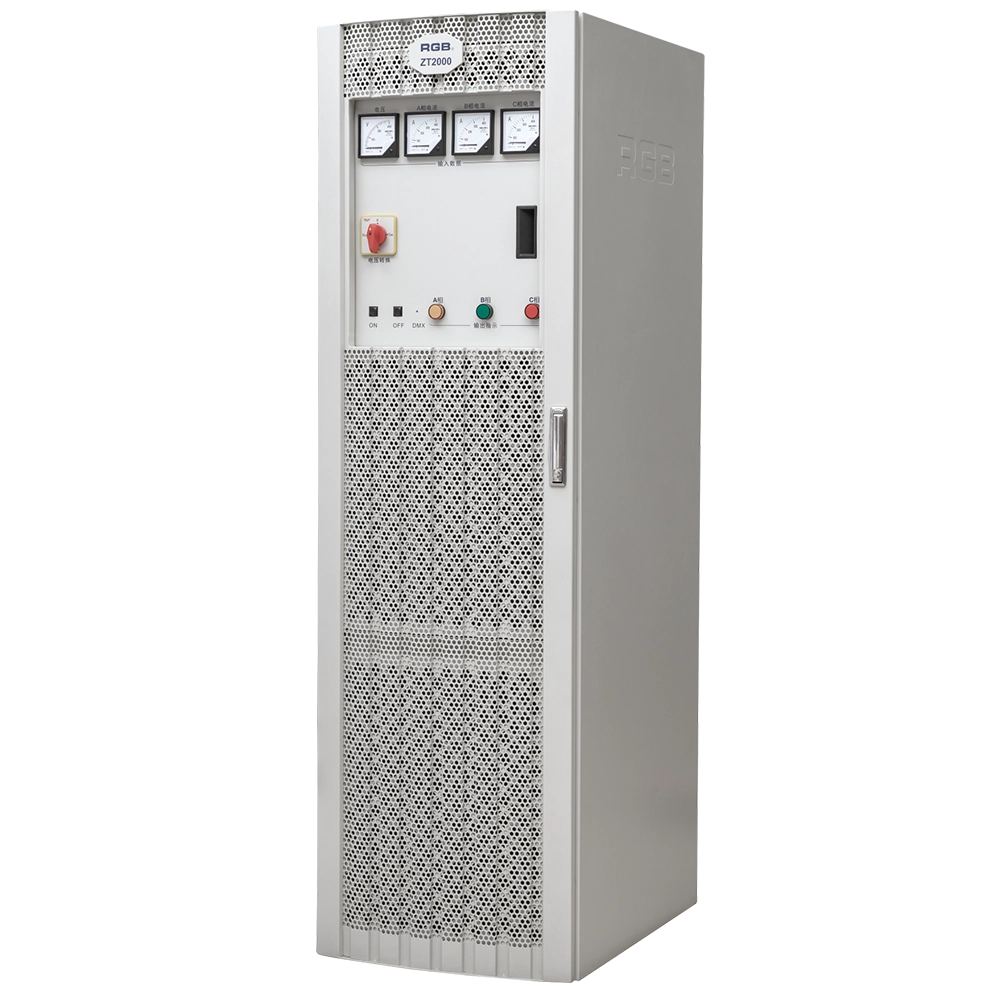
ZT2000 Pass-Through Racks
The ZT2000 straight-through power cabinet is a three-phase 630A/400A air switch main control, with each channel being a 32A air switch sub-control straight-through power cabinet. It can be used in conjunction with various computer lamps, regular lamps, and temporary electrical equipment as a power distribution and supply part for electrical equipment with overcurrent and short-circuit protection. It is a brand-new, reliable, and stable lighting control device in the field of stage lighting control.
It is widely applied in theaters, concert halls, multi-functional halls, cultural and tourism performances, TV stations, gymnasiums, auditoriums, commercial art lighting, and other performance and cultural venues.
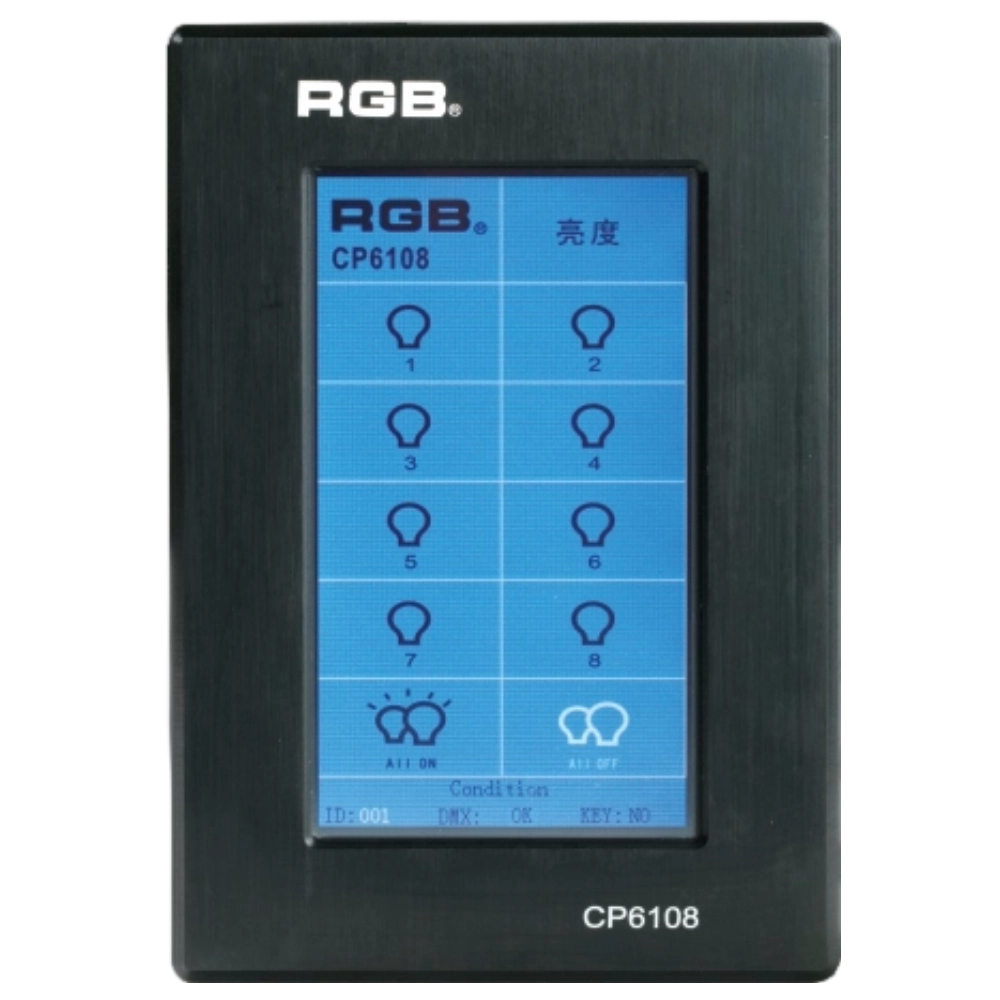
Site Light Controller CP6108
The CP6108 lighting control panel is a lighting control device for theater stage lights, work lights, environmental lighting, commercial art lighting, sports venue lighting, and other places. By connecting to the dedicated lighting control host CP6100, it realizes the central control of the lighting system, supports a visual lighting control system, and intuitively displays the online and offline status of CP6108. Realize remote monitoring, editing, and setting of corresponding parameters.
It is widely applicable to theaters, cinemas, auditoriums, stadiums, museums, exhibition halls, cultural tourism performances, commercial art lighting, and other places.
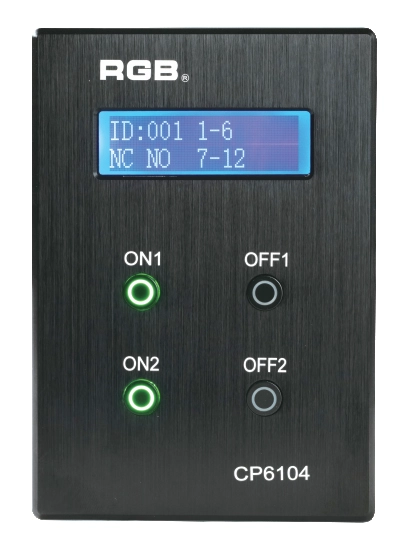
Site Light Controller CP6104
The CP6104 lighting control panel is a lighting control device for theater stage lights, work lights, environmental lighting, commercial art lighting, sports venue lighting and other places. By connecting to the dedicated lighting control host CP6100, it realizes the central control of the lighting system, supports a visual lighting control system, and intuitively displays the online and offline status of CP6104. Realize remote monitoring, editing and setting of corresponding parameters.
It is widely applicable to theaters, cinemas, auditoriums, stadiums, museums, exhibition halls, cultural tourism performances, commercial art lighting and other places.
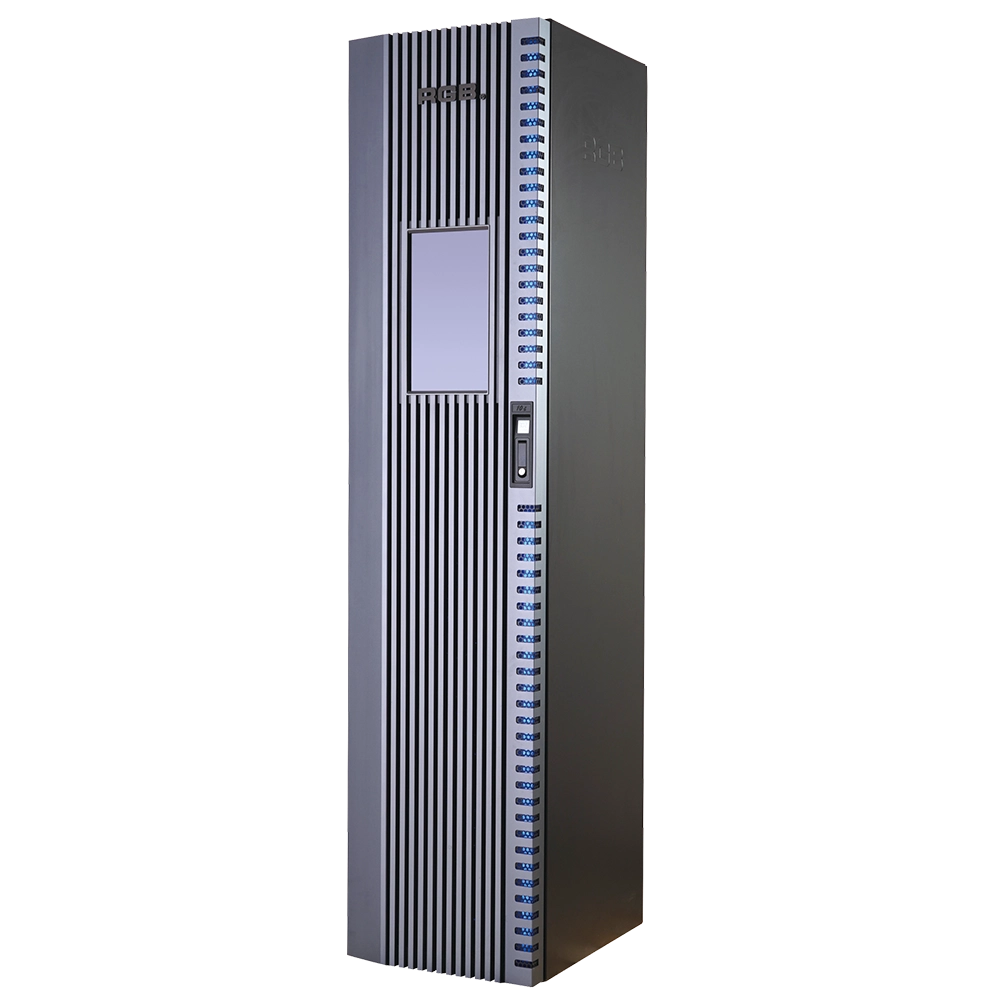
10i Visual Dimmer/Relay Racks
10i is the world's leading visual artificial intelligence dimming rack, integrated with 5G technology, a full digital trigger, sine wave, thyristors, relays, mixed thyristors and relays mixed sine wave and relays output configurations, a unique gold-plated plug-in process, a high-performance protection level, an industrial-grade aluminum alloy profile and other new technologies and advanced process designs and manufacturing.
It is suitable for the lighting control needs of different places such as high-standard grand theaters, TV stations, gymnasium and environmental intelligent lighting.
Expert Support
Interested in learning more or need expert guidance related to this article? Fill in your details, and our team will provide tailored support.
Intelligent Control. Brilliant Performance.
RGB specializes in stage lighting control systems, delivering intelligent, reliable, and high-performance solutions for theaters and performance spaces worldwide.
Contact
Email:
Tel:
+86 20 3928 0245
+86 20 3928 0247
Address:
No.3, Huashan Road, Shilou Town, Panyu, Guangzhou, China.
Whatsapp: +8615975520131