
Master Your Rig: The Step-by-Step Guide to Wiring and Addressing DMX Dimmer Racks (2026 Edition)
- Quick Summary: Key Takeaways
- What is a DMX Dimmer Rack and How Does It Work?
- The Mechanics of Dimming
- Pre-Installation: Understanding the Anatomy of Your Rig
- Assessing Power and Connectors
- Step-by-Step Guide: Wiring Your DMX Dimmer Rack
- High-Voltage Connection Protocol
- Mastering the Address: Configuration Techniques
- From Binary to Digital
- Expert Tips & Common Mistakes to Avoid
- Improving Signal Chain Integrity
- Future-Proofing: Dimming in the Age of LEDs (2026+)
- The Hybrid Reality
- Conclusion
- FAQ
- What is the difference between a dimmer rack and a switch pack?
- How many channels does a standard DMX universe handle?
- Why do my lights flicker when connected to the dimmer rack?
- How do I calculate the DMX address using dip switches?
- Can I plug LED lights into a standard dimmer rack?
- What is the maximum cable length for a DMX run?
- Do I need a terminator for my DMX dimmer rack?
- What is RDM and how does it help with dimmer racks?
Quick Summary: Key Takeaways
DMX Dimmer Racks are the backbone of conventional lighting rigs, converting low-voltage control data into high-voltage output. Successfully managing these systems requires a blend of electrical safety knowledge and digital protocol mastery. Before diving into the wiring process, here are the critical points every technician must know:
- Signal Conversion: Dimmer racks translate DMX512 Protocol signals into regulated voltage for tungsten fixtures.
- Safety Critical: Adhering to 3-Phase Power Distribution balance and grounding rules is non-negotiable to prevent equipment failure or injury.
- Modern Addressing: While Dip Switch Addressing remains a fundamental skill, modern rigs utilize RDM (Remote Device Management) for remote configuration.
- Data Integrity: Proper termination and cabling prevent 'ghosting' and signal reflection.
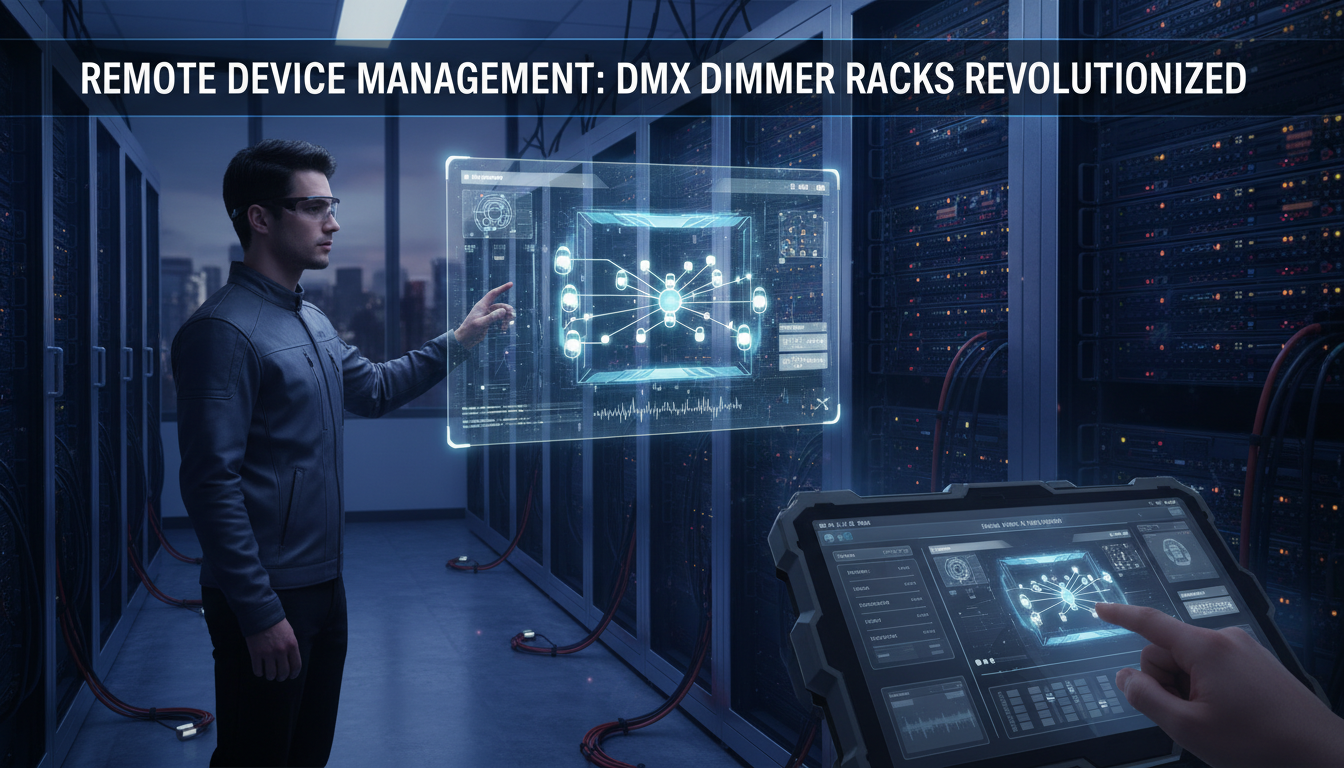
What is a DMX Dimmer Rack and How Does It Work?
A DMX Dimmer Rack is a high-density power distribution unit that interprets digital DMX512 signals from a console to regulate the electrical voltage supplied to stage lights. It uses power modules to 'chop' the AC sine wave, controlling light intensity without altering the frequency.
The Mechanics of Dimming
Understanding the internal logic of your dimmer rack is the first step toward mastery. Unlike a simple on/off switch, a dimmer rack acts as a gatekeeper between the main power supply and your lighting fixtures. By rapidly switching the power on and off (hundreds of times per second), the rack controls the total energy reaching the bulb filament. This process is known as phase-control dimming.
For professional venues, the stability of this system is paramount. The DMX512 Protocol serves as the universal language here, allowing a lighting console to send 512 channels of data down a single cable. As detailed by the United States Institute for Theatre Technology (USITT), this standard has evolved to ensure interoperability between equipment from different manufacturers, making it the industry standard for decades.
Key Functions of a Dimmer Rack:
- Voltage Regulation: Precises control of output voltage to smooth fade times.
- Thermal Management: Fans and heat sinks dissipate the massive heat generated by SCR or IGBT modules.
- Signal Decoding: The processor card reads the DMX packet and assigns intensity values to specific dimmers.
Pre-Installation: Understanding the Anatomy of Your Rig
Rig anatomy refers to the physical layout and electrical requirements of your lighting system, distinguishing between portable dimmer packs and permanent rack installations. You must identify your power input type (Single-phase vs. Three-phase) and output connector style before attempting any connections.
Assessing Power and Connectors
Before you run a single cable, you need to verify the infrastructure. A mismatch between your rack's requirements and the venue's power supply can lead to catastrophic trips or fire hazards. Most large-scale professional racks operate on 3-Phase Power Distribution, which splits the electrical load across three hot legs (X, Y, Z), a neutral, and a ground. This setup balances the load to prevent overheating any single wire.
Component Checklist:
- Control Module (Brain): The digital processor that accepts DMX data.
- Power Modules (Muscle): The physical breakers and chokes that handle high voltage.
- Input Power: Confirm if you have Cam-Lok feeders or direct terminal block wiring.
- Output Connectors: Identify if you are using Stage Pin (Bates), Twist-Lock (L5-20), or Socapex multi-cables.
Step-by-Step Guide: Wiring Your DMX Dimmer Rack
Wiring a dimmer rack involves connecting main power feeders in a specific safe sequence and establishing a clean data signal chain. The golden rule is 'Ground First, Hot Last' during connection, and the reverse during disconnection, to ensure the chassis is always grounded.
High-Voltage Connection Protocol
Working with mains power is the most dangerous part of a lighting technician's job. Always assume wires are live until tested. The standard color code for 3-Phase Power Distribution in the US is Green (Ground), White (Neutral), Black (Hot 1), Red (Hot 2), and Blue (Hot 3).
The Wiring Sequence:
- Safety First: Perform Lockout/Tagout procedures on the company switch or generator. Never plug into a live panel.
- Connect Ground (Green): This ensures that if any fault occurs during the process, the current has a safe path to earth.
- Connect Neutral (White): The neutral is critical for 120V systems; losing it can send 208V/240V to your equipment, frying the electronics instantly.
- Connect Hots (Black, Red, Blue): Connect these last. Ensure Cam-Loks are twisted fully to lock.
- Daisy-Chain DMX Data: Connect your 5-pin XLR data cables. Adhere to the 'Rule of 32'—do not exceed 32 devices on a single data run without a splitter.
- Terminate: Install a DMX Terminator at the final device to stop signal reflection.
Mastering the Address: Configuration Techniques
Addressing is the process of assigning a unique starting channel (DMX footprint) to your dimmer rack so the console can control it individually. This can be done physically via binary dip switches or digitally through a menu system or RDM.
From Binary to Digital
In the past, technicians had to calculate binary math to set addresses using Dip Switch Addressing. Each switch represents a binary value (1, 2, 4, 8, 16, 32, 64, 128, 256). To set address 21, you would flip switches 1, 4, and 16 to 'On' (1+4+16=21). While reliable, this method is slow and prone to human error.
Modern systems utilize RDM (Remote Device Management). This protocol allows the lighting console to 'talk back' to the dimmer rack. You can set the DMX address remotely without climbing a ladder or crawling behind a rack. According to standards published by ANSI (American National Standards Institute), RDM operates over the exact same pair of wires as standard DMX, making it a powerful tool for 2026 workflows.
Configuration Methods:
- Binary Dip Switches: Reliable, physical hard-setting of addresses.
- Digital Menu: LCD screens on the rack allowing for push-button addressing.
- RDM Patching: Changing settings directly from the lighting desk.
- Soft-Patching: Leaving the rack at 1-1 and re-routing channels internally at the Lighting Console Patching screen.
Expert Tips & Common Mistakes to Avoid
Troubleshooting dimmer racks often comes down to isolating variables, such as bad cables, improper termination, or phase imbalances. Proactive labeling and the use of dedicated data cables (not microphone cables) are the hallmarks of an expert technician.
Improving Signal Chain Integrity
A common mistake in amateur rigs is using 3-pin XLR audio cable for lighting data. While it may work for short distances, audio cables have a different impedance (resistance) than the required 110-120 Ohms for DMX. This mismatch leads to flickering and 'ghosting' (lights turning on randomly).
Best Practices:
- Load Balancing: When patching, distribute heavy loads (like 2k Fresnels) across the three phases evenly to prevent tripping the main breaker.
- Labeling: Mark every cable at both ends. A piece of white tape with a sharpie saves hours of troubleshooting.
- Opto-Isolators: Use an optically isolated splitter. If a dimmer rack surges, the isolator sacrifices itself to save your expensive lighting console.
- Dedicated Hard Power: Never plug intelligent lights or LED hardware into a dimmable circuit unless the module is swapped for a 'Relay' or 'Constant Power' module.
Future-Proofing: Dimming in the Age of LEDs (2026+)
Future-proofing involves adapting traditional dimmer infrastructure to handle modern hybrid rigs that mix tungsten sources with intelligent LED fixtures. This often means replacing standard dimming modules with relay modules to provide switched hard power within the same rack footprint.
The Hybrid Reality
As the industry shifts toward greener technologies, the classic 'dimmer rack' is evolving into a 'power control rack.' Pure tungsten rigs are becoming rare. In 2026, you are likely to encounter racks that contain a mix of SCR dimmers for your Source Four PARs and Relay Modules for your LED movers.
Standards organizations like PLASA continue to update protocols to ensure these hybrid systems communicate effectively. The move toward networked DMX (sACN and Art-Net) means that the physical DMX cable is often just the final mile of a larger Ethernet-based network.
2026 Standards Checklist:
- Swappable Modules: Ensure your rack accepts relay modules for LED power.
- Network Nodes: Integrated sACN nodes effectively turn the dimmer rack into a network gateway.
- Energy Audits: Modern racks monitor power consumption in real-time, helping venues meet strict green energy targets.
Conclusion
Mastering the art of wiring and addressing DMX dimmer racks is a blend of respecting old-school electrical physics and embracing new-school digital protocols. By following strict safety guidelines for 3-Phase Power Distribution, utilizing tools like RDM, and ensuring your signal chain is robust, you guarantee a show that is safe, reliable, and visually stunning. Whether you are managing a binary dip switch system or a fully networked hybrid rig, the fundamentals of clean power and clear data remain the same.
Contact us today to optimize your lighting infrastructure and safety strategy.
FAQ
What is the difference between a dimmer rack and a switch pack?
A dimmer rack regulates voltage to fade lights up and down. A switch pack provides simple on/off power, ideal for motors or LEDs that cannot be dimmed via voltage.
How many channels does a standard DMX universe handle?
A single DMX universe handles exactly 512 control channels.
Why do my lights flicker when connected to the dimmer rack?
Flickering is often caused by lack of DMX termination. It can also result from using audio XLR cables instead of proper DMX data cables.
How do I calculate the DMX address using dip switches?
Dip switches use binary code where switch 1=1, 2=2, 3=4, 4=8, etc. Add the values of the 'On' switches to determine the starting address.
Can I plug LED lights into a standard dimmer rack?
Generally, no. Most LEDs require constant power (non-dimmed). Plugging them into a dimmer can damage the LED electronics unless the dimmer is set to 'Non-Dim' or 'Switched' mode.
What is the maximum cable length for a DMX run?
The theoretical limit is around 1,200 meters (3,900 ft), but practical reliability suggests keeping runs under 300 meters (1,000 ft) before using a repeater.
Do I need a terminator for my DMX dimmer rack?
Yes, a 120-ohm terminator should always be placed at the output of the last device in the chain to maintain signal integrity.
What is RDM and how does it help with dimmer racks?
RDM (Remote Device Management) allows bi-directional communication. It lets you change the dimmer's address or check its temperature remotely from the lighting console.
LED Stage Dimmers: Compatibility and Flicker-Free Solutions
DMX/RDM Explained: Dimmer Rack Definition for Control
Dimmer Rack vs LED Driver: Which Is Best for Stage Lighting
Rack Dimmer vs LED Dimmers: DMX Compatibility and Costs
About RGB
What types of lighting control systems do you support?
We support sine-wave dimming, SCR dimming, relay control, hybrid dimmer systems, and intelligent network control solutions for theaters, studios, events, and architectural lighting.
What after-sales support do you provide?
We offer technical guidance, remote diagnostics, installation assistance, system upgrades, and global support services.
Do you offer customized solutions for specific projects?
Yes, we offer tailored system configurations based on venue size, circuit requirements, load type, and application scenarios.
How do you ensure product stability during large-scale events?
All products undergo rigorous testing, long-duration load simulation, and multi-standard verification to guarantee stable performance in demanding environments.
Distributors
What are the after-sales support methods?
Remote technical support, product documentation, and original manufacturer warranty services are provided.
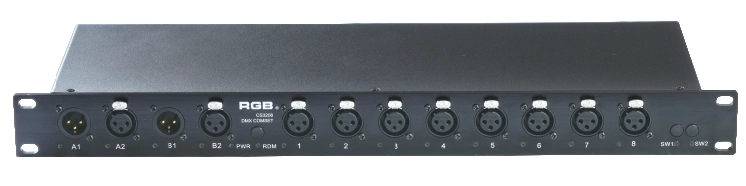
DMX&RDM Signal Mergers Amplifiers
The rack-mounted DMX signal amplifier complies with the DMX-512 standard protocol, improving the transmission quality of DMX-512 signals, ensuring the reliability of system control, and preventing faults such as reverse connection of AC high voltage in the lighting control system, high voltage intrusion due to lightning strikes, and line short circuits, which may affect the stability of the system.
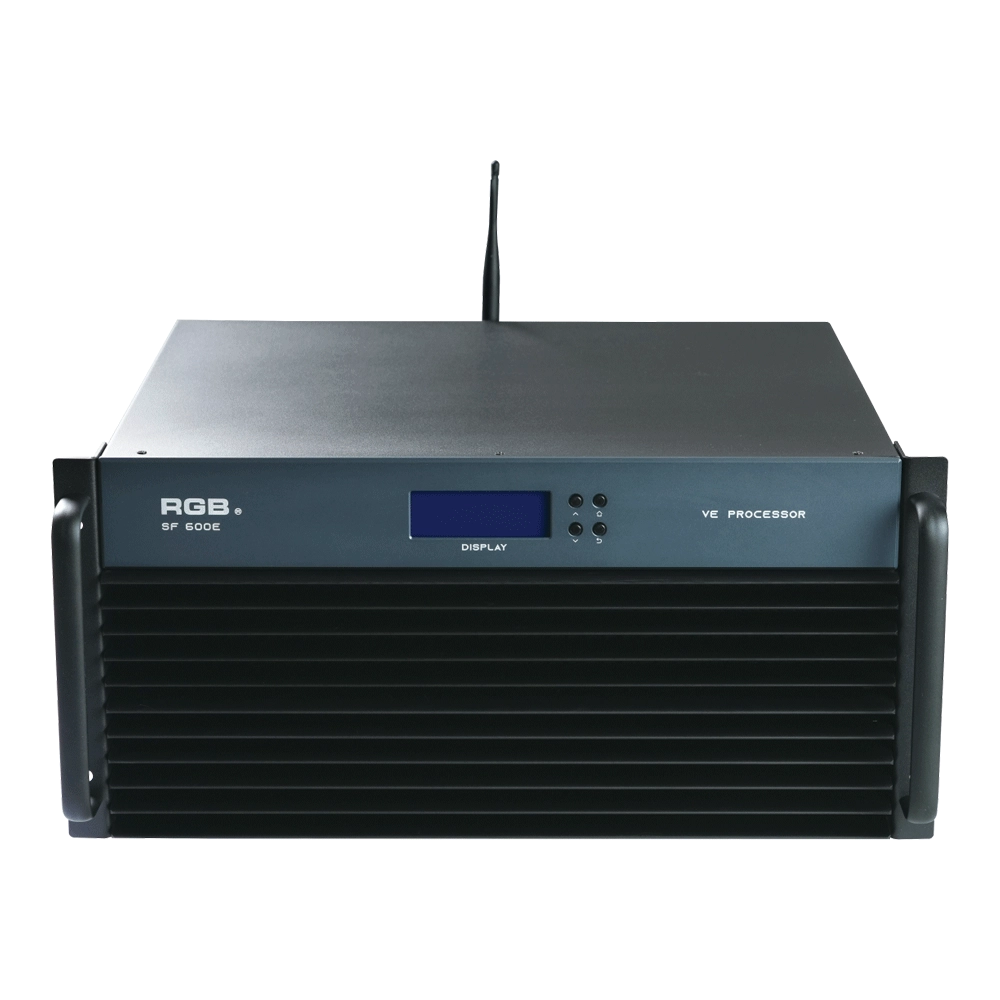
SF600E Visual R-net environment processor
The SF600E Visual R-net environment processor by RGB delivers advanced performance for visual systems. As a leading visual systems manufacturer, RGB ensures seamless integration and high reliability, making SF600E ideal for complex visual processing needs in diverse environments.
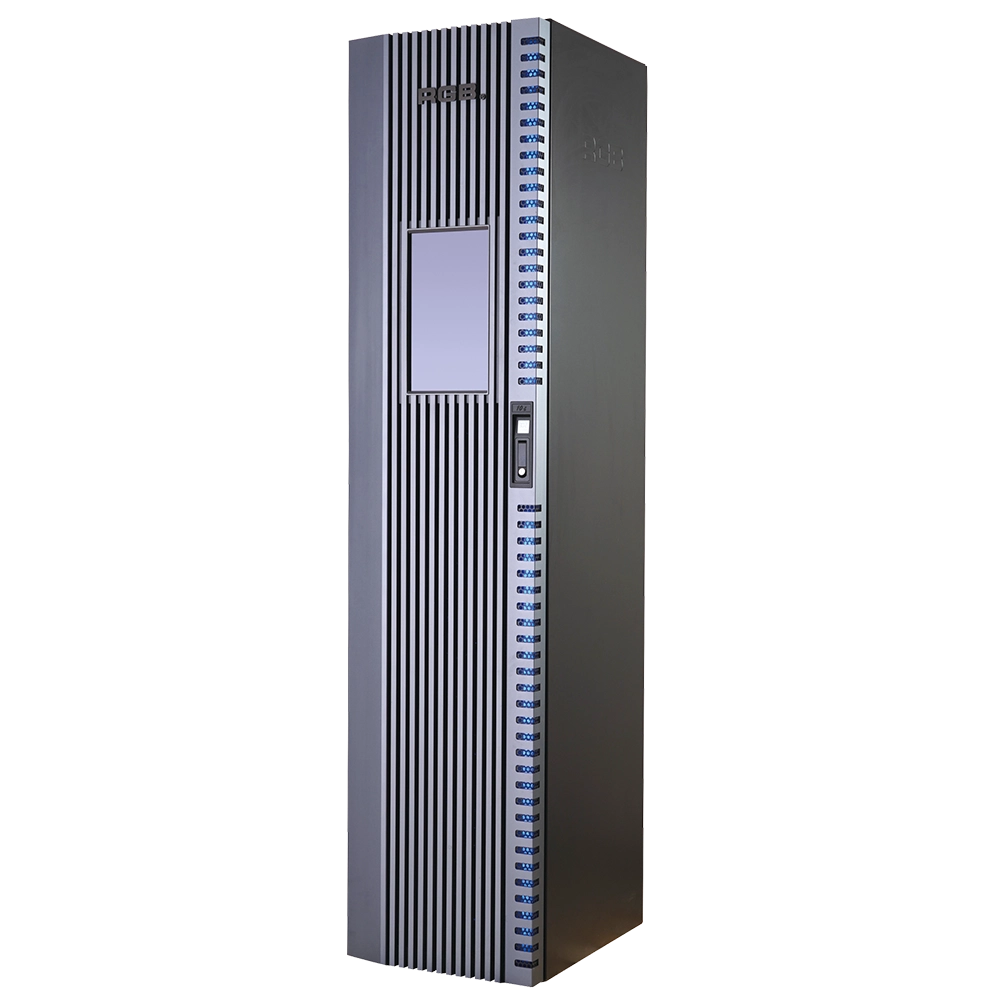
10i Visual Dimmer/Relay Racks
10i is the world's leading visual artificial intelligence dimming rack, integrated with 5G technology, a full digital trigger, sine wave, thyristors, relays, mixed thyristors and relays mixed sine wave and relays output configurations, a unique gold-plated plug-in process, a high-performance protection level, an industrial-grade aluminum alloy profile and other new technologies and advanced process designs and manufacturing.
It is suitable for the lighting control needs of different places such as high-standard grand theaters, TV stations, gymnasium and environmental intelligent lighting.
RDM Series Signal Amplifier
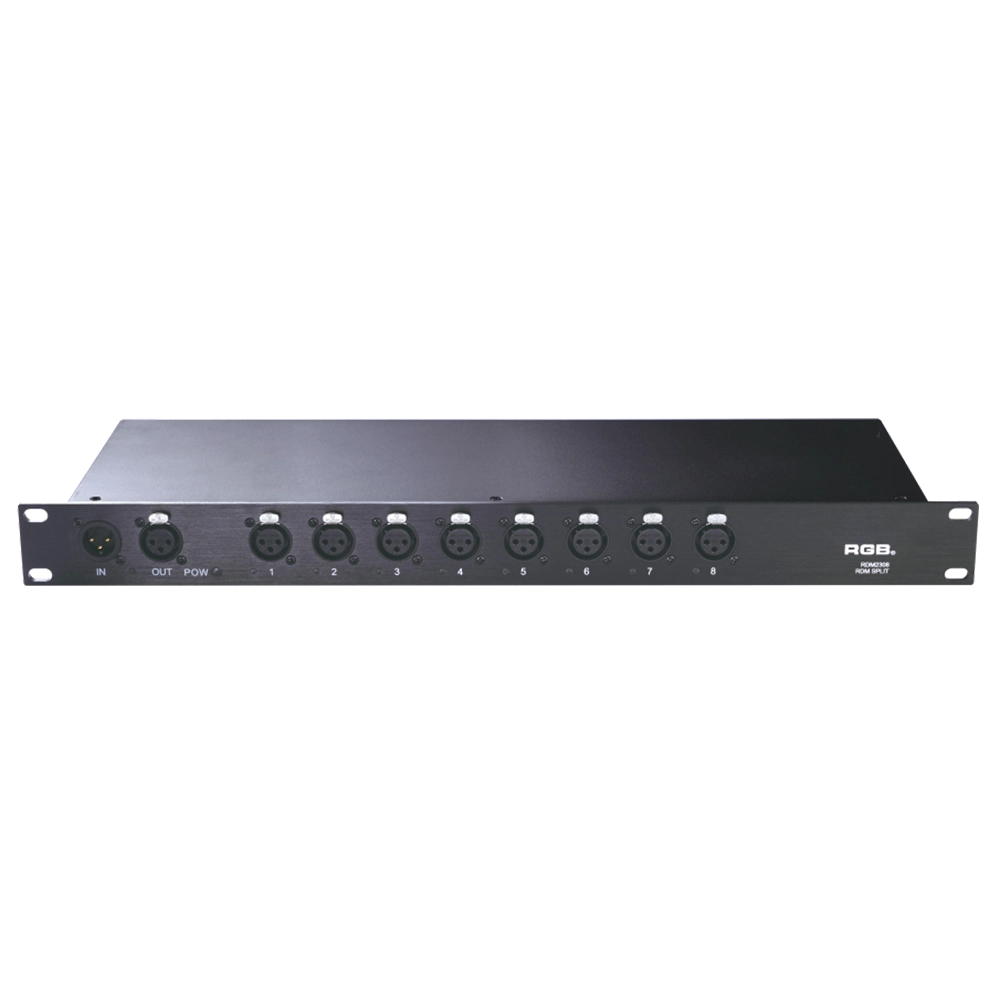
RDM2304, RDM2308, RDM2310, RDM2312 rack-mounted The RDM signal amplifier improves the quality of bidirectional RDM signal transmission, ensures the reliability of system control, and prevents faults such as AC high-voltage reverse series lighting control system, lightning high-voltage series entry, and line short circuit, which may affect system stability.
Expert Support
Interested in learning more or need expert guidance related to this article? Fill in your details, and our team will provide tailored support.
Intelligent Control. Brilliant Performance.
RGB specializes in stage lighting control systems, delivering intelligent, reliable, and high-performance solutions for theaters and performance spaces worldwide.
Contact
Email:
Tel:
+86 20 3928 0245
+86 20 3928 0247
Address:
No.3, Huashan Road, Shilou Town, Panyu, Guangzhou, China.
Whatsapp: +8615975520131