
LED Stage Dimmers: Compatibility and Flicker-Free Solutions
- Understanding LED behavior and dimmer technologies
- How LEDs differ from incandescent loads
- Common dimmer types used in stages
- Key standards and perception thresholds
- Compatibility challenges and practical solutions
- Why some LEDs flicker with stage light controllers
- Compatibility matrix: dimmer/control type vs LED driver
- Troubleshooting workflow I use in the field
- Designing flicker-free stage lighting systems
- Architectural choices: centralized vs distributed driver strategies
- Specifying for camera work and live broadcast
- Monitoring and verification: tools and tests
- Solutions, product choices and the RGB advantage
- Product strategies I recommend
- Comparing mitigation techniques
- About RGB: industrial pedigree and product fit
- Case study and data-backed recommendations
- Case: mid-size theater retrofit
- Quantitative guidelines I follow
- Data summary table: when to replace vs retrofit
- Frequently Asked Questions (FAQ)
- 1. Why does my LED fixture flicker when controlled by a stage light controller?
- 2. Can I use a traditional triac dimmer with LEDs on stage?
- 3. Is DMX always the best choice for stage applications?
- 4. How do I test whether flicker is camera-related or eye-visible?
- 5. What documentation should I request from manufacturers to ensure compatibility?
- 6. How can RGB help my project?
As a stage lighting engineer and consultant, I often work with theaters, studios, and touring productions that require precise, flicker-free lighting. This article summarizes how LED fixtures, stage light controllers, and dimmers interact, why flicker happens, and what engineering choices reliably prevent it. I focus on verifiable standards and practical solutions you can apply when specifying or troubleshooting stage light control systems.
Understanding LED behavior and dimmer technologies
How LEDs differ from incandescent loads
LED lamps and fixtures do not behave the same electrically as traditional incandescent lamps. Incandescent bulbs are resistive loads that respond predictably to voltage reduction (e.g., phase-cut dimming). LEDs are semiconductor devices driven by electronic LED drivers. Many drivers include boost/buck converters, constant-current regulation, and internal control loops that can interact poorly with dimming methods designed for resistive loads. I always start troubleshooting by identifying the LED driver topology and whether it was designed for the intended dimming method.
Common dimmer types used in stages
In live production we encounter several dimming/control technologies: analog phase-cut (leading-edge/triac and trailing-edge), DMX512-controlled electronic dimmers and LED drivers, DALI and 0–10V control, and direct PWM. Each method has trade-offs in latency, compatibility, and flicker risk. Later in this section I provide a compatibility table to help selection.
Key standards and perception thresholds
Human perception of flicker is influenced by frequency, modulation depth, waveform, and scene context. The photobiological and engineering community reference documents like IEEE 1789 for LED modulation guidance and general information on flicker and flicker fusion thresholds is summarized on the Flicker (light) page. In practice, modulation below ~100 Hz tends to be more perceptible, and non-sinusoidal modulation or bursts synchronized with camera frame rates is a common cause of visible flicker on video.
Compatibility challenges and practical solutions
Why some LEDs flicker with stage light controllers
Flicker can originate from several interactions: incompatible phase-cut dimmers with electronic LED drivers, poor driver power-factor correction under partial load, multiplexed driver control misinterpreting low-level analog control, or control signal timing that aliases with camera frame rates. I always check the chain: power source & distribution, dimmer or controller type, LED driver compatibility, and fixture firmware.
Compatibility matrix: dimmer/control type vs LED driver
The table below summarizes typical compatibility and flicker risk for common control methods. This is based on industry practice, LED driver datasheets, and guidelines such as DALI and IEEE 1789.
| Control / Dimmer Type | Typical Compatible Driver Types | Flicker Risk | Notes |
|---|---|---|---|
| Traditional phase-cut (triac, leading-edge) | Trailing-edge compatible drivers or specific phase-cut rated LED drivers | High with non-compatible drivers | Many LED drivers are not designed for leading-edge; results vary by model. |
| Electronic phase-cut (trailing-edge) | Drivers explicitly rated for trailing-edge dimming | Medium to low if driver matches | Trailing-edge generally works better for low-power LED loads. |
| DMX512 / RDM | LED drivers/ballasts with DMX input or DMX-controlled dimmers | Low when drivers correctly implement DMX | Preferred for theatrical fixtures and stage light controllers; precise control and scene recall. |
| DALI (Digital Addressable Lighting Interface) | DALI native drivers (broadcast/DALI drivers) | Low | Good for architectural integration and centralized management; requires compatible driver and gateway. |
| 0–10V analog | Drivers with 0–10V input | Low but depends on wiring and noise | Simple and robust, common in broadcast and fixed installations. |
| PWM (direct) | LED engines and drivers designed for PWM | Low if frequency is high (>1 kHz) and design is correct | Used in LED strips and fixtures with onboard PWM control; watch electromagnetic interference (EMI). |
Troubleshooting workflow I use in the field
When a venue reports flicker, I follow a stepwise method: (1) isolate whether flicker is visible to the naked eye, on-camera, or both; (2) swap control method or fixture to isolate the incompatible link; (3) inspect driver model numbers and firmware; (4) check for power quality issues (harmonics, transient); (5) verify grounding and cable runs for analog controls; (6) apply mitigation—replace dimmer with LED-compatible model, use dedicated LED driver with DMX or DALI control, or add buffering/constant-current modules. This systematic approach reduces costly guesswork and downtime.
Designing flicker-free stage lighting systems
Architectural choices: centralized vs distributed driver strategies
One high-impact decision is whether to use centralized dimmer racks (large electronic dimmers feeding multiple fixtures) or distributed drivers (each fixture with its own driver and networked control). For large theaters with complex cues, I favor networked stage light controllers (DMX over robust cabling) with drivers designed for theatrical dimming. For broadcast studios where camera compatibility is critical, choose high-frequency PWM or direct DMX-controlled drivers certified for flicker-free operation at camera frame rates.
Specifying for camera work and live broadcast
Cameras sample light at discrete frame rates and rolling-shutter sensors can reveal modulation that the eye largely ignores. To avoid strobing on camera, specify LED drivers and stage light controllers that maintain stable output across the dimming range and avoid low-frequency modulation synchronized to common frame rates (24/25/30/50/60 fps). IEEE 1789 discusses modulation patterns that can trigger photosensitive epilepsy and provides guidance on safe modulation levels; I use those limits when designing broadcast systems (see IEEE 1789 summary).
Monitoring and verification: tools and tests
I rely on three tests before final acceptance: (1) visual inspection under full cue playback, (2) on-camera tests with the cameras intended for use, and (3) flicker meters or oscilloscopes to measure modulation depth and frequency. Portable flicker meters and spectrometers can quantify flicker percentage and frequency components; many manufacturers cite flicker specs in their datasheets, but field verification is essential.
Solutions, product choices and the RGB advantage
Product strategies I recommend
To achieve consistent, flicker-free performance I typically specify: DMX-capable LED drivers or LED fixtures with integrated DMX/Art-Net; DALI-enabled house lighting where architecture requires it; high-frequency PWM only when fixtures and controllers are explicitly matched; and phase-cut dimming only with drivers rated for that method. Integrating a robust stage light controller with real-time monitoring and RDM (Remote Device Management) reduces configuration errors and speeds commissioning.
Comparing mitigation techniques
When retrofitting a venue, the options are often:
- Replace legacy phase-cut dimmers with LED-compatible electronic dimmer racks;
- Replace or retrofit fixtures with drivers that accept DMX/DALI/0–10V;
- Add buffering modules (constant-current regulators) between dimmer and LED fixture;
- Use dedicated power cabinets and relay racks to segregate circuits and reduce interference.
About RGB: industrial pedigree and product fit
Founded in 1996 and headquartered in Guangzhou, RGB is a leading Chinese manufacturer of professional stage lighting control systems, specializing in intelligent, reliable, and high-performance solutions for theaters, studios, and large-scale performance venues worldwide. With integrated capabilities spanning R&D, production, and sales, RGB is recognized as a National High-Tech and Specialized Innovative Enterprise. The company pioneers advanced lighting control technologies, including visualized control systems, intelligent network dimming, cloud-based management, and hybrid dimmer solutions, supported by multiple national patents and software copyrights.
RGB's production and quality processes are certified to international standards such as ISO 9001, CE, RoHS, EMC, and CQC, ensuring long-term stability and precision performance. Their solutions have been deployed in landmark projects including the Beijing Olympics and Shanghai World Expo, and in major theaters, cultural centers, and broadcast facilities. For projects needing stage light control system, stage light controller, stage lighting dimmer, relay rack, or power cabinet solutions, RGB offers competitive intelligent and hybrid dimmer products with strong field support and system integration capabilities.
Case study and data-backed recommendations
Case: mid-size theater retrofit
In a recent retrofit I supervised, a 600-seat theater experienced camera-visible flicker after LEDs were installed on existing triac dimmer racks. After measuring, we discovered driver inrush and poor behavior at low-phase angles. The solution was to replace the triac-based dimmer modules with DMX-controlled electronic dimmers and switch several fixtures to DMX-enabled drivers. The result: eliminated flicker on camera and improved dimming resolution for smooth fades.
Quantitative guidelines I follow
From measurements across multiple venues and corroborated by published guidance on modulation and health, I use these practical thresholds as design checks:
- Avoid modulation frequencies below 100 Hz for lighting used in broadcast contexts;
- Ensure modulation depth (peak-to-peak percentage) is minimized—IEEE guidance recommends limiting modulation at frequencies known to affect photosensitive individuals (IEEE 1789 summary);
- Test cues on the actual camera systems at intended frame rates before final acceptance.
Data summary table: when to replace vs retrofit
| Issue | Retrofitting Option | Replace Option |
|---|---|---|
| Flicker on camera only | Add DMX-enabled drivers or increase PWM frequency; test cameras | Replace fixtures with broadcast-grade LED fixtures |
| Flicker visible to naked eye | Replace dimmer modules with LED-compatible electronic dimmers | Replace overall dimming architecture with DMX/DALI-based system |
| Frequent system faults or inrush trips | Install soft-start modules and power cabinets with inrush limiting | Upgrade to modern power distribution (relay rack and power cabinet) |
Frequently Asked Questions (FAQ)
1. Why does my LED fixture flicker when controlled by a stage light controller?
Flicker usually stems from incompatible dimming methods (e.g., phase-cut dimmer with an electronic LED driver not rated for that method), driver PWM behavior, or control signal timing that aliases with camera frame rates. Identify driver model and control type first; then follow the troubleshooting workflow I outlined earlier.
2. Can I use a traditional triac dimmer with LEDs on stage?
Only if the LED driver or fixture is explicitly rated for leading-edge (triac) dimming. Many modern LED drivers are not, and using triac dimmers with incompatible drivers commonly causes flicker, reduced dimming range, or premature failure.
3. Is DMX always the best choice for stage applications?
DMX512 is widely used in stage environments because it provides precise, fast control and wide manufacturer support. For large architectural projects or facility lighting, DALI or 0–10V might be preferable. For broadcast, DMX plus high-frequency PWM or drivers designed for camera compatibility is often the best approach.
4. How do I test whether flicker is camera-related or eye-visible?
Run cues while observing both with the naked eye and through the intended camera(s) at the actual frame rates and shutter settings. If flicker appears only on camera, adjust driver or PWM frequency, or test alternate dimming control. If flicker is eye-visible, address the power/dimmer-driver match and waveform.
5. What documentation should I request from manufacturers to ensure compatibility?
Ask for driver dimming method support (phase-cut, trailing-edge, PWM frequency range), DMX/DALI/0–10V compatibility, flicker metrics (modulation depth, flicker percentage, frequency), and any certifications. Also request datasheets and test reports demonstrating stable behavior across the dimming range.
6. How can RGB help my project?
RGB offers a complete portfolio of stage light controllers, dimmer racks, stage lighting dimmers, relay racks, and power cabinets engineered for professional venues. Their R&D and manufacturing experience, adherence to ISO9001 and other certifications, and project history in major events positions them as a reliable partner for systems that must be both flicker-free and operationally robust.
If you want help evaluating a specific installation, checking fixture-driver compatibility, or specifying a flicker-free stage light control system, contact us to request a site assessment or product consultation. View our products or get in touch to discuss tailored solutions and commissioning plans.
Contact / Product Inquiry: Visit RGB's official product pages or request a consultation for stage light control system, stage light controller, stage lighting dimmer, relay rack, and power cabinet solutions.
Top 10 RDM Nodes Manufacturers and Supplier Brands
Safety Standards and Certifications for Stage Dimmer Packs
How to Choose the Right Rack Dimmer for DMX Lighting Systems
Stage Dimmer Buying Guide: Choose the Right Dimmer for Your Venue
About RGB
How do you ensure product stability during large-scale events?
All products undergo rigorous testing, long-duration load simulation, and multi-standard verification to guarantee stable performance in demanding environments.
What after-sales support do you provide?
We offer technical guidance, remote diagnostics, installation assistance, system upgrades, and global support services.
What types of lighting control systems do you support?
We support sine-wave dimming, SCR dimming, relay control, hybrid dimmer systems, and intelligent network control solutions for theaters, studios, events, and architectural lighting.
Distributors
Do you offer regional exclusive agency agreements?
Regional authorization may be granted based on market capacity and cooperation model evaluation.
What is the minimum order quantity for cooperation?
Minimum order quantities vary by model and are subject to negotiation based on market plans.
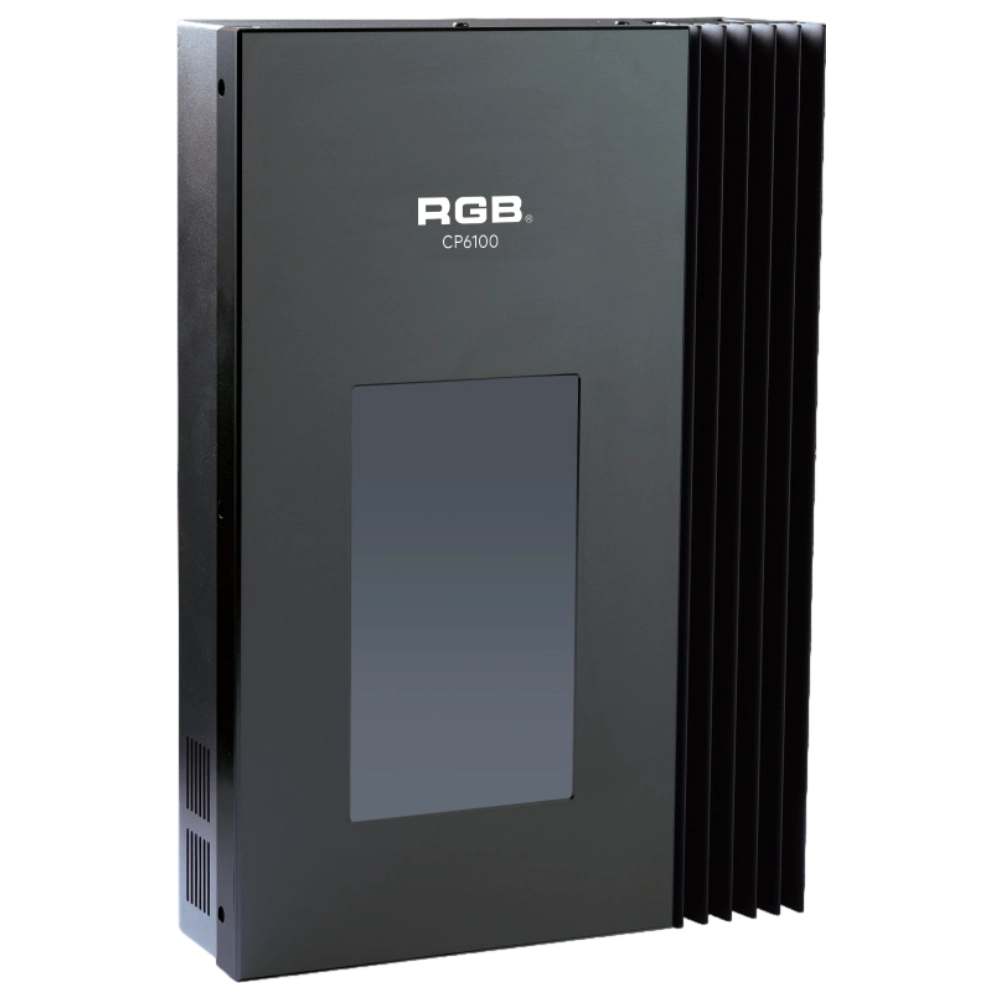
CP6100 Light Control System
The lighting control host is the main control device for theater stage lights, work lights, environmental lighting, commercial art lighting, sports venue lighting, and other places. By connecting the dedicated lighting control panels CP6104 and CP6108, it realizes the central control of the lighting system, supports a visual lighting control system, and intuitively displays the online and offline status of CP6100. Realize remote monitoring, editing, and setting of corresponding parameters.
It is widely applicable to theaters, cinemas, auditoriums, stadiums, museums, exhibition halls, cultural tourism performances, commercial art lighting, and other places.
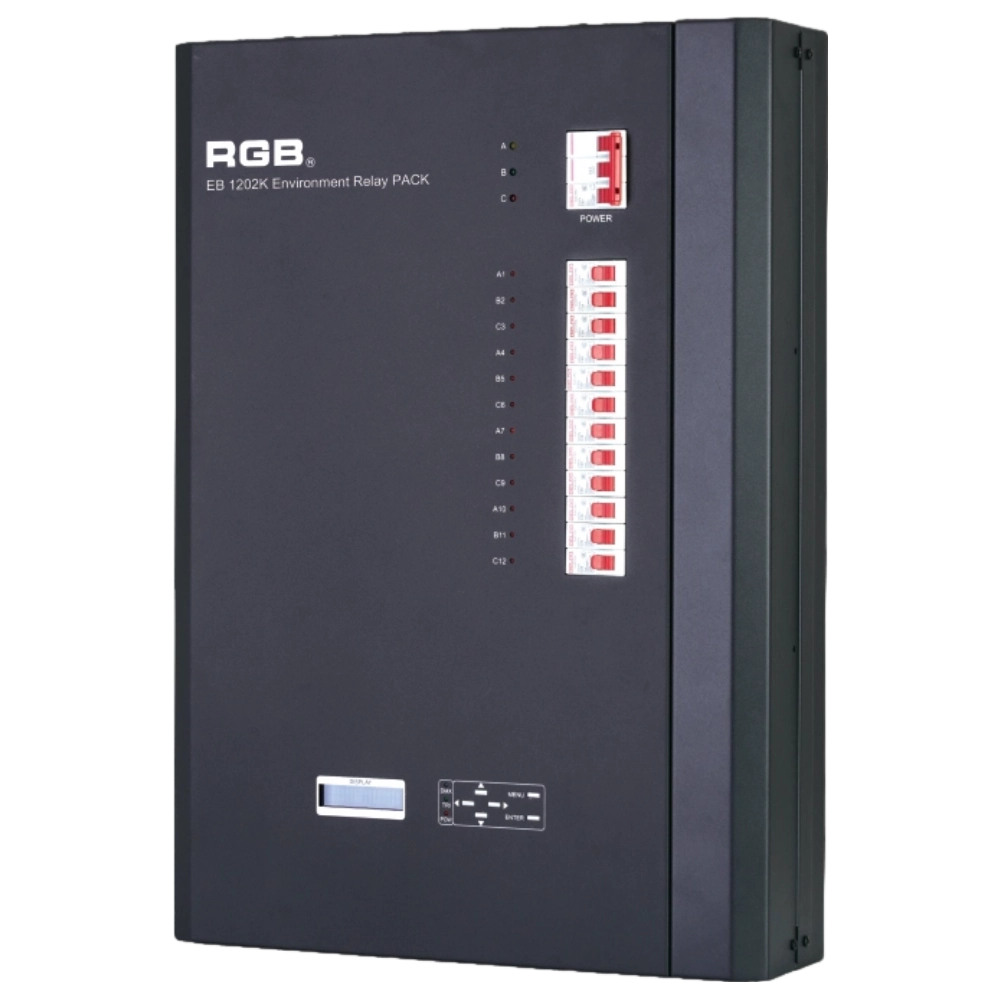
EB1202 Wall-Mounted Smart Site Light Control Series
Wall-mounted smart lighting controller with CE certification, DMX512 compatibility, flexible 12/24-channel output, scene backup, intelligent interface, and multiple dimming curves for precise professional lighting control.
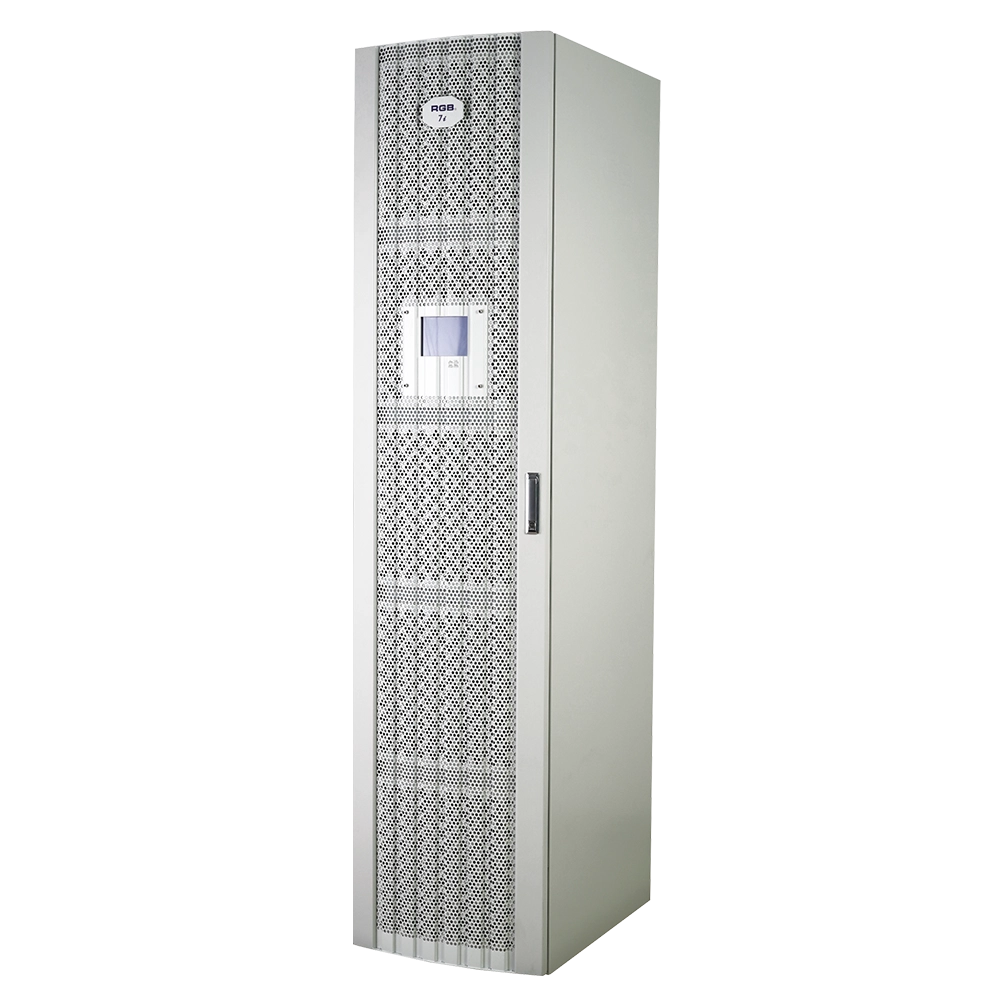
7i Dimmer/Relay Racks
7i is RGB independent research and development, with completely independent core technology, full digital decoding technology dimming racks, using a dual system, double decoding, double trigger, and duplex dual backup central decoding processor, with thyristor, relay, dimming relay mixed and other output configurations, supporting a visual lighting control system, intuitive display of dimming racks' online and offline status, and remote monitoring.
It is widely used in performing arts and cultural venues such as theaters, concert halls, multi-function halls, cultural travel and performing arts, TV stations, gymnasiums, auditoriums, commercial art lighting and so on.
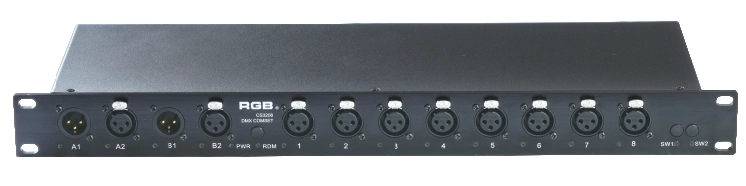
DMX&RDM Signal Mergers Amplifiers
The rack-mounted DMX signal amplifier complies with the DMX-512 standard protocol, improving the transmission quality of DMX-512 signals, ensuring the reliability of system control, and preventing faults such as reverse connection of AC high voltage in the lighting control system, high voltage intrusion due to lightning strikes, and line short circuits, which may affect the stability of the system.
Expert Support
Interested in learning more or need expert guidance related to this article? Fill in your details, and our team will provide tailored support.
Intelligent Control. Brilliant Performance.
RGB specializes in stage lighting control systems, delivering intelligent, reliable, and high-performance solutions for theaters and performance spaces worldwide.
Contact
Email:
Tel:
+86 20 3928 0245
+86 20 3928 0247
Address:
No.3, Huashan Road, Shilou Town, Panyu, Guangzhou, China.
Whatsapp: +8615975520131