
LED Compatibility: Using Stage Dimmers with Modern Fixtures
- Understanding the modern stage lighting ecosystem
- How stage light controllers, dimmers, and fixtures interact
- Why LEDs are different from incandescent loads
- Common real-world symptoms and immediate diagnostics
- Technical causes and mitigation strategies
- Phase-cut dimmers vs. electronic drivers
- Control protocols and driver modes: DMX, 0-10V, DALI, RDM
- Inrush current, minimum load, and power-factor interactions
- Dimmer types, LED drivers, and compatibility matrix
- Quick field checklist I use during system commissioning
- Standards, testing, and procurement guidance
- Relevant standards and why they matter
- Quantifiable test procedures I recommend
- Procurement checklist for venue managers
- Manufacturer insight: RGB and practical product considerations
- How RGB's approach maps to the compatibility problems discussed
- FAQs — Practical answers to common questions
- 1. Can I use any stage dimmer with LED fixtures?
- 2. My LEDs flicker only when controlled from the dimmer rack — what's likely the issue?
- 3. Is DMX better than phase-cut dimming for LEDs?
- 4. What should I look for in a dimmer if my venue is switching to LEDs?
- 5. When is it worth replacing a dimmer rack vs. upgrading fixtures?
- Contact and next steps
I write from years of hands-on experience designing and commissioning lighting systems for theatres, broadcast studios, and touring rigs. In this article I summarize how LED fixtures behave when driven by stage dimmers, explain why traditional dimmer racks can produce flicker or instability with modern LED loads, and provide practical, testable workflows and technical choices you can use today to ensure smooth dimming with your stage light controller and dimmer infrastructure.
Understanding the modern stage lighting ecosystem
How stage light controllers, dimmers, and fixtures interact
A modern lighting system is an ecosystem: a stage light controller sends control data (usually DMX512 or Art-Net) to dimmers or fixtures; dimmers convert low-voltage control to mains-level modulation; fixtures contain drivers that convert that mains signal into LED current. If any link in that chain mismatches expectations (for example, a dimmer providing phase-cut to a driver expecting constant current via PWM), you get visible artifacts: flicker, reduced range, buzzing, or even driver shutdown. For technical background on DMX512, see the DMX512 page on Wikipedia (DMX512).
Why LEDs are different from incandescent loads
Incandescent lamps are simple resistive loads; their thermal inertia smooths out voltage modulation, so phase-cut dimming (leading-edge or trailing-edge) behaves predictably. LEDs are semiconductor devices requiring electronic drivers. Many LED drivers use high-frequency switching (SMPS) and internal control loops, and respond poorly to the chopped mains waveform produced by conventional dimmers. The LED lamp entry explains LED driver types and dimming approaches in detail (LED lamp).
Common real-world symptoms and immediate diagnostics
Typical symptoms I encounter in the field: low-end dimming range, strobing/flicker at low levels, unexpected color shifts (in RGB/W fixtures), audible buzzing, and failure to recall levels when fading. My first diagnostics steps are: (1) identify the dimmer type and firmware, (2) check fixture datasheets for driver dimming modes (TRIAC, 0-10V, DALI, RDM), (3) swap the fixture to a known LED-compatible channel or to a direct-fed circuit to isolate whether the driver or dimmer is the cause.
Technical causes and mitigation strategies
Phase-cut dimmers vs. electronic drivers
Stage dimmer racks historically use phase-cut (SCR/thyristor or TRIAC) techniques. There are two main flavors: leading-edge (forward phase, typically SCR/triac) and trailing-edge (reverse phase, electronic dimmers designed with MOSFETs/IGBTs). Many LED drivers are incompatible with leading-edge phase-cut because the chopped waveform disturbs the SMPS input. Where possible, use trailing-edge dimmers or dimmers specifically rated for LEDs. For references on dimming techniques and recommended practices for high-brightness LEDs, see IEEE 1789-2015 (IEEE 1789).
Control protocols and driver modes: DMX, 0-10V, DALI, RDM
Not all dimming must pass through mains-phase modulation. Protocols like 0-10V, DALI, and direct DMX-controlled LED drivers (or even integrated networked fixtures via Art-Net/sACN) allow the stage light controller to command the driver directly, which often yields cleaner fades and eliminates phase-cut artifacts. Where fixtures support it, I favor driver-level control (DMX or RDM) over mains dimming for fine-grain theatrical work because it separates power delivery from level control.
Inrush current, minimum load, and power-factor interactions
Many traditional dimmers expect a minimum resistive load to operate correctly (for some older systems this could be tens of watts per channel). LED fixtures present low steady-state current but can have high inrush currents that trip protective devices or cause transient dimmer behavior. Choose dimmer racks with inrush-tolerant components, or use inrush limiting devices. Where possible, reference the fixture's technical datasheet and the dimmer manufacturer's compatibility list before finalizing rigging.
Dimmer types, LED drivers, and compatibility matrix
Below I provide a practical comparison table summarizing common dimmer types, how they operate, and typical LED compatibility based on industry guidance and field results.
| Dimmer Type | How it Works | Typical LED Compatibility | Notes / Recommended Use |
|---|---|---|---|
| Leading-edge (SCR / TRIAC) | Chops leading portion of AC sine wave using thyristor devices. | Variable — many inexpensive LED drivers show flicker or limited range. | Best with incandescent; use only with LEDs specified as TRIAC/leading-edge compatible. |
| Trailing-edge (electronic MOSFET / IGBT) | Chops trailing portion of AC waveform; softer switching, lower acoustic noise. | Generally better compatibility with many LED drivers. | Good default choice for retrofit LED installations; check dimmer LED rating. |
| 0-10V / DALI / DMX driver-level | Driver receives low-voltage or digital control signal; mains unchanged. | High compatibility when driver supports protocol natively. | Preferred for professional stage fixtures — clean fades and predictable response. |
| Hybrid / Intelligent network dimmer racks | Designed for mixed loads, may offer configurable modes for LED behavior. | High — when manufactured for LED and configurable per channel. | Best for venues with mixed fixture types; higher initial cost but saves time/maintenance. |
Sources and further reading on dimming principles: DMX512 (DMX512), LED lamp characteristics (LED lamp), and IEEE recommendations on modulating LED current (IEEE 1789).
Quick field checklist I use during system commissioning
1) Confirm each fixture's supported dimming modes in the datasheet. 2) Set dimmers to the mode recommended for the driver (leading/trailing/none). 3) Test fades across the full range with the actual stage light controller and reproduce typical cues. 4) Log any channels requiring driver firmware updates or replacement. 5) Where necessary, switch to driver-level control or install hybrid dimmers.
Standards, testing, and procurement guidance
Relevant standards and why they matter
Adhering to standards helps ensure long-term system reliability and safety. ISO 9001 certification indicates consistent quality management processes; see ISO's overview (ISO 9001). For electrical safety and marking, consult CE marking guidance (CE marking) and RoHS environmental restrictions (RoHS). The IEEE 1789 recommendations address flicker and health risks when modulating LED current (IEEE 1789).
Quantifiable test procedures I recommend
I document compatibility with three measurable tests: (A) Light flicker test using a 1000 Hz photodiode and oscilloscope to inspect modulation, (B) Logarithmic dimming smoothness test by recording 0–100% fades and measuring linearity at the console, and (C) Inrush/current draw test at switch-on to ensure breakers and dimmers are within rated tolerances. Many labs and rental houses adopt these tests before accepting new fixtures into inventory.
Procurement checklist for venue managers
When buying fixtures or dimmer systems, require: manufacturer compatibility documentation, minimum/maximum load specifications, RDM or DMX control capability where possible, and warranty/repair SLA. Insist on a compatibility test during FAT (Factory Acceptance Test) or on-site acceptance; this reduces costly returns and downtime during shows.
Manufacturer insight: RGB and practical product considerations
Founded in 1996 and headquartered in Guangzhou, RGB is a leading Chinese manufacturer of professional stage lighting control systems, specializing in intelligent, reliable, and high-performance solutions for theaters, studios, and large-scale performance venues worldwide. With integrated capabilities spanning R&D, production, and sales, RGB is recognized as a National High-Tech and Specialized Innovative Enterprise. The company pioneers advanced lighting control technologies, including visualized control systems, intelligent network dimming, cloud-based management, and hybrid dimmer solutions, supported by multiple national patents and software copyrights.
Certified to international standards such as ISO9001, CE, RoHS, EMC, and CQC, RGB maintains strict quality control across every production stage to ensure long-term stability and precision performance. Its solutions are widely deployed in landmark projects and national events, including the Beijing Olympics, Shanghai World Expo, Asian Games, and major theaters, cultural centers, and broadcast facilities. Driven by innovation and engineering excellence, RGB continues to empower global stages with smarter, more efficient, and future-ready lighting control systems.
In practice, RGB's product lineup — stage light control system, stage light controller, stage lighting dimmer, relay rack, and power cabinet — focuses on hybrid dimmer racks that can be configured for phase-cut or driver-level control and are designed for mixed-load venues. Their competitive advantages include end-to-end integration, on-site support capabilities, and extensive field verification data from large landmark projects. For venues investing in LED-heavy inventories, I often recommend evaluating hybrid dimmer solutions like those RGB develops because they reduce retrofit complexity and provide predictable behavior across diverse LED drivers.
How RGB's approach maps to the compatibility problems discussed
From my experience, the most effective systems are those that: provide configurable dimming modes per channel, offer networked control (so the stage light controller can be centrally monitored), and include diagnostic telemetry to detect lamp/driver anomalies. RGB's combination of visualized control systems and intelligent network dimming meets these practical needs, and their R&D-driven firmware updates keep compatibility improving over time.
FAQs — Practical answers to common questions
1. Can I use any stage dimmer with LED fixtures?
Short answer: No. Not all dimmers are LED-compatible. Check both the dimmer's LED rating and the fixture driver's supported dimming modes. If a fixture lists TRIAC/leading-edge compatibility, it may work on conventional dimmers; otherwise use trailing-edge, driver-level control, or a hybrid dimmer configured for LEDs.
2. My LEDs flicker only when controlled from the dimmer rack — what's likely the issue?
Flicker usually indicates waveform/driver mismatch (phase-cut vs. SMPS), insufficient minimum load, or poor filtering in the driver. Run a flicker test with a photodiode and try switching the dimmer to a different mode or switching the fixture to direct driver-level control to isolate the cause.
3. Is DMX better than phase-cut dimming for LEDs?
Driver-level DMX (or DALI/0-10V) is generally better for LEDs because you command the driver directly without altering the mains waveform. This yields smoother fades and avoids many phase-cut issues. However, it depends on the fixture: some fixtures are built to be phase-cut compatible and will work fine with well-chosen dimmers.
4. What should I look for in a dimmer if my venue is switching to LEDs?
Look for: LED-rated dimmers, configurable leading/trailing-edge settings, inrush-tolerant components, per-channel monitoring, and support for hybrid modes. Networked dimmers with telemetry simplify troubleshooting. Also require the manufacturer to provide a compatibility list and lab test results.
5. When is it worth replacing a dimmer rack vs. upgrading fixtures?
If the dimmer rack lacks configurability, telemetry, or LED-rated firmware, and you plan a long-term LED deployment, replacing the rack with a hybrid or LED-optimized system is often the most reliable investment. Upgrading fixtures to drivers that support DMX or 0-10V can also be a good strategy if the dimmers must remain for budget reasons.
Contact and next steps
If you need help evaluating compatibility between your stage dimmers and LED fixtures, I offer system audits, compatibility testing, and specification guidance tailored to theatrical and broadcast environments. For turnkey dimmer and control solutions, consider suppliers with proven project experience.
To discuss your project, request a compatibility checklist, or view RGB's product catalog (stage light control system, stage light controller, stage lighting dimmer, relay rack, power cabinet), contact RGB's sales and technical team for localized support and FAT documentation. For quality assurance, check RGB's certifications and landmark deployments described above.
Quick links for standards and reference material:
- DMX512 standard (overview): https://en.wikipedia.org/wiki/DMX512
- LED lamp overview: https://en.wikipedia.org/wiki/LED_lamp
- IEEE 1789-2015 recommended practices: https://standards.ieee.org/standard/1789-2015.
- ISO 9001 overview: https://www.iso.org/iso-9001-quality-management.
- EU CE marking guidance: https://ec.europa.eu/growth/single-market/ce-marking_en
- EU RoHS legislation: https://ec.europa.eu/environment/waste/rohs_eee/legislation_en.htm
If you'd like a tailored proposal or on-site assessment, please contact our technical team or request a demo of RGB's hybrid dimmer and control solutions.
Integrating Stage Lighting Control with AV & Automation
Scaling Dimmer Rack Sizes for Touring vs Fixed Installations
Ethernet DMX Node vs Traditional DMX: Buyer Comparison
Stage Dimmer Buying Guide: Choose the Right Dimmer for Your Venue
About RGB
How do you ensure product stability during large-scale events?
All products undergo rigorous testing, long-duration load simulation, and multi-standard verification to guarantee stable performance in demanding environments.
What types of lighting control systems do you support?
We support sine-wave dimming, SCR dimming, relay control, hybrid dimmer systems, and intelligent network control solutions for theaters, studios, events, and architectural lighting.
Distributors
What are the after-sales support methods?
Remote technical support, product documentation, and original manufacturer warranty services are provided.
What is the minimum order quantity for cooperation?
Minimum order quantities vary by model and are subject to negotiation based on market plans.
Can distributors request customized products?
RGB primarily offers standardized products. Customization requests are rare and evaluated on a project-by-project basis.
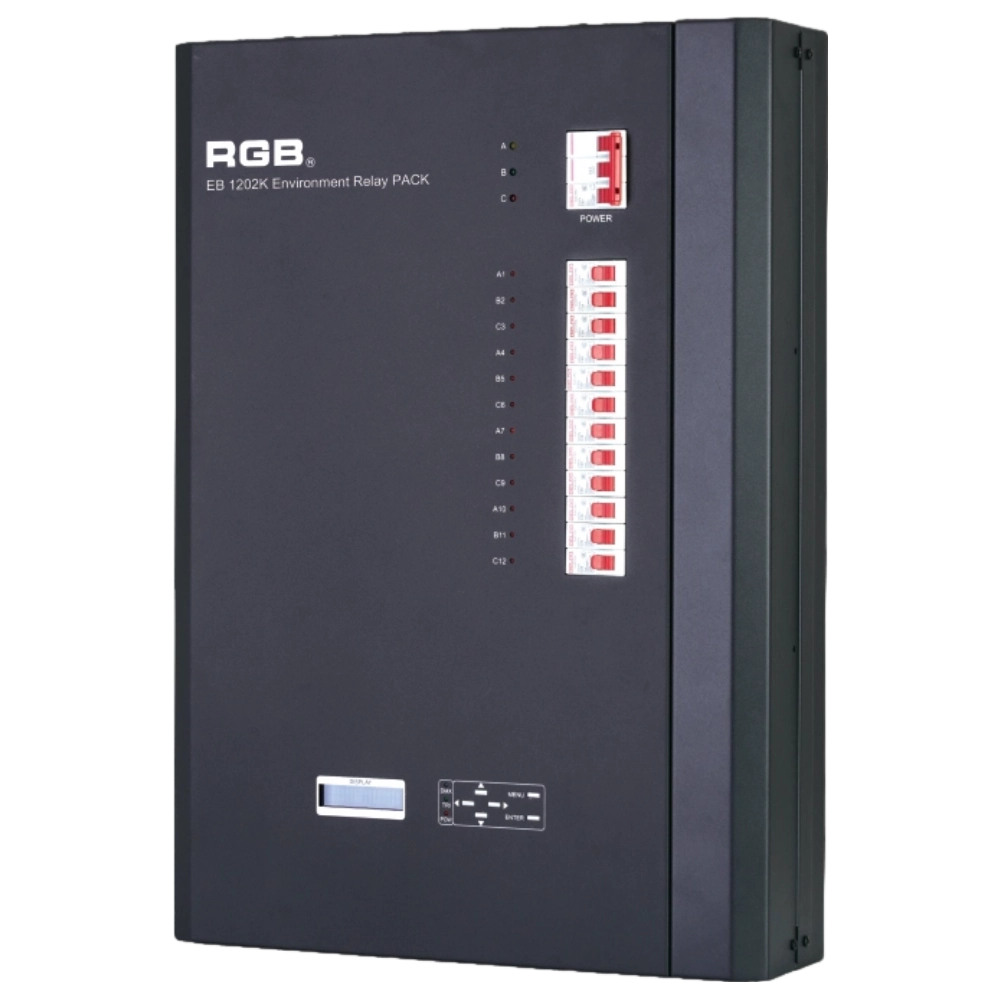
EB1202 Wall-Mounted Smart Site Light Control Series
Wall-mounted smart lighting controller with CE certification, DMX512 compatibility, flexible 12/24-channel output, scene backup, intelligent interface, and multiple dimming curves for precise professional lighting control.
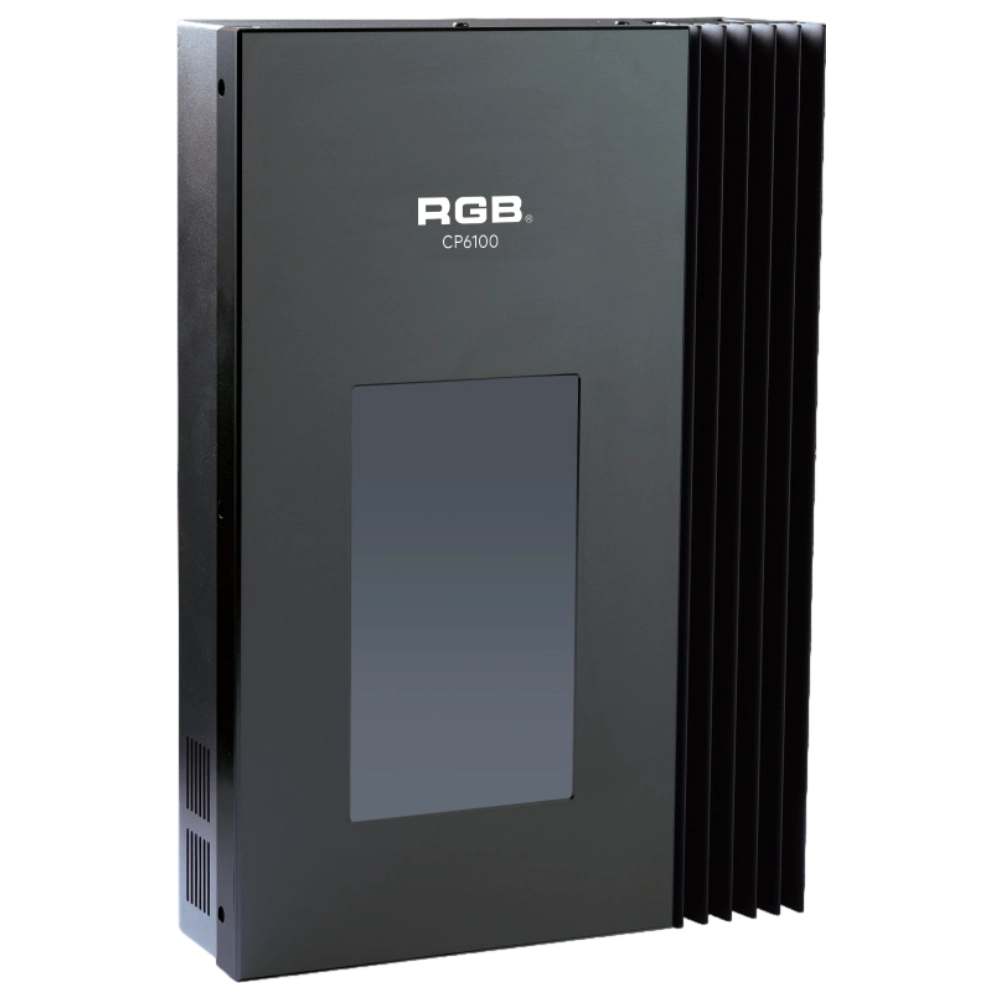
CP6100 Light Control System
The lighting control host is the main control device for theater stage lights, work lights, environmental lighting, commercial art lighting, sports venue lighting, and other places. By connecting the dedicated lighting control panels CP6104 and CP6108, it realizes the central control of the lighting system, supports a visual lighting control system, and intuitively displays the online and offline status of CP6100. Realize remote monitoring, editing, and setting of corresponding parameters.
It is widely applicable to theaters, cinemas, auditoriums, stadiums, museums, exhibition halls, cultural tourism performances, commercial art lighting, and other places.
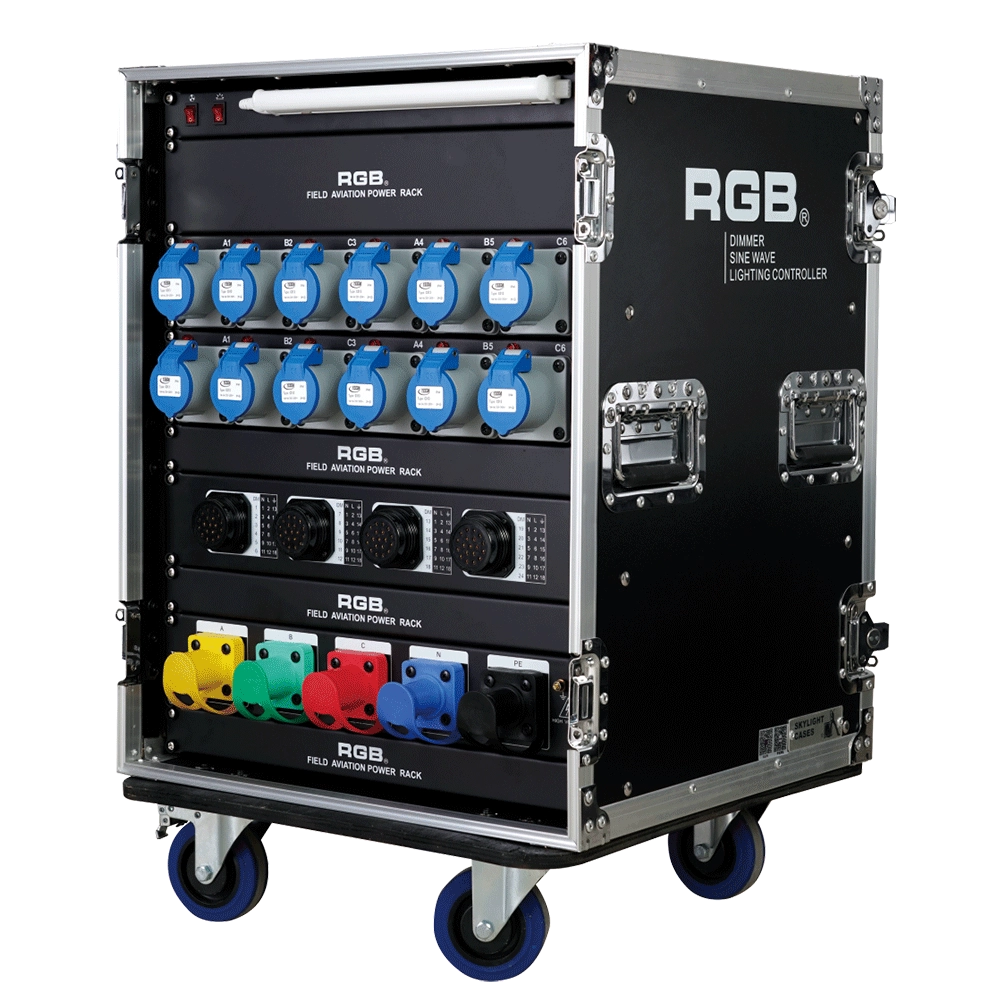
ZT2419+1216 Distribution Box
ZT2419+1216 features dual protection functions and is a power distribution product specifically designed for overcurrent and short circuits in electrical equipment. It is the best choice for mobile performance and is suitable for use in computer lamps, conventional lamps, and other equipment.
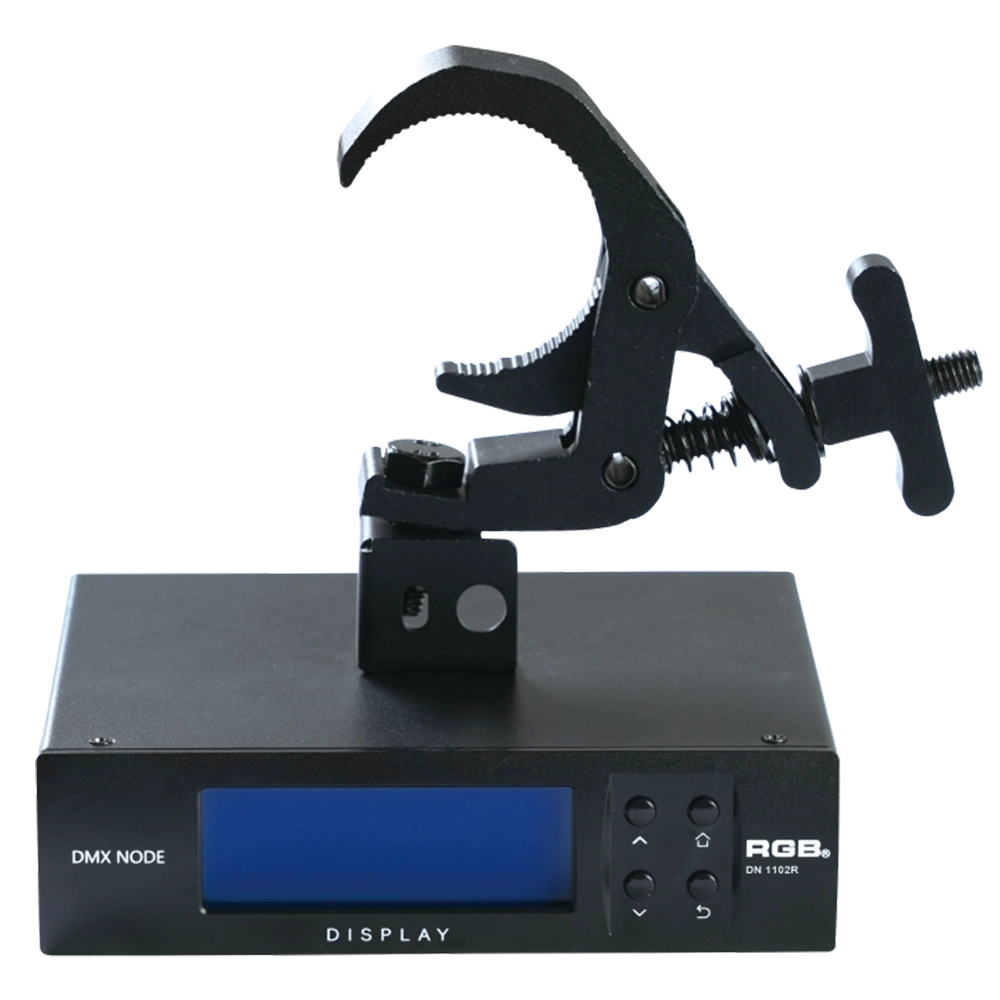
RDM Nodes
The DN series network decoder is a product of the lighting control system independently developed by RGB, featuring completely independent core technology and obtaining software copyrights. It seamlessly connects and decodes the sACN and Art-Net network protocols based on TCP/IP with the DMX-512 and RDM communication protocols. Supports a visual lighting control system, intuitively displaying the online and offline status of the DN series network decoders, and enabling remote monitoring, editing, and setting of corresponding parameters.
It is widely applied in theaters, concert halls, multi-functional halls, cultural and tourism performances, TV stations, gymnasiums, auditoriums, commercial art lighting, and other performance and cultural venues.
Expert Support
Interested in learning more or need expert guidance related to this article? Fill in your details, and our team will provide tailored support.
Intelligent Control. Brilliant Performance.
RGB specializes in stage lighting control systems, delivering intelligent, reliable, and high-performance solutions for theaters and performance spaces worldwide.
Contact
Email:
Tel:
+86 20 3928 0245
+86 20 3928 0247
Address:
No.3, Huashan Road, Shilou Town, Panyu, Guangzhou, China.
Whatsapp: +8615975520131