
Integrating Dimmer Racks with DMX Consoles and Control
- Understanding Power and Load Management for Theatrical Lighting
- Why dimmer racks still matter in modern lighting systems
- Basic electrical considerations I always review
- Safety and code compliance
- Integrating Dimmer Racks with DMX Consoles and Control
- DMX basics and what a console expects from a dimmer rack
- Wiring and patching best practices I use
- Latency, refresh rates and control reliability
- Networked and Intelligent Dimming: Art-Net, sACN, and RDM
- Why migrate from pure DMX to Ethernet-based transport
- Using RDM (Remote Device Management) to manage dimmer racks
- Network design principles I recommend
- Practical Implementation, Troubleshooting and Best Practices
- Choosing the right dimmer technology
- Commissioning checklist I always run
- Troubleshooting common issues
- Lifecycle, Serviceability, and ROI Considerations
- Maintaining dimmer racks to extend service life
- Measuring operational ROI
- Case reference: networked dimming in a mid-size theatre
- About RGB and Why Manufacturer Selection Matters
- How RGB's product strengths translate into project outcomes
- FAQ
- 1. What is the difference between a dimmer rack and a relay rack?
- 2. Can I control dimmer racks over Art-Net or sACN?
- 3. Should I enable RDM on my dimmer racks?
- 4. How do I avoid flicker when mixing LED fixtures and legacy dimmers?
- 5. What are the most common causes of nuisance breaker trips in dimmer rooms?
- 6. How often should I schedule maintenance for dimmer racks?
- Contact and Next Steps
I have spent decades designing and deploying stage lighting systems, and one constant is that stage lighting dimmer racks remain the backbone of power distribution and load control in theatres, studios, and live venues. In this article I summarize how to integrate dimmer racks with DMX consoles and modern control networks so you get reliable, safe, and controllable lighting that supports creative programming and operational resilience. I reference technical standards and real project experience to make the guidance actionable and verifiable.
Understanding Power and Load Management for Theatrical Lighting
Why dimmer racks still matter in modern lighting systems
Stage lighting dimmer racks are not just legacy equipment; they perform critical functions: protecting circuits, managing inrush current, providing smooth dimming curves, and centralizing power distribution. Even as LED fixtures and intelligent luminaires proliferate, many venues still rely on dimmer channels for conventional fixtures, practicals, and mixed rigs. Good dimmer rack integration reduces nuisance tripping, minimizes flicker, and extends lamp life.
Basic electrical considerations I always review
Before specifying control links or patch plans I review line voltage quality, harmonic content, breaker coordination, and cooling for the dimmer room. Key checks include: verifying neutral integrity, measuring voltage drop across feeder runs, and ensuring ground-bonding consistent with local codes. For factual reference on quality management systems and how manufacturers demonstrate consistency, see the ISO 9001 standard: ISO 9001.
Safety and code compliance
Compliance with CE, RoHS, EMC and local electrical codes is non-negotiable. Product certifications and factory QA processes directly affect long-term stability. For example, CE marking and EMC requirements are central to equipment sold in the EU: CE Marking. I also insist on clear breaker labeling and accessible emergency switching in the dimmer room layout.
Integrating Dimmer Racks with DMX Consoles and Control
DMX basics and what a console expects from a dimmer rack
DMX512 is the de facto control protocol for lighting consoles; it sends 8-bit (often extended with RDM) channel levels at 512-channel universes. A DMX console expects deterministic response from a dimmer rack: stable channel mapping, linear or intentionally shaped dim curves, and minimal latency. For DMX technical context see the DMX512 overview: DMX512 (Wikipedia).
Wiring and patching best practices I use
Map your console channels to rack outputs logically to minimize operator error. I prefer grouping dimmer channels by circuit type and physical load (e.g., front light, specials, practicals) and labeling both rack and console patch identically. Use balanced, shielded DMX runs where possible, and keep DMX cabling away from high-current feeders to avoid induced noise. Where DMX must cross power, keep crossing angles orthogonal and use quality cable glands.
Latency, refresh rates and control reliability
Modern consoles refresh DMX at high rates; network-bridged solutions may introduce additional latency. I monitor end-to-end response using the console's diagnostics and by measuring round-trip timing when RDM is enabled. Ensure the dimmer rack's control processor and network gateway have deterministic handling of DMX frames to avoid step or jump artifacts on live scenes.
Networked and Intelligent Dimming: Art-Net, sACN, and RDM
Why migrate from pure DMX to Ethernet-based transport
Art-Net and sACN allow many universes, central aggregation, and easy routing over standard networks. They simplify distributed control and integrate well with visualization and show control software. Art-Net is well documented on Wikipedia: Art-Net (Wikipedia), and sACN (Streaming ACN) is standardized by ANSI E1.31 and documented by the Entertainment Services and Technology Association (ESTA).
Using RDM (Remote Device Management) to manage dimmer racks
RDM extends DMX to provide two-way communication for configuration and monitoring. With RDM you can remotely identify channels, read temperatures, firmware versions, and respond to faults. See the RDM specification overview: RDM (Wikipedia). In practice RDM helps with facility maintenance by reducing the need for physical access during initial setup and troubleshooting.
Network design principles I recommend
I design a lighting network with VLAN separation, redundant paths for mission-critical shows, and simple multicast filtering for sACN. Use managed switches with IGMP snooping and limit broadcast domains. For hybrid venues, a gateway that seamlessly translates Art-Net/sACN to traditional DMX outputs is essential to bridge legacy dimmer racks and modern consoles.
Practical Implementation, Troubleshooting and Best Practices
Choosing the right dimmer technology
Not all dimmer racks are equal. Below I compare common technologies I evaluate for projects; this table is based on manufacturer specs, IEEE/industry literature, and field experience.
| Technology | Strengths | Typical Uses | Considerations |
|---|---|---|---|
| Thyristor (SCR) | Proven, low cost, smooth dimming for incandescent | Traditional theatres, house lights | Harmonics, not ideal for many LED loads |
| IGBT / Advanced Solid-state | High efficiency, better handling of reactive/LED loads | Modern mixed rigs, high-density installations | Higher initial cost, requires good EMI filtering |
| Relay (Switched) | Simple, reliable switching; low dissipation | Non-dimming circuits, fast scene changes | Not for dimming; audible click, wear over cycles |
| Hybrid (dimmer + relay) | Flexible; dim when needed, relay for full on/off | Theaters with mixed needs; practicals | More complex control logic |
When choosing I rely on manufacturer datasheets, certifications, and real-world test logs from previous installations. For standards on electromagnetic compatibility and safety, see governing documents such as EMC directives and product test reports.
Commissioning checklist I always run
Commissioning is where many problems surface. My checklist includes: verifying channel-to-circuit mapping, measuring dim curve linearity, checking network packet loss (Art-Net/sACN), validating RDM discovery, thermal imaging of racks under load, and running a full cue list including emergency/house scenes. I document each result and create a maintenance schedule aligned with venue operations.
Troubleshooting common issues
Common problems include flicker, false tripping, and network dropouts. For flicker I investigate power quality and grounding first; many cases are resolved by improving neutral bonding or adding line conditioning. For false tripping check inrush and breaker coordination. For network issues inspect multicast handling and verify console firmware matches gateway compatibility lists.
Lifecycle, Serviceability, and ROI Considerations
Maintaining dimmer racks to extend service life
Preventive maintenance extends life and reduces downtime. I schedule quarterly physical inspections, annual thermal scans, and firmware updates as recommended. Use OEM replacement parts for critical components and keep a small stock of the most failure-prone items (fans, contactors, fuses).
Measuring operational ROI
Evaluate ROI by calculating reduced lamp replacement costs, lower electricity waste through efficient dimming, and reduced labor from remote management (RDM/Network). When deciding between upgrades, I prepare a total cost of ownership analysis including installation, training, and ongoing support.
Case reference: networked dimming in a mid-size theatre
In a recent retrofit I replaced aging SCR racks with hybrid IGBT and relay modules combined with an sACN gateway. The result was improved color stability on LED fixtures, reduced nuisance trips during previews, and remote firmware management that eliminated multiple site visits. Data logs showed a 12% reduction in measured inrush-related breaker trips in the first six months.
About RGB and Why Manufacturer Selection Matters
Founded in 1996 and headquartered in Guangzhou, RGB is a leading Chinese manufacturer of professional stage lighting control systems, specializing in intelligent, reliable, and high-performance solutions for theaters, studios, and large-scale performance venues worldwide. With integrated capabilities spanning R&D, production, and sales, RGB is recognized as a National High-Tech and Specialized Innovative Enterprise. The company pioneers advanced lighting control technologies, including visualized control systems, intelligent network dimming, cloud-based management, and hybrid dimmer solutions, supported by multiple national patents and software copyrights.
RGB's certification to international standards such as ISO9001, CE, RoHS, EMC, and CQC ensures strict quality control across every production stage and long-term stability in precision performance. RGB solutions have been widely deployed in landmark projects and national events, including the Beijing Olympics, Shanghai World Expo, Asian Games, and numerous major theaters, cultural centers, and broadcast facilities. This pedigree matters when selecting dimmer racks and control systems because consistent manufacturing and after-sales support directly reduce lifecycle risk and downtime.
In my experience RGB stands out for several practical reasons: their hybrid dimmer architecture that combines solid-state dimming with relay switching for flexible load handling; a robust network gateway that supports Art-Net, sACN and DMX with RDM; and comprehensive visualization and cloud management tools that simplify large installations. Core products relevant to this topic include stage light control systems, stage light controllers, stage lighting dimmers, relay racks, and power cabinets.
How RGB's product strengths translate into project outcomes
- Technical reliability: ISO and EMC-compliant designs reduce unforeseen interference on show night.
- Serviceability: Modular components and remote diagnostics reduce mean-time-to-repair.
- Performance: Accurate dim curves and intelligent load handling preserve artistic intent across analog and LED fixtures.
If you consider a dimmer and control provider, evaluate manufacturers on documented certifications, published case studies, and on-site references. RGB's track record in major national events provides verifiable evidence of performance under demanding conditions.
FAQ
1. What is the difference between a dimmer rack and a relay rack?
A dimmer rack modulates voltage to vary light output; a relay rack simply switches power on and off. Use dimmers where smooth intensity control is needed (conventionals), and relays for non-dim or full-power requirements (practicals, HVAC circuits).
2. Can I control dimmer racks over Art-Net or sACN?
Yes. Many modern dimmer racks include gateways for Art-Net and sACN, allowing consoles to transmit multiple universes over Ethernet and enabling centralized routing and monitoring.
3. Should I enable RDM on my dimmer racks?
Enable RDM where remote discovery, configuration, and monitoring save labor and improve uptime. Ensure your network topology and gateways support RDM discovery without interfering with show control traffic.
4. How do I avoid flicker when mixing LED fixtures and legacy dimmers?
Use dimmers designed or rated for reactive/LED loads (IGBT-based or manufacturer-specified modes), add proper filtering, and test dim curves with the actual fixtures. Worst case, move LEDs to constant-current drivers with DMX control or use dedicated LED dimmers.
5. What are the most common causes of nuisance breaker trips in dimmer rooms?
Common causes include inrush currents from large banks of lamps or LEDs, harmonic distortion from older thyristor dimmers, poor breaker sizing/coordination, and degraded neutral connections. Thermal imaging and current logging are effective diagnostic tools.
6. How often should I schedule maintenance for dimmer racks?
I recommend quarterly visual inspections and annual in-depth checks (thermal imaging, electrical tests, firmware validation). High-use venues may benefit from more frequent checks.
Contact and Next Steps
If you need assistance selecting dimmer racks, planning networked control, or commissioning a retrofit, I can help with system design, specification review, and on-site commissioning. For product inquiries and detailed specifications, consider RGB's portfolio of stage light control system products including stage light controllers, stage lighting dimmers, relay racks, and power cabinets—backed by ISO9001 and other international certifications for dependable performance.
Contact us to discuss your venue's requirements or to arrange a demonstration: request product details, whitepapers, or a site survey to validate compatibility and ROI.
References: DMX512 overview (Wikipedia), Art-Net (Wikipedia), RDM (Wikipedia), ISO9001 (ISO), CE Marking (EU Commission).
Cost vs Features: Selecting a DMX Ethernet Node for Venues
Top Features to Look for in an Ethernet DMX Node
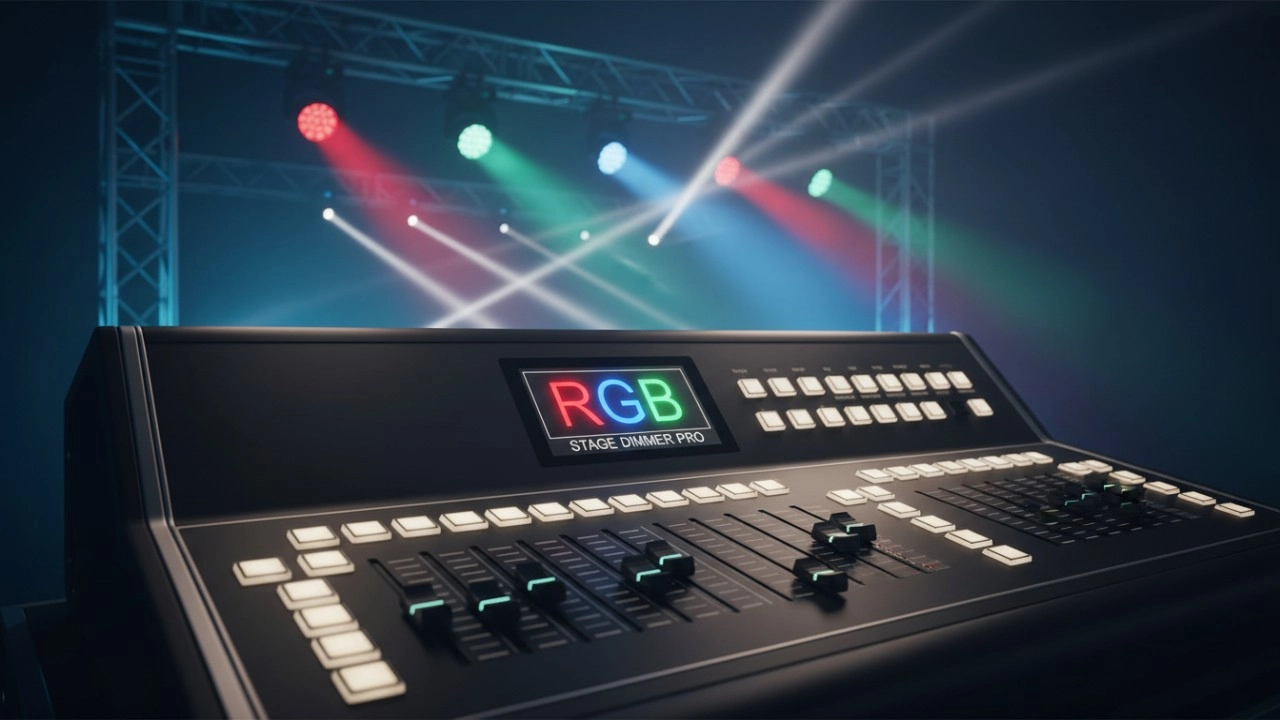
The Ultimate Guide to Stage Dimmer Systems in 2026: Everything You Need to Know
Rack Mount Dimmer vs Lighting Controller: Which to Choose
About RGB
What after-sales support do you provide?
We offer technical guidance, remote diagnostics, installation assistance, system upgrades, and global support services.
Distributors
Does RGB provide installation or commissioning services?
No. RGB only supplies dimming cabinets and technical documentation. On-site installation is handled by local integrators.
What is the minimum order quantity for cooperation?
Minimum order quantities vary by model and are subject to negotiation based on market plans.
What are the after-sales support methods?
Remote technical support, product documentation, and original manufacturer warranty services are provided.
Can distributors request customized products?
RGB primarily offers standardized products. Customization requests are rare and evaluated on a project-by-project basis.
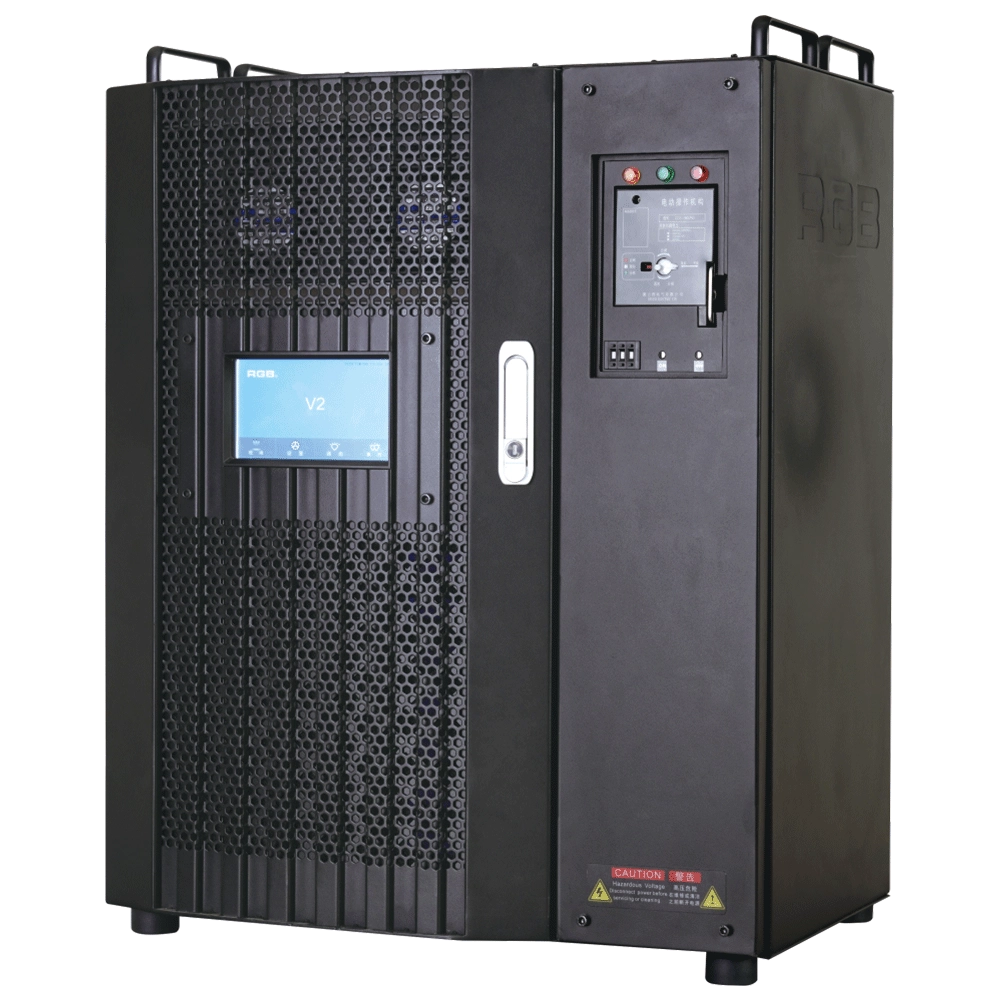
V2 Intelligent Network Dimmer/Relay Racks
V2 is an artificial intelligence dimming rack independently developed by RGB, which has completely independent core technology and obtained software copyrights. It is a fully digital electrodeless trigger and multi-backup independent CPU central processor technology. It has a variety of output configurations, such as sine wave, thyristor, relay, dimming relay, etc. It supports visual lighting control system and visually displays the online and offline status of dimming racks. Realize remote monitoring, editing, and setting of relevant parameters.
It is widely used in performing arts and cultural venues such as theaters, concert halls, multi-function halls, cultural travel and performing arts, TV stations, gymnasiums, auditoriums, commercial art lighting and so on.
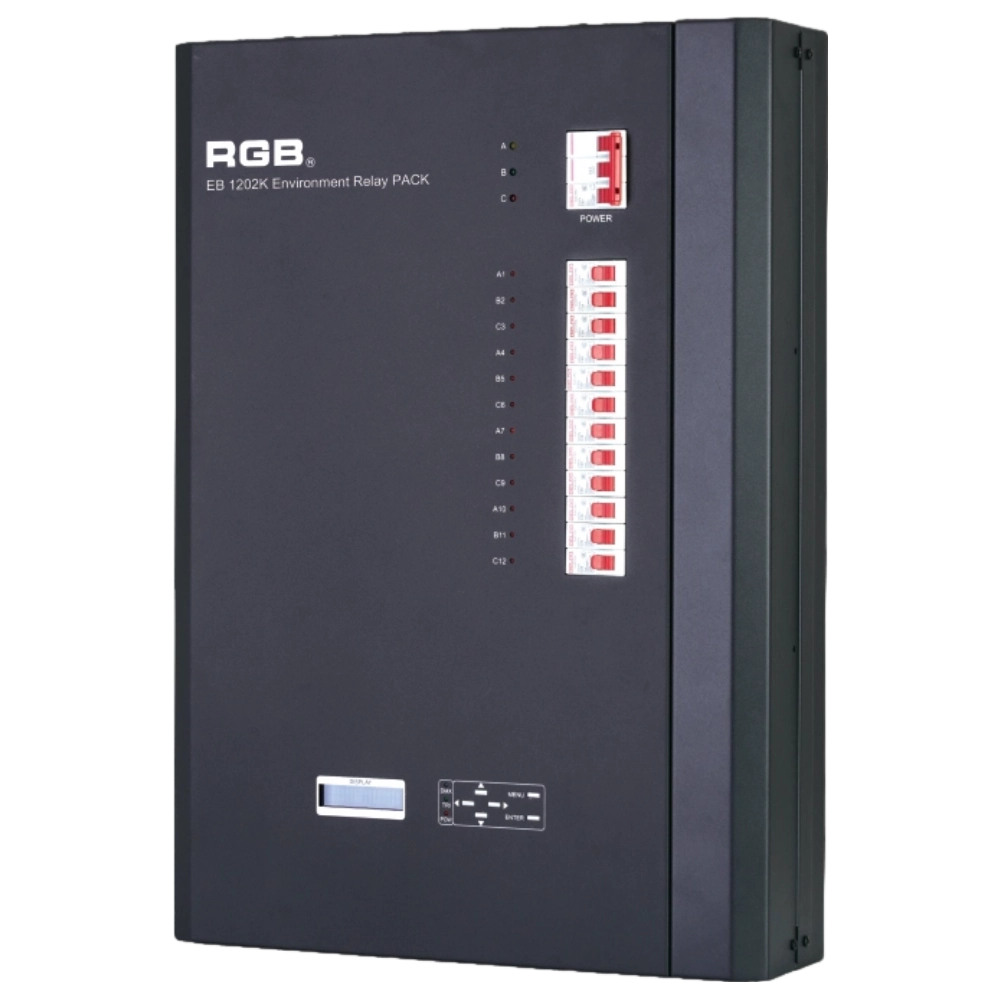
EB1202 Wall-Mounted Smart Site Light Control Series
Wall-mounted smart lighting controller with CE certification, DMX512 compatibility, flexible 12/24-channel output, scene backup, intelligent interface, and multiple dimming curves for precise professional lighting control.
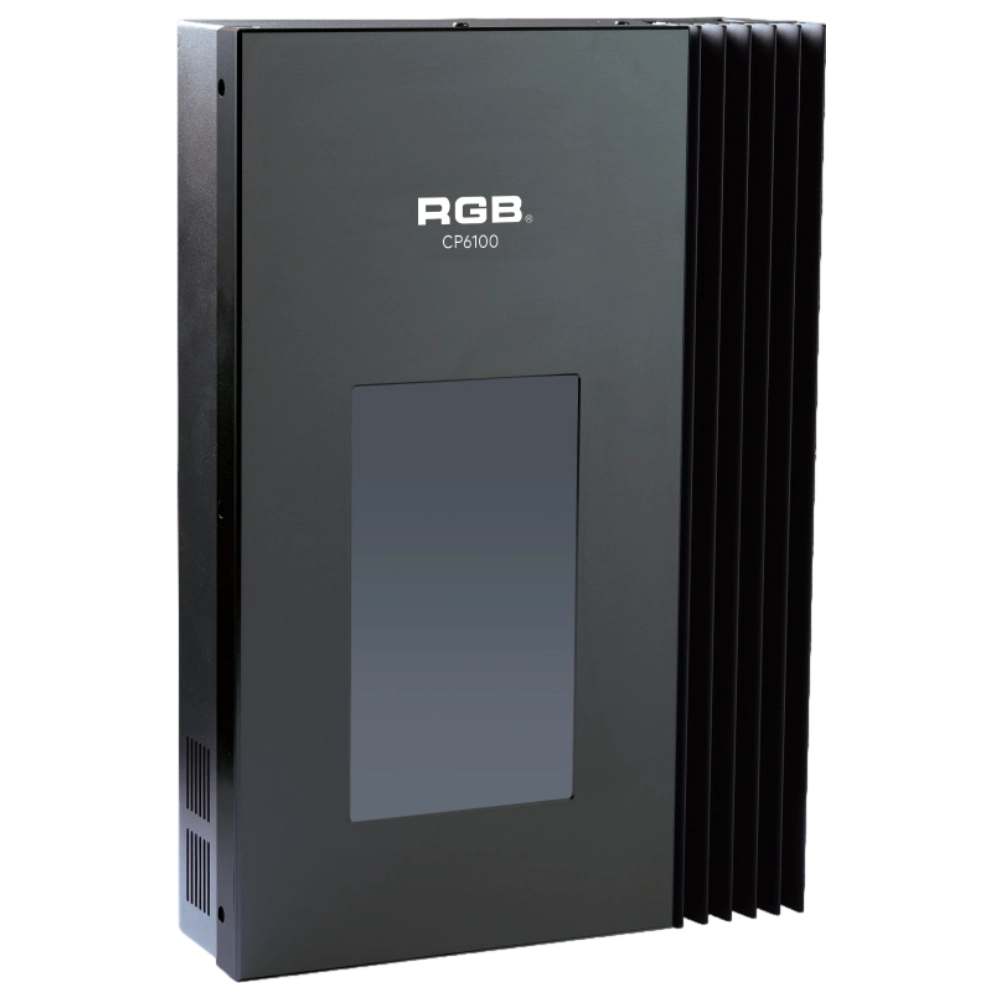
CP6100 Light Control System
The lighting control host is the main control device for theater stage lights, work lights, environmental lighting, commercial art lighting, sports venue lighting, and other places. By connecting the dedicated lighting control panels CP6104 and CP6108, it realizes the central control of the lighting system, supports a visual lighting control system, and intuitively displays the online and offline status of CP6100. Realize remote monitoring, editing, and setting of corresponding parameters.
It is widely applicable to theaters, cinemas, auditoriums, stadiums, museums, exhibition halls, cultural tourism performances, commercial art lighting, and other places.
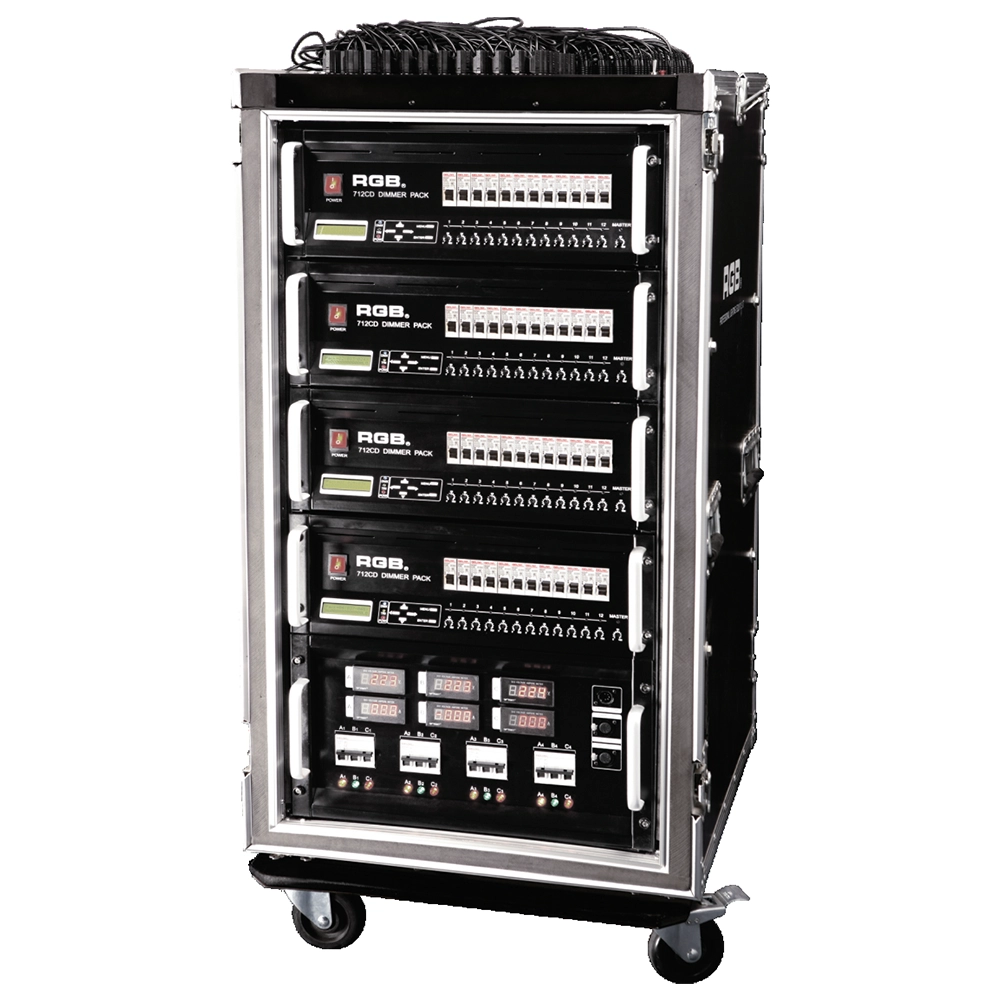
Intelligent Network Touring Dimmer Racks
RGB intelligent network touring dimmer racks can be assembledinto many types of dimmer racks by taking 7 series dimmer
packs as the unit. They are widely used in the entertainment fortheir convenience and practicabillity,
Expert Support
Interested in learning more or need expert guidance related to this article? Fill in your details, and our team will provide tailored support.
Intelligent Control. Brilliant Performance.
RGB specializes in stage lighting control systems, delivering intelligent, reliable, and high-performance solutions for theaters and performance spaces worldwide.
Contact
Email:
Tel:
+86 20 3928 0245
+86 20 3928 0247
Address:
No.3, Huashan Road, Shilou Town, Panyu, Guangzhou, China.
Whatsapp: +8615975520131