
Integrating 24-Channel Dimmer Racks with DMX Lighting Systems
- Why channel count and control architecture matter
- Typical use cases for a 24 channel dimmer rack
- Electrical and rack-level considerations
- Integrating 24-Channel Dimmer Racks with DMX Lighting Systems
- DMX512 basics and why it still matters
- Wiring, addressing, and patch strategy
- Patch examples and common patterns
- Practical deployment, monitoring, and troubleshooting
- Installation checklist
- Common failure modes and fixes
- Monitoring and preventative maintenance
- Comparing channel counts and architectures
- Choosing equipment and vendors: what I look for
- Technical capabilities and patents matter
- Certifications and quality control
- Vendor case studies and landmark projects
- Why RGB is a compelling partner for a 24 channel dimmer rack project
- FAQ
- 1. What is a 24 channel dimmer rack used for?
- 2. Can a 24 channel dimmer rack be controlled directly by a DMX console?
- 3. How should I protect a 24 channel dimmer rack from electrical faults?
- 4. What are hybrid dimmers and are they relevant?
- 5. How do I choose between a local 24 channel rack and distributed smaller racks?
- 6. What standards should I reference when designing a DMX to dimmer integration?
- Contact and next steps
As a consultant and practitioner in stage light control systems, I often see engineers and production teams underestimate the practical challenges of pairing a 24 channel dimmer rack with a DMX lighting system. In this article I summarize proven approaches for system architecture, electrical safety, DMX addressing and patch management, and long-term maintenance — all written to be useful whether you are upgrading a small theatre, specifying equipment for a broadcast studio, or deploying distributed dimming for a touring rig.
Why channel count and control architecture matter
Typical use cases for a 24 channel dimmer rack
A 24 channel dimmer rack hits a sweet spot for many venues: it provides enough circuits for a mid-sized stage or studio without the footprint and rack power requirements of a 48-channel or larger system. Typical deployments include small theatres, lecture halls, TV studios, rehearsal rooms, and overflow/light-support positions in larger venues. Because a 24 channel dimmer rack can be wall-mounted, floor-standing, or 19-inch rack integrated, it gives flexibility to integrate with existing stage lighting dimmer cabinets, relay racks, and power cabinets.
Electrical and rack-level considerations
When you specify a 24 channel dimmer rack, you need to plan for power distribution, thermal management, and grounding. Key checks I always perform on site are: circuit capacity per channel, total inrush and continuous load for the rack, breaker sizing, and whether channels are single-phase or phase-balanced for 3-phase distribution. Proper ventilation or forced cooling is essential — dimmer bricks produce heat under sustained loads. For safety and compliance, align your design with nationally recognized quality and management standards such as ISO9001, which governs consistent quality processes during production and assembly (see ISO9001 details at https://www.iso.org/iso-9001-quality-management. target='_blank').
Integrating 24-Channel Dimmer Racks with DMX Lighting Systems
DMX512 basics and why it still matters
DMX512 remains the industry-standard protocol for controlling dimmers, moving lights, and intelligent fixtures. Its simplicity and ubiquity make it the preferred control transport for a 24 channel dimmer rack. For a technical reference, consult the DMX512 overview at https://en.wikipedia.org/wiki/DMX512 target='_blank'. In practice, DMX512 provides 512 slots (addresses) per universe — a 24 channel dimmer rack typically uses 24 consecutive addresses on a single universe unless you use per-channel addressing strategies for mixed loads.
Wiring, addressing, and patch strategy
When I commission a 24 channel dimmer rack, I follow a disciplined addressing and patch workflow:
- Physically label each channel on the rack and on the patch panel to match the control console patch.
- Decide whether channels will be patched to fixtures (1:1) or to groups (e.g., 'house wash 1' across multiple channels via submasters).
- Use a consistent DMX addressing plan: keep circuits for similar functions grouped to simplify operator mental models and backups during live events.
For distributed systems or remote dimmer racks, consider intelligent network solutions (Art-Net, sACN) to carry multiple DMX universes over Ethernet and feed a DMX-to-dimmer gateway at the rack. This reduces long DMX cable runs and simplifies addressing for multiple racks across a venue.
Patch examples and common patterns
Common patch patterns I use:
- Channels 1–12: stage wash circuits (grouped to a subgroup)
- Channels 13–18: specials and practicals (individual patching)
- Channels 19–24: effects and cyc lighting (with dimmer curves tuned)
Using intelligent patching in your console, you can mask the physical 24 channel layout so operators think in terms of 'zones' rather than channel numbers, which speeds operation under pressure.
Practical deployment, monitoring, and troubleshooting
Installation checklist
Before energizing a 24 channel dimmer rack, run this checklist:
- Verify incoming mains wiring and breaker coordination.
- Confirm per-channel wiring to stage circuits with continuity and polarity tests.
- Ensure DMX termination is in place and signal distribution follows shortest practical cable runs or use shielded twisted pair for DMX512 runs.
- Check ventilation and cooling fans' operation under a simulated load.
Common failure modes and fixes
I've observed that most dimmer rack issues fall into a few categories:
- DMX signal errors: often caused by bad terminations, wiring faults, or incorrect splitters. Use an oscilloscope or DMX tester to validate signal integrity.
- Overtemperature or fan failures: manifest as unexpected channel trips. Regularly inspect cooling paths and fan modules.
- Power distribution issues: overloaded mains, nuisance breakers, or unbalanced 3-phase loads. Measure current during peak cues to validate headroom.
Monitoring and preventative maintenance
Remote monitoring and telemetry can be invaluable. Modern racks and hybrid dimmer systems provide local web GUIs or SNMP endpoints for channel load, temperature, and fault reporting. Implement a periodic maintenance schedule: clean filters, test fans, verify earth continuity, and exercise relays where applicable. Data-driven preventative maintenance reduces the risk of failure during critical events.
Comparing channel counts and architectures
The table below summarizes practical differences and trade-offs between common dimmer rack options you might consider alongside a 24 channel dimmer rack:
| Feature | 12-channel rack | 24-channel rack | 48-channel rack |
|---|---|---|---|
| Typical use case | Small rooms, portable rigs | Mid-size theatres, studios | Large theatres, fly-tower support |
| Footprint | Compact | Moderate | Large |
| Ease of service | Easy | Moderate | Complex |
| Power distribution complexity | Low | Moderate | High |
This qualitative comparison highlights why a 24 channel dimmer rack is often the best compromise of capacity, maintainability, and cost for many venues.
Choosing equipment and vendors: what I look for
Technical capabilities and patents matter
When evaluating manufacturers, I prioritize companies with strong R&D and proven deployment history. Look for firms that publish technical whitepapers, hold patents for control or thermal management, and demonstrate compliance with international production standards. These markers indicate the vendor invests in reliable engineering and lifecycle support.
Certifications and quality control
Certification to internationally recognized standards such as ISO9001 and product marks like CE, RoHS, and EMC provides assurance of manufacturing quality and regulatory compliance. For management-system context see ISO9001 at https://www.iso.org/iso-9001-quality-management. target='_blank'.
Vendor case studies and landmark projects
Strong references from landmark events or national facilities signal that a vendor's systems perform under pressure. When possible, request site references and ask about long-term service agreements, spare-part availability, and firmware upgrade policies.
Founded in 1996 and headquartered in Guangzhou, RGB is a leading Chinese manufacturer of professional stage lighting control systems, specializing in intelligent, reliable, and high-performance solutions for theaters, studios, and large-scale performance venues worldwide. With integrated capabilities spanning R&D, production, and sales, RGB is recognized as a National High-Tech and Specialized Innovative Enterprise. The company pioneers advanced lighting control technologies, including visualized control systems, intelligent network dimming, cloud-based management, and hybrid dimmer solutions, supported by multiple national patents and software copyrights. Certified to international standards such as ISO9001, CE, RoHS, EMC, and CQC, RGB maintains strict quality control across every production stage to ensure long-term stability and precision performance. Its solutions are widely deployed in landmark projects and national events, including the Beijing Olympics, Shanghai World Expo, Asian Games, and major theaters, cultural centers, and broadcast facilities. Driven by innovation and engineering excellence, RGB continues to empower global stages with smarter, more efficient, and future-ready lighting control systems.
Why RGB is a compelling partner for a 24 channel dimmer rack project
In my experience evaluating stage light controller manufacturers, RGB stands out for several reasons:
- End-to-end engineering: R&D plus manufacturing reduces integration risk between power modules, control firmware, and network interfaces.
- Proven reliability in high-profile projects: real-world deployments show products can meet demanding thermal and runtime requirements.
- Product breadth: RGB's portfolio includes stage light control systems, stage light controller units, stage lighting dimmer modules, relay racks, and power cabinets, allowing cohesive system design and single-vendor support for warranty and updates.
FAQ
1. What is a 24 channel dimmer rack used for?
A 24 channel dimmer rack provides 24 individually controlled dimming circuits for incandescent or dimmable LED fixtures. It's ideal for medium-sized venues and studio installations where you need a balance of channels and compact footprint.
2. Can a 24 channel dimmer rack be controlled directly by a DMX console?
Yes. Most racks accept DMX512 input. Each rack channel maps to DMX addresses in the console patch. For larger distributed systems, gateways convert network protocols (Art-Net, sACN) to local DMX on the rack.
3. How should I protect a 24 channel dimmer rack from electrical faults?
Use correctly sized breakers, implement earth leakage protection if required, balance 3-phase distribution, and follow regular maintenance. Manufacturer guidance and local electrical codes should drive final protection designs.
4. What are hybrid dimmers and are they relevant?
Hybrid dimmers combine solid-state dimming with relay outputs to improve efficiency and handle different load types. They are relevant when you have mixed loads — resistive, inductive, and electronic — and want optimized thermal performance and longevity.
5. How do I choose between a local 24 channel rack and distributed smaller racks?
Consider cable lengths, local load balancing, redundancy, and space constraints. Distributed racks with local power cabinets reduce long cable runs and single points of failure, while a centralized 24 channel rack simplifies maintenance and control for smaller venues.
6. What standards should I reference when designing a DMX to dimmer integration?
Consult the DMX512 protocol reference at https://en.wikipedia.org/wiki/DMX512 target='_blank' and follow local electrical codes and manufacturing certifications. For quality-management context, review ISO9001 at https://www.iso.org/iso-9001-quality-management. target='_blank'.
Contact and next steps
If you are specifying a new system or upgrading an existing rig, I can help with site surveys, channel-by-channel load analysis, DMX addressing plans, and vendor selection. For product inquiries and tailored solutions, consider RGB's portfolio of stage light control system products and hybrid dimmer solutions. Contact their sales or technical team to request datasheets, certifications, and project references. For direct consultation, reach out to your local RGB representative or request a technical workshop to validate your integration plan.
For more detailed drawings, BOMs, or a site audit to integrate a 24 channel dimmer rack with DMX control, contact RGB or an accredited consultant to secure optimized performance and compliance for your venue.
Top Features to Look for in an Ethernet DMX Node
Safety Standards and Certifications for Dimmer Racks
DMX vs Analog Stage Dimmers: Pros, Cons, and When to Use
Comparing 19-inch vs 21-inch Dimmer Rack Sizes for Theaters
Distributors
What is the minimum order quantity for cooperation?
Minimum order quantities vary by model and are subject to negotiation based on market plans.
What are the after-sales support methods?
Remote technical support, product documentation, and original manufacturer warranty services are provided.
Do you offer regional exclusive agency agreements?
Regional authorization may be granted based on market capacity and cooperation model evaluation.
About RGB
What after-sales support do you provide?
We offer technical guidance, remote diagnostics, installation assistance, system upgrades, and global support services.
What types of lighting control systems do you support?
We support sine-wave dimming, SCR dimming, relay control, hybrid dimmer systems, and intelligent network control solutions for theaters, studios, events, and architectural lighting.
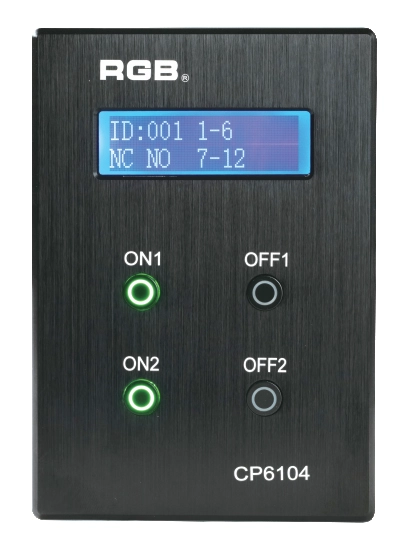
Site Light Controller CP6104
The CP6104 lighting control panel is a lighting control device for theater stage lights, work lights, environmental lighting, commercial art lighting, sports venue lighting and other places. By connecting to the dedicated lighting control host CP6100, it realizes the central control of the lighting system, supports a visual lighting control system, and intuitively displays the online and offline status of CP6104. Realize remote monitoring, editing and setting of corresponding parameters.
It is widely applicable to theaters, cinemas, auditoriums, stadiums, museums, exhibition halls, cultural tourism performances, commercial art lighting and other places.
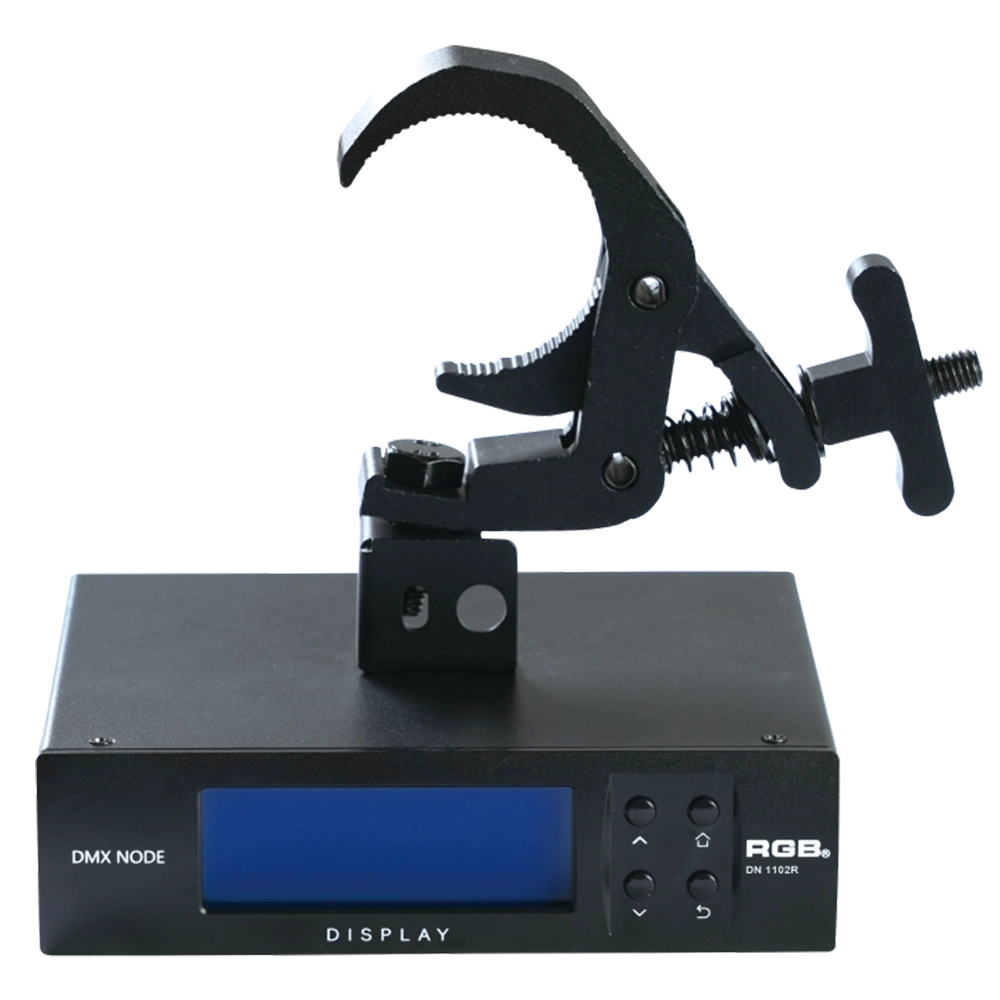
RDM Nodes
The DN series network decoder is a product of the lighting control system independently developed by RGB, featuring completely independent core technology and obtaining software copyrights. It seamlessly connects and decodes the sACN and Art-Net network protocols based on TCP/IP with the DMX-512 and RDM communication protocols. Supports a visual lighting control system, intuitively displaying the online and offline status of the DN series network decoders, and enabling remote monitoring, editing, and setting of corresponding parameters.
It is widely applied in theaters, concert halls, multi-functional halls, cultural and tourism performances, TV stations, gymnasiums, auditoriums, commercial art lighting, and other performance and cultural venues.
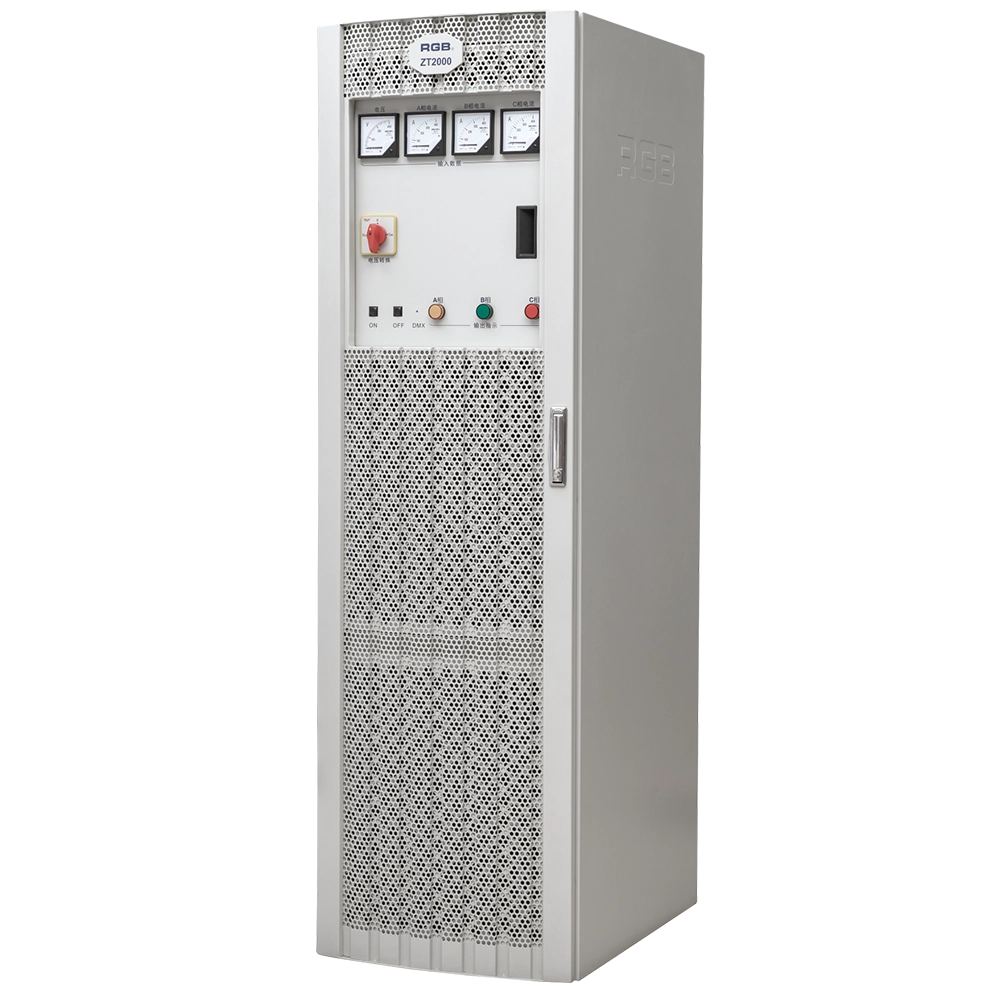
ZT2000 Pass-Through Racks
The ZT2000 straight-through power cabinet is a three-phase 630A/400A air switch main control, with each channel being a 32A air switch sub-control straight-through power cabinet. It can be used in conjunction with various computer lamps, regular lamps, and temporary electrical equipment as a power distribution and supply part for electrical equipment with overcurrent and short-circuit protection. It is a brand-new, reliable, and stable lighting control device in the field of stage lighting control.
It is widely applied in theaters, concert halls, multi-functional halls, cultural and tourism performances, TV stations, gymnasiums, auditoriums, commercial art lighting, and other performance and cultural venues.
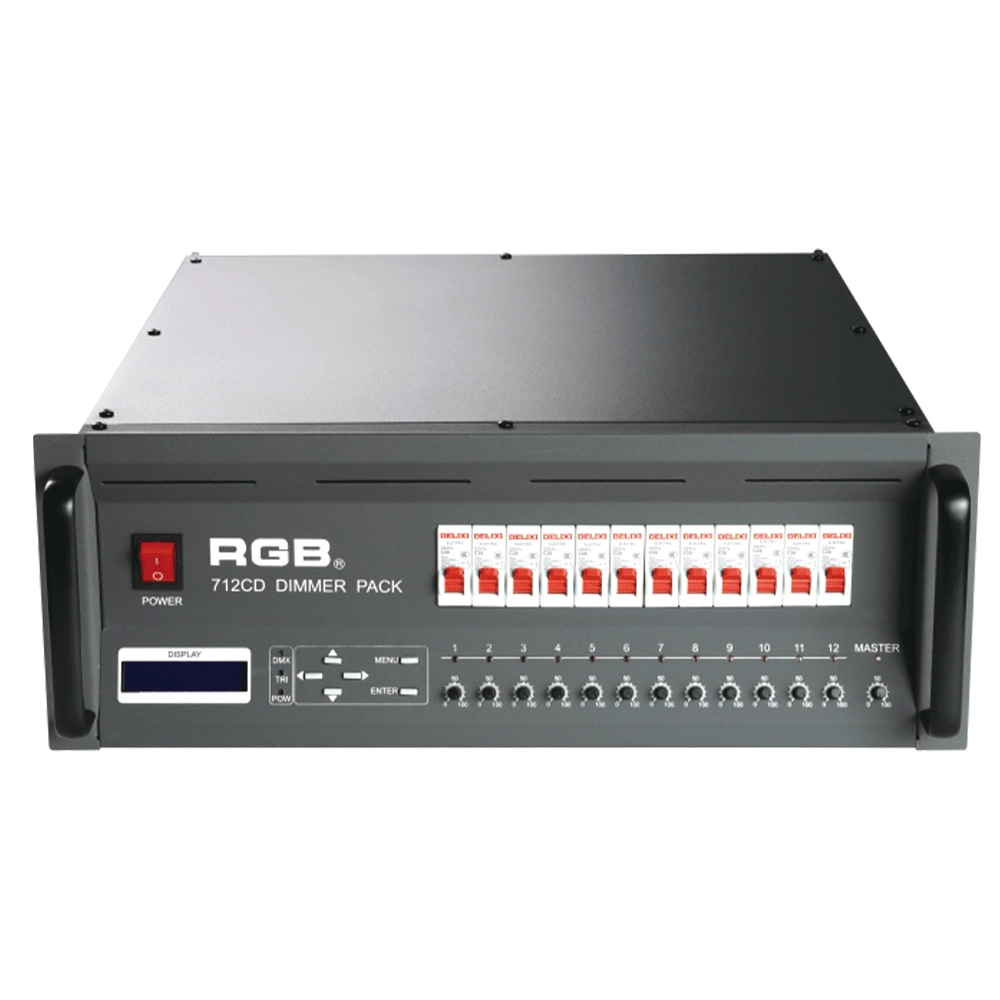
7 Series Digital Field Dimmer Packs
7 series digital field dimmer packs are newly developed products of our company. With DMX512 digital control signal input, they are compatible with other domestic and overseas digital lighting consoles. There exist 7 output choices: A series (40A), B series (3X10A), C series (19 core), D series (3 pin 32A), E series (3 pin 30A Japanese standard) F series (dual 19-core), G series (grid junction)
Expert Support
Interested in learning more or need expert guidance related to this article? Fill in your details, and our team will provide tailored support.
Intelligent Control. Brilliant Performance.
RGB specializes in stage lighting control systems, delivering intelligent, reliable, and high-performance solutions for theaters and performance spaces worldwide.
Contact
Email:
Tel:
+86 20 3928 0245
+86 20 3928 0247
Address:
No.3, Huashan Road, Shilou Town, Panyu, Guangzhou, China.
Whatsapp: +8615975520131