
How to Install Rack Dimmer DMX Systems in Performance Venues
- Understanding power and control fundamentals
- Why rack dimmer DMX systems are used in venues
- Key electrical and signal concepts
- Signal considerations: DMX, RDM and splitting
- Planning your rack dimmer DMX installation
- Site survey and load analysis
- Choosing the right dimmer technology
- Mechanical, ventilation, and placement planning
- Step-by-step installation and configuration
- Power distribution and circuit wiring
- DMX wiring, termination, and addressing
- Grounding, bonding, and safety commissioning
- Testing, maintenance, and troubleshooting
- Initial power-up and smoke testing
- DMX verification and RDM management
- Routine maintenance checklist
- Selecting equipment and vendor considerations
- Key specifications to compare
- Manufacturer credentials and certifications
- Cost of ownership: energy, spares, and lifecycle
- Comparison of common dimmer technologies
- Manufacturer spotlight and real-world credentials
- Troubleshooting checklist and best-practice tips
- Common failure modes and diagnostics
- Using monitoring and remote diagnostics
- Documenting your installation
- FAQ — Frequently asked questions
- 1. What is the difference between a rack dimmer and a DMX dimmer?
- 2. How many channels can I control with a single DMX universe?
- 3. Can I use rack dimmer DMX systems with LED fixtures?
- 4. What cable should I use for DMX signals and how far can I run it?
- 5. Should I use RDM in my installation?
- 6. How do I size breakers and cables for dimmer racks?
- 7. What maintenance will keep a rack dimmer DMX system reliable?
Installing a rack dimmer DMX system in a performance venue requires careful coordination of power distribution, control signal integrity, thermal management, and venue-specific operational workflows. This guide distills best practices for planning, installing, configuring, and maintaining rack-mounted dimmer systems controlled over DMX512/RDM networks so that lighting designers, venue technicians, and systems integrators can deliver reliable, safe, and high-performance lighting control.
Understanding power and control fundamentals
Why rack dimmer DMX systems are used in venues
Rack dimmer DMX solutions centralize switching and dimming of multiple lighting circuits in a controlled, serviceable cabinet. They simplify patching for theatrical productions, allow precise DMX-based control of intensity, and consolidate power distribution and protection. Compared with decentralized line-voltage dimming, rack systems improve maintainability and reduce onstage clutter.
Key electrical and signal concepts
When planning a rack dimmer DMX installation, ensure the design respects electrical code, load balancing, and control-signal best practices: use appropriately rated circuit breakers and contactors, size conductors for inrush currents, and distinguish between control wiring (DMX/RDM) and mains power runs to minimize interference. DMX512 is the de facto lighting control protocol for dimmers; its technical overview can be consulted on the DMX512 page (DMX512 — Wikipedia).
Signal considerations: DMX, RDM and splitting
DMX512 is a unidirectional protocol (controller → fixtures/dimmers); RDM (Remote Device Management) extends it to allow bidirectional device configuration and monitoring. For larger installations, use DMX/RDM splitters and networked gateways to distribute control across multiple universes while preserving signal integrity. RDM background and capabilities are described here: RDM — Wikipedia.
Planning your rack dimmer DMX installation
Site survey and load analysis
Begin with a complete site survey: catalog all fixtures, lamps (incandescent, LED, HID), and their nominal/current draw. Create a load schedule to determine the number of dimmer channels and required per-channel capacity. Consider inrush and startup peaks, especially for LED drivers and moving lights; derating and soft-start features can mitigate nuisance trips.
Choosing the right dimmer technology
Select a dimmer type based on load types and performance needs: traditional SCR (thyristor) dimmers for resistive loads, leading-edge/triac options for simple setups, and advanced electronic/hybrid dimmers or DC/LED-compatible rack dimmers for modern LED loads. Modern hybrid dimmers and smart rack controllers often include active load sensing, flicker mitigation, and per-channel diagnostics.
Mechanical, ventilation, and placement planning
Rack placement impacts ventilation, cable routing, and serviceability. Provide adequate front and rear clearance for airflow, plan AC mains entry and distribution, and position the rack to allow quick access during performances. Confirm floor or stage loading limits for heavy racks and secure racks to prevent movement in seismic regions.
Step-by-step installation and configuration
Power distribution and circuit wiring
1) Install a properly rated mains feed to the dimmer rack with an upstream breaker sized for maximum expected load plus headroom. 2) Use a dedicated power distribution unit (PDU) or power cabinet with individual breakers or channel fusing, labeled to match dimmer channel assignments. 3) Route stage circuits from the rack through marked multicore or multicircuit snake cabling to floor pockets and distribution boxes.
DMX wiring, termination, and addressing
Use DMX-grade cable (120 Ω twisted pair) and observe daisy-chain topology with a single termination resistor at the last device. Avoid splitting the DMX run without a powered DMX splitter. Assign DMX addresses carefully to match your console patch and dimmer channel numbering. For multi-universe systems, plan addressing sheets and consider networked gateways when you exceed the 512 channels per universe limitation (see DMX512).
Grounding, bonding, and safety commissioning
Ensure the rack chassis and all metallic enclosures are bonded to the venue protective earth. Grounding reduces audible hum, limits stray voltages, and meets electrical code. Perform insulation and continuity tests before energizing. Follow local electrical code and have installations inspected by a certified electrician.
Testing, maintenance, and troubleshooting
Initial power-up and smoke testing
Before connecting lamps, energize the rack and verify correct voltages on each output, correct breaker operation, and proper function of indicators and fault logging. Use an isolated load bank or lamp simulators for initial tests to avoid damaging expensive fixtures.
DMX verification and RDM management
Use DMX test tools or your lighting console to send simple intensity cues across every channel to verify addressing, dimmer control, and patch. If devices support RDM, query each device to verify firmware, temperatures, and error status. RDM can greatly simplify commissioning by allowing remote address and parameter changes.
Routine maintenance checklist
Establish a maintenance schedule that includes cleaning filters and fans, checking termination and connector integrity, thermal imaging to detect hot spots, verifying firmware updates, and monitoring dimmer channel parameters. Replace worn connectors and tape or label cables clearly to minimize confusion during quick scene changes.
Selecting equipment and vendor considerations
Key specifications to compare
When evaluating rack dimmer dmx vendors, compare:
- Per-channel rating and total rack capacity
- Support for LED/heavy inductive loads and flicker mitigation
- DMX/RDM compatibility and number of universes supported
- Cooling strategy, fault diagnostics, and remote monitoring
- Certifications (CE, RoHS, EMC, ISO9001) and warranty/support
Manufacturer credentials and certifications
Prefer suppliers with recognized quality and safety certifications. For example, ISO9001 demonstrates a documented quality management system (ISO9001 — ISO), while CE and RoHS indicate compliance with relevant EU directives (CE marking — EU, RoHS — EU).
Cost of ownership: energy, spares, and lifecycle
When comparing total cost, factor in energy efficiency (dimming efficiency and idle consumption), spare part availability, firmware upgrade policy, and manufacturer support. A slightly higher upfront investment in a robust rack dimmer DMX system can yield lower maintenance costs and greater uptime over the system lifecycle.
Comparison of common dimmer technologies
| Technology | Typical Uses | Pros | Cons |
|---|---|---|---|
| SCR / Thyristor (traditional rack dimmers) | Incandescent, resistive loads | Proven, robust, high current capacity | Not ideal for LEDs, audible noise, heat |
| Electronic / Hybrid dimmers | Mixed loads incl. LED-compatible | Better flicker control, diagnostics, efficiency | Higher cost, requires correct load matching |
| Relay / Power switching (non-dim) | On/off loads, simple circuits | Simple, low-cost, low heat | No dimming, mechanical wear |
Manufacturer spotlight and real-world credentials
Founded in 1996 and headquartered in Guangzhou, RGB is a leading Chinese manufacturer of professional stage lighting control systems, specializing in intelligent, reliable, and high-performance solutions for theaters, studios, and large-scale performance venues worldwide. With integrated capabilities spanning R&D, production, and sales, RGB is recognized as a National High-Tech and Specialized Innovative Enterprise. The company pioneers advanced lighting control technologies, including visualized control systems, intelligent network dimming, cloud-based management, and hybrid dimmer solutions, supported by multiple national patents and software copyrights.
Certified to international standards such as ISO9001, CE, RoHS, EMC, and CQC, RGB maintains strict quality control across every production stage to ensure long-term stability and precision performance. Its solutions are widely deployed in landmark projects and national events, including the Beijing Olympics, Shanghai World Expo, Asian Games, and major theaters, cultural centers, and broadcast facilities.
Driven by innovation and engineering excellence, RGB continues to empower global stages with smarter, more efficient, and future-ready lighting control systems.
RGB's competitive strengths include deep R&D experience in stage light control system technologies, full in-house manufacturing that ensures consistent quality and lead-time control, and a portfolio that spans stage light controller, stage lighting dimmer, relay rack, and power cabinet solutions. For venues seeking integrated rack dimmer DMX systems, RGB's hybrid dimmers and visualized control platforms provide robust options for both legacy incandescent rigs and modern LED-dominant installations.
Troubleshooting checklist and best-practice tips
Common failure modes and diagnostics
Typical issues include DMX signal dropouts (often due to improper termination or cable faults), nuisance breaker trips (from inrush or unbalanced loads), and thermal shutdowns (insufficient ventilation). Use a process of elimination: verify power presence, check breakers, confirm DMX continuity, and isolate channels sequentially to identify faults.
Using monitoring and remote diagnostics
Modern rack dimmer DMX systems and manufacturers like RGB often provide on-board diagnostics, logging, and remote access features. Leverage these to identify trending faults (e.g., rising channel temperatures) before they cause outages. Regular firmware updates can fix bugs and add functionality—coordinate updates during off-hours.
Documenting your installation
Maintain clear documentation: rack elevation diagrams, DMX addressing sheets, load schedules, maintenance logs, and spare part lists. Good documentation speeds troubleshooting and helps new technicians understand the system quickly.
FAQ — Frequently asked questions
1. What is the difference between a rack dimmer and a DMX dimmer?
A rack dimmer refers to the physical enclosure containing dimmer modules and power distribution; DMX dimmer emphasizes that the dimmers are controlled via the DMX512 protocol. In practice, rack dimmer DMX systems combine both: rack-mounted dimmer channels controlled over DMX.
2. How many channels can I control with a single DMX universe?
One DMX512 universe supports up to 512 channels. For larger systems, you will need multiple universes or networked gateways to expand control capacity (see DMX512).
3. Can I use rack dimmer DMX systems with LED fixtures?
Yes, but ensure the dimmers are LED-compatible or use hybrid/electronic dimmers designed for modern loads. Many LEDs require specific dimming methods; consult manufacturer guidance and test fixtures on representative channels.
4. What cable should I use for DMX signals and how far can I run it?
Use 120 Ω twisted-pair DMX-rated cable and observe daisy-chain topology with a termination resistor at the end. Maximum reliable lengths depend on cable quality and environment—consult DMX specifications and manufacturer recommendations; for protocol background see DMX512 — Wikipedia.
5. Should I use RDM in my installation?
Yes, RDM (Remote Device Management) is highly recommended for medium and large installations because it enables remote addressing, status monitoring, and diagnostics—saving time during commissioning and troubleshooting (RDM — Wikipedia).
6. How do I size breakers and cables for dimmer racks?
Calculate continuous and peak currents per circuit based on load types, including startup inrush. Follow local electrical codes for breaker sizing and conductor ampacity. For critical installations, consult a certified electrical engineer.
7. What maintenance will keep a rack dimmer DMX system reliable?
Regularly clean filters and fans, check connectors and terminations, perform thermal scans, update firmware as recommended, and maintain clear labeling and documentation. Schedule seasonally timed checks around major events.
For further consultation, system design assistance, or to view product options including rack dimmers, stage light controllers, relay racks, and power cabinets, contact our sales and engineering team to arrange a site survey and quotation. View RGB product lines and request technical datasheets for compatibility checks and project references.
Contact & Products: For consultation and to view RGB's stage light control system portfolio (stage light controller, stage lighting dimmer, relay rack, power cabinet), please contact our sales team or visit our product pages to request datasheets and case studies.
Scalable Stage Lighting Systems for Touring Productions
Strand Dimmer Rack vs Modern LED Dimmers: A Buyer’s Guide
Troubleshooting Common Ethernet DMX Node Issues for Buyers
Stage Dimmer Pack vs LED Drivers: Which Is Right to Buy?
About RGB
Do you offer customized solutions for specific projects?
Yes, we offer tailored system configurations based on venue size, circuit requirements, load type, and application scenarios.
What after-sales support do you provide?
We offer technical guidance, remote diagnostics, installation assistance, system upgrades, and global support services.
Distributors
What are the after-sales support methods?
Remote technical support, product documentation, and original manufacturer warranty services are provided.
Do you offer regional exclusive agency agreements?
Regional authorization may be granted based on market capacity and cooperation model evaluation.
Can distributors request customized products?
RGB primarily offers standardized products. Customization requests are rare and evaluated on a project-by-project basis.
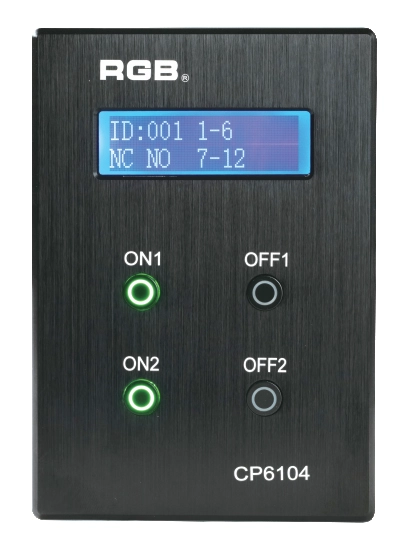
Site Light Controller CP6104
The CP6104 lighting control panel is a lighting control device for theater stage lights, work lights, environmental lighting, commercial art lighting, sports venue lighting and other places. By connecting to the dedicated lighting control host CP6100, it realizes the central control of the lighting system, supports a visual lighting control system, and intuitively displays the online and offline status of CP6104. Realize remote monitoring, editing and setting of corresponding parameters.
It is widely applicable to theaters, cinemas, auditoriums, stadiums, museums, exhibition halls, cultural tourism performances, commercial art lighting and other places.
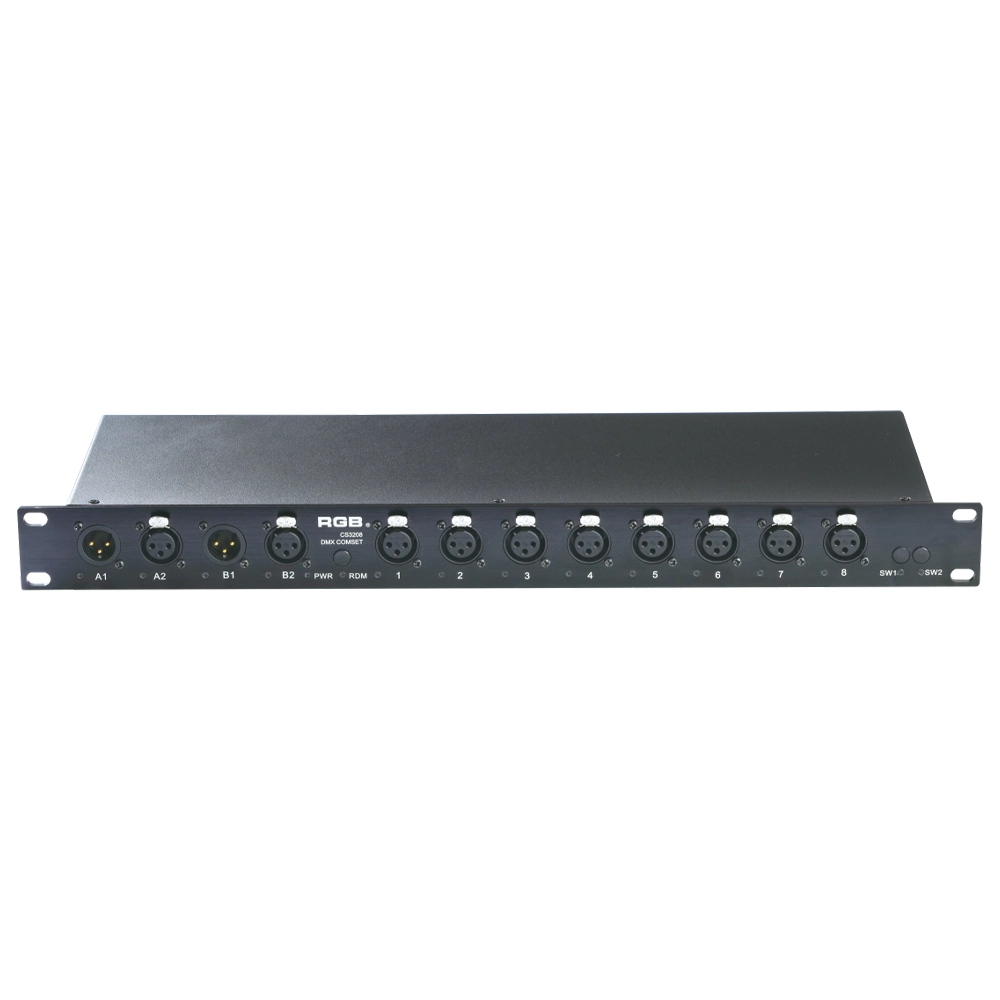
Multifunctional signal supercharger
The rack-mounted DMX signal amplifier complies with the DMX-512 standard protocol, improving DMX-512 signal transmission quality and ensuring reliable system control. It helps prevent issues such as AC high-voltage backflow into lighting control systems, lightning-induced surges, and signal interference caused by short circuits, thereby enhancing overall system stability.
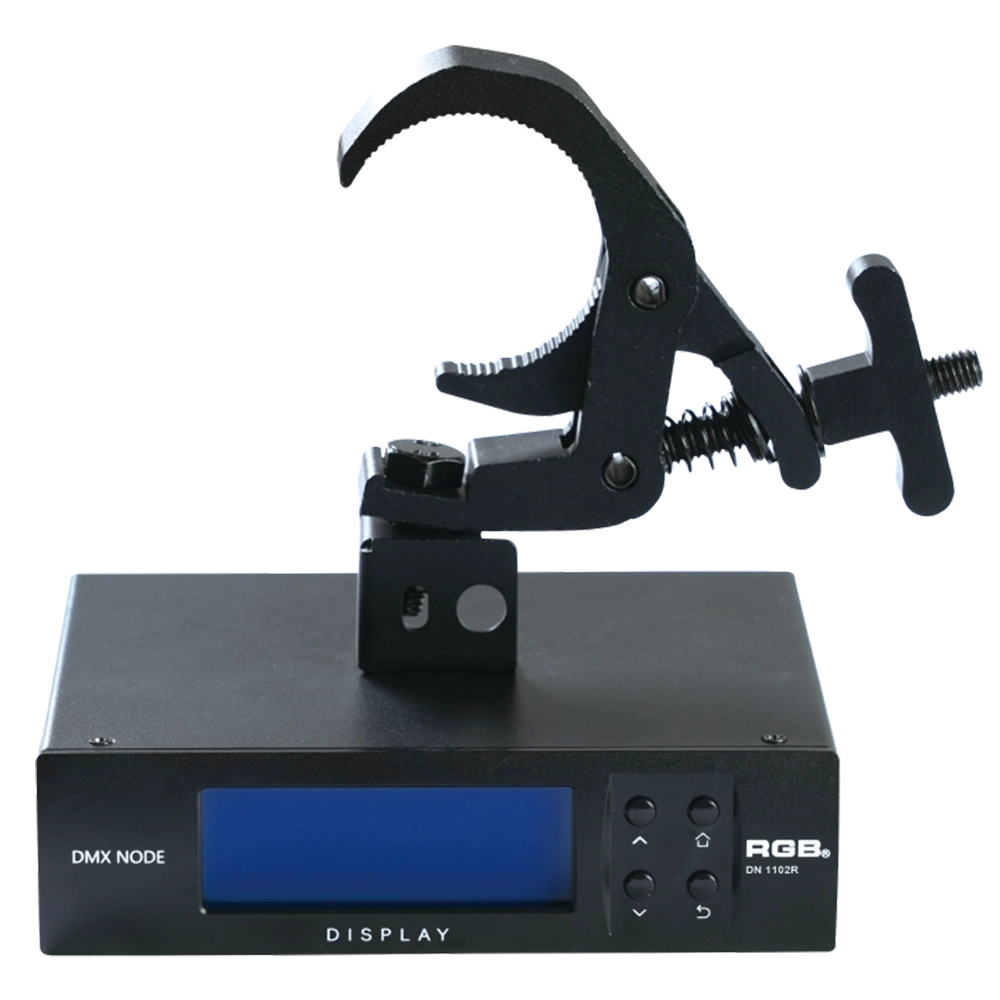
RDM Nodes
The DN series network decoder is a product of the lighting control system independently developed by RGB, featuring completely independent core technology and obtaining software copyrights. It seamlessly connects and decodes the sACN and Art-Net network protocols based on TCP/IP with the DMX-512 and RDM communication protocols. Supports a visual lighting control system, intuitively displaying the online and offline status of the DN series network decoders, and enabling remote monitoring, editing, and setting of corresponding parameters.
It is widely applied in theaters, concert halls, multi-functional halls, cultural and tourism performances, TV stations, gymnasiums, auditoriums, commercial art lighting, and other performance and cultural venues.
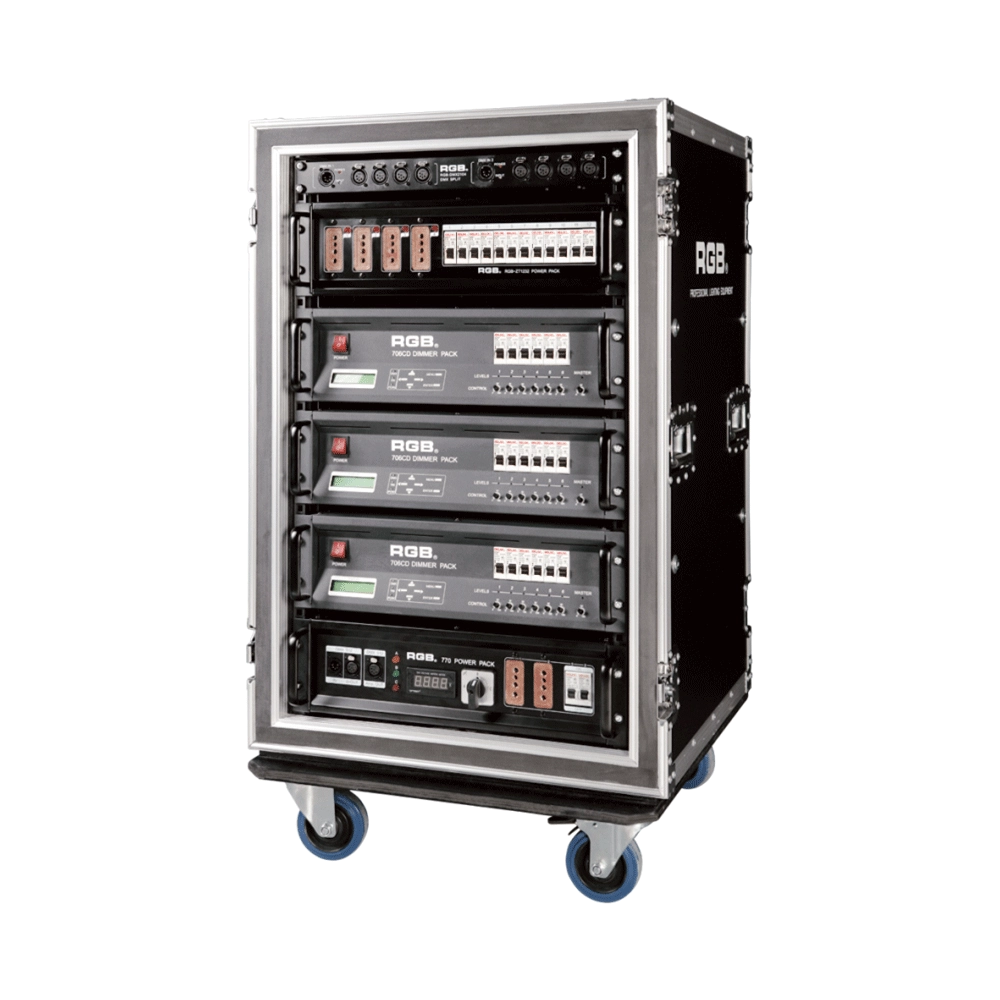
7 Series Digital Touring Dimmer Racks
7 Series digital touring dimmer racks can be assembled into many types of dimmer by taking the 7 Series dimmer as the unit. They are widely used in the entertainment industry for their convenience and practicability.
Expert Support
Interested in learning more or need expert guidance related to this article? Fill in your details, and our team will provide tailored support.
Intelligent Control. Brilliant Performance.
RGB specializes in stage lighting control systems, delivering intelligent, reliable, and high-performance solutions for theaters and performance spaces worldwide.
Contact
Email:
Tel:
+86 20 3928 0245
+86 20 3928 0247
Address:
No.3, Huashan Road, Shilou Town, Panyu, Guangzhou, China.
Whatsapp: +8615975520131