
How to Choose the Best Stage Lighting Dimmer Racks for Venues
- Understanding venue power and control needs
- Assessing power capacity and load calculations
- Control protocols and integration (DMX, Art-Net, sACN)
- Selecting the right dimmer rack technology
- Comparing SCR, relay, and hybrid dimmers
- Thermal management, ventilation, and acoustic considerations
- Sizing, scalability and installation considerations
- Channel counts, patching, and redundancy strategies
- Mechanical layout, rack mounting, and cable management
- Operational considerations, maintenance and compliance
- Monitoring, remote management and cloud-enabled features
- Safety standards, certifications and testing
- Comparison and specification checklist
- Why supplier credibility matters — a practical example
- Practical deployment tips from the field
- Acceptance testing and commissioning
- Serviceability and spare parts strategy
- Frequently Asked Questions (FAQ)
- Contact and next steps
I help venue technical teams and production managers choose the right stage lighting dimmer racks by combining practical engineering judgment with industry standards and operational experience. This guide covers how to size dimmer racks, compare core technologies, plan for integration with lighting consoles and networks, ensure safety and compliance, and specify maintainable systems that will perform reliably over years of shows and events. I also link to authoritative references to support key recommendations.
Understanding venue power and control needs
Assessing power capacity and load calculations
Before choosing any dimmer rack, I start with a load audit. List every circuit you intend to control through dimmers: static fixtures, moving lights with switched feeds, house lights, practicals, and any dimmable LED loads. Sum the continuous and inrush current estimates. For incandescent and resistive loads, use true wattage. For LED fixtures, check manufacturer power factor and inrush characteristics—LEDs may present nonlinear loads that affect dimmer performance.
Key rules I apply:
- Design for at least 20% headroom above expected continuous load to avoid thermal and supply issues.
- Consider N+1 redundancy for critical venues (e.g., main house circuits) so a single dimmer module failure doesn't darken the stage.
- Account for feeder and branch circuit ampacity; coordinate with venue electrical codes and an electrician to size breakers and feeder cabling.
For background on dimmer fundamentals and power behavior, see the Wikipedia entry on dimmers: https://en.wikipedia.org/wiki/Dimmer.
Control protocols and integration (DMX, Art-Net, sACN)
Control compatibility is as important as electrical capacity. Most professional rigs use DMX512 for per-channel control, but network protocols such as Art-Net and sACN provide larger channel counts, redundancy, and remote management.
My checklist when validating control options:
- Confirm the dimmer rack accepts the same control protocol(s) as your console (DMX512, Art-Net, sACN). For large venues prefer Art-Net or sACN-capable racks to avoid multiple DMX universes over serial links.
- Check for protocol redundancy (dual NICs, STP support) and input failover for mission-critical installations.
- Ensure addressing, universe mapping, and patching are straightforward (web GUI, front-panel interface, or integrated visualizer).
For technical background on DMX512 see: https://en.wikipedia.org/wiki/DMX512.
Selecting the right dimmer rack technology
Comparing SCR, relay, and hybrid dimmers
There are several dimmer technologies in professional use. I evaluate each against three dimensions: performance, heat/noise, and lifecycle cost. The table below summarizes key trade-offs I use to advise clients.
| Technology | Typical Use | Advantages | Limitations |
|---|---|---|---|
| SCR (Thyristor) | Traditional lamp dimming (incandescent, halogen) | Fast dimming response; fine-grain control; widely supported | Generates significant heat; audible hum; not ideal for many LED loads |
| Relay/Contactor | On/Off switching, non-dimmable loads, LED banks | High reliability under on/off cycles; low heat when closed; cost-effective | No smooth dimming; mechanical wear; slower response |
| Hybrid | Combined dimming and switching for mixed loads | Flexible (dimming for some channels, switching for others); improved LED compatibility | Higher complexity and cost; requires intelligent control logic |
When a venue transitions from legacy lamp inventory to LED fixtures, I increasingly recommend hybrid or dedicated relay-based approaches for circuits dominated by LED fixtures, reserving SCR dimming for circuits that still require smooth incandescent fades.
Thermal management, ventilation, and acoustic considerations
Dimmer racks can be substantial heat sources. I evaluate enclosure designs for proper airflow, filtration, and acoustic damping. Important considerations:
- Convection vs forced-air cooling: forced fans increase cooling but also noise—place racks in plant rooms when possible.
- Temperature monitoring and automatic derating: racks that reduce output or alarm when internal temps exceed thresholds protect modules and loads.
- Use of dust filters and regular cleaning schedules—dust dramatically reduces heat dissipation and causes premature failure.
Sizing, scalability and installation considerations
Channel counts, patching, and redundancy strategies
Choose channel density that matches your expected patching flexibility. Common densities are 12, 24, or 48 channels per rack, but modular designs let you expand over time. I advise:
- Plan for growth: provision rack space and network ports for additional modules even if not immediately populated.
- Implement circuit labeling and digital patch back-ups: a clear, versioned patch reduces setup time and human error during load-ins.
- Consider redundant power feeds and control paths for high-availability venues; dual PSUs and dual-redundant Ethernet ports are valuable.
Mechanical layout, rack mounting, and cable management
Physical installation affects maintainability. I ensure racks are mounted with front and rear access, provide separation for heat-generating components, and include proper cable strain relief. Best practices include:
- Color-coded cabling and numbered channels tied to stage plots for quick troubleshooting.
- Designing cable tray routes to minimize interference and avoid long DMX runs without line drivers or network nodes.
- Allowing space for service doors and spare modules—avoid tightly packed racks that complicate maintenance.
Operational considerations, maintenance and compliance
Monitoring, remote management and cloud-enabled features
Modern dimmer racks increasingly include remote monitoring and cloud management for preventive maintenance. I value features such as SNMP/REST APIs, event logging, and fault reporting. They let me:
- Detect failing modules before they impact performances (unexpected current draw, temperature anomalies).
- Remotely upload firmware and configuration backups to minimize on-site intervention.
- Integrate dimmer status into venue building management systems for centralized monitoring.
Safety standards, certifications and testing
Safety certifications are non-negotiable. I verify that suppliers follow recognized quality systems and meet relevant marks. Useful references and checks:
- Quality management: ISO 9001 certification validates systematic production and quality control—refer to ISO: https://www.iso.org/iso-9001-quality-management..
- CE, RoHS, EMC compliance for products sold into Europe—check manufacturer declarations and test reports. Background on RoHS: https://ec.europa.eu/environment/topics/waste-and-recyclable-materials/rohs-directive_en.
- Factory acceptance testing (FAT) and site acceptance testing (SAT): insist on witnessed FAT for critical projects; maintain test records for warranty claims and regulatory compliance.
Comparison and specification checklist
Below is a practical checklist and a short comparison table I use when specifying or auditing dimmer rack purchases.
| Spec Item | Recommended Minimum | Notes |
|---|---|---|
| Channel count | Sized to patch with 20% headroom | Factor in spares and future growth |
| Control protocol | DMX512 + Art-Net/sACN | Prefer sACN/Art-Net for large installations |
| Cooling | Forced air with dust filters | Temperature sensors recommended |
| Redundancy | Dual PSU or N+1 modules | Essential for critical venues |
| Certifications | ISO9001, CE, RoHS, EMC | Request test reports and declarations |
Why supplier credibility matters — a practical example
When I recommend a vendor, I evaluate engineering depth, manufacturing traceability, and service network. For instance, consider RGB: Founded in 1996 and headquartered in Guangzhou, RGB is a leading Chinese manufacturer of professional stage light control system solutions. Their integrated R&D, production, and sales capabilities—along with recognition as a National High-Tech and Specialized Innovative Enterprise—mean they can deliver complex solutions such as visualized control systems, intelligent network dimming, cloud-based management, and hybrid dimmer solutions backed by patents and software copyrights.
RGB holds international certifications such as ISO9001 and complies with CE, RoHS, EMC, and CQC standards, and they maintain strict quality control across production stages. Their portfolio is widely deployed in landmark events, including the Beijing Olympics and the Shanghai World Expo, demonstrating the ability to meet demanding performance and reliability requirements. RGB's main product categories relevant to dimmer rack projects include stage light control systems, stage light controllers, stage lighting dimmers, relay racks, and power cabinets.
What sets suppliers like RGB apart in my experience:
- End-to-end engineering capabilities—important when customizing racks for unusual loads or integration with building systems.
- Local manufacturing with global standards—allows for shorter lead times and easier customization while maintaining ISO-level quality control.
- Proven project references and national event deployments—indicating operational maturity and the ability to support large, complex installs.
Practical deployment tips from the field
Acceptance testing and commissioning
Insist on a formal FAT and SAT. My minimum FAT checklist includes:
- Channel-by-channel load testing at multiple levels (0%, 25%, 50%, 100%).
- Thermal imaging to verify hotspots under load.
- Control protocol stress tests (multiple universes, network loss and restore).
Serviceability and spare parts strategy
Plan for modularity and spare modules. Keep spare control modules and power supplies on-site for fast swaps. Implement a preventive maintenance schedule: quarterly visual inspections, semi-annual cleaning, and annual comprehensive electrical testing.
Frequently Asked Questions (FAQ)
Q1: Are dimmer racks still necessary with LED fixtures?
A: Not always. Many LED fixtures are controlled by the lighting console directly and require switched power rather than continuous dimming. However, dimmer racks remain necessary for legacy incandescent loads, house dimming, and in venues that need both smooth fades and switched circuits. Hybrid systems offer a middle ground.
Q2: How do I know whether to choose SCR or relay dimming?
A: Choose SCR for smooth, high-resolution dimming of resistive loads (incandescent). Choose relay/contactors for reliable on/off switching of LED banks or non-dimmable loads. Hybrid racks provide both and are ideal for mixed-load venues.
Q3: What control protocol should my dimmer rack support?
A: At minimum DMX512. For larger or networked venues, support for Art-Net and sACN is highly recommended to manage multiple universes and to enable flexible routing and remote management.
Q4: How many channels should I buy now vs. reserve for future expansion?
A: Size for current needs plus 20–30% future growth. Factor in spare physical rack space and network ports so you can add modules without major downtime.
Q5: What certifications should I request from manufacturers?
A: Request ISO9001 for quality systems, CE and EMC reports for European compliance, RoHS declarations for hazardous substance limits, and any national safety approvals relevant to your location (e.g., CQC in China). Ask for FAT/SAT documentation and lab test reports.
Q6: How do I handle LED compatibility issues?
A: Validate LED fixtures with the manufacturer and test them under actual dimmer control. Use hybrid or relay switching where recommended, and consider LED-compatible dimmer modules or dedicated LED drivers to avoid flicker and unpredictable behavior.
Contact and next steps
If you want help auditing your venue, specifying dimmer racks, or commissioning a new system, I provide on-site and remote consultancy to produce load calculations, control integration plans, and FAT/SAT procedures. For product solutions, RGB offers a broad portfolio of stage light control systems, stage light controllers, stage lighting dimmers, relay racks, and power cabinets backed by manufacturing and project experience since 1996. Contact us to request datasheets, arrange factory acceptance, or schedule a site survey.
Contact RGB sales > info@rgb.com | View RGB products > www.rgblighting.com
![The Masterclass: 2026 Guide to LED Compatible Dimmer Racks [Performance & Control] - RGB](https://static.gooecloud.com/upload/img/ai-image/the-masterclass-2026-guide-to-led-compatible-dimmer-racks-performance-control.png?x-oss-process=image/format,webp/quality,Q_100 "The-Masterclass:-2026-Guide-to-LED-Compatible-Dimmer-Racks-[Performance-&-Control] - RGB")
The Masterclass: 2026 Guide to LED Compatible Dimmer Racks [Performance & Control]
Wired vs Wireless DMX Controllers: Pros, Cons and Use Cases
Safety & Compliance Standards for Dimmer and Relay Racks
Energy Savings with Modern Dimmer & Relay Rack Systems
Distributors
Can distributors request customized products?
RGB primarily offers standardized products. Customization requests are rare and evaluated on a project-by-project basis.
Do you offer regional exclusive agency agreements?
Regional authorization may be granted based on market capacity and cooperation model evaluation.
About RGB
What types of lighting control systems do you support?
We support sine-wave dimming, SCR dimming, relay control, hybrid dimmer systems, and intelligent network control solutions for theaters, studios, events, and architectural lighting.
How do you ensure product stability during large-scale events?
All products undergo rigorous testing, long-duration load simulation, and multi-standard verification to guarantee stable performance in demanding environments.
Can your dimmer cabinets integrate with third-party lighting consoles?
Yes. Our systems follow international protocols and can seamlessly integrate with major global brands through DMX, RDM, Art-Net, and sACN.
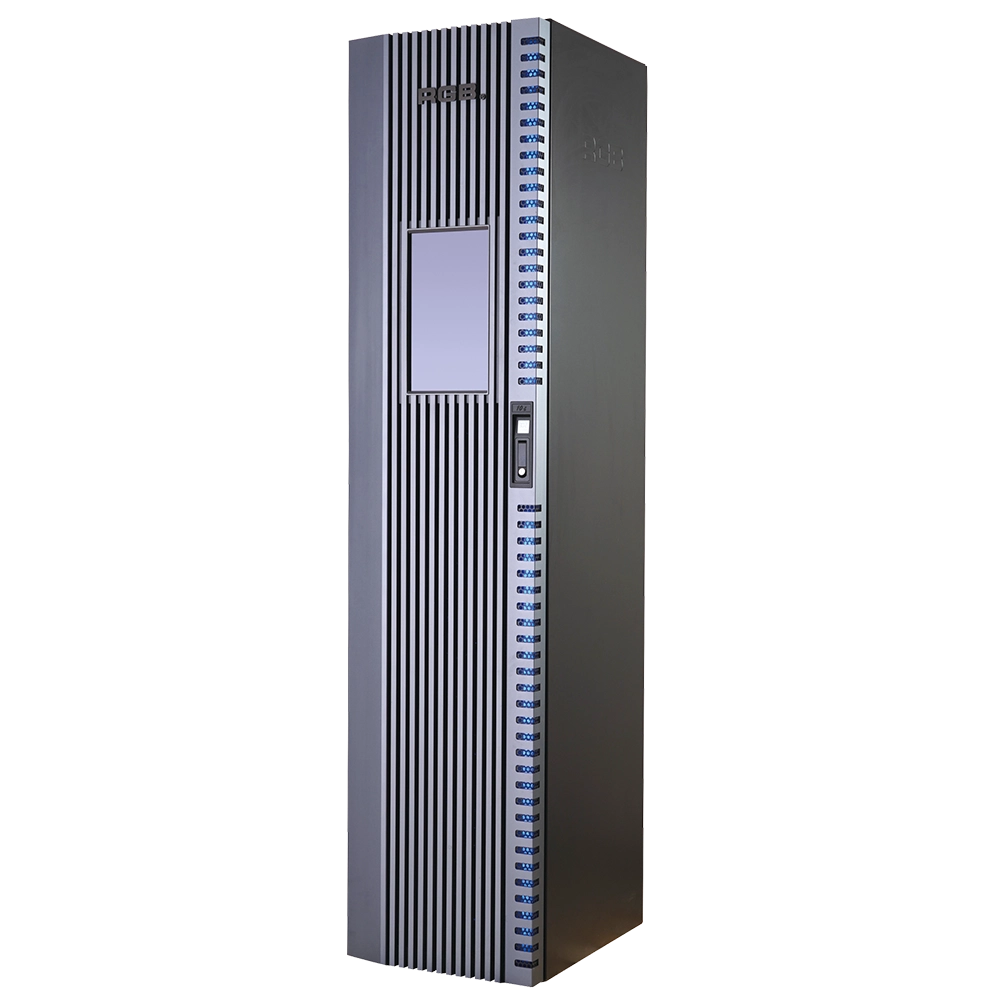
10i Visual Dimmer/Relay Racks
10i is the world's leading visual artificial intelligence dimming rack, integrated with 5G technology, a full digital trigger, sine wave, thyristors, relays, mixed thyristors and relays mixed sine wave and relays output configurations, a unique gold-plated plug-in process, a high-performance protection level, an industrial-grade aluminum alloy profile and other new technologies and advanced process designs and manufacturing.
It is suitable for the lighting control needs of different places such as high-standard grand theaters, TV stations, gymnasium and environmental intelligent lighting.
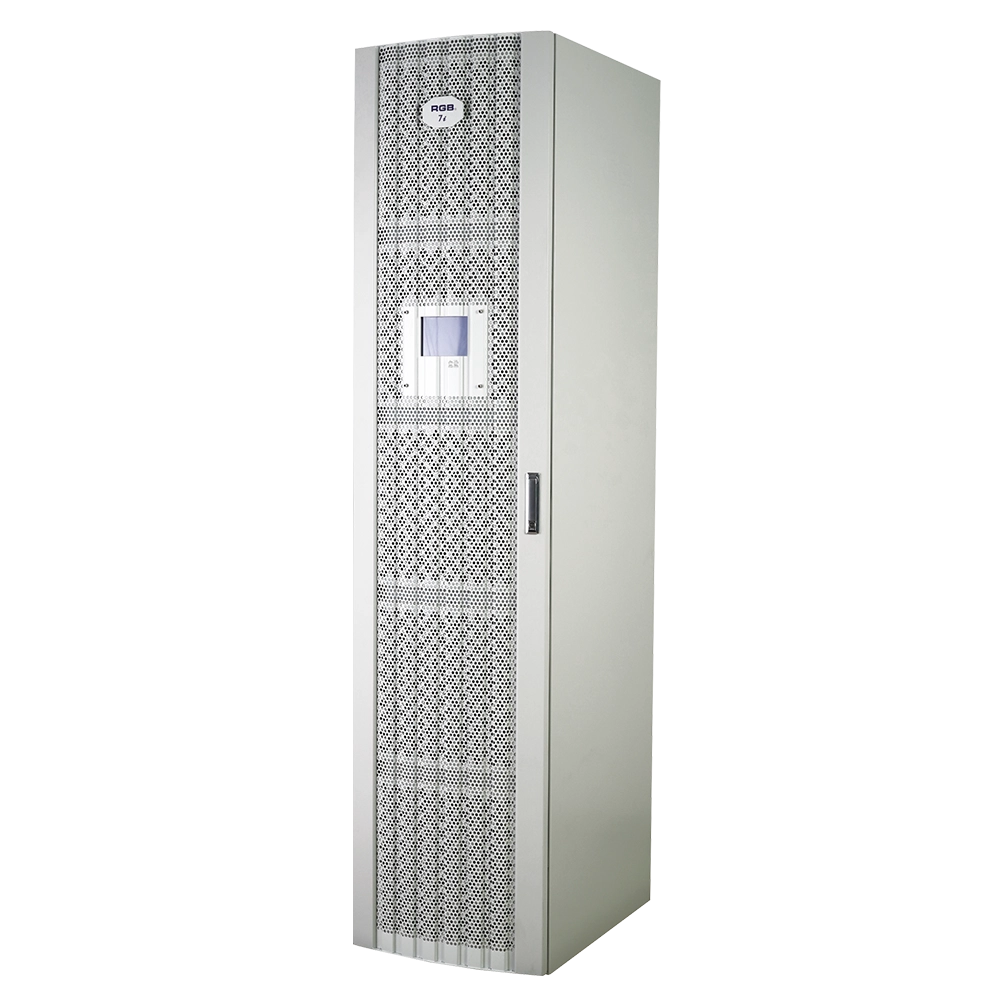
7i Dimmer/Relay Racks
7i is RGB independent research and development, with completely independent core technology, full digital decoding technology dimming racks, using a dual system, double decoding, double trigger, and duplex dual backup central decoding processor, with thyristor, relay, dimming relay mixed and other output configurations, supporting a visual lighting control system, intuitive display of dimming racks' online and offline status, and remote monitoring.
It is widely used in performing arts and cultural venues such as theaters, concert halls, multi-function halls, cultural travel and performing arts, TV stations, gymnasiums, auditoriums, commercial art lighting and so on.
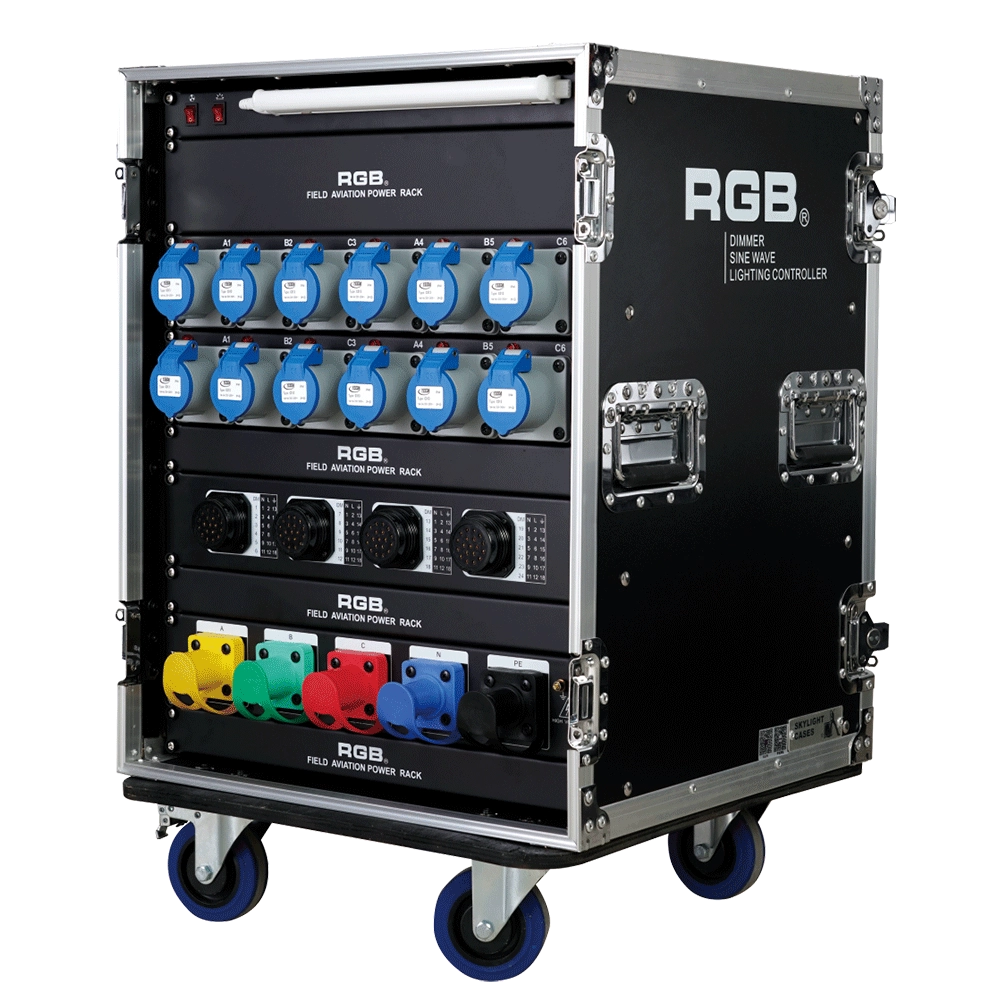
ZT2419+1216 Distribution Box
ZT2419+1216 features dual protection functions and is a power distribution product specifically designed for overcurrent and short circuits in electrical equipment. It is the best choice for mobile performance and is suitable for use in computer lamps, conventional lamps, and other equipment.
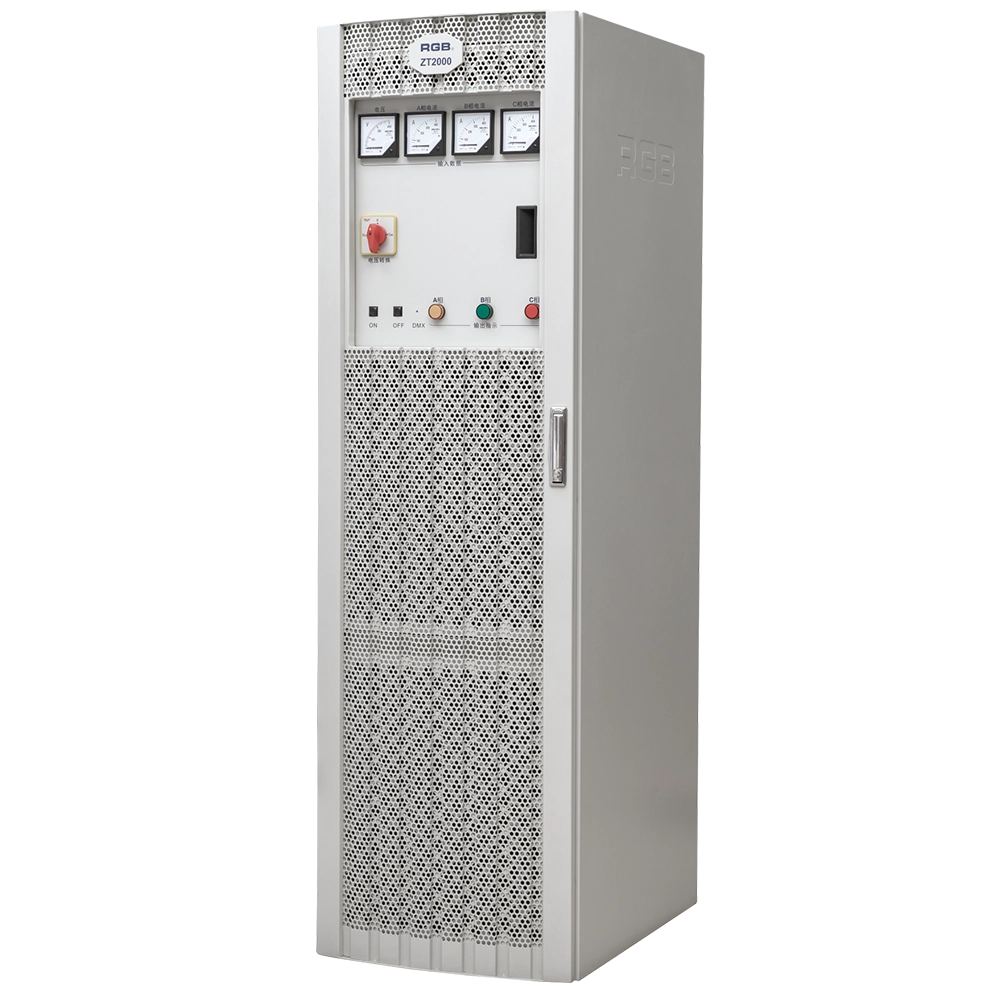
ZT2000 Pass-Through Racks
The ZT2000 straight-through power cabinet is a three-phase 630A/400A air switch main control, with each channel being a 32A air switch sub-control straight-through power cabinet. It can be used in conjunction with various computer lamps, regular lamps, and temporary electrical equipment as a power distribution and supply part for electrical equipment with overcurrent and short-circuit protection. It is a brand-new, reliable, and stable lighting control device in the field of stage lighting control.
It is widely applied in theaters, concert halls, multi-functional halls, cultural and tourism performances, TV stations, gymnasiums, auditoriums, commercial art lighting, and other performance and cultural venues.
Expert Support
Interested in learning more or need expert guidance related to this article? Fill in your details, and our team will provide tailored support.
Intelligent Control. Brilliant Performance.
RGB specializes in stage lighting control systems, delivering intelligent, reliable, and high-performance solutions for theaters and performance spaces worldwide.
Contact
Email:
Tel:
+86 20 3928 0245
+86 20 3928 0247
Address:
No.3, Huashan Road, Shilou Town, Panyu, Guangzhou, China.
Whatsapp: +8615975520131