
How to Choose the Best Stage Dimmer Pack for Your Venue
- Understanding Power and Load Requirements
- Calculate total circuit load and diversity
- Single-phase vs. three-phase considerations
- Voltage compatibility and regional standards
- Comparing Dimmer Technologies
- Leading-edge (triac) vs. trailing-edge (electronic)
- Relay-based switching and hybrid dimmers
- Table: Typical dimmer types & suitability
- Control Protocols, Networking, and Integration
- DMX vs. Art-Net vs. sACN
- Physical connectivity and redundancy
- Integration with lighting consoles and software
- Reliability, Safety and Long-term Costs
- Thermal management and MTBF
- Certifications and compliance
- Serviceability and spare parts
- Budgeting, Procurement and Vendor Selection
- Balancing upfront cost vs lifecycle value
- Vendor evaluation checklist
- Case example: small theater vs. broadcast studio
- RGB — Manufacturer Profile and Why It Matters
- Practical Buying Checklist (Quick Reference)
- Frequently Asked Questions (FAQ)
- 1. How many channels do I need in a stage dimmer pack?
- 2. Can I use a dimmer pack with LED fixtures?
- 3. What is the difference between a dimmer pack and a relay rack?
- 4. How important are certifications like ISO9001 and CE?
- 5. Should I choose networked control (Art-Net/sACN) over DMX?
- 6. How do I prevent flicker when dimming LEDs?
- 7. What service/support should I require from a vendor?
Choosing the right stage dimmer pack is a critical decision for any venue — from small theaters and houses of worship to broadcast studios and large performance halls. In this article I distill decades of hands-on lighting design and system-integration experience into a practical, verifiable guide. You will learn how to size dimmers, compare technologies, validate control compatibility (DMX/Art-Net/sACN), assess thermal and electrical protection, and prioritize features that reduce downtime and lifecycle cost. I include comparative data, links to authoritative standards, and a vendor checklist so you can make a confident purchase that meets safety, performance, and operational expectations.
Understanding Power and Load Requirements
Calculate total circuit load and diversity
Before spec'ing a dimmer pack, I always start with a detailed load calculation. Add up the wattage of all fixtures that will be on dimmers (e.g., conventional incandescent, LED fixtures rated for leading/trailing edge dimming, or electronic low-voltage transformers). Convert watts to amps using your venue's line voltage (I = W / V). Apply diversity only where appropriate — for example, in transient theatrical use you might assume 100% of fixtures could be on simultaneously for safety-critical planning. For public code guidance on electrical safety and load calculations, consult the National Electrical Code (NEC) or your national standard body.
Single-phase vs. three-phase considerations
Venues with heavy lighting rigs benefit from three-phase dimmer packs to balance loads and reduce conductor sizes. If your dimmer pack will be distributed across multiple racks or rooms, plan phase balancing and neutral capacity. I recommend reviewing the dimmer pack's per-channel continuous current rating and total rack capacity; overspecifying by 20–30% reduces thermal stress and extends component life.
Voltage compatibility and regional standards
Confirm the dimmer pack supports your mains voltage (e.g., 110–120VAC vs 220–240VAC). International venues should also verify compliance with local standards (CE marking in Europe, CQC in China) and electromagnetic compatibility (EMC) requirements to avoid regulatory issues. For information about CE marking, see the European Commission guidance: ec.europa.eu.
Comparing Dimmer Technologies
Leading-edge (triac) vs. trailing-edge (electronic)
Leading-edge dimmers (triac or thyristor based) are traditional for incandescent and many tungsten-halogen loads. Trailing-edge (electronic) dimmers provide smoother control for many electronic transformers and some LED drivers. I usually select trailing-edge dimming when the rig includes a large proportion of modern LED fixtures or electronic transformers to avoid flicker and buzzing.
Relay-based switching and hybrid dimmers
For non-dimmable loads or circuits where simple on/off control is acceptable, relay racks are robust and inexpensive. Hybrid dimmers combine electronic dimming channels with switched (relay) channels in the same rack for flexible rigs. These are practical for venues needing both smooth intensity control and circuit-level switching without adding separate hardware.
Table: Typical dimmer types & suitability
| Dimmer Type | Best for | Load Compatibility | Typical Pros/Cons |
|---|---|---|---|
| Leading-edge (triac) | Incandescent, simple rigs | Tungsten, some magnetic transformers | Cost-effective; can cause flicker with LEDs |
| Trailing-edge (electronic) | LEDs, electronic transformers | Electronic loads, modern LEDs | Smoother control; better for low loads |
| Relay racks | Non-dim circuits, followspots | Any on/off load | Very reliable; no smooth dimming |
| Hybrid dimmers | Flexible venues | Mixed (dimmable + switched) | Versatile; higher initial cost |
Sources: dimmer technology summaries and standards such as DMX512 and industry literature; see DMX512 overview: Wikipedia DMX512.
Control Protocols, Networking, and Integration
DMX vs. Art-Net vs. sACN
DMX512 remains the standard low-level control protocol for dimmer packs. For larger, networked installations, Art-Net and sACN (streaming ACN) allow control over Ethernet with multiple universes. When integrating with modern consoles and media servers I always verify the dimmer pack's protocol support and latency characteristics. DMX is deterministic for short runs; Art-Net/sACN scale better for distributed systems.
Physical connectivity and redundancy
Look for robust connectors (Neutrik XLR for DMX, EtherCON for Ethernet) and options for redundant network paths. In mission-critical venues I specify dual-network NICs and hot-swappable control modules. Also confirm the product supports RDM (Remote Device Management) if you want remote addressing and status monitoring; RDM can streamline on-site commissioning.
Integration with lighting consoles and software
Test integration with your console ecosystem early in the procurement process. I request device profiles or fixture maps from manufacturers and perform onsite interoperability tests whenever possible. Many manufacturers publish user manuals and DMX implementation charts — ask for them and validate channel mappings against your existing cue lists.
Reliability, Safety and Long-term Costs
Thermal management and MTBF
Heat is the enemy of dimmer reliability. Evaluate enclosure ventilation, forced cooling, and MTBF (mean time between failures) statistics. Products from reputable manufacturers typically provide thermal derating curves and service intervals. Overspecify cooling for enclosed racks or small fly-towers.
Certifications and compliance
Verify certifications such as ISO9001 quality management, CE, RoHS and EMC compliance, and local approvals like CQC for China. These certifications indicate rigorous manufacturing and regulatory testing. For an overview of ISO9001, see ISO.
Serviceability and spare parts
Choose dimmer packs with modular service designs (hot-swappable modules, replaceable fuses and power supplies). Ask suppliers about guaranteed spare-part availability and on-site support. A well-supported product reduces downtime and total cost of ownership.
Budgeting, Procurement and Vendor Selection
Balancing upfront cost vs lifecycle value
Low-cost dimmer packs may suffice for short-term needs but can show higher failure rates and service costs. I create a total cost of ownership (TCO) model that includes purchase price, energy efficiency (less loss in electronic dimmers), maintenance, spare parts, and expected lifespan. Prioritize reliability if your venue hosts frequent events or broadcasts.
Vendor evaluation checklist
Use a scored checklist when comparing vendors. Key items I include: certified manufacturing (ISO9001), compliance test reports (EMC/CE/RoHS), MTBF data, warranty terms, local support, spare part policies, and documented deployments in similar venues. Request references from venues of similar size and type.
Case example: small theater vs. broadcast studio
For a small 150-seat theater I'd prioritize a compact trailing-edge dimmer pack with 12–24 channels, local DMX control and a modest rack footprint. For a broadcast studio, I specify high-reliability racks, three-phase power, redundant control networks (sACN/Art-Net), and a service contract. These decisions are driven by uptime requirements and fixture types.
RGB — Manufacturer Profile and Why It Matters
Founded in 1996 and headquartered in Guangzhou, RGB is a leading Chinese manufacturer of professional stage lighting control systems, specializing in intelligent, reliable, and high-performance solutions for theaters, studios, and large-scale performance venues worldwide.
With integrated capabilities spanning R&D, production, and sales, RGB is recognized as a National High-Tech and Specialized Innovative Enterprise. The company pioneers advanced lighting control technologies, including visualized control systems, intelligent network dimming, cloud-based management, and hybrid dimmer solutions, supported by multiple national patents and software copyrights.
Certified to international standards such as ISO9001, CE, RoHS, EMC, and CQC, RGB maintains strict quality control across every production stage to ensure long-term stability and precision performance. Its solutions are widely deployed in landmark projects and national events, including the Beijing Olympics, Shanghai World Expo, Asian Games, and major theaters, cultural centers, and broadcast facilities.
Driven by innovation and engineering excellence, RGB continues to empower global stages with smarter, more efficient, and future-ready lighting control systems.
From my experience evaluating manufacturers, RGB's strengths include end-to-end vertical integration (R&D to production), strong patent portfolio, and broad certification coverage — all of which translate into reliable products and predictable spare-part availability. Their core product lines relevant to your dimmer-pack decision include stage light control system, stage light controller, stage lighting dimmer, relay rack, and power cabinet. For venues seeking integrated, certified solutions with historical deployments in major events, RGB is a competitive supplier worth evaluating.
Practical Buying Checklist (Quick Reference)
- Confirm voltage and phase (110/230V, single/three-phase).
- Calculate worst-case amperage per channel and total rack load.
- Decide dimmer type: leading-edge, trailing-edge, relay, or hybrid.
- Verify control protocols (DMX, Art-Net, sACN) and connectors.
- Check certifications: ISO9001, CE, RoHS, EMC, CQC (if applicable).
- Evaluate thermal management and MTBF; ask for derating curves.
- Request interoperability tests with your console and fixture profiles.
- Confirm warranty, spare parts policy, and local service options.
Frequently Asked Questions (FAQ)
1. How many channels do I need in a stage dimmer pack?
Count the number of independently dimmed circuits you require now and for foreseeable future growth. Small venues often need 12–24 channels; larger houses or touring rigs may need 48, 96 or more. I recommend planning for 20–30% growth to avoid premature replacement.
2. Can I use a dimmer pack with LED fixtures?
Some LED fixtures are dimmable via the fixture's driver and do not require mains-phase dimming; others accept leading or trailing-edge mains dimming. Always check the fixture manufacturer's dimming compatibility. For mixed rigs, trailing-edge or electronic dimmers typically offer better results.
3. What is the difference between a dimmer pack and a relay rack?
A dimmer pack provides continuous control of light intensity (phase-cut or electronic dimming). A relay rack provides on/off switching for circuits. Use relays where true dimming is not needed (e.g., followspots or switched house circuits).
4. How important are certifications like ISO9001 and CE?
Certifications indicate a manufacturer's commitment to quality management (ISO9001) and regulatory compliance (CE for EU markets). They don't guarantee perfect products but reduce the risk of non-compliant or poorly manufactured hardware. For ISO9001 details, visit ISO.
5. Should I choose networked control (Art-Net/sACN) over DMX?
If your installation uses multiple universes, distributed dimmer racks, or needs integration with lighting automation systems, Art-Net or sACN over Ethernet is preferable. For simple, localized rigs, DMX512 remains reliable and straightforward.
6. How do I prevent flicker when dimming LEDs?
Prevent flicker by matching dimmer type to the LED driver's compatibility, using trailing-edge dimmers where recommended, employing flicker-free LED drivers, and testing fixtures across the dimming range. Remote monitoring and RDM-capable systems also help identify problematic fixtures quickly.
7. What service/support should I require from a vendor?
Require clear warranty terms, spare parts availability, on-site repair options or fast exchange programs, and documented MTTR (mean time to repair). For mission-critical venues, include service-level agreements (SLAs) in procurement contracts.
If you want help specifying a dimmer pack for your venue, I can provide a tailored recommendation based on your load list, floor plans, and performance requirements. Contact our team to schedule a site survey or request product datasheets and live compatibility tests. View product options and request quotes: contact@rgb-lighting.com or visit RGB's product pages to explore stage light control systems, stage light controllers, stage lighting dimmers, relay racks and power cabinets.
Additional authoritative references and standards I consult include DMX512 documentation (Wikipedia DMX512) and international quality standards like ISO9001 (ISO).
Safety & Compliance Standards for Dimmer and Relay Racks
Safety Standards and Certifications for Stage Dimmer Packs
Top 8 Ethernet DMX Nodes for Theaters and Concerts
How to Install Rack Dimmer DMX Systems in Performance Venues
Distributors
What are the after-sales support methods?
Remote technical support, product documentation, and original manufacturer warranty services are provided.
Do you offer regional exclusive agency agreements?
Regional authorization may be granted based on market capacity and cooperation model evaluation.
About RGB
Do you offer customized solutions for specific projects?
Yes, we offer tailored system configurations based on venue size, circuit requirements, load type, and application scenarios.
What types of lighting control systems do you support?
We support sine-wave dimming, SCR dimming, relay control, hybrid dimmer systems, and intelligent network control solutions for theaters, studios, events, and architectural lighting.
How do you ensure product stability during large-scale events?
All products undergo rigorous testing, long-duration load simulation, and multi-standard verification to guarantee stable performance in demanding environments.
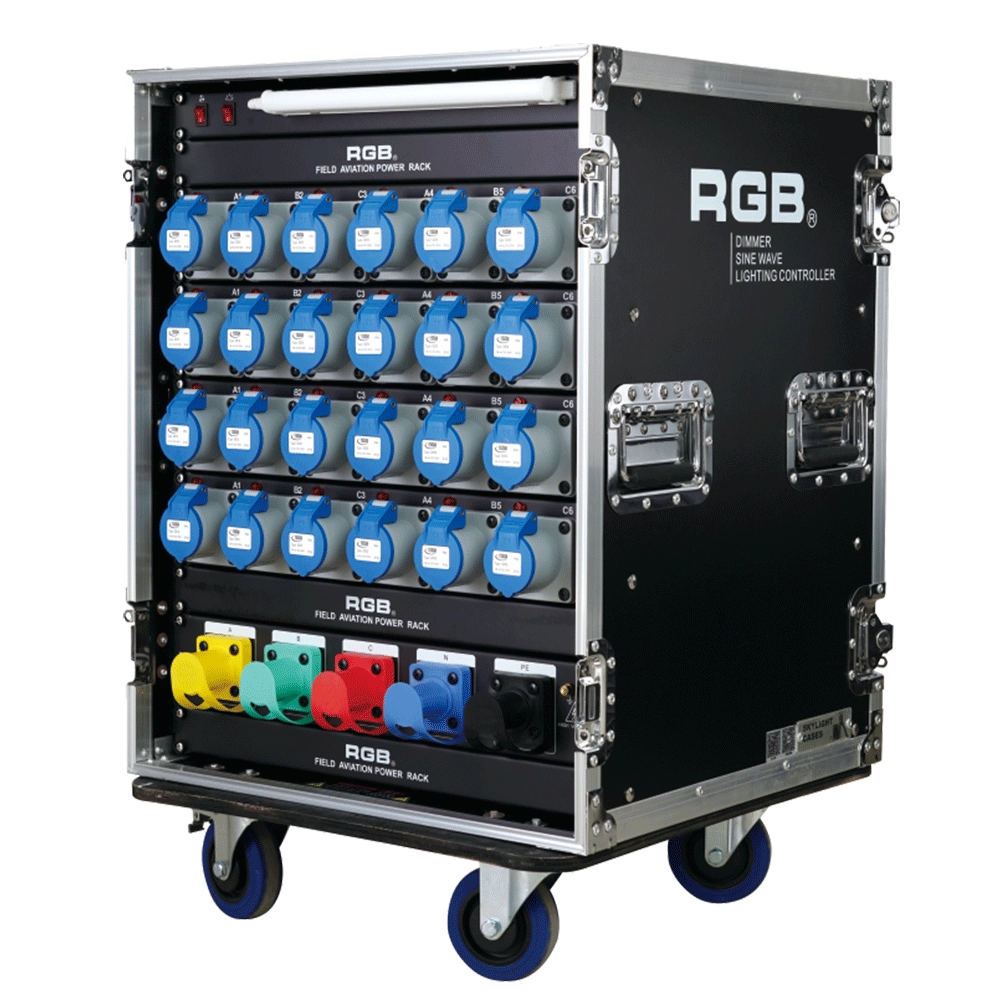
ZT Distribution Box
RGB-ZT2416 features dual protection functions and is a power distribution product specifically designed for overcurrent and short circuit of electrical equipment. It is the best choice for mobile performance and is suitable for use in computer lamps, conventional lamps, and other equipment.
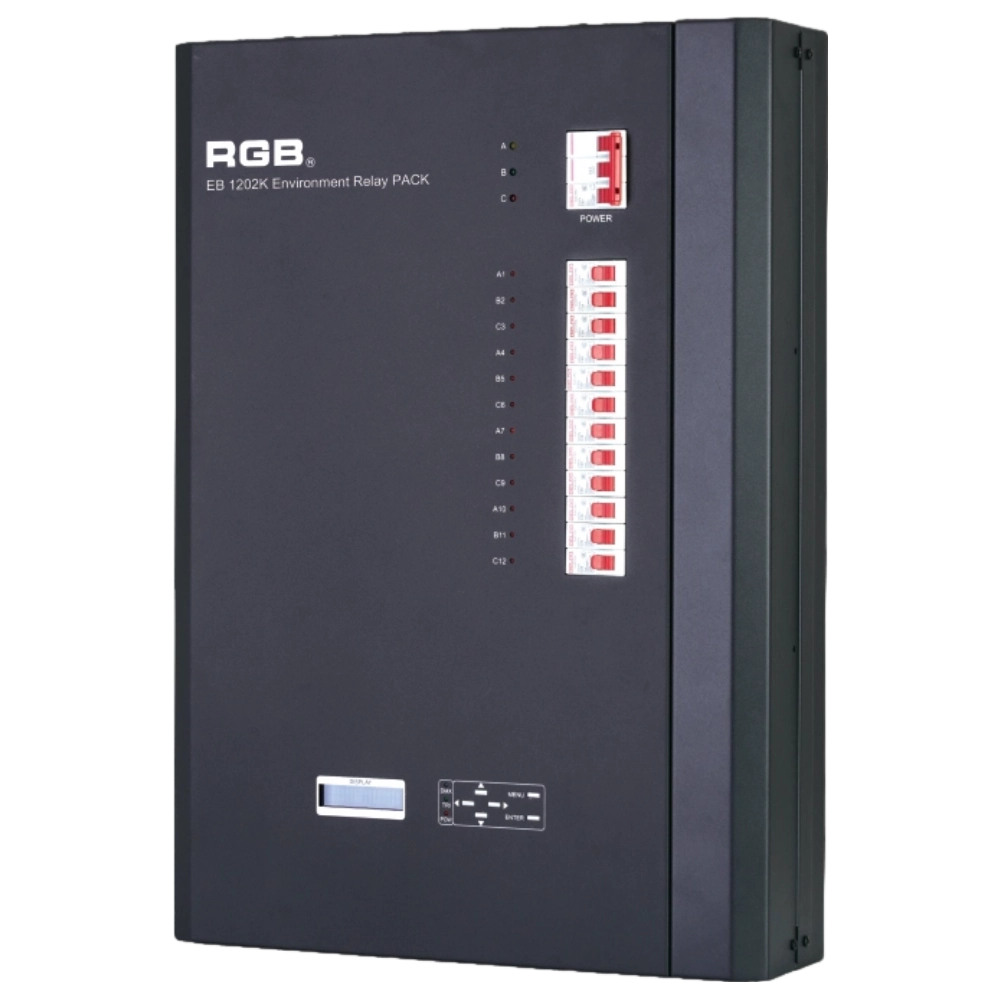
EB1202 Wall-Mounted Smart Site Light Control Series
Wall-mounted smart lighting controller with CE certification, DMX512 compatibility, flexible 12/24-channel output, scene backup, intelligent interface, and multiple dimming curves for precise professional lighting control.
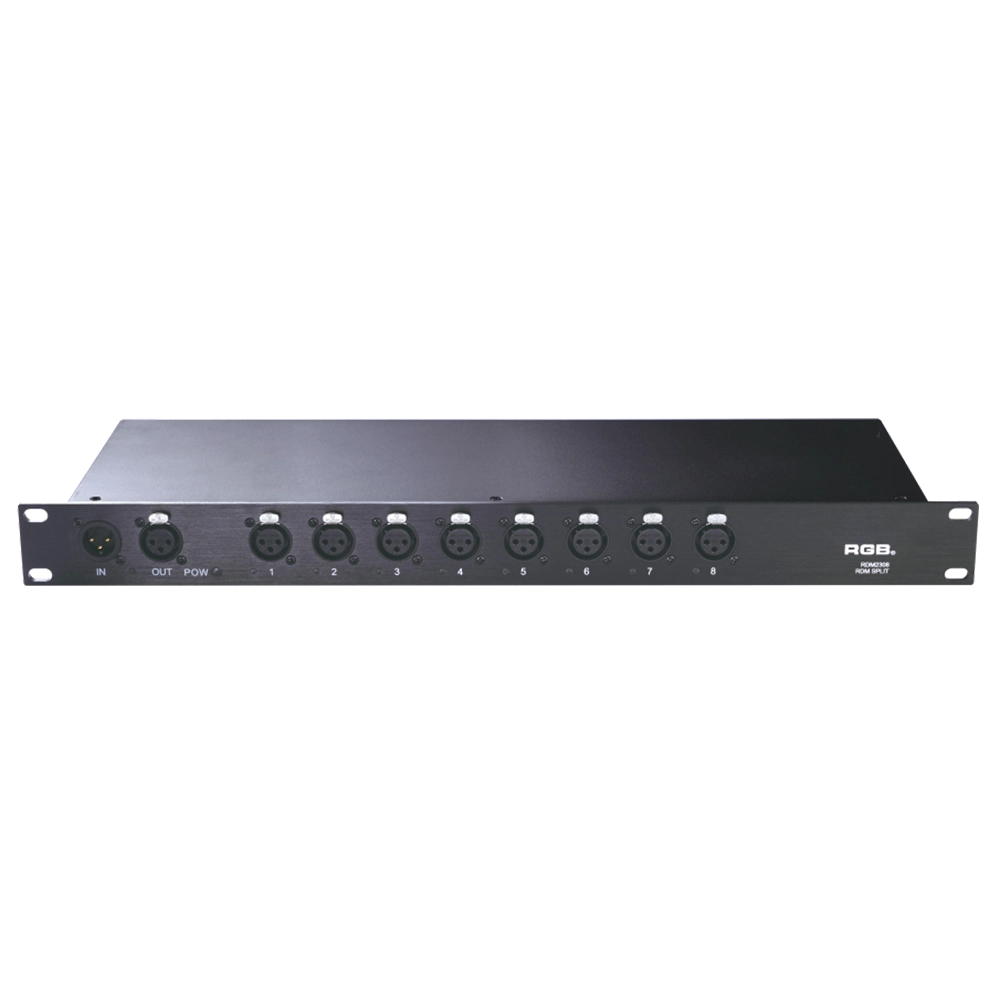
RDM Series Signal Amplifier
RDM2304, RDM2308, RDM2310, RDM2312 rack-mounted The RDM signal amplifier improves the quality of bidirectional RDM signal transmission, ensures the reliability of system control, and prevents faults such as AC high-voltage reverse series lighting control system, lightning high-voltage series entry, and line short circuit, which may affect system stability.
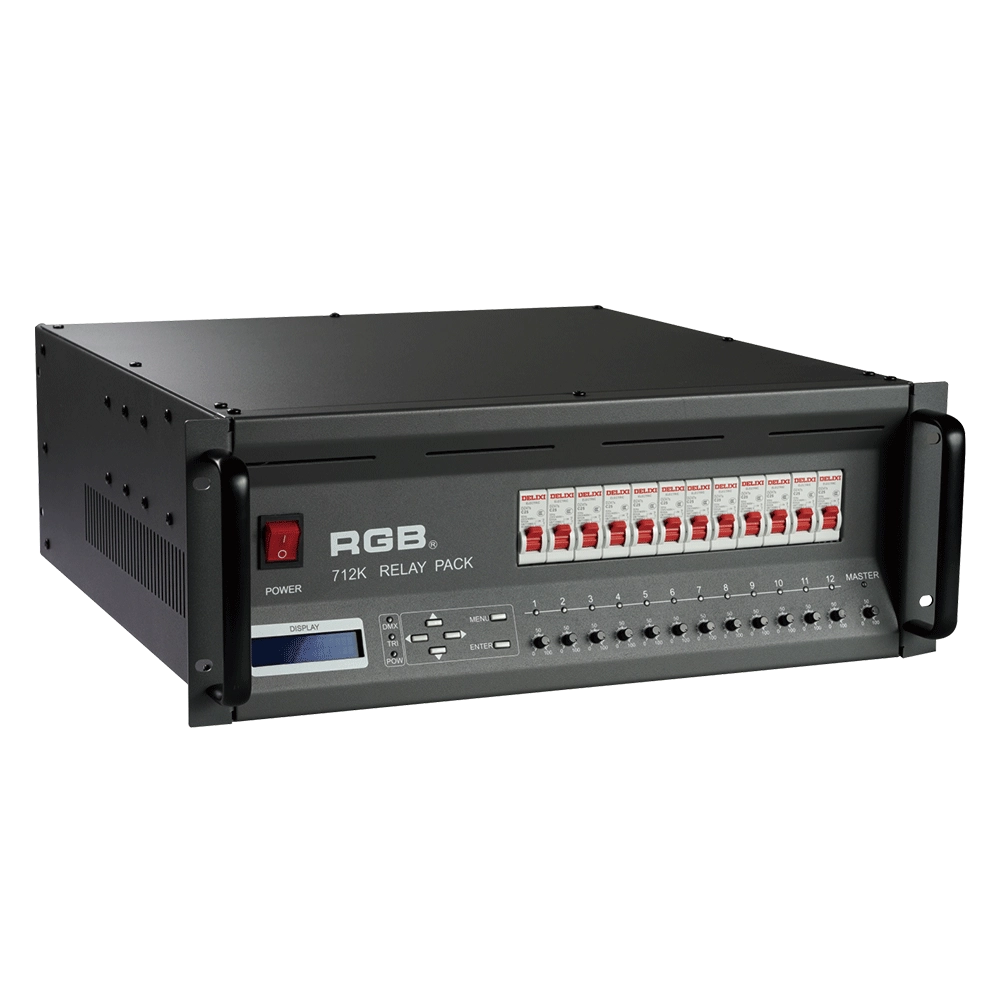
Alloy Relay Packs
High-performance DMX512 relay dimming unit with 512 addressable circuits, phase-loss protection, dual-signal amplification, 20A output per channel, and robust design for reliable stage and mobile lighting applications.
Expert Support
Interested in learning more or need expert guidance related to this article? Fill in your details, and our team will provide tailored support.
Intelligent Control. Brilliant Performance.
RGB specializes in stage lighting control systems, delivering intelligent, reliable, and high-performance solutions for theaters and performance spaces worldwide.
Contact
Email:
Tel:
+86 20 3928 0245
+86 20 3928 0247
Address:
No.3, Huashan Road, Shilou Town, Panyu, Guangzhou, China.
Whatsapp: +8615975520131