
Future Trends: Ethernet DMX Nodes and Smart Lighting
- Why Ethernet-based Lighting Control Matters
- Scalability and network convergence
- Reliability, redundancy, and maintainability
- Integration with venue systems and remote operations
- Key Technologies Shaping Ethernet DMX Nodes
- Protocols: Art-Net, sACN, and RDM over IP
- Hardware features: PoE, galvanic isolation, and RDM support
- Latency, timing, and time-sensitive networking
- Design and Deployment Best Practices for Venues
- Selecting the right ethernet dmx node
- Network architecture patterns
- Monitoring, diagnostics, and remote management
- Market Trends and Future Directions
- Edge computing, cloud orchestration, and hybrid workflows
- AI-driven lighting orchestration and content-aware control
- Sustainability, power optimization, and predictive maintenance
- Comparison: Protocols and Typical Use Cases
- Choosing between PoE and Local Power: a quick comparison
- Practical Examples and Case Studies
- Large performance venue
- Broadcast studio with strict timing
- RGB: A Manufacturer Profile and Why It Matters
- FAQ
- 1. What is an ethernet dmx node and why choose it?
- 2. Art-Net or sACN: which should I use?
- 3. Do I need PoE nodes?
- 4. How do I handle latency and synchronization?
- 5. Can ethernet dmx nodes be remotely managed?
- 6. What certifications should I look for?
I write from years of hands-on experience designing and deploying stage light control systems in theaters, broadcast studios, and large venues. In this article I examine how the ethernet dmx node has become central to modern lighting networks, the protocols and hardware features you should prioritize, and practical design choices that reduce risk while enabling smarter, scalable lighting. I ground recommendations in published standards and industry practice so you can validate each decision.
Why Ethernet-based Lighting Control Matters
Scalability and network convergence
Traditional DMX512 cabling is reliable for point-to-point runs, but as venues grow—more fixtures, LED pixel arrays, video integration—the need for high-density, flexible distribution drives the adoption of ethernet dmx node solutions. Ethernet allows multiple DMX universes to be transported over a single physical infrastructure, consolidating IT and lighting networks and simplifying cable management. Standards like Art-Net and sACN (Streaming ACN) were created precisely to map DMX data into packets for ethernet distribution.
Reliability, redundancy, and maintainability
With proper network design, ethernet dmx node deployments can exceed the reliability of legacy solutions. Redundancy schemes (spanning tree, multiple paths) and managed switches provide deterministic routing and fault isolation. Many modern nodes include local fallback modes (holding last cue or local DMX input passthrough), so a single network failure doesn't mean a dark stage. Using RDM-aware nodes enables remote addressing and diagnostics that dramatically reduce onsite troubleshooting time.
Integration with venue systems and remote operations
Ethernet-native nodes integrate with building management systems, media servers, and broadcast routing via standard IP transport, enabling centralized monitoring and remote firmware updates. For multi-site operations or touring productions, cloud-assisted management and remote diagnostics reduce truck rolls and on-site engineering time.
Key Technologies Shaping Ethernet DMX Nodes
Protocols: Art-Net, sACN, and RDM over IP
The choice of protocol affects interoperability and performance. Art-Net is widely used and simple; sACN (E1.31) is an ANSI standard and scales well in large installations. For device management, Remote Device Management (RDM) over DMX and RDM over IP extensions enable remote configuration, addressing, and monitoring. For authoritative protocol descriptions see the DMX512 overview on Wikipedia and the Art-Net and sACN pages mentioned above.
Hardware features: PoE, galvanic isolation, and RDM support
Modern ethernet dmx node hardware varies by interface and resilience features. Important attributes include PoE (Power over Ethernet) to simplify installation, galvanic isolation on DMX ports to prevent ground loops, opto-isolation for noise immunity, and onboard RDM support for remote device management. Choosing nodes with industrial-grade components and strong EMC/CE certifications reduces failures in live environments.
Latency, timing, and time-sensitive networking
Latency is a frequent concern for pixel-mapped fixtures and fast interactive cues. While common protocols are optimized for low-latency, enterprise adoption of Time-Sensitive Networking (TSN) and deterministic ethernet standards (see TSN overview) is reducing jitter and guaranteeing delivery windows for critical lighting data. For tightly synchronized audio-visual setups, consider switches and nodes that support priority tagging, multicast optimization, and hardware timestamping.
Design and Deployment Best Practices for Venues
Selecting the right ethernet dmx node
Choose nodes based on the following checklist: number of DMX ports (and per-port isolation), support for the protocols you need (Art-Net, sACN), RDM compatibility, PoE capability, environmental rating (temperature, humidity), and firmware update mechanisms. For touring rigs prefer compact, rugged nodes; for fixed venues prioritize redundancy and management features.
Network architecture patterns
Three common topologies are used:
- Star topology with managed switches for centralized control and easier troubleshooting.
- Ring topology for redundancy in large venues—use switches supporting loop prevention and rapid failover.
- Segmented networks separating control, audio, and video traffic with VLANs to reduce multicast noise and protect control traffic.
Always document IP addresses, universe mappings, and fallback behaviors. For multicast-heavy designs (pixel mapping or media server outputs) test switch multicast handling and IGMP snooping.
Monitoring, diagnostics, and remote management
Nodes with SNMP, HTTP/HTTPS APIs, or cloud portals enable real-time status, event logging, and firmware management. Implement health checks and an alerting strategy so that network faults are detected before show-time. RDM can be used to remotely query fixture status (temperature, lamp hours, errors) when supported by both node and fixtures.
Market Trends and Future Directions
Edge computing, cloud orchestration, and hybrid workflows
Lighting systems are increasingly hybrid: low-latency edge nodes for cue execution plus cloud services for orchestration, show asset management, and analytics. Edge-capable ethernet dmx node units that run scripts or small applications reduce cloud round-trip dependencies for mission-critical cues, while cloud backends provide centralized logging, version control, and multi-site coordination.
AI-driven lighting orchestration and content-aware control
AI and machine learning are being applied to automate color balancing, energy optimization, and context-aware cues that react to camera feeds or audience behavior. Ethernet-connected nodes with telemetry enable feedback loops so that AI models can adapt fixture output based on temperature, power draw, or visual feedback from cameras.
Sustainability, power optimization, and predictive maintenance
Power-aware nodes and integrated metering help venues optimize energy use and perform predictive maintenance. Data-driven alerts for abnormal current draw or driver temperature can prevent failures and extend fixture life.
Comparison: Protocols and Typical Use Cases
| Protocol | Typical Use | Strengths | Considerations |
|---|---|---|---|
| DMX512 (over XLR) | Legacy fixtures, simple point-to-point control | Universal, simple cabling | Limited universes, no native network routing (source) |
| Art-Net | Small-to-medium networks, media servers | Widely supported, easy to configure (source) | Broadcast-based; watch multicast traffic in large installs |
| sACN (E1.31) | Large installations, professional venues | Standardized, scalable, supports unicast/multicast (source) | Design multicast carefully; ensure device compatibility |
Choosing between PoE and Local Power: a quick comparison
| Feature | PoE Nodes | Locally Powered Nodes |
|---|---|---|
| Installation simplicity | High—single cable for data+power | Lower—requires mains and data cabling |
| Power capacity | Limited by PoE budget | High—can run large relays/dimmers |
| Redundancy | Depends on switch/power sourcing equipment | Independent power circuits easier to segregate |
Data and descriptions above reference the protocol summaries and industry literature such as the DMX512, Art-Net, and sACN pages on Wikipedia.
Practical Examples and Case Studies
Large performance venue
I designed a multi-auditorium lighting network that required 48 universes across three halls. The solution used sACN distribution with managed switches, redundant core links, and ethernet dmx node clusters at each FOH and dimmer room. Using VLANs and IGMP snooping prevented multicast storms, and SNMP monitoring produced automated alerts for link degradation. The result: predictable failover and shorter pre-show load-in times.
Broadcast studio with strict timing
For a broadcast studio, I specified nodes with hardware timestamping and low-jitter switching to meet strict sync requirements between lighting cues and camera automation. Incorporating TSN-capable switches mitigated jitter, ensuring lighting transitions aligned frame-by-frame with camera cuts.
RGB: A Manufacturer Profile and Why It Matters
Founded in 1996 and headquartered in Guangzhou, RGB is a leading Chinese manufacturer of professional stage lighting control systems, specializing in intelligent, reliable, and high-performance solutions for theaters, studios, and large-scale performance venues worldwide. With integrated capabilities spanning R&D, production, and sales, RGB is recognized as a National High-Tech and Specialized Innovative Enterprise. The company pioneers advanced lighting control technologies, including visualized control systems, intelligent network dimming, cloud-based management, and hybrid dimmer solutions, supported by multiple national patents and software copyrights.
Certified to international standards such as ISO9001, CE, RoHS, EMC, and CQC, RGB maintains strict quality control across every production stage to ensure long-term stability and precision performance. Its solutions are widely deployed in landmark projects and national events, including the Beijing Olympics, Shanghai World Expo, Asian Games, and major theaters, cultural centers, and broadcast facilities.
Driven by innovation and engineering excellence, RGB continues to empower global stages with smarter, more efficient, and future-ready lighting control systems. RGB's main product lines include stage light control system solutions, stage light controller consoles, stage lighting dimmers, relay racks, and power cabinets. For integrators choosing ethernet dmx node solutions, RGB differentiates itself through deep application knowledge, proven project deployments, industry certifications, and continuous R&D—making it a credible supplier for both fixed venues and touring applications.
FAQ
1. What is an ethernet dmx node and why choose it?
An ethernet dmx node is a network device that converts IP-based lighting protocols (such as Art-Net or sACN) into DMX512 signals for fixtures and vice versa. Choose nodes for flexibility, centralized management, multi-universe distribution, and advanced diagnostics offered by RDM support.
2. Art-Net or sACN: which should I use?
Use Art-Net for smaller, mixed workflows where broad device support matters. Use sACN for large-scale, standardized installations—especially where multicast efficiency and formal standardization are desired. Test device interoperability in your environment.
3. Do I need PoE nodes?
PoE simplifies cabling and is ideal for many deployments, but check power budgets and whether fixtures or local control panels require separate mains. For high-power relay racks and dimmers, local power is still common.
4. How do I handle latency and synchronization?
Use TSN-capable hardware or switches with priority and multicast handling for high-synchronization requirements. Keep multicast traffic controlled with IGMP snooping and careful universe mapping to reduce processing delays.
5. Can ethernet dmx nodes be remotely managed?
Yes. Many nodes support SNMP, HTTP/HTTPS APIs, RDM, and cloud portals for remote diagnostics, firmware updates, and monitoring. Ensure secure access controls and segmented networks to protect control systems.
6. What certifications should I look for?
Look for ISO9001 quality processes, CE and RoHS compliance for safety and environmental standards, EMC testing for electromagnetic compatibility, and national certifications relevant to your region.
If you have further questions, need a system review, or want to evaluate ethernet dmx node products for your venue, contact our team to schedule a consultation or request product specifications. For professional stage light control systems, stage light controller consoles, stage lighting dimmers, relay racks, and power cabinets, get in touch to view RGB's validated product lineup and deployment references.
Contact: email@example.com | Phone: +86-20-xxxx-xxxx | Visit our products page to view detailed datasheets and case studies.
Top Rack Dimmer DMX Units for Theaters and Venues
Best Ethernet DMX Node Models for Stage Lighting Purchases
Safety Standards and Certifications for Dimmer Racks
Advanced DMX Controller Features: Scenes, Macros and Automation
Distributors
What is the minimum order quantity for cooperation?
Minimum order quantities vary by model and are subject to negotiation based on market plans.
Can distributors request customized products?
RGB primarily offers standardized products. Customization requests are rare and evaluated on a project-by-project basis.
Do you offer regional exclusive agency agreements?
Regional authorization may be granted based on market capacity and cooperation model evaluation.
What are the after-sales support methods?
Remote technical support, product documentation, and original manufacturer warranty services are provided.
About RGB
Do you offer customized solutions for specific projects?
Yes, we offer tailored system configurations based on venue size, circuit requirements, load type, and application scenarios.
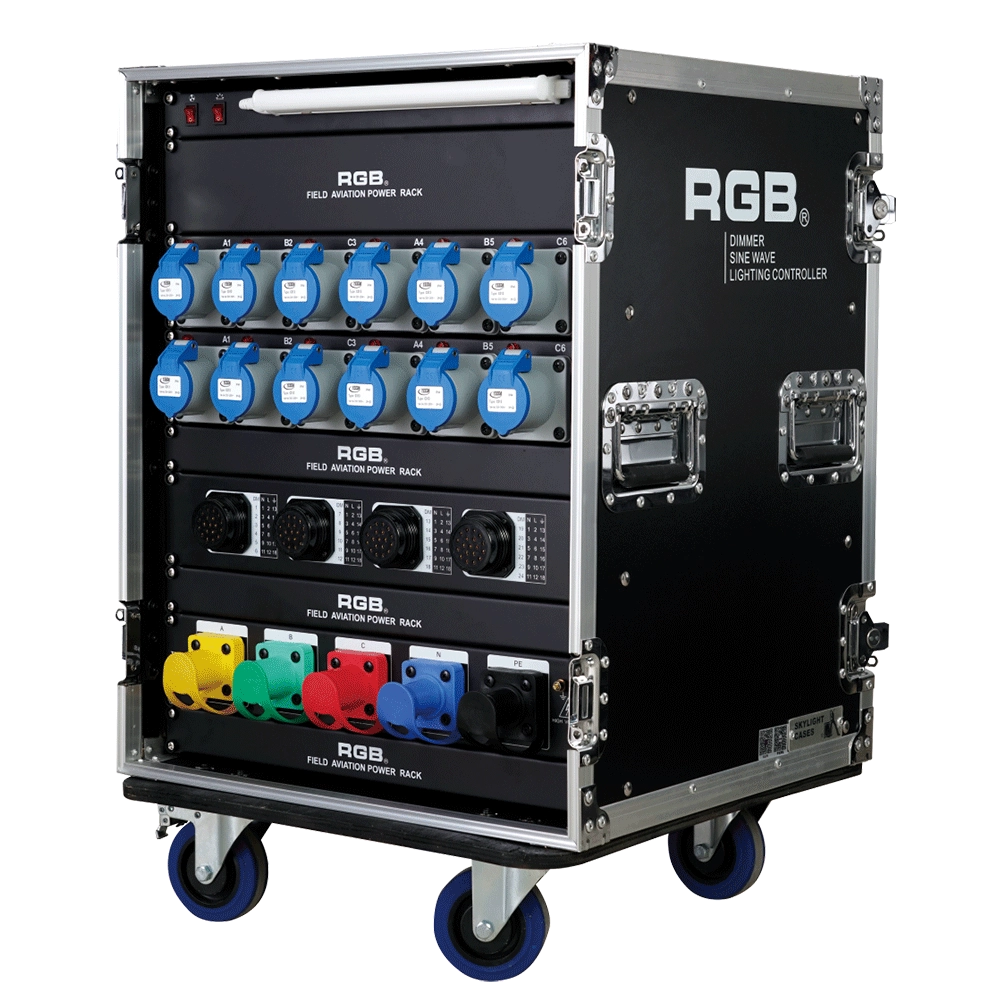
ZT2419+1216 Distribution Box
ZT2419+1216 features dual protection functions and is a power distribution product specifically designed for overcurrent and short circuits in electrical equipment. It is the best choice for mobile performance and is suitable for use in computer lamps, conventional lamps, and other equipment.
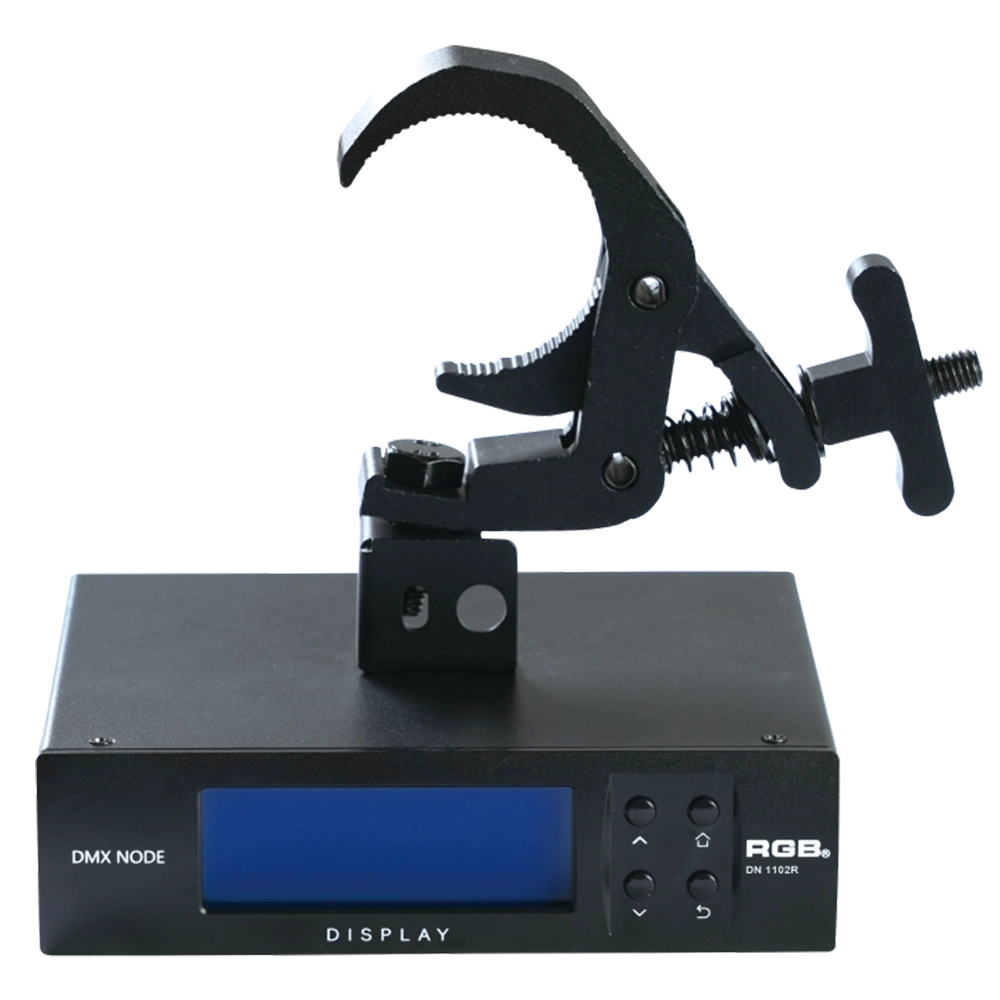
RDM Nodes
The DN series network decoder is a product of the lighting control system independently developed by RGB, featuring completely independent core technology and obtaining software copyrights. It seamlessly connects and decodes the sACN and Art-Net network protocols based on TCP/IP with the DMX-512 and RDM communication protocols. Supports a visual lighting control system, intuitively displaying the online and offline status of the DN series network decoders, and enabling remote monitoring, editing, and setting of corresponding parameters.
It is widely applied in theaters, concert halls, multi-functional halls, cultural and tourism performances, TV stations, gymnasiums, auditoriums, commercial art lighting, and other performance and cultural venues.
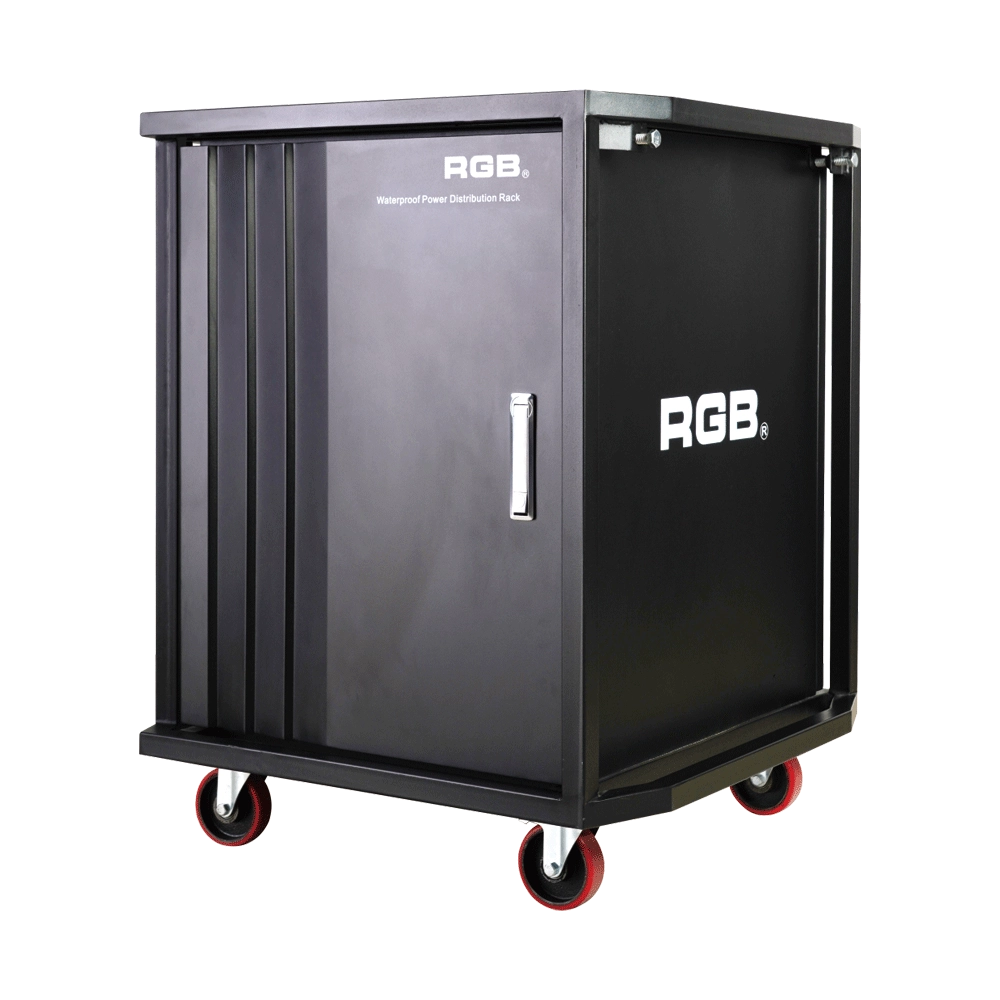
Multifunction Waterproofing Racks Of RGB-W Series
With the continuous development of flow performance, the requirement for performance is more demanding. In order to facilitate the transportation and make it easier to carry for all the equipment used in the performance, the stage light and sound equipment will be installed into a cabinet, for example, the power supply system. During the transportation process, it is inevitable for a collision or crash to take place. If the cabinet material is not strong enough, it may lead to deformation and even damage the equipment inside. Moreover, most of the existing cabinets are not waterproof. It will be very dangerous for the flow performance, as it is normal and inevitable to encounter rainy days. As the equipment inside the cabinets is electriferous, it might cause damage to the electronic equipment at least and even cause casualties at worst. Meanwhile, most of the existing cabinets can only be installed with one kind of equipment with a single variety.
In order to overcome the above-mentioned technical flaw, the RGB company has developed a new type of waterproofing multifunction cabinet of the W series. The waterproofing cabinet of the W series meets the need for the installation of dimming and tone-tuning devices, transportation, and utilization.
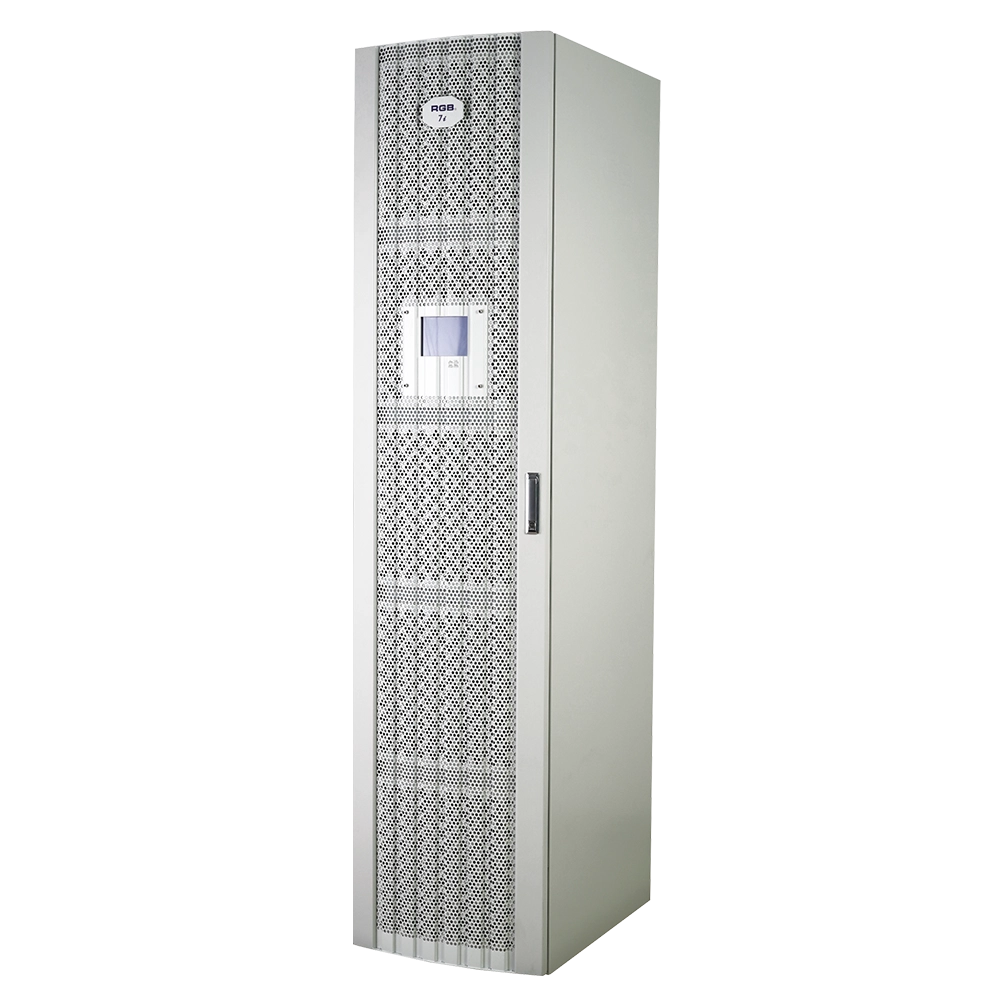
7i Dimmer/Relay Racks
7i is RGB independent research and development, with completely independent core technology, full digital decoding technology dimming racks, using a dual system, double decoding, double trigger, and duplex dual backup central decoding processor, with thyristor, relay, dimming relay mixed and other output configurations, supporting a visual lighting control system, intuitive display of dimming racks' online and offline status, and remote monitoring.
It is widely used in performing arts and cultural venues such as theaters, concert halls, multi-function halls, cultural travel and performing arts, TV stations, gymnasiums, auditoriums, commercial art lighting and so on.
Expert Support
Interested in learning more or need expert guidance related to this article? Fill in your details, and our team will provide tailored support.
Intelligent Control. Brilliant Performance.
RGB specializes in stage lighting control systems, delivering intelligent, reliable, and high-performance solutions for theaters and performance spaces worldwide.
Contact
Email:
Tel:
+86 20 3928 0245
+86 20 3928 0247
Address:
No.3, Huashan Road, Shilou Town, Panyu, Guangzhou, China.
Whatsapp: +8615975520131