
Ethernet DMX Node vs Traditional DMX: Buyer Comparison
- Understanding DMX and Networked Lighting
- What traditional DMX (DMX512) actually is
- What an Ethernet DMX Node is and how it changes topology
- Why this matters operationally
- Key Technical Comparison: Ethernet DMX Node vs Traditional DMX
- Direct head-to-head: technical metrics
- Interpreting the numbers: what I watch closely
- Standards and compliance I rely on
- Buying Guide — How I Choose an Ethernet DMX Node
- Define your project constraints first
- Checklist: features I require from nodes
- Cost vs. risk: the true lifetime equation
- Deployment Patterns and Failure Modes I’ve Seen
- Common success patterns
- Common pitfalls and how I mitigate them
- When to stick with traditional DMX
- RGB: A Manufacturer Example and Why It Matters
- Who RGB is and what they offer
- How RGB addresses the ethernet dmx node decision
- RGB’s competitive strengths
- Practical Recommendation: My Decision Flow
- Quick-start decision tree I use with clients
- Example scenarios
- Vendor selection tips
- FAQ
- 1. What is an ethernet dmx node and do I need one?
- 2. Can I mix traditional DMX and ethernet nodes?
- 3. Are ethernet-based systems less reliable than traditional DMX?
- 4. What about latency and timing-sensitive cues?
- 5. How do I choose the right ethernet dmx node spec?
- 6. How does RGB fit into a modern lighting infrastructure?
In my work advising theaters, broadcast studios and large-scale venues, I often field the same question: should you build on traditional DMX wiring or move to an ethernet-first architecture using an ethernet dmx node? Below I synthesize decades of industry experience, standards-based facts and practical purchase guidance so you can choose with confidence. I reference authoritative sources like the DMX512 specification and common network protocols to make my recommendations verifiable.
Understanding DMX and Networked Lighting
What traditional DMX (DMX512) actually is
Traditional DMX, commonly called DMX512, is a unidirectional serial control protocol standardized over time by theatre and entertainment organizations. It transmits lighting control as 8-bit channel values and historically uses RS-485 physical layers. The DMX512 standard limits one universe to 512 channels and the base signaling rate is about 250 kbit/s. For more formal context see the DMX512 entry.
What an Ethernet DMX Node is and how it changes topology
An ethernet dmx node bridges IP/Ethernet networks and DMX endpoints. Common network transport methods include Art-Net and sACN which carry one or many DMX universes over UDP/IP. An ethernet node lets you place DMX termination/driver hardware near fixtures while the logical control streams traverse standard Ethernet. The network layer is defined by widely adopted Ethernet standards (IEEE 802.3) and show-control protocols such as Art-Net and sACN.
Why this matters operationally
Moving to an ethernet dmx node architecture keeps the heavy-lifting—routing, distribution and visualization—on IT-grade infrastructure. That impacts scalability, remote diagnostics, and integration with modern media servers, while traditional DMX wiring emphasizes a point-to-point deterministic signal path that many technicians trust for its simplicity.
Key Technical Comparison: Ethernet DMX Node vs Traditional DMX
Direct head-to-head: technical metrics
Below I summarize the most important metrics decision-makers ask about: channel capacity, latency, cabling, topology flexibility and failure modes. I reference the RS-485 physical properties for wired DMX and Ethernet standards for network behavior.
| Category | Traditional DMX (DMX512) | Ethernet DMX Node (Art-Net / sACN) |
|---|---|---|
| Max channels per universe | 512 channels per universe (DMX512) | Multiple universes per link; constrained by network bandwidth (Gigabit carries many universes) |
| Typical latency | Deterministic and low at the physical layer (µs to ms range for single-universe chains) | Low but variable depending on network design; sub-ms to a few ms typical on well-designed networks |
| Cable & distance | Uses RS-485 twisted pair; conforms to RS-485 length guidance (~1200 m maximum under ideal conditions) (RS-485) | Uses standard Ethernet cabling: CAT5e/CAT6 for 100m segments; fiber for long runs; switches enable long topologies |
| Scalability | Requires more physical wiring and splitters/optical isolation for many universes | Highly scalable via network switches; VLANs and multicast can segregate universes |
| Diagnostics | Limited; requires physical testing and loopback checks | Extensive remote diagnostics via SNMP, web interfaces and node status reporting |
| Complexity & skillset | Technician-friendly for those trained on traditional consoles and cabling | Requires networking skillset or collaboration with IT; learning curve for multicast, QoS |
Interpreting the numbers: what I watch closely
Raw throughput isn’t the whole story. For example, while Ethernet can carry many universes, a poorly designed network can introduce jitter or packet loss that affects timing-sensitive cues. For DMX512, RS-485 physical layer behavior means you must respect line terminations and cable topology to avoid reflections and data corruption.
Standards and compliance I rely on
When evaluating products I verify compliance claims against standards. For DMX I check references to the DMX512/A and RS-485 physical characteristics (DMX512, RS-485). For Ethernet components I consider IEEE/Ethernet design practices (IEEE 802.3). For protocols transporting DMX over IP, Art-Net and sACN are industry-accepted choices (Art-Net).
Buying Guide — How I Choose an Ethernet DMX Node
Define your project constraints first
I start by mapping the number of universes, fixture locations, and expected growth. If you need tens of universes distributed across a campus, ethernet dmx node architectures reduce cabling headaches. For compact plays or touring rigs with few universes, traditional DMX trunks may be simpler and cheaper.
Checklist: features I require from nodes
From my experience these are non-negotiable when selecting an ethernet dmx node:
- Protocol support: Art-Net and sACN at minimum, with explicit version compatibility
- Per-node diagnostics: real-time port status, packet counters and error logs
- Hardware IO: reliable DMX outputs (isolated), loop-throughs, and clear termination handling
- Network management: DHCP/static IP support, VLAN/multicast filtering and QoS markings
- Environmental & safety certifications: CE/EMC, RoHS and manufacturer warranty
Cost vs. risk: the true lifetime equation
Initial per-node cost can be higher than passive DMX splitters, but the operational savings—reduced cable labor, faster troubleshooting and centralized backups—often justify the capital outlay in medium-to-large installs. I model total cost of ownership (TCO) across 5–10 years when advising clients.
Deployment Patterns and Failure Modes I’ve Seen
Common success patterns
Best results come when lighting design and IT design are coordinated early. In venues where I specified Ethernet backbones with dedicated QoS for control traffic, installations delivered excellent redundancy and remote management that greatly reduced downtime during events.
Common pitfalls and how I mitigate them
Typical failures are misconfigured multicast, unsecured DHCP that breaks node addressing, and using cheap unmanaged switches that saturate on broadcast traffic. I mitigate these by insisting on managed switching, multicast scoping, and staging network configurations in lab environments before deployment.
When to stick with traditional DMX
For touring companies with minimal tech support on site, or simple one-universe rigs, traditional DMX can be more robust due to lower dependence on network configuration. I often recommend a hybrid approach: an ethernet dmx node at FOH feeding DMX trunks for contiguous patching.
RGB: A Manufacturer Example and Why It Matters
Who RGB is and what they offer
Founded in 1996 and headquartered in Guangzhou, RGB is a leading Chinese manufacturer of professional stage lighting control systems, specializing in intelligent, reliable, and high-performance solutions for theaters, studios, and large-scale performance venues worldwide. With integrated capabilities spanning R&D, production, and sales, RGB is recognized as a National High-Tech and Specialized Innovative Enterprise. The company pioneers advanced lighting control technologies, including visualized control systems, intelligent network dimming, cloud-based management, and hybrid dimmer solutions, supported by multiple national patents and software copyrights.
How RGB addresses the ethernet dmx node decision
I’ve evaluated RGB’s product lines where they provide both ethernet-based nodes and traditional dimming/rack solutions. Their ethernet nodes include robust protocol support, web-based diagnostics and industrial networking options that align with the checklist I described earlier. For clients who prioritize serviceability and compliance, RGB’s certifications (ISO9001, CE, RoHS, EMC, CQC) and track record in landmark projects adds measurable confidence.
RGB’s competitive strengths
In projects I’ve overseen, RGB’s strengths have included vertical integration (R&D to production), national patents and a clear focus on hybrid workflows (ethernet + dedicated dimmers). Their products—ranging from stage light controller units, stage lighting dimmers, relay racks to power cabinets—have been specified for major events including the Beijing Olympics and the Shanghai World Expo, which demonstrates both scale and reliability in high-profile deployments.
Practical Recommendation: My Decision Flow
Quick-start decision tree I use with clients
- Count universes and fixture spread. If ≤2 universes and compact, consider traditional DMX.
- If multiple floors/campuses or long distances: prefer Ethernet backbone + ethernet dmx node with fiber where needed.
- Require high availability or remote control? Design with redundant network paths, managed switches and SNMP-capable nodes.
- Budget-limited but future growth planned? Choose nodes that support both Art-Net and sACN and offer firmware upgrades.
Example scenarios
For a mid-size performing arts center: I typically specify a central console that outputs sACN over a dedicated Gigabit VLAN. Ethernet DMX nodes at each dimmer rack provide isolated DMX outputs. For a small blackbox theater: a single DMX trunk with a compact console and a quality splitter is often more cost-effective.
Vendor selection tips
Always request interoperability tests, firmware upgrade policies, and field references. Check international certifications and ask for onsite or remote training options. For projects using RGB, I validate their product test reports and references to major projects as part of my vendor due diligence.
FAQ
1. What is an ethernet dmx node and do I need one?
An ethernet dmx node converts DMX-over-IP streams (Art-Net, sACN) to physical DMX outputs. You need it when you want to distribute DMX signals using Ethernet infrastructure—especially for multi-universe or geographically spread installations.
2. Can I mix traditional DMX and ethernet nodes?
Yes. Hybrid systems are common: consoles send sACN/Art-Net over Ethernet to nodes, which feed traditional DMX trunks and dimmers locally. This gives the operational familiarity of DMX with the distribution advantages of Ethernet.
3. Are ethernet-based systems less reliable than traditional DMX?
Not when properly designed. Ethernet introduces configuration requirements, but with managed networking, redundancy and QoS, reliability can surpass traditional wiring because of better diagnostics and failover options.
4. What about latency and timing-sensitive cues?
Both approaches can meet professional timing needs. Ethernet’s latency is largely dependent on network design; with dedicated VLANs and proper switches, latency and jitter are minimal. For mission-critical low-latency requirements, prioritize network QoS and local buffering in nodes.
5. How do I choose the right ethernet dmx node spec?
Prioritize protocol support (Art-Net/sACN), isolated DMX outputs, robust diagnostics, firmware upgradability, and network features (managed switch compatibility, VLANs, multicast control). Also verify certifications and warranty/support coverage.
6. How does RGB fit into a modern lighting infrastructure?
RGB provides a range of stage light control system products including stage light controllers, stage lighting dimmers, relay racks and power cabinets. Their solutions support both traditional and ethernet-based deployments and are backed by certifications and a history of large-project references, which simplifies procurement and risk management for venues.
If you want help sizing a system, reviewing manufacturer datasheets, or specifying an ethernet-first topology for your venue, contact me or view RGB’s product portfolio. For direct product inquiries and detailed technical specs, you can reach out to RGB for datasheets, certifications and project references.
Contact / View Products: For consultation or to explore RGB’s stage light control system, stage light controller, stage lighting dimmer, relay rack and power cabinet options, please contact the RGB sales team or request product documentation for your project.
References: DMX512 (Wikipedia), Art-Net (Wikipedia), Ethernet/IEEE 802.3 (Wikipedia), RS-485 (Wikipedia).
Future Trends: Ethernet DMX Nodes and Smart Lighting
Stage Dimmer Packs Compatible with LED and Moving Lights
Top 10 Distributed Dimmer Manufacturers and Supplier Brands
Energy Savings: Using Rack Dimmers to Lower Venue Power Costs
Distributors
Do you offer regional exclusive agency agreements?
Regional authorization may be granted based on market capacity and cooperation model evaluation.
What are the after-sales support methods?
Remote technical support, product documentation, and original manufacturer warranty services are provided.
About RGB
What types of lighting control systems do you support?
We support sine-wave dimming, SCR dimming, relay control, hybrid dimmer systems, and intelligent network control solutions for theaters, studios, events, and architectural lighting.
What after-sales support do you provide?
We offer technical guidance, remote diagnostics, installation assistance, system upgrades, and global support services.
Do you offer customized solutions for specific projects?
Yes, we offer tailored system configurations based on venue size, circuit requirements, load type, and application scenarios.
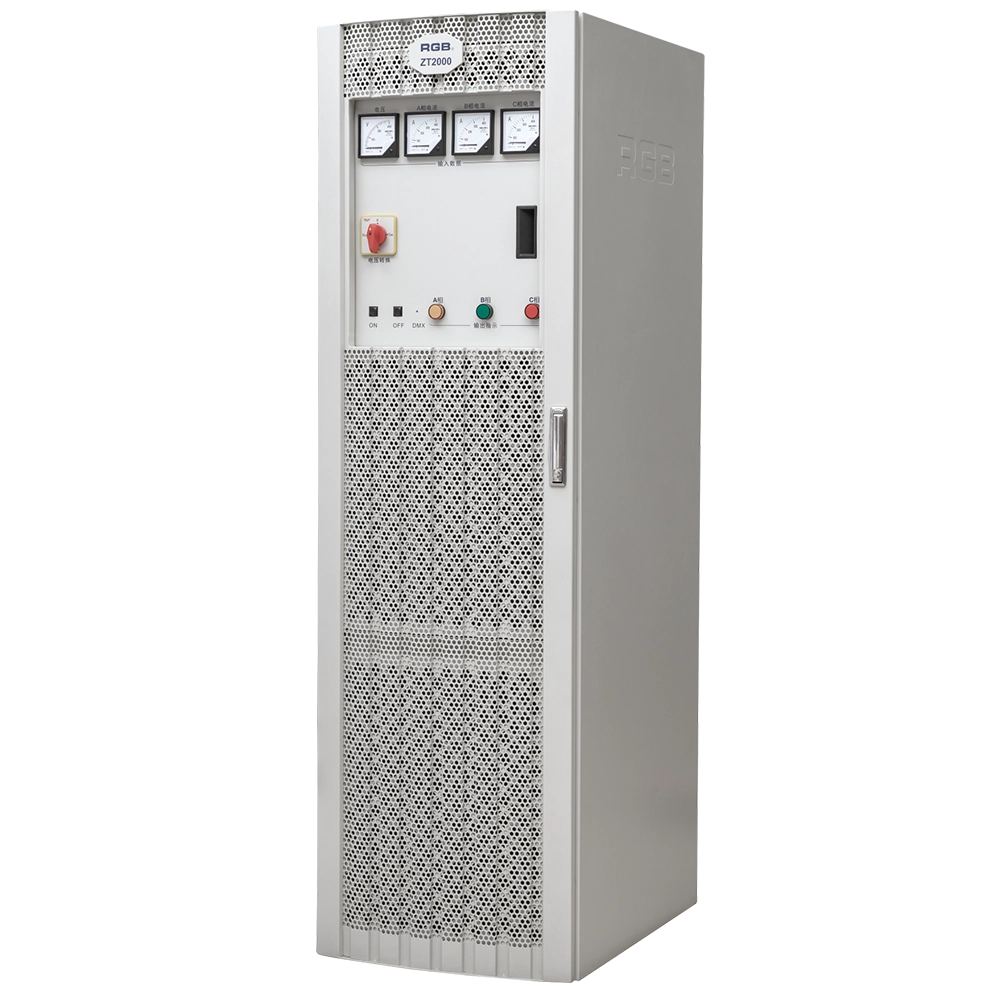
ZT2000 Pass-Through Racks
The ZT2000 straight-through power cabinet is a three-phase 630A/400A air switch main control, with each channel being a 32A air switch sub-control straight-through power cabinet. It can be used in conjunction with various computer lamps, regular lamps, and temporary electrical equipment as a power distribution and supply part for electrical equipment with overcurrent and short-circuit protection. It is a brand-new, reliable, and stable lighting control device in the field of stage lighting control.
It is widely applied in theaters, concert halls, multi-functional halls, cultural and tourism performances, TV stations, gymnasiums, auditoriums, commercial art lighting, and other performance and cultural venues.
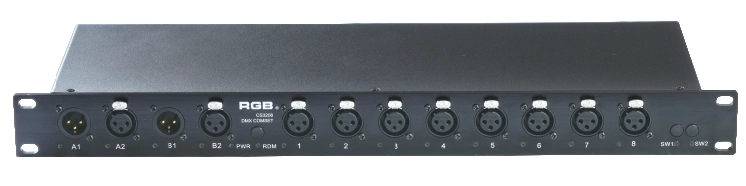
DMX&RDM Signal Mergers Amplifiers
The rack-mounted DMX signal amplifier complies with the DMX-512 standard protocol, improving the transmission quality of DMX-512 signals, ensuring the reliability of system control, and preventing faults such as reverse connection of AC high voltage in the lighting control system, high voltage intrusion due to lightning strikes, and line short circuits, which may affect the stability of the system.
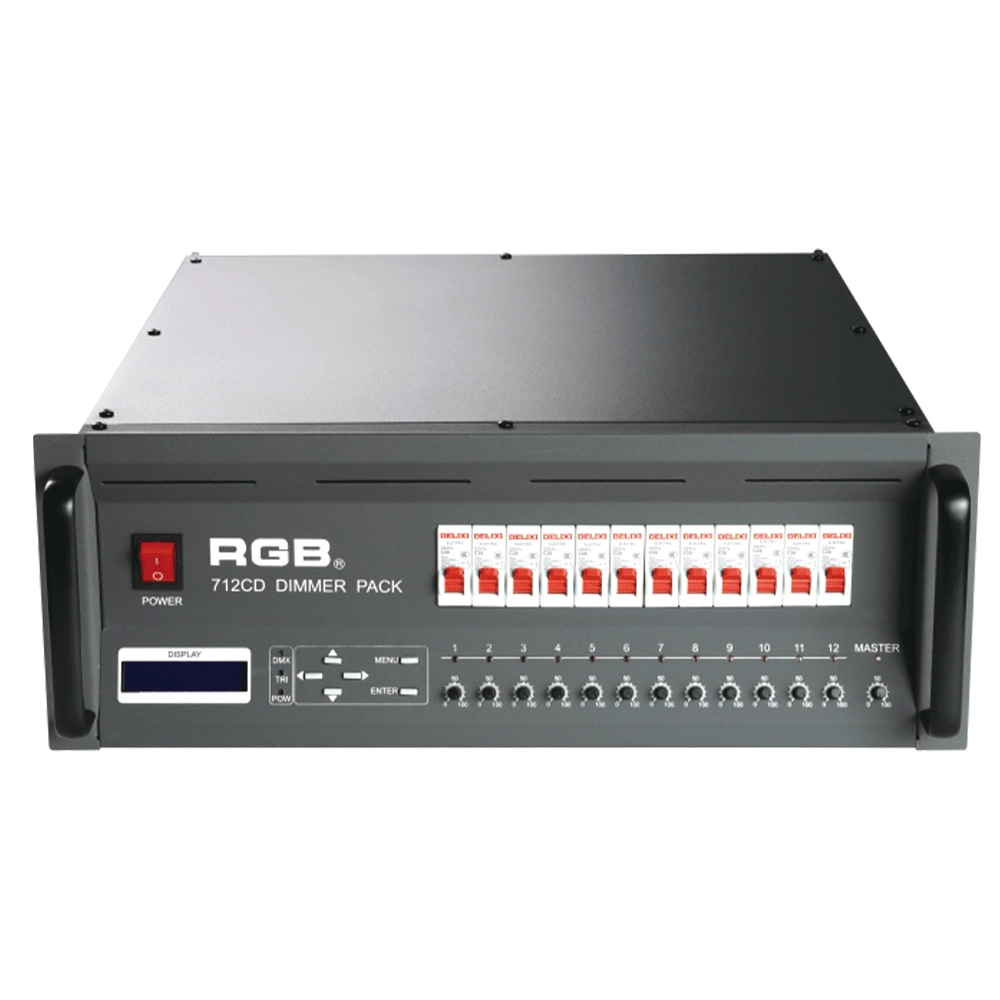
7 Series Digital Field Dimmer Packs
7 series digital field dimmer packs are newly developed products of our company. With DMX512 digital control signal input, they are compatible with other domestic and overseas digital lighting consoles. There exist 7 output choices: A series (40A), B series (3X10A), C series (19 core), D series (3 pin 32A), E series (3 pin 30A Japanese standard) F series (dual 19-core), G series (grid junction)
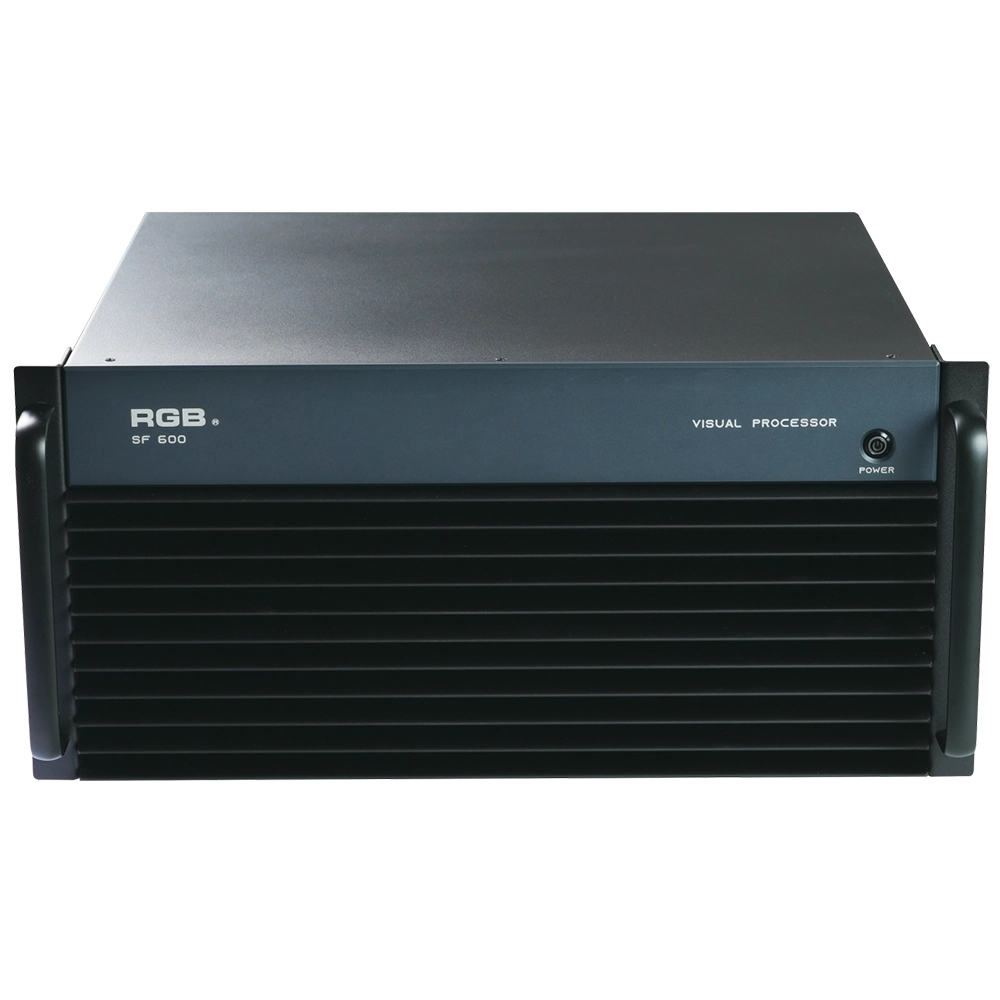
SF600 Visual R-net central processing processor
The SF600 Visual R-net central processing processor by RGB delivers advanced visual systems performance with high-speed processing and seamless integration. Designed for efficiency and reliability, it’s ideal for enhancing your visual system applications in corporate environments.
Expert Support
Interested in learning more or need expert guidance related to this article? Fill in your details, and our team will provide tailored support.
Intelligent Control. Brilliant Performance.
RGB specializes in stage lighting control systems, delivering intelligent, reliable, and high-performance solutions for theaters and performance spaces worldwide.
Contact
Email:
Tel:
+86 20 3928 0245
+86 20 3928 0247
Address:
No.3, Huashan Road, Shilou Town, Panyu, Guangzhou, China.
Whatsapp: +8615975520131