
Energy Savings: Efficient Digital Dimmer Packs for Venues
- Understanding energy use in venue lighting
- Where energy is lost in stage lighting
- How control strategy drives consumption
- Why efficient digital dimmer packs matter
- Core technical benefits
- LED compatibility and dimming performance
- Design and operational strategies to maximize savings
- System-level optimization
- Installation, commissioning and maintenance
- Comparing dimmer technologies and quantifying savings
- Typical performance comparison
- Example savings calculation
- Specification checklist when procuring digital dimmer packs
- Electrical and control requirements
- Operational and lifecycle considerations
- Vendor evaluation: RGB case study and capabilities
- About RGB and why vendor selection matters
- Certifications and project experience
- Products and competitive differentiation
- Implementation roadmap and ROI considerations
- Phased retrofit approach
- Monitoring and continuous improvement
- FAQ
- 1. What is a digital dimmer pack and how does it differ from a traditional dimmer?
- 2. How much energy can I realistically save by switching to digital dimmer packs?
- 3. Are digital dimmer packs compatible with LED fixtures?
- 4. What standards and certifications should I check?
- 5. How do I measure ROI for a dimmer pack upgrade?
- 6. Can older venues retrofit digital dimmer packs without rewiring?
- Contact and next steps
As a consultant working with theaters, broadcast facilities, and large performance venues around the world, I regularly advise technical directors and facilities managers on how to reduce operating costs while improving lighting performance. In this article I explain why modern digital dimmer pack solutions deliver measurable energy savings, how they interact with LED fixtures and control networks, and what specifications and operational practices yield the best return on investment for venue lighting systems.
Understanding energy use in venue lighting
Where energy is lost in stage lighting
Lighting energy in a venue is not consumed only by fixtures; it's also lost in inefficiencies across the control and power distribution chain. Traditional analog dimmers and inefficient control schemes can create significant heat losses, poor power factor, and unnecessary standby consumption. Upgrading to a well-specified digital dimmer pack reduces these loss vectors by improving switching efficiency, adding power factor correction, and enabling smarter control strategies.
How control strategy drives consumption
Control strategy determines how often and how long fixtures run at high output. A digital dimmer pack integrated with scene-based programming, occupancy scheduling, and networked control (for example via DMX/RDM or Art-Net) allows you to minimize run-time and avoid over-lighting. Standards such as DMX512 provide reliable transport for lighting commands, while modern digital dimming modules let you translate those commands into efficient power switching with lower thermal losses.
Why efficient digital dimmer packs matter
Core technical benefits
A modern digital dimmer pack replaces older thyristor-only architectures with intelligent switching, advanced firmware, and improved power electronics. Benefits include reduced switching losses, active power factor correction, accurate channel metering, and fault isolation. When I specify systems, I prioritize units that report per-channel current and power so facility managers can track energy use in real time and verify savings.
LED compatibility and dimming performance
LED adoption is one of the largest drivers of energy savings in venues—U.S. Department of Energy resources show typical LED retrofits can reduce lighting energy use substantially (U.S. DOE: LED lighting). However, the interaction between LEDs and dimmers is sensitive. A digital dimmer pack designed for mixed loads and with appropriate dimming curves will avoid flicker, maintain color stability, and preserve fixture lifetime. Properly matched digital dimmer packs therefore extend LED efficiency gains from the fixture level to the system level.
Design and operational strategies to maximize savings
System-level optimization
Energy savings are greatest when the dimmer pack is considered part of a larger system: fixture selection, scene design, power distribution, and control scheduling. I recommend an audit that measures baseline energy use by circuit during typical events and then models savings for different retrofit scenarios. Where possible, combine dimming-based reductions with occupancy-based shutdowns for rehearsal rooms and public spaces to compound savings.
Installation, commissioning and maintenance
Proper installation and commissioning can change projected savings by 10–30%. That includes correct load balancing across phases, setting trip thresholds, calibrating dimming curves for fixture types, and enabling power factor correction where available. Regular maintenance—cleaning ventilation, updating firmware, and verifying metering—keeps a digital dimmer pack operating at peak efficiency over its lifetime.
Comparing dimmer technologies and quantifying savings
Typical performance comparison
Below I present a representative comparison between three common approaches used in venues: legacy analog/thyristor dimmers, modern switched-mode digital dimmer packs, and a hybrid approach optimized for LED loads. The numbers reflect typical industry ranges; your site audit will determine precise savings.
| Metric | Legacy thyristor dimmer (analog) | Modern digital dimmer pack | Hybrid dimmer (LED-optimized) |
|---|---|---|---|
| Typical efficiency at mid load | 85–90% | 92–97% | 95–98% |
| Power factor (typical) | 0.6–0.8 | 0.9–0.99 (with PFC) | 0.95–0.99 |
| Heat loss (relative) | High | Lower | Lowest |
| Suitability for LED | Poor to mixed | Good | Excellent |
Sources: component and architecture performance ranges based on industry literature and manufacturer data; see general dimmer background at Wikipedia: Dimmer and LED efficiency context at the U.S. DOE.
Example savings calculation
Consider a venue with 20 circuits, each averaging 1.5 kW during performance (30 kW total). If legacy dimmers run at 88% efficiency and a digital dimmer pack improves to 95% efficiency, the reduction in losses is:
Loss_legacy = 30 kW * (1/0.88 - 1) ≈ 4.1 kW
Loss_digital = 30 kW * (1/0.95 - 1) ≈ 1.6 kW
Reduction = 2.5 kW (≈61% less thermal loss compared with legacy)
Over a 4-hour show, that is 10 kWh saved per show in reduced losses alone, before accounting for the greater savings possible with LED fixtures and smarter control. This type of site-level calculation is how I justify retrofit ROI to stakeholders.
Specification checklist when procuring digital dimmer packs
Electrical and control requirements
Ask for per-channel metering, active power factor correction, overcurrent protection with clear diagnostic reporting, and support for relevant control protocols (DMX/RDM, Art-Net, sACN). Verify EMC and safety standards—many reputable manufacturers publish CE/EMC, RoHS, and ISO9001 evidence. For control integration, confirm addressing and remote management features.
Operational and lifecycle considerations
Prioritize units with modular replaceable power modules or relay racks and service-friendly designs to reduce MTTR. Firmware update paths and secure remote diagnostics improve long-term reliability and allow incremental efficiency improvements without hardware replacement.
Vendor evaluation: RGB case study and capabilities
About RGB and why vendor selection matters
Founded in 1996 and headquartered in Guangzhou, RGB is a leading Chinese manufacturer of professional stage lighting control systems, specializing in intelligent, reliable, and high-performance solutions for theaters, studios, and large-scale performance venues worldwide. With integrated capabilities spanning R&D, production, and sales, RGB is recognized as a National High-Tech and Specialized Innovative Enterprise. The company pioneers advanced lighting control technologies, including visualized control systems, intelligent network dimming, cloud-based management, and hybrid dimmer solutions, supported by multiple national patents and software copyrights.
Certifications and project experience
RGB is certified to international standards such as ISO9001, CE, RoHS, EMC, and CQC, and maintains strict quality control across every production stage to ensure long-term stability and precision performance. Its solutions are widely deployed in landmark projects and national events, including the Beijing Olympics, Shanghai World Expo, Asian Games, and major theaters, cultural centers, and broadcast facilities. Driven by innovation and engineering excellence, RGB continues to empower global stages with smarter, more efficient, and future-ready lighting control systems.
Products and competitive differentiation
When selecting a digital dimmer pack vendor I look for demonstrated strengths in:
- stage light control system integration (console, network, and rack-level products)
- stage light controller design and software tools
- stage lighting dimmer hardware with verified efficiency and metering
- relay rack and power cabinet solutions for robust distribution
RGB’s combined R&D and manufacturing capabilities, national-level recognition, and field-proven deployments make them a competitive option when procurement criteria emphasize long-term reliability, standards compliance, and integrated systems support.
Implementation roadmap and ROI considerations
Phased retrofit approach
I usually recommend a phased approach: pilot a digital dimmer pack on a portion of the rig, measure savings and performance under real show conditions, then expand. Pilot results reduce financial risk and provide empirical data to stakeholders. Typical payback periods for combined LED + digital dimmer upgrades range from 2–5 years depending on hours of operation and local energy costs.
Monitoring and continuous improvement
Install real-time metering and logging at the start. Use the digital dimmer pack’s reporting features to build a baseline and verify savings post-retrofit. Continuous monitoring allows tuning of scenes and identification of abnormal loads or failing fixtures that could erode savings.
FAQ
1. What is a digital dimmer pack and how does it differ from a traditional dimmer?
A digital dimmer pack is a rack-mounted unit that takes digital control signals (DMX, Art-Net, sACN) and provides precise, efficient power control to lighting circuits. Unlike older analog or thyristor dimmers, modern digital dimmer packs use smarter switching, active PFC, per-channel metering, and networked diagnostics to reduce losses and improve compatibility with LED fixtures.
2. How much energy can I realistically save by switching to digital dimmer packs?
Savings vary by site. Improvements in dimmer efficiency, power factor, and reduced heat losses can lower system losses by 30–60% compared to legacy dimmers. When combined with LED retrofits and smarter control strategies (scheduling, occupancy), total lighting energy consumption reductions are often much larger. Always perform a site audit to quantify expected savings.
3. Are digital dimmer packs compatible with LED fixtures?
Yes—modern digital dimmer packs designed for mixed loads and with appropriate dimming algorithms are compatible with most professional LED fixtures. Ensure the dimmer’s dimming curve and update rate match fixture requirements and test fixtures under full range during commissioning to avoid flicker or color shift.
4. What standards and certifications should I check?
Look for IEC/EMC compliance, CE, RoHS, and quality management certifications like ISO9001. Also verify interoperability with control standards such as DMX512 and network protocols used in your facility.
5. How do I measure ROI for a dimmer pack upgrade?
Calculate baseline energy use per circuit, estimate reductions from improved efficiency and control, and include reduced HVAC and maintenance savings from lower heat output. Compare total lifecycle costs including installation, commissioning, and expected service life. Piloting a small system provides empirical ROI data.
6. Can older venues retrofit digital dimmer packs without rewiring?
Often yes. Many digital dimmer packs are form-fit replacements for existing racks, but phase balancing, breaker coordination, and distribution checks are necessary. I recommend a short site survey to identify any distribution limitations and to size neutral/grounding upgrades if required.
Contact and next steps
If you’re planning a retrofit or new installation, I can help with auditing, specification, and vendor selection to ensure you achieve measurable energy savings with your digital dimmer pack investment. For product inquiries or to view RGB’s solutions for stage light control system, stage light controller, stage lighting dimmer, relay rack, and power cabinet products, contact our sales team or visit the RGB product pages to request technical documentation and case studies.
Get in touch: Contact us to schedule a site audit or request a quotation for digital dimmer pack solutions and complete lighting control systems.
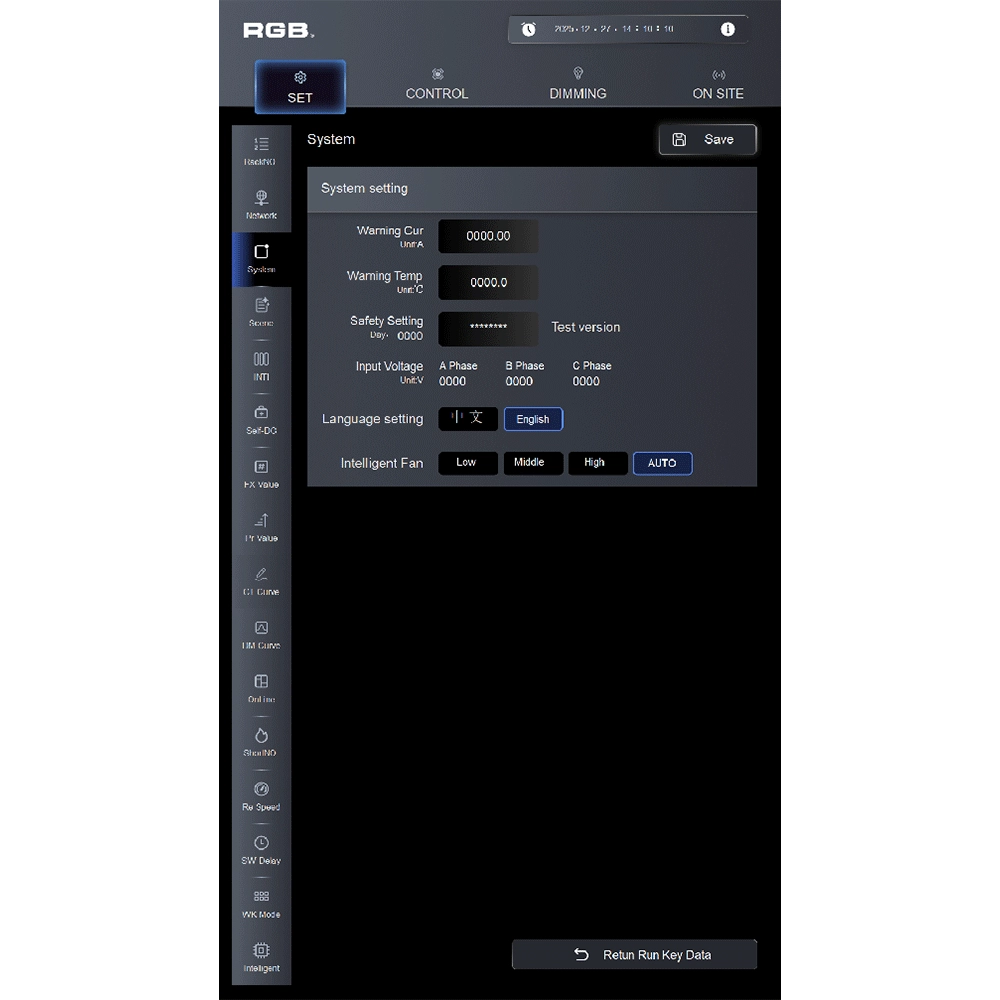
9i Intelligent Network Dimmer Relay Racks — Reliable, Scalable Stage Dimming
Modular Theatre Dimmer Racks: Scalability for Growing Venues
Top custom dimmer racks Manufacturers and Suppliers
Stage Lighting Control Systems: Architecture, Supplier Evaluation & RFQ Guide
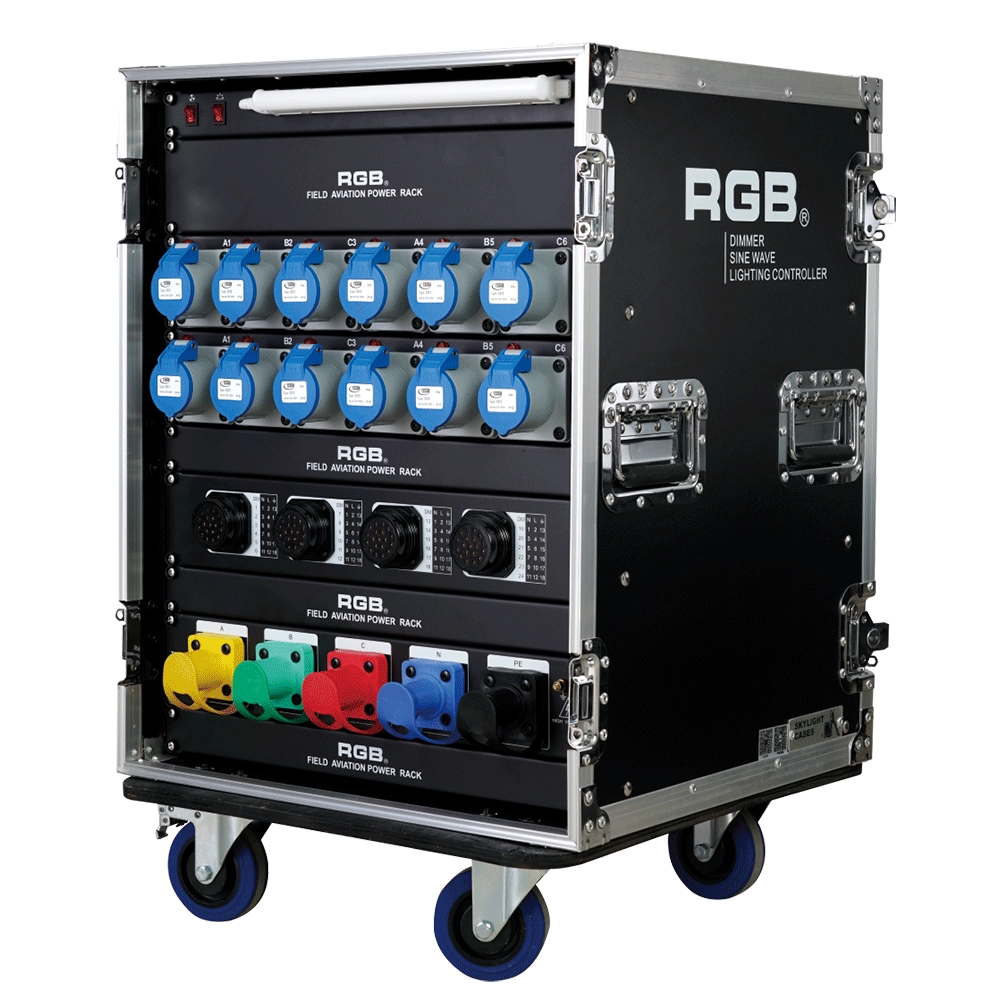
ZT2419+1216 Touring Power Distribution Box
RGB ZT2419+1216 is a mobile stage power distribution box designed for temporary event and performance lighting systems. The published configuration lists a three-phase 225 A main circuit breaker, four 19-core output connectors, twelve 16 A waterproof socket outputs, and a three-phase five-wire power input with a 400 A connector. Confirm the detailed circuit schedule, protective devices, connector standards and electrical ratings for the exact configuration.
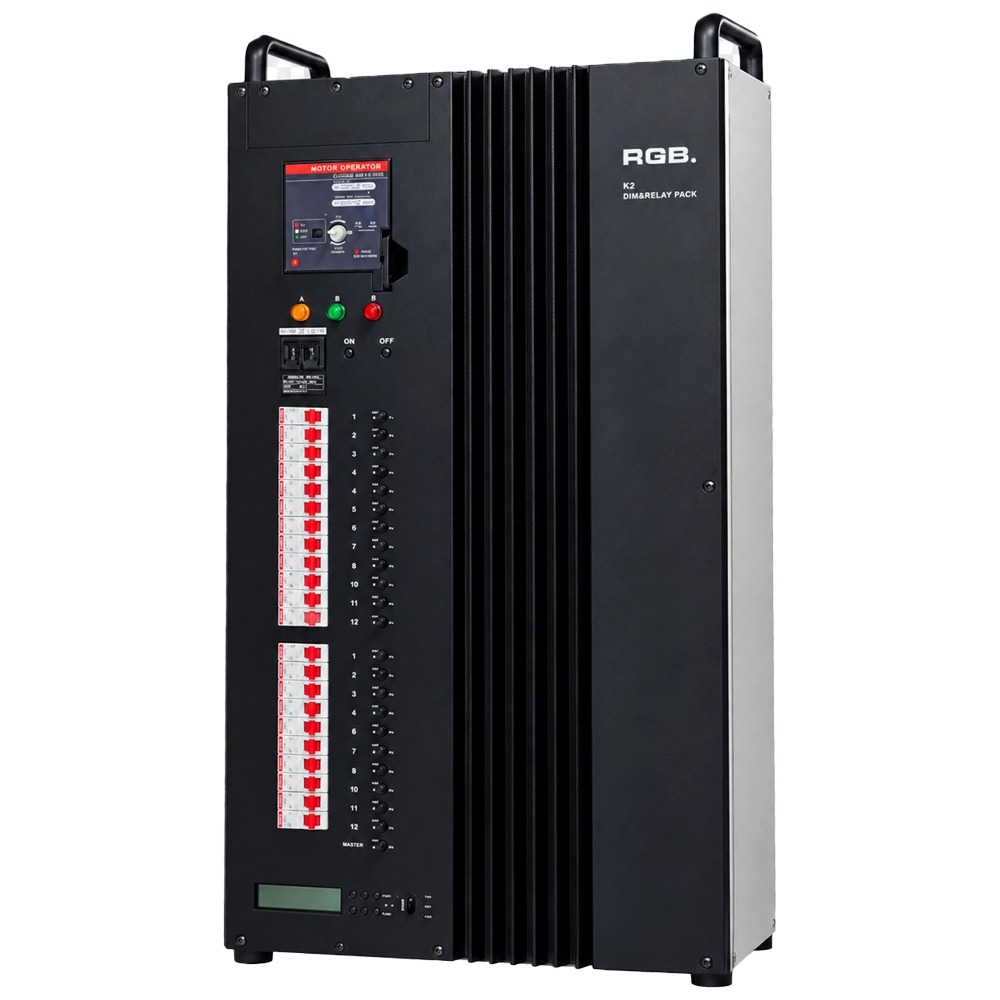
K2 Intelligent Network Relay Racks
RGB K2 is an intelligent network relay rack designed for stage and venue lighting power switching. The K series provides dual DMX512 control with optional Art-Net and sACN networking, 24-, 48- and 60-circuit configurations, and wall-mounted or cabinet installation options. K2 is the standard variant; KW2 is the separately described waterproof variant. Select the circuit count, power input and network options to match the venue's electrical design.
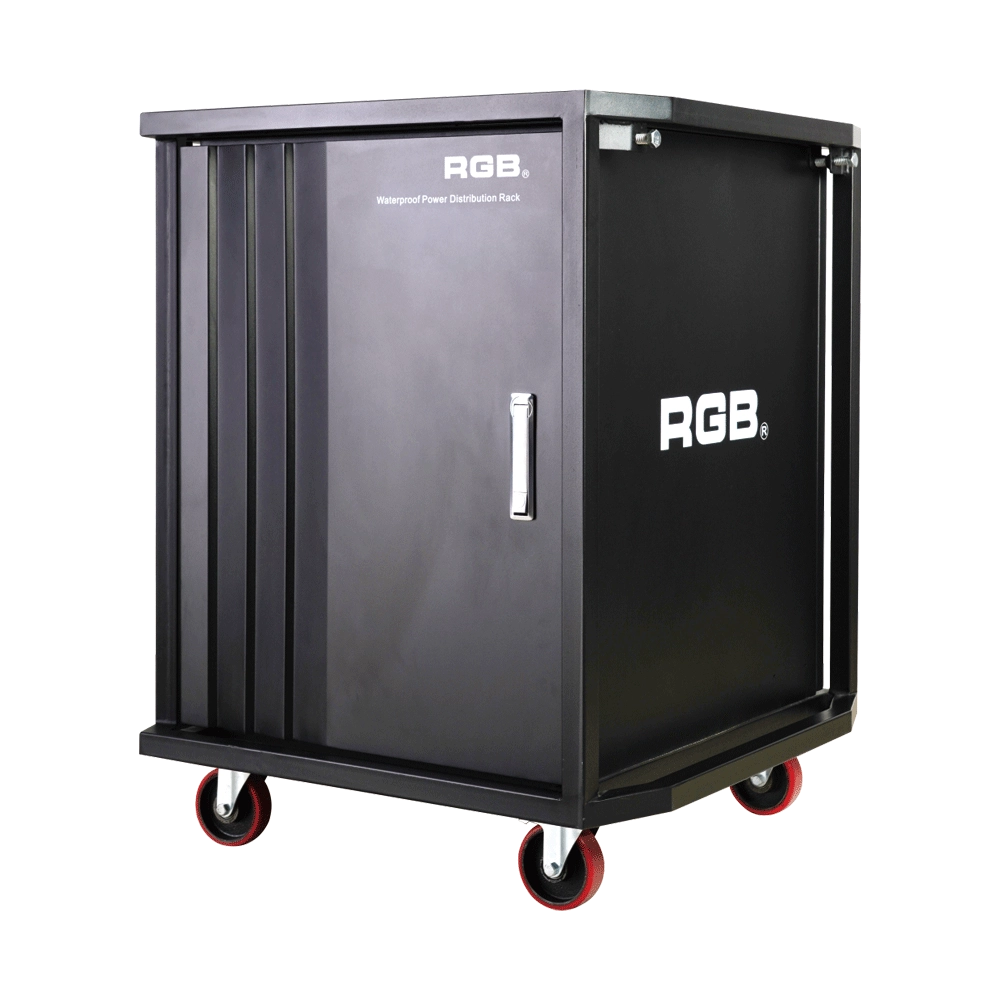
RGB-W W9/W13 Waterproof Stage Equipment Racks
RGB-W Series W9 and W13 are protective stage equipment racks for portable power and control equipment. The published designs include a protective enclosure, wheel-mounted transport frame, internal cable routing and configurable connector arrangements. The existing product description states IP65 protection; confirm which complete rack configuration was tested and under what conditions before specifying the protection rating.
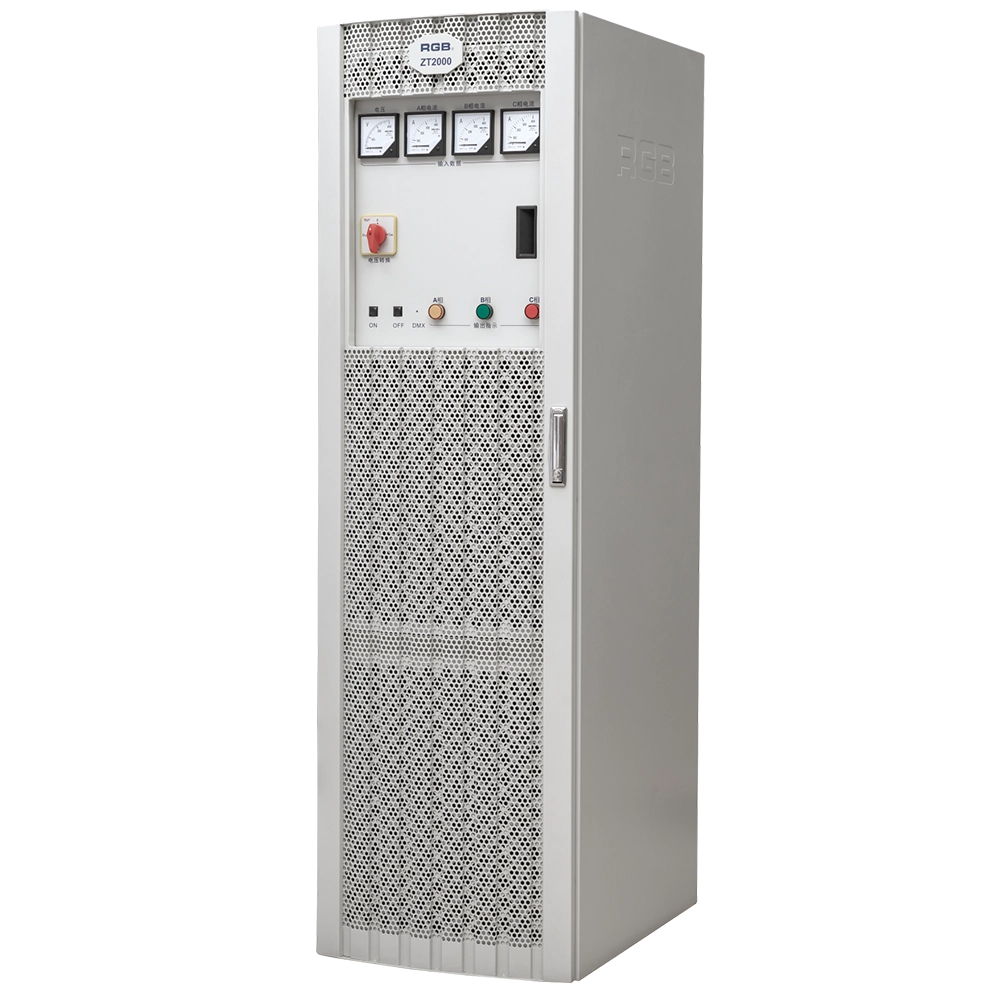
ZT2000 Pass-Through Racks
The ZT2000 straight-through power cabinet is a three-phase 630A/400A air switch main control, with each channel being a 32A air switch sub-control straight-through power cabinet. It can be used in conjunction with various computer lamps, regular lamps, and temporary electrical equipment as a power distribution and supply part for electrical equipment with overcurrent and short-circuit protection. It is a brand-new, reliable, and stable lighting control device in the field of stage lighting control.
It is widely applied in theaters, concert halls, multi-functional halls, cultural and tourism performances, TV stations, gymnasiums, auditoriums, commercial art lighting, and other performance and cultural venues.
Expert Support
Interested in learning more or need expert guidance related to this article? Fill in your details, and our team will provide tailored support.
Intelligent Control. Brilliant Performance.
RGB specializes in stage lighting control systems, delivering intelligent, reliable, and high-performance solutions for theaters and performance spaces worldwide.
Contact
Email:
Tel:
+86 20 3928 0245
+86 20 3928 0247
Address:
No.3, Huashan Road, Shilou Town, Panyu, Guangzhou, China.
Whatsapp: +8615975520131