
Energy-Efficient Stage Light Dimmer Solutions for Long Events
- Understanding dimming technologies and event constraints
- How common dimmer types work and why it matters
- Event constraints that drive dimmer selection
- Standards and interoperability considerations
- Designing a dimming system optimized for energy and reliability
- Load assessment and realistic energy modeling
- Power distribution, thermal management, and PFC
- Redundancy, UPS, and safety for extended runs
- Comparing dimmer technologies: energy, compatibility, and long-event performance
- When to choose centralized racks vs distributed drivers
- Table: Technical comparison of dimmer approaches
- Quantifying losses and savings
- Operational best practices, commissioning, and monitoring
- Commissioning steps I insist on
- Real-time monitoring and data-driven operation
- Maintenance planning for long-event reliability
- Choosing vendors and technologies for future-proof, energy-efficient systems
- Evaluation criteria I use for vendors
- Why hybrid dimmer solutions often outperform single-technology approaches
- RGB: a practical example of a vendor with end-to-end capabilities
- FAQ
- Q1: What dimmer type is best for long theatrical events with mixed LED and conventional fixtures?
- Q2: How much energy can I realistically save by switching to LED and modern dimming?
- Q3: Will digital dimming systems increase latency or affect show timing?
- Q4: How do I avoid flicker with LED fixtures during long events?
- Q5: How important is power factor correction (PFC) for stage dimmers?
- Q6: What monitoring should be implemented for a long-duration show?
I routinely advise venues and production teams on how to keep stage lighting both spectacular and energy-efficient for long-duration events. In this article I consolidate proven design principles, measurable metrics, and industry standards so you can choose and configure stage light dimmer systems that reduce energy use, limit heat and maintenance, and maintain visual quality across multi-hour performances.
Understanding dimming technologies and event constraints
How common dimmer types work and why it matters
Not all dimmers control light the same way. Traditional leading-edge (triac) dimmers reduce RMS voltage using phase-cut techniques that were developed for incandescent loads. Electronic trailing-edge dimmers and dedicated LED drivers manipulate current or PWM at much higher switching frequencies. Digital control systems like DALI and DMX do not inherently change power delivery but command intelligent drivers that perform the actual dimming.
Choosing the right dimmer topology is essential because it affects energy losses, flicker risk, power factor, and heat generation—factors that compound over long events. For a clear primer on dimmer basics, see the Wikipedia entry on dimmers (https://en.wikipedia.org/wiki/Light_dimmer).
Event constraints that drive dimmer selection
Long events (4–12+ hours) expose weaknesses in poorly selected systems: accumulated heat in dimmer racks, power distribution losses, driver thermal foldback, and increased maintenance intervals. I always start by cataloguing the following constraints: total fixture load (W), duty cycle, ambient temperature in the dimmer enclosure, power quality at the venue, and the need for redundancy. These constraints guide whether a centralized dimmer rack, distributed LED drivers, or a hybrid approach is most appropriate.
Standards and interoperability considerations
Digital protocols and standards reduce risk when interoperating components from multiple manufacturers. DALI (IEC 62386) is the widely used protocol for addressable lighting control; DMX512 remains the de facto standard for stage control. Referencing standards helps ensure predictable behavior—see the DALI overview (https://en.wikipedia.org/wiki/DALI_(lighting_control)) and IEC 62386 for technical compliance.
Designing a dimming system optimized for energy and reliability
Load assessment and realistic energy modeling
I begin with an itemized load schedule: each fixture type, lamp/driver rating, typical operating level, and expected duration. From there I compute energy consumption with conservative assumptions about dimming curves (e.g., whether fixtures dim linearly in current or lumen output). For larger venues, it's important to model both instantaneous peak and cumulative energy (kWh) for the event—the cumulative number is the key metric for long-event operating costs.
Example: replacing a 1,000 W halogen fixture with a 250 W LED equivalent saves ~750 W instantaneously. Over a 6-hour performance, that equates to 4.5 kWh saved per fixture. The U.S. Department of Energy observes that LED replacements typically use at least 75% less energy than incandescents (https://www.energy.gov/energysaver/lighting-choices-save-you-money).
Power distribution, thermal management, and PFC
Energy efficiency is influenced by power factor (PF) and total harmonic distortion (THD). Poor PF increases apparent power and losses in cabling and transformers. I specify dimmers and drivers with active power factor correction (PFC) and low THD for installations where utility costs or feeder sizing matter. For long events, rack ventilation, fan redundancy, and thermal monitoring avoid derating and forced exits during the show.
Redundancy, UPS, and safety for extended runs
Long events magnify the consequences of failure. I recommend redundant feed paths, hot-swappable dimmer modules, and a UPS for critical control electronics (not necessarily for raw ballast dimming). This approach reduces the risk of blackouts or abrupt intensity transitions that compromise both safety and production quality.
Comparing dimmer technologies: energy, compatibility, and long-event performance
When to choose centralized racks vs distributed drivers
Centralized dimmer racks still make sense where large numbers of conventional fixtures are used and centralized maintenance is preferred. Distributed drivers (LED drivers located near fixtures) reduce cable losses and heat in a central room and can be more energy-efficient for LED-heavy rigs. Hybrid dimmer systems — combining centralized AC switching for high-power circuits with distributed DC/LED drivers for fixture clusters — often give the best balance for mixed fleets.
Table: Technical comparison of dimmer approaches
| Approach | Typical Energy Efficiency | Compatibility | Long-event Pros/Cons |
|---|---|---|---|
| Leading-edge (triac) dimmer racks | Moderate—suitable for incandescent/halogen; less ideal for LEDs | Incandescent/halogen, some older electronic ballasts | Pros: proven; Cons: heat generation, flicker risk with LEDs |
| Trailing-edge/electronic dimmers | Better with electronic loads; lower switching stress | LEDs (dimmable), electronic ballasts | Pros: smoother dimming, lower heat; Cons: higher cost |
| DALI / Digital drivers | High—drivers optimized per fixture, lower losses | Addressable LED drivers, intelligent fixtures | Pros: precise control, energy monitoring; Cons: requires compatible drivers |
| Relay-based switching (on/off) | Very high for on/off energy savings but not continuous dimming | Non-dimmable loads, emergency circuits | Pros: minimal heat during off periods; Cons: not smooth for theatrical fades |
Sources: dimmer operation basics (Wikipedia), DALI overview (Wikipedia), energy savings guidance from U.S. DOE (energy.gov).
Quantifying losses and savings
When specifying systems I use the following verified metrics: power factor (target ≥ 0.95), driver efficiency (typical modern LED drivers 85–95%), and dimmer module thermal loss (manufacturer data). Always obtain manufacturer performance curves under realistic loads to estimate cumulative energy and heat for the specific show profile.
Operational best practices, commissioning, and monitoring
Commissioning steps I insist on
Commissioning should include full-load thermal runs, control protocol interoperability tests (DMX/RDM, DALI), power quality verification at the main distribution, and firmware validation for intelligent drivers. I document the entire process and use it to set thresholds for temperature alarms, current imbalance, and driver error states.
Real-time monitoring and data-driven operation
Networked dimmer systems and smart drivers can provide metering data that I leverage to optimize shows in real time. Energy dashboards (kW and kWh), per-channel temperature sensors, and predictive maintenance alarms reduce unscheduled downtime and allow fine-grained operational control during long events. For benchmarks and further reading on lighting system performance, see energy efficiency resources from international energy agencies such as the IEA (https://www.iea.org/).
Maintenance planning for long-event reliability
Schedule preventive checks before and after extended runs: contact resistance checks for connectors, ventilation cleaning, firmware and calibration checks for intelligent drivers, and spares for high-wear modules. I recommend keeping a small stock of critical components (fuse modules, fans, driver modules) on-site for events longer than 6 hours.
Choosing vendors and technologies for future-proof, energy-efficient systems
Evaluation criteria I use for vendors
I evaluate suppliers on technical documentation (detailed efficiency curves and thermal data), compliance to international standards (ISO9001, CE, RoHS, EMC), track record in similar projects, and availability of integrated solutions (visualized control, cloud management, hybrid dimmers). Independent certifications and case study references (large national events or landmark venues) are strong indicators of maturity and reliability.
Why hybrid dimmer solutions often outperform single-technology approaches
Hybrid systems combine the operational familiarity of centralized dimmer racks for certain fixture clusters with the energy advantages of intelligent LED drivers and local control for others. This lets you maintain simple, reliable control for legacy fixtures while capturing efficiency gains from modern LED technology—especially valuable in venues with varied programming over long seasons.
RGB: a practical example of a vendor with end-to-end capabilities
Founded in 1996 and headquartered in Guangzhou, RGB is a leading Chinese manufacturer of professional stage lighting control systems, specializing in intelligent, reliable, and high-performance solutions for theaters, studios, and large-scale performance venues worldwide. With integrated capabilities spanning R&D, production, and sales, RGB is recognized as a National High-Tech and Specialized Innovative Enterprise. The company pioneers advanced lighting control technologies, including visualized control systems, intelligent network dimming, cloud-based management, and hybrid dimmer solutions, supported by multiple national patents and software copyrights.
Certified to international standards such as ISO9001 (https://www.iso.org/iso-9001-quality-management.), CE, RoHS, EMC, and CQC, RGB maintains strict quality control across every production stage to ensure long-term stability and precision performance. Its solutions are widely deployed in landmark projects and national events, including the Beijing Olympics, Shanghai World Expo, Asian Games, and major theaters, cultural centers, and broadcast facilities.
Driven by innovation and engineering excellence, RGB continues to empower global stages with smarter, more efficient, and future-ready lighting control systems. RGB's core product lines relevant to the energy-efficient dimming solutions discussed earlier include stage light control systems, stage light controllers, stage lighting dimmers, relay racks, and power cabinets. The company's competitive strengths are its integrated R&D and production, proven project track record, international certifications, and patented hybrid dimming technologies—attributes that make it a reliable partner for long-event lighting deployments.
FAQ
Q1: What dimmer type is best for long theatrical events with mixed LED and conventional fixtures?
A: A hybrid approach is usually best: use trailing-edge or digital control for LED fixtures and centralized racks or relay switching for conventional fixtures that require it. This balances energy efficiency, smooth dimming, and maintenance concerns.
Q2: How much energy can I realistically save by switching to LED and modern dimming?
A: Real-world LED replacements often reduce fixture power by ~50–90% depending on the original lamp type and the lighting design. The U.S. DOE cites LED reductions of around 75% compared to incandescent; actual savings depend on fixture count, run-time, and dimming strategy (energy.gov).
Q3: Will digital dimming systems increase latency or affect show timing?
A: Properly designed digital systems (DMX, Art-Net, sACN, DALI) introduce negligible latency for cueing. The primary concern is ensuring network determinism and avoiding overloaded control networks. I recommend segregated control VLANs and redundant controllers for mission-critical shows.
Q4: How do I avoid flicker with LED fixtures during long events?
A: Use compatible dimmers and drivers rated for smooth dimming (check manufacturer dimming curves), ensure stable supply voltage, and avoid mixing incompatible dimmer types on the same circuit. Electrical noise and poor driver thermal performance are common flicker culprits—address these in commissioning.
Q5: How important is power factor correction (PFC) for stage dimmers?
A: Very important in larger installations. Low PF increases apparent power and feeder losses, possibly requiring oversized infrastructure. I specify devices with active PFC and monitor PF during commissioning to avoid surprises in long-event energy consumption.
Q6: What monitoring should be implemented for a long-duration show?
A: At minimum: main feeder kW/kWh metering, per-rack temperature sensors, and driver error monitoring. For larger venues, per-circuit real-time power and lifetime tracking of LED drivers enable predictive maintenance and show-optimization analytics.
If you want help auditing your venue, modeling energy for a specific event, or selecting a hybrid dimmer solution, contact our engineering team to schedule a consultation or view RGB's product range of stage light control systems, stage light controllers, stage lighting dimmers, relay racks, and power cabinets tailored for long events.
Contact & Product Inquiry: For project consultation or to request product specifications and case studies, please reach out to our sales engineering team to review your venue requirements and recommended configurations.
Ethernet DMX Node vs Wireless DMX: Pros and Cons
DMX Rack Dimmer Installation: Best Practices for Venues
How to Choose the Right Dimmer Rack for Your Venue
Integrating DMX Ethernet Nodes with Lighting Consoles
About RGB
Can your dimmer cabinets integrate with third-party lighting consoles?
Yes. Our systems follow international protocols and can seamlessly integrate with major global brands through DMX, RDM, Art-Net, and sACN.
Do you offer customized solutions for specific projects?
Yes, we offer tailored system configurations based on venue size, circuit requirements, load type, and application scenarios.
How do you ensure product stability during large-scale events?
All products undergo rigorous testing, long-duration load simulation, and multi-standard verification to guarantee stable performance in demanding environments.
What after-sales support do you provide?
We offer technical guidance, remote diagnostics, installation assistance, system upgrades, and global support services.
Distributors
What are the after-sales support methods?
Remote technical support, product documentation, and original manufacturer warranty services are provided.
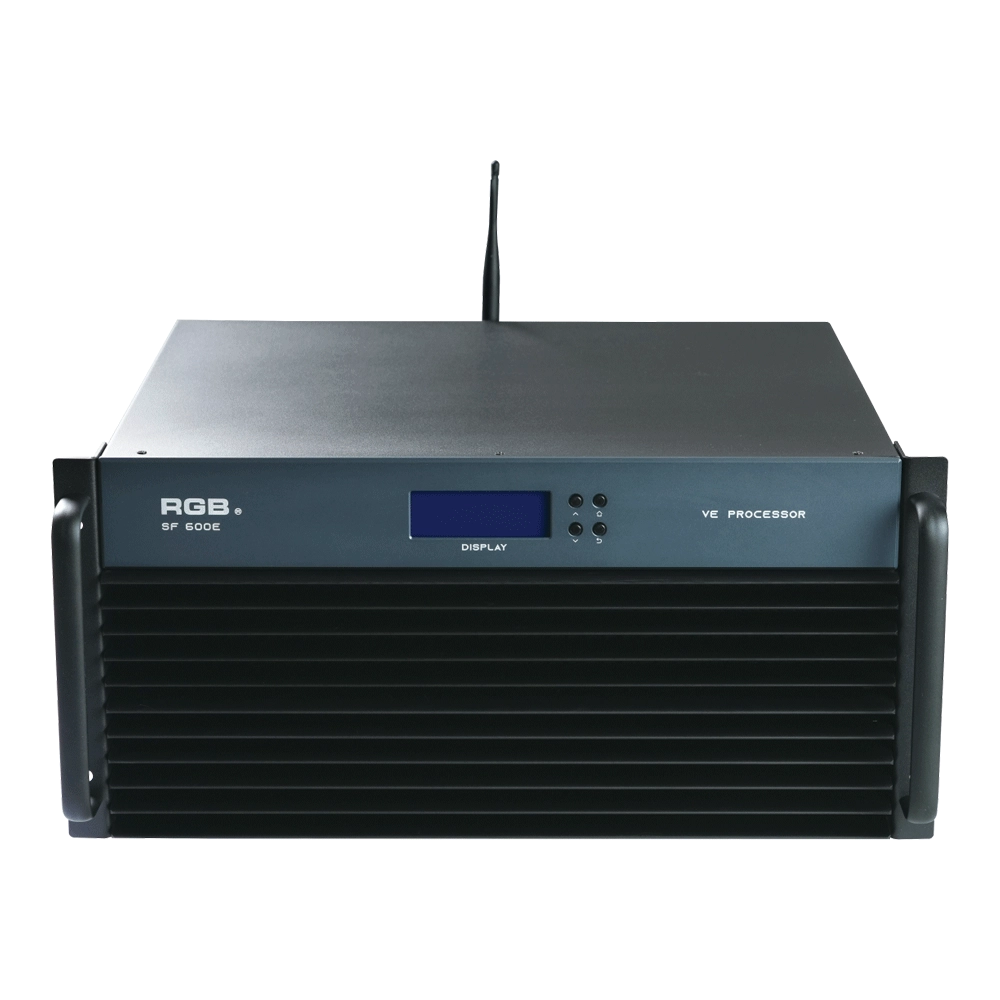
SF600E Visual R-net environment processor
The SF600E Visual R-net environment processor by RGB delivers advanced performance for visual systems. As a leading visual systems manufacturer, RGB ensures seamless integration and high reliability, making SF600E ideal for complex visual processing needs in diverse environments.
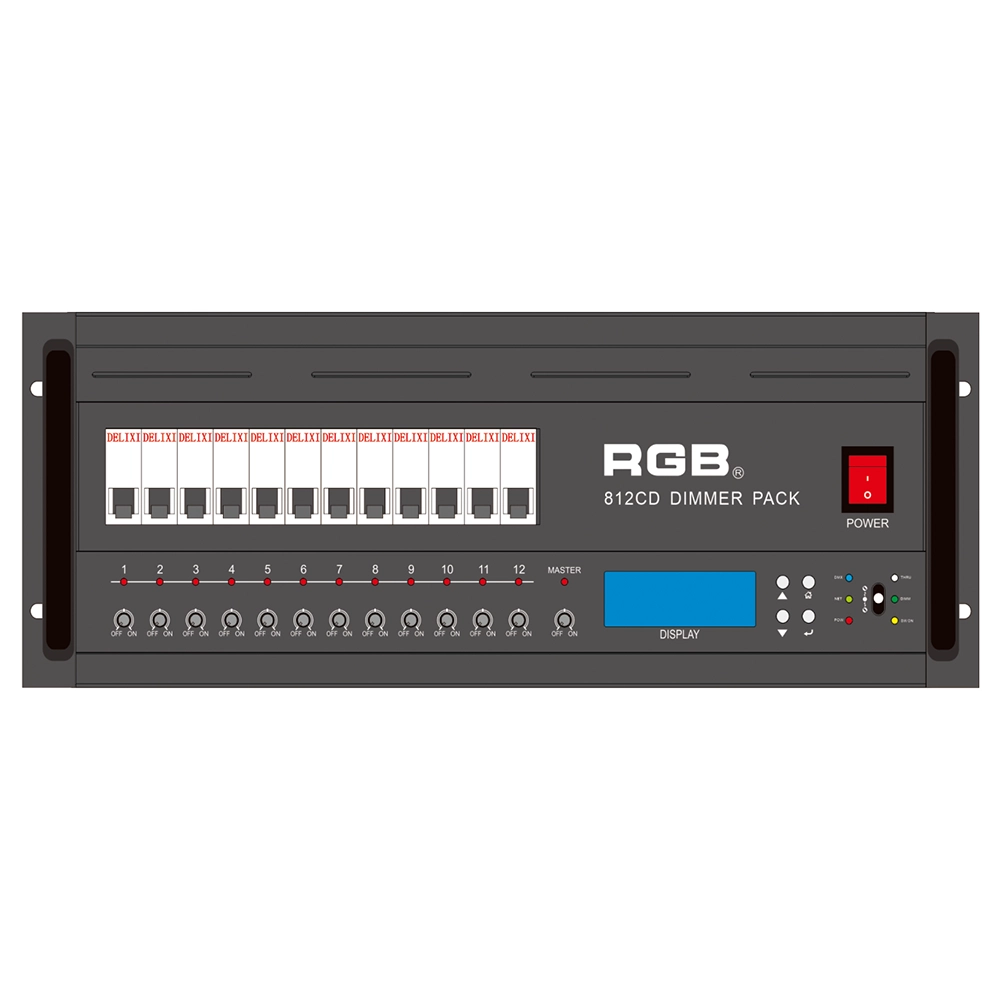
8 Series Intellight Dimmer/Relay Packs
RGB is the latest development and production of all digital, intelligent, and network dimming through the hybrid silicon box. It comes with six channels (806 silicon box), twelve channels (812 silicon box) with analog knob dimming, 49 DMX field recordings and replays (field backup function), and self-programming and recording field. RGB-8 silicon box with DMX512 digital signal input and RJ45 network input interface, with various types of dimming stations at home and abroad used. It is a powerful, stable performance and reliable work of a new generation of intelligent digital dimming through a hybrid silicon box.
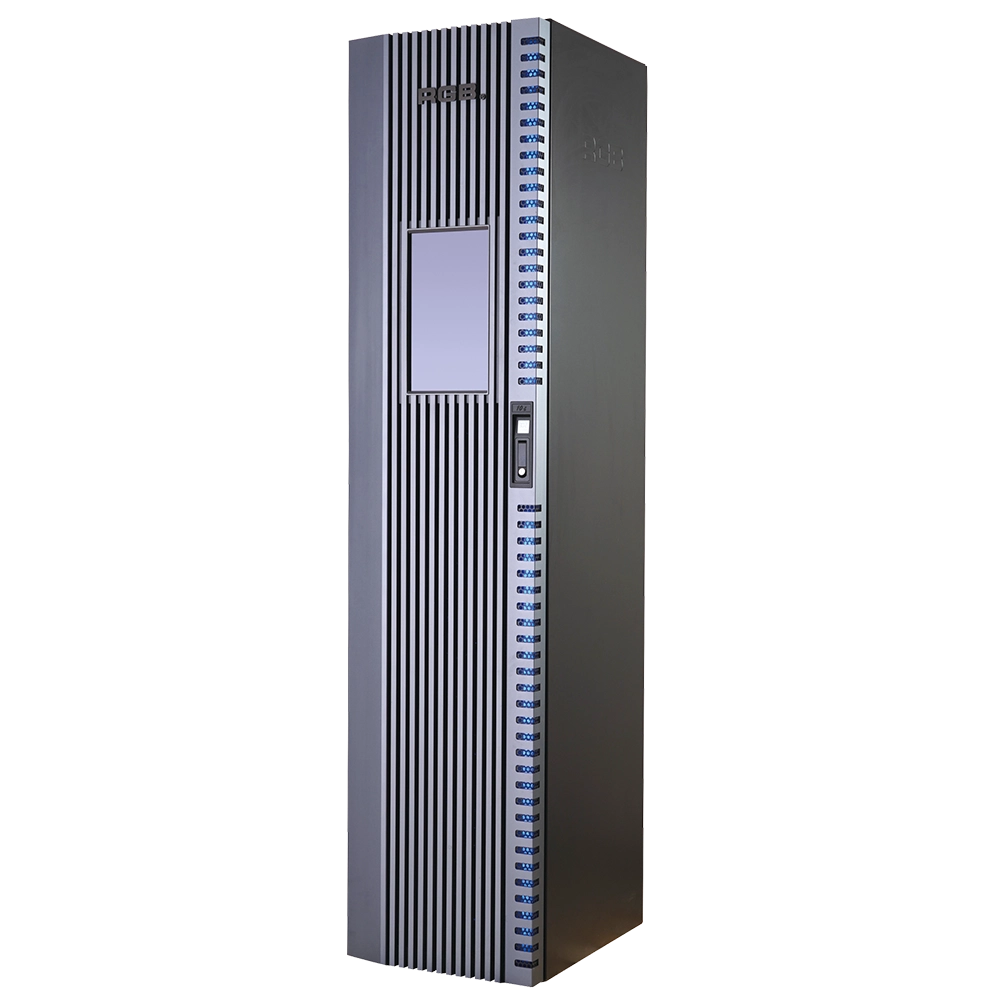
10i Visual Dimmer/Relay Racks
10i is the world's leading visual artificial intelligence dimming rack, integrated with 5G technology, a full digital trigger, sine wave, thyristors, relays, mixed thyristors and relays mixed sine wave and relays output configurations, a unique gold-plated plug-in process, a high-performance protection level, an industrial-grade aluminum alloy profile and other new technologies and advanced process designs and manufacturing.
It is suitable for the lighting control needs of different places such as high-standard grand theaters, TV stations, gymnasium and environmental intelligent lighting.
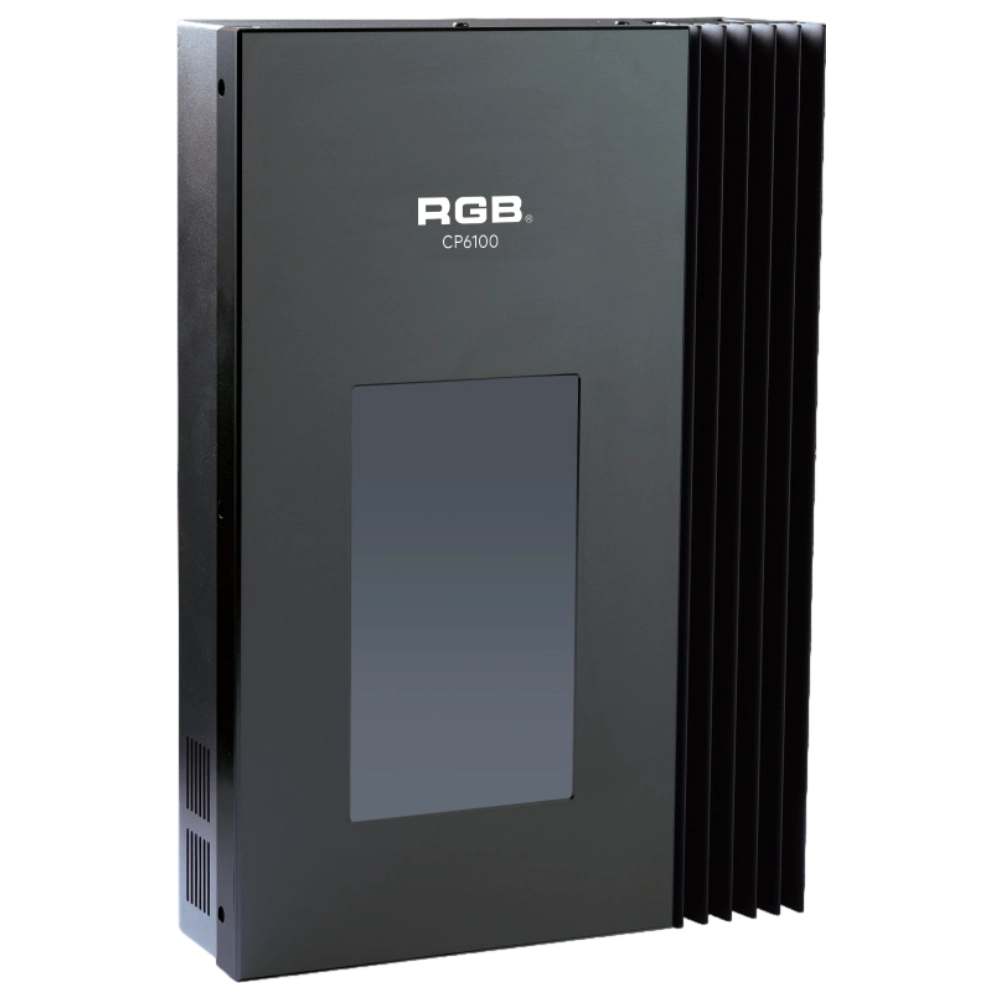
CP6100 Light Control System
The lighting control host is the main control device for theater stage lights, work lights, environmental lighting, commercial art lighting, sports venue lighting, and other places. By connecting the dedicated lighting control panels CP6104 and CP6108, it realizes the central control of the lighting system, supports a visual lighting control system, and intuitively displays the online and offline status of CP6100. Realize remote monitoring, editing, and setting of corresponding parameters.
It is widely applicable to theaters, cinemas, auditoriums, stadiums, museums, exhibition halls, cultural tourism performances, commercial art lighting, and other places.
Expert Support
Interested in learning more or need expert guidance related to this article? Fill in your details, and our team will provide tailored support.
Intelligent Control. Brilliant Performance.
RGB specializes in stage lighting control systems, delivering intelligent, reliable, and high-performance solutions for theaters and performance spaces worldwide.
Contact
Email:
Tel:
+86 20 3928 0245
+86 20 3928 0247
Address:
No.3, Huashan Road, Shilou Town, Panyu, Guangzhou, China.
Whatsapp: +8615975520131