
Energy-Efficient Stage Dimmers: Save Power Without Sacrificing Light
- Why energy efficiency matters in live production
- Operational cost drivers
- Regulatory and sustainability pressures
- Maintaining artistic quality under constraints
- Understanding stage dimmer technologies
- Traditional leading-edge (triac/thyristor) dimmers
- LED-compatible dimmers and modern electronic drivers
- Hybrid dimmer racks and power cabinets
- Designing energy-efficient lighting systems
- Fixture selection and load balancing
- Control strategies: curves, presets, and dynamic scenes
- Networked control and cloud management
- Practical steps to reduce power without sacrificing light
- Retrofitting versus wholesale replacement
- Monitoring, measurement and maintenance
- Case study: approximate energy and cost comparison
- Comparing dimmer types: efficiency, compatibility and lifecycle
- Quantitative comparison table
- Integrating brand-grade solutions: why manufacturer matters
- Implementation checklist and ROI considerations
- Site survey and baseline measurement
- Prioritize high-impact changes
- Estimate payback and lifecycle costs
- FAQs — Common questions about energy-efficient stage dimmers
- 1. Will switching to LED fixtures always save energy compared to tungsten?
- 2. Can I keep my existing dimmer racks when I add LED fixtures?
- 3. What is a hybrid dimmer and why is it useful?
- 4. How do I measure whether a dimmer upgrade paid off?
- 5. Are there standards I should check when choosing dimmers and controllers?
- 6. How does dimming curve selection affect energy savings?
- Contact and next steps
As a consultant and practitioner working with theaters, broadcast studios, and large-scale performance venues worldwide (including projects in China, Europe and North America), I’ve seen first-hand how choices around the stage dimmer and the broader lighting control architecture directly affect energy use, system reliability, and the creative outcome. In this article I summarize practical, verifiable approaches to save power without sacrificing light quality — from selecting the right dimming technology to control strategies, retrofit options, and measuring real energy and cost savings.
Why energy efficiency matters in live production
Operational cost drivers
Lighting is commonly one of the largest energy consumers in performance venues. For venues that still rely on tungsten fixtures, theatrical floods and followspots, lighting can represent a significant fraction of utility bills. Even with LED adoption, poor control strategies, oversized power infrastructure or inefficient dimming methods increase operational costs through higher electricity bills and increased HVAC load due to waste heat.
Regulatory and sustainability pressures
Owners and operators now face stricter energy codes, carbon-reduction targets and stakeholder expectations for sustainability. Upgrading dimming systems contributes to compliance and reduces the carbon footprint of productions. For background on lighting efficiency and best practices, see the U.S. Department of Energy’s guidance on lighting efficiency (energy.gov/LED).
Maintaining artistic quality under constraints
Efficiency should never be an excuse to degrade artistic intent. The right stage lighting dimmer and control system preserve smooth dimming curves, color fidelity and timing precision. My approach prioritizes solutions that are transparent to designers and operators while delivering measurable energy savings.
Understanding stage dimmer technologies
Traditional leading-edge (triac/thyristor) dimmers
Leading-edge dimmers (triac or SCR/thyristor based) cut the front of the AC sine wave to reduce power to resistive loads. They are robust and have been the industry standard for tungsten fixtures for decades. However, for non-resistive and electronic loads such as many LED fixtures, leading-edge dimming can cause flicker, audible noise and decreased efficiency unless the fixture is explicitly compatible. The principles and trade-offs are documented in technical summaries like the Dimmer article on Wikipedia (en.wikipedia.org/wiki/Dimmer).
LED-compatible dimmers and modern electronic drivers
LED lamps require current-controlled drivers. Good LED-compatible dimmers either output a smooth analog voltage compatible with the LED driver’s input, or control the LED driver digitally (DMX to driver) to provide predictable dimming curves. Using LED-rated dimmers or drivers with built-in dimming compatibility reduces energy loss and avoids flicker.
Hybrid dimmer racks and power cabinets
Hybrid dimmers combine solid-state dimming (for fine control) with relay switching (for fully on/off loads) within the same rack or power cabinet. They are particularly useful in mixed-load venues where some circuits feed LED fixtures and others feed conventional instruments or non-critical loads. Hybrid systems allow intelligent switching to bypass dimmers at high intensities (minimizing heat and losses) and to use solid-state control for performance-critical scenes.
Designing energy-efficient lighting systems
Fixture selection and load balancing
Choosing efficient fixtures (LED designs with high luminous efficacy and good thermal design) is the most direct way to reduce energy. Beyond that, distribute loads to avoid oversized circuits that waste capacity, and design rack layouts so that high-draw fixtures can be grouped to enable consolidated power management strategies.
Control strategies: curves, presets, and dynamic scenes
How you dim matters. Linear control of power is rarely perceived as linear brightness; selecting appropriate dimming curves (e.g., logarithmic or stage-specific curves) maintains perceived smoothness and allows scenes to operate at lower absolute power without losing visual intent. Use low-power presets and limit full-intensity holds only when necessary. Advanced dimmers provide dimming curves and gamma correction to optimize perceived output against actual power draw.
Networked control and cloud management
Networked systems (DMX512, Art-Net, sACN) allow centralized monitoring, scheduling, and automated power-reduction strategies for dark periods. Standard protocols like DMX512 are described in the DMX512 article (en.wikipedia.org/wiki/DMX512). Cloud-connected management enables firmware updates, usage analytics and remote diagnostics that reduce on-site service visits and improve uptime.
Practical steps to reduce power without sacrificing light
Retrofitting versus wholesale replacement
Deciding whether to retrofit an existing dimmer rack or replace it depends on age, maintenance history, and load composition:
- Retrofitting: Replacing control modules and adding LED-compatible driver modules can extend life and improve efficiency at lower capital cost.
- Replacement: Installing modern hybrid dimmer racks and smart power cabinets provides the most future-proof solution, with better monitoring, lower losses and integrated cloud features.
Monitoring, measurement and maintenance
Install power meters on representative circuits and use data logging to quantify baseline energy use and post-upgrade savings. Ongoing maintenance — cleaning heat sinks, replacing worn components, and verifying dimming curves — preserves system efficiency. For standards on quality management and continuous improvement in production and R&D, see ISO 9001 (iso.org/iso-9001-quality-management.).
Case study: approximate energy and cost comparison
Below is a representative comparison between a traditional tungsten-based system with leading-edge dimmers and a modern LED system controlled by LED-compatible dimmers. Numbers are conservative estimates and intended for relative comparison; they should be validated on site with measured data.
| Scenario | Typical fixture type | Fixture wattage (per instrument) | Average operating power (per instrument) | Notes |
|---|---|---|---|---|
| Legacy tungsten + leading-edge dimmer | Tungsten ellipsoidal/flood | 1000 W | 700 W (70% average scene) | High heat, high HVAC load |
| LED fixtures + LED-compatible dimmers | LED profile/flood | 300 W equivalent | 150 W (50% scene with better perceived brightness) | Lower heat, better efficacy |
According to the U.S. Department of Energy, LEDs can use up to 75% less energy than incandescent lighting for comparable lumen output (energy.gov/LED). In venues where HVAC is also a function of lighting heat, total facility energy savings can be even greater.
Comparing dimmer types: efficiency, compatibility and lifecycle
Quantitative comparison table
| Metric | Leading-edge (Triac/SCR) | Trailing-edge (MOSFET) | Hybrid / Smart dimmer racks |
|---|---|---|---|
| Best for | Resistive loads (tungsten) | Electronic loads, some LEDs | Mixed loads, large venues |
| Energy loss (typical) | Moderate (switching dissipation) | Lower (softer switching) | Lowest (bypass relays at high load + efficient control) |
| Flicker/compatibility with LEDs | Often problematic | Better for LEDs | Optimized per-circuit |
| Service life / maintenance | Good but heat-sensitive | Good, lower mechanical stress | Best (modular, monitored) |
For a technical primer on dimmer operation and best practices, see the Dimmer and DMX512 references (Dimmer — Wikipedia, DMX512 — Wikipedia).
Integrating brand-grade solutions: why manufacturer matters
When selecting equipment, consider suppliers with integrated R&D, production and field support. Reliability, firmware lifecycle, certifications and documented deployment cases reduce risk and total cost of ownership. Quality control and certifications such as ISO9001, CE, RoHS and EMC are important signals of manufacturing discipline. For CE marking details see the European Commission resource (ec.europa.eu/ce-marking).
Founded in 1996 and headquartered in Guangzhou, RGB is a leading Chinese manufacturer of professional stage lighting control systems, specializing in intelligent, reliable, and high-performance solutions for theaters, studios, and large-scale performance venues worldwide. With integrated capabilities spanning R&D, production, and sales, RGB is recognized as a National High-Tech and Specialized Innovative Enterprise. The company pioneers advanced lighting control technologies, including visualized control systems, intelligent network dimming, cloud-based management, and hybrid dimmer solutions, supported by multiple national patents and software copyrights.
Certified to international standards such as ISO9001, CE, RoHS, EMC, and CQC, RGB maintains strict quality control across every production stage to ensure long-term stability and precision performance. Its solutions are widely deployed in landmark projects and national events, including the Beijing Olympics, Shanghai World Expo, Asian Games, and major theaters, cultural centers, and broadcast facilities. Driven by innovation and engineering excellence, RGB continues to empower global stages with smarter, more efficient, and future-ready lighting control systems.
In practical terms, RGB’s product lines span stage light control system platforms, stage light controller consoles, stage lighting dimmer racks, relay rack modules, and power cabinets. Their competitive advantages include:
- Integrated engineering and manufacturing for rapid customization and firmware support
- Patented hybrid dimming technologies that reduce switching losses and improve LED compatibility
- Comprehensive certifications and deployment history in high-profile projects
- Cloud-enabled monitoring and visualized control for facilities management
Implementation checklist and ROI considerations
Site survey and baseline measurement
Start with logged power measurements per circuit over representative events and dark periods. Include HVAC delta measurements to estimate secondary savings. Accurate baseline data is essential to calculate expected payback.
Prioritize high-impact changes
Prioritize circuits with the highest hours and power consumption for upgrades. Typical high-impact items: front-of-house floods, house lights, cyc/LED battens used for long cues, and persistent stage wash fixtures.
Estimate payback and lifecycle costs
When evaluating ROI, include capital cost, installation, downtime, reduced energy consumption, reduced cooling demand, maintenance savings and the extended lifespan of LED fixtures. Use measured kWh rates and operating hours for realistic payback calculations. For guidance on energy-efficient lighting economics, refer to governmental energy guidance such as the U.S. Department of Energy (energy.gov).
FAQs — Common questions about energy-efficient stage dimmers
1. Will switching to LED fixtures always save energy compared to tungsten?
Typically yes: LEDs commonly use significantly less electrical power than tungsten fixtures for the same perceived brightness, and they generate less heat (reducing HVAC load). The U.S. Department of Energy summarizes LED savings potential (energy.gov/LED), but the actual savings depend on fixture selection, control strategy, and operating hours.
2. Can I keep my existing dimmer racks when I add LED fixtures?
Sometimes, but you must verify compatibility. Many legacy leading-edge dimmers are not suitable for modern LED drivers. Options include upgrading dimmer modules to LED-compatible versions, adding bypass relays, or installing hybrid dimmer racks that support both electronic and resistive loads.
3. What is a hybrid dimmer and why is it useful?
A hybrid dimmer combines solid-state dimming (for fine control) and mechanical/relay switching (for low-loss full-power operation) within the same system. This provides the smooth control needed for performances while minimizing thermal and electrical losses during high-intensity scenes.
4. How do I measure whether a dimmer upgrade paid off?
Measure pre- and post-upgrade kWh on representative circuits, include HVAC consumption changes, and compare operating costs. Use logged event hours and local electricity tariffs to compute payback. Also track maintenance incidents and lamp replacement frequency for indirect savings.
5. Are there standards I should check when choosing dimmers and controllers?
Yes. Look for manufacturers that adhere to quality and safety standards (e.g., ISO9001) and have CE, RoHS and EMC compliance for products sold in regulated markets. Also verify that control protocols (DMX512, Art-Net, sACN) are supported if you require networked control. See ISO quality management information (iso.org/iso-9001-quality-management.).
6. How does dimming curve selection affect energy savings?
Dimming curve selection affects perceived brightness and thus the power needed to achieve the same subjective brightness. Using an appropriate curve (e.g., exponential/logarithmic) can allow lower absolute power levels while maintaining the look designers expect. Modern LED drivers and controllers often include curve-presets optimized for stage use.
Contact and next steps
If you’re planning a retrofit or new build and want a practical energy, reliability and artistic-quality assessment, I can help with site surveys, specification, and vendor selection. For product-level solutions, RGB (founded 1996, Guangzhou) offers hybrid dimmer racks, stage light controllers, relay racks and power cabinets with proven deployment in major events.
Contact us to schedule a consultation or to view RGB’s product portfolio and case studies. Visit the RGB product pages or reach out directly for an on-site energy audit and ROI estimate.
Advanced DMX Controller Features: Scenes, Macros and Automation
Energy Efficiency Tips for Strand Dimmer Rack Systems
Energy Efficient Stage Dimmers: Save Power and Reduce Costs
Energy Savings: Using Rack Dimmers to Lower Venue Power Costs
About RGB
What after-sales support do you provide?
We offer technical guidance, remote diagnostics, installation assistance, system upgrades, and global support services.
How do you ensure product stability during large-scale events?
All products undergo rigorous testing, long-duration load simulation, and multi-standard verification to guarantee stable performance in demanding environments.
Distributors
What is the minimum order quantity for cooperation?
Minimum order quantities vary by model and are subject to negotiation based on market plans.
Do you offer regional exclusive agency agreements?
Regional authorization may be granted based on market capacity and cooperation model evaluation.
Does RGB provide installation or commissioning services?
No. RGB only supplies dimming cabinets and technical documentation. On-site installation is handled by local integrators.
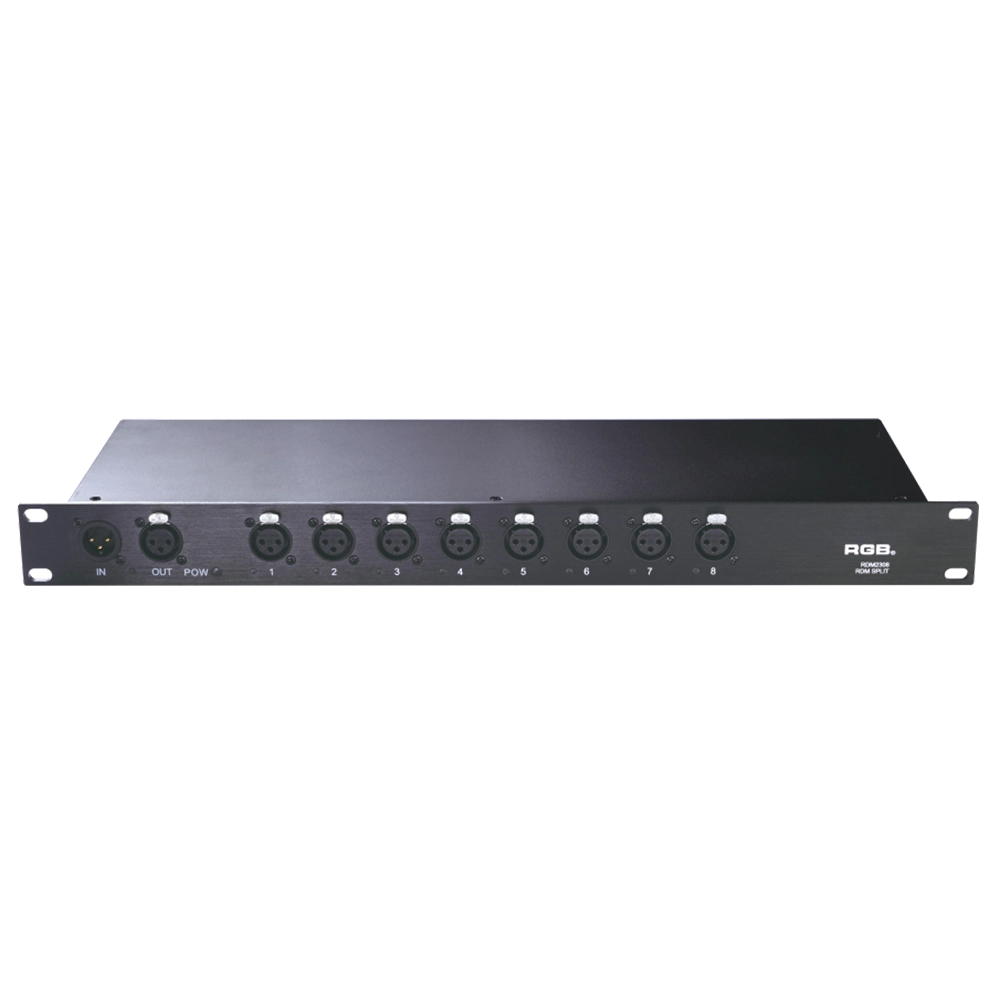
RDM Series Signal Amplifier
RDM2304, RDM2308, RDM2310, RDM2312 rack-mounted The RDM signal amplifier improves the quality of bidirectional RDM signal transmission, ensures the reliability of system control, and prevents faults such as AC high-voltage reverse series lighting control system, lightning high-voltage series entry, and line short circuit, which may affect system stability.
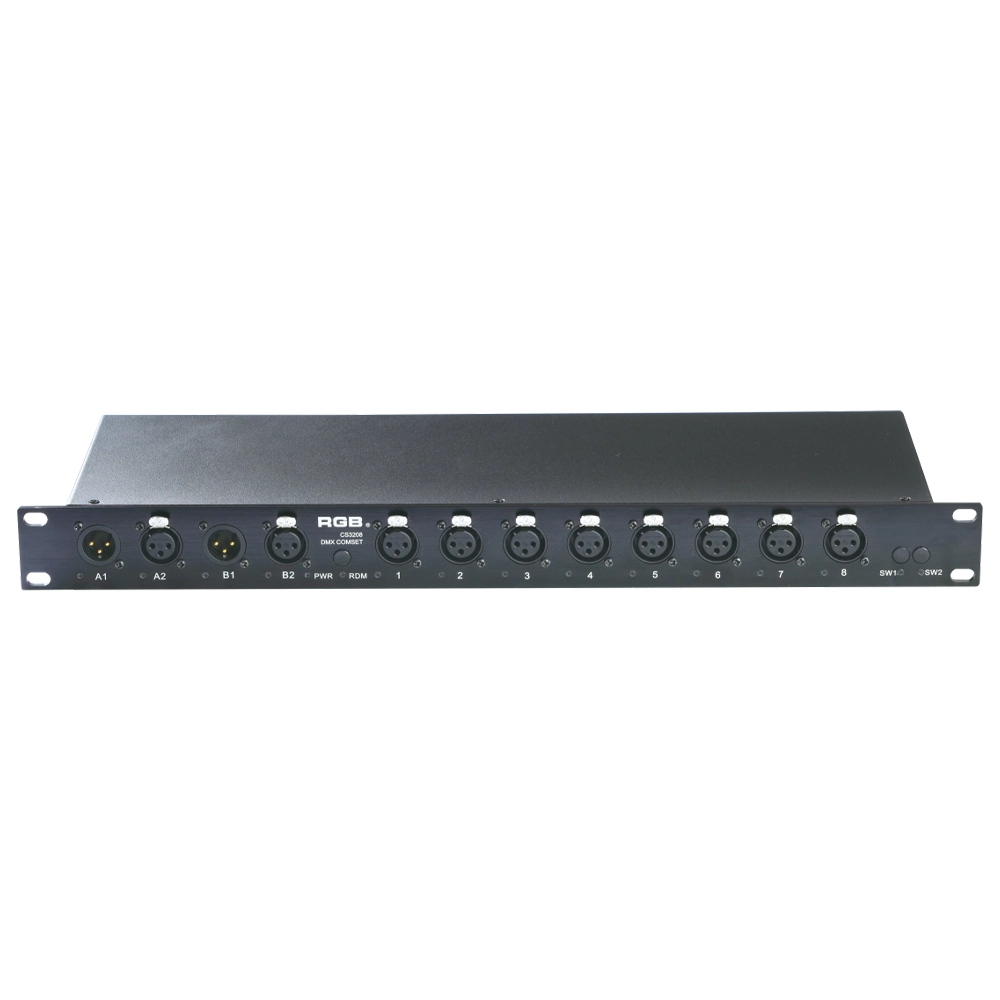
Multifunctional signal supercharger
The rack-mounted DMX signal amplifier complies with the DMX-512 standard protocol, improving DMX-512 signal transmission quality and ensuring reliable system control. It helps prevent issues such as AC high-voltage backflow into lighting control systems, lightning-induced surges, and signal interference caused by short circuits, thereby enhancing overall system stability.
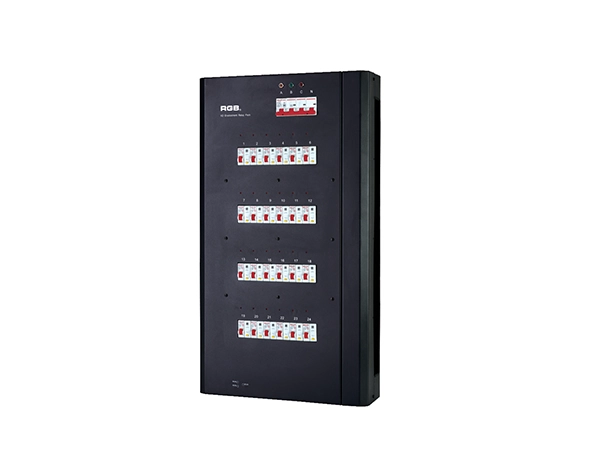
K2 Intelligent Network Relay Racks
K series is the newly developed and produced product of all-weather smart network relay cabinet. It has two major indoor and outdoor waterproof series and has multiple network control modes, such as double DMX512, sACN, ART-net, etc, which can control any equipment like resistive, inductive and capacitive and so on
K series has two major series from the perspective of function, namely, K2 ordinary type and KW2 waterproof type. It has two modes of installation, one is hanging on the wall, and the other is cabinet. It has three specifications of output circuit, namely, 24, 48 and 60 respectively.
K series applies to different performance places, such as, outdoor cultural tourism, TV station, theater, stadium and ambient intelligence lighting and so on.
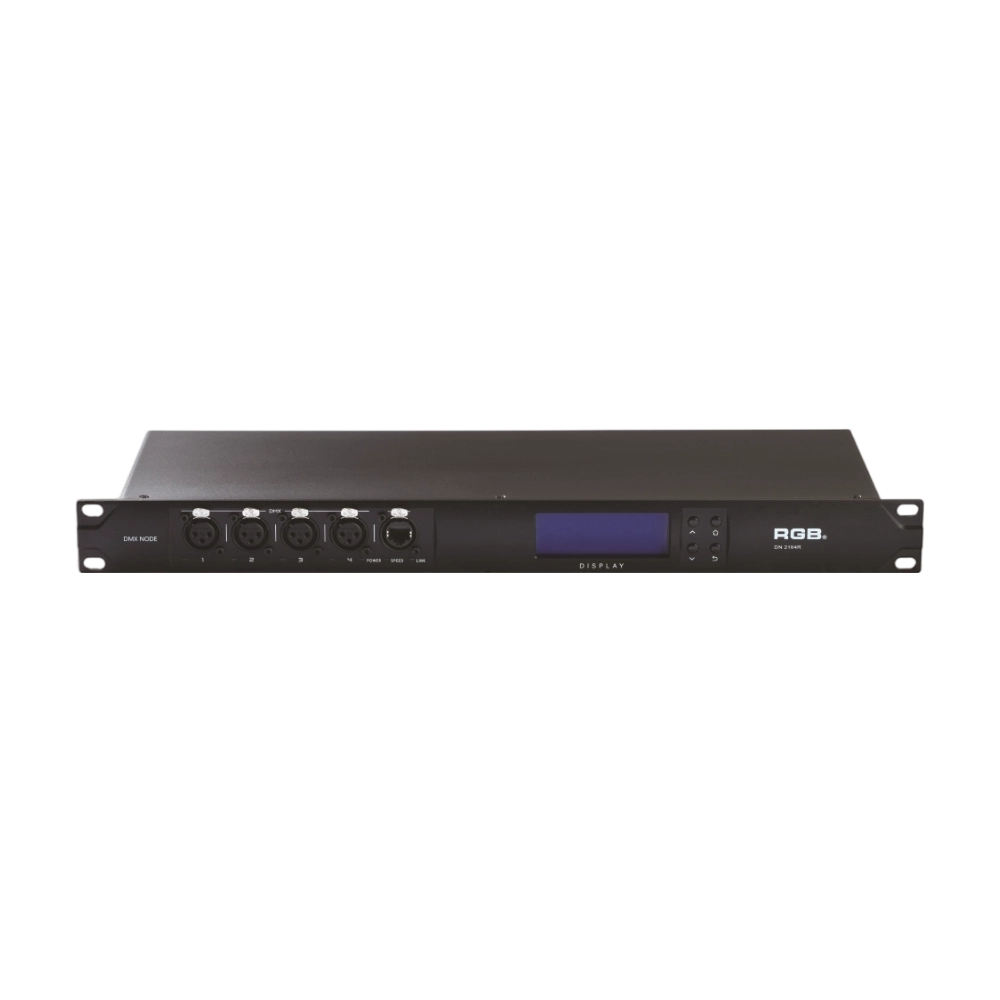
DMX, RDM Nodes
The DN series dual network port network decoder is a lighting control system product independently developed by RGB, featuring completely independent core technology and software copyright. It seamlessly connects and decodes the sACN and ART-Net network protocols based on TCP/IP with the DMX-512 and RDM communication protocols, achieving gigabit communication with dual independent physical address codes. Supports a visual lighting control system, intuitively displaying the online and offline status of the DN series network decoders, and enabling remote monitoring, editing, and setting of corresponding parameters.
It is widely applied in theaters, concert halls, multi-functional halls, cultural and tourism performances, TV stations, gymnasiums, auditoriums, commercial art lighting, and other performance and cultural venues.
Expert Support
Interested in learning more or need expert guidance related to this article? Fill in your details, and our team will provide tailored support.
Intelligent Control. Brilliant Performance.
RGB specializes in stage lighting control systems, delivering intelligent, reliable, and high-performance solutions for theaters and performance spaces worldwide.
Contact
Email:
Tel:
+86 20 3928 0245
+86 20 3928 0247
Address:
No.3, Huashan Road, Shilou Town, Panyu, Guangzhou, China.
Whatsapp: +8615975520131