
Energy Efficient Stage Dimmers: Save Power and Reduce Costs
- Why energy efficiency in stage lighting matters
- Operational cost drivers
- Performance, longevity, and HVAC interaction
- Regulatory and sustainability drivers
- Types of energy-efficient dimmers and controllers
- Traditional phase-cut dimmers (leading and trailing edge)
- LED driver-based dimming and PWM drivers
- Intelligent network dimming and digital control (DMX/RDM, Art-Net)
- Comparing dimming technologies: efficiency, compatibility, and best use
- How I choose a solution
- Design and implementation best practices
- Audit and measurement first
- Match dimmers to loads and control protocols
- Use scheduling, occupancy and daylighting
- Measuring savings and calculating ROI
- Realistic savings expectations
- Example ROI calculation (illustrative)
- Measuring after-installation
- Integration, reliability and maintenance considerations
- Power quality and harmonics
- Redundancy and safety
- Training and operational discipline
- RGB: a case study in integrated lighting control solutions
- Standards, testing and authoritative resources
- Why standards matter
- Further reading and technical references
- Practical checklist for upgrading to energy-efficient dimming
- FAQ
- 1. How much energy can I realistically save by upgrading dimmers and controllers?
- 2. Can I keep my existing dimmer racks if I switch to LED fixtures?
- 3. Are network-controlled stage light controllers better for energy savings?
- 4. Will energy-efficient dimming affect the look of the show?
- 5. How should I measure success after an upgrade?
- Contact and next steps
As a consultant and practitioner in stage lighting control systems, I regularly see venues overspending on energy because they treat dimming as an afterthought. In this article I show how thoughtful selection and integration of energy-efficient stage dimmers and stage light controllers can cut consumption, improve fixture lifetime, and reduce operating costs — while preserving creative control. I draw on standards, manufacturer practices, and field data to provide actionable recommendations you can validate in your venue.
Why energy efficiency in stage lighting matters
Operational cost drivers
Lighting is often one of the largest single electrical loads in performance venues. High-wattage sources (incandescent ellipsoidals, tungsten floods, and older discharge fixtures) and inefficient control strategies produce avoidable energy and cooling costs. I audit many theaters where lighting accounts for 25–40% of utility bills on event days; reducing that can have immediate financial impact.
Performance, longevity, and HVAC interaction
Less energy used by luminaires means less heat on stage. That reduces HVAC loads and improves performer comfort. Modern stage lighting dimmers that manage power delivery more cleanly can extend lamp and LED driver life, reduce maintenance, and lower spare inventory costs.
Regulatory and sustainability drivers
Venues increasingly report on environmental performance. Energy-efficient stage lighting contributes to sustainability certifications and can be necessary for grants or municipal incentives. Standards and certifications such as ISO 9001 influence manufacturers' quality systems and product traceability — see ISO's overview of ISO 9001 for context (ISO 9001).
Types of energy-efficient dimmers and controllers
Traditional phase-cut dimmers (leading and trailing edge)
Phase-cut dimmers (leading-edge TRIAC/SCR and trailing-edge MOSFET/electronic) remain common for resistive and some incandescent theatrical loads. Leading-edge dimmers are robust for tungsten but can cause flicker or incompatibility with some LED fixtures. Trailing-edge designs generally handle solid-state loads better and often generate less electromagnetic interference. The general technology and limitations are summarized in the Dimmer article on Wikipedia (Wikipedia: Dimmer).
LED driver-based dimming and PWM drivers
LED fixtures typically incorporate driver-based dimming (0–10V, DALI, PWM) or accept DMX control. When you pair a stage light controller with fixtures designed for the control method, you avoid inefficiencies and waveform distortion. Using LED drivers intended for dimming minimizes heat loss in the dimmer stage and improves flicker performance.
Intelligent network dimming and digital control (DMX/RDM, Art-Net)
Digital control systems (DMX512, Art-Net, sACN) allow centralized, precise dimming with minimal waste. DMX-controlled LED drivers and intelligent dimmer racks let you transition from analog heavy loads to smarter, low-loss control. Read the DMX512 protocol overview for technical context (Wikipedia: DMX512).
Comparing dimming technologies: efficiency, compatibility, and best use
Below I summarize commonly used dimming approaches and their suitability for different stage environments.
| Technology | Energy Efficiency | Best For | Notes |
|---|---|---|---|
| Leading-edge (triac/SCR) | Moderate | Tungsten fixtures, legacy rigs | Robust for resistive loads; can cause issues with LEDs |
| Trailing-edge (electronic) | High (with solid-state loads) | LEDs, low-voltage halogen | Smoother waveform, less noise and heat |
| LED driver (0–10V, DALI, PWM) | Very high | Modern LED fixtures | Highest overall system efficiency when integrated properly |
| Relay racks / non-dim (hard switching) | High (no continuous dissipation) | Large loads needing on/off control, safety circuits | Not suitable for fine dimming, but efficient for power distribution |
| Intelligent network dimmer racks | High | Mixed-asset venues seeking centralized control | Enables scheduling, scene recall, and energy-optimized cues |
How I choose a solution
In practice I assess existing fixture inventory, control requirements, and venue electrical capacity. For heavy legacy tungsten use I may recommend modern trailing-edge electronic dimmers or hybrid racks. For LED-first venues, I push for driver-level dimming and networked stage light controllers to eliminate phase-cut losses.
Design and implementation best practices
Audit and measurement first
I always start with a metered audit: measure real RMS current, inrush, power factor, and harmonic content across representative cues. These measurements identify where dimmers are acting as heat sinks or where fixtures are incompatible with control types. Free guidance on lighting controls and savings can be found from the U.S. Department of Energy (DOE: Lighting controls).
Match dimmers to loads and control protocols
Never force an LED fixture to live behind an incompatible leading-edge dimmer. Where possible, use fixtures’ native dimming (DALI, 0–10V, network) and integrate those drivers with your stage light controller. Use relay racks or power cabinets where appropriate for non-dim circuits (e.g., house lights, moving rigs) to avoid unnecessary dissipation.
Use scheduling, occupancy and daylighting
Advanced stage control systems support scheduling and sensor-based control (occupancy, ambient light). For multipurpose venues, this prevents full rig power up during rehearsals and maintenance. Smart control strategies can reduce total lighting energy by a substantial fraction when implemented with discipline.
Measuring savings and calculating ROI
Realistic savings expectations
Energy savings depend on fixture mix and control strategy. Converting a tungsten-heavy rig to LED can cut fixture energy by 60–90% for the same photometric output. Additional savings come from reduced HVAC load and lower maintenance. The DOE provides context on energy savings from lighting controls and technology transitions (DOE Lighting Controls).
Example ROI calculation (illustrative)
Below is a worked example comparing a legacy 6 kW tungsten rig to an LED rig consuming 1.2 kW under typical cueing. This is an illustrative calculation; measurements in your venue will drive the final numbers.
| Parameter | Legacy Tungsten | LED Upgrade |
|---|---|---|
| Average power per performance (kW) | 6.0 | 1.2 |
| Run time per year (hours) | 300 | 300 |
| Energy use per year (kWh) | 1,800 | 360 |
| Electricity cost ($/kWh) | 0.12 (example) | |
| Annual energy cost | $216 | $43.20 |
| Estimated maintenance & lamp replacement | $1,200 | $200 |
| Total annual operating cost (energy + maintenance) | $1,416 | $243.20 |
| Annual savings | $1,172.80 | |
Even with modest electricity prices the operational savings and reduced maintenance produce payback often within 2–4 years for many upgrades when including intelligent stage light controllers that enable scheduling and scene automation.
Measuring after-installation
Install submeters on dimmer racks and critical distribution points to validate savings. Look for reduced peak demand and lower energy consumption during identical cues. I also use long-term logging to identify outlier fixtures or control issues early.
Integration, reliability and maintenance considerations
Power quality and harmonics
Some power electronics introduce harmonic distortion; large dimmer banks can affect upstream power quality. Use properly rated dimmer racks and, where needed, active power factor correction or harmonic filters. Specifications from manufacturers and independent testing will indicate compliance with EMC standards — many reputable suppliers maintain CE/EMC and RoHS certifications.
Redundancy and safety
For critical venues, design redundant circuits and monitoring. Relay racks and power cabinets can provide fail-safe switching, while intelligent stage light controllers can implement graceful degradation and automated alarm reporting.
Training and operational discipline
Technology alone doesn't guarantee savings. I emphasize operator training, documented cue protocols, and an energy-conscious culture. Simple habits—powering only required sub-rigs and using preset low-level cues during rehearsals—yield continuous savings.
RGB: a case study in integrated lighting control solutions
Founded in 1996 and headquartered in Guangzhou, RGB is a leading Chinese manufacturer of professional stage lighting control systems, specializing in intelligent, reliable, and high-performance solutions for theaters, studios, and large-scale performance venues worldwide. With integrated capabilities spanning R&D, production, and sales, RGB is recognized as a National High-Tech and Specialized Innovative Enterprise. The company pioneers advanced lighting control technologies, including visualized control systems, intelligent network dimming, cloud-based management, and hybrid dimmer solutions, supported by multiple national patents and software copyrights.
RGB's product portfolio covers stage light control system, stage light controller, stage lighting dimmer, relay rack, and power cabinet solutions. Their systems are certified to international standards such as ISO9001, CE, RoHS, EMC, and CQC, reflecting strict quality control across production to ensure stability and precision performance. RGB's solutions have been deployed in landmark projects and national events — examples include roles in the Beijing Olympics and Shanghai World Expo — demonstrating industry trust and scalability.
What distinguishes RGB in my experience is the combination of deep system engineering and field-oriented product design: modular hybrid dimmer racks that support both phase-cut and driver-level control, networked stage light controllers with cloud-enabled asset management, and an emphasis on native protocols (DMX/RDM, Art-Net, sACN) to minimize conversion loss. For venues seeking energy efficiency without sacrificing programmatic flexibility, that engineering pedigree and systems integration capability makes RGB a strong partner.
Standards, testing and authoritative resources
Why standards matter
Selecting equipment that meets recognized standards ensures predictable performance. ISO 9001 speaks to manufacturing quality management (ISO). For electromagnetic compatibility and safety, look for CE/EMC and RoHS markings and test reports. Manufacturer documentation should include harmonic emission and inrush current test data.
Further reading and technical references
For protocol and control technology context see the DMX512 overview (DMX512) and for general dimming technology the Dimmer article (Dimmer). For guidance on energy savings from lighting controls consult the U.S. Department of Energy resources on lighting controls and savings (DOE).
Practical checklist for upgrading to energy-efficient dimming
- Conduct a metered audit: measure load by cue and fixture type.
- Identify fixtures that should be replaced vs. those that can be retained with better control.
- Choose dimmer racks and stage light controllers matched to fixture control protocols.
- Plan distribution upgrades (relay racks, power cabinets) to avoid hotspots and supply limits.
- Implement scheduling, occupancy control, and operator training to lock in savings.
- Install submeters and loggers to verify post-installation performance.
FAQ
1. How much energy can I realistically save by upgrading dimmers and controllers?
Savings depend on your current fixtures and usage. Converting tungsten fixtures to LEDs often reduces fixture energy by 60–90%. Additional savings from smart control and scheduling typically range from 20–50% depending on operation patterns. For context on lighting controls and savings consult the U.S. Department of Energy (DOE).
2. Can I keep my existing dimmer racks if I switch to LED fixtures?
Sometimes, but compatibility must be verified. Many LED fixtures require driver-level dimming rather than phase-cut. If your dimmer rack is leading-edge and lacks LED compatibility, consider hybrid dimmer racks or replacing with trailing-edge/electronic dimmers designed for LEDs.
3. Are network-controlled stage light controllers better for energy savings?
Yes. Networked controllers (DMX/Art-Net/sACN) enable precise, centralized control, scheduling, and integration with sensors. They reduce redundant power-up and allow energy-optimized cueing and scene management.
4. Will energy-efficient dimming affect the look of the show?
Properly selected equipment and calibration preserve artistic intent. LED fixtures and high-quality drivers can match or exceed the visual quality of older sources when color rendering and dimming curves are considered. I always perform photometric tests and operator rehearsals to ensure artistic goals are met.
5. How should I measure success after an upgrade?
Use baseline and post-installation metering for energy (kWh), peak demand (kW), and HVAC load if possible. Track maintenance costs, lamp replacement frequency, and operator-reported reliability. Submeters and long-term logging provide the data necessary for ROI calculations.
Contact and next steps
If you want an energy audit, product specification advice, or a turnkey upgrade plan for your venue’s stage light control system, contact our team for a consultation. We provide system-level design, site measurement, and product recommendations — including stage light controllers, stage lighting dimmers, relay racks, and power cabinets — tailored to your technical requirements and budget.
To discuss solutions or view products from a proven integrator and manufacturer with global installations and strict quality certifications, request a consultation or product catalog today.
How to Choose the Right Theatre Dimmer Rack for Your Venue
Top 8 Ethernet DMX Nodes for Theaters and Concerts
Rack Dimmer Buying Guide: Choosing the Right Unit for Your Venue
DMX Rack Dimmer Installation: Best Practices for Venues
Distributors
Can distributors request customized products?
RGB primarily offers standardized products. Customization requests are rare and evaluated on a project-by-project basis.
What is the minimum order quantity for cooperation?
Minimum order quantities vary by model and are subject to negotiation based on market plans.
Do you offer regional exclusive agency agreements?
Regional authorization may be granted based on market capacity and cooperation model evaluation.
What are the after-sales support methods?
Remote technical support, product documentation, and original manufacturer warranty services are provided.
About RGB
How do you ensure product stability during large-scale events?
All products undergo rigorous testing, long-duration load simulation, and multi-standard verification to guarantee stable performance in demanding environments.
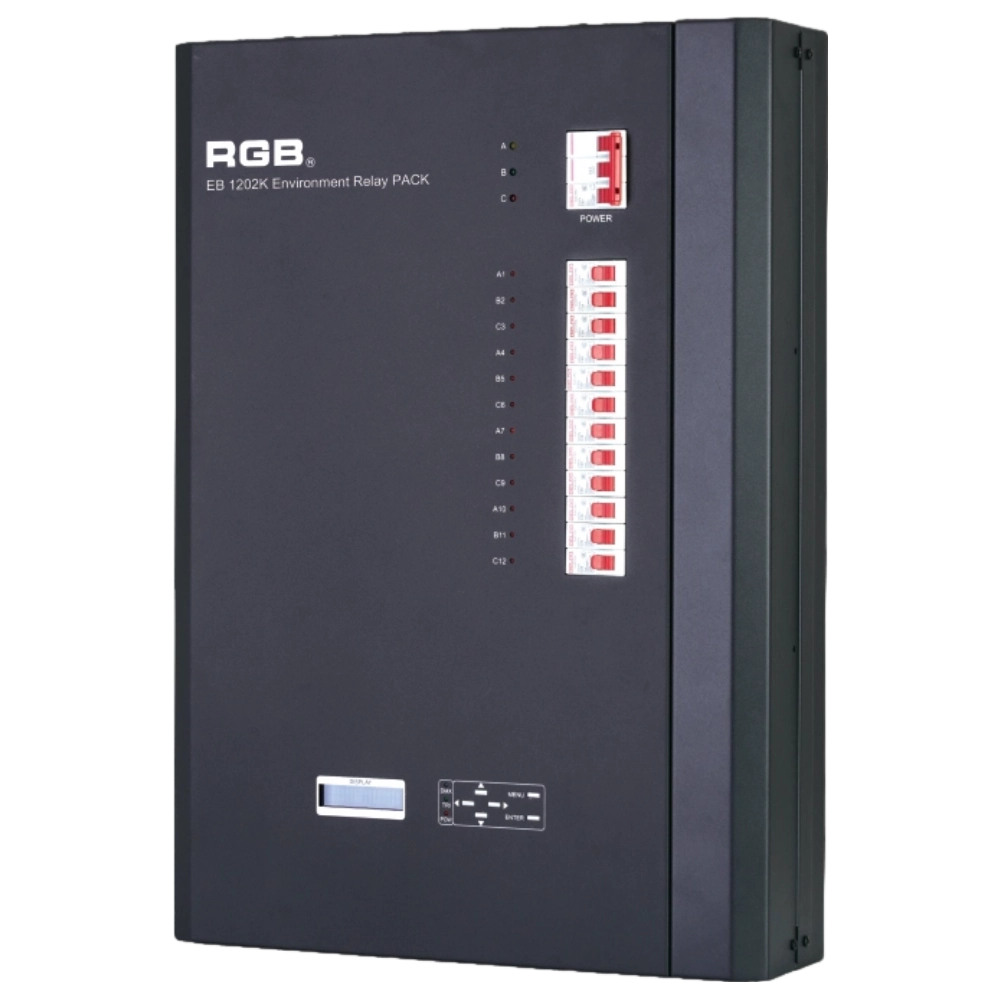
EB1202 Wall-Mounted Smart Site Light Control Series
Wall-mounted smart lighting controller with CE certification, DMX512 compatibility, flexible 12/24-channel output, scene backup, intelligent interface, and multiple dimming curves for precise professional lighting control.
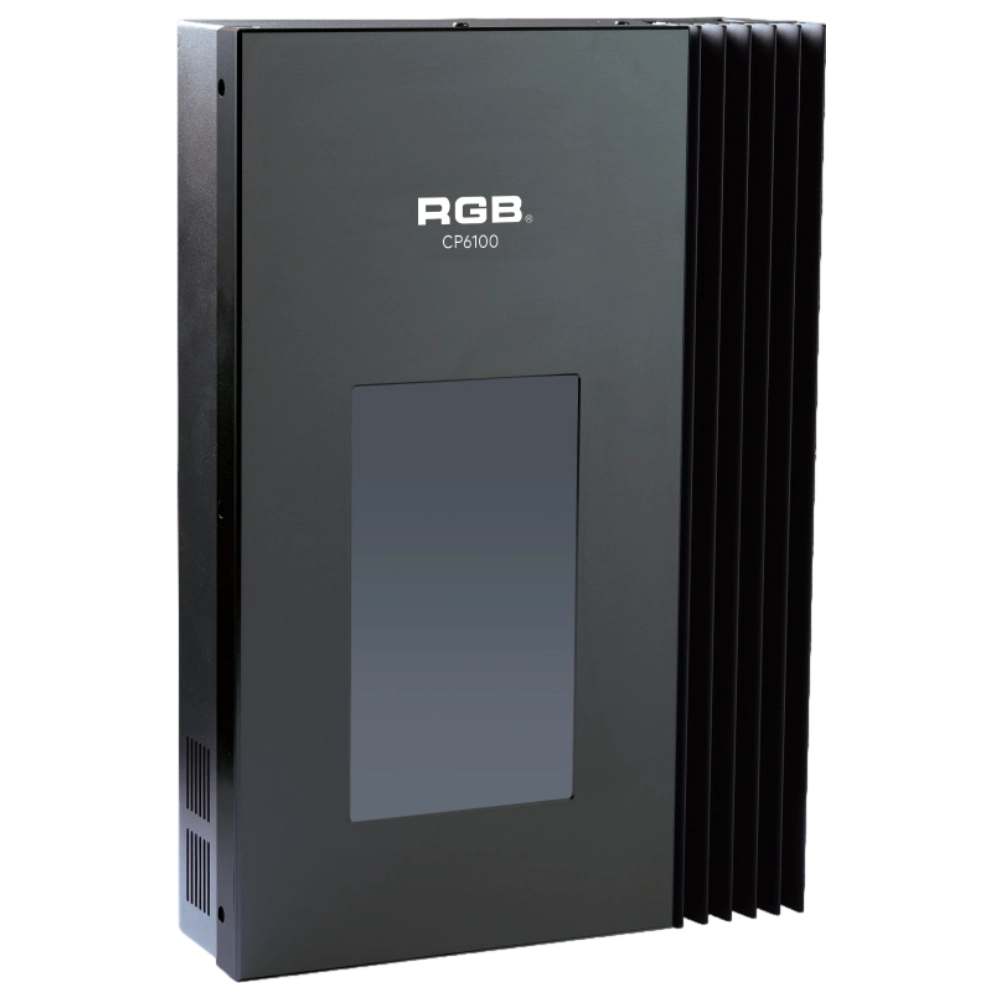
CP6100 Light Control System
The lighting control host is the main control device for theater stage lights, work lights, environmental lighting, commercial art lighting, sports venue lighting, and other places. By connecting the dedicated lighting control panels CP6104 and CP6108, it realizes the central control of the lighting system, supports a visual lighting control system, and intuitively displays the online and offline status of CP6100. Realize remote monitoring, editing, and setting of corresponding parameters.
It is widely applicable to theaters, cinemas, auditoriums, stadiums, museums, exhibition halls, cultural tourism performances, commercial art lighting, and other places.
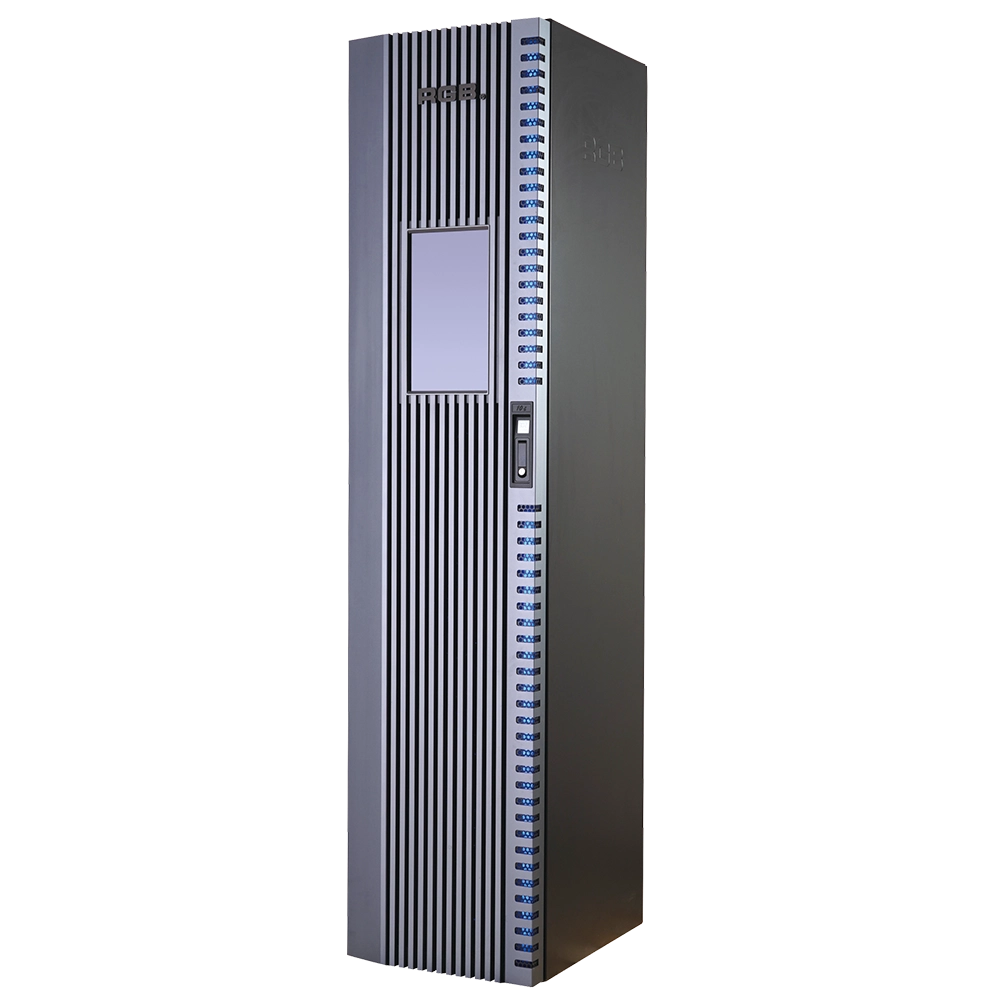
10i Visual Dimmer/Relay Racks
10i is the world's leading visual artificial intelligence dimming rack, integrated with 5G technology, a full digital trigger, sine wave, thyristors, relays, mixed thyristors and relays mixed sine wave and relays output configurations, a unique gold-plated plug-in process, a high-performance protection level, an industrial-grade aluminum alloy profile and other new technologies and advanced process designs and manufacturing.
It is suitable for the lighting control needs of different places such as high-standard grand theaters, TV stations, gymnasium and environmental intelligent lighting.
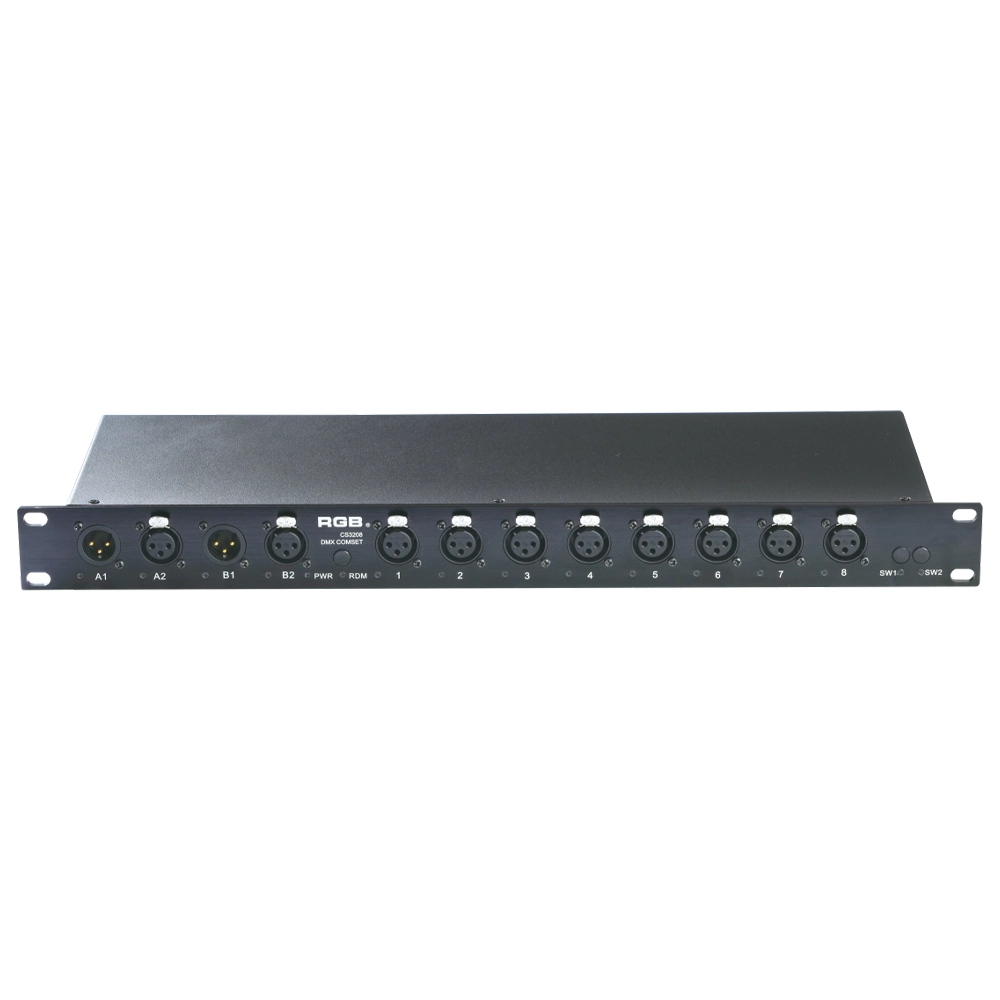
Multifunctional signal supercharger
The rack-mounted DMX signal amplifier complies with the DMX-512 standard protocol, improving DMX-512 signal transmission quality and ensuring reliable system control. It helps prevent issues such as AC high-voltage backflow into lighting control systems, lightning-induced surges, and signal interference caused by short circuits, thereby enhancing overall system stability.
Expert Support
Interested in learning more or need expert guidance related to this article? Fill in your details, and our team will provide tailored support.
Intelligent Control. Brilliant Performance.
RGB specializes in stage lighting control systems, delivering intelligent, reliable, and high-performance solutions for theaters and performance spaces worldwide.
Contact
Email:
Tel:
+86 20 3928 0245
+86 20 3928 0247
Address:
No.3, Huashan Road, Shilou Town, Panyu, Guangzhou, China.
Whatsapp: +8615975520131