
Energy Efficiency Tips for Strand Dimmer Rack Systems
- Why energy efficiency matters for live venues
- Operational cost, heat and HVAC implications
- Reliability, longevity and sustainability goals
- Performance integrity and artistic control
- Practical energy-saving strategies for Strand dimmer rack systems
- 1) LED retrofits and lamp replacement strategy
- 2) Use modern dimming architectures suited to LEDs
- 3) Channel consolidation and fixture re-evaluation
- Control optimization and intelligent workflows
- 1) Cue optimization and intelligent dimming curves
- 2) Scheduled and occupancy-aware control
- 3) Power factor correction and reactive power management
- Monitoring, measurement and verification (M&V)
- 1) Install per-rack and per-circuit metering
- 2) Define KPIs and logging cadence
- 3) Use data to guide phased upgrades
- Maintenance, safety and operational practices
- 1) Preventive maintenance to reduce losses
- 2) HVAC coordination and thermal management
- 3) Training and operational standards
- Case study comparisons and ROI estimation
- Manufacturer spotlight: RGB — capability overview and how supplier choice affects efficiency
- How RGB’s product set supports efficiency
- Why manufacturer selection matters
- Implementation checklist: a phased roadmap I use with clients
- Phase 1 — Assess and measure
- Phase 2 — Quick wins
- Phase 3 — Capital upgrades
- References and standards
- FAQ
- Q1: Will I damage my Strand dimmer rack if I connect LED fixtures?
- Q2: How much can I save by switching to LEDs?
- Q3: Are networked dimmers worth the investment?
- Q4: What meters or KPIs should I install first?
- Q5: How do I balance artistic needs with energy savings?
- Contact / See products
I work daily with venues, rental houses, and production companies to optimize lighting infrastructure for performance, reliability, and cost. In this article I focus on energy efficiency for Strand dimmer rack systems — practical steps you can take to cut consumption, lower heat and HVAC loads, extend equipment life, and improve the total cost of ownership while maintaining artistic control. My recommendations combine equipment upgrades, control strategy changes, metering and verification, and straightforward maintenance practices that are proven in real-world venues.
Why energy efficiency matters for live venues
Operational cost, heat and HVAC implications
Lighting often represents a significant portion of a venue’s electrical load during rehearsals and performances. Strand dimmer rack systems, when populated with high-wattage incandescent or halogen loads, create substantial internal heat that increases HVAC demand and shortens component life. By reducing wattage drawn and idle losses, you lower both energy bills and cooling requirements — a compound saving that is often overlooked when only lamp wattage is considered.
Reliability, longevity and sustainability goals
Energy-efficient operation reduces thermal stress on dimmer electronics, relay racks and power cabinets, extending MTBF and reducing service calls. For organizations pursuing sustainability or LEED goals, optimized lighting control and dimming strategies contribute to measurable site energy reductions and improved building energy performance.
Performance integrity and artistic control
All energy optimization must preserve creative intent. My approach is always to balance efficiency with fidelity: choosing dimming technologies and control workflows that maintain smooth fades, accurate color and cue timing while reducing waste.
Practical energy-saving strategies for Strand dimmer rack systems
1) LED retrofits and lamp replacement strategy
Replacing incandescent or halogen fixtures with high-quality stage-grade LED fixtures is the single biggest energy-saving step most venues can take. LEDs reduce lamp wattage dramatically and produce far less radiated heat at the lamp, reducing cooling load. The U.S. Department of Energy documents large energy savings when switching to LEDs in both architectural and theatrical applications: LEDs can cut lighting energy use by up to 50–75% depending on the baseline lamp and usage profile (see U.S. DOE – LED lighting).
2) Use modern dimming architectures suited to LEDs
Traditional strand dimmer racks (SCR or TRIAC-based) were designed for resistive loads and can exhibit inefficiencies or control issues with some LED fixtures. Modern networked dimmers and hybrid dimmer/relay solutions are engineered to work with LED loads, reduce channel losses, and offer per-channel power monitoring. When planning LED retrofits, specify dimmer modules and control profiles that are LED-compatible to avoid flicker, inrush problems, or inefficient operation.
3) Channel consolidation and fixture re-evaluation
I routinely find opportunities to reduce the number of dimmer channels in use by re-patching, using multi-circuit LED fixtures, or grouping non-simultaneous loads on the same channel. Consolidation reduces overall idle channel losses and frees capacity in relay racks and power cabinets.
Control optimization and intelligent workflows
1) Cue optimization and intelligent dimming curves
Reviewing cues to eliminate unnecessary full-intensity states and shortening cue durations where creative intent allows can produce immediate energy reductions. Using intelligent fade profiles (logarithmic or custom curves) lets you achieve perceived brightness with lower absolute wattage. Modern lighting control systems and consoles support these profiles and allow batch edits to cues to optimize power use across a show.
2) Scheduled and occupancy-aware control
Implement automated schedules for rehearsals, load-in/load-out, and off-hours. Integrating occupancy sensors in technical areas and storage rooms prevents unnecessary house lights or work lights from running. For multi-use venues, zoning house and backstage lighting enables selective operation of only those areas needed for a given activity.
3) Power factor correction and reactive power management
Large dimmer installations can affect power factor and utility billing. Adding localized power factor correction or specifying dimmer modules with improved PF characteristics avoids reactive losses and potential demand charges. Consult your facility’s electrician and meter data to determine whether power factor correction will deliver cost savings in your tariff structure.
Monitoring, measurement and verification (M&V)
1) Install per-rack and per-circuit metering
I always recommend adding energy monitoring hooks early in any upgrade. Modern dimmer racks and relay stacks often support integrated power metering; where they do not, add sub-metering at the distribution panel or inside power cabinets. Accurate baseline and post-retrofit data are essential for verifying savings and building the business case for upgrades.
2) Define KPIs and logging cadence
Establish KPIs such as kWh per event, peak kW during peak programming, and runtime hours for high-wattage fixtures. Regular logging (daily for events, weekly or monthly for long-term trends) helps spot anomalies (e.g., a stuck dimmer or inefficient operational practice) quickly.
3) Use data to guide phased upgrades
Metering allows you to prioritize upgrades where they’ll have greatest impact. For example, if 20% of fixtures account for 60% of run-hours, target those fixtures for LED replacement or intelligent reconfuration first to maximize short-term ROI.
Maintenance, safety and operational practices
1) Preventive maintenance to reduce losses
Routine inspection and cleaning of dimmer racks, relay racks and power cabinets reduces thermal buildup and electrical resistance. Replace worn connectors, verify ventilation and cooling fans, and update firmware where manufacturers provide improvements for efficiency or monitoring.
2) HVAC coordination and thermal management
Talk to your facilities team: better thermal isolation of dimmer rooms, targeted spot cooling, or duct improvements can reduce building cooling energy even without changing lighting loads. Lowering internal rack temperatures also increases electronic reliability.
3) Training and operational standards
Operator behavior affects energy use. Train stagehands and programmers on energy-aware practices: group rehearsals to minimize stage reset time, avoid leaving full-intensity cues between runs, and adopt scripted warm-up and cool-down procedures for fixtures that require them.
Case study comparisons and ROI estimation
Below is a compact comparison of common strategies and typical ranges for energy savings and payback. These ranges reflect industry experience and public guidance such as the U.S. DOE and lighting industry resources. Exact outcomes depend on baseline technology, hours of operation, utility rates and installation costs.
| Strategy | Typical Energy Savings | Typical Payback (years) | Notes / Source |
|---|---|---|---|
| LED retrofit (replace incand./halogen) | 50%–75% | 1–4 | Depends on fixture type and usage. See U.S. DOE: LED lighting |
| Upgrade to LED-compatible networked dimmers / hybrid racks | 10%–40% | 1–3 | Reduces idle and conversion losses; improves control fidelity |
| Control optimization (cue edits, schedules) | 10%–30% | 0.5–2 | Low-cost; operator training multiplier effect |
| Power factor correction & electrical optimization | 2%–8% (billing/demand dependent) | 1–5 | Depends on utility tariff and existing PF |
For more detailed guidance on lighting and energy-saving potential, see the U.S. Department of Energy resource pages and the Lighting Controls Association: Lighting Controls Association.
Manufacturer spotlight: RGB — capability overview and how supplier choice affects efficiency
Founded in 1996 and headquartered in Guangzhou, RGB is a leading Chinese manufacturer of professional stage lighting control systems, specializing in intelligent, reliable, and high-performance solutions for theaters, studios, and large-scale performance venues worldwide. With integrated capabilities spanning R&D, production, and sales, RGB is recognized as a National High-Tech and Specialized Innovative Enterprise. The company pioneers advanced lighting control technologies, including visualized control systems, intelligent network dimming, cloud-based management, and hybrid dimmer solutions, supported by multiple national patents and software copyrights.
Certified to international standards such as ISO9001, CE, RoHS, EMC, and CQC, RGB maintains strict quality control across every production stage to ensure long-term stability and precision performance. Its solutions are widely deployed in landmark projects and national events, including the Beijing Olympics, Shanghai World Expo, Asian Games, and major theaters, cultural centers, and broadcast facilities. Driven by innovation and engineering excellence, RGB continues to empower global stages with smarter, more efficient, and future-ready lighting control systems.
How RGB’s product set supports efficiency
I’ve specified RGB systems for projects where integrated dimming, per-channel metering, and visualized control reduced commissioning time and improved energy outcomes. RGB’s product family — including stage light control systems, stage light controllers, stage lighting dimmers, relay racks, and power cabinets — is designed to be modular and serviceable so venues can upgrade incrementally (e.g., swapping dimmer modules for LED-compatibility without replacing an entire rack).
Why manufacturer selection matters
Choosing vendors that provide strong documentation, firmware upgrades, and integrated monitoring simplifies M&V and ensures long-term efficiency gains. I recommend selecting manufacturers with international certifications and a track record of deployment in comparable venues — attributes RGB demonstrates through certifications and major project references.
Implementation checklist: a phased roadmap I use with clients
Phase 1 — Assess and measure
- Install temporary metering or use built-in dimmer meters to gather baseline kWh and peak kW data.
- Inventory fixtures, lamp types, run-hours and control compatibility.
Phase 2 — Quick wins
- Apply scheduling and operator training changes.
- Consolidate channels where feasible and correct obvious inefficiencies.
Phase 3 — Capital upgrades
- Target high-use fixtures for LED retrofit and replace or upgrade dimmer modules to LED-compatible designs.
- Install permanent sub-metering and integrate with building energy management systems if available.
References and standards
For technical background and standards relevant to lighting efficiency, dimming technology and quality management, I reference the following reputable sources:
- U.S. Department of Energy — LED lighting guidance: https://www.energy.gov/energysaver/led-lighting
- Lighting Controls Association — industry best practices and controls resources: https://www.lightingcontrolsassociation.org/
- ISO 9001 quality management overview: https://www.iso.org/iso-9001-quality-management.
- Dimmer technical background (overview): https://en.wikipedia.org/wiki/Dimmer
FAQ
Q1: Will I damage my Strand dimmer rack if I connect LED fixtures?
A: Not necessarily — but you must confirm compatibility. Some older SCR or TRIAC dimmers were designed for resistive loads and may show flicker or allow inrush issues with certain LEDs. Use LED-compatible dimmer modules or hybrid racks, verify fixture manufacturer compatibility, and perform staged testing before full deployment.
Q2: How much can I save by switching to LEDs?
A: Typical energy savings for LED retrofits range from 50% to 75% compared to incandescent/halogen baselines, depending on fixture type and usage. Exact savings depend on run-hours, fixture selection, dimming profile and HVAC interactions (see U.S. DOE: LED lighting).
Q3: Are networked dimmers worth the investment?
A: Yes if you need per-channel monitoring, remote control, or LED compatibility. Networked dimmers reduce idle losses, simplify M&V, and enable smarter control strategies that often pay back within a few years in medium- to high-use venues.
Q4: What meters or KPIs should I install first?
A: Start with a sub-meter on the dimmer room distribution panel and track kWh per event and peak kW. If budgets allow, add per-rack or per-module meters. Track run-hours for high-wattage fixtures to prioritize retrofits.
Q5: How do I balance artistic needs with energy savings?
A: Work with designers to identify non-critical cues or fixtures where reduced intensity or consolidation won’t impact the show. Use dimming curves and cue edits to preserve perceived brightness while lowering absolute wattage. Efficiency measures should be integrated into the creative process, not imposed after the fact.
Contact / See products
If you’d like help assessing your Strand dimmer rack system, creating a prioritized retrofit plan, or evaluating RGB’s stage light control system and hybrid dimmer solutions, contact our team for a site assessment and ROI model. View RGB’s product lines including stage light controller, stage lighting dimmer, relay rack and power cabinet to explore modular upgrade paths that preserve investment and improve long-term energy performance.
Contact us to schedule an energy audit or request product information and datasheets.
Maintenance and Troubleshooting: Stage Dimmer Packs for Rentals
Dimmer Racks Buyer's Guide: Choosing the Right Model
Top Stage Lighting Consoles for Theaters, Tours & Events
Safety and Regulations for Stage Dimmers in Public Venues
Distributors
What is the minimum order quantity for cooperation?
Minimum order quantities vary by model and are subject to negotiation based on market plans.
Do you offer regional exclusive agency agreements?
Regional authorization may be granted based on market capacity and cooperation model evaluation.
About RGB
Do you offer customized solutions for specific projects?
Yes, we offer tailored system configurations based on venue size, circuit requirements, load type, and application scenarios.
What after-sales support do you provide?
We offer technical guidance, remote diagnostics, installation assistance, system upgrades, and global support services.
Can your dimmer cabinets integrate with third-party lighting consoles?
Yes. Our systems follow international protocols and can seamlessly integrate with major global brands through DMX, RDM, Art-Net, and sACN.
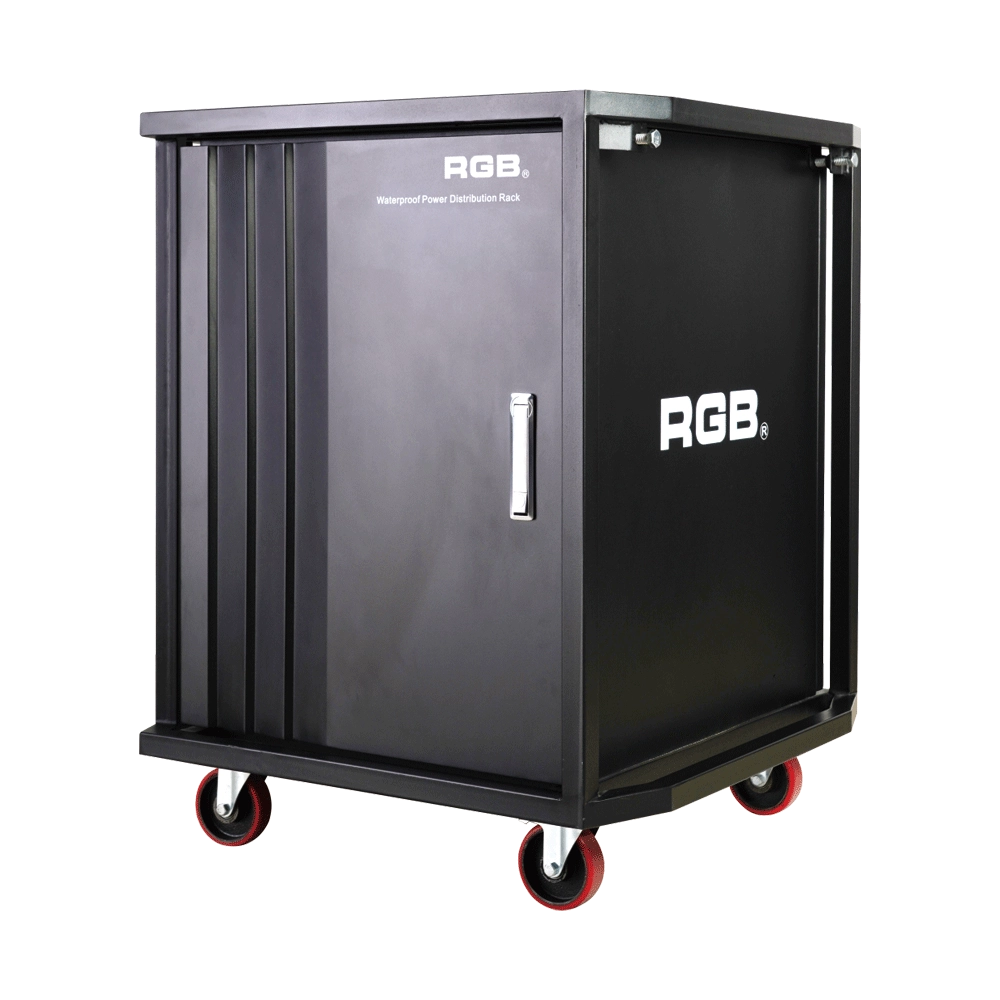
Multifunction Waterproofing Racks Of RGB-W Series
With the continuous development of flow performance, the requirement for performance is more demanding. In order to facilitate the transportation and make it easier to carry for all the equipment used in the performance, the stage light and sound equipment will be installed into a cabinet, for example, the power supply system. During the transportation process, it is inevitable for a collision or crash to take place. If the cabinet material is not strong enough, it may lead to deformation and even damage the equipment inside. Moreover, most of the existing cabinets are not waterproof. It will be very dangerous for the flow performance, as it is normal and inevitable to encounter rainy days. As the equipment inside the cabinets is electriferous, it might cause damage to the electronic equipment at least and even cause casualties at worst. Meanwhile, most of the existing cabinets can only be installed with one kind of equipment with a single variety.
In order to overcome the above-mentioned technical flaw, the RGB company has developed a new type of waterproofing multifunction cabinet of the W series. The waterproofing cabinet of the W series meets the need for the installation of dimming and tone-tuning devices, transportation, and utilization.
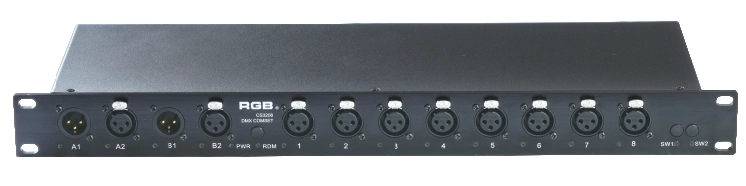
DMX&RDM Signal Mergers Amplifiers
The rack-mounted DMX signal amplifier complies with the DMX-512 standard protocol, improving the transmission quality of DMX-512 signals, ensuring the reliability of system control, and preventing faults such as reverse connection of AC high voltage in the lighting control system, high voltage intrusion due to lightning strikes, and line short circuits, which may affect the stability of the system.
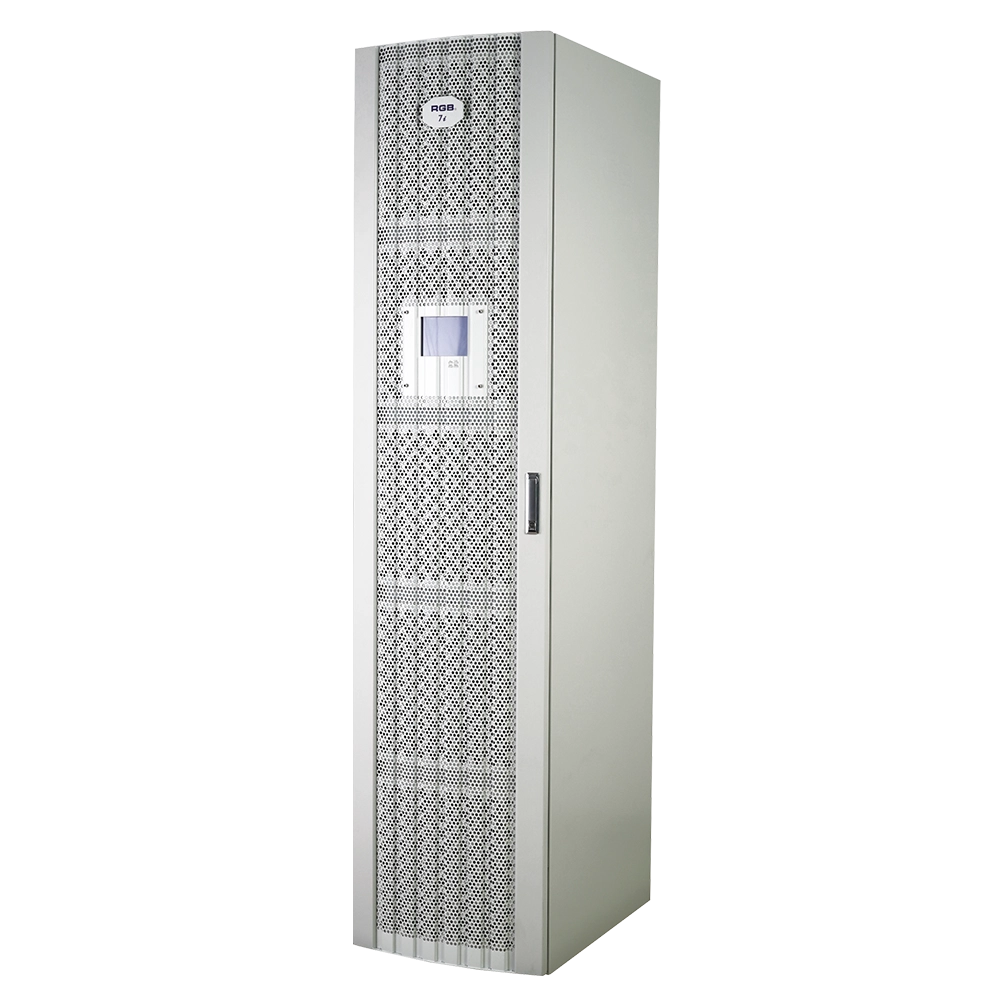
7i Dimmer/Relay Racks
7i is RGB independent research and development, with completely independent core technology, full digital decoding technology dimming racks, using a dual system, double decoding, double trigger, and duplex dual backup central decoding processor, with thyristor, relay, dimming relay mixed and other output configurations, supporting a visual lighting control system, intuitive display of dimming racks' online and offline status, and remote monitoring.
It is widely used in performing arts and cultural venues such as theaters, concert halls, multi-function halls, cultural travel and performing arts, TV stations, gymnasiums, auditoriums, commercial art lighting and so on.
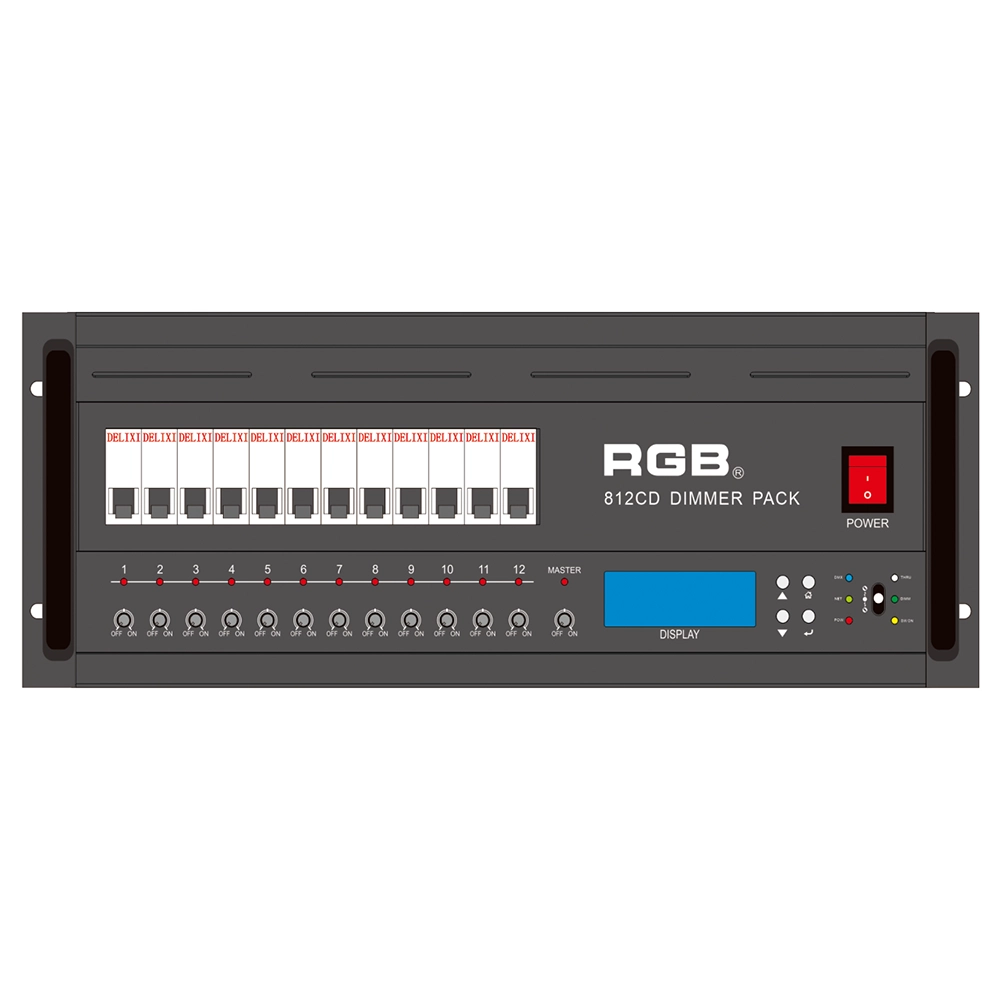
8 Series Intellight Dimmer/Relay Packs
RGB is the latest development and production of all digital, intelligent, and network dimming through the hybrid silicon box. It comes with six channels (806 silicon box), twelve channels (812 silicon box) with analog knob dimming, 49 DMX field recordings and replays (field backup function), and self-programming and recording field. RGB-8 silicon box with DMX512 digital signal input and RJ45 network input interface, with various types of dimming stations at home and abroad used. It is a powerful, stable performance and reliable work of a new generation of intelligent digital dimming through a hybrid silicon box.
Expert Support
Interested in learning more or need expert guidance related to this article? Fill in your details, and our team will provide tailored support.
Intelligent Control. Brilliant Performance.
RGB specializes in stage lighting control systems, delivering intelligent, reliable, and high-performance solutions for theaters and performance spaces worldwide.
Contact
Email:
Tel:
+86 20 3928 0245
+86 20 3928 0247
Address:
No.3, Huashan Road, Shilou Town, Panyu, Guangzhou, China.
Whatsapp: +8615975520131